
Research Methodologies
At IDC, we recognize our obligation to maintain objectivity, integrity, and independence in all of our research and analysis. Our analysts employ rigorous methodologies to ensure consistency and accuracy across our research products, coverage areas, and geographies.
Tech Buyer Methodologies
Our research methodologies empower the Tech Buyer community to make informed decisions that minimize risk and reduce implementation time while staying on top of critical trends. Explore our Tech Buyer research documents below.
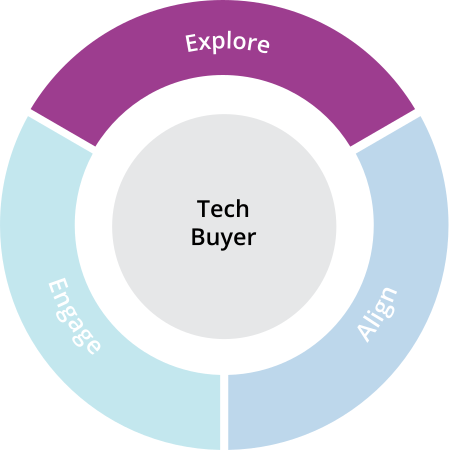
Understand Business Requirements and Technology Options
Track the adoption of emerging technologies and their projected impact on tech buyer strategies.
Ten Predictions from IDC for the next 5 years to help you identify issues in a three-year planning cycle.
Value: Understand the timeframe and magnitude of technology change and evaluate IT initiatives’ business value.
High level document (30,000-foot level) that captures the key segments in a technology market, and within each category significant companies.
Value: Understand key segments and companies within each, consistently with transparent methodology.
A report that focuses on a solution with a situation overview, key takeaways, and recommended actions.
Value: Provide insights and guidance into solutions and challenges faced by tech buyers.
A two-sided PowerPoint capturing key tech buyer related survey data and then providing observations and insights on its application to tech buyers.
Value: Short, concise data and insights to drive decisions and provide a peer perspective.
Outlines of new technologies that provide analysis of benefit, risk, adoption rate and costs.
Value: IDC TechBriefs quickly bring you up to speed on new technologies.
Classifications of emerging technologies by their impact and peak adoption timeframe.
Value: IDC TechScapes help you mitigate risk in new technologies adoption by helping you align strategy and risk tolerance.
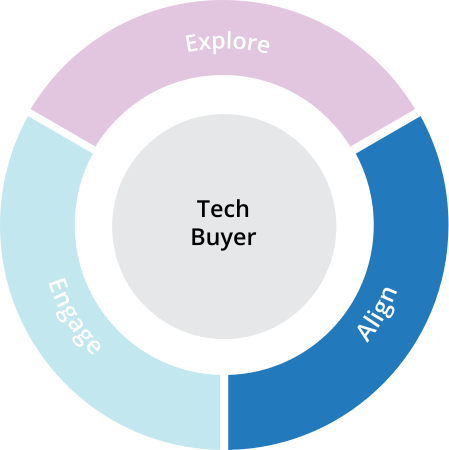
Create Strategy for Technology Initiative
Assess organizational maturity and readiness for technology initiatives with guidance on business cases and IT investments.
Roadmap of 3-5 dimensions / maturity levels for technologies and targets for maintaining competitiveness or achieving industry superiority.
Value: Provides a framework for technology strategies and identifies elements to address while aligning them to business goals.
Objectively compares peer classes and classifies emerging technologies by their impact and peak adoption timeframe.
Value: Benchmarks help you compare where you are relative to peers, making it easier to build a consensus around technology priorities.
Aggregation of multiple research reports into a guide to help organizations delivery technology.
Value: Curates and connects research report to create a holistic approach to a solution.
Outlines of new technologies that define approaches, key players, benefits, risks, timelines, resources, and likely business outcomes.
Value: Helps you architect and prepare the case for technology initiatives that are aligned with business goals, scoped to succeed, and properly resourced.
A presentation discussing a technology or solution accompanied by supporting data.
Value: Easily digestible and reusable insights, observations, and data to provide organizations with a quick understanding of a subject and drive action.
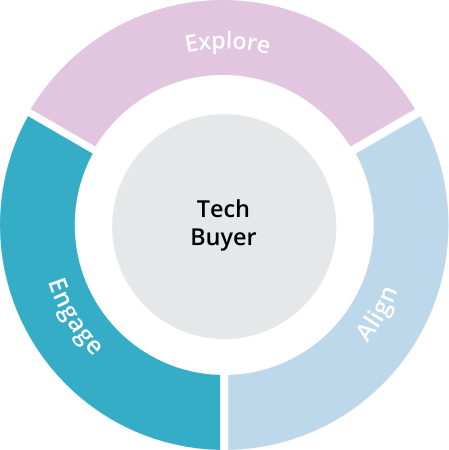
Implement a Technology Initiative and Optimize
Examine how tech buyer organizations are implementing technology initiatives with insight into use cases and best practices.
Presents suppliers using innovative technologies, approaches, or business models.
Value: Speed vetting of suppliers by singling out the most innovative practices and vendors.
An unbiased consistent methodology to assess technology supplier offerings and strategy.
Value: Assessing vendors with a consistent transparent methodology speeds time to a short list and mitigates risks.
An IDC PeerScape identifies peer business practices to emulate or avoid.
Value: Allows you to focus on practices with the most impact on success, driving business value.
Compares stated features of products in a category.
Value: Reduces effort in assessing technology vendor fit to organizational requirements.
Tech Supplier Methodologies
IDC’s unique research model captures the nuances of local and regional markets while adhering to a consistent set of methodologies that strengthen and differentiate our global coverage. Explore our Tech Supplier research documents below.
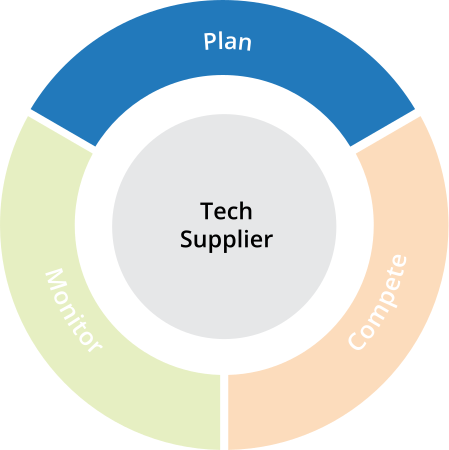
Identify Technology Trends and Market Opportunities
Optimize decision making with insights into technology trends, buyer intention, market size, and competitive landscape.
Survey-driven analysis of technology, business, and market trends.
Provides technology suppliers with survey-based insights and actionable advice to better inform decision making.
Succinct, data-driven insight and analysis of technology and business trends.
Helps inform and improve tech supplier planning by providing critical and timely insights into technology and business trends.
Concise technology market views complemented by analyst insight into the impact of future trends.
Helps tech suppliers better:
- Assess market opportunities
- Identify competitive landscapes
- Optimize go-to-market strategies
- Define market strategies and road maps
- Analyze leading market indicators
Forecast of a single market or group of related markets.
Helps tech suppliers identify future opportunities and build growth plans by providing insight into:
- Market size
- Market drivers
- leading market indicators
Content that may have been delivered at public forums, such as conferences and events, or for client presentations.
Insights into tech buyer strategy planning and technology initiatives.
Taxonomy that identifies industry terms and tracks, segments, and forecasts technology markets.
Helps tech suppliers identify opportunities and refine strategies by providing a comprehensive view of a technology marketplace.
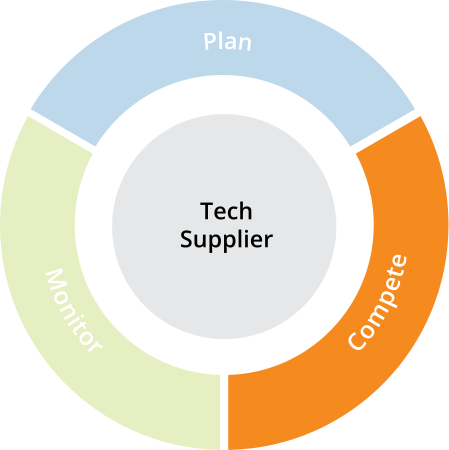
Understand the Competitive Landscape
Improve competitive position with detailed insight into market share and competitive positioning.
View of tech market landscapes that include competitive positioning, adjacent segments, and potential partner opportunities.
Helps technology suppliers assess market opportunities and identify where their organizations fit into the competitive landscape.
Market size, regional allocations, platform split, and summaries of vendor shares for the recently completed period.
Helps technology suppliers analyze competitors and promote market leadership.
Analysis of an emerging or established technology.
Insight into the potential impact of emerging or established technologies on products and markets.
In-depth analysis of a single company, a group of companies, or a company division focused on a particular market.
Provides tech suppliers with insight into other companies’ product or service offerings, go-to-market strategies, business performance, market positioning, and future opportunities and challenges.
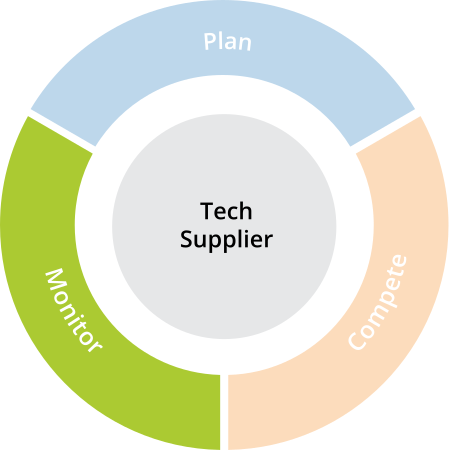
Track and React to Evolving Market Trends
Stay on top of technology and industry developments to continually refine market strategies.
IDC Links offer timely insight into important market trends and events in a short opinion piece.
IDC Blinks offer shorter written content, accompanied by a two-minute analyst audio opinion.
Helps tech suppliers adjust and refine business decisions based on IDC’s analysis of product and financial announcements, mergers and acquisitions, and other impactful events.
Analysis of an industry event, new product or service, company announcement, development or fast breaking news.
Helps tech suppliers anticipate and plan for the business and market impacts of industry developments.
Analysis of key market developments.
Provides tech suppliers with insight into key issues and topics, including:
- Competitive environments
- New business models
- Partner and channel strategy
- Innovation and market opportunity
- Enterprise strategies
- Regulation
- Socioeconomics