
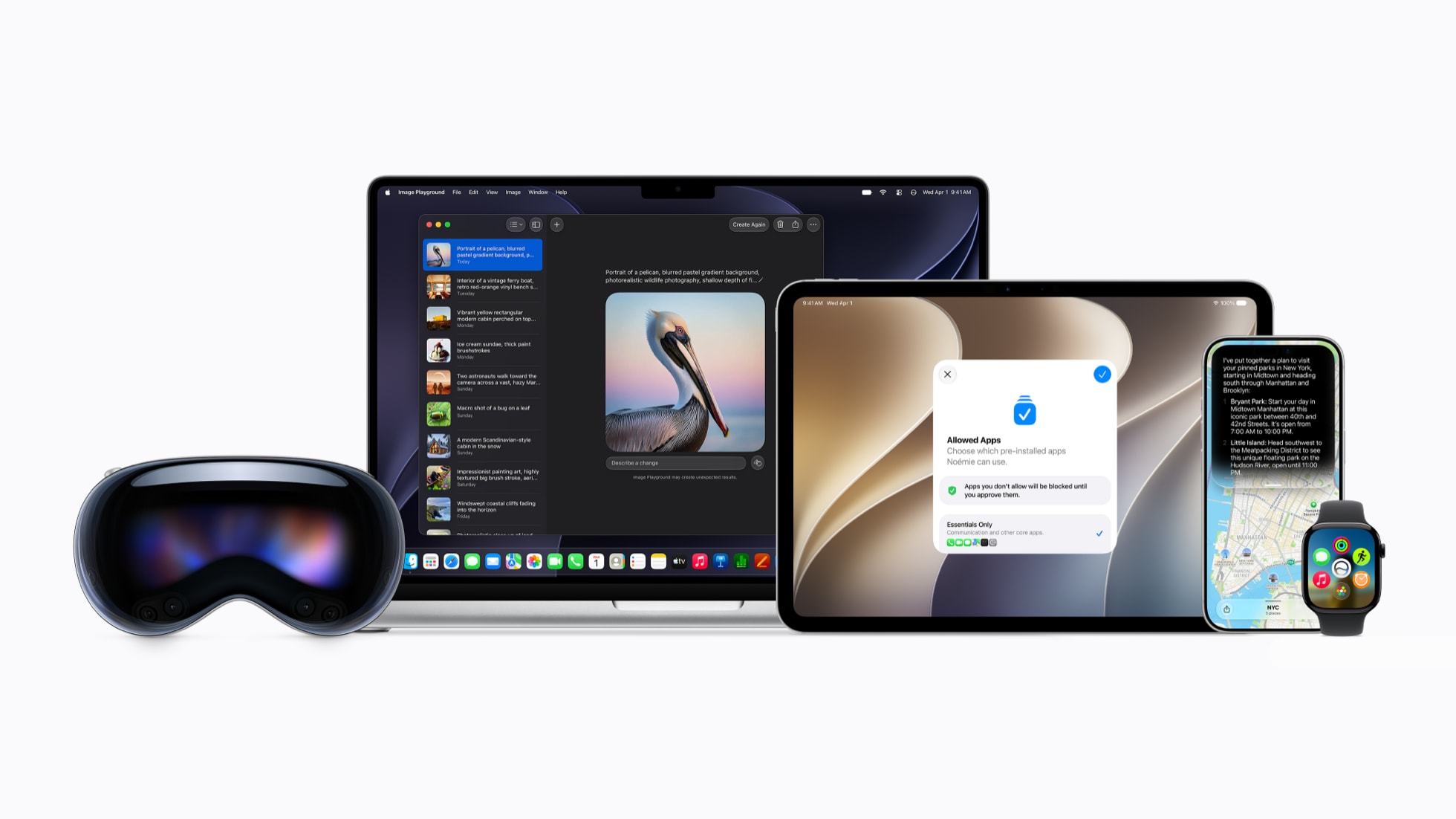
Although WWDC is a developers’ conference, this year’s keynote was primarily a statement of intent about Apple’s future and demonstration of its AI credibility.
The most important announcement this year was the new Siri AI. Apple rebuilt it from the ground up, trying to make AI feel native, useful and invisible across devices people already own. The winning AI experience for consumers will not be the loudest or most technically complex. It will be the one that understands context, respects privacy, works reliably across apps, and reduces friction without forcing users to change behavior.
Apple has rarely been about being first to a trend. It has been about waiting for the ability to embed technology far enough into hardware and silicon to change how people actually behave. Much has been made about Apple being behind on AI, and the company certainly had failed to deliver on promises made back in 2024. But consumers are wary of AI, and what the company demonstrated at WWDC this year seems ready to meet them where they are today.
What is the new Siri AI?
The center piece is a rebuilt Siri, dubbed Siri AI, and the detail that matters most is what sits underneath it. Apple was emphatic on one point: this third generation of foundation models is its own work, trained on its own data. Yes, the company worked with Google to develop the model family, and Apple refined four of the five models using outputs from Gemini’s frontier models. But the models, the training data, and the privacy architecture all belong to Apple. And while some of the broader Apple Intelligence capabilities, such as image generation, will run on Google’s Cloud Platform on NVIDIA chips, none of the new Siri AI runs on Gemini’s chat infrastructure.
The new Siri AI also arrives as a standalone app across iPhone, iPad, Mac, and Vision Pro with an iMessage-style interface, persistent conversation bubbles and a full chat history synced through iCloud. Users can attach images and documents and switch between quick voice commands and a deeper chatbot mode. The visual signature has changed too. Instead of the edge glow that has signaled Siri for years, the assistant now lives inside the Dynamic Island, expanding the pill to show prompts and a glowing search state. The “All Systems Glow” tagline was a tease of exactly this. The effect is that Siri AI feels part of the hardware rather than something that hijacks the screen.
What can Siri AI do?
One of the stronger Siri AI demos is write with Siri AI. Startups like WisprFlow have built entire businesses around helping people dictate clean text on an iPhone instead of thumbing out long passages. Siri AI goes further, picking up on your writing style, proofreading on its own, and producing complete drafts. Assuming it performs the way Apple showed it, the company has pulled off a familiar trick: baking in for free the kind of capability users have been paying outside vendors to get.
Siri AI appears to finally do what Apple suggested it would be capable of doing back in 2024. It reads personal context across emails, photos, messages and files, understands what is on screen, and executes multi-step tasks across apps. That personal context is a unique advantage that Apple has over competing AI services. While services such as OpenAI’s ChatGPT and Anthropic’s Claude are collecting contextual data on their users now, Apple has that data going back many years. It’s a true advantage, but one that Apple must leverage carefully as it continues to hammer on its privacy and security promises.
Understandably, then, Apple is being cautious with this Siri AI rollout. It is shipping the new feature as a preview, gated behind a waitlist even among those receiving the live developer betas. We expect many of the advanced parts of the stack to arrive across later 27.x updates rather than at launch.
What other OS improvements did Apple announce?
Beneath Siri AI, the various OS updates are where most users will experience benefits. Across each device Apple has worked to enhance app launches, speed up performance, and smooth animations. It added a slider so users can change the opacity of the Liquid Glass interface. And on macOS 27, specifically, it addressed a wide range of complaints around last year’s additions, from fixing the corner radius of windows to removing extraneous menu icons.
Safari gains Organize Tabs, which sorts open tabs into topics such as shopping, travel and work. Shortcuts have been rebuilt so you can describe a multi-step automation in plain language, and have it assembled for you, which finally makes the feature accessible to people who were never going to script it.
The camera and photo upgrades in iOS 27 are where Apple Intelligence becomes very tangible and will likely get the fastest recognition from consumers outside of Siri. Photos adds two generative tools: Extend, which fills in scenery beyond the original frame, and Reframe, which shifts the perspective of spatial photos after capture. The Camera app gains a Siri AI-powered Visual Intelligence mode that reads a nutrition label and logs calories and macronutrients straight into Health or pulls a phone number and address off a business card into Contacts. Wallet can now scan a physical ticket or membership and generate a digital version, and a new bill-splitting feature tied to Apple Cash lets you photograph a receipt, assign items to people, and send payment requests with tax and tip handled automatically, approved from your wrist if you like. The bill-splitter launches in the United States first because of the Apple Cash dependency.
What is Apple’s AI Strategy?
Apple’s strength has never been to ship new technologies for the sake of shipping. It has been to package complex technology into experiences that feel polished and trusted. This year’s Apple Intelligence announcements follow that logic. The new Siri AI, with a richer understanding of the user, smarter Shortcuts, visual intelligence in the camera, improved writing and image tools, and more capable on-device intelligence all point to the same strategic direction: Apple wants AI to become part of the operating system, not a separate destination only available through an app.
Siri AI is central to that ambition. For years, voice assistants were useful but limited. They answered basic questions, controlled simple settings and handled routine commands. What Apple is now proposing is genuinely different: an assistant that can understand what is on screen, read what is actually happening across apps, and execute multi-step actions on behalf of the user. If Apple delivers this well, Siri AI stops being a feature and becomes a new interaction layer for all of Apple’s current devices and eventually future categories of hardware.
Will Siri AI improve Apple’s long term growth or upgrade cycle?
The iPhone remains the center of Apple’s ecosystem, but growth increasingly depends on making the installed base more valuable, more loyal and more difficult to leave. A better Siri AI and a more capable Apple Intelligence layer make Apple devices harder to leave by making them work together in more personal and contextual ways. A Siri AI experience that works the same way across every device is an advantage other vendors will find difficult to replicate and gives Apple the upper hand.
It also gives Apple a stronger upgrade argument, especially as the best AI experiences will depend on newer hardware. The argument is even more pronounced for iPhone 15 and older users, who lack all access to Apple Intelligence. Any users that may have resisted upgrading due to inflationary pressures and economic uncertainty have a compelling argument to upgrade. For Apple this means continued upgrade momentum in 2026, despite a very strong upgrade cycle last year.
The announcements around Apple platforms reinforce this point. The operating systems are not being reinvented visually this year. They are being refined around performance, usability and embedded intelligence. That is the right move. After a major design transition, Apple needed to show maturity. The company is signalling that AI will improve everyday tasks: managing information, searching, automating workflows, editing photos, understanding documents, using the camera, and moving between apps with less effort.
Why is 2026 a pivotal year for Apple?
The bigger strategic question is execution. The AI features Apple showed this week weren’t groundbreaking. And the word “agentic” was rarely uttered. Apple isn’t chasing the hype around AI; it’s focused on delivering a polished AI experience rather than an experimental one. Consumers will not judge Apple Intelligence by model sizes, partnerships or technical architecture. They will judge it by whether Siri AI understands them, whether actions work, whether personal context feels useful rather than intrusive, and whether the experience is consistent across devices.
This is therefore a high-stakes year for Apple. If the new Siri AI works as shown, Apple Intelligence could become one of the most important ecosystem upgrades since the App Store matured into a services platform. It would deepen loyalty, increase the value of newer devices and reposition Apple’s operating systems around personal intelligence.
But the margin for disappointment is narrow. Apple has chosen a user-first AI narrative. Now it must deliver against it. The keynote created confidence; the real test will come when these features reach millions of users. Delivering on what was shown on stage is critical, because for Apple the risk is not that users misunderstand the strategy. The risk is that they understand it perfectly, try it, and feel the experience falls short. However, the announcements today make me feel that Apple is ready to excite its users with its intelligence capabilities.
How does WWDC position Apple for leadership transition to John Ternus?
This was also Tim Cook’s last WWDC keynote, and what he announced at every single WWDC keynote over the years reflected his leadership: disciplined, ecosystem-first, privacy-led, and making technology useful at scale. Apple has never been about being first to a trend. It has been about waiting until technology is embedded far enough into hardware and silicon to change how people actually behave. This is what Apple showed at WWDC26.
This is also a defining platform moment for John Ternus as he prepares to take over as CEO. He will inherit a company with one of the strongest hardware platforms in the world, but the next chapter will be defined by how intelligently that hardware works for users. For a leader with deep hardware DNA, the opportunity is to make Apple Intelligence feel inseparable from Apple devices.
WWDC 2026 gives Ternus a clear strategic runway: more personal devices, more contextual software, more intelligent services and a tighter link between silicon, hardware and AI. If Apple delivers the experience with the reliability, elegance and trust users expect, this could be remembered as the moment Siri AI and Apple Intelligence moved from the background of Apple’s product lineup to the center of its future.