
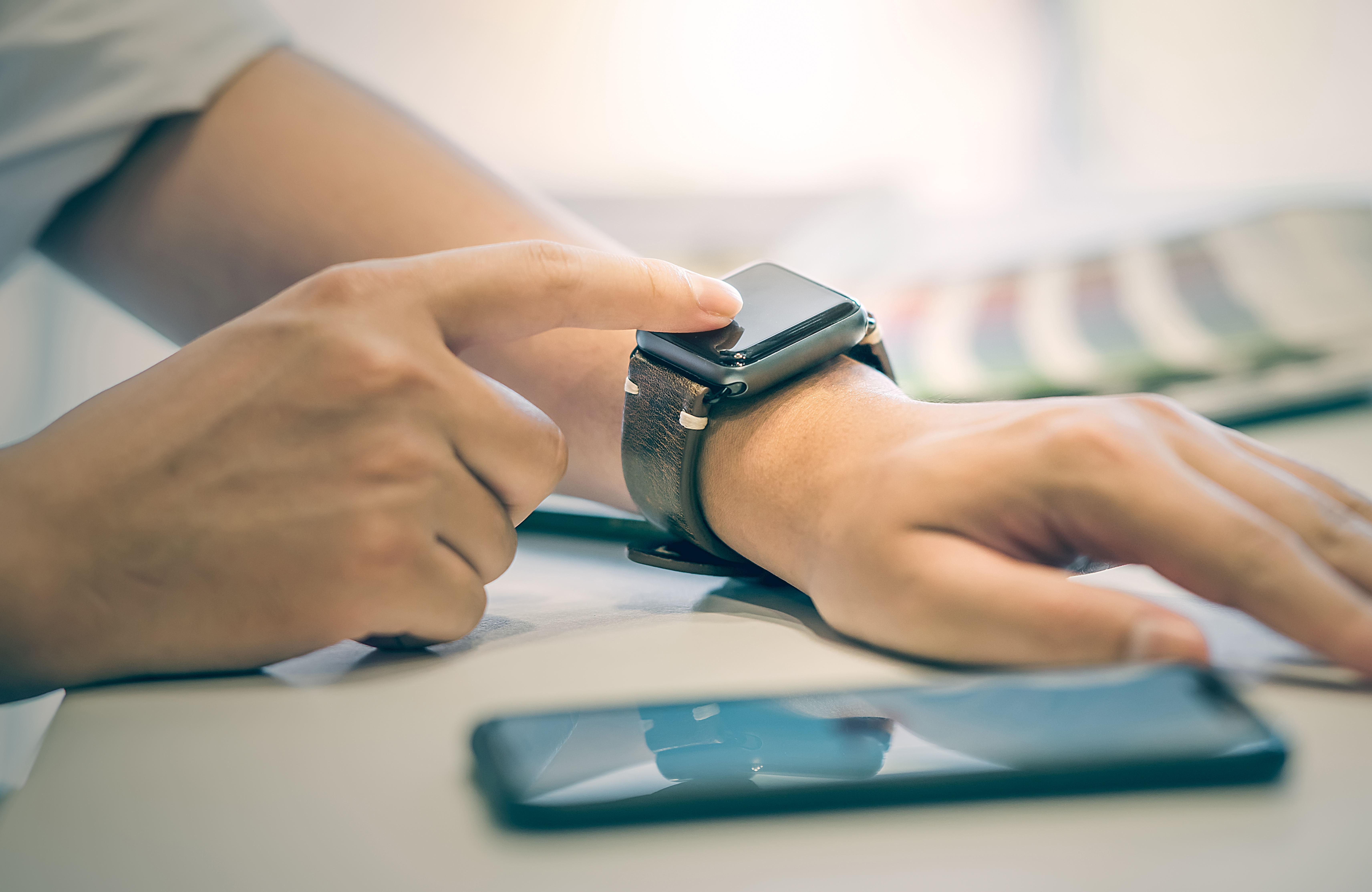
The fitness tracker on your wrist has quietly been turning from an electronic watch with a few cool features into something closer to a medical device, and AI is accelerating this change. Sensors such as those tracking heart rate, sleep, and body temperature have been increasing in accuracy for years, but for the most part the data they produce has been interesting yet largely non-actionable. What does the average user really get out of knowing their heart rate is 65 bpm and their readiness score is 80 out of 100? AI is changing that. For the first time, this vast and increasingly accurate data stream can be analyzed at scale, and the insights that are emerging are quietly revolutionary.
Detecting illness Before symptoms appear
Research has documented that even a common illness can produce early warning signs a full day before a person feels ill. Some of the most common signals are elevated core temperature and disrupted sleep patterns, both of which today’s smartwatches can already detect. So why does a single day’s warning matter? Because you may already be contagious. For nurses, doctors, and others who care for vulnerable people, the implications are striking. Imagine a doctor working in a small practice, seeing 25 patients a day. They’re uniquely exposed to infection, and when infected, uniquely positioned to pass it on to the most vulnerable people they treat. Now imagine that doctor had been wearing a device that flagged the infection, so they didn’t spend the day passing their illness to every patient who came in. Multiply this across a national healthcare system, and the number of preventable infections and deaths each year would be significant. AI improves this by making detection more accurate. Sleep patterns and core body temperature fluctuate for many reasons, including alcohol, caffeine, a heavy meal before bed, and jet lag, all of which create noise. But as AI evaluates ever larger volumes of data with increasing accuracy, that noise becomes easier to see through, and false positives and false negatives continue to decrease.
The longer horizon: Alzheimer’s and chronic disease
But why settle for a single day’s warning when wearable devices might soon detect the onset of illness years, even decades, before the first noticeable symptom? A 2025 review of sleep research links Alzheimer’s and other forms of dementia to detectable changes in sleep patterns more than a decade before recognizable symptoms begin. The link appears to run through deep slow-wave sleep, the part of the sleep cycle where the brain clears out metabolic waste, including the proteins that clump into Alzheimer’s plaque. Newer treatments can now help remove this plaque buildup and slow the disease’s progression, extending a person’s healthy lifespan. While major wearable manufacturers don’t yet claim to detect Alzheimer’s, Apple Watches have tracked sleep-cycle stages since 2022, and that measurement has grown more accurate over time. If that trend continues, it seems likely that Alzheimer’s will be detectable through a smartwatch within the next several years.
The data problem AI solves
These use cases are just the beginning. Sensors on smartwatches grow more precise with each generation, and hundreds of millions of people wear them every day. IDC’s Worldwide Quarterly Wearable Device Tracker counted 164 million smartwatches sold worldwide in 2025 alone. That volume of health data would have been unmanageable in 2020; analyzing it at any meaningful scale or accuracy would have verged on impossible. But with the buildout of data centers and advances in AI, today’s models can process this data efficiently, surfacing patterns no human could have spotted. If a person’s near-continuous stream of health data spanning years could be matched with their health records, and that approach scaled to tens of millions of people, the resulting insights would be substantial. Faint warning signs never considered before could be matched to the diseases they precede, long before the first noticeable symptom emerges. Integrating constant health monitoring and early detection into the medical system would shift it from reacting to emergencies to preventing them. Catching issues early is almost always the cheaper option, both financially and in terms of suffering. It’s the difference between finding cancer early, when a minor procedure can treat it, and finding it once it has spread, requiring grueling chemotherapy and years of costly treatment.
The barriers worth naming
Clearly there are legal, ethical, and logistical barriers to tracking a person’s health data for years, especially when matching it to their medical records. Many people will justifiably have concerns about companies accessing their health data, viewing the risk of data leaks and Big-Brother-style surveillance as not worth the upside. But many people already buy these devices for the health benefits they believe they offer, and deeper integration would only make that benefit more powerful. Data accuracy and AI hallucinations remain real concerns, but both sensor quality and AI reliability have improved rapidly and should continue to do so.
Where this is heading
In the long run, it seems inevitable that wearable devices and AI-generated insights will be deeply integrated into healthcare. Today’s system relies on overworked doctors who know little about the patient in front of them, glancing at a medical history before deciding how to proceed. Instead, healthcare should run on a system that holds a deep well of medical data on each patient, understands their individual baseline, and uses that data to inform diagnosis and next steps. That shift would turn healthcare from a point-in-time reaction to a crisis into a continuous, preventative system, one that saves both money and lives.