

Apple used this cycle to launch its first foldable iPhone, the iPhone Duo, alongside the iPhone 18 Pro family, Apple Watch Series 12 and Ultra 4, AirPods 5 and to widen the Apple Intelligence and Siri AI story across the range. The iPhone Duo is the flagship, a test of whether design, ecosystem and premium positioning can reshape a segment that has largely failed to appeal to the mainstream consumer.
Pricing was at the center of the event. At a time when we expected prices to rise beyond what consumers are comfortable paying due to memory costs, Apple held its increases below what we expected. The iPhone 18 Pro arrives at $1,199 and the Pro Max at $1,299, each only $100 up from last year (we expected at least a $150 increase). The company kept the starting price of its new Apple Watch Series 12 and Ultra the same as last year ($399 and $799). AirPods 5 bring active noise cancellation to a $129 entry point, $50 below the $179 price of the noise-cancelling AirPods 4. The foldable, Apple’s most expensive iPhone yet, starts at $1,999 versus an industry expectation of $2,499, which was the biggest surprise of all. Apple expanded the number of products it offers at mainstream prices and opened a super-premium tier at the top, all in a single keynote.
Apple Watch and AirPods strengthen the ecosystem
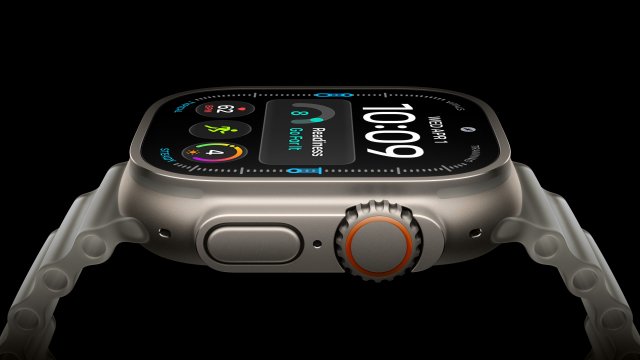
Apple Watch Series 12 and Ultra 4 put health sensing at the center. Both use the Apple S11 chip and a redesigned sensing system that reads heart rate every five seconds and heart-rate variability every five minutes, enough for continuous measurement rather than the isolated readings of previous versions. The new Readiness score combines training load, vitals and sleep quality, and the redesigned Health app adds Insights, Longevity and a Health Age metric, with Apple Intelligence underneath it. The proposition is moving from measurement toward interpretation and guidance, and looks to bring Apple into line with fitness-focused devices and services such as Whoop.
Audio Intelligence features on the watches, designed to help you hear what you missed (Live Rewind), capture sounds (Sound Recognition) or capture notes (Siri Recap), find Apple attempting to walk a fine line between always-listening ambient AI computing and its desire to respect users’ privacy.
AirPods 5 apply the same pricing logic lower down the range. The $129 model brings ANC to the entry point, and the $149 version adds volume swipe, wireless charging and an extra hour of battery. Apple says the new ANC is 50% better than its prior open-ear model with ANC. Lowering the entry price pulls more people into a companion device they rarely give up.
iPhone 18 Pro Series reinforces the premium core
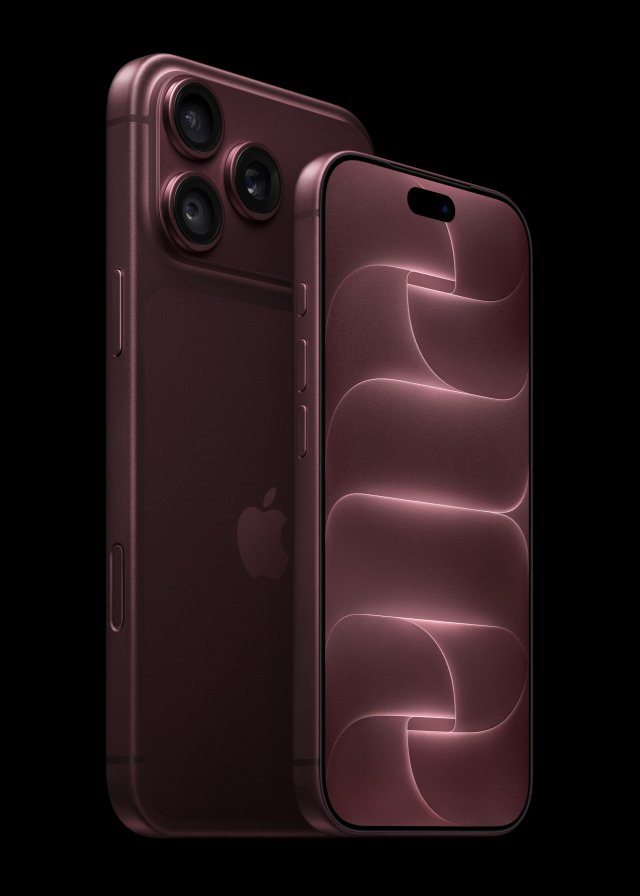
The iPhone 18 Pro and Pro Max defend the conventional flagship through performance, imaging and AI. The A20 Pro runs on-device Apple Intelligence, with Private Cloud Compute handling heavier work, and the 48MP Fusion main camera adds a physical variable aperture as wide as f/1.48. The most notable addition is Apple Reference Image, which signs pixel-level data at the sensor so a user can prove a photo was captured on the device and not altered. These products hold the premium core in place while the Duo enters above it, the Pro at $1,199 for 256GB and the Duo at $1,999 for the same storage.
18 Base Model moves to spring, redefines cadence
While the spotlight is on the Duo today, an important factor is the silent omission of the 18 base models. Apple’s shift of the base iPhone 18 to spring is a portfolio decision, decoupling the base models from the premium lineup in the fall. According to IDC, the last two base iPhone launches drove 16% of Apple’s total shipments in their first two quarters, though as lower-ASP devices their share of revenue runs below that unit figure. The new cadence allows Apple to even out its performance seasonality throughout the year and give each line clearer positioning.
Apple has also diversified its iPhone lineup into six different models, widening its demographic reach. The six are clearly grouped into two categories: the premium line (Pro, Pro Max, and Duo) launches in the fall; the budget-friendly line (base, E, and Air) follows in the spring. Each wave of devices gets a clear commercial narrative instead of six SKUs competing for the same spotlight.
iPhone Duo changes the foldables equation
The iPhone Duo is a polished piece of first-generation hardware. It positions foldability as a finished product rather than a work in progress. It pairs a 7.6-inch internal Super Retina XDR display with a 5.4-inch external one and runs on the A20 Pro with a dedicated display engine and a custom titanium hinge of more than 100 components, high-strength glass and a nano-texture finish meant to cut glare and play down the crease.
The software is the more differentiated part, with fluid transition from closed to open, intuitive execution of side-by-side apps, paired apps for repeated workflows, content movement between them, use in partly folded orientations and a redesigned standby, with Apple Pencil USB-C support due later this year. The point is to make the larger display more useful in day-to-day use rather than just feeling like a bigger phone. As with any first-generation foldable, the open questions are hinge and display durability over time and how the crease and added weight hold up in daily use.

Pricing starts at $1,999 for 256GB and passes $3,000 at 2TB of storage. That entry sits $500 below the $2,499 the market expected, and at roughly 1.6 times Apple’s non-foldable iPhone ASP of around $1,209. IDC still puts the blended iOS foldable ASP higher once storage mix is counted. Apple has not built a mass-market device. It has created a premium product for high-value iPhone users, which lets the Duo lift both foldable volume and Apple’s premium mix.
A value opportunity, not a volume-led category
IDC’s forecast explains why the Duo can matter even if foldables stay a small share of the market. Worldwide foldable value grows from $26.7 billion in 2025 to $42.0 billion in 2026 and $68.2 billion by 2030, a 20.6% CAGR from 2025 to 2030, while units rise from 20.3 million in 2025 to 35.8 million in 2030. Value grows faster than volume, which is what makes the segment worth Apple’s attention. Foldables move from 2.2% of global smartphone units in 2026 to 3.1% in 2030, but their revenue share climbs from 6.9% to 10.0%.
Apple does not need unit leadership for the Duo to pay off, though its design and price could deliver that as well. Supply may be the initial constraint, as Apple’s exacting standards make the unit hard to manufacture in large volumes at the start. We expect the company to ship roughly ten million units in the first 12 months. With Android foldable units forecast to fall this year, IDC expects Apple’s entry to be the main driver returning the segment to growth. The gap between value and unit share is the key: Apple can take a disproportionate share of category revenue by setting the premium reference point.
The China Test
China is the toughest test for the Duo, and also its clearest value opportunity. Huawei led the market with 79.4% of foldable units and 82.2% of value in the second quarter of 2026, backed by an established range, market familiarity and channel strength. IDC projects iOS foldables in China to reach 2.0 million units and $4.9 billion in value in 2026, rising to 4.4 million units and $10.3 billion by 2030, with Apple’s share of China foldable value growing to 50.8% and its unit share to 39.7% over the same period.
Apple leads on value well before it leads on units, which fits a premium entry priced above the rest of the market. The requirement is execution: industrial design, durability, display quality and app support strong enough to trade buyers up in a market that already has credible alternatives. If it gets that right, Apple can take a meaningful share of category value, helped by its standing as an aspirational brand. Get it wrong, and Huawei’s entrenched lead and China’s support for homegrown brands could hold the Duo to a niche.
What the September lineup signals
Taken together, the lineup reads as one strategy: AirPods lower the barrier to a premium feature, Apple Watch adds health value while holding price, the iPhone 18 Pro defends the premium core with measured discipline, and the iPhone Duo opens a new high-value tier below the price the market expected. Each move serves a larger active installed base, more multi-device ownership and stronger ecosystem attachment, with Apple Intelligence and Siri AI as the connective layer and on-device processing supporting the privacy story.
The real test for Apple is whether it can make foldables a more valuable category, own the defining premium product and use that position to extend the economics of the iPhone portfolio. IDC’s forecast suggests it can, with Apple positioned to be a principal driver of category growth through 2030.
Getting there requires strong first-generation execution, a convincing software story, and a credible strategy in China. Deliver those and the iPhone Duo stops being a new form factor and becomes a margin engine and a mix lever, and a sign Apple can still shape a category it entered years after competitors did.