In my last blog, I explained that when your CMDB is a mess, AI makes that mess happen faster. The same principle applies when your Managed Service Provider (MSP) gets there first. MSPs are now moving fast. AI is now embedded across service delivery operations. IDC research shows how AI is shifting IT services away from labor-led delivery toward platform-led, outcome-based models. The smarter MSPs get to know your environment, the harder it becomes to challenge their pricing.

When MSPs deploy AI across service delivery, their per-unit costs fall. But contract rates rarely follow. Buyers who maintain an independent, cost-enriched CMDB can verify MSP-reported usage, identify idle resources, and negotiate from evidence rather than estimates. The good news is that the same data foundation that protects you in IT Service Management can also protect you commercially.

What MSPs are actually deploying

Every major MSP now has an AI platform. The table below shows what the leading providers are running and what it means for buyers.

ProviderPlatformWhat It Does
AccentureAI Refinery for IndustryBuilds and deploys industry-specific AI agent solutions using NVIDIA’s AI stack, now targeting over 50 solutions across telecommunications, financial services, and insurance.
AtosPolaris AIDelivers agentic AI capabilities for IT engineering and business functions.
CapgeminiGenAI OperationsAI-powered service desk and infrastructure intelligence. In 2026, Capgemini joined OpenAI’s Frontier Alliance to build and scale agentic AI workflows across enterprise operations.
DeloitteZora AIAgentic platform for business finance functions, leveraging NVIDIA AI.
DXC TechnologyOASISConnects the entire IT estate into a single trusted view, using AI agents and human expertise to anticipate issues and act before they affect the business.
EYEY.ai Agentic PlatformLeverages NVIDIA AI to enhance tax, risk, and finance operations.
FujitsuKozuchi AI AgentEnhances operational productivity across managed infrastructure contracts.
IBMConsulting Advantage / watsonx OrchestrateDeploys AI agents across HR, finance, and IT workflows, with a catalog of over 150 pre-built domain-specific agents and multi-agent interoperability across SAP, AWS, and other enterprise platforms.
InfosysAgentic AI Foundry (part of Infosys Topaz)Published case data shows 30–40% reductions in ticket volume for specific engagements.
KPMGKPMG VelocityAI-powered business transformation platform built for consultants.
KyndrylAgentic Service ManagementCombines a maturity model, structured assessments, and implementation blueprints to help enterprises move from traditional service operations to autonomous, intelligent workflows at scale.
McKinseyLegacyXAccelerates legacy infrastructure modernization using agentic AI.
PwCAgent OSA new operating system for orchestrating AI agents across enterprise functions.
TCSWisdomNextEnterprise AI platform delivering automation across managed services delivery with integrated AI orchestration capabilities.
WiproWeGA Studio / WEGAProvides pre-built accelerators, domain frameworks, and agentic AI toolkits across software engineering, cloud, data, and enterprise applications, with NVIDIA AI Enterprise integrated throughout.

This list is not intended to be exhaustive.

Agentic AI refers to AI systems that can autonomously plan and execute multi-step workflows. They do not just generate responses; they act on them. IDC research confirms that leading platforms now share a common architecture covering agent orchestration, model services, knowledge management, enterprise integration, and governance. This is no longer experimental. It is becoming the standard delivery model.

For buyers purchasing the same services under existing contracts, the commercial question at renegotiation is straightforward: if your MSP’s delivery costs are falling, are your contract rates falling with them? In most cases, the answer is no. MSPs are actively working to demonstrate additional value to justify maintaining or increasing their rates, and the ones doing it well have the data to back it up. Buyers who lack independent data do not.

What this means for managed services pricing

Factors pushing prices up

Agentic platforms are enabling always-on, outcome-based service models, which support premium pricing for higher-value outcomes, particularly in business process services. Demand is also growing for orchestration, governance, and multi-agent operations across IT and business functions. MSPs are also expanding into new customers and workloads, including mid-market segments that were previously too expensive to serve.

Importantly, not all customers will adopt premium agentic services. MSPs need to recoup their platform investment costs across a broader base, which adds further upward pressure on pricing across the board.

Factors pushing prices down

AI agents now handle monitoring, triage, root cause analysis, and remediation within defined boundaries, reducing reliance on people for routine tasks. Platform efficiencies compress the cost per unit of work, and performance in predictable scenarios is becoming more consistent.

Net impact for MSPs

AI platforms are compressing MSP delivery costs while enabling premium pricing for outcome-based services. The net result is stronger margin for MSPs, and a real commercial case for buyers who can prove what they’re actually using.

Important context for IT buyers

AI platforms are not free for MSPs to build and run. Infrastructure, integration, specialist skills, and ongoing maintenance all carry significant costs. Buyers should find out whether AI investment is listed as a separate line item or is absorbed into base rates at renewal.

The commercial model is also shifting.

Traditional time-and-materials and consumption-based pricing do not map well to how agentic services are actually delivered, which is one reason outcome-based models are gaining ground. Buyers who understand this shift and write contracts that reflect it will be better placed to share in the productivity gains, rather than fund them.

Where IT buyers are still losing ground

Three problems consistently arise at contract renewal.

1. Accepting the MSP’s usage data

Most organizations have no independent, current view of their own environment. IDC PeerScape research found that organizations regularly discover assets MSPs keep billing for even after they leave active use. Old virtual machines, unallocated storage, and devices that were never decommissioned are common examples. When the MSP’s AI platform generates usage reports, most buyers have no external check, so they accept the numbers.

2. Paying for unused infrastructure

In one financial services organization I worked with, a pre-renewal audit found 50 virtual machines switched off for more than three months, and 15 terabytes of storage with no active application attached. The MSP was billing for all of it. Removing those items from scope saved 48,000 euros a year.

3. No basis to challenge per-unit pricing

MSP contracts priced per virtual machine, per device, or per terabyte are only negotiable if the buyer can independently verify what is actually in use. Without that, the MSP’s numbers go unchallenged. This is also one of the reasons outcome-based pricing deserves serious consideration. When delivery is driven by AI agents rather than headcount, per-unit pricing often fails to reflect the true cost or value of the service.

The answer is still the same

IDC’s research on agentic AI in services concludes that the providers who win will be those who prove value transparently and build trust through governance, portability, and accountability. Buyers have a role to play in demanding exactly that.

Build an independent source of truth. A well-maintained, cost-enriched CMDB is your foundation.

Run a pre-renewal audit. Start 90 to 120 days before contract expiry, using independent discovery tools such as ServiceNow Discovery or Dynatrace. This lets you verify MSP-reported usage, identify idle resources, and challenge billing for unused infrastructure before you reach the negotiating table.

Get the contract language right. Include the right to conduct your own audits, tie billing to verified active use, and build in scope reduction mechanisms. Ask directly how AI deployment costs and efficiency gains will be shared. Providers who cannot answer that question clearly are worth watching.

Push for outcome-based models, and define outcomes broadly. Buyers who request transparent pricing, clear ownership terms, and outcome-based commercial structures will be better placed to capture value rather than pay for it. But make sure the outcomes you measure go beyond technical metrics. An MSP can meet every SLA target and still fail to deliver real business value. Build business outcomes, not just service desk targets, into the contract from the start.

The bottom line

IDC forecasts cumulative AI economic value of $22.5 trillion between 2025 and 2031. The MSPs listed here are investing heavily to capture their share of the market. The platforms they are building are not just delivery tools. They are becoming the primary way MSPs own the workflow and outcome layer in managed services.

IT buyers with accurate, independent data about their own environments are in a much stronger position to participate in that value rather than fund it. An accurate, cost-enriched CMDB is not an IT housekeeping exercise. In the age of AI-driven managed services, it is a commercial imperative.

Tom Collins - Senior Consultant, IT Sourcing & Benchmarketing - IDC

Tom Collins is a Senior Consultant in IDC’s IT Sourcing and Benchmarking practice, advising organizations on IT cost management, sourcing strategy, and technology procurement.

The way business buyers find and evaluate solutions has changed more in the last two years than in the previous two decades. The arrival of AI-powered search hasn’t just added a new channel. It has reorganized where discovery happens, who shapes the shortlist, and whether a brand even gets a chance to be seen. 

During a recent IDC expert panel, Addressing the Pipeline Conversion Gap, analysts examined the shift from traditional ranked search to AI-facilitated discovery and beyond. 

You’ve spent years perfecting your Google rank. Your buyers just stopped using Google.” — Roger Beharry Lall, Research Director, Advertising Technologies and SMB Marketing Applications at IDC

To capitalize on this new mode of discovery and capture the market before competitors, CMOs, digital marketing leaders, demand gen managers, and B2B marketers must pivot from search engine optimization (SEO) to a new discipline: answer engine optimization (AEO). 

AEO is not SEO with a new name 

AEO and SEO operate on fundamentally different logics. The SEO pipeline was built on a clear sequence: optimize pages for keywords, earn backlinks to build domain authority, and win placement in a ranked list on Google or Bing. The buyer clicks your link. From that point forward, you control the experience. 

AEO, also called generative engine optimization (GEO), operates entirely differently. Large language model (LLM) chatbots like Gemini or ChatGPT synthesize an answer before the buyer even sees the options. Brands that get cited in AI-generated responses aren’t necessarily those with the best keyword density. They’re the ones with a deep, authoritative, and interconnected content infrastructure. 

In SEO, keywords signal relevance. In AEO, context and content depth establish authority. An LLM evaluating whether to cite your brand isn’t scanning meta titles. It’s assessing whether your information ecosystem is comprehensive enough to trust. 

Treating AEO as an extension of existing SEO practice is the most common and most costly mistake marketers are currently making. 

Most organizations aren’t ready for the shift 

According to IDC Research Director Roger Beharry Lall, only 35% of organizations have enterprise-wide content capabilities. That means nearly two-thirds of B2B brands are structurally unprepared to succeed in the AEO environment. 

Enterprise-wide content capability means more than a well-maintained website. It means product information management (PIM) systems that are integrated and externally surfaceable. Engines must be able to parse your digital asset management (DAM) libraries. Knowledge bases and technical documentation need to be connected to public-facing repositories. 

Most marketing teams have optimized their digital presence for ranked search engine performance. AEO requires something more: deep connection layers into your full data stack, exposed to the platforms buyers are now using to form their views. That demands cross-functional reach that most demand gen teams haven’t had to develop before. 

And that’s only the half you can control. 

Reputation is the new discoverability asset 

The “dark funnel” describes the portion of B2B buyer discovery that happens inside AI systems, beyond a brand’s direct control. In the traditional B2B discovery model, channels like communities, social, PR, ratings and reviews, and advertising reached buyers directly. In the emerging model, those same signals flow through AI first. The buyer receives a synthesized view of your brand, one that draws on everything the internet says, not just what lives on your domain. 

Buyers asking an LLM about your company aren’t just getting your FAQs and product specs. They’re getting a response built from analyst citations, peer review websites, press coverage, forum discussions, and social media. All of it beyond your control. 

For CMOs, the implication is significant. Reputation management, earned media, analyst relations, and community presence are no longer solely the domain of PR. They are the foundations for AEO. 

The window for early movers is real 

Most organizations haven’t begun to address AEO, which is precisely what makes this moment significant. The brands investing in it now are doing so before the field gets too crowded. That won’t be true for long. 

In IDC’s conversations with CMOs this year, the organizations moving on AEO now share one trait: they’re planning 12-month content infrastructure investments, not 90-day campaigns. AEO isn’t a campaign. It rewards consistent, long-term investment in how a brand shows up across the information environments buyers use, not just the ones you control. 

One area to watch closely: in-LLM advertising. The field is still in its early stages, but all the major platforms are working out how to monetize their models. When they do, the data a user prompt carries, who the buyer is, what problem they’re solving, how urgently they need it. That data will give advertisers a level of unprecedented targeting precision, at exactly the moment a purchasing decision is beginning to form. 

When advertising models mature, they have the potential to shift meaningful control back to the CMOs and marketing leaders who are positioned to capitalize on it. 

Fixing the funnel for the age of AEO 

The pipeline conversion problem doesn’t start at the qualification stage. It begins the moment a buyer asks an AI chatbot which vendors to consider and your brand doesn’t appear in the answer. Fixing the bottom of the funnel matters. But the organizations that will succeed in the AEO era are those shining a light on the dark funnel and investing in discoverability at the top. 

IDC’s latest expert panel explores how AI is reshaping buyer behavior across discovery, evaluation, and purchase, and what marketing and revenue leaders must change to remain competitive. 

Interested in exploring more of Roger Beharry Lall’s research on AI-era demand generation? Contact IDC today. 

IDC - -

International Data Corporation (IDC) is the premier global market intelligence, data, and events provider for the information technology, telecommunications, and consumer technology markets. With more than 1,300 analysts worldwide, IDC offers global, regional, and local expertise on technology and industry opportunities and trends in over 110 countries. IDC’s analysis and insight help IT professionals, business executives, and the investment community make fact-based technology decisions and achieve their key business objectives.

There is a well-established playbook for calculating the return on an IT investment. Define a baseline, model the efficiency gains, project the cost savings, and present a number to the CFO. For most technology investments, that approach works.

Agentic AI breaks it.

Unlike conventional software deployments, agentic AI (systems that execute multi-step tasks autonomously, make real-time decisions, and interact with external tools and other agents) does not deliver a fixed, predictable output in exchange for a fixed, predictable input. Agents learn. They adapt. They make decisions autonomously across multi-step processes, interact with other systems and other agents, and generate value or risk that compounds in ways traditional ROI models were never built to capture.

The top barriers: limited visibility into long-term impact, undefined or inconsistent baseline metrics, and the absence of a dedicated AI value office or task force. Agentic AI does not solve these problems. It amplifies them.

The answer is not to stop measuring. It is to measure differently.

Why agentic AI demands a new value framework

The core challenge is that agentic AI value is nonlinear. A single agent interacting with a customer, a data pipeline, and a back-office process does not generate a tidy productivity percentage. It generates outcomes shaped by adoption quality, autonomy boundaries, feedback loops, and the quality of the data and processes the agent operates within.

Costs present an equally complex picture. Agentic AI spending spans LLM and SLM licensing, API calls, token consumption, and cloud infrastructure, but the larger drivers are often orchestration and governance. IDC’s framework identifies agentic AI cost as fundamentally behavioral, shaped by how agents are prompted, how often they invoke external tools, and how closely they are supervised. Assuming linear cost scaling is one of the more expensive mistakes an IT leader can make.

Risk adds a third dimension. In agentic systems, failures propagate. A misconfigured decision boundary in one agent can cascade across steps, tools, and downstream processes in ways that static risk models do not account for.

A six-pillar framework for maximizing business value

To address this, IDC has developed the Agentic AI Business Value Maximization Framework, a structured approach built around six pillars, with governance as the thread running through all of them.

Strategy. Agentic AI introduces autonomous decision-making, so strategy must define where autonomy is permitted and where it is constrained. The output is not a vague aspiration toward “better productivity.” It is a multi-time horizon road map with metric owners, shared across the organization, and tied explicitly to investment prioritization. Organizations that treat agents as tools rather than autonomous actors are setting themselves up for governance failures, not productivity gains.

Use case prioritization. Not every problem is an agentic problem. Deploying agentic AI on narrow, siloed tasks that deterministic automation handles perfectly well wastes investment and adds unnecessary complexity. IDC’s framework introduces prioritization dimensions specific to agentic contexts: multi-step reasoning requirements, dynamic decision-making needs, orchestration complexity, and the degree to which autonomy itself generates value. The output is a ranked, feasibility-adjusted use case portfolio, not a list of technically interesting experiments.

Value mapping. Value mapping anchors agentic AI investments in clear business outcomes and prevents the aimless experimentation that inflates AI budgets without delivering measurable results. Critically, agentic AI value is not static. It compounds as agents learn, adapt, and expand scope. Value mapping must account for the learning curve, not just immediate efficiency gains, and must incorporate non-financial drivers such as sustainability and customer trust alongside traditional financial metrics.

Expanded cost model. IDC’s framework calls for a dynamic total cost of ownership model that distinguishes capital expenditure from continuous, AI-specific operational costs, and that gives FinOps, legal, and financial governance teams the visibility they need to manage the complex, usage-based economics of agentic AI.

Risk adjustment. ROI for agentic AI should not be presented as a single point estimate. It should be scenario-based, tied to adoption trajectory, output quality, and timing assumptions, all assigned to explicit owners with documented confidence levels. Risk should be treated as dynamic, updated as real data replaces estimates, and modeled for the interdependencies that make agentic system failures systemic rather than isolated.

Continuous value optimization. IDC’s lifecycle analysis of agentic deployments finds that without active tuning, agent performance degrades as context shifts and edge cases accumulate. Sustained value requires treating agentic AI as an ongoing lifecycle management challenge, not a project to be completed and handed off to operations. That requires a dedicated Centre of Excellence with a strong governance cadence, defined standards, and the organizational mandate to enforce continuous optimization.

From framework to action

IDC’s Agentic AI Business Value Maximization Framework is designed to deliver six concrete outputs: a multi-time horizon autonomy road map, a ranked use case portfolio, a business value calculator, a dynamic TCO model, a scenario-based risk evaluator, and an agent lifecycle governance model. These are not aspirational deliverables. They are the minimum set of instruments an organization needs to manage agentic AI as a business investment rather than a technology experiment.

IDC’s framework analysis indicates that organizations that build this infrastructure now will extract more value from current agentic deployments and will be structurally better positioned to scale as the next wave of capability arrives.

Get in touch

If you are a Technology Provider and want to learn more about how IDC’s Business Value Consulting practice can help you build a rigorous, defensible framework for measuring and communicating the value of your agentic AI solutions, or explore ROI-focused go-to-market and lead generation tools backed by IDC research, reach out to start the conversation.

If you are a Technology User and want to learn more about how IDC’s Business Value Consulting practice can help your organization measure, justify, and maximize the business value of your agentic AI investments, reach out to start the conversation.

Andrea Siviero

Andrea Siviero - Senior Research Director, AI-fueled Business Strategies

Andrea Siviero leads IDC’s AI-Fueled Business Strategies Global Research Group, which examines how AI and other Emerging Technologies accelerates digital maturity, enables new business models, delivers measurable business value (ROI), supports practical use cases, and strengthens the organizational capabilities required…

When Kyndryl separated from IBM in 2021, it entered the market as a startup of 80,000 people. The scale was deliberate. Kyndryl launched as one of the world’s largest managed service providers from day one, with a mandate to help the world’s most critical systems run better and a mission to become an AI-first organization. The analyst relations function, led by Mark Terranova, Head of Analyst Relations for Kyndryl’s global technical practices, was central to that work from the start.

The motion was clear in theory: listen to the question, find the right analyst, deliver the insight. In practice, the volume made that model creak almost immediately.

“I don’t have one stakeholder,” Terranova says. “I have hundreds.”

Product teams wanted to know where markets were heading. Marketing needed independent validation for positioning. Executives needed fast, well-grounded answers before decisions got made without them. Every request was legitimate. Every one took time. And synthesizing a defensible point of view from IDC research, reading the reports, drawing the conclusions, translating the findings into something an executive could use, took weeks.

Decision-makers, Terranova notes, had stopped waiting for it.

The scale problem with traditional analyst relations

The challenge wasn’t a shortage of good research. IDC had long been Kyndryl’s first call for market sizing and independent validation. When a senior leader needed to know how large a market segment was, or how fast it was moving, IDC research was where that conversation started.

Traditional analyst relations runs on inquiry calls and relationship depth. A skilled AR professional knows which analyst to call, how to frame the question, and how to turn a conversation into a briefing document. That expertise is real and it takes years to develop. But it also runs sequentially, one stakeholder at a time, one research thread at a time, in an organization where the demand for intelligence was running in parallel across hundreds of conversations simultaneously.

“AI lets me respond to hundreds of people really fast,” Terranova says, “whereas before it would be one at a time. And again, I would get to them all if it would take me weeks.”

From relationship to platform

When Terranova joined the beta program for IDC Quanta, IDC’s AI platform built on its proprietary research and analyst intelligence, he recognized immediately what made it different from the general-purpose AI tools he had already been using.

The difference wasn’t the interface. IDC Quanta is built on a familiar conversational model, close enough to ChatGPT that his team picked it up without friction. That familiarity was deliberate, and Terranova sees it as a key part of what makes the platform usable at scale: his team had already spent nine months developing real prompt engineering skills, and Quanta’s interface met them where they already were.

“The confidence comes from trust of the vendor,” he says. “I trust IDC to give me good information.”

That trust matters in a way that’s easy to understate. General-purpose AI tools crawl the open web, which means they surface a mix of analysis, marketing material, and noise with no way to know which is which. IDC Quanta draws from IDC’s proprietary research corpus. Every answer is grounded in specific reports. Every insight points back to the analyst work behind it.

For Kyndryl, an organization that stakes its market position on being a thought leader in managed services and uses independent research to validate that position with customers, the distinction is fundamental.

“Everyone in the world knows IDC is the best at counting things,” Terranova says. “When you want to know how big something is, or how large it’s going to be, IDC is where you start.”

Intelligence that interacts

What Terranova values most isn’t just the speed. It’s the kind of intelligence IDC Quanta produces.

The platform doesn’t return a lookup list. It engages with the question. He can ask about a topic, then ask follow-up questions, and the tool generates new answers based on what he’s actually trying to understand, not just a list of related reports to go read somewhere else.

“The tool allows me to script my answer to what I actually need it to be,” he says. “I can interact with it. AI needs to interact with the human. That’s how you get good answers.”

That quality has practical consequences for how Terranova’s team operates day to day. In a meeting where an executive asks a question he hasn’t prepared for, he can open a browser window, query Quanta in real time, and come back with five pieces of supporting research in minutes. Some inquiries that previously required scheduling a call with an analyst, and waiting for that call to happen, can now be resolved on the spot. The analyst conversation still has value for complex or strategic questions. Quanta narrows the list of situations where that conversation is actually necessary.

“I don’t need an inquiry for this,” he can now say. “Here’s the answer.”

A function redefined

Terranova sees what’s happening at Kyndryl as part of a larger, faster-moving shift across the industry. He’s direct about where it leads.

The analyst relations teams that build fluency with AI-led intelligence workflows now will be the ones that outpace their peers. The analyst remains essential. They still talk to customers, still generate the underlying research, and still bring the kind of judgment that no platform can replicate. But the idea that insight only travels through a scheduled inquiry call is already fading.

“Those that adopt this idea and this methodology and this work habit,” Terranova says, “they will succeed.”

For Kyndryl, that’s not a prediction. It’s the work already underway.

割草机器人翻倍增长,擦窗机器人异军突起。清洁机器人行业原有竞争格局与发展逻辑已然重塑。国际数据公司(IDC)最新追踪报告数据显示,2026年第一季度,全球家用清洁机器人市场出货893.6万台,同比增长36.7%。其中扫地机器人市场出货656.3万台,同比增长29.4%,头部厂商在欧洲市场布局力度持续加大。

本文以 IDC 最新追踪报告为依据,深度剖析扫地、擦窗、割草、泳池机器人细分市场的关键节点,助力行业伙伴制定科学可行的发展战略。

扫地机器人:三个市场,三种打法

欧洲:全域加速本地供应链 + 前置仓布局

欧洲市场延续高景气,当期出货量 231.8 万台,同比大增 81.4%;德国、法国、意大利、俄罗斯、荷兰位列欧洲出货量 TOP5 经济体。作为扫地机器人市场渗透率最高、规模最大、增长最快的区域,国内头部厂商同步落地加大海运批量备货 + 扩建区域前置仓双策略,持续深耕本地供应链布局。

北美:线下渠道的决战

北美市场一季度出货量同比 + 5.7%,行业格局持续重塑:iRobot 本土份额持续下行,高端市场份额被中国品牌持续抢占。本土渠道加速变革,国产品牌加速进驻 Target、Best Buy 等主流线下商超,线下市场竞争尤为激烈。

中国:高端化对冲需求疲软

国内市场一季度出货小幅上涨 0.4%, 2025 年家电补贴透支前置需求,使得线上零售端需求承压走弱,一季度部分厂商受到企业集采拉动,有效对冲 C 端零售疲软缺口。国内市场产品结构持续向高端升级,市场均价由去年同期 422 美元攀升至 473 美元。

IDC 洞察:全球扫地机器人市场已经进入一国一策的阶段。欧洲拼供应链,北美拼渠道,中国拼高端。全球化运营能力,正在取代单一的产品力,成为决定厂商长期竞争力的核心要素。从一季度全球市场综合表现来看,行业增长已告别全市场普涨时代,海外市场比拼供应链建设与线下渠道深耕能力,国内市场依托产品高端结构升级夯实增长底盘,全球化运营实力逐步成为决定厂商长期竞争力的核心要素。落脚产品端,2026 年行业迭代重心聚焦活水洗地为代表的深度清洁技术升级。

割草机器人:97%增长的背后,是国产供应链的降维打击

2026 年一季度割草机器人行业景气度高增,整体出货量同比大涨 97%,产业加速向高端化、智能化迭代升级。无边界激光导航机型已成市场主流,出货占比达 82.5%。

IDC洞察:供给端决定了割草机器人的产品发展趋势。头部国产品牌凭借完备的技术积淀与本土化供应链优势,持续加码欧洲、北美核心市场布局,出货节奏稳步提速。与此同时,传统清洁龙头入局割草赛道,行业加速出清,中小尾部品牌逐步淘汰出局。一季度行业新品密集落地,新品聚焦小庭院、阳台草坪等细分场景,高端机型占比持续抬升。当前硬件升级高度依托国产全链条供应链,激光雷达、驱动电机、动力电池及整机代工均实现国产化配套。在长续航配置、RTK + 激光雷达 + AI 视觉多融合方案驱动下,割草机器人加速落地,深度融入全屋户外庭院智能化生态。

擦窗与泳池:被低估的细分市场

一季度全球擦窗机器人出货102万台,同比增长68.9%,海外市场增长提速。IDC观察到,这个市场的爆发有两个驱动力。一是国内”春节除尘”的季节性刚需;二是海外市场的开拓。行业新品持续迭代,在吸附力、贴边清扫、安全防坠等核心性能全面升级。伴随行业规范落地、国标正式推行,市场资源与份额加速向头部品牌聚拢,全年赛道有望延续高增长态势。

一季度为泳池机器人市场全年淡季,泳池机器人(含地上泳池清洁机器人、地下泳池清洁机器人、水面漂浮器)市场出货42.6万台,同比增长8.8%。在地下泳池清洁机器人,无缆产品占比提升至66.7%。国产厂商市场份额加速提升,产品布局聚焦高端赛道。与割草机器人产品类似,泳池机器人电机、电池、密封组件、传感器、整机组装均由国内供应链主导,产能充足、交付周期短,可以极大程度支持厂商海外市场出货。IDC观察到,伴随海外泳池机器人传统旺季到来,泳池机器人出货在未来两季度将保持稳定增长,供给层面,国内厂商依托完善的全链路供应链、成熟的电机与锂电配套,成本管控优势突出,叠加无缆方案、水下 AI 导航等前沿技术落地带来的产品力升级,在中高端产品线上竞争力持续走强。依托跨境电商与海外线下渠道持续深耕,国产品牌全球出货占比稳步抬升,市场份额延续提升趋势。

决胜2026:三大能力决定座次

一、强化技术研发优势,筑牢产品核心竞争力

持续加大割草机器人、泳池清洁机器人两大核心赛道的研发投入,充分发挥国产供应链协同优势,重点提升整机防水、防腐蚀、复杂地形适应及陡坡通行能力,不断优化户外场景使用体验。针对缠绕、漏割、污渍识别不精准等行业痛点开展关键技术攻关,推动产品性能持续升级。以差异化创新技术构建竞争壁垒,摆脱同质化价格竞争,通过技术领先优势提升高端产品溢价能力。

二、完善全品类产品布局,搭建权价格段体系

顺应海外市场多层次消费需求,打造高端、中端、入门三级产品梯队,实现全价格带覆盖。高端产品聚焦智能化与高性能配置,搭载先进导航系统、长续航能力和智能管理功能,重点开拓欧美高端庭院存量替换市场;中端产品兼顾性能与性价比,满足主流家庭用户需求;入门级产品通过优化配置和成本结构,积极布局中小庭院及新兴市场。

三、落地本地化运维体系,补强海外售后能力

把握欧美市场销售旺季窗口期,加快海外本地化服务网络建设,依托海外仓体系建立区域备件储备中心,实现维修配件就近存储与快速调拨,有效缩短产品返修周期,提升服务响应效率。积极拓展本地化售后服务资源,优选签约维修服务商和线下服务网点,构建覆盖重点市场的售后保障体系。同时上线多语种客服平台和远程故障诊断服务,为用户提供及时、专业的技术支持,切实解决海外用户报修流程复杂、维修周期长等问题。进一步完善产品质保政策和退换货机制,以高质量售后服务提升用户满意度和品牌口碑,增强客户黏性,促进复购增长。

进一步交流

如需了解更多IDC相关研究或进一步与我们沟通,请点击此处与我们联系。,我们将安排专人与您对接,为您提供定制化的市场洞察与咨询服务。

Claire Zhao

Claire Zhao - Research Manager

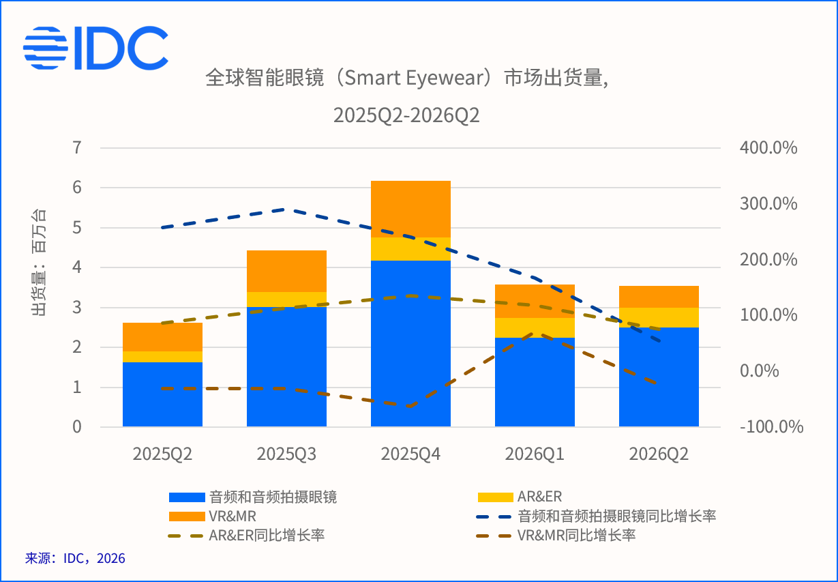
Claire Zhao is a Research Manager for Client System Research of IDC China. She is responsible for conducting research on the augmented reality (AR)/virtual reality (VR) market, and vertical analysis for the PC market. She started working for IDC China as…

The persistent presence of unauthorized device channels in the Middle East and Africa (MEA) is frequently mischaracterized. To many observers, the grey market appears to be the product of loose regulatory frameworks, complex trader networks, or opportunistic supply chain manipulation.

IDC data tells a more straightforward story. The grey market in MEA runs on basic supply and demand. When official channels cannot serve a population’s actual demand, others move in to fill the gap.

The global chasm: Extreme per-capita underserving

The device shortage in MEA becomes uniquely striking when examined through a global, per-capita lens. IDC shipment data across all major regions shows that MEA is not merely underserved relative to developed markets. It ranks last among every significant global region in per-capita notebook availability.

Using 2024 global population figures and IDC shipment data for the same year, the table below shows notebook shipments per capita.

Notebook Shipments Per Capita, 2024 (Per 1,000 People)

Global RegionUnits Shipped per 1,000 People
United States206.9
Canada142.5
Western Europe117.8
Japan113
Central & Eastern Europe42.7
Global Average41.6
Asia-Pacific (APeJC)34.2
People’s Republic of China (PRC)32.2
Latin America30.3
Middle East & Africa (MEA)6.9

What stands out in MEA is the sheer size of the gap. While the United States moves 206.9 notebooks per 1,000 people (30 times higher than MEA) and Western Europe ships 117.8 per 1,000 (17 times higher), MEA sits at a fraction of those figures. Even Latin America, a developing market facing its own distinct affordability challenges, ships 30.3 units per 1,000 people, which is 4.4 times higher than MEA.

Western Europe alone ships more PCs annually than the entire Middle East and Africa combined, despite MEA holding a population of over two billion people. When official channels deliver far less than the population requires, the structural inadequacy creates an unavoidable supply crisis.

The shipment story: Stagnant supply vs. accelerating demand

The fundamental driver of this imbalance is a stark divergence between flat allocation and a rapidly growing, increasingly digital population.

  • Flat official supply: From 2020 to 2024, MEA PC shipments remained essentially flat, moving from 12.2 million units to 13.7 million units, a marginal gain of 1.5 million units over four years. In contrast, the Asia-Pacific (APeJC) region expanded its shipments by 3.8 million units (a 10.2% growth rate) during the same period.
  • The demands of a two-billion-person market: The MEA region encompasses 73 countries (54 African nations and 19 Middle Eastern countries). A current allocation of 13.7 million units per year serves less than 1% of this population annually.
  • Strong macroeconomic drivers: The region’s projected growth rate sits at approximately 5.2% for 2025 [IDC projection]. Demand is accelerating via comprehensive government digitalization programs, bulk educational procurement initiatives, rapid SMB expansion, and a younger, digitally native population that views computing access as a basic utility.

Major global manufacturers systematically prioritize shipments to developed markets where margins are higher and procurement infrastructure is established. This leaves MEA as a highly fragmented market served by thin authorized retail channels that cannot lower prices to match what price-sensitive institutional or individual buyers can afford. That gap is where the grey market steps in, not as a parasite, but as a rational market correction.

The 13,500-kilometre journey: The economics of arbitrage

A recent market visit illustrates how this alternative supply chain functions in practice. A pallet of 20 factory-sealed, genuine laptops, originally destined for an Australian hospital, surfaced on a hand cart rolling through Dubai’s Deira trading district, its original shipping labels and valid serial numbers still completely intact.

This journey from Sydney to Dubai illustrates the economic mechanics of diversion:

  • Institutional discounting: Large public entities, hospitals, and universities in developed nations secure substantial volume discounts. A bulk order in Australia might secure a per-unit price well below retail. These price differentials give market players an incentive to rebalance and ship to a better-margin market.
  • Authorized MEA barriers: These deep institutional discount tiers are unavailable to commercial distributors in MEA, who are bound by strict brand pricing floors that keep devices uncompetitive.
  • The arbitrage opportunity: Intermediaries leverage the gap between the Australian institutional discount and the going rate on Dubai’s grey market (USD 700 to USD 790).

Grey Market Intermediary Cost Structure (Per Unit)

  • Acquisition Cost (Post-Diversion): USD 550
  • Air Freight (Sydney to Dubai): USD 35 to USD 45
  • Customs, Handling and Fees: USD 15 to USD 20
  • Total Landing Cost (Deira, Dubai): USD 615
  • Estimated Gross Margin: approximately USD 85 per unit

Multiplied across dozens of weekly consignments, the business model is sustainable. The air freight corridor remains highly resilient. Even when global freight rates fluctuate, the 30% acquisition discount provides traders with more than enough margin to absorb premium shipping increases.

Dubai as the velocity hub

Dubai’s position as the primary grey market distribution hub for EMEA is backed by 40 years of established trader networks, pragmatic customs infrastructure, and highly liquid wholesale buyer bases. A consignment arriving at Dubai International Airport can be cleared, moved to a warehouse, broken down, and partially distributed within 24 hours. From there, onward shipments rapidly penetrate markets across Africa, South Asia, and the wider Middle East where authorized retail channels either do not exist or are priced out of reach.

Strategic imperative for manufacturers: Serve or cede

The grey market does not generate demand. It responds to the structural scarcity that authorized channels fail to address. Schools in Nairobi, government agencies in Cairo, and SMBs in Dubai must navigate an environment where official channels systematically under-allocate hardware relative to the population.

Hardware manufacturers looking to reduce grey market activity face two clear strategic choices:

  • Option 1: Restructure supply and pricing. Find avenues to lower official pricing floors and aggressively scale shipment volumes directly to MEA to close the per-capita gap with other developing regions like Latin America.
  • Option 2: Cede the market volume. Accept that alternative grey channels will continue to fill the supply vacuum, maintaining visibility and resilience as an essential supply mechanism for the region.

A rapidly digitalizing region of two billion people cannot be sustainably served by 13.7 million authorized notebooks per year. Until global allocation models change or official pricing adapts to local realities, the mathematics of scarcity ensures that the grey market will remain a fixture of the MEA tech ecosystem.

Isaac Ngatia

Isaac Ngatia - Senior Research Analyst, Mobile Handsets, Systems & Infrastructure Solutions, Middle East & Africa

Based in Dubai, Isaac T. Ngatia is a senior research analyst within IDC's Personal Computer Trackers team for the Middle East, Turkey, and Africa (META), where he is responsible for conducting all annual, semi-annual, and quarterly research on PCs and…

Last week, a select group of senior print and imaging executives gathered in London for IDC’s Print and Imaging Leadership Dinner. During this invitation-only evening, a conversation unfolded between IDC analysts and the people shaping the industry, moderated by IDC’s Sandra Ng.  

What came out of that dinner? Some of the discussions reaffirmed what many already suspected. But some of the insights revealed will fundamentally change how forward-thinking vendors approach the next 18 months. Here’s a taste of what was discussed, and why you’ll want to be in the room for one of IDC’s executive dinners next time.  

The buying committee has expanded, and most vendors are still selling to the wrong people  

Two years ago, a print deal sat with IT and procurement. That’s no longer the world we’re operating in. IDC’s 2026 European Print Survey, covering 2,000 organisations across eight markets, revealed that the stakeholder landscape has shifted dramatically. The conversation that used to happen in one room now happens in four.  

The implications for how vendors structure their go-to-market approach are significant, and the dinner surfaced a very specific playbook that the those gaining the most ground are already executing. We’ll leave the details for the briefing room.  

Security just overtook cost reduction as the #1 investment driver in print. 

A striking 24% of European technology buyers now cite security and compliance as their primary reason for investing in print. That puts it ahead of both cost reduction and productivity.  

This is more than a repositioning opportunity, as it moves the conversation to a different level within the organization,  with a different buyer. Those in the room heard exactly which messaging reaches the CISO, which regulatory triggers are opening budgets right now, and where the hardware story needs to evolve to stay relevant.  

IDC predicts that 40% of worldwide new office MFP shipments will be classified as AI MFPs by 2027. The vendors with a credible roadmap published today will be the ones with a strategic seat in 24 months. Those without one are already behind.  

The buyer has already formed a view before your sales team picks up the phone  

This was the session’s sharpest insight, and the one most likely to keep vendor CMOs up at night.  

GenAI-sourced web traffic grew 1,200% between 2024 and 2025. Two in three searches today end without a single click. Buyers are shortlisting vendors, forming preferences, and making preliminary decisions inside AI assistants, before they’ve seen your website, opened your brochure, or taken a sales call.  

IDC’s Gala Spasova gave a demonstration that stopped the room. When major AI assistants were asked the questions a head of digital workplace would actually type, around 30 vendor names came back consistently. Not a single print OEM appeared. When the question became print-specific, all the familiar names showed up.  

The print category is owned. The workplace category, where your buyers are actually looking, is invisible.  

What it takes to change that, and how fast it compounds once you do, was laid out in detail at the dinner. The short version: it’s not pay-to-play, and the window to act is narrow.  

Three places the money is actually moving in 2026, and the 12–18 month window you can’t afford to miss  

IDC analysts Jacqui Hendriks and Gala Spasova mapped out three near-term growth areas where European buyer investment is already building, from value-add software and services through to Intelligent Document Processing and a sustainability play that changes both the buyer and the budget.  

The most time-sensitive of these? A three-way alliance opportunity, vendor, channel, certified refurbisher, that’s unserved by the larger SIs and telcos, but not for long. European refurbished device shipments grew 28% in 2025. Demand is running well ahead of vendor readiness. The potential of such a model was discussed at the dinner in some detail.  

The commercial model shift that separates the winners  

The evening closed with a discussion on what’s actually different about the vendors capturing European growth. It’s not just what they’re selling. It’s the contracts they’re willing to sign, the conversations they’re prepared to have, and the partnerships they’re building now.  

Roberto Alunni and Phil Sargeant laid out, with uncomfortable precision, the behaviours that distinguish vendors gaining ground from those defending yesterday’s revenue. Some of it is replicable quickly. Some of it takes 18 months of investment to build. All of it was on the table.  

Were you in the room?  

If you weren’t at IDC’s Print & Imaging Leadership Dinner, or if you’re wondering how to get on the guest list for the next executive dinner, now is the time to reach out. Events like this are where the defining conversations happen: the information and insight that doesn’t make it into LLMs and the strategic debates that shape how the market moves, alongside networking and the connections that open doors.  

Whether your focus is European print and imaging, AI-driven workplace transformation, digital sovereignty, channel partnerships, or any of the many other topics shaping the European technology landscape, IDC brings together the senior leaders and the research to drive the conversation forward.  

To find out more about IDC’s European print and imaging research programme, or to join the conversation at our next event, contact your IDC representative or simply fill in our contact form.  

IDC’s European print and imaging research covers 2,000 organisations across Czech Republic, France, Germany, Italy, Poland, Spain, the UK and the Nordics, across 15 verticals. The 2026 European Print Survey data underpinning this dinner is available to IDC clients and select briefing participants.  

Phil Sargeant

Phil Sargeant - Senior Program Director, Imaging and Hardcopy Devices and Document Solutions, European Region

Phil Sargeant is IDC’s leading expert in the field of imaging, hardware devices and document solutions. As senior program director, he researches and reports on the key aspects of the multifunction, production and large format printer markets and is also…
Gala Spasova

Gala Spasova - Senior Research Manager, Europe Smart Office and EMEA Content & Knowledge Management Strategies

Gala Spasova is a senior research manager in IDC's Future of Workplace & Imaging team. Her research focus is on Hybrid working, Smart Office technology and Content & Knowledge Management Strategies in EMEA.  Spasova is also part of the European…
Jacqui Hendriks

Jacqui Hendriks - Associate Research Director, European Print Vendor Transformation Strategies

Jacqui Hendriks, Associate Research Director, European Imaging, Printing and Document Solutions Jacqui Hendriks heads up IDC's European Print Vendor Transformation Strategies research program, in collaboration with various IDC research domains. Hendriks has more than 30 years of experience of working…
Roberto Alunni

Roberto Alunni - Senior Research Director, EMEA Data & Analytics

Roberto Alunni is a Senior Research Director at IDC for imaging, print, and document solutions research across the EMEA region. He is responsible for strategic and operational implementation and leads an international analyst team. He is a specialist in imaging…
Sandra Ng

Sandra Ng - Senior Vice President, WW and APJ Research

Sandra Ng is Senior Vice President at IDC and the Global Domain Leader for Devices, Consumers, Imaging, and Japan. Based in Singapore, she advises technology buyers and vendors worldwide on technology investments, financial priorities, and go-to-market strategies. She leads a…

过去,ERP帮助企业把业务“管起来”;现在,AI正在让ERP把业务“跑起来”。

国际数据公司(IDC)于2026年5月发布的《IDC 中国AI增强的企业级ERP市场份额,2025:AI增强驱动下的中国ERP市场格局》(Doc# CHC54272126,2026年5月)报告显示,2025年,中国 AI-enabled ERP 市场规模达到3.157亿美元,同比增长96.1%。这一高速增长表明,中国企业对ERP智能化升级的投入正在快速释放,AI能力正成为企业管理软件市场的新增长引擎。

需要说明的是,IDC对于 AI-enabled ERP 市场的统计维度,聚焦于ERP场景中由AI产品、AI能力或AI相关模块所产生的收入,不包括传统ERP产品本身的收入。因此,该市场规模反映的是企业在ERP智能化升级过程中,对AI能力的新增投入与采购规模,而非整体ERP软件市场规模。

这一高速增长的背后,并非简单的功能叠加,而是ERP产品逻辑正在发生根本性转变。企业不再满足于用ERP记录发生了什么,而是希望系统能直接参与业务执行。市场的快速扩张,恰恰反映了这种需求侧的变化正在倒逼供给侧的产品重构。

ERP正在从“记录系统”走向“执行系统”

传统ERP的核心价值,是流程标准化、数据集中化和管理可视化。企业通过ERP记录业务、管理流程、沉淀数据,让组织运行更加规范。但AI进入ERP之后,系统的角色正在发生变化。AI-enabled ERP不再只是回答 “发生了什么” , 而是开始帮助企业判断 “接下来可能发生什么” “应该如何处理” “哪些任务可以自动完成” 。

在财务、供应链、生产、采购、销售和经营分析等场景中,AI能力正在帮助企业实现需求预测、异常识别、资源调度、智能推荐和自动化执行。ERP的价值,也正在从“管流程”走向“提效率、控风险、助决策、促执行”。

市场变化:智能体正在把ERP带入新阶段

当前,中国AI-enabled ERP市场的增长,主要来自企业对智能化运营能力的迫切需求。随着业务复杂度提升,企业不再满足于ERP系统对流程和数据的被动管理,而是希望系统能够基于实时数据进行分析、预测和行动建议。

生成式AI和智能体的成熟,正在改变ERP的产品形态和使用方式。自然语言交互、业务智能体、跨模块任务执行和自动化决策支持,使ERP从“人找功能”逐步走向“系统理解意图并主动服务”。

与此同时,AI更深入参与企业数据处理和业务决策,也带来了新的安全与合规要求。未来,权限控制、模型治理、数据安全、审计追踪和决策可解释性,将成为企业部署AI-enabled ERP时的重要考量。

AI-Enable ERP市场正在形成三条演进主线:

IDC认为,AI-enabled ERP的下一阶段发展,不是给传统ERP简单增加一个AI助手,而是围绕数据、流程、智能体和治理能力,重构企业软件的使用方式与价值边界。从近期头部厂商的产品演进方向来看,市场正在形成三条清晰主线。

第一,ERP入口正在从“功能菜单”走向“业务意图”。随着生成式AI和智能体能力的成熟,ERP系统的交互方式正在发生变化。未来,用户不再需要在复杂菜单中寻找功能,而是可以围绕业务目标,通过自然语言交互、任务触发和智能推荐完成相关操作。例如,SAP围绕Autonomous Enterprise推出相关产品组合,用友发布YonClaw企业超级智能体,金蝶推出灵基企业AI操作系统以及浪潮数字企业发布的Mano企业级智能体平台,均体现出厂商正在将AI能力从单点工具延伸到业务入口和流程协同层。IDC认为,面向业务意图的智能交互,将成为AI-enabled ERP提升用户体验和业务效率的重要方向。

第二,智能体正在从“辅助应用”走向“流程执行载体”。过去,AI在ERP中的应用更多集中在数据查询、内容生成、报表撰写和知识检索等辅助性场景;未来,智能体将更深地嵌入财务、供应链、生产、人力和经营分析等核心业务流程,承担分析、判断、调度、预警和执行等连续任务。企业对AI能力的关注,也将从交互体验和响应准确性,进一步转向其能否稳定、安全、可治理地进入业务流程,完成从洞察生成到任务执行的闭环。

第三,市场竞争焦点正在从“功能完整”转向“智能落地”。传统ERP竞争主要围绕模块覆盖、行业经验和实施能力展开;AI-enabled ERP时代,新的竞争焦点将转向数据基础、业务语义理解、智能体编排、流程执行能力、安全治理和行业场景沉淀。IDC认为,企业不会只为“有AI”买单,而会更加关注AI能力能否带来可衡量的效率提升、风险降低和决策改善。未来,能够将AI能力真正融入核心业务流程,并形成可复制行业实践的厂商,将在市场竞争中获得更大优势。

IDC中国企业级应用软件市场高级研究经理徐文婷认为,2025年中国AI-enabled ERP市场的高速增长,表明ERP智能化升级正在从概念验证进入加速落地阶段。由于该市场统计的是ERP场景下AI产品、AI能力和AI相关模块的收入,而非传统ERP产品收入,因此其增长更能反映企业对AI驱动管理软件的新增需求。未来,AI-enabled ERP将不再只是ERP的功能增强,而是企业智能运营体系的重要组成部分。随着生成式AI、智能体、云原生架构和行业数据能力进一步融合,ERP系统将在企业经营管理中承担更主动、更智能、更关键的角色,推动企业软件市场进入以智能化价值为核心的新阶段。

IDC 2026年中国软件和服务领域研究计划:

文中引用的数据与观点来自IDC最新发布的ERP市场研究报告。无论您是希望深入了解市场数据、探讨报告发现,还是有定制化研究需求,IDC中国分析师团队期待与您进一步交流。

请点击此处与我们联系。

Wenting Xu

Wenting Xu - Senior Research Manager

Wenting Xu, senior research manager with IDC China's Enterprise Application Research, focuses on research and analysis of the China enterprise system and software area. She provides intelligence and consulting services for local and multinational corporation IT vendors. Wenting has developed a deep…

Artificial intelligence has been part of the telecom conversation for years. What is changing now is its role and scale. 

AI is no longer limited to isolated use cases or innovation initiatives. It is increasingly influencing core infrastructure decisions, from data center strategy to network architecture and investment priorities. 

Across EMEA, telcos are moving from experimentation to more structured, large-scale adoption. 

AI investment in telecommunications is accelerating across EMEA 

AI and generative AI spending in telecommunications is growing rapidly. In EMEA, spending is expected to increase at a compound annual growth rate of 31.8% between 2024 and 2029. 

Most telcos are already using, or planning to use, AI and machine learning to optimize network operations, improve customer experience, and explore new revenue streams. 

At the same time, operators are becoming more pragmatic. There is increasing focus on aligning AI ambitions with what existing data, cloud, and operational capabilities can realistically support. 

AI is reshaping telco infrastructure priorities 

As AI adoption scales, it is beginning to reshape how telcos think about infrastructure. 

Data center investments are being driven by workloads such as AI inferencing and large language model training. These require high-performance, low-latency environments and are pushing telcos to rethink how compute, storage, and networking are designed and deployed. 

This is reflected in several shifts: 

  • Closer collaboration with hyperscalers and ecosystem partners  
  • Expansion of colocation and edge deployments  
  • Greater focus on GPU-intensive infrastructure  

Infrastructure is becoming more closely aligned with the need to support real-time, distributed AI workloads. 

How short-term ROI is shaping AI adoption in telecom 

While investment is increasing, telcos are prioritizing use cases that can deliver measurable value in the near term. 

Employee productivity, customer experience, automation, and operational efficiency are key focus areas. These areas offer clearer paths to return on investment compared to more experimental AI initiatives. 

This creates a balance between near-term impact and longer-term transformation goals, such as autonomous networks and more adaptive service models. 

Data and cloud foundations remain a key challenge for AI 

Despite strong momentum, many telcos are still working to align their underlying capabilities with AI ambitions. Strong security and data privacy protections are fundamental to ongoing telecom investment in AI capabilities. If a capability or vendor partner is not trusted it won’t be implemented in production. 

Challenges around data quality, data management, and cloud readiness can also practically limit the speed and scale of AI adoption. As a result, AI strategy is closely linked to broader transformation efforts, including modernization of data platforms and investment in hybrid infrastructure. AI capabilities often act as multipliers of existing capabilities. The better the foundation the greater the impact and ability to scale. 

What this means for telecom operators 

AI is becoming a cross-functional priority that connects network, IT, and business strategy. 

Infrastructure planning, partner selection, and operating models increasingly need to reflect AI requirements. At the same time, telcos are working more closely with partners to access capabilities, accelerate adoption, and manage complexity. 

As AI becomes more embedded, it is also influencing how services are designed and delivered, and how operators position themselves in the market. 

Download the full analysis 

AI is one of the defining trends shaping the telecom market. In the IDC eBook State of the Telco Market 2026, you’ll find detailed data, forecasts, and analysis on how AI investment, infrastructure, and operating models are evolving. 

Download the eBook to explore the data behind these developments and better understand how the telco landscape is changing. 

If you’re currently evaluating how AI will impact your infrastructure, operations, or partner strategy, our experts are happy to exchange perspectives. Whether you’re at an early stage or already scaling initiatives, we welcome the conversation. Get in touch with our team to continue the discussion. 

Chris Silberberg

Chris Silberberg - Research Manager, Global Telecom Operations and Monetization

Chris Silberberg is Research Manager for IDC’s global Telecom Operations and Monetization research. Chris’ core research coverage includes the evolution of telco monetization, customer experience, orchestration, and assurance capabilities. Telcos are at a crossroads, double down as utility providers or…

The story being written by the AI market is extraordinary by almost any measure. OpenAI’s revenue grew from $2 billion in 2023 to $20 billion in 2025. Anthropic’s annualized revenue run rate surged from $87 million in January 2024 to $30 billion by April 2026, a trajectory that Salesforce took 20 years to achieve. NVIDIA’s revenue grew eightfold from $27 billion to over $216 billion between 2023 and 2026, achieving that growth in just one-third of the time it took Apple to do so during its heyday between 2007 and 2015. By nearly every reported metric, the AI market is delivering growth at a scale and speed that defies historical comparison.

Yet a narrative has emerged about how much of that growth reflects genuine market demand and how much reflects the circular financing structures that have become a defining feature of AI infrastructure investment. Circular financing in AI describes investment structures where the same capital flows simultaneously as vendor payment and equity stake. A company funds its own customer’s revenue while also supplying that customer’s core infrastructure. The result is reported revenue growth that is real but not cleanly separable from investment activity. The answer matters enormously, not just for investors in AI infrastructure companies, but for every enterprise software vendor and technology buyer trying to make sense of what’s actually happening in the market.

Without getting into any financial analysis of the diagram below, I include it simply to demonstrate the extreme complexity and circular nature of these financial relationships.

Figure 1:

The circular financing problem

Circular financing in AI works through a self-reinforcing loop. NVIDIA committed $30B as part of OpenAI’s $110B financing announced in February 2026, while simultaneously serving as OpenAI’s primary GPU supplier, making it both a major investor in and a vendor to the same company. NVIDIA simultaneously holds equity in CoreWeave, which supplies infrastructure to Oracle, which signed a $300 billion Stargate commitment with OpenAI. Microsoft has invested more than $13 billion in OpenAI while serving as its primary cloud provider, meaning a substantial portion of OpenAI’s rapidly escalating compute spend flows back into Azure revenue. Microsoft has disclosed more than $600 billion in AI-driven remaining performance obligations, of which management confirmed approximately 45% is attributable to OpenAI-related activity. These are just some of the interdependencies that exist, and while they do not make the revenue fabricated, they do make it very difficult to read reported growth figures as clear evidence of external market demand expanding at the rates that match recent headlines.

Stripping out circular flows to estimate genuine arm’s-length revenue is nearly impossible from the outside because none of these companies has any incentive to disaggregate them. What is clear is that OpenAI’s compute costs, projected to reach tens of billions annually, still dramatically exceed its current revenue. While their internal projections point to massive revenue growth over the longer term, the company is expected to remain unprofitable through at least 2029, with positive cash flow not expected until 2030. The infrastructure layer is being built on a combination of genuine demand and financial engineering, and the two are not currently separable from reported figures alone.

Why the application layer is the real signal

This is why revenue growth on the enterprise application layer has become the most important signal in the entire AI market. Enterprise application software does not carry a circularity problem. When an ERP vendor reports AI-driven ARR expansion, when an HCM platform demonstrates higher attach rates on AI-enabled capabilities, when a finance or procurement solution delivers measurable process efficiency gains that a CFO chooses to fund again at renewal, those signals reflect real buyers making real budget decisions based on perceived business value. There is no investment web distorting the demand signal. The revenue either reflects a genuine willingness to pay for demonstrated outcomes, or it does not.

What’s interesting is that we’ve seen this same exact pattern play out multiple times before during historical tech market revolutions. In each of the last several significant platform transitions, the application layer lagged the infrastructure layer in value creation, but eventually surpassed it as the platform matured.

The historical pattern

During the internet buildout, infrastructure companies captured the overwhelming share of market value. Cisco dominated with networking equipment and briefly became the most valuable company on earth, reaching a market cap of nearly $560 billion in March 2000. Companies like Sun Microsystems and Dell supplied servers, and even fiber optic cable makers like Corning and JDS Uniphase had their moment. Meanwhile, the application layer was largely characterized by money-losing dot-com ventures that collapsed when the bubble burst. But over the long term, application layer players like Amazon, Salesforce, and Google eventually dwarfed those companies.

The cloud era was no different. AWS launched in 2006 and, for years, held a dominant share of the cloud market, while enterprise SaaS applications were still proving their business model viability. IDC’s Worldwide Semiannual Public Cloud Services Tracker shows that by 2020, the SaaS application layer had grown to $148 billion in revenue, nearly half of the total $312 billion public cloud market, while IaaS, despite its faster growth rate, remained a significantly smaller share of the overall pie. Once the cloud infrastructure platform matured, value creation in the application layer far exceeded it.

Looking at the current AI boom, it’s following the same early-stage script. NVIDIA first became the world’s most valuable company in mid-2024, and we are in the middle of an AI infrastructure super cycle with trillions of dollars flowing into compute, datacenter construction, and power generation. Meanwhile, enterprise AI application revenues remain nascent relative to the trillions being invested in the infrastructure layer beneath them.

Agentic AI is triggering a fundamental reconsideration of how companies invest in packaged software, as AI agents effectively become the new enterprise apps. IDC’s spending forecasts project AI investment growing 31.9% annually between 2025 and 2029, reaching $1.3 trillion. These are real demand signals, and they are large enough to sustain significant growth at the application layer if enterprise software vendors can connect their AI capabilities to the business outcomes buyers are seeking.

The monetization gap that still needs closing

The monetization gap, however, remains significant and is not yet closing at the pace the market requires. IDC’s Future Enterprise Resiliency and Spending Survey (FERS) finds that few organizations report measurable financial results from their AI projects, despite widespread improvements in individual productivity. While most organizations aspire to grow revenue through AI initiatives, the majority have yet to achieve that goal. This distinction between individual productivity gains and organizational-level financial outcomes is one that enterprise software vendors have been slow to confront directly. Productivity at the individual level is real, documented, and genuinely valuable. Translating those gains into measurable business results that justify enterprise software pricing premiums is a fundamentally different challenge, and one that buyers are increasingly demanding vendors address more explicitly during renewal and contract-expansion discussions.

What vendors must do now

Closing that gap is the defining commercial challenge for enterprise software vendors over the next 12 months. The most urgent shift is from feature availability to outcome accountability: specific, auditable improvements in process efficiency or cost reduction that survive CFO scrutiny at renewal. Transparent commercial models follow from that. If buyers have to build the business case themselves, or fund significant professional services to reach value, adoption curves will flatten and renewal risk will rise. The competitive differentiator in this environment is not model sophistication. It is workflow transformation. Enterprises evaluate software on whether it changes the workflows that actually drive their business.

The infrastructure layer of the AI market may ultimately prove resilient. The circular financing dynamics, while real, are not unlike the capital formation structures that funded prior technology infrastructure buildouts, and genuine demand for compute at scale is not in dispute. The application layer is not a downstream beneficiary of the AI infrastructure boom. It is the proof point on which the entire narrative depends.

Eric Newmark

Eric Newmark - Group Vice President & General Manager of IDC's SaaS, Enterprise Software, CX and Workplace Solutions Division

Eric Newmark is Group Vice President & General Manager of IDC’s SaaS, Enterprise Software, CX, and Workplace Solutions Division, which includes several teams of analysts covering SaaS, 18 enterprise application markets, software monetization, business platforms, marketplaces, and services firms focused…