Key Highlights:

  • By 2028, CIOs will increase spending on sovereign-ready cloud and data localization by 50% to stay compliant in Asia/Pacific.
  • By 2030, 15% of A1000 firms will face lawsuits, fines, or CIO dismissals tied to poor AI agent governance.
  • By 2027, AI infrastructure costs will run up to 30% higher than planned, forcing CIOs to expand FinOps practices.
  • Most organizations still struggle to demonstrate consistent, measurable AI business value.

What is changing for CIOs in Asia/Pacific as organizations scale agentic AI?

Between 2026 and 2030, CIOs will be judged less on AI experimentation and more on their ability to operationalize AI securely, affordably, and in compliance with local regulations. IDC FutureScape research shows that success will depend on sovereign-ready architectures, transformational AI leadership, formal AI value playbooks, stronger governance of AI agents, and disciplined FinOps practices.

AI has become a board-level priority across Asia/Pacific (excluding Japan). Enterprises are under pressure to use AI to improve productivity, resilience, and growth, while navigating fragmented regulations, uneven cloud maturity, and persistent skills shortages.

For CIOs, the margin for error is shrinking. Poorly governed or poorly justified AI initiatives can quickly lead to cost overruns, regulatory exposure, or operational disruption. As a result, the CIO role is evolving beyond technology delivery toward enterprise leadership, financial accountability, and risk stewardship.

Five Predictions Defining the Shift to Agentic AI

1. Digital sovereignty

By 2028, CIOs at multinationals will boost investments in modular, sovereign-ready cloud and data localization environments by 50% to future proof operations against rising sovereignty demands.

Digital sovereignty is now a structural constraint on IT and AI strategy in Asia/Pacific. Expanding data localization and AI regulations in markets such as India, China, and Australia are forcing CIOs to move away from highly centralized global cloud models. Modular, sovereign-ready architectures allow organizations to localize data, models, and controls while maintaining operational consistency. Although this raises costs through redundancy and regionalization, it reduces regulatory risk and protects long-term market access.

2. Transformational AI leadership

By 2028, 70% of A500 CIO roles will be held by transformational leaders who can implement new AI-fueled business models with enterprise-wide consistency while modernizing IT to meet AI business needs.

As AI reshapes business models, CIOs are increasingly expected to lead enterprise transformation, not just IT modernization. In Asia/Pacific, where CIOs are more likely to report directly to the CEO, this shift reflects rising expectations that AI investments deliver measurable business outcomes. Transformational CIOs distinguish themselves by aligning AI initiatives with corporate strategy while modernizing core systems to support scale and resilience.

3. AI business value playbooks

By 2027, 60% of A500 CIOs will be tasked to create enterprise AI value playbooks, featuring expanded ROI models to define, measure, and showcase AI impact across efficiency, growth, and innovation.

Despite growing AI investment, most organizations struggle to prove consistent business value. Traditional ROI metrics fail to capture indirect benefits such as faster decision-making, improved customer experience, and resilience. AI value playbooks provide CIOs with a standardized framework to compare use cases, prioritize investment, and communicate impact to executives and boards, helping prevent pilot sprawl and loss of confidence.

4. AI business disruption impact

By 2030, 15% of A1000 organizations will have faced lawsuits, substantial fines, and CIO dismissals because of high-profile disruptions stemming from inadequate controls and governance of AI agents.

Agentic AI introduces new operational and regulatory risks as autonomous systems move into mission-critical workflows. In Asia/Pacific, unified AI governance remains limited, increasing exposure to outages, compliance failures, and reputational damage. CIOs are under growing pressure to implement stronger controls, human-on-the-loop mechanisms, and cross-functional governance before agentic AI scales further.

5. FinOps practices for AI

By 2027, A1000 organizations will face up to 30% rise in underestimated AI infrastructure costs, driving CIOs to expand the scope of FinOps teams to optimize expenses and enhance business value.

AI introduces volatile cost structures across cloud consumption, model training, and AI-infused applications. These costs are often underestimated, particularly in Asia/Pacific’s fragmented hybrid and multicloud environments. Mature FinOps practices are becoming essential to improve cost transparency, align AI spending with business priorities, and prevent unexpected overruns that undermine executive trust.

What Comes Next for CIOs in Asia/Pacific

Over the next three to five years, Asia/Pacific organizations will move from AI experimentation to industrialized, agentic AI operations. Investment will shift toward platforms, governance frameworks, and financial discipline that support repeatability and control. CIOs who establish these foundations early will be better positioned to scale AI while maintaining trust with regulators, customers, and boards.

Key Questions CIOs are Being Asked

  • Why is digital sovereignty shaping CIO priorities now?
    Regulatory enforcement is increasing across Asia/Pacific, making it essential for organizations to localize data and AI controls without sacrificing operational efficiency.
  • Why do AI initiatives struggle to show ROI?
    Many organizations lack standardized methods to measure indirect and long-term AI benefits, resulting in fragmented pilots and weak executive confidence.
  • What is the biggest risk as agentic AI scales?
    Inadequate governance of autonomous systems, which can lead to operational disruption, compliance failures, and executive accountability.

Explore IDC Research on the Asia/Pacific CIO Agenda and Agentic AI

For CIOs and technology leaders navigating AI at scale, IDC’s FutureScape research provides data-driven insight into how sovereignty, governance, cost discipline, and leadership expectations are reshaping the CIO role across Asia/Pacific.

Linus Lai - Group Vice President, Research - IDC

Linus Lai is a distinguished member at IDC Asia/Pacific, in which he spearheads research in digital business, trust, infrastructure, and services. With over 25 years of industry experience, Linus is based in Sydney and serves as the chief analyst for Australia and New Zealand (ANZ). He is a founding member of IDC's Emerging Technology Advisory Council and a respected senior member of the region's CIO100, CSO, and Future Enterprise awards. In his role, Linus provides strategic insights for digital leaders and the technology sector, focusing on sourcing strategies and emerging technology across Asia/Pacific. His expertise has earned him numerous accolades for his contributions to country, regional, and quality research. Previously, as the head of research in Southeast Asia, Linus was instrumental in expanding IDC's presence and influence in the region. His thought leadership is frequently sought after through regular features in various publications and media outlets. He is also a prominent speaker at industry forums, keynote events, and strategy workshops. Before joining IDC, Linus worked with a leading outsourcing service provider with a digital banking focus. He holds a Master of Science degree from the University of Lincoln, United Kingdom.

Daniel-Zoe Jimenez - Vice President, Digital Innovation, CX & Software, DNB/Start-ups, SMBs, Consumer and Channels Research - IDC

Daniel provides strategic advisory services to the C-Suite (CIOs, CTOs, CFOs, CDOs, CMOs, and CHROs) on how to develop and leverage technologies (e.g., AI/Analytics, Cloud, RPA, AR/VR, ERP, CRM) and new business operating models to become more agile, resilient, and competitive. He delivers workshops and strategic engagements for customers across Asia/Pacific such as assessing maturity, identifying gaps, crafting strategies and technology roadmaps, determining ecosystem readiness, business value metrics (KPIs), and skills required to drive future growth and profitability. Also, he provides research and strategic advisory to tech buyers and suppliers into the most emerging technologies and market developments like the Metaverse.

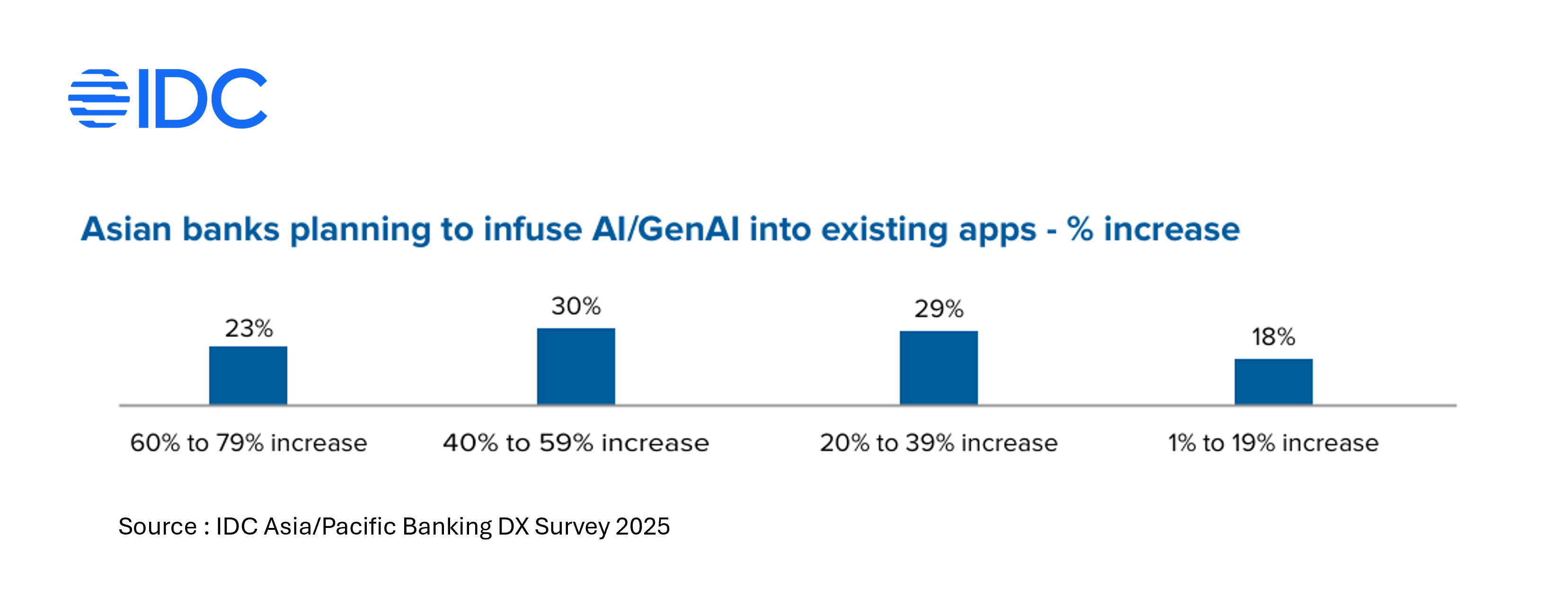
Asian banks are at a strategic crossroads.  Business complexity is rising as new asset classes, digital channels and ecosystem partnerships expand. Meanwhile, banks face softening interest rates, credit pressures, and geopolitical uncertainty. In response, banks are increasing investment in technology, especially AI, to drive efficiency, resilience, and revenue growth.   Recent IDC surveys show a clear rise in AI-related spending across the region.

The critical question is no longer whether banks are investing in AI, but how they can monetize that investment to generate measurable ROI and what role agentic AI plays in that equation.

Agentic AI offers banks a path from AI experimentation to measurable returns. By deploying autonomous AI agents across complex, multi-stage banking processes such as credit decisioning, risk management, and compliance, banks can accelerate decisions, improve consistency, and scale automation while maintaining governance. The greatest ROI comes from disciplined use case selection, AI-ready data and infrastructure, and strong trust and governance frameworks.

What Is Agentic AI in Banking?

Agentic AI in banking refers to AI systems composed of multiple autonomous agents that can independently analyze information, make decisions, and execute actions across workflows within defined guardrails and human oversight.

Unlike traditional AI models or copilots that provide recommendations, agentic AI systems can orchestrate end-to-end processes. This makes them well suited to banking operations, which involve multiple handoffs, probabilistic decision-making, regulatory constraints, and risk thresholds.

Why Banking Processes Are Strong Candidates for Agentic AI

Banking processes are often complex, involving multiple decision stages, approvals, and risk checks.   Many already rely on probabilistic model-driven decision-making engines, making them well-suited for agentic architectures.  

Example: Agentic AI in Credit Approval

Consider a credit approval process:

  • One agent specializes in credit checks against defined risk acceptance criteria.
  • Another agent estimates the maximum unsecured exposure the bank can underwrite.
  • A higher-level supervisory agent evaluates outputs and acts as the approver.

Together, these agents can accelerate credit decisions, improve consistency, and maintain governance and control.

Key Challenges Banks Must Address to Generate ROI

While the opportunity is significant, deploying agentic AI at scale poses several challenges banks must address.

Is the Bank AI-Ready?

Banks must realistically assess their data architecture and infrastructure readiness. Data patching and manual corrections may work during proofs of concept, but are unlikely to succeed in production. Similarly, pilot deployments may run on spare capacity, while scaled agentic AI systems require dedicated, resilient, and secure infrastructure.

Selecting the Right Use Cases

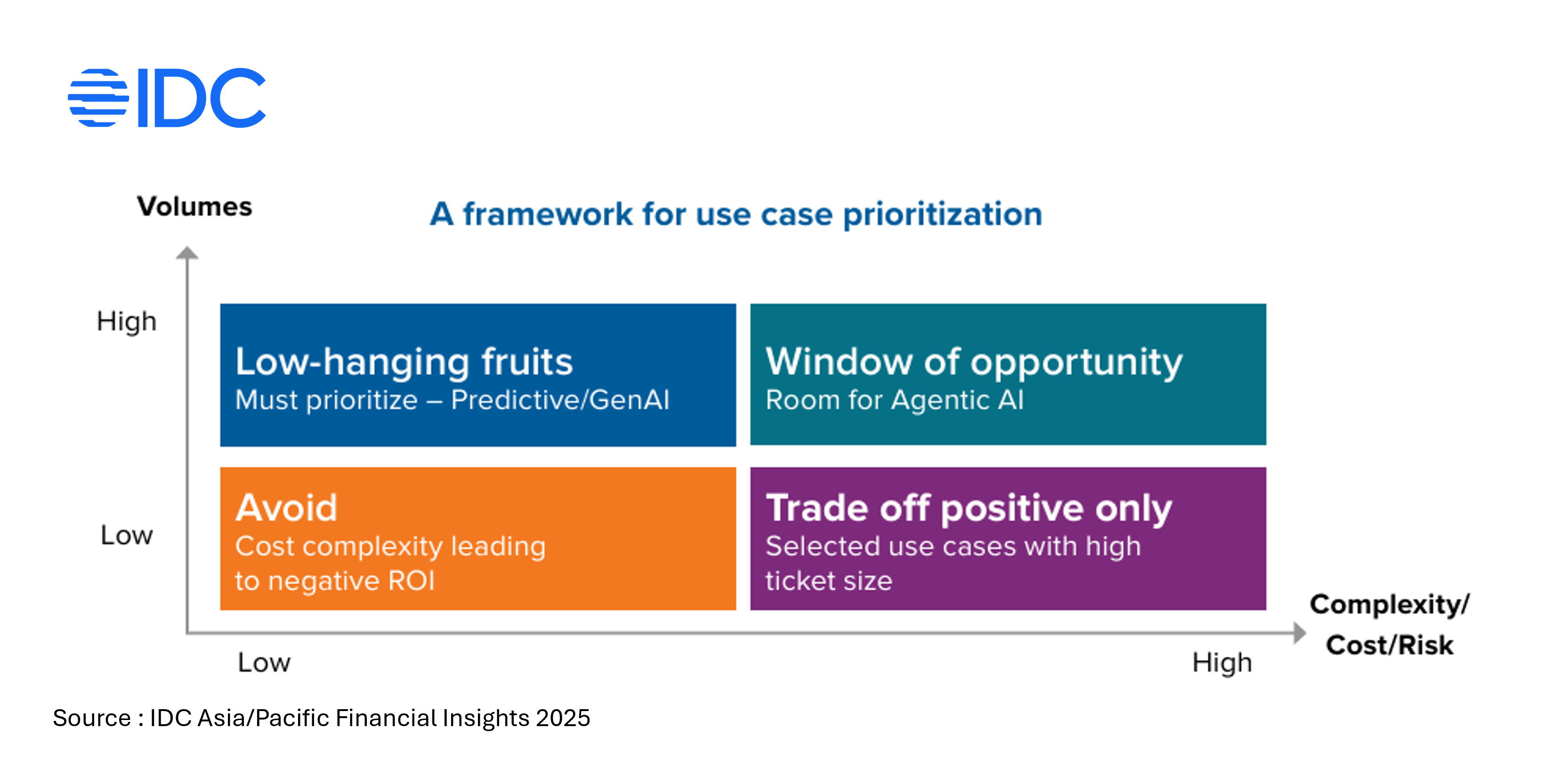
Use case discipline is critical. Many banks run multiple exploratory or hobby AI projects driven by local enthusiasm rather than measurable business value. Even when proofs of concept show limited ROI, some initiatives still progress.

Prioritization must be anchored in clear business outcomes, such as:

  • Revenue growth
  • Operational efficiency
  • Risk reduction and compliance effectiveness

Establishing Trust and Governance

The AI trust deficit remains a major barrier, especially given the persistence of hallucinations and model errors. Building trust requires governance frameworks, transparency, human-in-the-loop controls, and continuous monitoring.

Turning Agentic AI Investment into an AI Dividend

While these challenges are not insurmountable, overcoming them is essential to generating an AI dividend. IDC research and client engagements include multiple case studies that validate that agentic AI represents a significant opportunity for the banking sector.

According to the IDC FutureScape: Worldwide Banking and Payments 2026 Predictions — Asia/Pacific (Excluding Japan) Implications report, by 2027 in APeJ, the share of AI investments directed toward innovation will rise from 25% to 40%, with increased spending on new products and services.

Banks that act now—focusing on high-impact use cases, readiness, and governance—will be better positioned to translate the potential of agentic AI into measurable business outcomes.

What’s Next

IDC works with banks across Asia/Pacific to assess AI readiness, prioritize agentic AI use cases, and design governance models that support scalable ROI.

Register now for the live webinar on 24 February 2025 at 1:30 pm SGT to join IDC in charting the agentic future with confidence.

Ashish Kakar - Research Director - IDC

Dr. Ashish Kakar is research director for IDC Financial Insights in Asia/Pacific. Based in Singapore, he is the lead Financial Insights analyst responsible for all aspects of banking and insurance research. Dr. Ashish's own interest is in fraud and risk, resilience, customer centricity, AI/ML, retail banking, insurance, alternative investment management, cloud and infrastructure, and credit risk management. Prior to joining IDC, Dr. Ashish had over 16 years' experience in Citibank, five years' experience with insurance companies, and has run his own asset management start-up for two years. In his last role in Citibank, Dr. Ashish managed processes across banking technology, servicing operations, and product. He was a regional senior with oversight of the Asia and Europe operations.
Key Highlights
  • 75% of Asia/Pacific care providers say agentic AI delivers greater productivity gains than GenAI
  • 50% of providers will use advanced risk stratification for population health by 2028
  • Asia/Pacific accounts for nearly 60% of the global aging population
  • Agentic AI’s share of GenAI budgets will grow from 18% (2025) to 29% (2026)
  • Multimodal AI will predict 50% of chronic and rare diseases before symptoms by 2030
  • AI agents will be used by 33% of top-tier hospitals for real-time clinical decision support
  • Quantum platforms will enable 100x faster diagnostics for 20% of leading institutions by 2030
  • Singapore General Hospital’s AI chatbot saves ~660 clinician hours annually

Asia/Pacific healthcare provider organizations are at a critical inflection point. Generative AI (GenAI) is no longer an experimental initiative — it has become a strategic investment imperative. To navigate this shift, care providers need a clear roadmap that aligns AI priorities with emerging models of care delivery. IDC’s recently published FutureScape report for healthcare provides this roadmap and outlines how providers can move from experimentation to measurable impact.

A key highlight of this year’s FutureScape is agentic AI, which marks a new milestone in the region’s AI maturity. According to IDC’s Agentic AI Survey, 75% of Asia/Pacific care providers report that agentic AI outperforms GenAI in delivering measurable productivity gains. However, this transition requires robust regulatory frameworks and strong human-in-the-loop mechanisms to ensure ethical, transparent, and accountable deployment.

Asia/Pacific care providers must first address care productivity, enabling clinicians and operations teams to do more with constrained resources. This begins with building a resilient and trusted data foundation that can unlock the full value of agentic AI. With productivity gains as the anchor, providers can then reimagine care delivery by integrating advanced analytics, seamless workflows, and explainability to support personalized, secure, and transparent care.

This blog highlights five of the ten key predictions from the recently published IDC report: IDC FutureScape: Worldwide Healthcare Industry 2026 Predictions — Asia/Pacific (Excluding Japan) Implications

The Next Phase of Population Health Management: Toward Data-Driven, Proactive Intervention

By 2028, 50% of healthcare organizations in Asia/Pacific will leverage advanced risk stratification tools to tackle population health, specifically focusing on the chronic disease burden and aging population.

Asia/Pacific is home to nearly 60% of the world’s aging population, and the growing burden of noncommunicable diseases continues to place sustained pressure on healthcare systems. IDC expects population health management to become more data driven and proactive, as advanced risk stratification enables earlier identification of at-risk cohorts and more effective interventions.

This shift highlights the need for interoperable data platforms that unify clinical, demographic, and social determinants of health data. A strong example is Taiwan’s AI-on-DM (Diabetes Management) initiative — the country’s first large-scale healthcare AI program. Led by the Ministry of Health and the National Health Insurance Administration (NHIA), the initiative integrates long-term type 2 diabetes data with a medical large language model (LLM) to predict and manage complication risks for more than 2 million patients, years in advance. The program is expected to expand to other chronic and complex conditions, including hypertension and cancer.

Despite this progress, fragmented data environments and digital inequity remain major barriers across the region. Providers that invest in real-time analytics, standardized data exchange, and secure data sharing will be better positioned to shift from reactive care to preventive, population-scale interventions.

Agentic AI and the Future of Patient Experience: Advancing Digital Equity and Trust

By 2028, 45% of healthcare organizations in Asia/Pacific will advance agentic AI-enabled engagement by prioritizing digital equity, cultural alignment, and trust to produce personalized and empathetic communication.

Agentic AI introduces a new model of patient engagement. Unlike traditional automation, agentic systems adapt interactions in real time by drawing on clinical context, patient-reported outcomes, and social factors. In a region defined by linguistic, cultural, and socioeconomic diversity, this capability is critical.

IDC research shows that Asia/Pacific providers are rapidly increasing investment in agentic AI for patient engagement and care coordination. IDC’s 2025 FERS Survey indicates that agentic AI’s share of GenAI budgets will rise from 18% in 2025 to 29% in 2026. A practical example can be seen in Synapxe’s efforts to modernize Singapore’s national health digital infrastructure. By embedding AI-driven decision support and intelligent automation across patient-facing and care coordination platforms, Synapxe is enabling more proactive, personalized, and culturally aligned engagement.

Trust remains foundational. Transparent AI behavior, explainable recommendations, and clear escalation paths to clinicians are essential for adoption by both patients and care teams. Providers that embed governance, cultural sensitivity, and digital equity into agentic engagement strategies will build stronger patient relationships and improve outcomes.

Multimodal AI and the Shift to Predictive, Preventive Care

By 2030, multimodal AI will predict 50% of chronic and rare diseases before symptoms, making predictive care a reality with broader health data, including wearables and multiomics in Asia/Pacific.

This marks a decisive shift from reactive to predictive and preventive healthcare. Advances in multimodal AI — spanning clinical records, medical imaging, genomics, proteomics, and real-time wearable data — are enabling earlier and more accurate disease risk identification, often years before symptoms appear.

For a region facing rapid population aging and rising chronic disease prevalence, the impact is significant. Multimodal AI models can continuously analyze longitudinal health data to detect subtle patterns invisible to traditional diagnostics. In China, multimodal AI systems combining medical imaging, clinical records, and laboratory data have demonstrated approximately 98% accuracy in detecting biliary atresia.

Earlier detection supports targeted prevention, personalized care pathways, and reduced downstream costs. For rare but life-threatening pediatric conditions, such as biliary atresia, earlier diagnosis can dramatically improve outcomes.

Real-Time Decision Support: Governed AI Agents in Clinical Care

By 2030, 33% of top-tier hospitals in Asia/Pacific will deploy AI agents to deliver real-time decision support and autonomous workflows with greater than 80% accuracy while escalating exceptions to clinical staff.

Clinical environments demand speed, accuracy, and accountability. IDC expects AI agents to increasingly augment clinicians by synthesizing multimodal data and delivering context-aware insights at the point of care. These agents will not replace clinicians, but they will automate routine tasks and support faster, more consistent decision-making.

A real-world example is Singapore General Hospital’s AI chatbot, Peach (Perioperative AI Chatbot), which supports pre-operative assessments and saves approximately 660 doctor hours per year.

Success depends on data quality, interoperability, and governance. AI agents must operate within clearly defined boundaries, with continuous monitoring and escalation mechanisms. Hospitals that invest early in AI-ready infrastructure will improve clinician efficiency while preserving clinical oversight.

From Classical Limits to Quantum Leap: Preparing for Precision-Driven Care

By 2030, 20% of top-tier healthcare institutions in Asia/Pacific will harness quantum platforms for 100x faster diagnostics, simulations, and digital twins in precision-driven complex care.

Quantum computing remains emerging, but it represents a long-term inflection point for healthcare. IDC expects early adoption in complex diagnostics, precision medicine, and advanced simulations. Governments and institutions across Asia/Pacific are already investing in quantum ecosystems.

In Australia, the University of Wollongong’s quantum-enhanced imaging research demonstrates how hybrid quantum-classical techniques can accelerate genomics, biomarker discovery, and precision radiotherapy. For healthcare leaders, this reinforces the importance of future-ready data architectures and skills development.

Moving Forward: From Insight to Action

Together, these predictions highlight a clear message for Asia/Pacific healthcare providers. Agentic AI, advanced analytics, and emerging technologies can deliver measurable gains in productivity, patient experience, and clinical outcomes. However, success depends on trusted data foundations, interoperability, explainability, and strong human oversight.

IDC FutureScape provides a practical roadmap for navigating this transition. Providers that act now to align data, governance, and workforce strategies will be best positioned to lead in the next era of AI-driven, patient-centric care.

Manoj Vallikkat - Senior Research Manager - IDC

Manoj Vallikkat currently works as a senior research manager for Healthcare Insights in IDC Asia/Pacific. His research covers digital transformation (DX) across care delivery systems in the region, focusing on areas such as evolving healthtech ecosystem, patient-centric care, and predictive care management. He also covers the life sciences segment, with special interest in artificial intelligence (AI)-based drug discovery and remote clinical trial practices. Manoj has led key consulting engagements across the country markets in the Asia/Pacific region. He has also handled various GMS engagements for tech providers, which include tailored reports, round-tables, and speaking gigs.

国内ITインフラ市場(2025年の振り返り)

AIインフラ
2025年もAIインフラ投資が主役となりました。2024年に引き続きハイパースケーラーやサービスプロバイダーによる投資が中心ですが、研究機関や一般企業によるAIインフラ投資も徐々に拡大しています。

AIインフラは国内外の動向が一般ニュースに取り上げられるほど注目度が高く、2025年は講演でもAIインフラ関連のテーマが多くなりました。エージェンティックAIなどAI活用が進むにつれてAIインフラ投資への関心が高まってきますので、2026年も引き続き国内ITインフラ市場の注目テーマになるとみています。

仮想化&HCI
2024年から市場が流動的になっていますが、利用企業ごとに方向性が定まりつつあります。仮想化環境の移行を決めた企業では検証や移行作業が本格化してきました。2026年はこうした動きがさらに顕著になりそうです。

マネージドサービス
2025年はマネージドサービスやITインフラ運用の調査に注力しました。複数のレポートを発行しましたが、特にマネージドクラウドサービス領域でベンダー評価レポートを発行できたことは大きな取り組みでした。

クラウド移行は、ユーザー企業・ベンダー双方にとって関係性を見直す機会になっています。
調査にご協力いただいた皆様にはこの場を借りて御礼申し上げます。

FutureScape(今後5年間の予測)

IDCでは毎年、各調査領域でFutureScape(今後5年間の10項目の予測)を発行しています。デジタルインフラ戦略では、AIインフラ関連と、ITインフラへのエージェンティックAI適用に関する項目が中心です。

AIの影響は、コンピュート、データセンター、データロジスティクス、ネットワーク、コンテナ化、エッジ、プライベートデジタルインフラへの再投資など幅広い領域で強まります。

2026年に向けて

デジタルインフラ戦略の調査を主導して3年が経ちました。複数の領域を担当するアナリストと連携しながら調査を拡充してきましたが、2025年はさらに幅が広がった年でした。

2026年は新たな挑戦が始まる1年になりそうです。引き続き、AIインフラ、仮想化、インフラモダナイゼーションなどITインフラ分野の調査に取り組みます。そして、GPUクラウドなどを含む、Accelerated Compute as a Serviceの分野もMarketScapeを実施予定です。


2025年もご支援ありがとうございました。2026年もどうぞよろしくお願いいたします。

関連する調査やご相談について

より詳細なインサイトや市場動向については、当社アナリストへお気軽にご相談ください。

Yukihisa Hode - Research Manager, Infrastructure & Devices, Research, IDC Japan - IDC Japan

Yukihisa Hode is a research manager covering digital infrastructure strategies as well as AI infrastructure, IT infrastructure services, IT operations, hybrid/multicloud and hyperconverged infrastructure (HCI). He leads the research program on digital infrastructure strategies, providing insight and advice on the digital infrastructure through research reports, marketing content, and presentations to support IT and digital decision-making.