In May and June 2026, IDC Directions came to China for the first time as a multi-city roadshow with stops in Beijing, Hangzhou, and Shenzhen, plus a virtual livestream. Across all three cities, a clear picture emerged of where China’s AI market is heading. Here are five signals that matter for your strategic planning, and what they mean for your business.
Beijing: Robotics Takes Center Stage
Over 400 decision-makers attended the Beijing stop, where IDC CEO Lorenzo Larini shared the stage with two humanoid robots from AGIBOT. The moment drove home a striking data point: the global humanoid robotics market grew 800% in 2025. IDC projects that China’s embodied intelligence spending will grow from $1.4 billion today to $77 billion within five years (a 94% CAGR) making it the world’s largest robotics market by 2029. For manufacturers, logistics operators, and service businesses globally, that pace of development means new competitive pressures are arriving faster than most roadmaps anticipate.
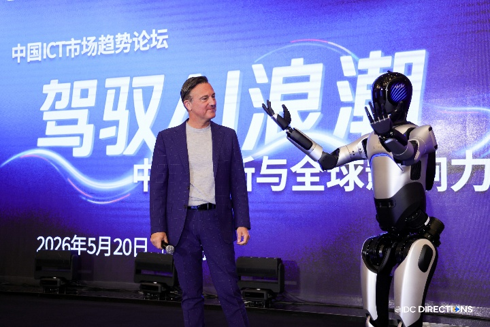
Lorenzo Larini, CEO of IDC, put it plainly, “In 2026, you cannot make any major technology decision without first understanding what is happening in this country.”
What this means for you: If your business touches manufacturing, logistics, or physical-world automation, a new generation of competitors is emerging, and they’re not competing on price alone. They’re defining the next product standards.
Hangzhou: Where AI Meets the Real Economy
Hangzhou drew over 100 decision-makers from the Yangtze River Delta, focusing on smart homes, robotics applications, and industrial ecosystems. Over 60% of China’s leading enterprises have already integrated generative AI into core business processes. That’s among the fastest penetration rates globally. The MaaS market tells a similar story: China’s token consumption is projected to reach 40,000 trillion calls in 2026, generating approximately RMB 18.6 billion in revenue, with a CAGR of 1,154.9% from 2024 to 2030.
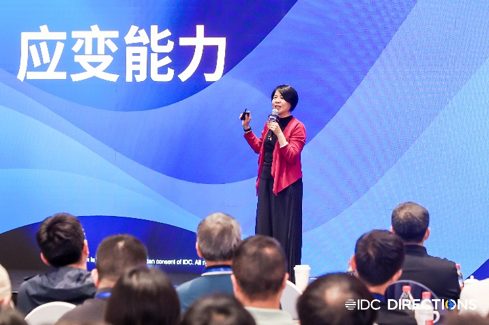
Kitty Fok, IDC’s Managing Director for China and a nearly 30-year IDC veteran, offers the ground-level view: “The energy, the innovation, the change since COVID—it is something very different from six years ago.”
What this means for you: The AI race is no longer about who has the best model. It’s about who can embed AI into business systems fastest and at the lowest cost. If your organization is still running pilots while competitors are re-engineering supply chains and customer service with AI, the gap is widening quarter by quarter.
Shenzhen: The Supply Chain Reality Check
Shenzhen closed the roadshow with over 300 attendees (200 in person, 100 online) and added a dedicated semiconductor track. IDC’s Helen Chiang, VP of Semiconductor Research, pointed to a clear trend: agentic AI is shifting chip demand from training toward inference, while supply of critical components, including memory, PCBs, ABF substrates, is tightening. The global accelerated computing server market is expected to surpass $1 trillion by 2029 at over 30% CAGR.
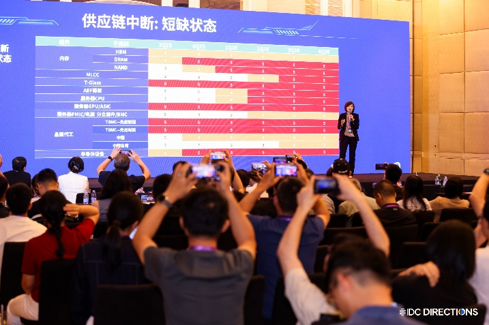
The takeaway: Compute is not infinite. Companies that plan ahead on inference costs, optimize “tokens per watt,” and invest in edge compute will gain a structural cost advantage. AI decisions cannot stop at algorithms—the silicon supply chain is a hard constraint.
Five Trends Worth Watching
1. Compute efficiency is the new battleground. Raw performance (FLOPS) is no longer the full measure of competitiveness. As IDC China Vice President of Research Zhou Zhengang notes, “tokens per watt is becoming the more relevant metric.” By 2027, inference will account for over 70% of AI compute demand. Procurement and architecture decisions need to be recalibrated now.
2. The token economy is taking shape. According to IDC China Group Vice President Zhong Zhenshan, “tokens are becoming the new currency of enterprise AI—a cost item and a value-creation lever.” Enterprise AI has moved from “generation” to “execution.” Competitive advantage now lies in converting AI into sustainable business capability at the lowest token cost. Do your KPIs already account for token costs?
3. Industrial AI is moving from pilots to autonomous operations. IDC China Assistant Research Director Cui Kai observes that “industrial AI has scaled beyond proof-of-concept” into production, supply chains, and operational decision-making. IDC projects Chinese industrial AI spending will approach RMB 9 billion by 2028 at 38% CAGR. Organizations still in the “digital factory” phase while competitors build autonomous operations face a widening gap.
4. AI-native endpoints are creating a new competitive arena. As Dr. Wang Jiping, IDC’s Vice President of Worldwide and China Research, points out, “purchase drivers have shifted from hardware specifications to intelligent experience and ecosystem capabilities.” China’s smart device shipments will reach 900 million units in 2026, and AI endpoint penetration will exceed 93% by 2027. Whether hardware-first roadmaps can catch up is an open question.
5. The shift from product exports to capability exports. IDC China Vice President and Chief Analyst Wu Lianfeng observes that Chinese companies are “shifting strategy—from exporting products to exporting capabilities, platforms, and ecosystems.” AI-native platform development, deep industry-scenario integration, and developer ecosystem expansion will define the next competitive phase, whether you’re a Chinese company going global or a multinational entering the market.
The Next Three Years Will Decide the Winners
Across all three cities, one theme emerged: AI is moving from technology breakthroughs to scaled deployment. IDC forecasts enterprises worldwide will run more than 1 billion AI agents by 2029, with multi-agent orchestration becoming standard. China’s early advantages in robotics, smart homes, industrial manufacturing, and supply chains position it at the forefront of that shift.
Meanwhile, as inference surpasses 70% of AI compute demand by 2027, the battlefield is shifting from cloud to edge. China’s massive smart device install base and manufacturing foundation make it fertile ground for edge AI adoption.
2026 marks an inflection point. The infrastructure buildout phase is nearing completion. The next three years will determine who wins on inference cost, application scenarios, and ecosystem synergies.
Navigate the AI Supercycle with IDC
For 40 years, IDC has maintained a sustained presence in China, and was the first foreign company to receive a domestic media license in the country. Today, IDC operates 77 dedicated China research programs with over 100 in-country analysts, a footprint more than three times the size of any other international research firm in the market.
To access IDC Directions 2026 presentation materials and reports or for analyst briefings and inquiries, contact the IDC China Team . We help you turn uncertainty into clarity and strategy into results.
As Larini said, “China is no longer a market you can watch from a distance. It is a technological force actively reshaping the direction of global development.”
That reshaping is only just beginning. The question is whether your strategy reflects it yet. Talk with the analysts who were there and find out what it means for your next move.