
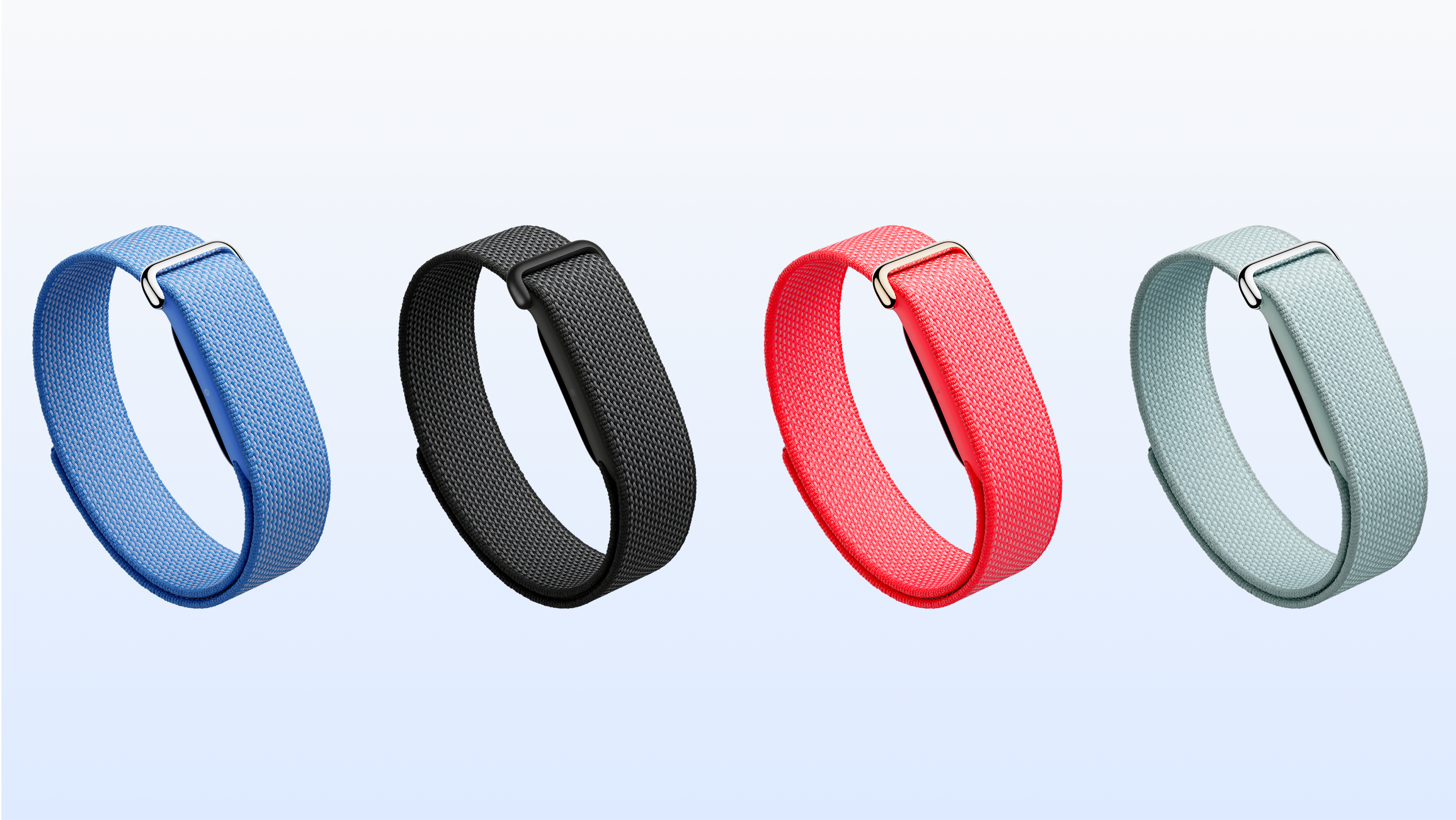
Google officially launched the Fitbit Air alongside the broader rollout of the Google Health platform, and while the hardware is getting most of the attention, enterprise and vendor watchers should keep their eyes on the software layer. This launch is less a fitness tracker story than a platform consolidation story, with significant implications for the broader health and wellness technology market.
The hardware: Deliberate, not derivative
The Fitbit Air is Google’s first screenless fitness tracker, priced at $99.99 and positioned squarely against the premium screenless wearables segment dominated by Oura and Whoop. The device is notably smaller than previous Fitbits and packs a meaningful sensor suite (heart rate, SpO2, HRV, irregular rhythm notifications, and automatic exercise detection) into a form factor designed to disappear on the wrist.
The deliberate absence of a screen is a strategic positioning decision, not a cost-cut. As the wearables market fragments, a growing segment of users prefers passive tracking devices that can be worn alongside a traditional watch rather than compete with one. The Fitbit Air isn’t the first screenless tracker to market, but it’s the first with a real chance to reach mainstream users, offering essentially the same health insights as premium incumbents at a fraction of the cost.
The lack of built-in GPS and NFC are notable omissions. Neither is a dealbreaker for the mass-market consumer Google is targeting, but both are worth flagging for more demanding buyers.
The real story: Google Health as a Platform
The hardware is secondary to what Google is actually building. The Fitbit app has been formally rebranded as Google Health, consolidating years of fragmented efforts across Google Fit, Health Connect, and Fitbit into a single platform. This is the kind of ecosystem rationalization that creates durable platform moats, and it matters for several reasons.
Google Health Coach, now out of public preview, is the differentiated layer. Built on Gemini, it functions as a personalized AI advisor across fitness, sleep, and health metrics; proactively surfacing insights rather than waiting to be queried. The coach delivers morning and evening summaries, post-workout analysis, and adaptive weekly fitness plans that update based on readiness scores and user context. In the US, it can connect to medical records, creating a longitudinal health data layer that goes well beyond what consumer wearables have historically offered.
What makes the coach genuinely interesting is its ability to incorporate life context, not just biometric data. When testing an earlier version as a new father traveling across multiple time zones with a sleep-training baby, the coach didn’t nag me to hit my workout targets. It recognized I wasn’t sleeping well, understood the circumstances I had shared, and offered practical alternatives such as a short walk, or pushing strength training to the next day. That kind of contextual flexibility is exactly what has been missing from wearables for years, and it’s where Google’s AI investment starts to show real differentiation over hardware-first competitors.
The platform also supports third-party device integrations via Health Connect and Apple Health, and Google intends to extend the experience to non-Google devices over time. The signal is clear: Google is less interested in selling you a tracker than in becoming the platform that ties all your health data together.
Competitive positioning and market implications
Several dynamics are worth watching. First, the Whoop comparison is apt but incomplete. The Fitbit Air takes the in-depth health analysis approach Whoop pioneered and opens it to the mass market at a budget price point. Whoop has a defensible customer base in enterprise wellness and athletic training; Google’s play is the mass consumer market plus enterprise wellness programs, an area where Fitbit has years of execution history. Notably, both represent a much larger total addressable market for Google than the competition it most directly displaces.
Second, Apple Health remains the obvious benchmark for platform completeness, and Google Health is clearly designed to close that gap on Android while making inroads on iOS. Limitations exist today, but Google has signaled plans to narrow the gap between Android and iOS experiences in the coming months.
Third, the subscription economics deserve attention. The Fitbit Air includes three months of Google Health Premium, after which the service runs $9.99/month or $99.99/year. Google is also bundling Health Premium into its broader AI subscription tiers (Google AI Pro and Ultra), a classic platform bundling move that mirrors its approach with cloud storage and productivity tools. This positions Google Health as a stickiness driver for the broader Google ecosystem, not a standalone revenue line.
One genuine limitation worth flagging
One architectural gap hasn’t received enough attention: although Google Health Coach is built on Gemini, it does not yet share context with the broader Gemini assistant. Users cannot tell Gemini “I’m traveling this week, pause my workout reminders until I get home” and have Health Coach act on it. The two systems currently operate in separate silos. For a company positioning Google Health as the intelligent, context-aware layer of its ecosystem, closing this gap should be a near-term priority.
The bigger picture
Google’s healthcare ambitions have historically outpaced execution, but this launch feels different. The coherence of the platform vision is clearer than it has ever been: a single app, an open third-party ecosystem, medical records integration, and an AI coaching layer all pointed at the same user experience. The Fitbit Air is the entry-point hardware, priced to drive volume. The data and subscription layer is the actual business, and the early signs suggest Google is serious about building it.