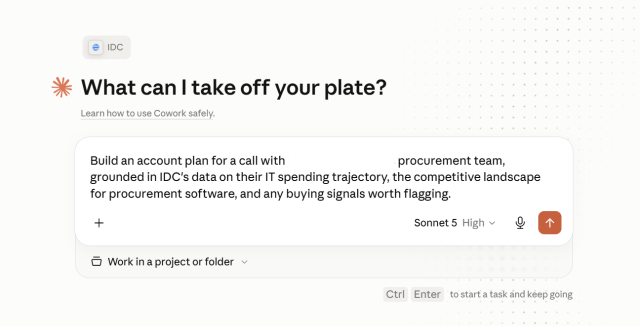
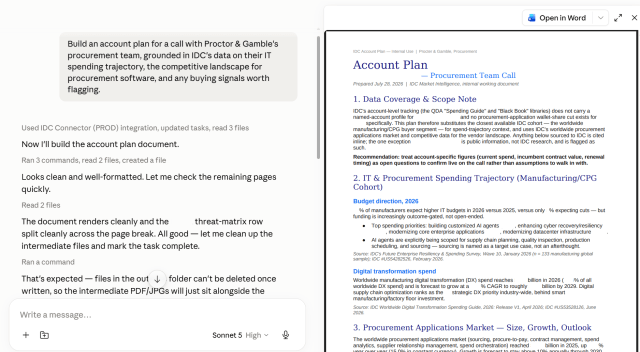
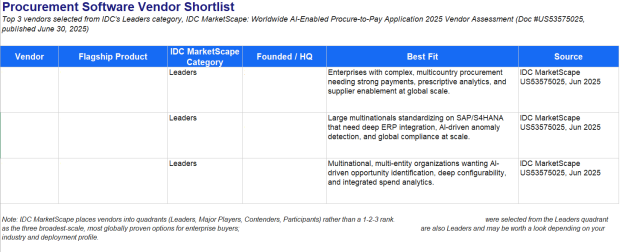
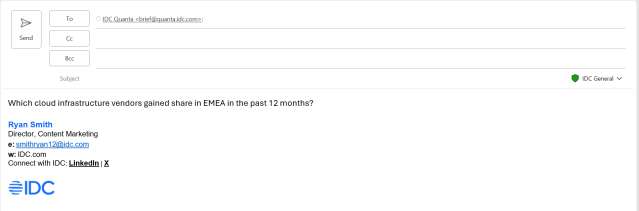
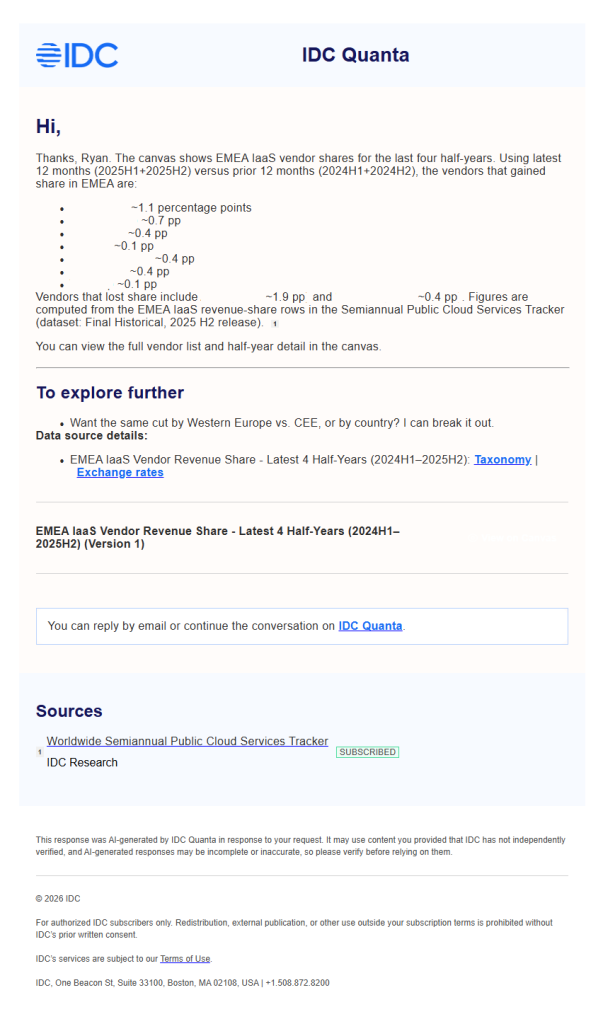
There is no shortage of ways to get an answer quickly. A question into ChatGPT, a search across a few analyst portals, a summary pulled from a PDF someone emailed three weeks ago. In under ten minutes, you have something that looks like intelligence. 

The problem is what happens next. When that answer gets questioned, challenged, or presented to a board that wants to know where it came from. 

This is the AI answer gap: the widening distance between the speed at which AI tools can produce answers and the standard to which those answers must be held in real decision-making environments. It is not a technology problem. It is a structural one. And it is getting harder to ignore. 

Three failures hiding inside one problem 

The AI answer gap isn’t a single breakdown. It’s three distinct failures that tend to travel together, and that compound each other when they do. 

The speed-to-answer gap 

When a critical decision arrives: a market entry call, a board presentation, a competitive repositioning. How long does it actually take your team to ground it in trusted, defensible research? For most organizations, the honest answer is longer than it should be. 

In IDC’s conversations with enterprise technology leaders, the time between a strategic question and a confident, evidence-based answer is consistently measured in days or weeks, not hours. Teams spend that time searching: pulling reports, cross-referencing sources, building a coherent picture from fragments. 

The cost isn’t just time. It’s the decisions that get made on incomplete intelligence. 

The AI credibility crisis 

The intuitive fix is to use AI to speed up the research process. That introduces a second problem the first one obscures. 

Public AI tools are fast. They are also wrong in ways that are difficult to detect until the moment they matter most. Hallucinated citations. Outdated market data presented as current. Confident summaries of research that doesn’t exist. The pattern is consistent enough that “AI hallucination” has become a standard budget discussion item for enterprise technology teams. 

The deeper issue isn’t accuracy in isolation. It’s accountability. When a technology leader presents a recommendation to the CFO or the board, the question is never just “is this correct?” It’s “where did this come from, and can you defend it?” A fast answer with no traceable source fails that test regardless of whether it happens to be right. 

“An AI backed by IDC’s research gives me a lot more confidence in the answers.”
Phillip Langeberg, CTO, The Resorts Companies

Confidence isn’t just about accuracy. It’s about provenance. The ability to say: here is the answer, here is the source, here is the reasoning — and have all three hold up under scrutiny. 

The workflow intelligence barrier 

The third failure is the most underestimated. Even when high-quality intelligence exists: proprietary research, trusted analyst data, validated market sizing. It tends to live somewhere other than where decisions get made. 

A portal that three people have bookmarked. A PDF that gets forwarded by email. A report that someone read six months ago and summarized in a slide deck that may or may not reflect the current version. Intelligence that should be shaping decisions is instead sitting one context switch away from the people who need it. 

The result is a structural gap between the intelligence an organization has access to and the answers that actually inform its decisions. Closing the AI answer gap requires more than better data. It requires rethinking where intelligence lives. 

Why the gap is widening, not closing 

The intuitive assumption is that more AI tools mean better answers. The evidence suggests the opposite is happening. As the number of AI research tools available to enterprise teams has multiplied, so has the complexity of the research environment: more sources to reconcile, more outputs to verify, more decisions about which tool to trust for which type of question. 

Across IDC’s research with enterprise technology organizations, the pattern is consistent: the teams that make the fastest, most confident decisions aren’t the ones with the most tools. They’re the ones whose intelligence infrastructure is the most coherent, where trusted data, workflow integration, and traceability work together rather than separately. 

That’s a design problem. And it’s one that the current generation of AI research tools, built to maximize speed rather than defensibility, hasn’t been designed to solve. 

What closing the AI answer gap requires 

Addressing the AI answer gap doesn’t mean slowing down. It means building toward a different standard, one where speed and defensibility aren’t in tension. 

Three things distinguish intelligence infrastructure that closes the gap from infrastructure that widens it. First, answers need to be traceable: every output should be linkable to a source that can be examined, challenged, and defended. Second, intelligence needs to live where decisions happen, not in a separate system that requires deliberate effort to access. Third, the research base itself needs to be trustworthy at the source: proprietary, current, and built on a methodology that can withstand scrutiny. 

These aren’t aspirational standards. They’re the minimum bar for answers that are usable in a real decision-making environment. The organizations closing the AI answer gap are the ones treating them as requirements, not nice-to-haves. 

The path forward 

The AI answer gap is a structural problem, and structural problems require structural solutions. Adding faster tools to an incoherent intelligence infrastructure doesn’t close the gap. It accelerates it. 

IDC has spent six decades building the proprietary research base that enterprise technology decisions depend on. The next step is making that intelligence accessible where decisions actually happen, embedded in the workflows, the tools, and the moments where the AI answer gap currently lives. 

IDC Quanta is that platform. If you want to stay informed as it launches this summer, the link below takes you there. 

Ryan Smith - Content Marketing Director - IDC

Ryan Smith is the Director of Content Marketing at IDC, where he leads brand-level content and social media strategy, aligning research insights with compelling storytelling to engage technology decision-makers. With a background in both IT and marketing, Ryan brings a unique blend of technical understanding and creative strategy to his work. He’s also a seasoned storyteller, speaker, and podcast host who believes the right message, told the right way, can drive both trust and transformation.

IDC Directions 2026 brought together more than 700 technology and business leaders for a single day of focused, analyst-led intelligence on where enterprise AI is heading and what to do about it.

The scale tells part of the story: 82 IDC analysts, 56 speakers, and 29 sessions across marketing, data, emerging technology, and AI-ready infrastructure. The attendee response tells the rest. In IDC’s post-event attendee survey, 98% said the day was worth their time and 96% left with insights they could act on.

Catch up on what you missed at IDC Directions 2026.

IDC built this year’s Directions around a question most technology executives are wrestling with right now: AI ambition is everywhere. How do you turn it into enterprise results? Every session pointed toward an answer.

Three Conversations That Set the Agenda

Chief Product & Research Officer Meredith Whalen opened with her keynote on the AI Supercycle, IDC’s term for the once-in-three-decades technology expansion cycle now underway, driven by AI infrastructure investment and the enterprise adoption wave that follows. The infrastructure buildout is already underway. The enterprise adoption wave is next. Whether your organization captures value as it shifts to new layers of the stack depends on decisions being made right now.

IDC CEO Lorenzo Larini brought the broader context into sharp relief. The volume of information is now growing at 17 petabytes per second. That’s not a backdrop — it’s the challenge. Making confident decisions in that environment requires a different kind of intelligence infrastructure, one built for speed and clarity rather than volume alone.

Lorenzo Larini speaking about the volume of data growth
Alessandro Perilli looks to the future in his Directions presentation

Vice President of Enterprise AI Strategies Alessandro Perilli put a number on what’s coming: by 2029, IDC forecasts that enterprises will collectively be running more than one billion AI agents. The organizations now designing cross-functional, multi-agent environments for orchestration and resiliency will have a structural edge over those that aren’t.

IDC Quanta: A New Platform for the AI Era

Directions was also where we shared more about IDC Quanta, our AI platform that puts IDC’s research and market intelligence directly into the tools enterprise teams already use. Built on 60+ years of IDC data and developed with input from more than 65 customers, Quanta is contextual, secure, and built to surface the signals that matter to your business before you think to ask.

Joe Bradley encourages the audience to join the waitlist for IDC Quanta, IDC's new AI platform

Early access is now full. The next window is coming. Reserve your spot now to be first in line when it opens, and get exclusive updates as the platform evolves.

 Visit our AI platform page to stay in the loop on IDC Quanta.

Everything Is Now Available on Demand

Whether you attended and want to revisit what you saw, or couldn’t make it and want to see what you missed: it’s all there. Sessions available include:

  • General sessions and mainstage keynotes
  • Breakouts across the Marketing, Data, Emerging Technology, and AI-Ready Infrastructure tracks
  • Analyst perspectives from across IDC’s research practice

The sessions were designed to give you something to take back to your team, your planning process, your next conversation about where to invest. They still will.

Don’t wait. See IDC Directions on Demand.

Ryan Smith - Content Marketing Director - IDC

Ryan Smith is the Director of Content Marketing at IDC, where he leads brand-level content and social media strategy, aligning research insights with compelling storytelling to engage technology decision-makers. With a background in both IT and marketing, Ryan brings a unique blend of technical understanding and creative strategy to his work. He’s also a seasoned storyteller, speaker, and podcast host who believes the right message, told the right way, can drive both trust and transformation.