Inflation is forcing tech leaders to make difficult choices in 2023. CIO’s and their teams must choose between delaying some technology investments to keep budgets under control or increasing budgets more than required based purely on business growth or transformation. The second choice is even less palatable today, as most IT leaders anticipate a recession in the coming year that may force even more aggressive cuts.

Inflation and Currency Fluctuations Alter IT Budget Decisions

IT leaders around the world faced many disruptive challenges in 2022, from IT supply chain issues to continued difficulties securing skilled people required to support new digital business initiatives. IDC tracked how all of these “storms of disruption” were influencing organization’s IT spending plans in our monthly Future Enterprise Resiliency & Spending surveys of   ̴850 IT decision makers around the world. Top concerns changed over time, but at the end of last year, concerns about the rising cost of technology due to inflation and “extra cost bumps” due to currency fluctuations topped the list for organizations across regions.

Source: Future Enterprise Resiliency & Spending Survey – Wave 11, IDC, December 2022, N=840, NA: 255, AP: 370, Europe: 215

In challenging economic times, Chief Information Officers (CIOs) and Chief Financial Officers (CFOs) tend to scrutinize the largest and fastest growing parts of their budgets in anticipation of a need to pare spending. The technology investment areas where surveyed IT leaders most expect inflation/currency fluctuations to affect budget decisions were SaaS, infrastructure hardware/software, IaaS, PaaS. All, however, are also important investment areas to support ongoing digital business transformation. They are at the core of enterprises’ automation and data analytics projects that can improve a business’s ability to navigate economic disruptions.

Aligning IT Spending with Business Conditions in an Inflationary Environment

When working with CIOs on their technology investment plans for 2023 and 2024, IDC recommends that organizations adopt a two-track approach.

  • Sustain momentum in technology projects that help the overall business navigate and even take advantage of this period of economic instability.
  • Adopt cloud optimization (FinOps) practices and processes that eliminate waste in current cloud investments while also resetting long term cloud cost metrics (Cloud Economics).

In both tracks, it’s also important to adopt a phased approach that delivers short term savings, mid-term gains that protect the business if conditions worsen more than expected, and long-term architectural choices that ensure sustainably lower operating costs as business conditions improve.

Adopt a Tech Project Prioritization Strategy that Aligns with the Strengths of Cloud

Cloud Services, as well as the growing number of as-a-Service solutions for infrastructure hardware and software, deliver several benefits.

  • The broad portfolio of cloud services offered by leading providers makes it possible to use the optimum cost/performance service without increasing administrative costs or business risk.
  • SaaS solutions provide the earliest access to innovation in collaborative applications, customer experience, AI/automation, data integration, and security that can be directly tied to critical business priorities.
  • The increasingly intelligent governance capabilities in cloud platforms make it possible to observe and automate reactions to actual changes in compute, storage, data, and process resource requirements in near real time as business conditions change.

All these benefits are about “speed”. Less upfront costs. More flexibility. Pay only for what you need when you need it. Companies that prioritize application modernization and data augmentation technology projects can quickly realize reduction in budget pressure. Businesses should gravitate towards those technologies that can deliver meaningful short term (in 2023) business benefits through greater use of cloud capabilities.

IDC also advises that CIOs adopt a mid-term strategy that reallocates funds from “run” projects that mostly just push out the elimination of technical debt. We recommend companies focus on “new” projects that can boost revenue or productivity by early 2024. This approach ensures the organization can recover faster if conditions improve or respond more quickly if conditions worsen.

It’s also important to start thinking early about priorities for 2024 and beyond. Regardless of how inflation and currency conditions change, IT organizations will remain sensitive to potential future cost shocks associated with people and processes. Technology suppliers are embedding more automation and AI into all their products and services. 2024 will be the year that forward thinking businesses identify and execute the right IT automation mix to deliver long term operational improvements. IDC finds that IT Automation projects can yield consistent paybacks in less than 12 months based on post-implementation reviews.

Adopt a FinOps and Cloud Economics Strategy to Minimize the Risks of Cloud

While “speed is a Cloud benefit which can contribute to lower costs for many workloads, speed also creates new risks. After numerous conversations with CIOs and surveys of IT leaders in 2022, it became clear to IDC that many technology leaders feel their companies are overspending on cloud resources.

To achieve the full benefits of a cloud-centric project prioritization strategy, CIOs must ensure that they are reducing current ” waste” in cloud and other IT resources. In the short-term, they must empower existing vendor/product procurement and service management teams to more aggressively pursue cost optimization strategies. These include:

  • Scrutinizing duplicate SaaS contracts
  • Assessing actual usage of existing service levels, particularly for SaaS applications that use graduated per user pricing.
  • Leveraging and maximizing volume-based discounts with leading cloud providers by selecting complimentary products/services from within their marketplaces.

In the mid-term, cloud operations teams need to adopt a wide range of standard processes that continually prune spending on unused resources. These teams also need to identify and accelerate adoption of new, lower cost options (e.g., new compute instances, storage tiers, tiered per-user pricing) as they become available. One significant opportunity to consider use of an emerging group of SaaS optimization solutions that provide greater visibility into actual SaaS use across the company. IDC has heard from IT leaders who noted that use of these solutions allowed them to get a clearer picture of current SaaS use and make changes that delivered major (up to 50%) reductions in recurring spend very quickly.

Both the of these short and mid-term efforts fall under what is commonly referred to as FinOps, today. While many CIO’s note that they already have staff dedicated to these tasks, what many lack is a unified view of actual cloud usage that is critical for achieving sustained rather than just one-time cost savings. Finding the right partner that can help create the visibility required to achieve this as well as establish sustainable processes can show paybacks tied to less over-provisioning in just a few months.

In the long-term, CIOs must also start laying a foundation for long term governance and cost optimization guardrails in their organizations’ future cloud use. The end goal of FinOps is to enable sustained assessment, reassessment, and future projection of cloud operating costs. IDC calls this Cloud Economics.

Businesses around the world are building entirely new business models based on smart connected things, AI-enhanced operations, and continuous customer engagement.  As a result, the effective use of cloud services will require timely and accurate implementation, scale out, and long-term costs forecasts for vital digital business systems and will be less focused on simply cutting the cost of running back-end business systems.

What If Everyone is Overreacting?

As 2023 progresses, industry observers quickly began asking IDC if this is all an overreaction. In some countries, inflation showed signs of cooling down in early 2023, and the US dollar lost some of its strength. Others wonder if we may all be calling this the “GODOT recession of 2023” next year. Is all this “cost optimization” and “project prioritization” wasted energy?

The simple answer is, “No!”

Regardless of where the shifting winds of the economics take global businesses over the next 12 months, the factors that triggered technology cost concerns are already locked in. They include the long-term price increases that many SaaS providers initiated in 2022. They also include the reset in energy prices that corporate datacenters, colocation operators, and cloud providers will be grappling with thorough 2023 and 2024 at a minimum. SaaS providers that run their own infrastructure or leverage IaaS from leading cloud providers will be dealing with cost increases, forcing them to weigh the costs of expansion/innovation against profit margins. CIO’s need to keep a close eye on how this develops.

In the long term, focusing on prudent and methodical cost optimization after several years of accelerated technology investment driven by radical, pandemic-driven disruptions is the right strategy no matter how the economic situation evolves in 2023. Tech investment is no longer about supporting the business. Tech is at the core of competing as a digital business. Using Cloud Economics to invest wisely and ensure maximum returns on those technology investments is the key to long term success.

Rick Villars - Group VP, Worldwide Research - IDC

Rick is IDC's chief analyst guiding research on the future of the IT Industry. He coordinates all IDC research related to the impact of Cloud and the shift to digital business models across infrastructure, platforms, software, and services. He helps enterprises develop effective strategies for using their diverse portfolio of cloud investments and applications. He supplies early guidance on implications of critical innovations such as the shift to cloud-based control platforms for deploying/managing infrastructure, data, and code delivery as well as the emergence of AI as a critical IT workload and part of all IT products/services.

Navigating the Storms of Disruption in the Nordics — Finding Potential Beyond the Winds of Change

From the beginning of the pandemic, IDC has talked about the new winds of change that were to come and how to navigate them in a new normal context. Now, we are right in the middle of the change, and people, businesses, and society are enduring new storms of disruption, striving to find opportunities to keep afloat and continue to deliver value.

First the pandemic, and then the Russia-Ukraine war, have created a critical turning point for Europe and the entire world, impacting the functioning and evolution of global ICT markets, from tech demand and supply chain limitations to inflationary pressure, significantly increased costs of energy, skills availability, and increased cyberattacks. And Nordic countries have not been spared from the consequences of this situation, with the changing macroeconomic conditions resulting in a shift of business priorities. Customer satisfaction has remained ttop priority throughout the year, but cost savings have become relatively more important at the expense of profits.

According to the latest IDC Future Enterprise & Resiliency Spending Survey (FERS) from December 2022, more than half of Nordic companies find that rising IT costs have the greatest or second greatest impact on ICT spending plans. This is followed by challenges related to the IT supply chain and expectations of a coming recession.

IT investment plans are directly affected. When prices increase, companies need to either increase spending or reduce the amount purchased — e.g., buying fewer units, licenses, or consulting hours. While few markets are unilaterally impacted, the technologies and projects that have the strongest and most immediate impact on business performance fare better than the ones that can relatively easily be postponed.

Despite the gloomy expectations, IT spending in the Nordic region, including Denmark, Finland, Norway, and Sweden, is expected to outperform GDP performance, as shown in IDC’s Black Book Live Edition from December 2022. However, with inflation expected to be around 5% in 2023, real growth will be limited.

Where Will Nordics Companies Expand Their Investments, Despite the Headwinds?

To maintain performance and mitigate the impact of the geopolitical and macroeconomic situation, Nordic companies will accelerate investments in technologies aiming to support them in their digital transformation.

Thus, the following key areas are identified by IDC to drive spending among Nordic organizations:

Cloud

Companies will keep their budgetary plans related to cloud infrastructure (IaaS) services. Overall cloud spending in the Nordics is estimated to achieve 22% five-year CAGR, reaching more than $27 billion by 2026. Even though more established than other emerging technologies, cloud will continue to drive investments across companies aiming to become digitally ready and to accelerate their business performance.

Internet of Things

According to the latest IDC European Emerging Technologies Survey from 2022, more than 40% of Nordic companies are already using IoT solutions. IoT is seen as part of the solution for the energy crisis, being critical to reduce costs, optimize processes, and improve performance. IoT spending will remain steady in Nordics, especially on use cases related to smart grids, electric vehicle charging, advanced payments, and so on.

Security

Investing in cybersecurity technologies is among the top 3 priorities for organizations in the next two years. Investment can be perceived as a cost center, but it also enables new offerings and reassures existing and potential customers. Cybersecurity spending in the Nordics is estimated to grow at 9% 5-year CAGR, reaching more than $6 billion by 2026.

Artificial Intelligence

Artificial intelligence is one of the fastest growing technologies due to tremendous potential to improve customer experience, enable new employee experiences, mitigate skills shortages, and transform the workplace environment. According to the latest IDC European Emerging Technologies Survey from 2022, more than 40% of Nordic companies are planning to adopt artificial intelligence solutions in the next two years.


Enterprise infrastructure, managed services, project/professional services, and anything “as a service” are additional areas where Nordic organizations indicated they will continue the pace of their investments.

How to Capture the Pockets of Growth in the Nordics Region

Many companies are struggling to find the right skills or partners to work with during the digital transformation journey, especially in such uncertain times. Offering guidance and support with the right technology stack, customized to address different industry-specific challenges will be the winning bet in these times.

To address all the challenges Nordic companies are facing, IT vendors must plan their strategy with precision. Adjusting to industry changes and rapid demand fluctuation, being use-case centric, and placing the right “growth” bets will be crucial to resist storms and headwinds.

IDC will help technology vendors remain resilient, stay competitive, and win revenue despite turbulent times by supporting their precision planning with the following assets:

  • Assess your competition and your position by analyzing technology markets, vendor shares, and forecasts — IDC Trackers
  • Position your products and services to the appropriate audience with an extensive market overview — IDC Black Book
  • Find strategic opportunities by industry, company size, use case, and geography — IDC Spending Guide

Contact us for more information about how IDC Data products help business leaders target, plan, and execute their most important strategic initiatives, analyzing more than 100 countries, 120+ technology markets, 20 industries, and more than 400 use cases.

In a recent webinar, we presented an entirely new marketing and sales approach to replace the well-known funnel. Based on extensive research, IDC’s new Adaptive Customer Experience (ACE) model is a circular and evolving framework and not linear at all, like it’s predecessor. This is because engagement with tech buyers is no longer linear. B2B buyers have B2C experience expectations today.  They expect you, as a vendor, to understand and provide solutions for their challenges, jobs to done and business outcomes. ACE is a customer-centric framework to evolve how you go to market.  

“Marketing is the conductor of orchestrated journey engagement, with data, automation and analytics to make this all work.”

– Laurie Buczek, Research VP, CMO Advisory Practices

And perhaps most importantly, to fully engage with a buyer, marketing and sales need to play on the same field. Put another way, no longer should the two functional groups be looked at as if they are running a relay race, where marketing passes a baton onto sales to finish the race. it is, instead, a customer experience journey, more like an orchestra, where all the instruments work together to make one beautiful masterpiece. And if marketing does a good job as conductor of the orchestra, the sounds become music that buyers want to sit and listen to, rather than just noise that they walk away from.

“More activity doesn’t bring more success” in “random acts of marketing”

– Jason Cunliffe, GVP Content Marketing Services

The webinar introduces this new framework and covers all of the elements in depth. From new analytics to content considerations. If you did not have an opportunity to attend, you can listen to the on-demand version. We received fantastic questions that we think will help you get started in a new marketing and selling approach.

Q1: Is the customer data platform (CDP) available in marketing and sales automation solutions?

 CDP is a very large category right now. You’re seeing niche players, but also established CRM or marketing automation vendors that are baking CDP into their platform experience. For more information, you can read IDC’s Marketscape:  Worldwide Customer Data Platforms Focused on Front-Office Users 2021-2022 Vendor Assessment.

Q2: Do you recommend building bespoke analytic platforms or are most off-the-shelf platforms good enough?

We are seeing that commercially available CPD and analytic capabilities can deliver functionality faster, more economically and with scale than home grown solutions.   Use the 80/20 rule to start – 80% off the shelf with the option for light customization for 20% of capability.

Q3: On the customer data platforms and analytics, can you talk about where you would typically see these functions reside in an organization? 

IDC recommends that customer data platforms (CDPs) are implemented as enterprise capabilities versus an overlay of a functional data silo.  ACE hinges on democratizing customer data rather than it being a departmental resource only.  Data and analytics are the only enterprise resource that enable the adaptive engagement more real-time.  To implement for success, it requires a collaborative effort between customer facing business functions and IT.  For more information refer to The Data Pardox Reshaping the CIO and CMO Relationship

Q4: Do you assume the tech stack and data scientists are in place to implement ACE? If not how does one start?

It is important to approach this holistically and as a system. Often, companies buy the tech first.  Let’s learn from the historical missteps of buying technology and thinking it will magically change the way you operate. It’s like buying a Ferrari but not having anyone who knows how to drive it. You must start by thinking about the skillset that you need. Marketing leaders are building marketing data operations competencies in-house, which include people who understand the business and how to use the data on a sophisticated level to be able to extract insights from the data to inform marketing action. Then couple this with people who really know how to create content that tells a connected story and supports the buying decision journeys rather than creating content in silos.

IDC Research finds that at least 25% of your people competencies are going to be in content strategy and in marketing data science.

Q5: Can you expand on the type of effective content that moves the needle?

Content that is highly measurable outperforms content that cannot be measured. So, the more content you can create that is interactive and provides a deeper, richer experience is more engaging and also highly measurable. It’s through testing that you can adjust content until it delivers the outcomes you want. You also should consider all of the other elements that are working together. Examine what efforts are coming before the content launches and what came after. Think about the entire customer experience with the content.

In addition, IDC Research finds that B2B buyers expect more interactive, immersive and omnichannel content across their engagement stages.  It is a mixology of content mediums that lines up to how buyers want to receive specific types of information.   Content creativity has been noted as most important for marketing effectiveness.

Q6: What are some examples of interactive content?

This is important to start to define. What does this look like? It can be calculators or business value assessment tools on your website where users can calculate how their business outcomes can be achieved (or the ROI) with your solution, without having to speak immediately to a human. Some buyers still want long form content pieces such as PDF’s, but significantly more want shorter content formats such as ebooks with embedded video, that provides options to read the content in smaller digestible pieces, if they need to. Also consider mobile applications and augmented reality that provide a realistic overlay of what your solutions can look like in a buyer’s environment.

IDC Custom Content Solutions sees that 70% of the content we create for clients is consumed on mobile. So, this is a key channel that needs to be considered, along with improvements in content readability.

It is time for a new operating logic.

To purchase the new IDC Perspective and learn more about the research behind the ACE Framework, click here – The Digital-First Era Demands a New Marketing and Sales Model: Introducing Adaptive Customer Engagement.

Or, to learn more about how we can help you implement the ACE model please reach out to one of our colleagues at IDC. Contact us today.

Introducing a new lead generation service! To make it easier for marketers to gain the most value of their IDC MarketScape and truly drive qualified leads, we have worked with Foundry to create an enticing lead generation package leveraging their media brands that capture proven customer engagements.

Laurie Buczek - GVP, Research - IDC

Laurie Buczek is the Group Vice President of Executive Insights at IDC, where she spearheads the global research initiatives that shape the industry's understanding of digital business transformation, evolving buying behaviors, and technology investments. She leads IDC's premier research practices, including the CMO Advisory Practice, C-Suite Tech Agenda, and Digital to AI Business Transformation. As the principal analyst for the CMO Advisory Practice, Laurie advises senior marketing leaders on driving business growth through deeper customer connections and the strategic evolution of the marketing function, with a keen focus on AI's transformative impact. Her expertise and thought leadership empower executives to navigate the intersection of technology, business strategy, and customer engagement in today's dynamic digital landscape.

After surviving a year that brought us supply chain issues, record inflation, labor shortages, and massive layoffs, we are now faced with a tumbling stock market, a hike in interest rates, and an emerging recession.  

But as we have seen in the past, an economic downturn can be an opportunity instead of a threat. After all, companies like Microsoft, Instagram, and Air BnB were formed during or just after a recession. 

Companies that will win in this climate are the ones who diligently use data to maintain and improve their strategies and services, and who master the balance between cutting costs to survive today and investing in growing tomorrow. 

And there are tools and actions available that will help you successfully navigate an economic slowdown.  

Create a Data-Driven, Agile Strategy 

In challenging times, building a strategy should neither rely on gut instinct alone nor should it repurpose what worked in the past. Situations can change very quickly during a decline in economic activity, and new factors impact even the best-researched plans. Make sure you use independent, reliable, up-to-date data to be able to reflect all kinds of economic scenarios and make informed decisions about factors like forecasting your total accessible market, pricing models, growth performance, and financial models. 

Working with an industry analyst can fast-track the development of a successful strategy by delivering third-party insight, feedback, and ideas. 

Credit: The State of Startups with Industry Analysts, Christ Holscher / Robin Schaffer / Prof. Neil Pollock, 2022

Understand your Buyer 

In times of economic downturn, it’s more important than ever to understand your customers and their changing buying habits. The right data will give you insights into your users’ experiences, expectations, and motivations, and will ensure that actions involved in acquiring new and serving existing customers are tailored to your buyers’ needs. 

Read the latest research on tech buyers’ behaviors in our recent worksheet

Use Data to Forecast – Carefully 

Forecasting is a vital part of any company’s success strategy, regardless of the economic climate. Now more than ever it’s essential to equip your sales team with the right data and analytics that enable them to plan and take the decisions needed to succeed. 

When planning a forecast during a recession it’s important not to be overly optimistic. Use timely intelligence and “from the field” market insights to forecast thoughtfully. Also remember that planning in difficult times calls for accounting for best-case scenarios, realistic scenarios, and worst-case outcomes. 

Enrich Data to Remain Competitive 

While there is no doubt that the first-party data that you collect gives you invaluable insights into your performance, you will soon fall behind your competitors if you fail to enrich it with external data sources. 

Enriching your data will fill in any gaps and add new information. This will give you the insight you need to stay relevant to your current clientele and fine-tune your products and services to reach new audiences. 

Tools like IDC’s Black Book can enrich your data and define your customer target to align your sales strategy to the latest market opportunities and plan for future market expansion. 

Keep Investing – But Wisely 

According to research by Harvard Business Review, the companies that don’t only survive a recession but flourish after aren’t the ones who drastically cut costs. It’s the companies who master the balance between cutting costs to survive today and investing in growing tomorrow. 

A data-driven approach will help you identify which parts to cut, and where to invest for future growth. Wise investments during a recession can make the difference between surviving or flourishing during and after the economic downturn. Programs like IDC’s Emerging Vendor Solutions will help you to increase market awareness, find prospective clients, and stay top of mind to changes in the industry. 

When organizations in all industries are struggling to attract talent, IDC explores opportunities for dealing with this shortage.

Introduction

Organizations in all industries are struggling to attract talent. The shortage of potential employees is a problem that has plagued the IT sector for years but has possibly never been worse than it is now. In this blog IDC explores opportunities for dealing with this shortage.

Employee Benefits

The most obvious perspective to consider is that of salary. Benchmarking employee expenses will allow your organization to match your peers and stop losing employees over salary competition.

Another benefit of benchmarking salary cost is tackling the possible internal tug of war for budget increases. An independent benchmark report is often useful to convince senior management that additional budget is required, if the benchmark points this out.

However, employees are not motivated by salary alone. For many, satisfaction also comes from working on cutting-edge technology, something that only some IT organizations allow an employee to do. In contrast, maintaining legacy systems at less competitive organizations may not be interesting to IT professionals who love to experience technology. In a benchmark, the technologies maintained by the IT staff are closely examined and compared to peers. IDC identifies key areas to innovate your business’ digital transformation, keeping IT staff engaged at the same time.

Optimize Your Current Environment

Another perspective to take is optimizing the existing situation. If finding new IT talent is challenging, IT management must consider ways to maximize the use of existing employees. With talent being as scarce as it is, management must be fully aware of possible optimizations.

A benchmark will show how teams are performing in terms of productivity and where potential exists.

Because IDC’s data collection methods dive deep into your IT administration and governance, gaps that no doubt exist are discovered and reported on. The results of a benchmark will uncover where your automation is lacking and whether your end users are educated to market conform levels. All of these insights will allow you to deliver more and better IT with the resources that you already have available.

Rationalizing and consolidating your IT environment has many benefits and generally offers an attractive business case. That said, possibly the most interesting result is simply reducing the amount of IT that needs to be managed by the talent that is so scarce. The size and complexity of the IT environment is a large factor in our benchmarks, be it the complexity of the networks, the size of the datacenter services, the setup of the end user workplace, or the amount of contract management and governance required. IDC reports on all of these components and shows the way to reducing unnecessary complexity and size.

Is Outsourcing the Way?

Finally, if the options of increasing budgets, optimizing teams, and reducing complexity are exhausted, outsourcing more of the IT services can be considered. Outsourcing can be a relatively quick answer to a suboptimal internal IT team, but it does not come without its share of challenges. The first step is deciding which IT domains are attractive candidates to place under a contract. In other words, an organization needs a sourcing strategy. This strategy will determine how each part of the IT organization should be sourced and what a fitting roadmap to get there should look like. Prioritization of rationalization projects are also considered, as well as the potential to supplement existing teams with external talent from an IT supplier.

Cost is, of course, an important factor in deciding which sourcing scenarios are feasible for the organization. IDC will provide so called ‘landing zones’ in which the future cost of a sourcing scenario are modeled based on the current IT market. This is essentially a virtual benchmark of your IT organization as if parts of it were outsourced.

If IT is outsourced in some way, the existing organization should also change. External contract governance and service management capabilities need to evolve and a future organizational model needs to be constructed. When transforming the organization, one must also consider whether it is attractive to re-educate the existing teams into roles that are needed in the new organization.

The ongoing war on talent is challenging. This blog, however, has hopefully shown that the tools to navigate this challenge exist. IDC continues to help organizations daily and to us, the current market offers new and exciting ways to help CIOs globally.


Generative AI is the buzzword of the day. More specifically, ChatGPT, the OpenAI model that is trained to interact in a “conversational way”.

The dialogue format enables ChatGPT to answer follow-up questions, admit its mistakes and challenge incorrect premises. Of course, like many geeks in the ICT industry and beyond, I have tried it.

It’s quite impressive. Well, besides the fact that it took me a couple of attempts to find the right time of the day when traffic was not so high to cripple access. I asked a couple of questions about my passion, mountaineering and climbing.

The answers were correct, although a bit conservative. For example, when I asked about which multipitch routes I could climb with my level of experience, in Western Canada, the model provided only two options that were exactly in line with my multipitch skills. Instead, I would have appreciated a wider variety of options, some easier and some harder than my skill level, so that I could make a choice.

The model also told me to consult local guides for more information, which indicates that careful ethical principles, like personal safety, are embedded in the design of the algorithm. I then asked about who I should vote for in the upcoming primary to elect the new secretary of the Italian Democratic Party. The answer was that the model can’t express a political opinion, but that it could provide me with the list of candidates.

That’s fair enough, and further proof that ethics are taken into account. So, I asked for the list of candidates and their programmes. The answer was that the model is trained on historical data available until 2021, so it’s not up-to-date on events between 2022 and early 2023. This is understandable, but I would expect it to be quasi real time in the future.

Regardless, fascinating.

Embracing the Augmentative AI Vision

I’ve not done enough research (yet) to say how good the model is and for what use cases. Many of my IDC colleagues are developing thought-leadership research and collecting in-depth data into how generative AI will affect enterprise and consumers.

What I’m thinking about is the societal implications of generative AI. This was triggered yesterday during our first meeting with the 2023 IDC Government Xchange Advisory Board. Gwendolyn Carpenter, a member of the Advisory Board, who has kids in school, said she’d heard about students using it to cheat on their homework.

My colleague Matt Ledger has already written a quick take on this matter too. As Matt noted in his piece, there are a range of opinions on this, from schools that believe ChatGPT can be very valuable as a learning tool, to those that are uncertain about the impact and have temporarily banned usage, to educators that believe that generative AI could make redundant our ability to write, learn and eventually think. This, paradoxically, could hamper our ability to invent brilliant new tools such as ChatGPT itself.

I am no Luddite. I don’t think we should stop progress. But I think generative AI is a great case in point for the ongoing debate about whether we should design AI that can replace human abilities versus AI that can augment human abilities.

For example, I don’t want generative AI to replace my writing, just because it’s much faster and more elegant than I am at synthesising available knowledge. I’m having a lot of fun expressing my opinions in this blog because, in a way, I’m creating it while I write it!

But I would definitely like to have a tool that can critique my writing. A tool that could, for instance, highlight where my piece is biased or where I could consider additional sources of data and literature to enrich my perspective. Sort of a much smarter version of the spell checker that tells me if there’s a typo or if I didn’t use punctuation correctly or if I used too many passive forms. This augmentative AI tool would push my brain to think more, not less. And I’d still be able to make my own choices on whether to apply the advice or not.

Policymakers need to think about how they can shape the new norms to maximise the benefits and tackle the risks of AI. For instance, by recommending (or mandating) a machine-readable label that helps recognise if a piece of content is generated by AI, for example in the case of government-regulated certifications. But regulation is not enough.

If that does not happen, AI will fail to meet the high expectations that it can be a positive force in the future. In fact, according to our Future Enterprise Resilience and Spending Survey (Wave 11, December 2022), only 25% of government executives worldwide think the promise of AI has completely lived up to their organisation’s expectations.

The future of generative AI (and the AI market in general) will depend on whether users and suppliers embrace the human augmentation narrative, in both the B2B and B2C worlds. We need to ask ourselves what kind of AI solutions we want — solutions that replace humans or augment humans. And then design and engineer them in a way that reflects that purpose.

I look forward to discussing more about the power of innovation, and how we can use it at scale to make a positive and ethical impact on society, at our Government Xchange.

Massimiliano Claps - Research Director - IDC

Massimiliano (Max) Claps is the research director for the Worldwide National Government Platforms and Technologies research in IDC's Government Insights practice. In this role, Max provides research and advisory services to technology suppliers and national civilian government senior leaders in the US and globally. Specific areas of research include improving government digital experiences, data and data sharing, AI and automation, cloud-enabled system modernization, the future of government work, and data protection and digital sovereignty to drive social, economic, and environmental outcomes for agencies and the public.

In a chilly and wintery New York, the IDC Retail Insights team joined more than 30,000 attendees from technology and retail companies at Javits Convention Center for NRF 2023: Retail’s Big Show. The four-day event, which took place from January 14 through January 17, was the first since the pandemic, and everyone was excited to meet in person after two years of remote interactions.

We attended more than 150 meetings with technology vendors to learn more about their offerings and discuss the latest trends in retail technology.

Here are some of the key points from our conversations:

In-store Frictionless Experience, Next-generation Checkouts

The physical store is making a big comeback, and this was visible when browsing the floor at NRF. Customer expectations have changed in the past few years and the store can no longer operate as before.

The challenge for retailers is how to “modernise” store visits and minimise friction. Vendors are expanding their offerings to accommodate this. We saw numerous innovative solutions to make checkout frictionless, including biometric checkout (through palm scanning or face recognition), POS leveraging IoT and computer vision to recognise products and improve loss prevention, and walk-out solutions.

eCommerce-like Experience In-store and Online-offline Integration

Reinventing the POS is part of a broader narrative focusing on the digitalisation of the physical store experience and online-offline integration. Computer vision and IoT in POS, for example — aside from making it easier for shoppers to pay in-store and prevent losses — effectively connect the front end (the POS) with the back-end operations (e.g., inventory management) for better omni-channel experience and operation management. In addition, shoppers expect greater, ecommerce-like engagement in the store, such as scanning a product to gather more information like customer reviews and item features.

Payments

Payment capabilities are becoming increasingly important in retail operations, particularly with the expansion of digital commerce and omni-channel retail. We noticed how some providers were announcing new payment platform offerings and new partnerships in the area.

As for in-store checkouts, digital payment can create friction if not executed well. With the proliferation of payment types available to shoppers and regional differences in terms of preferred methods, retailers need to ensure they can offer a vast range of options.

Also, payments need to connect with the entire customer journey and its personalisation options, such as shoppers linking to their loyalty schemes or donating to their preferred charity when checking out.

Reverse Experience

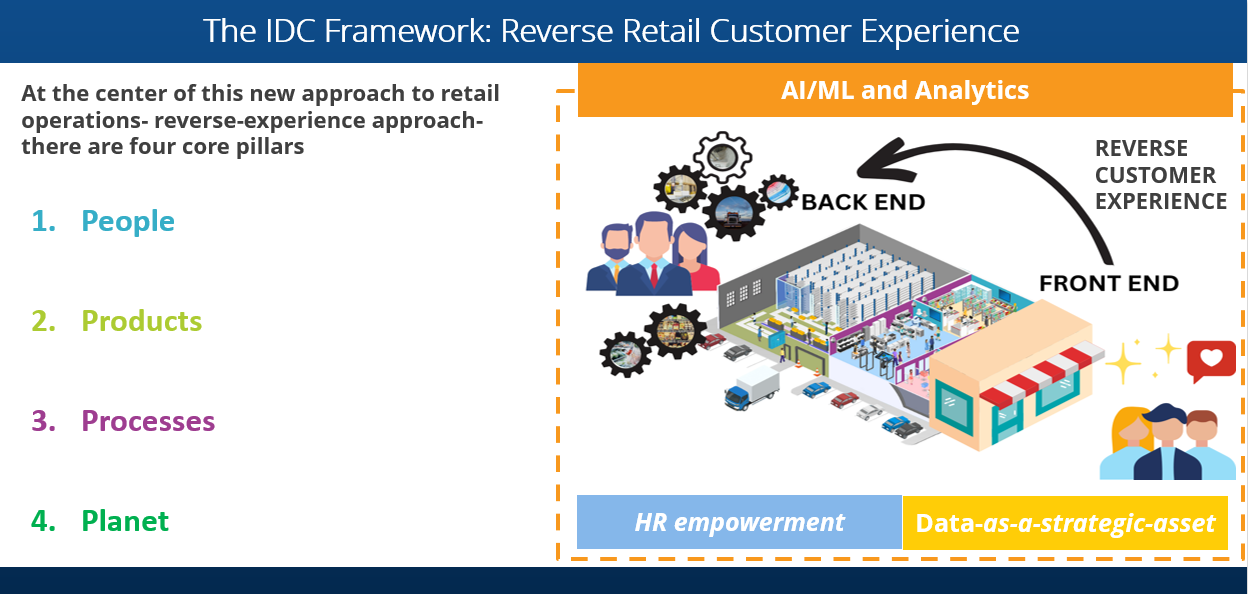
There is a growing emphasis on the back-office operations that are instrumental in retailers providing great omni-channel customer experience. In conjunction with the importance of front-end customer journey personalisation, what’s behind the scenes becomes key to meeting the expectations of increasingly channel-agnostic shoppers. Reverse experience — improving operational efficiencies to provide great customer journeys — is one of the key themes of our research for 2023 (watch this space!).

One vendor told us that order management systems (OMS) are the powerhouse that enable omni-channel retail. We agree. Among back-office operations, logistics and fulfilment weigh on retail operations’ profitability.

In addition, staff shortages make it harder for retailers to expand in the area. During our conversations at NRF, we came across concepts such as automation in fulfilment (e.g., microfulfilment), democratisation and uberisation of last-mile fleets (joining forces with partners to expand last-mile delivery), and solutions for reverse logistics and returns minimisation.

Employee Engagement

Reverse experience also means focusing on people — not just the customers but also employees and how store associates can integrate the two sides of the shopping experience to offer the best customer experience leveraging the right instruments, tools and training. The role of the store associate is growing in conjunction with the pivotal role of brick-and-mortar retail in the post-pandemic omni-channel environment.

Immersive Experience

Customers expect a coherent and augmented shopping experience. This should have the power (and the mystery) to transcend any discrepancies across channels.

Visual commerce is already a reality for retailers and brands that aim to enhance 360-degree customer engagement. This includes 3D visualisation, live streaming shopping, product design, digital showrooms, virtual try-on, the creation of personalised digital objects, virtual shopping assistants, customer care agents and human-like generated content.

Data Management

Customer data remains the fuel of the retail and consumer industry. Customer data platforms (CDPs) and data lakes have been the engine for collaboration between retail peers and brands. At the same time, AI and ML analytics are the foundational elements that convert data into actionable insights, that are converted into a better customer experience and personalisation, data accuracy, data security, identity management, data privacy and regulatory compliance, and data valorisation within partners’ ecosystems to generate a new source of revenue streams (e.g., retail media networks).

Loyalty

Retailers always aim to increase and maintain loyalty to build solid and trusted relationships with clients. This has led retailers to mix and match loyalty schemes, moving beyond rewards and unlocking customer lifetime value.

The platform-based approach to loyalty capabilities that we heard about in several conversations throughout the event is a clear sign that both retailers and brands have realised how important loyalty and customer satisfaction have been, especially during the pandemic. This has raised the bar for customer expectations and has led to new forms of collaboration between brands, as in the case of delivery subscriptions, by combining convenience, personalisation and omni-channel.

Next-generation Retail Platforms

Commerce platforms are central to retailers’ technology stacks. Retailers and D2C brands are looking for agility and flexibility in their commerce architecture to achieve omni-channel-ready operations.

These were recurrent topics in our conversations with commerce platform providers during the event. Composability was the key feature of next-generation commerce platforms at NRF. Composable commerce enables merchants to combine business services or modules without affecting other parts of the architecture. Simplifying UX and reducing the cost of experimentation are key objectives of the next-generation commerce architectures we came across at NRF, as well as enabling plug-and-play capabilities by ensuring the readiness of the back-end interface, such as making product categorisation ready for use in different touchpoints with the shopper, including mobile commerce apps and social media apps such as TikTok.


Retailers are focusing on getting the foundational capabilities right to meet the requirements of an increasingly complex omni-channel environment, particularly as the physical store is again becoming the centre of omni-channel operations and there is a strong need to blend online and offline and make the brick-and-mortar experience more digital. This resonates well with the reverse experience narrative.

Themes that would probably have been more prominent during the pandemic, including the role of emerging technologies such as blockchain, NFTs, Web3 and the metaverse, were less visible this year. We don’t believe retailers are turning their back on more visionary topics, however. Rather, they are preparing their back-end operations for the future of retail — whatever form that might take.

As of January 23rd 2023, Oracle has replaced Oracle Java SE Subscriptions commonly purchased by customers with a new Oracle Java SE Universal Subscription.

Employee for Java SE Universal Subscription: is defined as (i) all of Your full-time, part-time, temporary employees, and (ii) all of the full-time employees, part-time employees and temporary employees of Your agents, contractors, outsourcers, and consultants that support Your internal business operations. The quantity of the licenses required is determined by the number of Employees and not just the actual number of employees that use the Programs. For these Java SE Universal Subscription licenses, the licensed quantity purchased must, at a minimum, be equal to the number of Employees as of the effective date of Your order. Under this Employee metric for Java SE Universal Subscription Programs(s), You may only install and/or run the Java SE Universal Subscription Program(s) on up to 50,000 Processors, If Your use exceeds 50,000 Processors, exclusive of Processors installed and/or running on desktop and laptop computers, You must obtain an additional license from Oracle.

Source – https://www.oracle.com/us/corporate/pricing/price-lists/java-se-subscription-pricelist-5028356.pdf

Effectively, the new terms require customers to now purchase sufficient subscriptions in line with the Total Number of Customer Employees, regardless of whether they utilize/leverage the software directly, indirectly or not at all.  A customer with a small number of installs and a high number of employees, could see bills in the $Millions per annum.

As an example, a customer with 20,000 employees utilizing JAVA SE in any capacity under the new subscription terms would need to purchase JAVA SE Universal Subscriptions for all 20,000 Employees, at a monthly rate of $6.75, total $1.62M per annum.

Furthermore, there is a requirement to license Employees, Agents, Contractors, and temporary workers from third parties that support internal business operations of the customers, which will require further consideration and perhaps increase counts considerably.

For new customers this latest model will apply immediately and for existing customers this model might apply at next renewal. Whilst Oracle may signal that existing customers might be able to renew under the previous terms, this shouldn’t be considered a guarantee. Initial published costs for the model are as follows:

Source – https://www.oracle.com/us/corporate/pricing/price-lists/java-se-subscription-pricelist-5028356.pdf

When considering server deployments, the requirements to count Processors (Oracle Defined Processors) is still required although perhaps less emphasized, as by licensing all Employees, customers receive a grant of up to 50,000 Processor installations without extra charge (a further charge will apply to customers with higher Processor requirements). Those previous customer concerns around Virtualized Environments could likely still apply to customers when counting to that limit, noting the 50,000 Processor grant is still governed and defined by the same terms and definitions which have proved challenging to some customers previously.

Further information on pricing, full terms and further details can be found here:

What should customers do?

Overall, costs for many customers could be higher than those previously, therefore customers might choose to consider the impact of these changes on future renewals, gathering overall employee and partner counts, along with assessing Processor requirements in line with Oracle terms and definitions, to estimate any potential future requirements.

Furthermore, customers may wish to establish, or re-establish, assessments of third-party alternatives to Oracle JAVA that might fulfill their requirements, including both paid for and open-source options, in order to avoid potential costs.

Where assessments have been made to requirements with both the current and the revised model, IDC Pricing Evaluation customers can seek to benchmark pricing and obtain further advice on commercial optimization and strategy.

Finally, for customers that do not use Oracle JAVA, consideration might still be made, noting that Oracle terms are accepted on the download of the software and that Oracle monitors downloads from the JAVA website, therefore controls on the permission, access, download, and installation of Oracle JAVA might be seen as key to ensure large liabilities are not generated.

IDC’s Sourcing Advisory Services (SAS) provides you with the industry’s most-recognized price benchmarks, analyst advice and IT optimization insight. Learn more.

Neil Stewart - Vice President-Software Contracting Advisory (Major Vendors) - IDC

Neil Stewart, IDCs Senior Research Director for the Sourcing Advisory Service, provides expert coverage and insight into the Software Procurement and Commercial Market for Global Customers. Focusing on Major Software Vendors, Mr Stewart provides research, data and competitive intelligence helping customers to optimise their Software Investments, providing research and commercial insight on optimal pricing, contract vehicles and terms, available concessions, and proven negotiation strategies. Where Vendors might be transitioning to new product offerings, or where customer requirements are yet to be fully developed, he also provides more consultative assistance and strategic insight helping organisations both right-size software services and product requirements, but also understand their ongoing investments, entitlements and contractual responsibilities.

The current economic downturn has had a significant impact on businesses across industries. Digital native businesses (DNBs) are no exception. IDC defines DNBs as companies built based on modern, cloud-native technologies, leveraging data and AI across all aspects of their operations, from logistics to business models to customer engagement. All core value or revenue-generating processes are dependent on digital technology. A DNB leverages its ecosystem of stakeholders (i.e., customers, partners, suppliers, and the community) to drive community-led innovation, dynamically evolve, and co-create offerings.

Market growth for DNBs is heavily influenced by VC funding cycles. And these have seen drastic change over the past 24 months. Comparing deal activity to 2021, each quarter in 2022 showed an increasing decline.  Late-stage deal activity is low, and there is a significant lack of exit activity. This has an impact on valuations and results in portfolio triaging from venture capitalists. VCs have warned their portfolio companies to buckle up and ‘prepare for the worst’.

The last two years, however, create the basis for some tough comparisons (due to the pandemic driven spike in VC investments for digital native businesses). To put it into context, it is interesting to note that when compared to pre-pandemic levels (prior to 2020) overall VC investments have actually stayed on par or even showed growth (depending on the segment). Fundraising remained resilient, with most of the funds raised by larger, more experienced funds. Available cumulative dry powder is at an all-time high, just short of $300B, leaving enough money on the table to invest.

When looking at future market developments, it is important to note though that there is a difference in DNB business models and DNB company size. IDC distinguishes three DNB business models:

  • Tech-oriented DNBs, who focus primarily on selling a tech solution
  • B2B DNBs who offer tech-enabled digital services to the B2B market
  • B2C DNBs, who offer tech-enabled digital services to the B2C market.

The graphic below shows that tech-oriented DNBs are least likely to be affected by the economic downturn. B2B DNBs, in many cases, are vertical-oriented, and not all sectors are hit equally by current market conditions. The B2C market, appears to be hit the hardest. The consumer tech sector showed the largest decline in deals in 2022. In this consumer-driven recession, many of the larger B2C-oriented DNBs have been forced to look at their business model. The adage of profits over revenue and value over speed to market has become dominant in the B2C segment.

The same holds true for the various size classes that we distinguish in the DNB market. Not all size classes are affected to the same extent.

Up until this point, angel and seed deal activity appeared to be resilient to the economic downturn; however, this may change as the drop over the recent quarters has been significant. Deal value did increase, implying that start-ups in this segment are applying for larger funds to extend their runway. Early-stage deal activity also declined compared to 2021, but increased compared to pre-pandemic levels. Valuations remained on par, however, looking at a quarterly trend, they are declining as well.

The more mature digital natives are the most susceptible to economic conditions and public market pressure. Unicorns and mature, publicly listed DNBs face tough public market conditions and many of them have announced layoffs. Those planning an initial public offering are postponing their plans, making it more difficult for investors to cash in on their investments. This creates a hurdle in the venture capital investment cadence and in turn, makes it harder for start-ups and scale-ups to secure additional funding.

While the downturn may present challenges, it also presents opportunities. One area where start-ups and scale-ups can find opportunities is in recession-resilient tech areas such as cybersecurity, AI/ML, robotics and supply chain solutions. Additionally, focusing on industry-specific growth opportunities in the B2B DNB category, such as Fintech, Healthtech, and ClimateTech, remains beneficial.

Looking back, the pandemic has led to an abundance of funds available and the emergence of new business models in various sectors. The following economic downturn increases the need for sophisticated and innovative IT solutions. DNBs who depend on a digital business model are therefore expected to continue to increase their market share. IDC’s latest survey results show that DNBs are not inclined to cut back on their IT expenses*. This survey, of over 1200 DNBs globally further showed that this segment continues to invest more than average in IT and that the majority plans to increase these investments over the next 12 months. Overall IDC expects the worldwide digital native business tech spending to grow with a CAGR of 20.9% to become a $500 Billion Market in 2026.

In conclusion, the economic downturn will have its challenges for start-ups, scale-ups and unicorns, but still sees opportunity for growth, especially for the tech sector. By focusing on recession-resilient tech sectors and industry-specific growth opportunities, digital native businesses can navigate the current economic environment and secure the funding they need to grow their businesses.

If you want to learn more about this survey: please reach out to our Digital Native Business Team.

Customers’ raised expectations, government policies, a spike in fuel prices and technology innovation are converging to enable convenient, affordable, safe and environmentally sustainable mobility as a service (MaaS). MaaS solutions help connect the different phases of the door-to-door mobility experience, from planning to booking, payment, navigation and information queries, with seamless integrations across modes of transportation.

MaaS is not new, but it has been plagued by technical interoperability challenges and difficulty in finding the right business models that can push mobility ecosystem stakeholders — transit authorities, car OEMs, payment providers, transport network companies — to collaborate and share data.

Good Practices for MaaS Ecosystem Innovation

IDC research shows that MaaS is reaching an inflection point. Best practices are emerging among public transportation authorities and transportation operators to deliver on the promise of enabling customers to travel in a convenient way, when it suits them and at a reasonable cost.

At the same time, MaaS is enabling transport operators and planners to optimise the use of capital-intensive asset capacity, launch new revenue-generating services and encourage a modal shift to public modes of transport among citizens.

It all starts with the customer. User-centric MaaS apps enable travellers to build their unique mobility profile based on personal preferences, financial profile, physical characteristics and past behaviour. Service providers must recognise, serve and safeguard the individual preferences of each user to deliver truly personalised MaaS offerings.

Cities such as Genoa have deployed mobile-first user apps that provide a single point of access to information and services while on the move.

To book and pay for their journeys directly in the MaaS app, without the need to switch to a transport operator app, stakeholders must share data and define contractual models that benefit the whole ecosystem. In Spain, train operator Renfe has launched a door-to-door booking MaaS solution (the dōcō app) underpinned by a platform that enables actors across the mobility ecosystem to collaborate openly, from micromobility service providers, to ride-sharing apps, to technology manufacturers and payment system providers.

To enable rapid innovation and scale these MaaS data platforms to process, store, integrate and analyse vast swathes of data, transportation ecosystem companies such as Entur in Norway are moving away from monolithic, legacy systems to cloud-native solutions that enable data sharing at scale and agile innovation. 

Once data is aggregated and information is made accessible through platforms, transportation authorities can use it to build a mobility digital twin of the city that can help with traffic forecasting and simulation, traffic/city planning, infrastructure maintenance and asset management, and logistics resource planning. Data sharing can also support the development of new services and businesses. 


Further reading:

IDC PeerScape: Practices to Successfully Implement Mobility as a Service

Massimiliano Claps - Research Director - IDC

Massimiliano (Max) Claps is the research director for the Worldwide National Government Platforms and Technologies research in IDC's Government Insights practice. In this role, Max provides research and advisory services to technology suppliers and national civilian government senior leaders in the US and globally. Specific areas of research include improving government digital experiences, data and data sharing, AI and automation, cloud-enabled system modernization, the future of government work, and data protection and digital sovereignty to drive social, economic, and environmental outcomes for agencies and the public.