When IDC CEO Lorenzo Larini chose China as one of his first major destinations as a new chief executive, he wasn’t following a script. He was reading the data. 

Four months into his tenure, Larini is heading to Beijing to see firsthand what IDC’s analysts have been tracking for years: a market in a fundamental shift that most Western executives are still processing from a distance. He asked to meet with robotics companies. He wanted to see the technology himself. For Kitty Fok, IDC’s Managing Director in China and a 20-year veteran of the market, that instinct signals something important. 

“The energy in China right now, the innovation, the change since COVID, it is something very different from six years ago,” says Fok. “I really want him to feel that after his visit.” 

If your mental model of China was formed before the pandemic, it is time for an update. 

What does it mean that China is now a technology innovation engine? 

China is no longer just the world’s manufacturing center. It is one of the most active technology innovation markets on the planet, and the products, platforms, and business models coming out of China are already reshaping global competition. 

That transformation was built on three structural forces IDC has tracked across its 77 dedicated China research programs: the scale of China’s manufacturing base, the size of its domestic population and the demand it generates, and the external pressures that have pushed Chinese companies to build solutions from the ground up. 

Chinese vendors now lead globally in smartphones and electric vehicles. Robotics is where this next wave becomes impossible to ignore. IDC’s newly launched research on embodied intelligence projects China’s robotics market growing from $1.4 billion today to $77 billion in five years. That is 94% compound annual growth, every single year. Chinese robots are already shipping to Asia Pacific, Europe, and North America. This is not a future trend. It is already happening. And when you build for a billion people first, export follows naturally.  

Now look at the software layer. Alibaba built one of the most sophisticated e-commerce and logistics networks in the world. TikTok changed how a generation consumes content. And last year, DeepSeek moved global markets. Not because it was built with the most advanced compute infrastructure available, but because it was built without it. 

“We couldn’t get enough GPU from Nvidia because of restrictions,” says Fok. “So we had to change. DeepSeek happened because we didn’t have enough compute power. We had to innovate and create a different algorithm.” 

Necessity is a very effective R&D strategy. Western companies not watching this closely are working from an increasingly incomplete picture. 

What is the Belt and Road Initiative and why does it matter for global business? 

China’s innovation story doesn’t stop at its borders. That’s where the Belt and Road Initiative comes in. 

Modeled on the ancient Silk Road, it is the Chinese government’s coordinated strategy to help Chinese companies expand globally. In practice, the government establishes diplomatic relationships in target markets, state-owned enterprises move in first and build infrastructure, and private Chinese companies follow with a path already cleared. 

“The government itself is meeting with governments along the Silk Road, creating a better environment,” says Fok. “The state-owned enterprises set up infrastructure. Then all the other Chinese companies can go along with that.” 

The result is a wave of Chinese companies entering markets in the Middle East, Africa, and Europe that operate differently from what Western incumbents are used to: greater pricing flexibility, faster customization, and business models most Western companies haven’t encountered before. If you sell into those markets, you have new competition. If you want to reach Chinese enterprises expanding globally, they are actively looking for IT partners who understand their destination markets. Both are opportunities most Western companies haven’t fully accounted for. 

What Western companies get wrong about China 

The most common mistake IDC has observed across decades of working with multinationals is treating China as a sales geography rather than a distinct market. 

“The first mistake is assuming that anything that works in the US can sell in China,” says Fok. “I have seen American companies translate their product catalog into Chinese and hope that it will sell. It does not work like that.” 

China is a hardware-centric market. Even security companies need to sell appliances, not just software. When AI arrived, buyers expected AI devices alongside AI services. The product, the messaging, and the go-to-market approach all need to be built for the market, not translated into it. 

The second mistake is chasing the wrong benchmark. The competitive density in China is real, but a multinational doesn’t need to win it all. 

The key is finding the right slice. IDC helps companies identify their real addressable market in China, not the theoretical total, but the segment where a multinational can realistically compete and win. 

What does IDC uniquely offer for China strategy? 

That ground-level intelligence is what IDC has been building for approximately 40 years in China. IDC was the first foreign company to receive a media license in the country. Kitty Fok has spent 20 of her 30 years at IDC working in the Chinese market. 

Today, IDC operates 77 dedicated China research programs and has more than 70 analysts based in China. IDC’s nearest Western competitor has roughly 20. That presence matters because China is not a single market. Its provinces operate at different levels of maturity, its industries are distributed unevenly, and understanding which segment is addressable for a foreign company requires people talking to buyers and vendors every week, not a global report applied from the outside. 

“Sometimes we need to talk to the headquarters of a multinational to help them understand why China needs a different strategy,” says Fok. “Why it needs to be more than a sales office. That conversation requires local knowledge, not just market data.” 

IDC’s China intelligence works in both directions: helping Western companies enter China with the right strategy, and tracking how Chinese enterprises are expanding globally so Western companies in those markets know what’s coming. 

The signal in Larini’s visit 

Which brings the story back to Lorenzo Larini. 

Japan and China are the two largest single markets for IDC in Asia, and Larini is visiting both within months of taking the role, alongside IDC CFO Tiziana Figliola.  

He’s not just scheduling meetings. He is looking to meet with robotics companies and see the technology firsthand.  

According to Figliola—who lived and worked in China prior to becoming CFO at IDC— making this visit with Larini is a signal of how seriously IDC is weighing China as a driver of its next phase of growth. “What Larini will find is not the China of 2019. The technology is different. The competitive landscape is different. The pace of change is different in ways that are hard to appreciate without being there,” said Figliola.

For Fok, Larini’s visit matters beyond IDC. Since COVID, many Western executives have quietly stepped back from China, and a six-year gap in direct engagement is a long time in a market moving this fast.

That is the invitation for any Western executive weighing a China strategy. Come and see it. And when you are ready to act on what you see, make sure the intelligence behind your decisions comes from people who have been watching this market for decades. 

IDC has 70 analysts in China right now. The data is there. The question is whether you are ready to use it. 

Ryan Smith - Content Marketing Director - IDC

Ryan Smith is the Director of Content Marketing at IDC, where he leads brand-level content and social media strategy, aligning research insights with compelling storytelling to engage technology decision-makers. With a background in both IT and marketing, Ryan brings a unique blend of technical understanding and creative strategy to his work. He’s also a seasoned storyteller, speaker, and podcast host who believes the right message, told the right way, can drive both trust and transformation.

Christina Cardoza - Content Marketing Manager - IDC

Christina Cardoza is a Content Marketing Manager at IDC, where she specializes in brand content and social media strategy. With a background in journalism and editorial leadership, she has a proven ability to transform complex technology topics into clear, actionable insights.

レガシーシステムが稼働し続けるたびに、競合他社が優位を築いていく。日本の2.1兆円規模のITモダナイゼーション市場は待ってくれない—変革を急ぐ企業も同様である。

主要指標

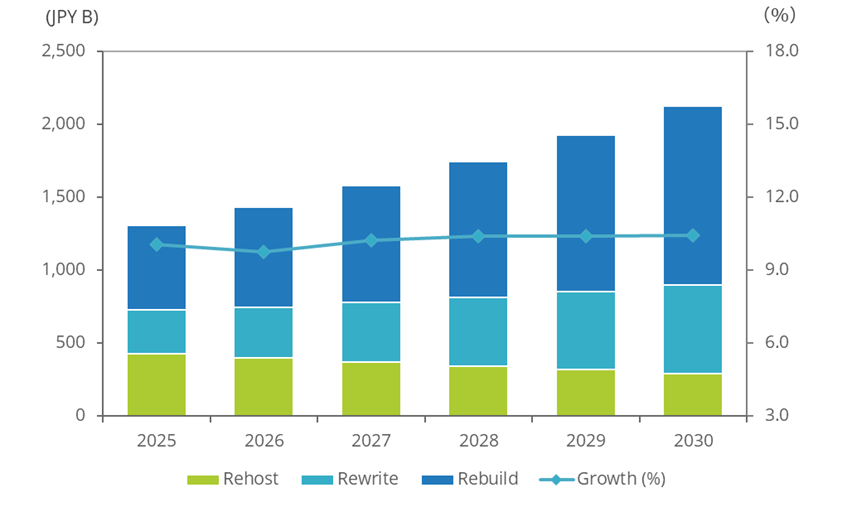
1,304億円 — ITモダナイゼーションサービス市場規模(2025年)

10.2% — 年平均成長率(2025〜2030年)

2,123億円 — 市場規模予測(2030年)

約80% — 依然としてレガシーシステムを稼働させている大企業・中堅企業の割合

なぜ日本は世界を上回るペースで成長しているのか

日本のITサービス市場は2024年から2029年にかけて年平均6.6%成長すると予測されており、世界平均の3.6%のほぼ2倍にあたる。その背景には構造的な要因がある。日本は特有の重いレガシー資産を抱えている——長年にわたる汎用機(メインフレーム)やオフィスコンピュータなどへの投資、複雑な個別開発システム、そしてそれらを長年維持してきた人材がある。今、これら三つに起因する課題が重なり合う中、ITモダナイゼーションが避けられないものになっている。

富士通メインフレームのサポート終了

2022年、富士通はメインフレームおよびUNIXサーバー製品の販売・サポートの2030年前後の終了を発表した。この発表により、1,000社以上の企業が後戻りのできないカウントダウンに入り、日本市場全体でITモダナイゼーションの取り組みが加速している。

AIへの対応という至上命題

AIの活用には、緊密に統合されたデータパイプラインと近代的なビジネスプロセス基盤が前提となる——まさにレガシーシステムはこれらの実現を阻む要素となっている。AI競争力を維持したい企業にとって、ITモダナイゼーションはもはや選択肢ではない。

人口動態の圧力

日本のレガシーシステムを構築・維持してきた世代のエンジニアが退職しつつある。そのノウハウや技術が失われてしまう前に、知識とインフラを移行できる時間は着実に縮まっている。

モダナイゼーションへの三つのアプローチ

IDCはITモダナイゼーションサービスを三つの実行タイプに分類しており、それぞれがサービス企業に異なる意味をもたらす。

リホスト

既存のアプリケーション資産を維持しながら、レガシー以外のプラットフォームへリフト&シフトする。予算や移行期間に制約を抱える企業にとっての入口となる手法である。

リライト

ビジネスロジックを変えずに、レガシーのソースコードを現代的な言語に変換する。管理された変革のための中間的なアプローチである。

リビルド

プロセス、データモデル、アーキテクチャをゼロから再定義する。最も高い価値をもたらす一方、最も複雑なアプローチでもある。

短期的には、リホストはリビルドに次ぐ2番目に大きなセグメントであり、メインフレームなどのEOL(End of Life)に対し早急な対応を要するに企業による支出が市場を牽引している——ただし既に成熟期を迎えており、今後はマイナス成長が予測されている。中長期的な成長機会は、アプリケーションのモダナイゼーション——リライト、リファクタリング、マイクロサービス化やクラウドネイティブアーキテクチャの採用——にある。

国内ITモダナイゼーションサービス市場 支出額予測: 2025年~2030年

Source: IDC Japan, 2/2026

企業がサービスプロバイダーに本当に求めているもの

IDCの調査では、レガシー依存度が相対的に高い大企業・中堅企業は、単なる技術的な実行だけを求めているのではなく、変革のパートナーを求めていることがわかった。セキュリティは基本的な前提として期待される一方、上位のニーズにはビジネスプロセス変革の支援やクラウド活用支援が挙がっている。

需要のシグナルはセクターによっても明確に異なる。

金融サービス

クラウドネイティブなアプリケーション開発能力、すなわち近代的なインフラ上で素早くイノベーションを起こす能力を優先している。

製造・流通

ビジネスプロセスの変革を優先している。基盤となる技術を刷新するだけでなく、業務に効率性とインテリジェンスを組み込むことを重視している。

全セクターを通じて、IDCは企業の期待に一貫した変化を観察している。ビジネス上の成果が主要な購買基準になりつつある。技術的な能力は当然のこととして見なされ、価値の創出が差別化要因となっている。

今、勝てるポジションを築くために

サービス企業にとって、競争上の必要性は明確だ。この市場で勝利する最良のポジションにある企業は、次の三つを実行する。

1. レガシーモダナイゼーションの実績を体系化する

過去の案件は活用されていない資産だ。サービス企業は、達成したビジネス成果——コスト削減、リードタイムの改善、AI対応力の解放——を体系的にまとめた資料を構築し、これを市場への訴求の核にすべきである。

2. AIの時代に向けた業種別のリファレンスアーキテクチャを開発する

汎用的なモダナイゼーションの提案は説得力を失いつつある。企業は自社のセクター、規制環境、そしてAIへの志向に合わせたシステムアーキテクチャと実装ロードマップを求めている。

3. 需要に先行してアプリケーションモダナイゼーション能力に投資する

リホストの波は既にピークに差し掛かりつつある。高い利益率をもたらす機会——リライト、リファクタリング、リビルド——がその後に続いている。クラウドネイティブとマイクロサービスの深い能力を培ったサービス企業こそが、2030年に向け企業から選ばれる存在となる。

IDCが提供するレポートのご紹介

IDCでは、国内ITモダナイゼーション市場の動向を詳細に分析したレポートを発行しています。

本調査レポートは、IDCの国内サービス市場予測における主要な成長促進要因の一つであるレガシーシステム(老朽化・陳腐化、肥大化・複雑化、ブラックボックス化したシステム)のITモダナイゼーションについて、市場規模の中期予測を示すと共に、国内企業(ITバイヤー)の取り組み動向や、それを支援するサービスベンダーの動向を分析しています。国内ITモダナイゼーションサービス市場予測では、サービスセグメント別、実行タイプ別(リホスト、リライト、リビルド)、システムタイプ別、産業分野別に予測しています。これらの分析から、国内企業のITモダナイゼーション支援におけるニーズ変化や市場機会、サービスベンダーの支援サービスの特徴や戦略を包括的に把握できます。

関連する調査やご相談について

より詳細なインサイトや市場動向については、当社アナリストへお気軽にご相談ください。

Masaru Muramatsu - Senior Research Analyst, Software, Services, and IT Spending, IDC Japan - IDC Japan

Masaru Muramatsu is a senior research analyst, responsible for research and analysis of the Japanese IT services market, including IT consulting, systems integration, business services. Prior to joining IDC, Masaru worked to help digitalize local government in Japan, implementing software as a service (SaaS) in the education and taxation sectors. He also acquired experience in domestic and international sales/marketing with his work for a company that provided materials for electronic devices like smartphones, PCs, and printers. Masaru Muramatsu earned a master’s degree in engineering from Chuo University, Japan.

IDC Directions 2026 brought together more than 700 technology and business leaders for a single day of focused, analyst-led intelligence on where enterprise AI is heading and what to do about it.

The scale tells part of the story: 82 IDC analysts, 56 speakers, and 29 sessions across marketing, data, emerging technology, and AI-ready infrastructure. The attendee response tells the rest. In IDC’s post-event attendee survey, 98% said the day was worth their time and 96% left with insights they could act on.

Catch up on what you missed at IDC Directions 2026.

IDC built this year’s Directions around a question most technology executives are wrestling with right now: AI ambition is everywhere. How do you turn it into enterprise results? Every session pointed toward an answer.

Three Conversations That Set the Agenda

Chief Product & Research Officer Meredith Whalen opened with her keynote on the AI Supercycle, IDC’s term for the once-in-three-decades technology expansion cycle now underway, driven by AI infrastructure investment and the enterprise adoption wave that follows. The infrastructure buildout is already underway. The enterprise adoption wave is next. Whether your organization captures value as it shifts to new layers of the stack depends on decisions being made right now.

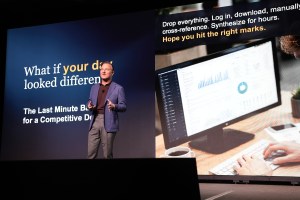
IDC CEO Lorenzo Larini brought the broader context into sharp relief. The volume of information is now growing at 17 petabytes per second. That’s not a backdrop — it’s the challenge. Making confident decisions in that environment requires a different kind of intelligence infrastructure, one built for speed and clarity rather than volume alone.

Lorenzo Larini speaking about the volume of data growth
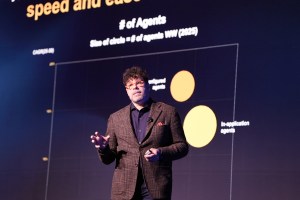
Alessandro Perilli looks to the future in his Directions presentation

Vice President of Enterprise AI Strategies Alessandro Perilli put a number on what’s coming: by 2029, IDC forecasts that enterprises will collectively be running more than one billion AI agents. The organizations now designing cross-functional, multi-agent environments for orchestration and resiliency will have a structural edge over those that aren’t.

IDC Quanta: A New Platform for the AI Era

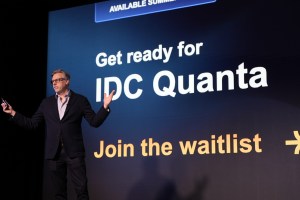
Directions was also where we shared more about IDC Quanta, our AI platform that puts IDC’s research and market intelligence directly into the tools enterprise teams already use. Built on 60+ years of IDC data and developed with input from more than 65 customers, Quanta is contextual, secure, and built to surface the signals that matter to your business before you think to ask.

Joe Bradley encourages the audience to join the waitlist for IDC Quanta, IDC's new AI platform

Early access is now full. The next window is coming. Reserve your spot now to be first in line when it opens, and get exclusive updates as the platform evolves.

 Visit our AI platform page to stay in the loop on IDC Quanta.

Everything Is Now Available on Demand

Whether you attended and want to revisit what you saw, or couldn’t make it and want to see what you missed: it’s all there. Sessions available include:

  • General sessions and mainstage keynotes
  • Breakouts across the Marketing, Data, Emerging Technology, and AI-Ready Infrastructure tracks
  • Analyst perspectives from across IDC’s research practice

The sessions were designed to give you something to take back to your team, your planning process, your next conversation about where to invest. They still will.

Don’t wait. See IDC Directions on Demand.

Ryan Smith - Content Marketing Director - IDC

Ryan Smith is the Director of Content Marketing at IDC, where he leads brand-level content and social media strategy, aligning research insights with compelling storytelling to engage technology decision-makers. With a background in both IT and marketing, Ryan brings a unique blend of technical understanding and creative strategy to his work. He’s also a seasoned storyteller, speaker, and podcast host who believes the right message, told the right way, can drive both trust and transformation.

IT has never been an easy job for CIOs and their teams. There’s the day-to-day reality of running the business, keeping systems available, managing risk, supporting customers, and delivering new capabilities. At the same time, CIOs are expected to keep pace with both the evolution of existing technologies and the steady stream of new ones entering the market. Some of the toughest challenges aren’t technical. They come from friction across roles, overlap, turf, and unclear ownership across IT and the business.

AI accelerates both progress and pressure

AI can help on the technology front. It can accelerate development, improve productivity, and make it easier to keep up with change. But it’s also introducing a new set of challenges — ones that can quickly turn into operational issues if CIOs don’t get ahead of them. Most CIOs are already feeling pressure from multiple directions. Boards and executive teams have invested heavily in AI and expect results. Business units are under the same pressure — and they don’t always wait for IT. Sometimes they partner. Other times, they move ahead on their own. That dynamic isn’t new. What’s changing is how easy it has become for the business to build technology without IT.

From IT-led development to business-led build

A recent article in The Wall Street Journal noted that OpenAI is working with firms like Accenture, Capgemini, and PwC to expand adoption of its AI coding tool, Codex — which generates and updates code from plain-English prompts — across enterprises, with millions of weekly active users and growing enterprise uptake. OpenAI Chief Revenue Officer Denise Dresser was quoted as saying that OpenAI’s consulting partners will help bring Codex “into every single line of business.”

Tools like Codex allow users to generate and update code using natural language. But that framing understates what’s really happening. These tools can be used to build applications, automate workflows, and create AI-driven agents that execute tasks across the business. Adoption is moving quickly. Finance teams can build finance applications. Sales teams can build sales tools. Increasingly, they’re doing it using plain-English prompts.

How boundaries blur

For CIOs, the challenge isn’t the technology; it’s the breakdown of traditional boundaries. Business units have often stepped in when they felt IT couldn’t move fast enough. Most CIOs have heard some version of: “I’m trying to run a business here. Either get it done or get out of the way.” What’s different now is that the barrier to entry is gone. With tools like Codex, and the support of external partners, business units don’t just have ideas. They can build and deploy. That’s where turf skirmishes emerge.

Development is no longer confined to IT. It’s happening across marketing, finance, and operations — anywhere there’s a problem to solve and the motivation to act. Without clear alignment within the organization, that quickly turns into overlapping solutions, duplicated effort, and ambiguous responsibilities.

Left unmanaged, this leads to familiar issues: fragmented architectures, integration challenges, security gaps, and increased operational risk. IDC’s 2025 assessment of low-code and no-code developer technologies confirms this shift is already underway at scale. But handled well, it can unlock a level of innovation most organizations struggle to achieve through centralized IT alone.

What CIOs should do next

The CIOs who get ahead of this won’t try to shut it down. They’ll get in front of it and shape it. In IDC’s conversations with enterprise CIOs, this is one of the most common inflection points we’re tracking right now. A few practical steps can make a meaningful difference.

Build fluency inside IT

Your teams need to understand tools like Codex well enough to guide the organization. That may mean partnering with firms like Accenture or PwC to accelerate the learning curve. The objective is straightforward: be the team the business turns to — not the one it works around.

Enable fast experimentation — but define the path to scale

Business units should be able to prototype quickly. In many cases, they’re closer to the problem and can move faster. But prototypes need a clear path into production. IT’s role is to take what works and integrate it, secure it, and operationalize it so it can scale across the enterprise.

Define roles early, before they get defined for you

If you don’t establish clear roles across IT and the business, they will emerge on their own — and usually through friction. Align early on:

  • Who builds demos and proofs of concept versus test and production
  • Who owns ideation versus scaling out and running
  • How solutions move from idea to production

Without that clarity, turf issues don’t go away — they grow.

Balancing speed and control

This isn’t just about Codex. It’s about what happens when the ability to build technology moves beyond IT. The CIOs who succeed won’t focus solely on control. They’ll focus on enablement — creating the conditions for the business to move faster while ensuring the right guardrails are in place. That balance — between speed and structure, autonomy and accountability — will determine how effectively organizations turn AI investment into real business outcomes.

Gerald Johnston

Gerald Johnston - Adjunct Research Advisor

Jerry Johnston, an adjunct research advisor with IDC’s IT Executive Programs (IEP), founded GJ Technology Consulting, LLC, where he assisted global financial institutions and helped launch a UK startup bank. Johnston is an experienced financial services and consulting executive who…

An AI system flags a high-value customer for fraud and blocks a transaction.
The customer churns within days. The business cannot explain why the decision was made.

A regulator asks for an audit trail of an autonomous workflow.
The organization cannot trace how the outcome was generated.

These are not edge cases. They are early signals of a broader shift.

As AI systems move into core operations, decisions are faster, workflows are more autonomous, and consequences are more visible. What changes is not just scale. It is accountability.

The challenge is no longer whether AI works.
The challenge is whether it can be trusted to work reliably, transparently, and at scale.

The new reality: scale without trust creates instability

Enterprise AI is entering high-stakes environments.

  • Decisions are automated
  • Workflows are autonomous
  • Data moves across systems and partners

This creates new pressure points:

  • Limited visibility into AI-driven decisions
  • Increasing regulatory and compliance exposure
  • Vulnerabilities across data, models, and agents
  • Erosion of customer and stakeholder confidence

Expectations are rising at the same time. Customers, regulators, and employees demand accountability, explainability, and control.

Without trust, scale introduces instability.

The shift: from AI adoption to trusted AI systems

IDC’s FutureScape 2026 predictions highlight a critical transition.

Organizations are moving from deploying AI systems to embedding trust into those systems.

This requires a new operating model:

  • Trust is built into workflows, not added after deployment
  • Governance operates continuously, not periodically
  • Security spans the full AI ecosystem, not isolated components

In practice, this means an AI-driven decision is no longer a black box.

A financial services firm deploying agentic AI for credit decisions can trace how a decision was made, validate the data used, demonstrate compliance, and apply human oversight where needed. That level of visibility allows AI to operate in regulated environments with confidence.

Trust, in this context, is operational.

To get there, organizations must move from principle to execution.

Charting the path: four moves to build trust and resilience

To succeed in this environment, leaders must take a deliberate approach to governance, transparency, security, and organizational readiness.

1. Embed governance into everyday operations

AI governance must move beyond policy frameworks.

Leading organizations are integrating governance directly into workflows through automated compliance checks, continuous monitoring, and embedded controls.

Without this:
Governance becomes reactive. Issues surface after failure, increasing regulatory risk and slowing adoption.

2. Establish transparency and accountability at scale

Autonomous systems require visibility.

Organizations must ensure that AI decisions can be traced, audited, and explained, with clear ownership for outcomes.

Without this: Decisions cannot be defended to regulators, customers, or internal stakeholders, limiting the use of AI in critical operations.

3. Strengthen security across the AI ecosystem

AI expands the attack surface across data, models, and agent interactions.

Organizations are adopting unified approaches to security, risk, and compliance that operate continuously across the AI lifecycle.

Without this: Vulnerabilities scale with adoption, exposing organizations to breaches, manipulation, and operational disruption.

4. Build a resilient, AI-ready organization

Resilience extends beyond systems to people and processes.

Organizations must prepare for workforce shifts, system disruptions, and evolving regulatory requirements.

Without this: AI-driven operations become fragile, with disruptions cascading across workflows and slowing response to change.

The payoff: trust as a foundation for scale

When trust is embedded into AI systems, organizations unlock consistent and measurable impact.

They gain:

  • Confidence in scaling AI initiatives
  • Stronger relationships with customers and stakeholders
  • Faster adoption of new capabilities
  • Greater resilience in uncertain environments

Trust enables organizations to move forward with clarity and control.

From control to confidence

The agentic future introduces new forms of risk alongside new opportunity.

Organizations that cannot explain, govern, or secure their AI systems will encounter increasing friction as they scale. Those that embed trust into their operations will move with greater confidence, expand into higher-value use cases, and sustain performance over time.

FutureScape 2026 makes the trajectory clear.

AI adoption is accelerating.
Trust will determine who can sustain it.

Those who operationalize trust will define the next phase of competitive advantage in the agentic economy.

Explore the FutureScape 2026 predictions behind trusted AI systems

FutureScape 2026 includes detailed research, analyst perspectives, and events that expand on building trust, resilience, and prosperity in the agentic future

Core Research

Analyst perspectives

On-demand webinars

IDC - -

International Data Corporation (IDC) is the premier global market intelligence, data, and events provider for the information technology, telecommunications, and consumer technology markets. With more than 1,300 analysts worldwide, IDC offers global, regional, and local expertise on technology and industry opportunities and trends in over 110 countries. IDC’s analysis and insight help IT professionals, business executives, and the investment community make fact-based technology decisions and achieve their key business objectives.

Organizations today are navigating powerful crosscurrents. Economic uncertainty, regulatory shifts, and workforce disruption are intensifying at the same time that AI is moving from experimentation to enterprise scale. Many leaders have responded by launching pilots, testing use cases, and investing in new tools.

A gap is emerging.

AI is present across the enterprise, yet measurable value remains limited.

Across industries, organizations are finding that experimentation does not automatically lead to impact. Pilots stall. Use cases remain isolated. Investments increase, but outcomes remain uneven.

The challenge is no longer whether to adopt AI. The challenge is how to operationalize it at scale.

The hidden barrier: From pilots to fragmentation

Most organizations are now well into their AI journey, yet many are unable to move beyond early deployments.

Isolated use cases create pockets of progress, but they do not transform the enterprise. Teams deploy agents, automate workflows, and generate insights, but these efforts are not connected to core operations.

This creates a new layer of complexity:

  • AI tools that do not integrate
  • Data that does not move in real time
  • Agents that operate without shared governance
  • Workflows that cannot scale across the organization

At the same time, the number of AI agents is increasing rapidly, introducing new demands for coordination, lifecycle management, and oversight.

Without a unifying approach, organizations face rising costs, inconsistent results, and delayed returns on investment.

In this environment, fragmentation becomes the primary barrier to progress.

The inflection point: From experimentation to orchestration

IDC’s FutureScape 2026 predictions highlight a clear shift.

Organizations that achieve impact will move beyond experimentation and adopt enterprise-wide orchestration.

This shift changes how the enterprise operates.

AI becomes embedded into the way decisions are made, work is executed, and systems interact.

Enterprise-wide orchestration includes:

  • Agents coordinating work across functions
  • Continuous data flow across systems
  • Applications evolving into AI-driven platforms
  • Governance integrated into daily operations

This is the transition from isolated deployments to connected systems that operate as a unified whole.

Charting the path: Four moves to scale AI with confidence

Reaching enterprise-wide orchestration requires deliberate action across strategy, architecture, and operations.

Based on FutureScape 2026 insights, four moves define this path.

1. Establish a control plane for AI orchestration

Scaling AI requires centralized coordination.

Leading organizations are building orchestration layers that manage agents, workflows, and governance across the enterprise. This creates consistency, reduces duplication, and enables AI systems to function together.

Without this coordination, complexity increases as deployments expand.

2. Re-architect for real-time, event-driven operations

Agentic AI depends on timely and contextual data.

Organizations must shift from batch-based systems to event-driven architectures where data flows continuously. This enables faster decision-making and allows agents to respond in real time.

In this model, data becomes an active component of operations rather than a static resource.

3. Build an AI lifecycle, not just deployments

Deploying AI is only the first step.

Organizations need structured lifecycle management that includes development, deployment, monitoring, and governance. This ensures that AI systems remain reliable and aligned with business objectives as they scale.

The adoption of formal lifecycle practices is becoming essential as agent usage expands.

4. Align the workforce to an orchestrated future

Enterprise orchestration requires changes in how work is performed.

As AI agents take on execution tasks, human roles shift toward oversight, coordination, and innovation. New responsibilities emerge in managing outcomes, ensuring accountability, and guiding AI systems.

Organizations that prepare their workforce for these roles will be better positioned to scale AI effectively.

The payoff: Enterprise impact at scale

When orchestration is achieved, organizations begin to see consistent and measurable impact.

AI supports coordinated operations across functions. Decision-making improves through real-time insights. Automation becomes more efficient and scalable. Innovation becomes a continuous process.

Organizations also gain greater adaptability. They can adjust workflows, reallocate resources, and respond to change more effectively.

From navigation to execution

The crosscurrents shaping the global economy will continue to evolve.

Navigation remains essential. Execution determines outcomes.

Organizations that adopt enterprise-wide orchestration can maintain direction, manage complexity, and scale their AI investments with confidence.

FutureScape 2026 makes the path forward clear.

AI adoption alone is not enough.
Operationalizing AI at scale is what drives results.

Those who take this step will define the next phase of the agentic future.

Explore the predictions behind charting the path to enterprise-wide orchestration

To move from AI experimentation to enterprise-wide orchestration, leaders need a coordinated view across applications, data, infrastructure, and operating models. The following FutureScape 2026 reports provide deeper insight into the predictions shaping this transition:

Core Research

Analyst perspectives

On-demand webinars

eBooks

IDC - -

International Data Corporation (IDC) is the premier global market intelligence, data, and events provider for the information technology, telecommunications, and consumer technology markets. With more than 1,300 analysts worldwide, IDC offers global, regional, and local expertise on technology and industry opportunities and trends in over 110 countries. IDC’s analysis and insight help IT professionals, business executives, and the investment community make fact-based technology decisions and achieve their key business objectives.

Digital sovereignty is moving from concept to strategic requirement. As organisations focus on managing IT risk, control, and compliance, expectations towards providers are rising. This blog explores why the “sovereign” label is no longer enough and what it takes to meet these new demands. 

Many technology providers in Europe today claim to offer “sovereign” solutions. 

But ask a simple follow-up question, what exactly makes them sovereign, and the answers quickly become less clear. 

At the same time, demand for digital sovereignty is increasing. Over the past 15 months, geopolitical and economic uncertainties have pushed the topic higher up the agenda. When asked about digital sovereignty, almost 50% of organisations globally say their interest has increased compared to the previous year. 

But focusing on geopolitics alone misses the bigger shift. 

Why digital sovereignty expectations are changing 

As interest grows, so do expectations. Digital sovereignty is no longer an abstract or purely regulatory concept. It is becoming an essential strategic requirement in IT decision-making. 

At the same time, it remains a source of confusion. Many organisations still struggle to define what sovereignty actually means in practice, what is required to achieve it, and whether they need it at all. And then you need to ask, who can you trust? And then you need to ask, who can you trust? 

This creates a gap in the market. Providers talk about sovereignty. Customers are still trying to understand it. 

What is really driving digital sovereignty adoption 

Despite the geopolitical backdrop, the main drivers are far more practical. 

Organisations are prioritising control over their data, stronger governance and compliance, and the ability to manage risk. In Europe in particular, protection against extra-territorial data requests has emerged as the highest concern. 

This is where expectations begin to change. 

More than 40% of organisations globally say they will increase the frequency and granularity of their reviews of IT vendors and platforms to better assess and manage this risk. Furthermore, when asked what was most needed to achieve data sovereignty, 85% cited enhanced tools and solutions for governance, risk and compliance as the extremely or very important. 

Thus, if digital sovereignty is ultimately about managing IT risk, it cannot be reduced to a label or a feature. It needs to be something that is tangible and can be clearly explained, implemented, and validated. 

This also changes the role of providers. They need to help organisations assess their risk appetite, manage that risk, and deliver the solutions required to meet these expectations. 

And this is where many providers are not yet aligned. 

What digital sovereignty actually requires 

Part of the challenge lies in how sovereignty is framed. It is often treated as a single capability, when in reality it spans multiple dimensions. 

One practical way to approach it is through three areas: data sovereignty, technical sovereignty, and operational sovereignty. These form the three key pillars of cloud sovereignty, which itself represents a subset of the broader concept of digital sovereignty. 

Together, these define how control is exercised across data, infrastructure, and operations. 

For providers, this raises the bar. Sovereignty is no longer something that can be communicated in broad terms. It needs to be articulated across these dimensions, in a way that is transparent and verifiable. 

Where sovereignty really matters: high-risk workloads 

It is also important to clarify where sovereignty actually needs to be applied. 

Sovereign requirements are typically focused on workloads that involve sensitive data, regulatory exposure, and or critical business processes. This increasingly includes certain AI use cases, where data control and model governance are essential. 

This is also where trust becomes central. 

Customers need confidence that sovereignty claims hold up under scrutiny, especially in high-risk scenarios. It is no longer enough to state that a solution is sovereign or to only address isolated aspects such as data residency or localisation. 

Providers need to demonstrate how sovereignty is ensured, where the boundaries lie, and what guarantees are in place. This assurance must extend across the entire partner ecosystem, from primary providers to their partners and beyond. 

From positioning to proof 

The conversation around digital sovereignty is evolving quickly. Expectations are rising, and with them, the level of scrutiny applied to providers. In this environment, sovereignty is no longer a positioning or marketing statement. It is something that needs to be clearly defined, agreed upon by all stakeholders, consistently implemented, and credibly demonstrated.

For many providers, that requires a shift. From broad claims to precise explanations. From messaging to evidence. And ultimately, from sovereignty as a label to sovereignty as a trust model that delivers autonomy, control, transparency, and resilience.

IDC’s strategic guide, Digital sovereignty beyond the label, breaks down what that shift looks like in practice, including a self-assessment framework across the three pillars of cloud sovereignty: data, technical, and operational.

One global technology provider put this to the test ahead of a major infrastructure launch, asking IDC to stress-test its sovereignty leadership claim before going to market. The case study covers what changed as a result.

For a closer look at how customer expectations are shifting and what that means for positioning, the webinar Digital sovereignty beyond the label: how customer expectations are changing is now available on demand.

 
All data sources: IDC Europe, Worldwide Digital Sovereignty survey 2025, July 2025 

Rahiel Nasir - Research Director, European Cloud Practice, Lead Analyst, Digital Sovereignty - IDC

Rahiel Nasir is responsible for leading and contributing to IDC's European cloud and cloud data management research programs, as well as supporting associated consulting projects. In addition, he leads IDC's worldwide Digital Sovereignty research program. Nasir has been watching technology markets and writing about them throughout his professional life.

IDCの最新レポートでは、今回の中東での戦争が2026年に向けてクラウドのレジリエンス、サイバーリスク、サプライチェーン、IT計画にどのような影響を及ぼすかを考察しています。
地政学的危機は、明確な予兆なく発生することがほとんどです。そして一度発生すれば、デジタルインフラ、サプライチェーン、テクノロジー運用に即座に大きな負荷がかかります。
今回の中東での戦争は、現代のデジタル経済、そして混乱下でも事業継続を担うCIOにとって、構造的なストレステストとなっています。
過去の紛争と異なり、現在の企業IT環境はクラウドインフラ、サブスクリプション型サービス、そしてグローバルに相互接続されたサプライチェーンに大きく依存しています。そのため、影響は局所的にとどまらず、地域・システム・パートナーを横断して急速に拡大します。
CIOにとっての課題は、単なるリスク管理ではありません。変化する状況に適応しながら事業運営を維持し続けることです。

IDC の見解:From Conflict to Continuity: How CIOs Can Respond to Disruption from the Middle East War.

なぜ今回の危機はCIOにとってこれまでと異なるのか

企業ITは、従来の内部完結型環境から、高度に分散されたエコシステムへと移行しています。

現在の企業は以下に依存しています:

  • クラウドプロバイダーおよびプラットフォームサービス
  • 分散型インフラおよび運用
  • テクノロジー供給および提供におけるグローバルサプライチェーン

この依存構造は、新たなリスクを生み出しています。

地域の不安定化は、以下に影響を与えます:

  • アプリケーションの可用性およびパフォーマンス
  • ハードウェア導入スケジュール
  • サイバー攻撃の増加
  • インフラおよびエネルギーコスト

これらの圧力は、既存のデジタル戦略の前提をすでに揺るがしています。

CIOにとっての優先事項は、自社のリスク露出(エクスポージャー)を把握し、それが業務にどう影響するかを理解することです。

エクスポージャーマッピングとシナリオプランニングから始める

最初のステップは、どこにリスクが集中しているかを特定することです。

CIOは以下の4つの観点で依存関係を整理すべきです:

  • 影響地域に所在する従業員・契約社員
  • 影響市場に関連する顧客および収益源
  • 混乱が発生している物流ルートやサプライヤー
  • 地域インフラに依存するアプリケーション、データ、運用

このマッピングが意思決定の基盤となります。

その上で、シナリオプランニングにより複数の展開に備えることが可能になります。

IDCは、CIOが検討すべき2つのシナリオを提示しています:

  • 地域の不安定状態が長期化するケース
  • エネルギーやサイバー領域に波及する広範なエスカレーション

シナリオごとに、レジリエンス、セキュリティ、投資の優先順位は変化します。

CIOが今優先すべきこと

CIOは以下の5つを直ちに見直す必要があります:

1. クラウドとインフラのレジリエンス再評価

単一リージョンや特定プロバイダーへの依存度を確認し、フェイルオーバー体制のギャップを特定する。

2. サイバーセキュリティの強化

脅威の増加を前提に、検知・対応・復旧能力を強化する。

3. テクノロジーサプライチェーンの多様化

供給のボトルネックを特定し、単一供給源への依存を低減する。

4. データ主権とコンプライアンスの見直し

地政学的緊張はデータローカライゼーションや規制強化を加速させる。

5. 人材・業務継続計画の整備

リモートワークや代替コミュニケーション手段を含め、業務継続を確保する。

これらは新しい課題ではありませんが、「同時に、かつ迅速に」対応する必要性が高まっています。

IDC アジアウェビナー(英語):Asia Pacific IT Spending Outlook 2026: Where to Win Amid Market Volatility

混乱下でのリーダーシップ

レジリエンスは技術課題であると同時に、リーダーシップの課題でもあります。

CIOは不確実性の中で明確な方向性を示す必要があります。成功する組織は、チームが目的を理解し、迅速に行動できる組織です。

有効なリーダーシップ行動には以下が含まれます:

  • 重要システム保護への明確なフォーカス
  • 意思決定の迅速化
  • 課題の分解と優先順位付け
  • 環境の簡素化と強化の機会特定

こうした局面では、技術的負債や運用の非効率、レジリエンスの欠如が顕在化します。

優れた組織は、混乱を「停止」ではなく「行動の契機」として捉えます。

混乱からオペレーショナル・レディネスへ

現在の状況は、地政学とデジタル運用の関係が変化していることを示しています。

CIOはもはや単発のインシデントに備えるのではなく、複数領域に同時影響が及ぶ前提で対応を進めなくてはなりません。

そのためには、継続的なレジリエンス強化が必要です:

  • 依存関係とリスクの可視化の継続
  • 複数シナリオを前提とした計画
  • 日常業務へのレジリエンスの組み込み

この能力を構築できた組織は、不確実性の中でもパフォーマンスを維持できます。

シナリオフレームワークの活用

リスクの把握は出発点に過ぎません。重要なのは、それを意思決定に落とし込むことです。

IDCのレポートでは以下について詳述しています:

  • IT支出やAI投資への影響
  • インフラ、サイバーセキュリティ、人材継続性への考慮点
  • 状況変化を把握するためのリスク指標

執筆者(Authors)

Rick Villars – Group VP, Worldwide Research – IDC

原文:2026年3月23日公開(英語)|日本語版監修:寄藤 幸治

関連する調査やご相談について

より詳細なインサイトや市場動向については、当社アナリストへお気軽にご相談ください。

Nations are prioritizing AI sovereignty, complicating operations for global CIOs. AI sovereignty defines a nation’s, or organization’s, control over the entire AI ecosystem, from the data used for training to the algorithms and the physical chips (GPUs) required to run them. Today, many governments are asserting their intent to regulate how AI is developed and deployed within their borders. For the modern enterprise, this transforms AI management from a purely technical challenge into a foundational leadership priority.

CIOs and enterprise executives must determine acceptable risk management objectives and how enterprise AI policy will align with regulatory compliance. Furthermore, CIOs must create a dynamic response that allows the IT organization and the broader enterprise to use predictive control to adapt to continuously changing regulations. IDC’s Sovereign AI Framework helps executives navigate these geopolitical and regulatory risks. By using this framework, organizations can align enterprise AI policies with diverse jurisdictional laws, ensuring strategic independence and compliance in an increasingly complex and regulated global landscape.

One size cannot fit all. There is no single model to respond to AI sovereignty globally, but there are several underlying themes for global CIOs. The enterprise AI model must account for the country of origin, the jurisdictions in which the company operates, how and why AI is deployed within the enterprise and with external entities such as suppliers and customers, and the industry in which the company operates.

As organizations rush to adopt AI, they often find themselves caught between innovation and risk management. While AI adoption is accelerating, it introduces a complex web of strategic, operational, regulatory, and geopolitical risks that global CIOs must navigate, often at significant cost. The table below provides a summary of risks with key drivers and dependencies.

Risk categoryKey drivers and dependencies
Regulatory and jurisdictionalModels and data hosted abroad may fall under foreign laws like the U.S. CLOUD Act or China’s Personal Information Protection Law (PIPL).
Security and supply chainVulnerabilities such as model poisoning and dependence on foreign semiconductor supply chains must be protected against.
Data and IP lossUse of external platforms can expose sensitive training data, customer information, and product designs.
Ethical and reputationalRelying on third-party models means inheriting their national biases and potentially inadequate safeguards.
Operational fragilityExcessive reliance leads to human skill erosion and single-point-of-failure architectures.
Economic and costEscalating compute/storage costs and unpredictable API pricing introduce variables that must be managed. Lack of scale to meet local requirements can make unit economics unattractive.

Five actions for CIOs

To manage the risks of AI sovereignty, IDC recommends five strategic actions for global CIOs:

  1. Educate the C-suite. Raise awareness of the importance of AI sovereignty, including data sovereignty, with the senior executive team. Provide a clear plan outlining opportunities and risks. Use the IDC Sovereign AI Framework as a starting point and adapt it to your enterprise, jurisdictions, and strategic intent.
  2. Consult legal experts. Work with legal experts who understand each jurisdiction where you operate to assess current and emerging AI laws and regulations relevant to your industry. CIOs will need to coordinate across functions, aligning legal, financial, and operational priorities.
  3. Balance global and local providers. Understand the trade-offs between global AI providers and smaller national providers. Most enterprises will adopt a hybrid approach, leveraging the scale of global providers while using smaller providers to build fit-for-purpose solutions aligned with enterprise strategy.
  4. Secure your data perimeter. Define an enterprise-specific AI sovereignty model. Identify proprietary data that should remain protected, such as marketing plans, customer information, research results, and product designs. Assess jurisdictional exposure for both data and the AI models that depend on it across all operating regions.
  5. Anticipate architectural shifts. A core implication of AI sovereignty is the move away from one-size-fits-all cloud models toward model-agnostic, hybrid architectures. CIOs are increasingly responsible for ensuring that sensitive workloads are processed within controlled environments. This often includes hybrid inference, where AI models run at the edge or within owned datacenters, keeping critical data, logic, and derived insights within the organizational perimeter.

As AI adoption becomes the norm across industries, managing AI sovereignty has shifted from a technical issue to a core risk management priority for global CIOs. AI sovereignty cannot be ignored.

Dr. Ron Babin - Adjunct Research Advisor - IDC

Dr. Ron Babin is an adjunct research advisor in IDC’s IT Executive Programs (IEP). He is a full professor at Toronto Metropolitan University, where he teaches IT management.

IDC一直密切关注主权云和AI主权的话题。特别是在当下地缘政治环境复杂的大背景下,企业如何在控制与创新之间找到平衡,在保障数据安全的同时实现业务发展,成为一道必答题。近日,IDC全球研究总监Massimiliano Claps、IDC中国研究副总裁周震刚联合撰文揭示,主权AI的核心理念并非追求绝对的封闭或开放,而是在安全合规与发展需求之间寻求和谐统一,真正将选择权掌握在自己手中。本文将梳理核心观点,与您一同探寻主权AI的破局之道。

各国政府机构与公共部门的高层管理者——如项目主管、CIO、CTO和CAIO等角色——始终肩负着双重使命:既要通过技术推动创新,又要控制好伴随而来的风险。从历史上看,私营部门的IT和业务领导者往往更敢于创新。不过,在受监管行业中,领导者所承受的压力与公共部门颇为相似。过去12到18个月里,这种张力在不断加剧。AI可能带来的巨大收益与颠覆性影响,引发了人们对于如何管理相关风险的担忧。同时,地缘政治的动荡,也让技术选择的战略自主性、数据的控制权以及运营韧性变得至关重要。这些变化交织在一起,汇聚成了当前关于主权AI的讨论。


主权辩论的演变:从战术控制到战略要务

速度与控制、创新与主权之间的张力,是当下数字化和AI战略的核心问题。这也正是主权辩论不断演变的焦点所在。之前,关于数字化和云主权的讨论,源于一个非常具体的担忧:敏感数据可能会被外国司法管辖区访问。如今,这种较为狭隘的担忧,已经扩展成了一个更宏大的命题。当前,主权已经成为一项战略要务,深刻影响着组织设计自身整个技术架构的方式。

今天,主权不再仅仅关乎“数据存放在哪里”,它涉及到对数据、基础设施、运营乃至供应链的控制。而AI主权则更进一步,它关乎对整个AI生命周期的控制——从模型开发、部署,到最终的治理。

IDC全球研究总监Massimiliano Claps表示,IDC研究表明,市场的信号非常清晰。各国政府正在积极投资主权AI能力,从国家云基础设施到本土的AI生态系统。它们通过各种激励措施推动本地数据中心建设,资助本土语言的AI模型,并制定指导方针,来规范主权解决方案的采购与部署方式。对于政策制定者而言,AI早已不再仅仅是一项技术,它已经成为提升经济竞争力和保障国家安全的重要工具。”

对组织来说,这意味着一个全新的现实。如今,企业高层管理者(包括业务与IT负责人)面临的问题不再是设计单一的全球架构,而是如何在碎片化、多主权的世界中找到自己的方向。

选择正确的路径

面对这种复杂性,许多领导者都在寻找一个“标准答案”:到底哪种部署模式最有主权?实际上,市场上已经形成了一系列部署原型,从公有云到完全物理隔离的环境,不一而足。每种模式在控制力、敏捷性、创新速度和成本方面,都各有利弊。没有哪种模式可以包打天下。

一个受到高度监管的AI工作负载,可能确实需要一个主权环境,甚至是物理隔离的环境。而一个面向客户的应用程序,可能更适合利用公有云的可扩展性,同时辅以一些主权控制措施。

真正的挑战在于,要为不同的用例,甚至是同一个用例的不同组成部分,选择正确的模式。例如,AI训练用一个部署模型,检索增强生成用另一个,而代理型AI编排层可能又要选第三种。

正因如此,混合架构正成为公共和私营部门共同的主流模式。根据IDC 2025年数字主权调查(覆盖了900多名来自各行各业的IT及非IT领导者),37%的受访者表示“本地部署是目前的主要环境,主权云是(或将是我们唯一使用的)云类型”,而高达55%的受访者表示“主权云是(或将成为)我们多云/混合云战略的一部分”。

IDC预测:

  • “到2028年,跨国公司的CIO,将把对模块化、主权就绪的云和数据本地化环境的投资增加65%,以应对日益增长的主权需求,确保运营能够适应未来发展。”
  • “到2026年,55% 的政府机构将采用混合主权云架构,将超大规模云服务商的能力与国家层面的控制相结合,确保AI应用合规、安全,并实现战略自主。”

公共和私营部门的领导者们,并未因此放弃云,而是在重塑云。他们将全球超大规模云服务商的能力与本地控制层相结合,构建出IDC所称的“主权就绪”环境。
这种做法也揭示了一个更深层次的真相:主权并不意味着自我封闭。主权的核心在于拥有选择权和控制权。

结合具体情况,IDC将主权云与主权 AI 划分为数据主权、技术主权、运营主权三个递进层级,主权掌控力度由低到高,企业无需追求一步到位,应结合自身合规要求、业务场景与创新节奏灵活选择适配层级。

  • 数据主权的核心是数据的属地存储、访问权限与合规流转,确保敏感数据不出境、受本国司法管辖,是企业满足基础监管要求的最低门槛,也是主权 云和主权AI 的起点。 
  • 技术主权聚焦算力硬件、模型框架、核心算法与供应链的自主可控,减少对单一外部技术的依赖,保障 AI 研发与迭代的技术自主性,适用于对安全与供应链韧性要求较高的场景。
  • 运营主权指对云和AI 全生命周期的部署、调度、运维、治理、应急响应拥有完全掌控权,覆盖基础设施运维、服务连续性、权限管理与合规审计,实现从技术到落地运营的全流程自主。

IDC中国研究副总裁周震刚表示,IDC认为,企业不必盲目追求更高层级,可按业务属性分级适配:普通创新场景满足数据主权即可;核心 AI 业务需叠加技术主权保障安全;政务、金融、关键基础设施等高监管领域,则需完整实现运营主权,在安全可控与业务效率间取得最优平衡。

主权AI的真相

关于数字化和AI主权的讨论,常常被描述成一种取舍:要么要控制,要么要创新。但那些真正能脱颖而出的组织,恰恰是摒弃了这种非此即彼思维的组织。它们明白,主权并不是限制创新,而是按照自己的方式去实现创新。

在AI正逐步成为经济与社会支柱的时代背景下,IDC的研究致力于帮助那些需要做出战略选择的业务和IT领导者,以及那些正在重新调整产品方向的技术供应商,把关键要素串联起来。

IDC主权云及AI主权相关研究报告

全球及政策制定者

  • 从数字主权到政府AI主权(2025-12)
  • 数字主权如何影响政府中的AI应用(2024-09)
  • IDC PlanScape:政策制定者的数字主权框架(2023-05)
  • AI主权:国家经济竞争力与安全(2025-02)
  • IDC PlanScape:国家政府IT领导者的数字与AI主权行动方案(2025-06)
  • 数据韧性、控制力与战略自主清单:重构复杂主权方法的实践进展(2025-08)

欧洲、中东、亚太等地区

  • 主权云对西欧、中东、土耳其和非洲地区AI工作负载的影响:组织需考虑的因素(2024-11)
  • 2025年欧洲主权云:什么是“B计划”?(2025-09)
  • 海湾地区主权云部署选择——全球与本地供应商如何在规模、控制与信任之间取得平衡(2025-11)
  • Deem Cloud:赋能沙特主权与AI就绪型政府服务(2025-09)
  • 亚太地区主权云:2025年市场动态(2025-09)

AI、云、能源、数据、应用

  • 数字主权如何影响AI与主权云的使用(2025-12)
  • 主权AI:是什么、为什么、怎么做(2025-11)
  • 全球主权云市场预测,2025–2029(2025-12)
  • 能源主权:数字主权如何影响IT能源选择(2025-10)
  • 数字主权与数据空间:不断演变的数据共享格局(2024-09)
  • 哪些工作负载迁移至主权云,AI如何受到影响?(2025-07)

IDC长期深耕数字主权、主权云与AI主权领域,持续跟踪全球市场动态,为企业提供从宏观趋势到落地路径的系统性洞察,涵盖国内以及亚太、中东非洲、欧洲、拉美等众多区域市场。

如需进一步了解与研究相关内容或咨询 IDC其他相关研究,请点击此处与我们联系。

Thomas Zhou - Vice President - IDC

Thomas Zhou is the vice president of Enterprise Research for IDC China. He leads the enterprise research team in covering market analyses, tracking of data, forecasting, and consulting for enterprise computing, storage, networking, infrastructure software, cloud, and datacenter. He is also responsible for IDC data tracking of software, services, and the public cloud services market in China. Thomas speaks frequently at IDC, industry, and user events and is always quoted in leading business and technology publications. Thomas joined IDC in 2006. He provides in-depth market analysis, research, and consulting on all aspects of the enterprise infrastructure to IT vendors and investors. During his tenure at IDC China, Thomas has led IDC's primary research focused on emerging trends in enterprise systems and datacenters. This research continues to make IDC a thought leader in enterprise infrastructure‒powered digital transformation. Thomas's recent topics covered software-defined infrastructure, hyperconvergence, virtualization, and cloud computing infrastructure. Prior to joining IDC, Thomas worked for 10 years as a senior project manager and business consultant for several leading IT companies in China. Thomas holds a master's degree in Computer Engineering from the University of Science and Technology of China.