

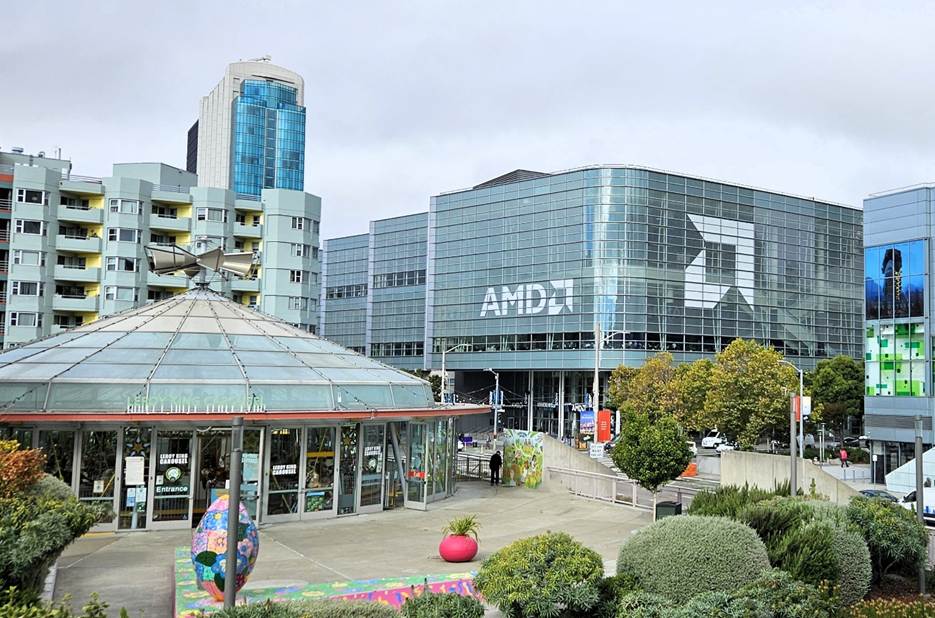
At AMD Advancing AI 2026, held on July 23, 2026, at the Moscone Center in San Francisco, California, AMD presented a broad AI strategy that spans cloud infrastructure, enterprise AI, client computing, robotics, and embedded systems. The event brought together developers, customers, ecosystem partners, and enterprise leaders to discuss how AMD’s end-to-end AI portfolio is evolving from silicon through software.
Financial Momentum Supports the AI Strategy
The announcements came shortly before AMD reported its second-quarter 2026 financial results. The company delivered record revenue of $11.5 billion, representing 50% year-over-year growth, while datacenter revenue more than doubled compared to the prior year. AMD attributed this growth to accelerating demand for EPYC processors, expanding Instinct deployments, and increasing AI infrastructure investments across the market.
A Vision Beyond Silicon
While hardware announcements often dominate AI events, the broader message from Advancing AI 2026 was AMD’s effort to create a unified AI development experience. The company’s strategy aims to enable developers to build AI applications on local systems, optimize them with a common software framework, and deploy them consistently across enterprise, cloud, edge, and robotics environments using the same foundational platform.
Building an Open AI Software Foundation
A key pillar of AMD’s strategy is its continued investment in open software. AMD reported that more than three million Hugging Face models run out of the box on AMD platforms, while many of the industry’s leading open-source AI projects now offer native AMD support. The company also highlighted significant growth in open-source contributions and ecosystem partnerships as part of its software expansion efforts.
ROCm Evolves from Platform to Development Ecosystem
AMD’s ROCm platform has evolved from a GPU programming environment into a broader AI software stack that supports frameworks, libraries, developer tools, and optimization capabilities. AMD positions ROCm as the common software layer that enables portability across its AI hardware portfolio, from client systems through hyperscale infrastructure.
Introducing ROCm.ai
Among the notable software announcements was ROCm.ai, an AI-driven development platform designed to help developers build, optimize, and deploy GPU applications more efficiently. ROCm.ai enables popular coding assistants such as Claude, Codex, Cursor, and Gemini to understand AMD hardware architectures and ROCm workflows natively, helping reduce the learning curve associated with GPU optimization.
AI-Assisted Performance Optimization
AMD also introduced capabilities that leverage AI to improve application performance. Through technologies such as Hyperloom, ROCm.ai can establish performance baselines, profile workloads, identify bottlenecks, tune serving configurations, generate optimized GPU kernels, and validate performance improvements. This represents a shift toward AI-assisted software engineering where optimization becomes increasingly automated.
Extending AI Development to the Desktop
AMD’s vision extends beyond the datacenter. With the Ryzen AI Halo developer platform and upcoming systems powered by Ryzen AI Max PRO 400 Series processors, AMD aims to make advanced AI development accessible on desktop-class hardware. These systems provide developers with local environments capable of running increasingly sophisticated AI workloads while maintaining compatibility with larger AMD compute environments.
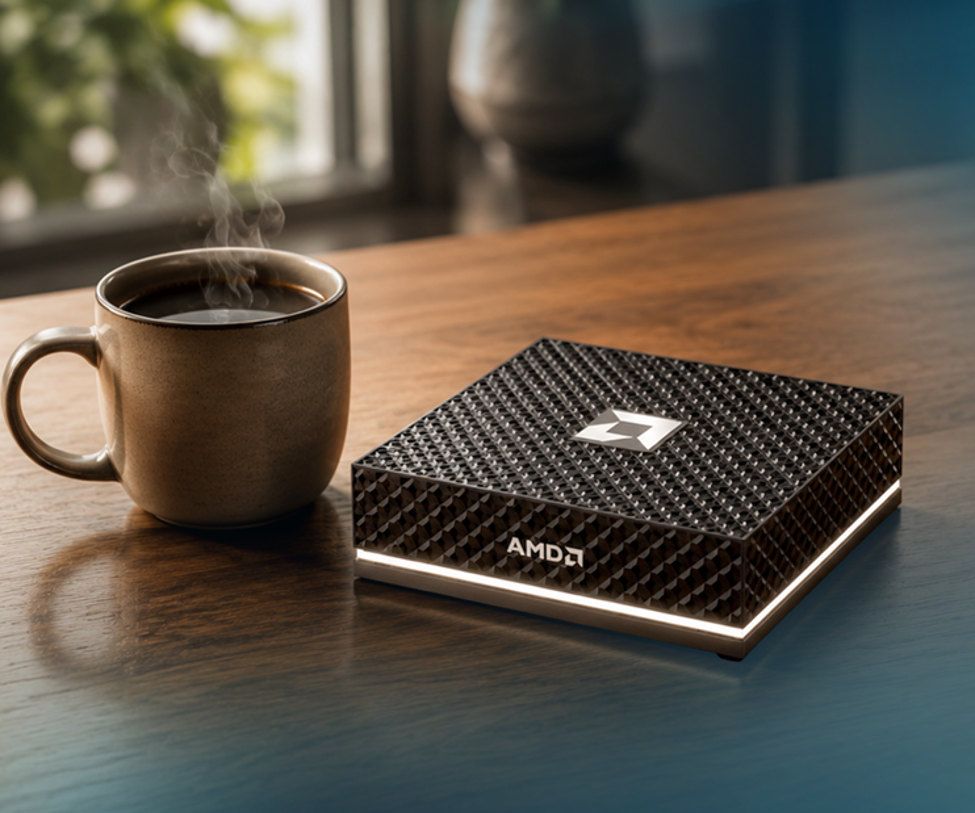
Ryzen AI Halo developer platform, source: AMD, 2026
Developing Locally, Scaling Globally
A notable aspect of AMD’s approach is software consistency across deployment environments. AMD presented ROCm.ai as supporting systems that range from AI PCs and workstations to rack-scale AI infrastructure and datacenters. This approach creates a workflow where models can be developed and tested on local hardware before being deployed at cloud scale using the same software foundation.
Enterprise AI and Hybrid Deployment
AMD also highlighted a collaboration with Cisco designed to combine AMD AI inference platforms, including Ryzen AI Halo systems, with Cisco networking, security, observability, and management capabilities. The goal is to help enterprises deploy, govern, and manage hybrid and local agentic AI deployments while maintaining operational consistency across environments.
Extending AI into Robotics and Physical Systems
Another major theme of the event was AMD’s expansion into Physical AI. As AI moves beyond digital environments into machines that perceive, reason, and act in the physical world, AMD is positioning its technology portfolio to address robotics, industrial automation, healthcare, and autonomous systems. AMD estimates that the Physical AI silicon market could reach $200 billion by 2035.
Introducing the Kria AI Portfolio
To address this opportunity, AMD introduced the Kria AI solutions portfolio, extending its presence from traditional robotics control systems into higher-level robot intelligence. AMD describes this as bringing together perception, reasoning, decision-making, and control capabilities on a unified platform designed for demanding robotic workloads.
Ryzen AI Embedded X100 Series
At the foundation of the portfolio is the new Ryzen AI Embedded X100 Series, which combines CPU, GPU, and NPU resources within a unified memory architecture. AMD positions these processors as platforms capable of supporting the simultaneous requirements of perception, reasoning, planning, orchestration, and real-time control that characterize modern Physical AI systems.
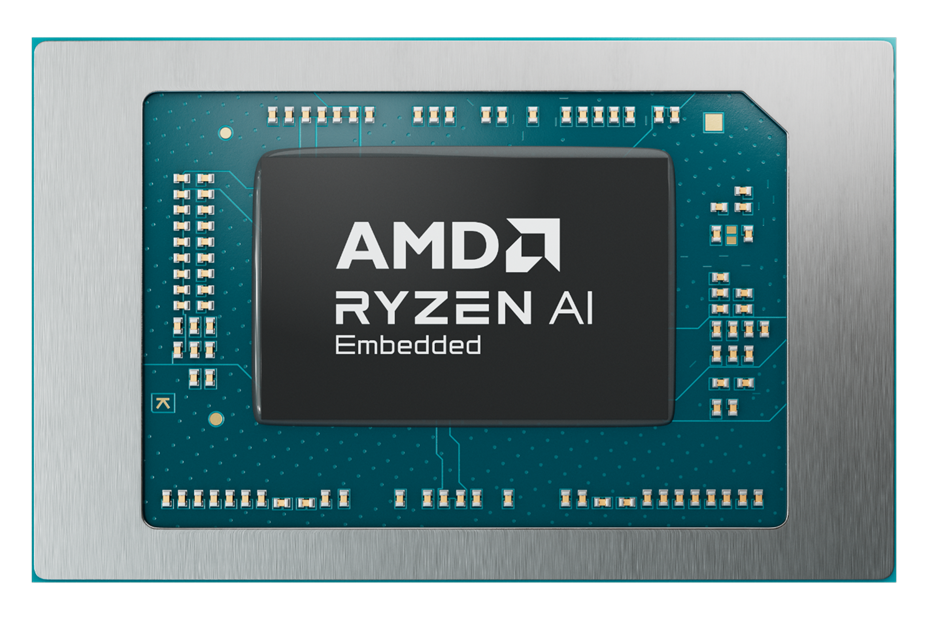
Ryzen AI Embedded X100 Series, source: AMD, 2026
The Kria AI Robotics Developer Platform
AMD also introduced the Kria AI Robotics Developer Platform, described as an open, turnkey robotics development environment that integrates CPU, GPU, NPU, and FPGA compute. The platform is intended to reduce development complexity while helping robotics developers move more quickly from concept and prototype to production deployment.
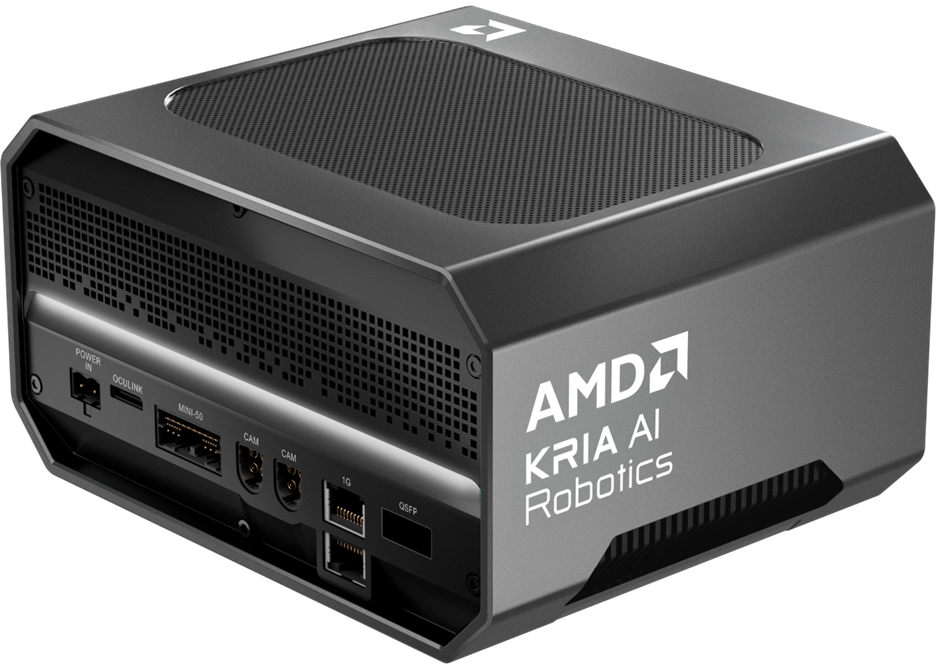
Kria AI Robotics Developer Platform, source: AMD, 2026
Bringing the Cloud Software Stack to the Edge
One strategically important aspect of AMD’s robotics announcements is software continuity. The new AMD Robotics Software Suite is built on ROCm, allowing developers to leverage familiar frameworks, tools, and workflows already used in cloud AI environments. AMD explicitly describes ROCm as both cloud-proven and embedded-ready, creating a common software layer between datacenter AI and Physical AI deployments.
Reducing Vendor Lock-In Through Open Standards
AMD repeatedly emphasized openness throughout its software and robotics announcements. The company highlighted support for open standards, familiar x86 development workflows, industry partnerships, and open-source technologies. In robotics specifically, AMD identified avoidance of vendor lock-in as a key priority among developers and positioned its software stack as an alternative built around portability and ecosystem flexibility.
Analyst Opinion and Conclusion
AMD’s Advancing AI 2026 announcements reflect a strategy focused on developer productivity, software consistency, and open ecosystem adoption. Rather than treating desktops, datacenters, edge systems, and robotics as separate markets, AMD is building a continuum in which applications can be developed locally, optimized through AI-assisted software tools, deployed at cloud scale, and extended into physical systems using a common architecture. This approach addresses a persistent industry challenge: the fragmentation between experimentation, production deployment, and edge execution.
Technical vision alone will not guarantee adoption, however. AMD continues to compete against an incumbent ecosystem built on years of developer investment, mature tooling, and deep integration with commercial AI applications, and shifting those established development priorities typically requires clear performance, cost, or business benefits. Pricing and total cost of ownership will matter as much as raw compute performance, particularly as enterprise buyers weigh software readiness, operational simplicity, and deployment timelines across the full lifecycle.
Success will likely depend less on hardware specifications than on ecosystem momentum: winning ISV certifications, application optimizations, framework support, and robotics middleware integrations may prove as important as introducing faster processors. The broader significance of Advancing AI 2026 is not that AMD is entering new AI segments, but that it is attempting to connect desktop, cloud, and physical AI through a common development model. Whether AMD becomes an increasingly influential platform provider across that continuum will depend on its ability to sustain software adoption and partner engagement alongside its hardware roadmap.