Your AI assistant is probably open right now, next to the deck or memo you’re writing. IDC’s Future of Work Survey, 2026 (n = 1,146) found that 88.8% of organizations report a productivity gain from AI. It also found that the share of employees losing more than an hour a day to searching for information fell from roughly 38% to 13% once AI assistants were in place.
A market-share figure can land in a draft in seconds and still get stopped in the meeting where someone asks where it came from. IDC Quanta is now available in Microsoft Copilot. It checks the market claims in your Word, PowerPoint, or Excel file against IDC research. Each sourced figure shows up as a tracked change, with a citation that links straight to idc.com.
What is IDC Quanta in Microsoft Copilot?
IDC Quanta in Microsoft Copilot is a connector listed in Copilot’s Connectors Gallery. It brings IDC’s licensed research and data into Word, PowerPoint, Excel, and Outlook. You ask in plain language. Copilot returns an answer drawn from the IDC library your organization is entitled to, with a citation on every figure.
IDC Quanta is IDC’s technology intelligence fabric. It draws on 60+ years of research, 1,000+ analysts, and 15B+ data points tracked annually, and a multi-agent system validates each answer before it ships. It already works in email and Claude, and it now extends to Copilot
What can you do with it inside Copilot?
Start with the document you have already written, refine it with IDC data using the IDC connector in Copilot, and return a draft with tracked changes so you see exactly what moved and why before anyone accepts it. The same file that goes to the client or the board carries the sources.
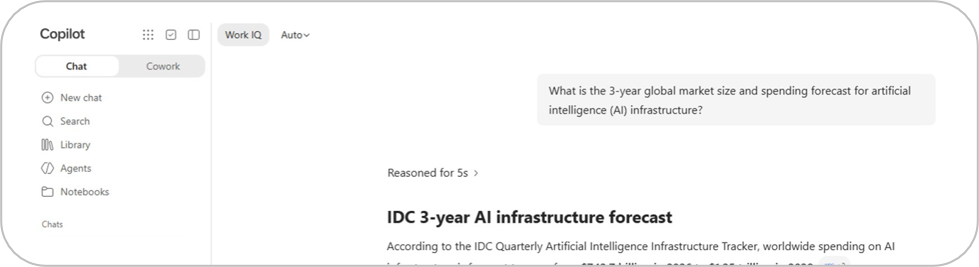
You can also just ask. In the Copilot chat panel, a question about vendor share or a spending forecast returns a plain-language answer based on your entitlements to IDC research and data tables, each attributed to its source.
And if a number needs a person behind it, the connector can surface the IDC analyst who covers the topic and that analyst’s published documents. You skip the separate search on idc.com.
How is it different from asking Copilot on its own?
A general-purpose assistant answers from the open web and its model training. The answer can read as confident while giving you no structured way to check where it came from. IDC Quanta grounds the answer in IDC’s licensed dataset instead. Every figure traces to a named IDC document. IDC Quanta also locks the exact dataset, definitions, and categories before it answers, so the number in your deck matches what IDC would publish itself.
How does access work?
Sign-in uses the Microsoft credentials you already use every day. Microsoft Entra ID maps your identity to your organization’s IDC entitlement, so it evaluates each request against what your organization licenses. IDC Quanta never uses customer data to train an AI model.
What does it mean for your team?
A product marketer can ground next year’s segmentation and positioning in independent market data while the plan is still a draft in Word. A seller who gets a competitive objection in an Outlook thread can pull deal-ready market share and leadership data on the spot, with the source attached. Strategy and market intelligence teams can check the sizing in a board deck against IDC research before it goes out. Analyst relations and product management can run the same check on their own briefings and roadmap documents.
See it in your own workflow
IDC Quanta in Microsoft Copilot is available now. Visit the IDC Quanta page to see how it works across Copilot, Claude, and email. Then book a demo and bring the deck you’re working on this week.