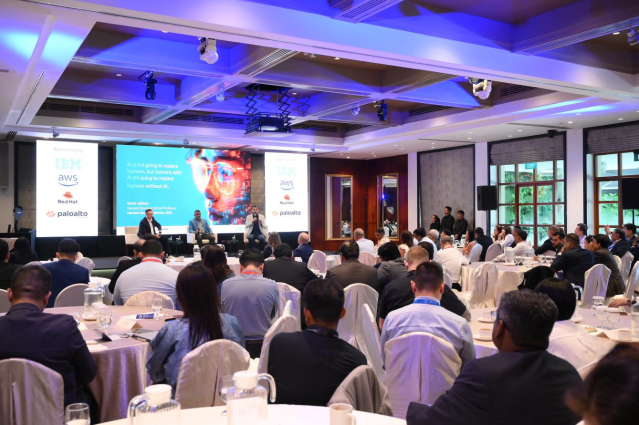
At the IDC Quanta launch webinar, Jamie Fiorda, SVP of Product Marketing at IDC, laid out why the gap between how fast markets move and how fast organizations understand them is becoming the defining challenge for companies trying to act before conditions shift again. He also laid out where AI-powered intelligence tools fit into closing it.

Fiorda’s starting point was access: who actually gets to use the intelligence a company already has. In most organizations, the market intelligence a company already invests in tends to serve a narrow slice of the business (a research team, maybe a strategy analyst or two), while the insights that could sharpen decisions elsewhere in the company never reach the people making them.

That’s the pattern Fiorda described: intelligence that exists, but sits in a portal most of the organization has no reason to open. The problem isn’t the quality of the research. It’s that the value of it is being rationed by who has access, right as every function in the business is under pressure to move faster on planning that used to have more runway.

Positioning AI as an Intelligence Layer, Not Another Tool

Fiorda’s case for IDC Quanta wasn’t framed as a new subscription or a new dashboard to learn. It was framed as infrastructure: a layer that sits beneath the tools an organization already uses, making the intelligence within them actionable and defensible.

Organizations already have plenty of AI tools. What most of them can’t do is prove their answers are trustworthy. That gap shows up largest in finance: nearly a third of global enterprises still run their finance analytics function with no formal structure at all, department by department, which is exactly where an M&A assumption or a market-sizing input gets challenged first by a board, an investor, or an auditor. Fiorda’s argument centers on embedding intelligence directly into the workflows where strategy is developed, backed by a source a leadership team can point to when that challenge arises.

What This Looks Like Across a Business

Fiorda walked through what that shift means function by function, not as a feature list, but as a picture of how fast an organization can move when intelligence isn’t gated to one team.

A market intelligence team doesn’t change what it does, just how quickly it does it: sizing markets and benchmarking with intelligence flowing directly into the tools they already use.

Finance picks up a use case that’s often entirely new: market sizing inside their own models, risk analysis, revenue validation, all backed by third-party data at the point of decision. IDC research points to real upside here: cognitive technologies applied across due diligence and predictive analytics are projected to drive a 25% increase in M&A returns by 2027, largely because AI-enabled screening surfaces viable targets faster than traditional methods can.

Product gains competitive benchmarking and roadmap validation the same way. Marketing builds segmentation and messaging grounded in actual demand trends instead of assumptions a real shift for CMOs navigating today’s pressure to justify every dollar: IDC research found 52% are already leaning harder into scenario-based planning and 41% report increased pressure to justify marketing ROI, both signs that assumption-driven messaging is no longer good enough. And sales walks into a room with validated, current talking points instead of a battlecard built last quarter.

The strategic point is that all five are pulling from the same source of truth, at the same time, without waiting on each other.

The Question Leaders Must Consider

Fiorda’s close reframed the pitch as a single question for leadership to sit with: if the intelligence an organization already values could reach five functions instead of one, what would that be worth? It’s worth sitting with the scale of that gap: IDC research shows nearly 60% of Chief Data Officers say their organizations need to rethink how they use analytics in decision-making, and only about a third of executives are active users of the intelligence tools already in place. That’s not just a research quality problem. It’s strategic value sitting untouched, simply because of where information lives.

In a landscape changing this quickly, the organizations that move fastest will be the ones where that research actually reaches every team that needs it.

Learn More

Organizations already working with IDC can talk to their account team about which teams could get access next. Those exploring IDC Quanta for the first time can request a demo at idc.com/quanta to see where this fits for your team.

Ryan Smith - Content Marketing Director - IDC

Ryan Smith is the Director of Content Marketing at IDC, where he leads brand-level content and social media strategy, aligning research insights with compelling storytelling to engage technology decision-makers. With a background in both IT and marketing, Ryan brings a unique blend of technical understanding and creative strategy to his work. He’s also a seasoned storyteller, speaker, and podcast host who believes the right message, told the right way, can drive both trust and transformation.

Token计费账单逐月攀升、实时响应需求倒逼本地推理、数据合规红线日益收紧——端云集中算力的“三座大山”已让企业不堪重负。国际数据公司(IDC)最新预测数据显示,2026年全球Gen AI PC出货量将达0.5亿台、Gen AI手机将达4.32亿台,边缘算力正从概念走向规模化落地。本文为你拆解算力下沉的底层逻辑、终端变局与新兴赛道,并提供三类角色的可执行行动清单。

AI终端产业正告别云端集中算力时代。随着Token计费模式普及、端侧算力芯片性能跃升,以及企业对数据隐私和实时响应要求的持续提高,纯粹依赖云端处理AI任务的模式已触及天花板。IDC最新发布的2026年全球PC和手机市场预测显示,2026年全球Gen AI PC出货量有望达0.5亿台,占整体PC出货量的19.6%,Gen AI手机出货量预计达4.32亿台、占整体手机出货量的39.7%——AI终端已进入规模化普及期。

但终端出货量激增只是表象。更深层的变化在于:端-边-云算力替代端云扩容,正在成为终端产品差异化竞争、企业智能化降本增效的核心路径。理解这场算力架构的深层切换,才能精准抓住AI终端赛道的结构性机遇。


然而,出货量数字背后的驱动力是什么?为什么厂商和用户不约而同地将算力需求从云端“拽”回本地?答案藏在端云模式的三个深层矛盾中。

一、算力下沉的底层逻辑:端-边-云模式的三大优势

当前AI终端产业正从端云集中算力向端-边-云协同架构转型。这一转型不是技术潮流使然,而是端云模式的三大短板已触达临界点:边缘侧产生的成本节约与安全性。

第一,节约成本。 随着Token计费模式普及,企业AI算力支出持续攀升,轻量化AI任务尚可承担,高频次推理场景下云端调用成本已让多数企业难以负荷。当每月Token费用从数千元飙升至数十万元,算力成本的陡峭曲线正在倒逼企业寻找替代方案,边缘侧大大节约成本。

第二,减少延迟。 7×24小时待机、本地化智能响应已成为终端刚需,而端云模式下的网络延迟无法满足高实时性场景——从智能家居的瞬时响应到工业现场的实时决策,云端往返的毫秒级延迟正在成为生产力损耗。边缘侧本地计算减少数据延迟问题。

第三,数据安全。 企业高频次、高隐私的业务数据通过云端处理,合规风险持续放大。尤其是在金融、医疗、政务等敏感领域,数据不出域已是刚性约束。边缘侧完美的解决了以上诸多问题。

二、终端变局:AI终端正演变为边缘算力核心

算力下沉的第一波红利,落在终端设备的形态重构上。

算力下沉带动AI智能硬件迎来高速增长,AI终端市场已进入规模化爆发周期。算力下沉重塑了手机、PC等传统终端定位——它们不再是单纯的数据采集和展示工具,而是具备本地推理能力的边缘算力节点。目前海内外轻量化AI终端密集迭代,AI眼镜、智能耳机等新品持续涌现,AI终端正从边缘侧支持AI原生应用,成为算力支持中心。

这一变局的意义在于,数亿台AI PC和AI手机构成的不是零散的设备群,而是一个分布式边缘算力池。每台设备都是算力的生产者和消费者,端侧算力从“闲置资源”变为“可用产能”。

各厂商将AI PC定位为边缘算力中心,覆盖mini PC、AI手机、高性能笔记本、塔式工作站等多元形态,兼顾普通用户端-边-云算力需求与企业本地化高强度算力部署场景,搭建起分层边缘算力体系。行业竞争重心已从纯云端算力比拼,转向端-边-云算力调度、生态适配与协同优化,为产业带来全新机遇的同时,也对算力分配、硬件适配、算法迭代提出更高要求。

三、新兴赛道:AI小型算力中心激活边缘新潜力

架构切换的窗口期,往往是新赛道爆发的黄金期。

在边缘算力生态中,AI小型算力中心成为新兴优质赛道。传统NAS、服务器只是数据存储和计算设备,而AI小型算力中心彻底升级了这一品类——集成强算力、算法与本地AI处理能力后,AI小型算力中心可独立完成本地模型推理、数据分析,无需将数据上传云端即可实现智能处理。

这一变化带来三重价值:一是降低云端压力,高频本地任务无需消耗Token费用;二是提升响应效率,本地推理消除网络延迟;三是保障数据安全,敏感数据全程不出本地设备。AI小型算力中心打通了云边端一体化算力链路,在家庭场景中可支撑智能相册管理、本地知识库检索,在中小企业场景中可满足私有化文档处理、轻量级模型微调等需求,适配范围广泛且落地门槛低。
终端变了,赛道出来了——但这些趋势对三类不同角色意味着什么?答案不是统一的,而是分层分场景的。

四、行动指南:三类角色的差异化策略

端侧迁移是AI发展的必然趋势,边缘计算机遇与挑战并存。未来能否搭建成熟的边缘算力体系,将成为厂商产品突围、企业降本增效、从业者把握赛道红利的关键。以下针对三类核心角色,给出具体可执行的行动建议。

硬件厂商:用分层产品替代同质化内卷

厂商需摒弃同质化产品研发,针对三类用户群体打造分层产品:

  • 消费市场:侧重轻量化、低功耗、高适配的AI手机、mini PC、AI小型算力中心设备,适配云端订阅算力模式。
  • 中小商户:提供一体化的边缘算力解决方案,以AI小型算力中心为核心节点,降低本地AI部署的技术门槛和运维成本。
  • 大型企业:重点布局高性能AI PC、塔式工作站,强化本地算力与算法集成能力,满足高强度本地推理场景需求。

具体可落地的第一步: 盘点现有产品线中哪些具备“本地推理能力”标签,将其从“功能卖点”升级为“独立算力节点”来定义产品定位,围绕端-边-云协同重构产品路径。

企业用户:用混合算力替代盲目云端扩容

企业无需盲目采购高端算力设备,可采用“云端通用算力+边缘端专属算力”的混合模式:

  • 常规轻量化AI任务依托云端Token订阅处理。
  • 高频次、高隐私的业务数据通过本地AI设备处理。
  • 以此平衡算力成本、响应速度与数据安全三重目标。

具体可落地的第一步: 梳理企业当前所有AI应用场景,按“实时性要求(高/中/低)”和“数据敏感度(高/中/低)”两个维度画出四象限矩阵,将落在“高实时+高敏感”象限的任务优先迁移至端侧处理,直接砍掉对应的云端Token预算。

最终用户:聚焦边缘生态,把握细分赛道红利

消费者可重点关注AI终端适配、边缘算法优化、算力调度、AI小型算力中心落地等细分领域,依托终端硬件爆发红利,布局个人AI场景化应用解决方案。

IDC洞察

AI产业下半场的核心红利不在端云扩容,而在端侧边缘算力的落地与生态完善。AI PC、AI手机的规模化爆发重构了终端算力需求,AI小型算力中心等新赛道持续补齐场景短板,端-边-云协同将彻底替代纯端云模式。短期来看,行业仍需磨合端-边-云算力配比与落地标准;长期来看,边缘算力的普及将进一步降低AI应用落地门槛,释放全场景智能化升级红利。

IDC中国助理研究副总裁武止戈认为,未来随着端侧生态持续完善、算力硬件不断迭代,边缘计算将成为AI规模化落地的核心底座,重塑整个智能产业的发展格局。

进一步交流

IDC中国终端系统研究团队将持续提供AI终端研究、端-边-云行业发展洞察、为厂商、渠道、企业用户提供可落地的边缘算力布局决策方案。如果你需要最新IDC终端产品市场规模预测、赛道竞争格局分析、厂商专属咨询、或是想要精准评估自身产品客户满意度(NPS)可联系我们分析师团队(点击此处),我们可提供一对一深度咨询服务,帮你规避端云算力内卷,精准抓住端-边-云布局确定性增量红利。

Fiona Wu

Fiona Wu - Associate Vice President, Client System Research and IPDS, IDC China

Fiona Wu, associate vice president for IDC China's Client System Research, has 10 years of experience working in the IT industry and is focused on research and analysis of the China IT hardware market. She leads the team to provide…

What Happened in China’s Smartphone Market in Q2 2026?

China’s smartphone shipments came in at roughly 66 million units in the second quarter of 2026, down 4.3% year over year and the fifth straight quarter of decline. Rising memory and component costs pushed most Android vendors to raise prices, which cooled upgrade demand. Huawei and Apple were the exceptions, growing close to 20% and 25% respectively.

China Smartphone Market, Top 10 Companies Market Share, and YoY Growth, Q2 2026 (Preliminary results, shipments in millions of units)
Company2Q26 Market Share2Q25 Market ShareYOY Growth
1. Huawei22.6%18.1%19.4%
2. Apple18.1%13.9%24.4%
3. OPPO16.0%17.3%-9.7%
3. vivo16.0%17.0%-11.4%
5. Xiaomi12.4%15.1%-21.7%
6. Honor11.3%11.9%-9.5%
7. Wiko1.1%2.1%-49.2%
8. Lenovo0.3%0.4%-10.4%
9. ZTE0.3%0.4%-33.5%
10. Samsung0.1%0.4%-60.8%
Others1.8%3.4%-50.3%
Total100.0%100.0%-4.3%
Source: IDC Quarterly Mobile Phone Tracker, July 14, 2026
Note:
• Data are preliminary and subject to change.
• All figures are rounded off.
• IDC declares a statistical tie in the Smartphone market when there is a difference of one-tenth of one percent (0.1%) or less in the shipment shares among two or more companies.
• vivo includes vivo and iQOO; OPPO includes OPPO, OnePlus, and realme.

 What Drove the Quarter

The pressure this quarter traced back to a few causes.

  • Memory and other core component costs climbed from late March onward, and most Android vendors responded by raising prices or trimming configurations. That directly dampened consumers’ willingness to upgrade.
  • The lift from government subsidies faded, removing a prop that had supported demand in earlier quarters.
  • Both forces showed up plainly during the “618” shopping festival, where overall smartphone sales fell close to 15% year over year.

Huawei and Apple moved in the opposite direction for reasons that were just as concrete. Both held prices steady while the rest of the Android field raised them, and both layered on targeted promotions. Huawei kept widening its lineup to cover more of the market, while Apple’s early signaling of price increases on its second-half products pulled some buyers forward into the iPhone 17 series sooner than they might have bought otherwise. Strong brand pull helped as well.

The top six vendors now hold about 96% of the market, which keeps squeezing smaller and mid-sized brands and pushes concentration higher.

China Smartphone Market at a Glance, Q2 2026

  • Total shipments: about 66 million units, down 4.3% year over year
  • Fifth consecutive quarter of year-over-year decline
  • First-half 2026 shipments: about 134 million units, down 4.2% year over year
  • Huawei and Apple: each up roughly 20% year over year
  • “618” festival smartphone sales: down close to 15% year over year
  • Vendor tiers: Huawei and Apple lead, followed by OPPO and vivo, then Xiaomi and Honor close behind
  • Top six vendors: about 96% of total market share

Analyst Insight

“Huawei and Apple held their prices steady while competitors were raising theirs, and that gave hesitant buyers a reason to go ahead and purchase in a quarter when most of the market was giving them a reason to wait,” says Arthur Guo, Research Analyst, Client Devices Research at IDC China.

What Is IDC’s Outlook?

Vendors have been cushioned so far by earlier low-cost component inventory, and as that runs down, cost pressure should land more heavily in the second half of the year. On current trends, the year-over-year decline in China could widen to around 20% in the second half of 2026.

Looking into 2027, the market faces continued headwinds, since storage pricing is unlikely to correct in a big way. Even so, there is room for measured optimism. Consumers are postponing upgrades rather than walking away from smartphones, so that delayed demand should return in time. The smartphone remains the one device almost everyone carries and relies on daily, so its core position holds. A recovery looks likely around 2028–2029 as a fresh replacement cycle comes due.

One scenario worth watching is how deeply software developers and large-model AI companies get involved, and whether some enter the market directly. The “AI agent” phone could become the direction that breaks the current impasse, though real AI adoption depends on four elements working together: hardware, operating system, ecosystem, and large models. Only when those four are integrated closely does AI move from concept to daily use, and that is what could eventually spark the next wave of upgrades.

FAQs

Why did China’s smartphone market decline even with new launches and AI features? The main drag was price. Rising memory and component costs led most Android vendors to raise prices from late March, and with government subsidy support fading, hesitant buyers chose to wait rather than upgrade.

Which vendors benefited most in Q2 2026? Huawei and Apple, growing about 20% and 25% year over year respectively. Both held prices steady while competitors raised theirs, ran targeted promotions, and drew on strong brand loyalty. Apple also saw purchases pulled forward ahead of expected second-half price increases.

What could change the market’s direction after 2026? Component costs, particularly storage, will shape the near term, with pressure likely running into 2027. Longer term, capable AI agent experiences that integrate hardware, software, ecosystem, and large models could revive upgrade demand around 2028–2029.

Learn More

Read the latest press release on preliminary data from the Worldwide Quarterly Mobile Phone Tracker or for the full data set and vendor-level detail, visit here.

Kiranjeet Kaur - Associate Research Director - IDC

Kiranjeet Kaur is an associate research director for IDC Asia/Pacific. She is involved in building IDC's successful research tracker programs and producing core market data used across all of IDC's Asia/Pacific research reports and consulting projects. Based in Singapore, Kiranjeet is part of a team that manages the quarterly Mobile Device Tracker where she is responsible for sizing and forecasting the Smartphone and mobile phone markets on a quarterly basis, examining competitive trends and studying end user trends.

从安全助手到数字员工,Agentic AI开启SOC建设运营新范式

过去几年,企业IT架构发生了深刻变化。混合云、多云、本地数据中心以及边缘计算等部署模式长期并存,业务系统和数据不断向云端迁移,安全边界逐渐模糊。与此同时,大模型、智能体以及AI原生应用开始快速进入企业生产环境,网络攻击也随之发生变化。攻击者借助生成式AI持续提升攻击效率,从自动生成钓鱼邮件、编写恶意代码,到利用智能体实施复杂攻击,攻击规模、速度和隐蔽性都在快速提升,传统SOC依赖规则、剧本和人工分析的运营模式正面临前所未有的挑战。

IDC观察到,Agentic AI(智能体)的快速成熟,正在推动安全运营进入新的发展阶段。不同于传统安全助手主要承担知识问答和辅助分析的角色,智能体具备自主规划、自主推理、自主执行和持续学习能力,能够直接参与威胁检测、事件调查、响应处置以及运营优化等完整流程,推动SOC由“人工驱动”向“智能体驱动”演进。Agentic SOC正在成为新一代安全运营范式。

市场进入高速增长期,Agentic AI成为安全运营的新引擎

国际数据公司(IDC)最新发布的《IDC MarketShare:中国基于大模型的安全运营平台市场份额,2025》(Doc# CHC53617226,2026年7月)报告数据显示,2025年,中国基于大模型的安全运营平台市场规模达到15亿元人民币,同比增长144%,成为近年来网络安全子市场增长最快的细分领域之一。这一增长表明,大模型技术正在从能力验证阶段迈向规模化应用,而安全运营已经成为AI技术在安全领域最先实现商业化落地、也是企业价值最明确的应用场景之一。其中,阿里巴巴、深信服科技、360数字安全集团、启明星辰集团、绿盟科技、安恒信息等厂商占据市场主导。

IDC预计,未来几年,随着智能体技术的持续成熟、多智能体协同能力的不断完善以及智能体治理体系的逐步建立,中国基于大模型的安全运营平台市场仍将保持高速增长,并逐步成为网络安全市场最具潜力的核心赛道之一。

Agentic AI正在重新定义SOC

过去几年,大模型开始进入SOC,但更多以AI助手(Copilot)的形式出现。这类能力虽然提升了分析效率,但本质上仍属于“辅助工具”,需要分析师主导整个运营流程。智能体则代表了另一种技术范式。与传统助手相比,安全运营智能体不仅能够理解用户意图,更能够围绕既定目标自主规划任务、自主调用工具、自主推理分析、自主执行操作,并根据执行结果持续优化后续行动,真正完成从威胁检测、事件调查到响应处置的完整安全运营任务。这意味着安全运营平台正从“工具自动化”迈向“智能体自主运营”。Agentic SOC并不是传统SOC增加一个聊天窗口,也不是SOAR叠加一个大模型,而是以安全运营智能体集群为核心,重构整个安全运营体系。更重要的是,智能体具备持续学习能力,能够在日常运营中不断积累企业知识、安全剧本和行业经验,逐步理解企业业务流程、安全策略和风险偏好,形成“运营即学习、学习即进化”的持续优化闭环。

IDC近日发布的《IDC MarketScape:中国安全运营智能体厂商评估,2026》(Doc #CHC54110626 ,2026年7月)报告指出,安全运营智能体的发展,不仅意味着AI能力的提升,更代表着安全运营模式的变革。传统SOC始终围绕“人”开展工作,分析师负责告警分析、事件调查、风险研判和响应处置。在Agentic SOC中,智能体开始承担越来越多重复性和标准化工作,可全天候自主完成告警分流、威胁调查、攻击溯源和事件响应,分析师的职责将逐步转向策略制定、复杂威胁研判和智能体管理等方向,实现从“人工处理告警、事件”到“管理智能体”的角色转变。

未来企业建设的不再只是一个SOC平台,而是一支能够7×24小时持续运行、由多个安全运营智能体组成的”数字安全团队”。安全分析师将逐步从告警处理者转变为智能体管理者和安全决策者,而安全运营平台也将从传统工具平台演进为企业AI原生安全运营的核心基础设施。

企业迈向Agentic SOC,仍需跨越五大门槛

尽管智能体为安全运营带来了新的可能,但从当前市场实践来看,安全运营智能体仍处于规模化落地的早期阶段。随着智能体逐步参与安全运营核心流程,企业关注点已从”智能体能不能用”转向“智能体能不能安全、可靠、持续地使用”。《IDC MarketScape:中国安全运营智能体厂商评估,2026》报告指出,企业部署Agentic SOC还需解决如下五大问题:

  • 系统集成复杂:智能体与现有安全平台、网络架构的融合涉及多系统对接和流程重构,落地门槛高。
  • 信任与可解释性不足:AI模型存在幻觉、决策过程不透明等问题,客户对智能体输出的结果和采取的行动的信任度有限,亟须增强可解释性。
  • 行业适配性问题:通用型智能体难以满足不同行业的专有安全需求,需要符合自身行业和场景要求的智能体。
  • 智能体自身安全风险:智能体本身可能成为新的攻击面,还需关注其自身安全防护和可控性。
  • 算力与数据合规挑战:智能体对算力资源消耗大,全部上云涉及数据安全、合规与算力成本的权衡,尤其在数据主权和行业监管严格的场景下更为突出。

IDC观察:Agentic SOC正沿七个方向持续演进

趋势一:从安全助手走向数字员工

安全运营智能体正由“辅助分析+建议输出”升级为“可执行主体”,不仅理解告警与威胁,还能直接调用工具链完成研判、响应与处置,形成从发现到修复的闭环。在一些标准化、低风险的场景中,安全运营智能体将逐步替代人工完成重复性工作,同时通过持续学习与策略优化提升处置质量与效率。未来衡量Agentic SOC成熟度的重要标准,不是智能体回答了多少问题,而是能够自主完成多少安全运营工作。

趋势二:从单一智能体走向多智能体协同

安全运营能力从单一智能体扩展为多智能体协作体系,不同角色(如检测、分析、溯源、响应、汇报等)分工协同完成复杂任务,通过编排与通信机制实现跨系统联动与全流程自动化。在某些成熟场景中可实现端到端自动响应与决策,推动安全运营向“无人值守”演进。与此同时,智能体集群协同机制将使得“超级智能体”成为用户安全运营的中枢和总管,进行任务调度与分配,帮助用户更好地完成安全运营任务。

趋势三:从GUI走向LUI,重塑安全运营交互方式

安全运营交互方式正由图形界面转向以自然语言与命令行为核心的对话式入口,用户通过与智能体交流即可完成查询、分析与处置操作,无需在复杂界面中反复切换。这种转变降低了使用门槛,提升了响应效率,并将安全运营入口从“系统界面”重塑为“对话即平台”的统一交互中心。

趋势四:走向智能体全生命周期管理

安全运营智能体是一系列智能体的集合,其工作流程中还会涉及调用诸多自有智能体、第三方智能体、工具、Skills等,智能体全生命周期管理至关重要。安全运营平台需覆盖智能体开发、编排、调优和监控的能力,实现智能体状态可视、动作可追溯、经验可沉淀、效果可量化,并通过数据反馈驱动能力持续进化。

趋势五:与用户共同成长,形成持续进化能力

智能体的真正价值来自与用户长期的协同进化,并深度结合具体业务场景与行业特性进行优化。一方面,为用户开放智能体、Skills等开发环境,并简化开发流程,降低使用门槛。另一方面,持续积累、整合知识库、Skills与剧本等能力资产,在真实运营中不断沉淀经验与优化策略,逐步形成可复用、可扩展且具备行业适配能力的安全运营体系。

趋势六:安全可信成为Agentic SOC规模化落地的基础

智能体自身的安全与可信问题是企业上线部署以及使用智能体的前提条件,安全运营智能体的技术服务提供商还需系统性解决模型幻觉、智能体身份与权限边界、决策可解释性等核心风险。同时引入“AI对抗AI、AI防护AI”的机制,通过智能体之间的交叉验证、对抗检测与自动审计提升防护能力,确保其行为可控、过程可追溯、结果可验证,从而支撑其在关键安全场景中的可靠落地。

趋势七:构建开放生态,推动安全运营平台化发展

安全运营智能体的发展不再依赖单一能力,而是需要构建涵盖模型生态、工具生态与行业生态的协同体系,通过多模型接入、工具链整合与行业伙伴共建,形成能力互补与持续扩展的生态格局。在此基础上,最终实现能力的快速集成与场景的灵活适配,推动安全运营从“单点能力”向“生态化能力平台”演进。

IDC中国网络安全领域研究经理王一汀表示,2026年,伴随智能体应用部署加快,安全运营智能体进入规模化落地与体系化演进的新阶段,Agentic SOC将成为企业AI原生安全运营体系的重要基础设施,也将成为未来几年网络安全市场最具活力和创新潜力的发展方向之一。从技术演进路径看,安全运营智能体正由“辅助工具”快速转向“数字员工”,在告警降噪、事件分析与威胁响应等高频场景中形成实用化能力,并逐步承担更多自动化处置职责。未来,Agentic SOC的发展将呈现集群化协同、平台化统一管理、全生命周期治理、安全可信增强以及开放生态融合等趋势,并通过持续的反馈与调优机制构建学习与优化的闭环体系,推动安全运营能力向更高效、更智能的方向迈进。

IDC更多相关研究:

进一步交流

IDC已于2026年启动AI安全技术系列研究,围绕AI原生安全架构、安全智能体成熟度评估、AI驱动DevSecOps实践路径以及企业级AI治理框架等方向展开持续跟踪与分析。对于希望进一步了解相关研究、评估自身AI安全能力或探讨落地路径的企业,欢迎与IDC分析师团队进行深入沟通(请点击此处),以获得更具针对性的洞察与建议。

Sophia Wang, CISSP

Sophia Wang, CISSP - Research Manager

Sophia Wang is a Research Manager in IDC China. She is responsible for the analysis and research of China's cybersecurity market. Her primary focus is on China's cybersecurity appliance and services market and operational technology (OT) security market. Additionally, she…

随着机器人技术持续成熟、应用场景不断拓展,全球配送机器人和商用清洁机器人市场进入快速发展阶段,商业化进程持续加快。为持续跟踪全球市场发展趋势,国际数据公司(IDC)最新发布了《全球配送机器人跟踪报告》《全球商用清洁机器人跟踪报告》显示,2025年全球商用服务机器人市场继续保持高速增长。全年市场规模达到13.7亿美元,同比增长35.7%;全年出货量约15.5万台,同比增长44.1%。

IDC预计,2026-2030年全球商用服务机器人市场仍将保持较快增长,2026—2030年货量复合增长率(CAGR)约15.1%。到2030年,全球商用服务机器人出货量将达45.4万台,市场规模将至31.7亿美元。

商用清洁机器人领跑市场增长,配送机器人保持规模优势

从产品品类来看,商业清洁机器人是2025年全球商用服务机器人市场增长最快的细分领域。2025年全球商业清洁机器人出货量约5.8万台,同比增长83.8%;市场规模超7.6亿美元,同比增长48.5%。中国市场规模化部署持续放量,欧美市场渗透率持续提升,日本、亚太市场更新换代需求稳步释放,共同推动商用清洁机器人快速增长。

配送机器人仍是全球商用服务机器人出货规模最大的细分市场,并继续保持稳健增长。2025年全球配送机器人全年出货量约8.4万台,同比增长30.2%;市场规模超3.8亿美元,同比增长25.4%。餐饮、酒店、医疗等场景需求持续增长,叠加劳动力短缺及智能化升级需求,推动配送机器人市场稳步发展。

全球化成为产业发展主线,中国厂商持续引领全球市场

全球商用服务机器人需求持续增长,全球市场进入多区域协同增长阶段,成熟市场持续扩容,新兴市场保持高速增长。2025年,中国、西欧、日本、美国及亚太(除中国、日本)位列全球前五大区域市场,合计贡献全球出货量约92.1%。其中,中国市场份额约38%,继续保持全球第一;拉丁美洲市场出货量同比增长84.4%,成为全球增长最快的区域市场。

中国企业正依托完善的制造体系、成熟的供应链能力以及人工智能技术创新,不断提升产品性能、智能化水平和成本竞争力,加快全球市场布局。2025年全球商用服务机器人出货量Top 10厂商中,中国厂商占据绝对优势,合计出货量占比超过90%。其中,擎朗智能、普渡机器人、高仙机器人位居全球出货量前三,三家厂商合计贡献全球出货量约53.2%,且海外收入占整体营收的比重均超过65%,全球化运营能力持续增强。

  • 擎朗智能连续保持全球商用服务机器人出货量第一,持续领跑全球配送机器人市场;同时积极布局商用清洁等新品类,商用清洁机器人业务出货量同比增长超过800%,第二增长曲线加速形成。
  • 普渡机器人持续推进配送与商用清洁双产品战略,两大产品线协同发展,商用清洁机器人业务增长更快。
  • 高仙机器人连续保持全球商用清洁机器人销售额、出货量双第一。作为商用清洁机器人赛道的开拓和定义者,高仙持续迭代的产品创新实力、深度适配多元场景的完整解决方案,持续巩固行业领先地位。

全球化竞争正从市场拓展迈向全球运营能力竞争。与此同时,欧美及新加坡等地区的厂商也在不断拓展国际市场。例如,LionsBot持续拓展西欧、美国及中东非市场;Bear Robotics依托LG全球合作网络,加快布局美国、西欧及亚太市场。未来,品牌建设、本地化运营、服务体系和生态合作能力将成为全球竞争的关键,具备全球运营能力的企业有望进一步巩固竞争优势。

应用场景持续拓展,机器人向更复杂环境延伸

随着自主导航、多传感器融合和环境感知能力不断提升,商用服务机器人的应用边界持续扩大,行业渗透率不断提升,应用场景正由室内向室外、由相对稳定环境向开放复杂环境持续延伸。

  • 配送机器人主要应用于餐饮、酒店、楼宇、文娱和零售行业,前五大行业占全球出货量92.8%;医疗、教育等行业需求持续增长
  • 商用清洁机器人主要应用于楼宇、零售、交通、酒店和餐饮行业,前五大行业占全球出货量72.9%;医疗、物流及工业等行业成为新的增长领域。
  • 室外服务机器人商业化进程明显提速。随着室外自主导航、环境感知和安全避障能力不断提升, 2025年全球室外服务机器人出货量同比增长62.2%,在外卖配送、园区配送、道路清扫、安防巡检等场景实现快速发展。

物理AI驱动升级,具身智能开启服务机器人新阶段

物理AI正推动商用服务机器人向具身智能体演进。随着具身智能模型、多模态感知、世界模型及机器人基础模型持续成熟,机器人将不断提升环境理解、任务规划、自主决策和持续学习能力,向自主完成复杂服务任务演进,产业竞争也将向AI模型、数据和场景能力迁移。

  • 具身智能推动机器人向自主服务演进。机器人将具备更强的环境感知、任务理解和自主执行和持续学习能力,实现从”被动执行任务”向”自主完成任务”转变。
  • 服务机器人形态持续丰富,人形机器人与服务机器人协同作业。配送、商用清洁等服务机器人将持续承担高频、标准化任务,人形机器人加快在酒店迎宾、零售导购、展馆讲解、物业服务、物品搬运等场景开展应用,二者协同满足复杂、多样化服务需求。
  • 竞争转向“AI+数据+运营”迁移。未来竞争将不再局限于机器人本体性能,而是围绕AI模型能力、数据闭环、软件平台、服务场景Know-how及运营服务能力展开,商业模式也将持续向RaaS、AI模型服务和机器人运营服务延伸。

全球服务机器人市场正迈入高质量发展阶段,来市场竞争将从单一产品能力转向产品、AI能力与场景化解决方案的综合竞争。——IDC中国机器人与具身智能领域研究经理李君兰

本文核心内容基于IDC相关研究成果:

本文数据来源于《全球配送机器人跟踪报告》《全球商用清洁机器人跟踪报告》及《中国具身智能服务机器人技术评估》(即将发布)等。机器人分类及定义请参考《IDC’s Worldwide Annual Delivery Robotics Tracker Taxonomy, 2026》与《IDC’s Worldwide Annual Commercial Cleaning Robotics Tracker Taxonomy, 2026》。

进一步交流

如需获取完整版报告《全球配送机器人跟踪报告》《全球商用清洁机器人跟踪报告》及即将发布的《中国具身智能服务机器人技术评估》,或希望就市场数据、竞争格局及AI应用趋势进行深入探讨,欢迎联系IDC中国机器人研究团队。

Lily Li

Lily Li - Research Manager

Lily is the Research Manager for China Robotics and Embodied Intelligence, specializing in market research on embodied intelligent robots. She has long focused on the development trends of China’s embodied intelligence robotics industry, systematically studying the evolution of robot hardware,…

Today we launched IDC Quanta. I led the strategy behind it, working closely with our product, research, and engineering teams to turn a point of view into something real. I want to share what building it taught me about the state of AI adoption, not just at IDC, but everywhere.

The number that started it

By 2029, there will be a billion AI agents running inside enterprises worldwide. That translates into an enterprise running thousands of agents. The investments to prepare for that future are already taking place. Hyperscalers are increasing AI infrastructure spend from $54 billion in 2023 to $800 billion by 2029 to create inference capacity at that scale. Enterprises are spending $400 billion on AI platforms, apps and services this year, headed toward a trillion by 2029.

Most enterprises can’t orchestrate at that scale today. Most vendors can’t fully support it yet either. A billion agents means the entire IT industry, vendors and enterprises together, has a massive amount of infrastructure, governance, and orchestration work still ahead of it before that number is something to be excited about instead of something to be worried about. We didn’t want IDC standing outside that work, measuring it from a distance. We wanted to build the intelligence layer that helps our clients get through it. That’s the thinking behind Quanta.

The gap we kept running into

Earlier this year, we ran our global AI maturity benchmark. In the U.S., the largest single group of organizations, 39%, sits at what we call the AI Pivot stage. They’ve moved past ad hoc experimentation. They have momentum and intent. But they’re still reacting to use cases as they surface instead of executing against one enterprise strategy.

That gap comes down to a problem our team designed against from the start: islands of AI. Fragmented experimentation across functions that makes enterprise-level orchestration nearly impossible. Half of organizations have an AI roadmap defined at the functional level. Finance has one. IT has one. Marketing has one. They don’t connect. There’s no shared prioritization and no way to see where one function’s work could accelerate another’s.

The reason this is more than a coordination problem is because agents don’t respect functional boundaries. A customer service agent needs data from CRM, from order management, from your knowledge base. An operations agent touches supply chain, finance, and procurement. The moment you deploy agents that work across functions, a fragmented roadmap becomes an architectural blocker. It’s why 42% of CEOs plan to hire a Chief AI Officer in the next year. They’re looking for someone who can see the whole board, not just their own function’s piece of it.

We had our own version of this problem to solve. For decades, IDC’s model was research in one place and data in another, and clients had to hunt across both to get a full picture. Quanta brings our research and our data together in a single platform, so that fragmentation stops being something you have to solve every time you come to us.

The curve nobody wants to admit they’re on

For the past three and a half years, enterprises have struggled to prove the ROI on their AI use cases. Now we have runaway token costs arriving at the exact moment everyone is lining up to deploy agents.

IDC recently published a report on effective agent cost management. In the report, the team showed cost per action spikes early in almost every deployment, before value catches up. We call that phase High Anxiety. Value climbs slowly the whole time, crossing cost at what we call the Strategic Alignment phase. Past that point, cost keeps falling and value keeps climbing. That’s the payoff phase.

Most organizations in this industry are still on the wrong side of that curve. The token economy conversation isn’t about whether AI is worth the spend. It’s about how long it takes you to get through the High Anxiety phase. The organizations pulling ahead are the ones treating ROI as a discipline, not a one-time calculation. A cost model that only counts inference will undercount true total cost of ownership by 30 to 60%. The shift that matters is treating tokens like a raw material, the way a factory tracks cost per unit, instead of like a technology bill.

That framework is one example of the kind of intelligence Quanta is built to deliver. Not a report waiting to be opened weeks after it would have mattered. Something you can reach directly at idc.com, or through connectors built into the platforms your team already uses, so the intelligence shows up where the decisions and execution happens instead of sitting in a document.

Why I’m telling you this today

Quanta didn’t come from spotting a market opportunity from a distance. It came from our team solving the exact problem I just described, for our own organization, alongside the people who build and research this every day.

For decades, our model was simple: we publish research, and you come find it. That worked when the pace of decisions making was slower. It doesn’t work anymore, not with a billion agents coming and the decisions being made this year that companies will live with for years. We built Quanta to work two ways. Come to idc.com directly for grounded, evidence-based answers. Or reach that same intelligence through connectors already built into the platforms your team uses, so you’re not switching context.

I’m proud of what we’re launching today. But the thing I actually want you to take from this is the reminder that the gap between where your organization is and where it needs to be closes the same way ours did: someone has to own the whole board, and go get the intelligence instead of waiting for it to come to you.

Meredith Whalen - Chief Research Officer - IDC

As IDC's Chief Product, Research & Delivery Officer, Meredith Whalen leads the company's global product, research and data, and delivery organizations. Under her leadership, IDC delivers cutting-edge intelligence to the world's leading technology vendors, enterprises, and investors as they navigate the evolving AI economy. Meredith sets the strategic direction for IDC's global analyst community, shaping research methodologies and agendas that generate industry-leading data and actionable insights to drive high-impact business decisions. With more than 20 years at IDC, Meredith has been a catalyst for some of the company's most transformative initiatives. She founded IDC's Industry Insights and Tech Buyer business units and pioneered the industry's first comprehensive business use case taxonomy. She also led the creation of IDC's DecisionScape methodology-a strategic framework that empowers organizations to better plan, implement, and optimize their technology investments. A recognized thought leader and sought-after speaker, Meredith regularly delivers keynotes at major global technology events and advises senior executives on the trends shaping the future of business and technology. Meredith holds a B.A. with honors from Wellesley College and an MBA with honors from Babson College's F.W. Olin Graduate School of Business.

I spent much of my career helping organizations operationalize customer and employee intelligence. During that time, I watched an entire industry emerge around dashboards.

Companies invested billions collecting customer feedback, employee sentiment, operational metrics, and business intelligence. Entire software categories were built around helping organizations visualize that information and drive action.

The model worked extraordinarily well.

Companies like Qualtrics, Medallia, Tableau, Salesforce, and many others helped define a generation of enterprise software. But over time, a pattern emerged.

The problem was never collecting the data; the problem was getting people to use it.

Organizations spent years trying to encourage executives, managers, and frontline employees to regularly log into dashboards, review reports, identify issues, and take action.

Adoption became a business problem unto itself. The intelligence existed, but the behavior did not.

The hidden cost of dashboards

The challenge with dashboards is simple: they require users to interrupt their workflow.

Every dashboard assumes a user will:

  1. Stop what they are doing.
  2. Open a separate application.
  3. Find the relevant information.
  4. Interpret it.
  5. Decide what to do next.

That process creates friction, and friction is the enemy of adoption.

Today, most professionals spend the majority of their time in a handful of environments:

  • Email
  • Teams
  • Slack
  • CRM platforms
  • ChatGPT
  • Claude
  • Productivity applications

These have become the operating systems for modern work. Every additional application competes for attention against those environments, and most lose.

AI changes the equation

Large language models have created a new interface for work, allowing users to interact with intelligence through natural language rather than reports, dashboards, and portals. For the first time, intelligence no longer needs to live in a separate destination. Instead, it can travel directly to the user.

An executive can ask a question inside ChatGPT.

A seller preparing for a customer meeting can instantly surface market trends, competitive threats, and analyst insights directly within Salesforce.

A product leader can receive market insights through Teams.

A strategist can query complex research through an AI assistant.

The user never leaves their workflow, because the intelligence comes to them. This represents more than a user experience improvement: It’s about introducing a fundamentally different operating model.

The goal isn’t simply better intelligence. It’s reducing the friction between intelligence and action.

Why proprietary data matters more than ever

Many organizations believe AI itself is the competitive advantage. I believe the opposite.

As models become increasingly accessible, the differentiator will be intelligence.

Organizations that possess unique, proprietary, trusted data will have a significant advantage because they can combine AI with insights that cannot be found on the open internet. That’s exactly what makes this moment so rich with potential.

At IDC, we have decades of proprietary market intelligence: market sizing data, competitive positioning, technology adoption trends, vendor performance data, industry forecasts, and strategic research.

These are the datasets organizations use to make billion-dollar decisions. Historically, customers accessed that intelligence through reports, portals, and analyst interactions.

Today, AI allows us to reimagine how that intelligence is consumed.

From intelligence systems to decision systems

The next evolution is bigger than dashboards, and it’s bigger than reports. It’s even bigger than AI assistants.

The real opportunity is creating a technology intelligence layer that connects:

  • Market intelligence
  • Customer intelligence
  • Operational intelligence
  • Financial intelligence
  • First-party enterprise data

When those signals come together, organizations gain a more complete view of their markets, customers, competitors, and business performance. At that point, we are no longer talking about a research platform, but a new decision system.

IDC Quanta was built around this idea: bringing trusted technology intelligence directly into the workflows where decisions are made.

The organizations that win in the next decade will not necessarily have the most data, but they will have the least friction between intelligence and action.

Dashboards are dead because intelligence no longer needs a destination. It can travel directly to the moment of decision.

Nick Mercurio - Chief Revenue Officer - IDC

Chief Revenue Officer As Chief Revenue Officer of IDC, Nick Mercurio leads the company’s global commercial organization, including Sales, Customer Success, and Revenue Operations. He is responsible for accelerating growth, expanding customer value, and advancing IDC’s position as the technology intelligence layer of the AI economy.