“Key Highlights from the 2023 CIO Sentiment Survey” by Mona Liddell provides key insights to understanding the operational dynamics and strategic directions of IT organizations. In this blog, we’ll cover four that rise to the surface. Let’s dive in to some of them!

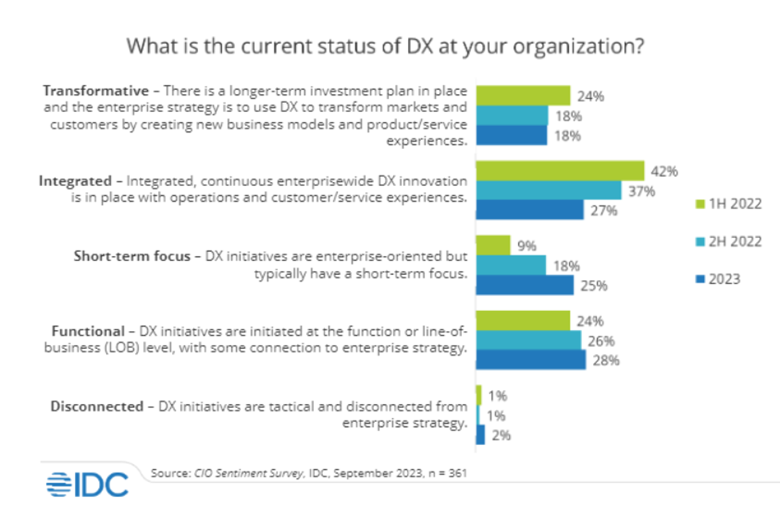
Firstly, let’s discuss Digital Transformation (DX). While integrated, continuous enterprise-wide DX strategies once took the spotlight, organizations are now leaning towards shorter-term approaches.

This shift may stem from factors like organizational learning curves, economic uncertainty, or the aftermath of global disruptions, such as the ongoing recovery from the pandemic. Figure 1 shows significant growth in organizations who have transformed or are integrated than over the previous year. Almost 65% were in the transformed or integrated maturity groups versus even a year previous where it was only 45% – an almost 45% increase.
Next on the agenda is Generative AI (GenAI), a topic sparking both excitement and caution. While about 32% of IT organizations have already adopted GenAI, a considerable number are still either not investing or only developing the use cases. This means these more conservative organizations are not developing the skills, building the data platforms, or examining the competitive advantages GenAI can provide.

IDC recommends piloting GenAI as a way to understand the potential business benefits, develop governance structures, and identify gaps within the organization to deliver its potential. Efforts can start with the simplest use cases, such as productivity, before expanding to functional and industry use cases.

GenAI isn’t a fad, like NFTs or the metaverse. It is a sea change on the level of the ’80s PC revolution and the ’00s smart phone transformation. A notable 22% of organizations are already adapting to the emergence of GenAI by actively changing their hiring plans. These companies may be creating new roles to leverage the early benefits of GenAI. 

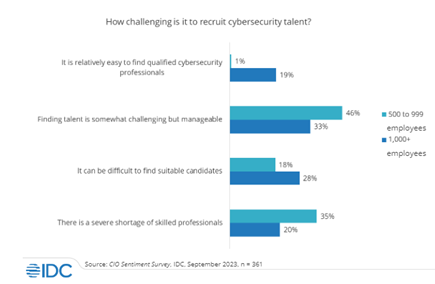
Meanwhile, cybersecurity remains a perennial concern, with varying investment priorities across organizations of different sizes. Both midmarket and large enterprises struggle to recruit cybersecurity talent, akin to finding a needle in a haystack. Larger enterprises due to more resources are less affected by this cybersecurity skill gap, but still struggle.

The question organizations need to consider is whether creative solutions can help bridge the gap, like using GenAI tools to summarize security alerts for less experienced staff, retraining existing staff, implementing robust internship programs, machine learning, and moving from discrete applications to a platform approach to security to simplify security management.
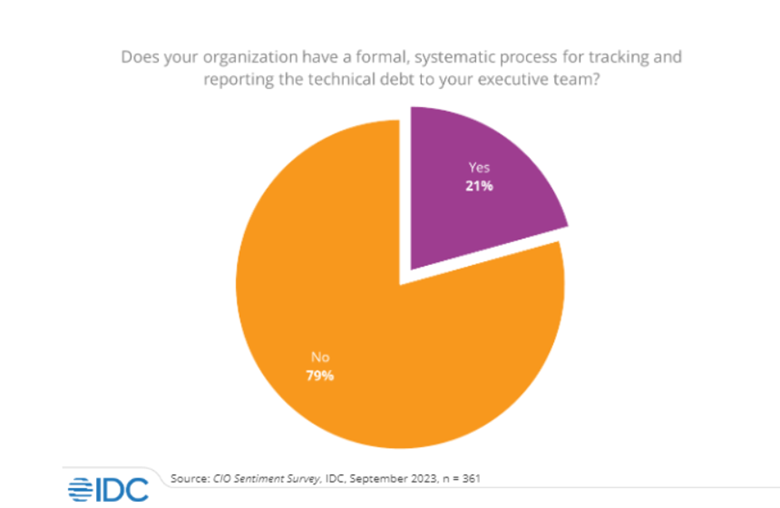
Technical debt poses another challenge, with a majority of organizations failing to allocate adequate resources or establish formal processes for its management.

While a majority of organizations allocate a small portion (12.8% average) of their IT budget to reduce technical debt, a significant number (79%) do not have formal processes for tracking and reporting this debt.

This gap in tracking and reporting could affect the strategic planning and alignment of IT initiatives with business objectives. It also reflects a need for more structured reporting and management practices to ensure that technical debt is accounted for in executive decision-making. However, amidst these challenges, there’s a silver lining: widespread adoption of cloud-based solutions and virtualization as integral parts of digital transformation endeavors.
These insights prompt several recommendations:

  1. Balance Short and Long-Term DX Strategies: Maintain equilibrium between short-term necessities and long-term digital roadmaps. Establish agile practices that allow for rapid adaptation between immediate market demands and long-term digital evolution to help ensure that short-term shifts don’t disrupt the broader business goals of the organization.
  2. Develop a Strategic Approach to GenAI Adoption: Plan strategically, incorporating governance principles and adoption roadmaps. In anticipation of GenAI-driven market changes, proactively revise IT hiring strategies while also upskilling current employees to ensure alignment with the future demands of GenAI integration. 
  3. Invest in Cybersecurity Talent: Prioritize recruiting and developing cybersecurity professionals. Prioritize investments in training programs (e.g., certifications and workshops) to upskill current employees in cybersecurity practices and incorporate an internship program for fostering new talent, thereby mitigating the talent shortage by internally growing cybersecurity skills and introducing fresh perspectives through internships.
  4. Establish Formal Processes for Technical Debt Management: Implement structured processes for tracking and mitigating technical debt.. This should include regular audits of existing systems, quantification of debt, and documentation of remediation plans. Second, develop a prioritization framework to tackle technical debt, focusing on areas that yield the highest risk to the business or present opportunities for quick wins. A future tease is IDC will be releasing a methodology to assess technical debt in a report to be published in April 2024.

These insights, drawn from a global survey of IT leaders, provide valuable guidance. However, it’s essential to tailor strategies to fit individual organizational contexts and needs. The findings from this survey have been exclusively depicted in an eBook for technology leaders like you. Click the button below to download the eBook now.

Learn what matters most to your customers with IDC’s AI Use Case Discovery Tool—find out more.

Mona Liddell - Research Manager, Quantitative Analysis, CIO Executive Research - IDC

Mona Liddell is a Research Manager for IDC’s CIO Executive Research team. She is responsible for leading the creation, analysis, and delivery of quantitative-based research and related marketing content for business and technology leaders. This research provides guidance on how to leverage technology to achieve innovative and disruptive business outcomes.

High Expectations Collide with Market Realities

Telecom Service Providers are facing historic challenges amidst shifts in both enterprise and consumer demand and challenges transforming from “connectivity providers” to digital platform players.

Historically, telecom service providers have championed connectivity at scale. In past decades, this proved a profitable strategy, with the value of connectivity garnering consistent year-over-year revenue growth and profits. However, recent years have seen telecom providers grapple with a host of challenges including industry competition, commoditization of services, and inflexible IT systems that have made it hard for them to swiftly innovate and compete against new threats.

Further, while network traffic continues to rise, predominantly driven by video apps, service providers have been unable to effectively monetize this traffic growth. The disconnect between revenue growth and network traffic growth remains one of the top challenges globally for service providers as they hunt ways to reinsert themselves and justify connectivity as not just a commodity, but as a value-based service that can be delivered to support a range of use cases and verticals.

In response, many forward-thinking telecom providers have made a purposeful decision to focus their technology offerings and ecosystem partners on targeting digital engagement and new revenue opportunities and rearchitecting their technology stacks to align with hyperscale cloud models as a means to simultaneously control costs and position for service agility longer term.

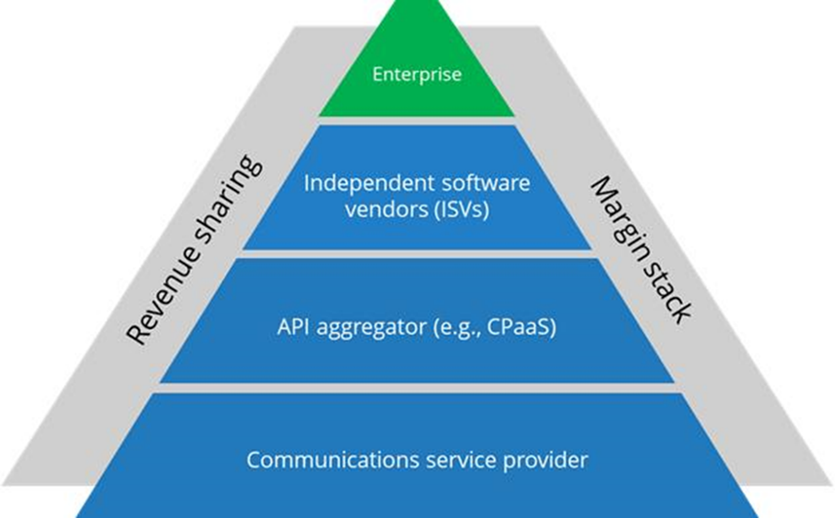
Even so, third-party entities, including CPaaS, cloud, and other digital platform players, have moved into largely siphon off these digital opportunities while curating vast developer ecosystems, once again relegating many telecom providers to a connectivity-only role.

New Tools in the Arsenal Create New Monetization Opportunities for Telcos

Amidst this push and pull of telecom service provider efforts, a new opportunity has emerged, driven by the promise of SA 5G networks and API exposure capabilities to empower telecom providers to reinsert themselves within the digital landscape by unlocking the ability to more easily sell and scale customized, programmable connectivity designed to be packaged and consumed by application developers.

Unsurprisingly, hyperscale cloud providers, CPaaS companies, and systems integrators have also positioned themselves for this new market opportunity by aligning with industry consortia (e.g., Camara, Open API Gateway) that are championing global standards; however, it remains to be seen where, how, and by whom value will ultimately be created and monetized.

Figure 1: Emerging Telecom and Network API Ecosystem

Source: IDC, 5G Exposure and Network APIs: How Will the Telecom Ecosystem Capture New Opportunities with Developers?

As part of these market developments, the worldwide IDC team has spent the past couple of years building a methodology to size this opportunity and define ways the telecom API ecosystem can work together to enhance this emerging market.

Telecom Service Providers Can Capitalize on AI and GenAI to Improve Business Results and Potentially Reshape Their Market Role

While APIs represent one-way service providers can capture new monetization opportunities, Artificial Intelligence (AI) presents another avenue to drive business results. More specifically, AI can be inserted into the telecom technology stack to improve TCO, enhance service agility (e.g., AIOps), as well as improve the customer experience (CX) lifecycle.

As telcos move toward future network architectures governed by cloud-native architectures, this ushers in a much greater role for automation and orchestration across various physical, virtual, and containerized network functions, as well as AI-informed operations and monetization platforms.

This in turn raises the importance of adopting AIOps within network operations; however, network-related AIOps brings its own unique set of challenges for Telecom Service Providers as well as a vendor community that overlaps but does not entirely match, the more generalized ITOps vendor roster.

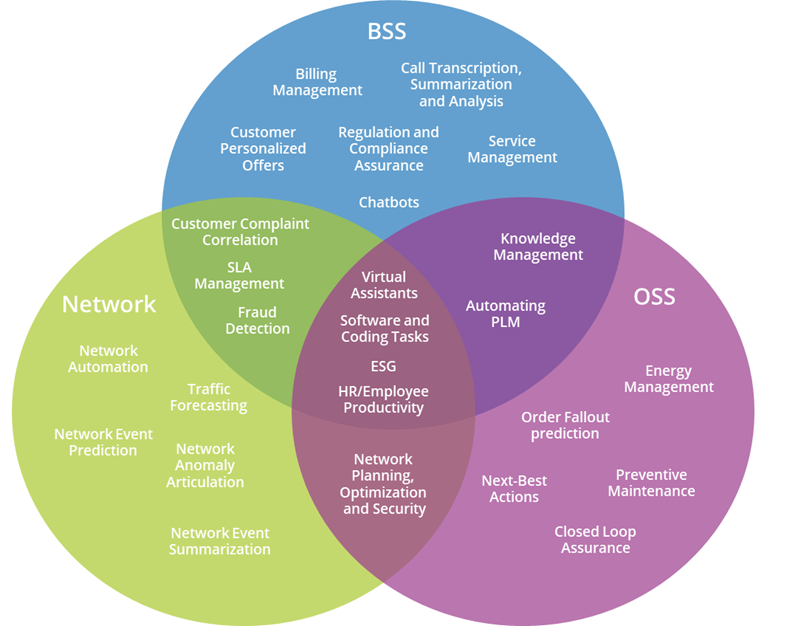
Meanwhile, GenAI has emerged as a powerful tool to enable telcos to embrace some of the benefits of AI while simultaneously investing in the internal skillsets and capabilities required to embrace AI more broadly. The graphic below highlights some of the key use cases IDC envisions for GenAI across telco environments.

Figure 2: GenAI Telco Use Cases Across Telco Environments

Source: Core Use-Cases for Generative AI in Telcos (Doc # EUR151410923)

While this graphic provides an optimistic outlook for the full set of Gen AI’s impact on telecom service providers, the reality is it will take time, effort, and AI partners for telecom providers to realize gains from AI. Indeed, with AI curators racing to drive AI innovation across multiple environments (e.g., hybrid and multi-cloud, etc.), it is likely multiple models will become prevalent in which telecom service providers serve dual purpose by becoming some of the strongest consumers and distributors of AI and Gen AI going forward.

Further, interest in AI applications is also prompting service providers to build near-term roadmaps clarifying how enterprise customers can leverage their core and edge assets to support emerging use cases (e.g., AI inferencing at the edge) while reinforcing connectivity as the foundation of AI-enabled applications and services. Indeed, while AI is being emphasized by many organizations, it will require a global distribution mechanism to help scale. Hyperscale cloud providers are top-of-mind, but telecom service providers can also play a role in connecting AI apps.

Overall, it is a critical time for telecom providers, and their technology vendors, to synchronize on key priorities and investment strategies, particularly in light of historical struggles to optimally monetize telecom networks. Doing so can enable them to rearchitect a brighter future for telecom monetization and set them up for a key role in a digital, AI-centric world.

For a deeper dive into these topics, watch IDC’s July 10th webinar, “Revenue Enablers for the Future Telco: APIs, AI, and Emerging Tech”.

In today’s high-stakes sales environment, managers are grappling with an array of challenges that can stifle growth and efficiency. From the daunting task of managing diverse teams and complex sales processes to the relentless pressure of meeting ambitious targets, the role of a sales manager has never been more demanding. Add to this the reality of having to do more with less—facing static staffing budgets amidst increasing operational complexities—and it’s clear that the traditional approaches to sales management are no longer sufficient.

Enter Artificial Intelligence (AI). This transformative technology is not just a buzzword, but a practical solution poised to revolutionize sales management. AI’s ability to automate administrative tasks, provide personalized training, and deliver data-driven insights offers a beacon of hope for overwhelmed sales managers.

By harnessing AI, sales leaders can not only navigate the challenges of their roles more effectively but also unlock new levels of productivity and strategic decision-making. This introduction to AI in sales management marks the beginning of a new era, where efficiency and growth go hand in hand, empowering managers to lead their teams to unprecedented success.

The Challenges Sales Managers Face

In today’s high-pressure sales environments, sales managers are grappling with a myriad of challenges that test their limits daily. The transition from top-performing salesperson to a managerial role often comes with the assumption that success in sales equates to success in leadership. However, the reality is far more complex. Sales managers find themselves overwhelmed by the immense workload, which includes not just leading and motivating their teams but also handling administrative duties and striving to meet ambitious sales targets.

The scarcity of resources, be it time, budget, or staffing, further exacerbates the pressure on sales managers. They are also tasked with navigating the intricate sales processes and managing a deluge of data from various sources without adequate analytical tools. The diversity within teams, in terms of skill sets, personalities, and working styles, adds another layer of complexity to ensuring cohesion and productivity. Continuous learning and development for both the managers and their teams are essential to maintain consistency and adherence to sales methodologies, all while under relentless pressure to achieve organizational goals.

Despite these challenges, organizations often expect sales managers to do more with less. With staffing budgets remaining stagnant and the tools and processes involved in B2B selling becoming increasingly complex, sales managers are often set up for failure from the start. The high turnover among sales representatives and the significant costs associated with hiring and training new talent only add to the burden, making the role of sales managers one of the most challenging in the business landscape today.

Revolutionizing Sales Management with AI

In today’s dynamic sales environment, AI and Machine Learning (ML) are essential tools that are reshaping the way sales management operates. By offering personalized training, automating administrative tasks, and providing data-driven insights, AI is setting a new standard for efficiency and growth in sales management.

Personalized Training and Coaching

Gone are the days of one-size-fits-all training programs. AI enables a more personalized approach to training, catering to the unique needs and learning styles of each sales representative. By analyzing sales interactions, AI identifies areas for improvement and tailors training content, ensuring that each member of the sales team receives the most relevant and effective coaching.

Administrative Automation: A Time Saver

AI shines in automating routine tasks that consume a significant portion of sales managers’ and representatives’ time. From generating personalized emails to logging customer interactions and scheduling meetings, AI tools streamline these processes, freeing up time for more strategic activities. This shift not only enhances productivity but also allows sales managers to focus on coaching and strategic planning.

Harnessing Data-Driven Insights

In the realm of sales management, data is king. However, the sheer volume of data can be overwhelming. AI algorithms excel in sifting through vast datasets, providing real-time performance metrics, identifying bottlenecks, and offering accurate forecasting. These insights empower sales managers to make informed decisions that drive better results for their teams and organizations.

AI is not just transforming sales management; it’s revolutionizing it. By providing personalized training, automating administrative tasks, and delivering data-driven insights, AI is enabling sales teams to achieve unprecedented levels of efficiency and growth. As we embrace these technologies, the future of sales management looks brighter than ever.

“In the fast-paced world of sales, managers are often overwhelmed by the sheer volume of data and tasks. AI offers a lifeline, helping them navigate the complexity with precision and efficiency, turning chaos into opportunity.”

Navigating the AI Implementation Journey in Sales Management

Integrating AI into sales operations isn’t just about deploying new technology; it’s about aligning it with your organizational culture, securing leadership buy-in, and ensuring your data is primed for action. Here’s how to make AI work for your sales team:

Organizational Culture: The Foundation of AI Adoption

Your company’s culture is the bedrock of successful AI integration. A culture that values innovation and is open to change will embrace AI’s potential to transform sales management. Conversely, a culture resistant to change may see AI as a threat rather than an opportunity. Cultivating an environment that encourages experimentation and learning is key to leveraging AI effectively.

Leadership Buy-In: Steering the Ship

Without the support of leadership, AI initiatives are likely to flounder. Leaders must not only endorse AI projects but also actively participate in their implementation. This involves allocating resources, setting clear objectives, and demonstrating a commitment to leveraging AI as a strategic tool for sales management success.

Data Readiness: The Fuel for AI

The adage “garbage in, garbage out” holds particularly true for AI in sales. The quality, completeness, and accessibility of your CRM data are critical. Before embarking on your AI journey, assess your data infrastructure to ensure it can support AI analysis. This step is crucial for avoiding pitfalls and setting the stage for meaningful AI-driven insights.

By focusing on these key areas, organizations can navigate the complexities of AI implementation in sales management, transforming challenges into opportunities for growth and efficiency. Remember, AI is not just a tool but a strategic asset that, when aligned with your organizational culture, leadership vision, and data capabilities, can significantly enhance sales management practices.

“Incorporating AI into sales operations requires more than just technological know-how; it demands a strategic approach that considers the unique dynamics of your organization. By addressing these foundational elements, companies can unlock the full potential of AI to empower their sales teams and drive unprecedented growth.”

Harnessing AI for Future Sales Success

The potential of AI in sales management cannot be overstated. As organizations look to navigate the complexities of modern sales environments, AI stands as a beacon of efficiency, growth, and strategic insight. By embracing AI, companies can unlock scalable success, empowering sales managers to lead with confidence and foresight. The path forward is clear: integrating AI into sales operations is not just an option; it’s a strategic imperative for sustainable growth and competitive advantage.

Learn what matters most to your customers with IDC’s AI Use Case Discovery Tool—find out more.
Michelle Morgan - Research Manager, Customer Experience - IDC

Before joining IDC, Holtz worked for ABN AMRO. As a senior analyst in the bank's Treasury Operations, Wholesale Division, she had a strategic advisory role on business organizational matters and was responsible for internal IT cost control and internal service level and performance data management.

The Hybrid Cloud Imperative

In today’s rapidly evolving digital landscape, the hybrid cloud has become an indispensable strategy for organizations aiming to maximize their IT investments. Our insights reveal that hybrid cloud is not just a trend but a critical component of modern IT infrastructure, blending the strengths of private and public clouds to foster efficiency, performance, and agility.

The complexity of implementing and operating such environments makes the role of managed service providers (MSPs) critical. These partners not only help smooth out the technical and operational challenges, but they also play a pivotal role in unlocking the true value of hybrid cloud investments.

As European organizations increasingly lean towards hybrid cloud solutions, understanding the importance of selecting the right MSP partner becomes paramount for achieving the desired business outcomes.

Overcoming Hybrid Cloud Hurdles with MSPs

Europe’s hybrid cloud landscape is experiencing a significant transformation, marked by rising investments and a clear growth trajectory. IDC’s 2023 EMEA Managed Cloud View Survey illustrates that, while hybrid cloud accounted for 31% of total IT budget in 2023, IT leaders expect a significant increase (up to 48%) of their total IT spending in Europe over the next two years.

The appeal of hybrid cloud in Europe is underscored by its compelling benefits. Organizations are drawn to the promise of enhanced cloud performance, streamlined backup and recovery processes, and more efficient cost management. These advantages position hybrid cloud as a cornerstone for building resilient, cost-effective, and optimized IT infrastructures.

However, the journey to harnessing these benefits is fraught with challenges. Skill shortages, particularly in cloud security and public cloud specific competencies, emerge as significant hurdles. The complexity of managing across diverse cloud environments adds another layer of difficulty, with operational visibility and governance among ongoing concerns.

As organizations progress in their cloud journey, they start to encounter more complex technical challenges, spanning security and data interoperability, as well as difficulties in meeting compliance and regulatory requirements.

To smooth out the edges of hybrid cloud adoption, many organizations are leaning towards managed service providers (MSPs). MSPs are pivotal for guiding customers to the right cloud types and orchestrating the ecosystem components to streamline operations, drive IT efficiency, improve agility, and increase business value.

Choosing the Ideal MSP for Hybrid Cloud Success

Understanding Your Unique Needs

When embarking on the hybrid cloud journey, understanding your organizational needs is paramount. Identify your objectives in the cloud landscape and the core IT challenges to these objectives. This clarity will guide you in selecting an MSP with the requisite cloud expertise, one that is capable of aligning the right cloud solutions with your specific workloads’ requirements.

The Crucial Role of Expertise

Expertise in various cloud environments is non-negotiable. An MSP must offer comprehensive services, from consulting to management, ensuring a seamless transition to the cloud. Their knowledge should span different cloud types, facilitating a match between cloud platforms and workloads that optimizes performance and cost.

Unified Management: A Must-Have

A unified management approach simplifies the oversight of diverse cloud environments, enhancing visibility, security, and compliance. Opt for MSPs that propose a platform-centric model for managing hybrid and multicloud scenarios. This model should streamline operations across your IT estate, fostering standardization and operational efficiency.

Empowering Your Hybrid Cloud Journey

In conclusion, the journey to mastering hybrid cloud in Europe hinges on the strategic selection of an MSP that aligns with your organization’s unique needs and goals. This journey, while complex, is made significantly smoother and more rewarding with the right partner by your side. As we’ve explored, the right MSP partner is not just a vendor but a pivotal collaborator in unlocking the full potential of hybrid cloud-enhancing efficiency, agility, and security across your IT operations.

If you want to learn more, please refer to this IDC document: Managing Hybrid Cloud: Considerations for European IT Buyers when Selecting Managed Service Providers

Francesca Ciarletta - Research Manager, European Services - IDC

Francesca Ciarletta's research covers how European organizations use managed cloud services on the infrastructure (IaaS), platform (PaaS), and software (SaaS) layers to be successful with their cloud journeys. How do managed cloud service providers ensure that customers reach their business outcomes from cloud? What are customer's expectations of their managed cloud services providers at each step of the journey? What is the role of managed cloud service providers in the broader cloud ecosystem? Which cloud provider ecosystems should they prioritize? Consequently, Ciarletta also covers the evolution of IT services towards cloud-based models, with a particular focus on managed cloud services. Her research analyzes market dynamics, challenges, and opportunities for IT service providers as they embrace digital-first delivery models.

Often, I hear that the business communications market will witness more consolidation because it’s overcrowded, meaning some vendors will either exit by divesting their operations or merge with another. There is some weight to this speculation, but by leveraging AI, vendors can reinforce their positions in the market.

When I say “leveraging AI,” I don’t mean just adding new features, but also overcoming some of the hurdles that are holding back end-user adoption. To make their AI strategies a success, it is necessary for vendors to understand and address these challenges.

Key Challenges for Businesses Trying to Gain the Full Value of AI

  1. Data silos are inhibiting AI’s full potential.

Our data reveals that businesses are at different stages of their AI journey, and the majority are still exploring, trying to determine use cases and how to extract value. Actual adoption will be determined by AI efficacy, which depends on backend data and AI training.

One challenge that limits the full value of AI is data being locked in disparate sources. Businesses often use separate systems for customer databases and CRM and utilize multiple communication and collaboration channels, creating data silos that hinder AI’s comprehensive system view.

Furthermore, these systems have different deployments, some on-premises and others in the cloud, making silos even harder to overcome.

Aggregating the different data sources, cleaning and structuring data, and training AI are the first steps in developing AI efficacy. Businesses need a connected IT stack, but this begs questions such as: Should solutions come from a single vendor who can provide a unified system in a common environment or a provider who is able to integrate different systems into a unified stream of data flow?

Many businesses are not able to adopt a unified solution from a single provider, because their investments are locked into existing IT systems and workflows. Even if systems are at the end of life, migration may not be an option due to the deep integration of workflows and strong relationships which the businesses may share with their existing providers.

Our data shows that businesses have concerns about migrating to new systems. Among other things, they are uncertain about the ultimate ROI the new system will deliver.

  1. Data privacy is a concern.

How much data should be exposed to AI is an issue for end-user organizations as well as government regulatory agencies.

Among the many benefits of data integration is the enablement of AI to drive personalized and targeted service in customer support, as AI can view and summarize customer information from different systems. This can range from listing a customer’s name and intent on agents’ desktops to providing buying history to support agents’ upsell efforts based on customers’ past preferences.

There is, however, a fine line between personalized service and violating a customer’s privacy. While some elements of personalization can feel special and help to create a sense of emotional connectedness, it’s important not to pass the point where knowledge about the customer creates a sense of invasion.

Another concern is the need to move operations to the cloud, as most AI is cloud based. Some businesses may be unable to do this due to regulatory compliance requirements for customer databases to remain on premises. For example, healthcare providers must keep patient data on premises to maintain security and privacy .

Additionally, some businesses are concerned about losing control and visibility of their IT infrastructure and customer databases by moving them to the cloud. Data sovereignty is also a factor, as some governments (including those in Europe) require businesses to keep data within the country, forcing AI solution providers to base their solutions in local datacenters.

Strategies to Overcome Challenges Impeding AI Adoption

  1. Base AI capabilities on integration and training, but also customer privacy and data governance.

Efficacy is critical for driving end-user adoption. This involves connecting different data sources and enabling closer and more far-reaching integrations within the ecosystem.

To this end, the market is witnessing a shift from SaaS-based to platform-based solutions, which allow integrations across different systems and third-party providers. Vendors also need to ensure compatibility with different IT environments, including integrating on-premises with cloud environments to enable business in different stages of their DX journey to access AI benefits.

The next step should be cleaning and structuring data, which can be overwhelming for businesses with particularly large/extensive data pools. This could present a business opportunity for professional service providers and systems integrators.

AI innovations should also incorporate guardrails to prevent misinformation, since AI is only as good as the data behind it and the training it receives. There should always be an option for human intervention to monitor and rectify AI-based results. Customers should be able to opt for how much of their information they want to be exposed to AI and other parties.

AI should be available for businesses who are mandated to run their operations on premises. And communications and collaboration solution providers should develop partnerships with other service providers that have widely distributed or local datacenters, thus making it possible to base their solutions in datacenters stipulated by data sovereignty requirements.

  1. Handhold customers during the process.

Developing suitable solutions is just one part of the story. It is also necessary to educate customers who are still familiarizing themselves with AI. Our data reveals that many businesses are unsure about use cases and how AI will fit into their overall operations. It is therefore necessary to drive conversations with relevant business leaders.

IDC data shows that while IT is still an integral part of sales discussions, business leaders are becoming more involved. Deploying AI is not just about new technology but changing business culture around it involving managers, and employees at all levels.

Making AI successful within organizations requires hand-holding through the process, from education to implementation and change management.

  1. Pay close attention to pricing.

Pricing is another important consideration, and pricing trends are wide ranging. Some vendors include AI features in their solutions without charging extra, while others offer them as add-ons at an additional price.

Not surprisingly, customers’ willingness to pay for AI solutions varies, depending on their perceived value versus price. While the unique and sophisticated functions AI can perform will influence pricing strategies, common features like meeting summarization and message composition are likely to face commoditization.

A federated approach to AI is helping to keep costs down and make it possible to offer AI as part of overall communication solution bundles. In the long run, it is likely that basic GenAI-based features will be part of overall communications solution bundles.

  1. Work closely with partners for go-to-market motions.

Go-to-market strategies are also crucial, particularly in Europe, where much of the IT communication stack is sold through partners, some of whom need training to communicate effectively with relevant business stakeholders. Channel partners should be incentivized for go-to-market initiatives, including monetary incentives and ownership of commercial relationships.

Vendors need to provide high-touch support during the sales process but leave ownership to channel partners post-sale. Market dynamics require vendors and partners to work hand-in-hand.

Conclusion

Succeeding in the business communications market involves more than introducing new AI features. It requires ensuring data efficacy by connecting different data sources, effectively training AI, and implementing guardrails to prevent misinformation.

Vendors need to understand where businesses are in their AI journey and customize solutions to meet their needs, including integration with unique IT environments and compliance with data governance and security requirements. Educating businesses about AI benefits and helping them implement AI in a compatible IT environment is essential.

The partner community plays a crucial role in the go-to-market process, and success will necessitate close collaboration between vendors and partners.

Oru Mohiuddin - Research Director - IDC

Oru Mohiuddin is a Research Director in the European Enterprise Communications and Collaboration team. Based in London, she is responsible for IDC’s coverage of Unified Communications and Collaboration in the region. Her work focuses on tracking the markets for premise-based and cloud solutions and new developments and trends, particularly in the light of changing work patterns impacting the traditional mode of enterprise communication. Prior to joining IDC, Oru worked for Euromonitor International, where she focused on Future of Work and technology in the SMB context. She also worked in New York and Bangladesh and speaks English and Bengali. Oru was awarded Chevening Scholarship by the British Foreign and Commonwealth Office to pursue her MSc in International Development from the University of Birmingham. In addition, Oru has a BA from Marymount Manhattan College in New York.

On June 10, 2024, Apple entered a new era of intelligence. At their annual Worldwide Developers Conference (#WWDC24), Apple unveiled how artificial intelligence will be embedded into their ecosystem and announced several enhanced features for iOS, iPadOS, and MacOS. These new smarter features will empower users through the use of AI.

This year’s WWDC marks a pivotal moment for Apple, being one of the most significant events in recent years. Since the introduction of the iPhone, the iPad, and the Apple watch, Apple has been the undisputable leader in terms of the user experience, and dominated sales of smartphones, tablets and smartwatches in value terms.

Over the last 17 years, Apple has not faced any other disruptive technology as potentially detrimental for its business and its future as AI, if not tackled in the right way. WWDC 2024 offered Apple and its CEO, Tim Cook, an opportunity to demonstrate how the company will lead in making AI a transformative, advanced, and intelligent experience for their users.

With smartphone, tablet and PC sales slowing down due to high adoption rates and offering just incremental improvements from the previous version of devices, Apple needs to reignite consumers excitement to encourage more frequent upgrades. We all remember the long queues outside Apple stores when a new iPhone was launched! The excitement generated by past product launches is critical to Apple’s business and brand.

AI Will Enable Apple To Offer Unique and Intelligent Features, Experiences and Services to Their Customers.

However, the key question remains: will these announcements be enough to secure Apple’s leading position? Many competitors (from phones to PCs vendors) have already revealed their AI strategies and devices. How can Apple stand out and how can a partnership with OpenAI help?

AI-Enabled Devices Will Be the Fastest Growing Segment in for Smartphones and PCs.

IDC forecasts that AI Smartphones to reach 170 million units in 2024, and AI PCs to account for nearly 60% of all PC shipments by 2027.

Historically, the App Store has been at the heart of the value proposition of Apple’s iPhone and the iPad. The slogan, “there’s an App for that” became iconic. However, AI is set to “kill” the apps and a new era is about to begin for Apple and the industry.

Previously, the more apps the smartphone (and the iPad) was able to run, and the more powerful the apps, the better the smartphone (or iPad). Today, the smartphone is not ‘smart’ anymore. With AI, the fewer apps needed and the more a phone can use data contextually to assist the user, the better the phone will be. This will revolutionize the user experience, requiring an operating system able to learn from all devices and services in Apple’s ecosystem. Apple’s full control of its ecosystem, hardware and software, and seamless integration gives it a significant advantage over competitors. This is particularly important when the experience will be defined by how well the phone “knows” the user, which can only be achieved by this seamless integration, while making sure the personal information and data remains private.

Although Apple is not the first to offer AI-enabled features, it is in its DNA to offer the perfect experience. AI will not just offer the best experience, but the most powerful, disruptive, personalized and private, and that’s exactly what Apple showed today with Apple Intelligence.

While AI-generated emojis will grab the headlines, Apple showcased how AI will empower users in several ways, particularly around productivity, education and entertainment. These are the areas where Apple already excels with its range of services and applications.

As User Interaction Shifts From Opening an App To Asking the Phone, Siri Will Be the Glue.

This killer feature will attract consumers to AI enabled devices. Siri will offer a unique way to interact with all Apple devices using our voice in a more personalized and conversational manner. It will become a true digital assistant, contextually understanding various aspects of users’ lives and providing human-like responses by accessing data across all devices to provide the right response to the users’ needs. This conversational digital assistant fully integrated with all devices will be a game changer, and I believe it will offer a compelling reason for many to upgrade their iPhones in the years to come.

Apple’s strength lies in the breath of its portfolio and its ecosystem. For consumers, it does not matter what an AI-enabled iPhone is, or how many TOPs it can run. What matters is how well a phone can assist users in managing their lives. By reducing the need to navigate multiple apps, Apple’s AI-enabled devices will offer a smoother, more intuitive and smarter experience. This marks the beginning of a new era for Apple and for their users.

For more insights and views, watch this conversation with Tom Mainelli at the Apple Park.

Learn what matters most to your customers with IDC’s AI Use Case Discovery Tool—find out more.
Francisco Jeronimo - Vice President, Data & Analytics - Devices - IDC

Francisco Jeronimo is VP for Data and Analytics at IDC EMEA. Based in London, he leads the research that covers mobile devices, personal computing devices, emerging technologies and the circular economy trends across EMEA. His team delivers data on personal computers, tablets, smartphones, wearables, PC monitors, PC gaming, enterprise Thin Client devices, smart home, augmented reality and virtual reality, and sales of used devices. He provides in-depth analysis of the strategies and performance of the key industry players.

Carbon reporting has been much in the news over the past several years, with organizations under increasing pressure to track and disclose their carbon emissions.

IDC recently published a new document that offers a holistic assessment of the rapidly evolving landscape of carbon accounting and management platform vendors that are serving growing need for accurate, data driven emissions calculations and decarbonization strategy analysis.

As the global regulatory environment for climate risk and sustainability reporting continues to develop, organizations are under increasing pressure to report on their corporate emissions as well as their strategy for decarbonization. 

Organizations are also experiencing mounting pressure from customers and business partners for transparent carbon emissions data, indicating a business value impact in lost revenue opportunities associated with non-cooperation.  This is creating new demands on software platforms to support robust emissions calculations as well as provide analytical support to optimize decarbonization pathways. 

Key Trends Representative of Carbon Management Software Capabilities

The mounting organizational regulatory and business value impact of robust carbon accounting and management practices is leading more enterprises to depend on purpose specific applications to support these initiatives. Some important trends that are driving carbon accounting and management platform development include:

  • Data driven emissions calculations and reporting is elevating the importance of prebuilt connectors and APIs to source relevant data from billing systems, enterprise applications, third party sources, and IoT devices.  Centralized management of sourced data is vital to ensure consistency, accuracy, efficiency, transparency, regulatory compliance, scalability, improved decision-making and enhanced collaboration.
  • There is a wide breadth of organizational maturity that will dictate the scale of carbon accounting that an organization undertakes.  While many organizations continue to focus primarily on internal carbon emissions, regulation is beginning to mandate value chain emissions reporting which will significantly increase the complexity of emissions calculations.
  • Regulation is also mandating limited and eventually reasonable assurance of carbon emissions data requiring solutions that are highly auditable with transparent calculation methodologies and robust data verification capabilities.
  • As the complexity of carbon emissions reporting escalates, sustainability teams, often small in number, are becoming overburdened with routine tasks, which impinges on their availability for more strategic initiatives.  An important aspect of carbon management platforms will be workload offset enabled through automation and AI driven capabilities.
  • Regulatory and stakeholder requirements are extending expectations from reporting of historical emissions to forward looking decarbonization initiatives and goal management.  Supporting these requirements will necessitate advanced strategy, analytical and scenario planning features.
  • Sustainability is increasingly extending beyond an organization’s sustainability team as initiatives are incorporated into organization KPIs and values.  Carbon management platforms therefore should incorporate communication, collaboration and project management features that will foster cross team communication.
  • Expectations for corporate carbon emissions reporting and management are rapidly advancing.  Organizations are looking to software vendors to provide not only a robust platform but are also looking to these vendors for thought leadership, education resources and support.

In an era of escalating environmental scrutiny, mastering carbon accounting is not just compliance, but a strategic imperative for future-proofing businesses.

The 2024 IDC MarketScape for Worldwide Carbon Accounting and Management Applications evaluates 18 software vendors across 29 scoring criteria categories, including 18 capability categories and 11 strategy capabilities.

Software vendors included in the evaluation offer a carbon management software solution that is either a stand-alone product or a component of a broader platform. Vendors had to meet a minimum threshold of total employees as well as operate at a global scale (defined as having operations in at least two regions of the following regions: North America, South America, EU, APAC, Africa).

This research includes the analysis of eighteen sustainability software vendors including Acuity, Cority, EnergyCAP, FigBytes, GE Digital, Honeywell, IBM, Microsoft, Nasdaq, Normative, Persefoni, Plan A, SAP, Salesforce, Sphera, Sweep, UL Solutions and Watershed, who are positioned in the leaders and major players categories. The analysis identified that all 18 of the vendors have a strong carbon management solution, but some offer a more advanced solution set as well as a more innovative roadmap compared to others.

The carbon management software landscape has experienced explosive growth over the past five years which while providing better optionality, also presents organizations with increasingly complex choices in vendor selection.

This MarketScape is meant as a guide to help organizations evaluate software vendor platforms in order to identify the best platform for their organization for today as well as tomorrow’s requirements. It provides a comprehensive analysis of carbon management platforms, highlighting the increasing need for organizations to track, manage, and report carbon emissions amid evolving regulatory landscapes and stakeholder pressures. It evaluates vendors based on their capabilities and strategies to meet future customer needs, focusing on innovation, customer satisfaction, and the ability to support organizations in their decarbonization efforts.

Amy Cravens - Research Manager - IDC

Amy Cravens is Research Manager contributing to IDC's Sustainable Strategies and Technologies Team. In this role she is responsible for the Sustainability and ESG Software research program, providing strategic guidance and research on market trends, technology usage, and business strategies. Ms. Cravens has provided strategic market consulting to companies for over two decades. Previously working as an independent consultant, her areas of research included mobile devices, services and applications. Prior to working as a consultant, Ms. Cravens served as a Senior Research Analyst at In-Stat covering mobile applications/services and public broadband.

Blockchain technology is more frequently associated with cryptocurrencies and financial transactions. However, its usefulness extends far beyond the financial services sector. As a decentralized and immutable ledger, blockchain offers unmatched security, transparency, and efficiency across various industries. This blog post explores the value of blockchain outside of financial services in industries including retail supply chain management, healthcare, intellectual property protection, real estate, identity verification, energy, digital marketplaces, and government and public services.

Supply Chain Management

Supply chain management, a prime example of blockchain’s application beyond finance, has long grappled with issues like lack of transparency and inefficiencies, leading to problems such as counterfeit goods, fraud, and delayed deliveries. Blockchain steps in as a solution, offering a transparent and immutable record of every transaction and movement of goods within the supply chain. A case in point is the collaboration between Walmart and IBM, which use blockchain to trace the origin of food products. By scanning a product’s QR code, consumers can instantly access detailed information about its journey from farm to store shelf, ensuring product authenticity and quality and enabling swift response in case of contamination or recall.

Healthcare

In the healthcare industry, where the security and privacy of patient data are of utmost importance, blockchain is emerging as a game-changer. With patient data scattered across various systems and institutions, inconsistencies, breaches, and difficulties in data sharing have been a persistent challenge. However, blockchain is changing the game by creating a unified and secure patient record system accessible only by authorized parties. MedRec, a blockchain-based system, is a shining example of this. It ensures that patient data is secure and easily accessible to healthcare providers, enhancing coordination and patient care delivery. Moreover, patients have control over their data, deciding who can access their medical history, thereby instilling a sense of security and control in them.

Intellectual Property and Copyright Protection

Intellectual property (IP) protection is another area in which blockchain can substantially impact. The current IP systems are often slow and prone to ownership disputes. Blockchain provides a transparent, timestamped, and immutable record of IP rights, making it easier to prove ownership and combat piracy. Platforms like Ascribe and KodakOne use blockchain to protect the works of artists and photographers. By registering their creations on a blockchain, creators can ensure that their IP rights are securely recorded and indisputable, simplifying the enforcement of copyright and licensing agreements.

Real Estate

Real estate transactions are historically complex and slow, involving numerous intermediaries and paperwork. Blockchain can streamline these processes by providing a transparent and secure ledger for recording property transactions, thereby reducing fraud and increasing efficiency.

Propy is a blockchain-based platform that enables the buying and selling of real estate using smart contracts. These contracts automatically execute and verify transactions, ensuring all parties fulfill their obligations before transferring the property title. This reduces the need for intermediaries, speeds up transactions, and lowers costs.

Identity Verification

Identity verification is essential for various services, yet traditional methods are often cumbersome and insecure. Blockchain provides a decentralized solution where individuals can securely control their personal information. Sovrin is an example of a decentralized identity management system. It allows individuals to create and control a digital identity that they can securely share with others. This system reduces identity theft risk and simplifies the verification process for individuals and service providers.

Energy Sector

Blockchain technology is making waves in the energy sector, particularly enabling peer-to-peer (P2P) energy trading. This allows consumers to buy and sell excess energy directly to each other, promoting renewable energy sources and increasing efficiency.

Power Ledger is a platform that facilitates P2P energy trading using blockchain. Consumers with solar panels can sell surplus energy to neighbors, creating a decentralized and efficient energy market. This empowers consumers and contributes to the broader adoption of renewable energy.

Government and Public Services

Blockchain enhances transparency and efficiency in government and public services. From maintaining public records to managing public funds, blockchain ensures that records are immutable and verifiable. Estonia pioneered using blockchain for e-governance. The country uses blockchain to secure public records, including land registries and health records. This ensures data integrity, reduces fraud, and enhances the efficiency of public services.

Digital Commerce and Cloud Marketplaces

A blockchain-enabled marketplace enables peer-to-peer (P2P) on-platform buying and selling that allows the sale of goods without intermediaries. A traditional online marketplace is centralized, meaning a third party regulates the entire buying and selling process. Transactions go through intermediary platforms that retain some percentage of the transaction. Transactions become costly, and the intermediary becomes a powerful holder of sensitive data. All marketplace participants must trust the administrator as all the operations happen only on the platform. These factors are especially relevant in the context of cross-border transactions, in which there are no mechanisms to ensure effective legal protection of the parties.

Integrating blockchain in digital commerce could potentially address these concerns by providing a decentralized and transparent system for transactions and data management. The immutability of transactions in the blockchain ensures that it is impossible to modify or lose data on participant transactions by the platform operator. Blockchain marketplace transactions are regulated by digitally signed agreements called smart contracts. These contracts can be accessed by everyone and are immutable. The terms must be approved by both parties before the transaction concludes.

Reviews and ratings are the most requested information before buyers conduct transactions. Blockchain can be used to ensure users are provided with objective and transparent information about suppliers and solutions.

Blockchain technology holds immense potential beyond the realm of crypto financial services. Its applications in supply chain management, healthcare, government and the public sector, intellectual property, real estate, identity verification, energy, and digital commerce prove its versatility and transformative power. By leveraging blockchain, various industries can achieve greater transparency, security, and efficiency, paving the way for innovative solutions to enduring challenges. As blockchain evolves and use cases expand, its adoption across different industries will accelerate, unlocking opportunities for growth and innovation.

Frank Della Rosa - Research VP - IDC

Frank Della Rosa is Research Vice President responsible for SaaS, Business Platforms, and Industry Cloud. Mr. Della Rosa's core research analyzes current market conditions and trends and provides strategic guidance to technology suppliers and mid-market and enterprise technology buyers. Ongoing research highlights various SaaS and cloud computing aspects, including hybrid and multi-cloud application deployments, business platforms, cloud marketplaces, buyer behavior, and global trends across vertical and functional markets. Mr. Della Rosa's research covers emerging ISVs' journey to SaaS, SaaS management platforms, market forecasts, and supplier market shares.

Gen AI is Transforming Experiences

In this era of AI everywhere, one thing is clear: GenAI is not just another technological advancement. It is significantly impacting many aspects of enterprises – and experiences are a huge component of this. GenAI is truly becoming a game changer in terms of the unprecedented level of hyper personalization it brings to the table.

Imagine a situation where you, as a customer, are ordering groceries online. A GenAI -enabled agent can anticipate ahead of time what items you tend to put in your cart and provide you with multiple alternatives of those out of stock, depending on your desired delivery date and time. Further, it can share with you active promos on items you tend to purchase without you having to look or search for them one by one. This would make my day to day tasks so much easier.

The value discussion is evolving – moving away from traditional methods of measuring success of CX initiatives, where it is customer metrics such as customer satisfaction, or financial metrics such as revenue, and profitability. Organizations are looking to connect the value of their CX efforts to the impact on all the stakeholders in this experience ecosystem – internal and external.

APJ organizations are recognizing this opportunity and moving fast to act on it. According to IDC’s FERS Wave 3 2024 Survey, 49.6% of APJ organizations are in initial testing stage, while 40.3% are investing significantly in GenAI.

However, 55.2% organizations are still struggling to connect AI-powered applications and technology projects to business outcomes, according to IDC’s FERS Wave 1 2024 survey results. There is still a long path to traverse to realize value from potential of these modern technologies.

Enter the Experience-Orchestrated Business (X-OB) Model

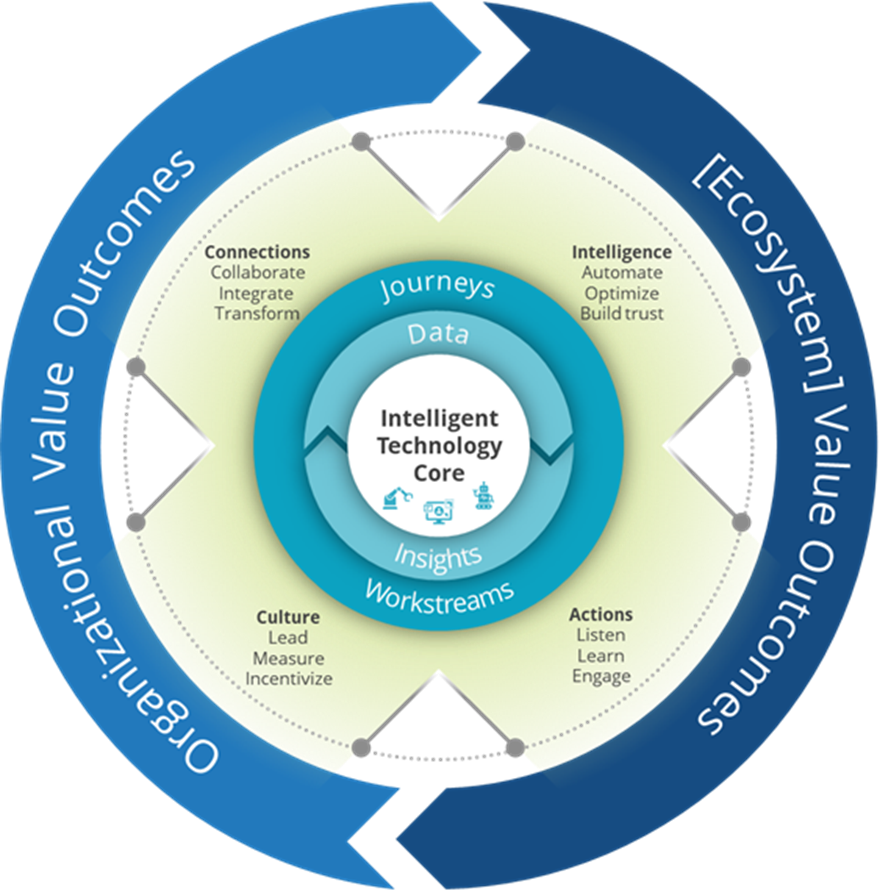
To design experiences that span processes, applications, channels, and intelligent exchanges between the entire ecosystem of stakeholders, IDC has put forth the construct of the experience-orchestrated (X-O) business.

An X-O business thrives due to its ability to deliver shared experience value powered by intelligence. To compete in an AI everywhere world, digital businesses must orchestrate a meaningful value exchange between the organization and their key stakeholders.

Data is vital to intelligent applications embedded in daily operations and decision-making. Insights help align actions with desired outcomes and ensure that investments deliver the desired results for the experience-orchestrated business. Using AI-enabled technology to optimize journeys and automate workstream tasks, organizations can break down organizational silos and foster connectedness across the experience ecosystem.

Where Does X-O Fit into the CX World

This model provides a way for all the CX stakeholders to evaluate their capabilities across the four key pillars – connections, intelligence, culture, and actions.

1. Connections: This means transforming the environment we are working in towards more cross-functional collaboration, real-time data sharing, and integration.

For customer service/support teams, this means they would be able to maintain context across interactions, reduce customer effort, provide more proactive customer engagement, and enhance their overall service quality.

For marketing and sales teams, this means a unified brand voice, consistent communication, seamless transfer of leads from marketing to sales, and so on.

When all three collaborate effectively, it can help unlock cross-selling/up-selling opportunities, integrated customer support, and consistency across channels and touchpoints.

2. Intelligence: Intelligence from automated processes can be used to optimize experiences further. Any new technology comes with risks – brand, data privacy, and compliance to name a few when it comes to GenAI. Building trust is critical – customers are becoming increasingly conscious and cautious about how and what data they are sharing across different apps and brands.

Being able to do this effectively means customer support teams have automation in place to streamline customer service processes and speed up time to resolution. Further, AI is at the driver’s seat guiding them with context-aware prompts to reply to customers, or directly being able to address customer queries.

Marketing teams can automate a greater number of manual tasks ranging from SEO, end-to-end campaign management, predicting future engagement trends, and identifying opportunity areas for improvement.

There is also the element of being able to generate more relevant content, which includes hyper personalized campaigns, towards improved engagement and conversion rates. Sales teams would be empowered with the relevant customer context before calls, higher quality leads, and so on.

3. Culture: Culture, often ignored, forms a critical part of attracting, skilling, and retaining the right talent within an organization. More often than not, organizations tend to focus on output as a measure of success. This needs to change and become more outcome-oriented. For example, customer satisfaction from closed cases should be prioritized over number of cases (effective case resolution) closed in a given time interval (productivity).

There is a need to establish joint and consistent metrics across CX, marketing, and sales. Service quality and the experience provided to the customer take precedence over productivity.

CX, marketing, and sales teams gain incentives based on customer impact – how seamless they made the experience for the customer, continuous improvement based on predictive insights, recognizing sales reps who go the extra mile to resolve customer pain points over just those who bring in the most opportunities.

4. Actions: This refers to being able to engage stakeholders in a context-aware manner. This is a result of having the right tools and technologies in place to actively listen to the various cues (sentiment, intent, behavior, etc.), and convert into actionable insights.

GenAI is great at consuming large amounts of structured and unstructured data. This large amount of data should be filtered to identify that of value. Once CX, marketing, and sales teams are armed with these insights – they can more effectively respond to customer needs ahead of the customer asking for it and in real time. All the customer micro-moments are opportunities to act fast, if you are slow, you lose out to many others in the market.

Assessing where organizations are in their ability to have all these pillars in place, will help them identify the opportunity gaps to maximize value to all the stakeholders (partners, employees, customers, community, and so on). Those who realize where they are in their journey and have a roadmap ahead on how to embed this XOB will seek to gain a significant competitive market advantage amid increasing digital sameness of experiences, where value is imperative.

Learn what matters most to your customers with IDC’s AI Use Case Discovery Tool—find out more.

Lavanya Jindal - Senior Research Analyst - Channels & Ecosystem Strategies - IDC

As a Senior Research Analyst at IDC Asia/Pacific, I focus on Channels & Ecosystem Strategies, analyzing trends and supporting strategic decision-making through research. Prior to this, my work encompassed customer experience (CX), Martech, ecommerce and product operations - highlighting my ability to adapt to various domains.

In the digital business and AI-everywhere era, technology is now a strategic enabler that permeates every aspect of business operations. According to IDC’s Worldwide CEO Survey (February 2024, n = 67), 48% of CEOs in Europe, the Middle East, and Africa (EMEA) now report regularly to the board on the status of digital initiatives, highlighting the strategic nature of digital technologies among businesses.

In this context, the chief information officer (CIO) is assuming a pivotal role as business leader, with digital technologies driving innovation, growth, and competitive advantage. Increasingly, the main KPIs on which CIOs are now measured are business-related metrics, from revenue growth to improving customer and employee experience, in a close relationship with other functional business leaders.

Historically, the CIO was primarily responsible for managing the IT infrastructure, ensuring its reliability, security, and efficiency. However, in today’s digital business era, European CEOs are assigning their CIOs multiple responsibilities, each one building upon the other to an increasing level of complexity:

  • IT Modernization: This will be the primary responsibility for CIOs for the next two years, with the aim of making IT systems and solutions up to date and capable of providing the necessary speed, efficiency, and flexibility to improve business results. The expansion of artificial intelligence and generative AI — and the drive to generate value from these technologies — is drawing attention to the fundamental aspects of foundational IT. Modernizing IT systems and processes also requires significant organizational change, addressing concerns and resistance from stakeholders and ensuring a smooth transition to new systems and technologies. This involves training and support for employees to help them adapt to new ways of working, which requires collaboration from other C-suite roles.
  • Digital Business Orchestration: In the next two years, as organizations mature into digital businesses, CIOs will be increasingly expected to orchestrate digital business initiatives across different functions, with a view to generating new revenue streams from digital business models, such as ecommerce or servitization. While C-Suite buy-in and stakeholder management are key for this progress, they will be even more essential for IT modernization. For instance, in the majority of organizations, investment decisions around artificial intelligence entail joint accountability. IDC predicts that in 2024, as part of a responsible Al strategy, 40% of CIOs in EMEA organizations adopting Al will team up with line-of-business CxOs to ensure a clear ROI on prioritized use cases (IDC EMEA Futurescape, 2024).
  • Risk Mitigation and Management: Macro-shocks such as the Covid-19 pandemic, geopolitical and economic uncertainties, and supply chain disruptions have underlined the need for digital technologies to strengthen overall organizational resiliency. CIOs are tasked with ensuring business continuity and defining disaster recovery plans in the face of risks ranging from cyber attacks to unpredictable external events. Investing in security technologies to improve organizational risk posture is first priority for European CEOs and CIOs. Moreover, attention to regulatory compliance and corporate trust is on the rise, as reflected in the European Union, for example, with directives such as the Corporate Sustainability Reporting Directive (CSRD). Technology can play a key role in such areas as integrating and automating environmental, social, and governance (ESG) compliance reporting. This is why IDC also predicts that, by 2025, CIOs in at least 60% of large EMEA organizations will have components of their compensation package tied to ESG targets.
  • Cost Optimization: Despite persisting macroeconomic uncertainties, European CEOs do not expect to reduce IT budgets, as digital investments are key to driving business growth. In fact, according to IDC Worldwide Black Book Live Edition (March 2023), IT spending in EMEA will grow four times faster than GDP in 2024. However, with the number of digital initiatives increasing steadily and IT modernization efforts requiring significant financial investments, CIOs are in charge of resource allocation and are often being accountable for cost control when orchestrating digital business initiatives across functions.

As the role of CIOs expands to encompass broader strategic responsibilities, these leaders are increasingly claiming their seat on the Board as digital business leaders.

To learn more about IDC EMEA CIO Predictions, download our ebook IDC FutureScape “What If You Could See Around the Corner — EMEA Perspective” or reach out to discover more on IDC EMEA C-Suite Tech Research.

Martina Longo - Research Manager, Digital Business - IDC

Martina Longo is a research manager in the IDC Digital Business Research Group. In her role she advises ICT players on how European organizations create business value using digital technologies. She also leads IDC European Digital Native Business research, focused on those enterprises born in a modern technological world in a mix of start-ups, scaleups, and more mature digital natives. Within the European Digital Business Research, the European Digital Native Business, Start-ups and Scale-ups theme advises technology suppliers on the market dynamics and segmentation, business priorities, tech buying patterns and go to market approaches (sell to/sell with) needed to engage digital native organizations in Europe.