In today’s dynamic environment, the focus isn’t just on achieving efficiency—it’s about achieving “intelligent efficiency,” where cutting-edge technologies enable smarter, faster, and more adaptive processes tailored to the unique challenges of the region.

Technologies like AI, ML, and Generative AI (GenAI) are empowering Asia/Pacific supply chain participants to enhance logistics, optimize inventory management, and respond dynamically to disruptions caused by regional complexities such as varying regulations, diverse markets, and evolving consumer demands. This approach drives unprecedented levels of operational agility and precision in one of the world’s most dynamic supply chain ecosystems.

“Intelligent efficiency” also bridges the gap between sustainability and profitability. By leveraging cloud platforms and IoT-driven digital twins, organizations are not only enhancing operational speed and accuracy but are also enabling circular supply chains that reduce waste and comply with stringent environmental regulations. This holistic approach ensures that efficiency is no longer just about cost-cutting but also about building long-term resilience and competitiveness.

When thinking about approaching organizational goals, whether they be focused on efficiency or otherwise, organizations can leverage IDC’s Futurescape predictions to strategically prepare for and adapt to the rapidly evolving supply chain landscape. These predictions act as a “north star,” guiding organizations toward smarter decision-making and long-term success. By incorporating predictions into strategic planning, businesses can focus on how they will integrate technology to support organizational outcomes.

Prediction statements can provide clarity on building resilience through technology adoption, highlighting how the outcomes and goals of the organization while navigating disruptions and proactively managing risks. That’s why, at IDC, each year we come up with 10 predictions that we expect to drive supply chain organizations forward (Figure 1) and publish it in our report  IDC FutureScape: Worldwide Supply Chain 2025 Predictions ― Asia/Pacific (Excluding Japan) Implications.
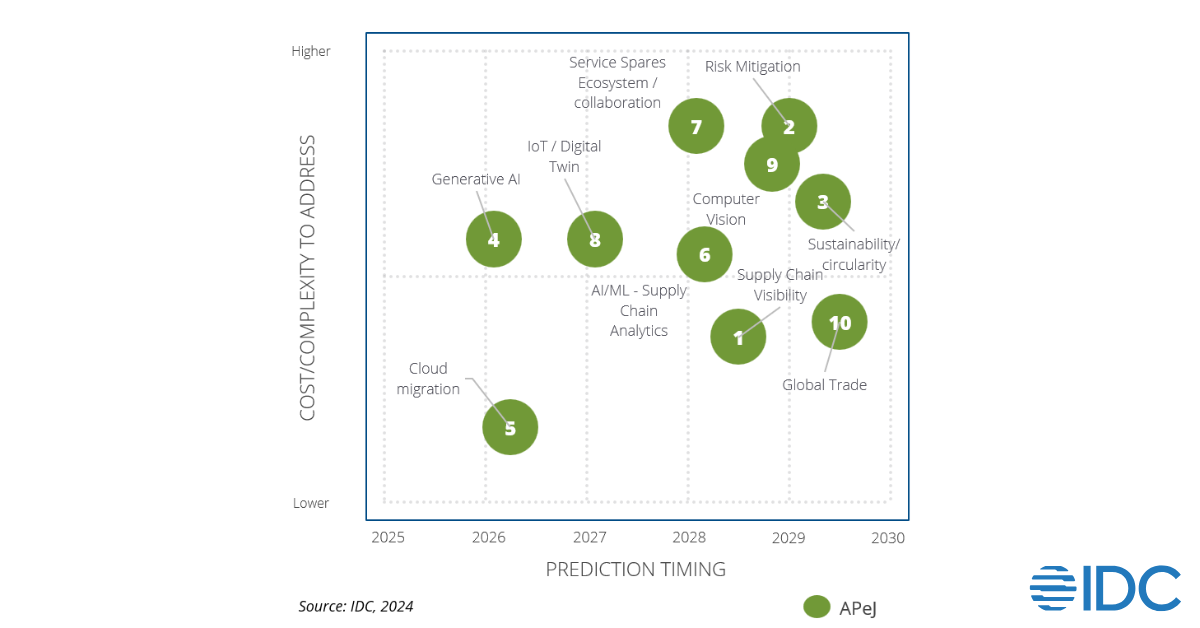
Here are five of those supply chain FutureScape predictions that are shaping how Asia/Pacific organizations will support operational efficiency and build resilience for future success.

1. Predicting the Unpredictable with LLMs

IDC Predicts: By 2028, 50% of A1000 supply chain organizations will deploy LLM-powered platforms to simulate and predict risks related to geopolitics, regulatory frameworks, and weather impacts to increase resiliency.

These platforms not only enable faster, data-driven decisions but also highlight the shift towards predictive, proactive supply chain management. By identifying potential disruptions in advance, these tools help organizations build more resilient operations, ensuring stability and agility in an increasingly volatile global environment. This trend reflects the growing emphasis on leveraging advanced technologies to future-proof supply chains and respond effectively to complex challenges.

2. Sustainability Gets Smarter

IDC Predicts: By 2029, 60% of A2000 supply chain participants will deploy AI to comply with circularity regulations, achieving adherence to environmental regulations and 20% efficiency gains.

As circularity regulations grow stricter, organizations are increasingly turning to AI to navigate these demands while aligning with sustainability goals. This shift represents more than compliance; it underscores a fundamental transformation in how supply chains operate—from reducing waste to optimizing resource use. By embedding AI into their strategies, companies are not only meeting environmental expectations but also enhancing operational efficiency and building more competitive and sustainable supply chains for the future.

3. Cloud Levels the Playing Field

IDC Predicts: By 2026, 45% of A2000 supply chain organizations will have migrated to cloud solutions, improving inventory velocity by 5% and making small and medium-sized businesses competitive with larger players.

Small and Medium-sized Enterprises (SMEs) are the backbone of the Asia/Pacific region’s economy. In APEC in 2020, it was estimated that they make up approximately 98% of businesses. Most businesses created today are likely to be digitally native, and that often means adopting cloud-based solutions. These solutions enable SMEs to compete effectively by offering cost-efficient tools that enhance connectivity, scalability, and collaboration. This shift empowers a new wave of businesses to improve visibility, agility, and operational efficiency, laying the foundation for interconnected, resilient supply chains and accelerating digital transformation across the region.

4. AI Supercharges Logistics

IDC Predicts: By 2028, 60% of A2000 supply chains organization will utilize AI/ML for dynamic shipment planning and network optimization, reducing disruption response time by 75% and delivering 5% reduction in transportation spend.

AI and ML are taking center stage in shipment planning and network optimization, enabled by the increasing adoption of cloud-based technologies that provide a stronger data foundation. With this improved infrastructure, these tools can deliver smarter, more adaptive logistics systems that respond dynamically to real-time conditions. By leveraging these advancements, supply chains are achieving unprecedented efficiency and resilience, positioning themselves to thrive in an increasingly interconnected and unpredictable global environment.

5. GenAI Transforms Risk Management

IDC Predicts: By 2029, 40% of APeJ manufacturers will utilize AI and GenAI for compliance automation, ensuring a 90% reduction in manual compliance tasks and cutting operational costs by 15%.

AI and GenAI are driving significant advancements in compliance automation, helping businesses streamline traditionally manual and resource-intensive tasks. These technologies are a response to increasing regulatory complexity, enabling organizations to ensure adherence while reducing costs and errors. By leveraging these tools, supply chains can focus on more strategic priorities, improving overall operational efficiency, enhancing compliance accuracy, and significantly boosting productivity. This enables businesses to not only adapt swiftly to evolving compliance landscapes but also gain a competitive edge in a highly regulated environment.

A Future of Intelligent Supply Chains

Asia/Pacific* supply chains are evolving into ecosystems of intelligence and resilience. Technologies including AI/ML, GenAI, IoT, cloud computing, and digital twins are not just enhancing operational efficiency but redefining the boundaries of what is possible. From smarter sourcing and predictive risk management to sustainability-driven efficiencies, AI and emerging technologies are transforming challenges into opportunities.

Ready to embrace the future of intelligent supply chains? For more insights and detailed analysis, explore our report: IDC FutureScape: Worldwide Supply Chain 2025 Predictions ― Asia/Pacific (Excluding Japan) Implications, or join us for our FutureScape webinar “Building a Future-Ready Supply Chain” on January 22.

*Asia/Pacific excludes Japan.

In a world where change is constant and opportunities are often hidden in plain sight, organizations must navigate a maze of challenges while identifying the pathways that lead to growth. Staying competitive requires not just data but meaningful insights to inform decisions and shape strategies.

IDC’s recent research highlights how businesses are increasingly leveraging AI and other advanced technologies to stay ahead. The market for AI platforms, for instance, saw impressive growth in 2023, with revenue expanding by 44.4%, reflecting the surge in AI adoption across industries​.

The Power of Actionable Insights

Actionable insights have become the key for businesses to stand out and lead with purpose. These insights are more than just data—they are the catalysts that drive strategic decisions, enabling organizations to identify opportunities and address challenges with precision and agility. IDC’s research emphasizes the growing role of market intelligence in decision-making, with Strategic Market Insights (SMI) tools offering businesses access to comprehensive data, trends, and forecasts that are critical for making informed choices.

IDC’s Rapid Modules, such as Barometer and Analyst Pulse, provide businesses with quick access to proprietary data, insights, and their very own IDC analyst panel. These tools offer a valuable lens for tracking the pace of AI adoption and understanding market dynamics. What makes these insights particularly powerful is the credibility of the research behind them. IDC has been recognized as the Analyst Firm of the Year for the fifth consecutive year by The Institute of Influencer & Analyst Relations (IIAR). This recognition highlights IDC’s reputation for thorough analysis, strategic thinking, and expertise across areas like AI services, cybersecurity, digital commerce, and emerging technologies such as generative AI.

Addressing Key Challenges for Long-Term Success


As companies embrace actionable insights, they must also address key challenges—such as digital security, technical debt, and the evolving role of AI. These challenges must be recognized and tackled head-on to stay ahead of the curve and set the foundation for sustainable success. Let’s take a closer look at how these issues impact strategic planning.

  • Expanding Digital Security Frontiers
    With the sophistication of cyberattacks increasing, safeguarding data has never been more important. IDC’s research suggests integrating AI into security systems to protect sensitive information and maintain customer trust. AI can enhance security measures, detecting anomalies and mitigating risks in real time, making it an essential part of any security strategy.
  • Managing Technical Debt
    Adopting new technologies often leads to the accumulation of technical debt, creating inefficiencies. IDC stresses the importance of addressing these issues to maintain agility and drive innovation. Organizations must streamline processes, update legacy systems, and integrate new technologies seamlessly to stay competitive in an ever-changing market.
  • Monetizing AI
    What was once considered hype, generative AI is now a crucial business tool. IDC reports that nearly half of organizations deploying generative AI in production have selected AI platforms. This shift creates new opportunities to explore revenue streams, enhance product offerings, and adjust business models to align with evolving market demands.

Unlocking the Full Potential of Strategic Insights


As businesses continue to adopt data-driven strategies, it becomes clear that insights are the true differentiator. By embedding these insights into every level of their operations, organizations can gain a competitive advantage, accelerate growth and ensure long-term sustainability. IDC’s research shows that businesses leveraging strategic insights, particularly through AI and advanced analytics, are better positioned to respond to market shifts and align offerings with demand in real time.

Furthermore, organizations increasingly rely on third-party data and AI to enhance their insights. This enables more effective decision-making through predictive analytics that drive performance. As AI adoption accelerates, IDC forecasts a 50.9% compound annual growth rate (CAGR) for cloud-based AI platforms over the next five years. This shift to cloud platforms not only increases operational efficiency but also enables businesses to scale securely and adapt swiftly, reinforcing the value of strategic insights as guiding forces in an organization’s long-term strategy.

Embracing Strategic Leadership


To stay ahead, organizations must move beyond simply reacting to change. They must leverage tools like IDC’s Strategic Market Insights and thought leadership to lead proactively. By embracing these insights, companies can maintain a neutral and unbiased view of the market, positioning themselves to foresee change, allocate resources effectively, and navigate an increasingly digital landscape with resilience.

Building a Future-Ready Roadmap

Strategic planning has never been more crucial. It’s not just about keeping up—it’s about staying agile, spotting new opportunities, and making smarter decisions at every turn. To get there, businesses need to embed actionable insights into their day-to-day operations. This goes beyond simply collecting data—it’s about transforming that data into actionable perspectives and insights, viewed from multiple angles. IDC’s research makes it clear: the organizations that leverage strategic insights, particularly through AI and advanced analytics, are the ones poised for success.

As 2024 comes to a close, organizations across industries are preparing for change in 2025. Technology is advancing rapidly with investments being prioritized, use cases being evaluated, and employees being primed for the changes on the horizon.

2024 was clearly the year of Artificial intelligence (AI). It comes as no shock that within the coming year we saw more AI. However, we would need some advancements in areas such as autonomous agents. With this looming pivot around AI, the ability for business functions, teams, and stakeholders to orchestrate data seamless to make better informed decisions will be the dividing line between success and failed proof of concepts or investments.

In this environment, the experience-orchestrated business (X-O) is a transformative approach that leverages AI and generative AI (GenAI) to create interconnected, data-driven experiences for all stakeholders.

This concept is crucial as it enables organizations to deliver enhanced value and differentiated outcomes in a competitive market. AI and GenAI technologies play a pivotal role in this transformation by:

  • Optimizing processes
  • Automating tasks
  • Breaking down data silos

These advancements allow businesses to align actions with desired outcomes, ensuring that investments yield meaningful results.

In an X-O business, data and insights are embedded in daily operations, fostering a connected ecosystem that benefits employees, customers, and partners alike. This shift not only improves efficiency but also drives innovation and growth, making it essential for organizations aiming to thrive in the digital age.

Overcoming Challenges in Transitioning to an Experience-Orchestrated Business

Transitioning to an experience-orchestrated (X-O) business is a complex endeavor that involves several significant challenges. One of the primary hurdles is transforming existing business operations. This requires a comprehensive roadmap, the establishment of new metrics, and the integration of advanced technologies like AI and GenAI. Organizations must be prepared to overhaul their processes and systems to align with the goals of an X-O business.

Stakeholder alignment is another critical challenge. Internal and external stakeholders often have different perspectives, success metrics, and goals. Achieving a unified vision and ensuring that all parties are working towards common objectives is essential for the success of an X-O business. This alignment and orchestration requires continuous communication and collaboration to align expectations and outcomes.

Data silos present a significant barrier to the seamless flow of information necessary for an X-O business. Many organizations struggle with fragmented data environments, which hinder their ability to unify customer and operational data. Breaking down these silos and ensuring data accessibility and integration across all functions is crucial for deriving actionable insights and delivering cohesive experiences.

Employee resistance to change is another major obstacle. The shift to an X-O business involves adopting new technologies and processes, which can be met with apprehension and resistance from employees. Educating and engaging employees about the benefits and value of becoming an X-O business is vital.

Addressing their concerns and demonstrating how these changes can enhance their roles and contribute to the organization’s success will help mitigate resistance and foster a culture of innovation and adaptability.

Steps to Implement Experience-Orchestrated Applications

Establish Metrics

Begin by defining clear metrics that align with your organization’s goals. These should measure both internal and external stakeholder experiences. Metrics like customer satisfaction, employee engagement, and operational efficiency are crucial. Regularly review these metrics to ensure they reflect the evolving needs of your stakeholders.

Invest in Technology

Invest in AI-enabled technologies that support experience orchestration. This includes predictive analytics, machine learning, and generative AI. These technologies will help automate tasks, optimize workflows, and provide actionable insights. Ensure your technology stack is integrated and scalable to adapt to future needs.

Educate Stakeholders

Educate all stakeholders about the benefits and functionalities of experience-orchestrated applications. This includes training sessions for employees, informational meetings for executives, and collaborative workshops with external partners. Clear communication will help mitigate resistance and adopt a culture of innovation.

Foster Collaboration

Encourage collaboration across departments and with external partners. Break down data silos to ensure seamless information flow. Use collaborative tools and platforms to facilitate communication and data sharing. This will help in creating a unified approach to delivering exceptional experiences.

By following these steps, organizations can effectively become an experience-orchestrated business, driving value and differentiation in a competitive market.

The Future of Experience-Orchestrated Business

X-O business models offer transformative benefits, including enhanced stakeholder engagement, streamlined operations, and improved decision-making. Embracing this transformation is crucial for staying competitive in an AI-driven world.

Organizations must prioritize outcomes over outputs, leveraging AI to create interconnected experiences. The journey to becoming an experience-orchestrated business is challenging but essential for long-term success. Start by assessing your digital maturity, aligning metrics, and fostering a culture focused on value creation.

Now is the time to act and lead your organization into the future of X-O business.

Aly Pinder - Research Vice President - IDC

As Research Vice President, Aftermarket Services Strategies, Aly Pinder Jr leads IDC research and analysis of the service and customer support market for the manufacturer, which includes topics such as field service, warranty operations, service parts management, and how these service areas impact the overall customer experience. Mr. Pinder Jr. establishes a roadmap for organizations to better understand how technology can transform service and support functions to drive exceptional customer experiences and customer value, profitable revenue growth, and improved efficiency in the field.

2024 was nothing short of transformational for the tech industry, with AI taking center stage. From groundbreaking implementation practices to AI’s sweeping impact across industries, this year marked a turning point. IDC analysts explored how AI is shaping business strategies, uncovering use cases that redefined innovation, and analyzing its economic ripple effects across the globe.

Throughout the year, we shared hundreds of free resources packed with insights from our research. If you missed one or two, don’t worry—we’ve curated a list of our most accessed content. Explore the top ten must-reads below, covering topics your peers found important.

As 2024 comes to a close, the rollout and adoption of 5G in Europe stand at a pivotal juncture. This year has seen significant progress but also challenges that continue to hinder its full potential. Let’s reflect on the milestones achieved, the obstacles overcome, and the outlook for the coming year, positioning 5G as a key driver of innovation for businesses of all sizes.

Key Achievements of 2024

1. Expansion of Network Rollout

5G coverage has expanded significantly across Europe, reaching rural areas and less-developed regions, spreading the availability of 5G Standalone widely across key markets in Europe. This has reduced the digital divide and unlocked opportunities for new business models based on advanced connectivity.

2. Consolidation of Enterprise Use Cases

Industries such as manufacturing, logistics, and automotive have led the adoption of 5G through mobile private networks (MPN) and are beginning to look at network slicing capabilities that are still not fully available commercially. These industrial solutions have enabled operational optimization and applications such as predictive maintenance and real-time remote control.

3. Push of OpenAPIs

A significant milestone in 2024 was the formation of a consortium led by Ericsson, a group of communication service providers (CSPs), and Google to drive the adoption of OpenAPIs. This initiative aims to standardize and simplify the integration of 5G capabilities, opening doors for monetization through new digital services. By enabling seamless interoperability, OpenAPIs pave the way for developers and enterprises to create innovative solutions, further enhancing the value of 5G in both consumer and enterprise markets.

Challenges Remaining

1. Investment Profitability

Although deployment has advanced significantly, and many industries are already looking at 5G as a “no brainer”, monetization remains a challenge. Many operators struggle to justify returns on 5G investments, particularly in saturated markets where consumers perceive 5G as an extension of 4G.

2. Fragmented Ecosystem

The European landscape remains characterized by fragmentation, with differing regulatory frameworks and adoption levels across countries. This limits economies of scale and complicates cross-border solution implementation – a good example being the spectrum required to deploy 5G mobile private networks

3. Business Awareness and Education

Despite progress, some enterprises and many SMEs still lack a clear understanding of 5G’s benefits. This knowledge gap hampers broader adoption, particularly in traditional sectors.

Outlook for 2025

1. Prioritizing Business Innovation and Cocreation with Customers

5G infrastructure is essentially ready to fly, but it must solidify its role as a key tool for digital transformation. Multinationals will leverage its capabilities to scale global solutions, while SMEs can focus on tailored solutions to enhance competitiveness.

2. Expansion of Use Cases

5G is a fantastic enabler to get fast, accurate and reliable data from enterprise operations and customers, and aggregate those into platforms where insights can be extracted. Based on this, technologies like edge computing and artificial intelligence (AI) integrated with 5G are taking center stage and they will continue to do so. These will enable new real-time services, such as autonomous fleet control or connected healthcare applications.

3. Harmonized Regulatory Framework

The European Union is expected to move toward more uniform regulations, fostering a more favorable environment for collaboration and innovation across the continent.

4. Sustainability Focus

Energy efficiency will remain a priority. 5G, combined with sustainable solutions, can help reduce energy consumption in key sectors, contributing to Europe’s climate goals.

Conclusion

2024 has been a year of consolidation for 5G in Europe, marked by significant achievements but also highlighting challenges that remain. Looking ahead to 2025, priorities must focus on maximizing the business and societal impact of 5G, reinforcing its role as a driver of innovation for companies of all sizes. Only by doing so can Europe lead the race toward a connected and competitive future.

Alejandro Cadenas - Associate Vice President - IDC

Alejandro Cadenas leads the European Telco Mobility unit, comprising the CISs European 5G Monetization and Adoption Strategies, European Consumer Telecoms Strategies, and European Internet of Things Ecosystem and Trends. The focus of these three programs is to address the Monetization strategies, best practises, challenges and recommendations for all players across the telecom sector. The key areas addressed include, but are not limited to, OpenAPis monetization, 5G monetization in the Enterprise (Mobile Private Networks, Slicing) and Consumer (digital products categories) segments, Partnerships, Commercial stratregies, key customers and pain points, LEO satellite connectivity, Mission Critical systems, as well as all strategies to take these to the market.

The intersection of market trends, industry developments, and technological advancements is transforming how organizations function, innovate, and provide value. New and emerging technologies have the potential to significantly transform our daily lives and work environments.

For governments and the public sector, a period of reflection is underway on the potential impacts of new technologies on governance, citizen participation, and the establishment of adequate regulations to ensure these technologies are utilized for the benefit of society.

For companies, now is the time to adopt and integrate new technologies. In today’s fast-paced and ever-changing landscape, it’s crucial for organizations to comprehend the potential of emerging technologies as they navigate their strategic direction amid ongoing change and uncertainty.

What Are Emerging Technologies?

Emerging technologies are innovative advancements that are currently developing but have yet to reach widespread adoption. IDC identifies three main features that must coexist for a technology to be an emerging one:

• Early Maturity: Emerging technologies are no longer just concepts — they are actively being developed and refined. Early business applications highlight their promise and potential for significant impact.
• Potential to Create New Ways of Working and Living: Emerging technologies have the power to fundamentally transform society, reshaping how we live, work, and interact with each other. They can challenge established norms and revolutionize the structures of organizations.
• Broad But Uncertain Impact: Emerging technologies have far-reaching implications, albeit with varying degrees of certainty regarding their ultimate outcome, thus bearing potential risks. The impact refers to the industry scope and the number of applications within the same industry.

How Emerging Technologies Transform Industry and Society

The Role of Government

Emerging technologies are revolutionizing society and industry, driving significant changes in how we live, work, and interact. Successful governments task regulators with ensuring that they bring balance to the economy when regulating. They must ensure market fairness and consumer protection while fostering an environment conducive to business, innovation, and economic growth.

Regulation

Governments and international organizations are setting standards that span multiple facets of the digital landscape, from AI to data privacy protection to fostering a resilient digital economy and sustainability. Governments are increasingly enacting legislation around antitrust, sustainability, and technology risk.

For instance, the EU’s Digital Markets Act targets tech monopolies, while the AI Act addresses ethical and data privacy concerns. These regulations require companies to closely monitor and adapt to the evolving digital regulatory landscape in the EMEA region, particularly focusing on areas such as ESG regulations, data and AI regulations, digital economy enablement, and privacy and security regulations.

A proactive approach ensures compliance and helps to leverage regulatory changes as a competitive advantage.

Privacy and Security

The rapid pace of technological advancement is transforming our lives — and it is imperative to ensure its safe and responsible use.

For over a decade, Europe has been a leader in enacting digital privacy and security regulations. The EU’s technology regulations are designed to protect consumers and businesses while promoting innovation.

The General Data Protection Regulation (GDPR) is one of the most important to date. The GDPR has had a significant impact on how companies around the world handle personal data. These regulations can be difficult for businesses to understand and implement, but they help create a more respectful and orderly society. In the long run, these regulations can lead to greater protection of individual rights.

Innovation and Research Policy

Governments can play a key role in driving investment and commercialization of emerging technologies by providing funding, creating favorable regulatory environments, and fostering collaboration between industry, academia, and government.

• Innovation and Research Policy: Creating frameworks that support bringing ideas to market
• Funding and Grants: Providing financial support to all types of organizations for research and development
• Public-Private Partnerships: Collaborating with private sector companies to advance technological development and work collaboratively on projects, policy, and regulations
• Tax Incentives: Offering tax breaks or incentives for companies investing in emerging technologies
• Education and Training: Investing in education and workforce development to build the necessary skills for emerging tech industries
• Infrastructure Development: Supporting the creation of the infrastructure needed for new technologies, such as 5G networks or renewable energy grids

All sectors of society have a vested interest in working with governments and vendors to ensure that Europe continues to pursue ambitious innovation targets and drive global competitiveness.

Strategic Recommendations for Vendors in the Emerging Tech Landscape

Technology vendors should adopt a proactive and strategic approach to emerging technologies. Just as governments must play their part as an enabler and regulator, vendors must play their parts as innovators and users of new technologies.

  1. Lead the innovation strategy. Embrace a persona-driven approach to product development. Create a technology radar to spot emerging trends and strategically plan product road maps. This proactive stance ensures relevance and positions you as a market leader.
  2. Propose targeted solutions. Align your value propositions with clearly identifiable and targeted use cases. This enhances the perceived value of your offerings and increases presales success rates. Articulate how your solutions address specific pain points within different industrial sectors to differentiate yourself effectively.
  3. Master your messaging. Tailor your marketing messaging to resonate with diverse customer personas, such as heads of strategy and innovation. Advocate for pilot projects and proof-of-concept initiatives to engage prospects and showcase the practicality of your solutions.
  4. Empower your partnerships. Foster collaborative relationships through co-development programs and comprehensive partner training. Facilitate knowledge exchange and skill-building exercises to drive innovation and expand market reach. Work with government bodies where possible to build research and innovation communities that contribute positively to industry and society.
  5. Optimize services delivery. Equip your teams with the skills and processes needed to support emerging technologies. Invest in training and enablement programs and implement support frameworks to ensure seamless customer experiences and maximize product utility.


In a rapidly changing technological landscape, it’s crucial for technology vendors to anticipate future trends to become market leaders and drive business value. Businesses that can identify and adopt emerging technologies early on will be at the forefront of innovation, outpacing competitors.

However, success hinges on having a skilled workforce that can adapt to new technologies and drive innovation. By investing in employee training and development, businesses can ensure they have the talent needed to capitalize on emerging opportunities and maintain a competitive edge.

As technological evolution accelerates, adapting swiftly and effectively is no longer optional — it is a critical imperative for thriving in the future marketplace. By committing to ongoing innovation, collaboration, and responsiveness to market shifts, organizations can not only navigate change but also leverage it as a catalyst for growth and success.

Are you ready to stay ahead in the ever-evolving landscape of emerging technologies? Our comprehensive research dives deep into the adoption levels, key drivers and barriers, and the essential skills and IT infrastructure necessary to harness these innovations effectively. Discover how organizations across EMEA are leveraging EmTech to drive value and explore key use cases that are transforming industries. Contact us for more information on how we can help you navigate the future of emerging technologies!

Europe will present strong opportunities for unified communications and collaboration (UC&C) and contact center (CC) vendors/providers in 2025. Businesses are increasingly receptive to modern technologies — but succeeding in this market requires tailored approaches by country and business segment.

1. The European Market Will Become More Vibrant and Dynamic

As the external environment evolves and legacy infrastructure comes to end of life, European businesses are more open to upgrading to modern IT infrastructure that can drive future business outcomes. Awareness of what modern technology can achieve is growing thanks to campaigns led by market players. AI is contributing to this receptiveness, with businesses recognizing its immense potential.

Our European UC&C and CC research has revised upward the five-year forecast for both markets. While Europe is ready to embrace new technology at a faster pace, it is important to understand that this complex and unique market requires a tailored approach by country. This economy, composed largely of small and medium-sized businesses (SMBs), has been underserved and offers new opportunities. To succeed in Europe, it is crucial to understand specific country dynamics and buying behaviors and the value Europeans place on trust and working relationships.

2. UCaaS/CCaaS Bundles Will Become More Popular

UCaaS/CCaaS bundles are not new, but IDC’s 2024 European Enterprise Communications and Collaboration Survey indicates their growth will accelerate. This will be driven by contact centers as well as businesses that do not operate contact centers but require lightweight contact center functionalities for customer engagement (marketing/sales). This is particularly true for Europe, where contact centers are relatively smaller and the economy is comprised of more SMBs, making them inclined to consolidated solutions. Their smaller operations also make them more agile and adaptable to new solutions.

Businesses increasingly understand that isolated stacks create silos, leading to disjointed and frustrating experiences for both employees and customers, negatively impacting business outcomes. Businesses realize that analytics can reveal meaningful insights for informed decision-making. Given the large proportion of smaller businesses, resource optimization is important, leading to the blurring of front- and back-office workers. AI can facilitate this by guiding workers through workflows, minimizing the need for in-depth expertise. From an IT perspective, a consolidated stack is easier to manage, leading to greater efficiency.

3. Hybrid Deployments Will Grow

Europe is opening up to modern technologies but the transition from legacy to cloud is not linear. Some businesses/verticals will need to remain on premises for security reasons. Those migrating their entire stack from on premises to cloud will usually do so in stages, resulting in a period of hybrid deployment. IDC’s European Communications and Collaboration Survey showed that contact center hybrid deployments in Europe will grow over the next two years, although some countries will differ. The survey also revealed that a small fragment of businesses may return to on premises from cloud. Providers must offer flexible options to meet customers where they are and provide what they need.

4. GenAI Will Shift to Value-Based Conversations

While the benefits of GenAI are widely discussed, the conversation in 2025 will shift to the actual value it drives. This involves evaluating benefits in relation to costs. In theory, GenAI can automate many functions in UC&C and CC, driving greater efficiency while keeping overhead costs down. However, GenAI is still expensive and businesses are exploring use cases specific to their needs. Efficacy remains an issue due to dispersed data sources and unstructured formats.

There are also concerns about data privacy. Despite GenAI’s fluidity in interactions, sufficient guardrails are needed to prevent data leakage, limiting its performance. Businesses will consider pricing more closely in relation to benefits. Some functions, such as summarization, have become popular. GenAI is here to stay but needs to be value-driven going forward. Vendors/providers need to showcase real-life cost benefits that customers have derived from their GenAI solutions.

5. Opportunities for Service Providers Will Increase

There are some gaps in the market deterring the adoption of modern UC&C and CC technologies and this will create scopes for service providers in 2025. Our survey found that a key reason why businesses are not migrating to the cloud is a lack of the support needed to do so. This includes support with identifying the right solutions, implementation, change management, and aftersales service.

Another reason is that alternatives do not match specific requirements, indicating the need for customization and integration with business-specific IT applications. The emergence of GenAI creates new opportunities, including data management, consolidation, and aggregation. Service providers can also form strong partners in catering to the SMB segment.


Europe is set to become a dynamic market in 2025, offering ample opportunities for vendors/providers — but competition will be fierce. Succeeding in this market is not just about innovation but also about getting the go-to-market approach right. This involves understanding the intricacies of the European market very well.

IDC’s European Unified Communications and Collaboration and Contact Center research provides in-depth coverage of the European market by country and business size segments and can offer data-based strategic guidance.

Oru Mohiuddin - Research Director - IDC

Oru Mohiuddin is a Research Director in the European Enterprise Communications and Collaboration team. Based in London, she is responsible for IDC’s coverage of Unified Communications and Collaboration in the region. Her work focuses on tracking the markets for premise-based and cloud solutions and new developments and trends, particularly in the light of changing work patterns impacting the traditional mode of enterprise communication. Prior to joining IDC, Oru worked for Euromonitor International, where she focused on Future of Work and technology in the SMB context. She also worked in New York and Bangladesh and speaks English and Bengali. Oru was awarded Chevening Scholarship by the British Foreign and Commonwealth Office to pursue her MSc in International Development from the University of Birmingham. In addition, Oru has a BA from Marymount Manhattan College in New York.

In today’s fast-changing business environment, startups and growing tech vendors face unique challenges and opportunities. As we approach 2025, planning for sustainable growth means more than just reacting to industry shifts—it requires a forward-thinking approach. From leveraging technology to fostering innovation, the most successful businesses are those that adapt with a proactive mindset. This blog outlines five essential strategies every startup and growing tech company can use to build resilience, drive growth, and stay competitive in an ever-evolving market. 

If you’re ready to equip your business with the tools to thrive, read on to learn how to turn today’s trends into tomorrow’s growth drivers. 

1. Embrace Technology to Stay Agile and Scalable 

For startups and growing tech vendors, agility and scalability are key to thriving in competitive markets. Advanced technologies like AI, automation, and cloud computing provide powerful tools to streamline operations, reduce costs, and respond quickly to changes. AI-driven automation, for example, can handle repetitive tasks, freeing up teams to focus on innovation and strategy. Cloud infrastructure allows businesses to expand their operations without heavy investment in physical infrastructure, providing the flexibility to scale at pace with demand. 

Staying agile doesn’t mean adopting every new tech trend—it’s about identifying use cases that align with your business goals. Consider what tools will help your business scale smoothly and improve productivity without creating complexity. Focusing on high-impact technologies, such as AI for customer support or data analysis, can lead to meaningful improvements in efficiency while ensuring your business remains flexible in a shifting market. 

2. Make Data-Driven Decisions 

In a competitive market, data is one of the most powerful tools a business can wield. By analyzing customer behavior, market trends, and operational performance, businesses can identify patterns and make more informed choices. Real-time data can help spot emerging opportunities and uncover potential challenges before they escalate, ensuring companies stay one step ahead. 

Data-driven decision-making is about turning data into actionable insights. For example, IDC’s data analytics solutions offer startups and growing vendors the ability to harness data for better decision-making. With insights into customer behavior, market trends, and operational metrics, IDC helps companies turn data into strategic advantages. These analytics tools are invaluable for identifying key trends, optimizing resources, and making timely adjustments that fuel growth. 

Using data to drive your decisions doesn’t require a complex setup; even basic analytics can reveal valuable insights. For instance, tracking customer engagement metrics can inform your product development or marketing strategies. By continually monitoring performance metrics, you can refine your approach, allocate resources wisely, and make strategic adjustments that align with growth goals. 

3. Prioritize Operational Efficiency Without Losing Flexibility 

Efficient operations are essential for startups and growing tech vendors, but it’s important to balance this efficiency with flexibility. Streamlining workflows and automating routine tasks can improve productivity, reduce costs, and allow your team to focus on high-value activities. However, maintaining flexibility is equally critical—especially in fast-moving markets where customer needs and industry standards are constantly evolving. 

Consider adopting lean practices to enhance productivity while staying adaptable. For example, automating tasks in customer support or logistics can drive efficiency, while maintaining flexible processes lets your team pivot as new opportunities or challenges arise. By regularly assessing and refining your workflows, you can find areas to optimize without sacrificing your business’s ability to respond to changes. 

Operational efficiency doesn’t mean rigidity; it means refining processes in a way that enhances agility. This balance of efficiency and adaptability will allow your business to grow sustainably, laying a strong foundation for long-term success. 

4. Build a Resilient, Sustainable Business Model 

In today’s market, sustainability is not only a regulatory requirement but also a powerful driver of brand loyalty and customer trust. Building a business that prioritizes environmental and social responsibility resonates with today’s consumers and investors alike. For example, IDC predicts that by 2027, 80% of IT buyers will only work with vendors that meet social, environmental, and governance-related responsible AI criteria in accordance with sustainable procurement requirements (IDC FutureScape: Worldwide Sustainability/ESG 2025 Predictions). For startups and new tech vendors, adopting sustainable practices from the outset can become a unique differentiator. 

Resilience and sustainability go hand in hand. By incorporating eco-friendly practices, responsible sourcing, or transparent supply chain management, you create a business model that supports longevity. This approach also aligns with regulatory demands that are increasingly focused on sustainability, ensuring your business is prepared for future industry standards. 

While sustainability can mean an initial investment, it ultimately leads to cost savings through efficient resource use, reduced waste, and improved brand reputation. By embedding sustainability into your business strategy, you’re not only building a resilient business but also positioning your brand as a leader in an increasingly conscientious market. 

5. Cultivate a Culture of Innovation and Growth 

For tech startups and growing companies, success hinges on a culture that prioritizes continuous learning, innovation, and personal growth. Companies that invest in developing their talent are better positioned to innovate, adapt, and thrive. This focus on professional growth helps attract top talent while also ensuring that your team has the skills to drive your business forward. 

Creating a culture of innovation involves more than just providing training; it requires a commitment to fostering creativity and collaboration. By encouraging your team to explore new ideas, experiment with different approaches, and challenge existing assumptions, you ensure that your team is motivated to contribute to your business’s success. 

Moreover, nurturing talent in critical areas like AI, data science, and digital transformation equips your team with the skills to lead in a technology-driven world. As the market changes, having a skilled, forward-thinking workforce will be one of your biggest competitive advantages. 

Conclusion 
The road to sustainable growth requires a proactive, strategic approach. By embracing the right technologies, making data-driven decisions, prioritizing efficiency, building a resilient business model, and fostering a culture of innovation, startups and growing tech vendors can lay the foundation for long-term success. 

In the first blog of our e-invoicing series, we explored the pivotal role of e-invoicing in pioneering the transformation of business-to-business (B2B) transactions. In our second blog, we dove deeper into the regulatory frameworks influencing these digital transformations, examining the opportunities and challenges that arise as businesses adapt to evolving compliance requirements.

In this third and final blog in the series, we explore the future of e-invoicing as it arrives with haste in Europe. We conclude with some clear guidance on selecting and implementing e-invoicing solutions.

The Rise of e-Invoicing Mandates in Europe

First was Italy, followed by France. Next in line are Germany and Poland, with Belgium, Romania, Hungary, Spain, Portugal, Greece, and others soon to follow. e-Invoicing mandates are rapidly spreading across Europe, and we anticipate a surge in new B2B e-invoicing requirements.

For organizations operating in any of these markets, or across multiple countries on this list, maintaining compliance will be a challenge. Each country has its own set of rules, making it difficult to stay up to date. However, with the right strategy, you can simplify this process considerably.

Let’s explore the challenges and opportunities and consider whether e-invoicing is merely about staying compliant — or if it can also be a competitive advantage.

Navigating Regulatory Complexity and Volatility

One of the biggest headaches organizations face when it comes to e-invoicing is the fragmented and ever-changing regulatory landscape in Europe. Although several initiatives are aiming to harmonize regulations across member states, presently there is no single, overarching EU e-invoicing act. Each country has its own unique set of e-invoicing requirements, including formats, procedures, and deadlines.

This complexity makes it difficult for organizations to remain compliant across multiple jurisdictions. Regulations can change frequently and there may be little warning. With numerous mandates on the horizon, this volatility is likely to become an even bigger pain for organizations across the continent.

The Growing Demand for Compliance as a Service

With the pressure to stay compliant growing, more organizations are turning to cloud-based solutions that offer “compliance as a service.” These platforms help organizations navigate the challenging world of regulations by handling compliance across multiple countries. This frees companies to focus on what they do best instead of getting bogged down by paperwork and admin tasks. As the regulatory landscape continues to evolve, this trend will only get stronger as more businesses realize the benefits of outsourcing compliance.

Exploring Vendor Diversity in e-Invoicing Solutions

The European e-invoicing market is set to grow rapidly over the next five years, fueled by new mandates and the potential for automation. The market has attracted a wide range of vendors, each bringing unique strengths from fields such as AP/AR automation, tax compliance, ERP, EDI, and others.

Of course, you can also expect to have e-invoicing capabilities added by your financial application vendor as a part of regular updates, or you may purchase a standalone solution. The challenge for businesses lies in identifying the option that is best suited to their specific needs from the vast array of possibilities available.

Potential for Automation and Efficiency Improvements

Compliance may initially seem like a burden, but e-invoicing has the potential to be a catalyst for wider business improvements. Companies that view e-invoicing as an opportunity rather than a challenge can leverage it to automate their invoicing workflows, reduce manual errors, and enhance operational efficiency. By adopting a strategic approach, organizations can align e-invoicing compliance with their broader digital transformation goals.

What’s Next for e-Invoicing in Europe?

The European e-invoicing market is poised for rapid expansion, driven by regulatory pressures and technological advancements. Over the next five years, e-invoicing adoption is expected to accelerate, potentially reaching near 100% adoption rates in some sectors and countries. This growth will be fueled by both national mandates for B2B transactions and the European Union’s VAT in the Digital Age (ViDA) initiative, which aims to standardize digital reporting and compliance.

Ongoing digital transformation will also continue to reshape the market. Companies that adopt robust e-invoicing solutions stand to benefit from improved efficiency and enhanced data transparency. As automation becomes more prevalent, businesses will be able to reduce manual tasks and enable employees to focus on higher-value activities.

Recommendations for Selecting and Implementing e-Invoicing Solutions

Prioritize Regulatory Coverage

Given the growing complexity of e-invoicing regulations across Europe, it is critical to select a solution that covers relevant current and future geographies and that can adapt to evolving rules and requirements. This will ensure that your organization remains compliant across all jurisdictions, mitigating the risk of fines or penalties due to noncompliance.

Choose a Scalable, Cloud-Based Solution

A cloud-first solution offers significant advantages over other deployment types, including scalability, flexibility, and ease of updates. As e-invoicing regulations continue to evolve, a cloud-based solution will allow your business to scale operations seamlessly, particularly if you are operating in multiple countries or plan to expand in the future.

Focus on Integration and Automation

When selecting a solution, ensure that it integrates smoothly with your existing financial and ERP systems. Look for automation features that handle tasks such as invoice generation, validation, and error correction. Automating these processes will reduce manual effort, minimize human errors, and enhance overall efficiency.

Align e-Invoicing with Broader Business Goals

Rather than treating e-invoicing solely as a compliance issue, consider how it can support your broader business objectives. A well-implemented e-invoicing solution can improve transparency and streamline processes, making it a vital component of your company’s long-term digital strategy.

Carefully Evaluate Vendor Capabilities and Strategies

When assessing potential vendors, look beyond the basics. Challenge them with real-world scenarios to see how their solutions perform under pressure. Request a live demo or trial period to gain hands-on experience. Additionally, prioritize vendors with a forward-looking approach, particularly those investing in and incorporating AI and machine learning capabilities to stay competitive as the landscape evolves.


Further Resources

If you are in the process of evaluating e-invoicing solutions, we invite you to check our latest report on the subject. The IDC MarketScape: European Compliant e-Invoicing 2024 Vendor Assessment provides a comprehensive overview of the e-invoicing landscape in Europe, highlighting the challenges, opportunities, and key trends shaping the market. For organizations looking to implement an e-invoicing solution, the report offers invaluable insights and recommendations to assist in the decision-making process.

As e-invoicing continues to evolve, organizations that adopt a strategic, forward-thinking approach and solutions will be well positioned to navigate the regulatory complexities while driving efficiency and growth.

Sustainability advocates are assessing changes that the new administration of President-elect Trump, due to take office in January, may make in U.S. environmental policies. Concerns include potential withdrawal of the United States from the Paris Climate Accords, cuts to investments in renewable energy, and changes in enforcement of climate-related reporting at the federal level.

The sustainability outlook is further clouded by limited outcomes at COP29. The UN Climate Change Conference was held in November in Azerbaijan, the third petrostate in a row to host the annual event (following the UAE in 2023 and Egypt in 2022).

All is not lost, however: This state of affairs offers an opportunity for Europe to strengthen and expand its role as a sustainability leader. The EU should seize this moment to reinforce its commitment to sustainability and spark a global renewal of the climate agenda.

The need for climate action is growing more urgent by the day. Scientists at the Copernicus Climate Change Service have predicted that 2024 will be the hottest year on record and the first calendar year in which global temperatures will have warmed 1.5C above pre-industrial times. Scientists warn that, after this threshold is crossed, Earth may reach the tipping point at which the catastrophic effects of global warming cannot be averted.

The European Green Deal

The ambitious goals of the EU’s Green Deal aim to make Europe the first climate-neutral continent by 2050. The EU now has a chance to double down on these efforts and lead by example. By investing in renewable energy, promoting sustainable manufacturing and agriculture, and driving social sustainability initiatives, Europe can not only reduce its carbon footprint but also create a robust, future-ready, and sustainable economy.

Such leadership can inspire other regions to follow suit, fostering global collaboration in the fight against climate change, wider environmental damage, and the deepening societal divide.

Europe’s diverse landscape allows for a variety of innovative approaches to sustainability. From Germany’s Energiewende (energy transition) to Portugal’s solar energy projects, Finland’s circular economy strategy, and Denmark’s wind energy initiatives, there’s a wealth of knowledge and experience that can be shared and expanded upon. Businesses — in collaboration with each other and innovative start-ups — must lead the way, while politicians should continue to build investment security via concise and reliable regulatory frameworks.

Digital Technologies for Sustainability

A crucial element in achieving sustainability leadership is the deployment of digital technologies, including:

• IoT and AI to optimize energy use, reduce waste, and improve the efficiency of supply chains
• Digital platforms and automation to facilitate greater transparency in environmental reporting and compliance, ensuring that sustainable practices are maintained and improved
• Geospatial intelligence combined with AI to enable climate adaptation and help to manage climate risk
• Digital twins supporting R&D and innovation processes to develop new, sustainable business models as well as approaches to enable reverse logistics, remanufacturing, and recycling of products and materials

By embracing these technologies and driving innovation initiatives, Europe can enhance its sustainability performance as well as serve as a beacon for other regions looking to adopt similar practices.

Tech vendors have an opportunity to support these developments and benefit in the medium and long term. We predict spending on ESG sustainability tech products/services in EMEA to grow by 19% on average over the next five years, reaching $104 billion in 2027.

To gain a share of this market, tech vendors should innovate responsibly and sustainably, keeping in mind the impact of technology itself (e.g., the energy consumption of AI use) as well as the impact of technology use cases (e.g., downstream Scope 3 emissions resulting from the use phase of products or services).

In conclusion, the results of the U.S. elections present a unique opportunity for Europe to strengthen and solidify its role as a global sustainability leader. By continuing to innovate and invest in sustainability technologies, Europe can pave the way for a more sustainable future for all — while at the same time establishing the conditions for future growth. The current headwinds can be transformed into future tailwinds for European business and economy.

For more information on the tech vendor opportunities, watch our latest webcast: Sustainability Headwinds: Re-Energizing Your Momentum for the Sustainability Tech Opportunity.

Katharina Grimme - Associate VP, Research and Practice Lead, EMEA Sustainable Strategies and Technologies - IDC

Katharina Grimme has more than 20 years' experience as an industry analyst and strategy consultant in the tech industry and is leading is leading IDC's Sustainability research in EMEA. With her expertise and passion for sustainable concepts for business, society, and digitization, she drives thought leadership at the intersection of sustainability and digital transformation.