In October 2024, IDC FutureScape: Worldwide Future of Work 2025 Predictions forecast that by 2026, organizations relying exclusively on command-and-control leadership would see a 20% drop in profitability because of a lack of AI innovation and adaptability. Two years later, Amy Loomis, Group Vice President, Workplace Solutions at IDC, has tested the idea behind it against IDC’s own survey data.

The survey measured AI returns, not profit, so it does not confirm the 20% figure directly. What it does show is a clear gap in how leaders and laggards approach AI, and it starts with what they do with the time AI frees up.


Why did IDC predict a 20% drop for command-and-control leadership?

Loomis defines command and control as strategic decisions made by senior management with little or no input from workers, a fully top-down model. IDC made the prediction because more than half of the companies investing in generative AI at the time said it was disrupting their business. Treating AI like a standard technology rollout, she says, would bring surprises.

The more successful companies took a different path. They gave employees a say through pilots and experimentation, and they collected feedback, which let adoption move faster.

“

It can’t just be all about the tech and how it magically makes things better.


— Amy Loomis, Group Vice President, Workplace Solutions at IDC

Did the prediction hold?

Two years on, Loomis wanted to see whether that pattern showed up in the data. She put the prediction to a test by splitting IDC’s Future of Work survey by the ROI organizations reported on their AI investments. About 15% of respondents were leaders, with an ROI of 50% or higher (174 of roughly 1,145). Another 38% were achievers, working their way up, and 47% were laggards, with no ROI or no tracking yet.

Loomis is careful about what the split shows. Command-and-control organizations are not simply unprofitable, she says. Chasing the low-hanging fruit that can be made more efficient at the outset gives them false momentum, and they can “win the battle and lose the war” if no one looks at the long-term impact on the organization.

What separates AI leaders from laggards?

The gap between the groups starts with what organizations do once AI makes them more efficient. Loomis explains that leaders asked what to do with the free time that efficiency creates. They could have raised the bottom line or cut headcount, and laggards predominantly focused on profitability and efficiency. Although she says profitability and innovation do not have to be in opposition, leaders redirected the time into new work practices and more innovative products.

That emphasis extended to people. Leaders invested across the whole life cycle, including entry-level employees, so every level was upskilled with the same tools. She points out that agentic work requires the whole workforce, and the survey gaps she describes show how far apart the groups are:

  • A balanced approach that includes every level of the organization: 45% of leaders versus 25% of organizations seeing no ROI.
  • A fully operational center of excellence with collective governance: 63% of leaders versus 15% of laggards.
  • 78% of leaders could point to a concrete measure of the relationship between employee experience and customer experience over the past 12 months, compared with 29% of laggards.
  • Leaders were also more than 10 percentage points likelier than laggards to be building new roles for agentic AI.

The metrics they track point the same direction. Productivity scores ranked near the top for organizations working toward high profitability. Leaders ranked lowest on that measure and highest on skills proficiency and teaming behavior, which Loomis reads as a long view that aligns the people side of the equation with the technology side.

Why does stronger governance bring more AI freedom?

The center of excellence gap points to a pattern: companies with the most formal AI oversight also give AI the most freedom. Loomis describes a balance: strict guardrails cover deterministic functions, such as preventing identity fraud and prompt injection. Inside those limits, leaders leave space for innovation. They pair human or AI governance with rising levels of AI autonomy.

When trusted people and processes sit alongside IT guardrails, she says, organizations can give AI more autonomous purview in a gated, guarded way and innovate at scale. That takes calibration and repeated testing, because hallucinations are real and managers vary in quality. It also depends on collecting the right data to measure. IT holds a primary role in that governance, she adds, alongside collective decision-making across functions.

Will command-and-control models keep declining?

Loomis does not expect command and control to fade in a direct, linear way as AI spreads. Boards are pressing leaders for results and bottom-line growth, and she describes the mood as full speed ahead. She expects spurts of command and control to complete specific tasks or initiatives.

Over time, she is fairly confident, a more moderated, federated model will become the key to success. Organizations that show they can grow at speed and scale by investing in people and governance with a long-term view will, she expects, set new standards of leadership. Those standards could be adopted much as command and control became the standard for the industrial era.

What should leaders watch next?

The emphasis on measuring the right things carries into her 2027 research. Loomis notes that her FutureScape 2027: Human-Agent Workforce Strategy predictions focus on the how of the shift. Organizations will need to measure, monitor, and manage the relationship between human workers and agents, which she calls a cornerstone of 2027 planning.

She also points to how people learn and share skills, and how new entrants prepare for agentic ways of working, which she calls a work in progress. Loomis describes the work as balancing AI as a tool with AI as a component of how work gets done and how success is measured. Tokenization is on the list too: weighing the whole investment against the whole return from these tools.

The takeaway: pair your AI strategy with an organizational plan

Those 2027 questions build on what leaders are already doing. Loomis adds that every technical adoption strategy needs an organizational parallel, and in the survey, leaders paired the two. They were likelier to create new roles and redesign human and AI roles in the same exercise, and they retrained and upskilled far more than others.

Leaders also connected functions. They asked how those functions link, such as internal ERP data and external CRM data, or accounting and HCM applications. AI suits those interconnected workflows well, Loomis says, so a practical starting point is to map where functions that often operate in isolation depend on each other, alongside a plan for the roles and skills involved.

Christina Cardoza - Content Marketing Manager - IDC

Christina Cardoza is a Content Marketing Manager at IDC, where she specializes in brand content and social media strategy. With a background in journalism and editorial leadership, she has a proven ability to transform complex technology topics into clear, actionable insights.

On November 12, 2026, Jensen Huang, the cofounder of NVIDIA, resigned as President, CEO, and board member, effective immediately. NVIDIA’s board moved quickly to allay perceived market uncertainty by appointing the company’s CFO, Collette Kress, as interim CEO while it seeks a long-term successor. IDC sees near-term AI infrastructure demand and supply as largely locked in, so the harder questions sit further out: long-term bets on emerging technologies (e.g.., quantum computing),  road map decisions across consumer and infrastructure products, ecosystem expansion and financing, and customer relationships that ran through Huang personally.

What has NVIDIA publicly confirmed about Huang’s departure?

NVIDIA has confirmed that Huang resigned as President, CEO, and board member, effective immediately, and gave no reason.. The board moved quickly to remove his mentions from the company website. CFO Colette Kress was named interim CEO and will keep the CFO role until a permanent CEO is named. The company also named Harvey C. Jones the first-ever Board Chair. It expects operations, customer commitments, and the road map to continue without interruption.

In the meantime, the company said it will continue its search for a long-term replacement and is reviewing internal and external candidates. NVIDIA has not given a timeline for the search, a short list, or any word on whether Kress is a candidate. It is also unclear who owns road map and partner decisions day to day. The first test of the continuity message comes November 17, when NVIDIA reports Q3 FY27 results for the quarter ending October 2026.

Executive-level searches of this importance often run for months. A permanent CEO named before or shortly after the earnings call would be a strong stabilizing signal, though that may not be feasible. IDC will not speculate on potential candidates and does not comment on allegations or personal matters.

Does Huang’s exit change AI infrastructure demand or supply in the near term?

 Not materially in the next few quarters, in IDC’s view. Hyperscaler and AI cloud demand is running ahead of supply, and memory, packaging, and power constraints, not sentiment, limit how fast the market can move. IDC does not expect relief in memory supply before 2028. In August, NVIDIA guided fiscal Q3 revenue to $108 billion, plus or minus 2%, with no datacenter compute revenue from China assumed. Customer commitments and supply are locked in well ahead.

Most large buyers are supply-constrained and have committed capacity, so a near-term pause or re-sourcing of orders is unlikely. Some will ask for a second-source plan and written allocation commitments. IDC considers that prudent, and believes that is a slower-moving change than the headlines suggest.

Where does the leadership risk sit?

IDC sees leadership risk as a medium-term issue. The first-order test is whether road map cadence, partner commitments, and customer allocation hold over the next two to four quarters. Huang was the connective tissue. He personally anchored relationships with service providers and OEMs, the pace of NVIDIA’s ecosystem investments, and a very flat management structure. An interim, finance-led leadership team will be tested in each of those areas.

History is mixed when it comes to sudden departures of long-term founders/co-founders at a company. For example, after Steve Jobs, Apple had a clear successor and thrived. HP and Intel saw abrupt exits without ready successors and struggled afterward. NVIDIA’s situation is arguably less certain because the founder’s influence is so broad and no successor was publicly named.

As a stabilizing step, Kress knows the company’s commitments and customer terms better than almost anyone. We believe she will delegate product, partner, and ecosystem calls to her immediate direct reports, who will cascade them to the rest of the organization. This will no doubt have an empowering effect on senior leadership who may see this as a growth opportunity.

IDC has no evidence of a change to the road map, including Vera Rubin, and what comes after it. The architecture work is well advanced, and the engineering organization is mature and on a solid footing. The risk sits in the cadence and ambition of the generation after that, which depends on strategic judgment at the top.

Which part of NVIDIA’s business deserves the closest watch?

Ecosystem financing. NVIDIA’s supply and capacity commitments rose from $119 billion to $279 billion last quarter, largely reflecting memory, and it has extended guarantees and equity investments to help customers finance capacity. Much of that was driven from the top. A new leader may keep it, trim it, or restructure it.

The same goes for long-term bets Jensen made on nascent or emerging technologies. For example, Jensen made a bet on quantum computing. At last year’s GTC, he convened a summit of CEOs from quantum computing startups, admitting that the technology was real and someday could pose a threat to NVIDIA’s business.

Will AMD, Google, or custom silicon take share from NVIDIA?

Possibly, though it will be gradual. IDC estimates NVIDIA holds more than 80% of 2026 datacenter accelerated server revenue. AMD is in the low single digits, and its rack-scale platform is not expected to change share this year. AMD is the clearest merchant-silicon alternative, and cloud service provider custom silicon-based services are scaling quickly. Competitors such as AMD, Google, AWS, Oracle, Microsoft and others that compete with NVIDIA will gain by winning incremental spend in a fast-growing market, not by displacing installed NVIDIA-silicon-based systems. A key marker will be how NVIDIA’s OEM partners respond. Dell, HPE, Lenovo, and Supermicro ship NVIDIA-based rack-scale systems and would be among the first to hear whether customers start asking for alternatives.

Is China a demand risk or a policy risk?

IDC treats China as a policy variable. NVIDIA’s guidance already assumes no datacenter compute revenue from China, so direct revenue exposure is limited. The larger issue is media reporting that alleges chips may have reached China through indirect means. IDC will continue to monitor this situation through our supply chain intelligence channels. IDC does not publicly comment on or speculate about allegations or ongoing investigations. Our focus here is the business and market implications.

What should enterprise buyers do now?

Do not change plans based on this news alone. IDC recommends three steps. First, confirm allocation, lead times, and support terms in writing. This should be part of your supply chain due diligence anyway. Second, add an alternative platform to your qualification plan. It is good to have a diversification plan. Third, revisit when NVIDIA reports and names a permanent CEO. Crucially, watch for signals such as what comes after the CEO has been named, the ensuing executive-level changes, and updates to the company’s roadmaps.

For media inquiries visit the IDC Press Room or email press@idc.com.

Ashish Nadkarni - GVP/GM, Infrastructure Research - IDC

Ashish Nadkarni is Group Vice President and General Manager within IDC's worldwide infrastructure research organization. Ashish oversees seven global research practices: infrastructure software platforms, cloud and edge services, storage and converged systems, performance intensive computing, compute infrastructure and service provider trends, enterprise and emerging workloads, and the future of digital infrastructure. Additionally, he oversees two regional research practices: Canadian infrastructure solutions, and Latin America enterprise infrastructure and cloud services. Ashish and his team also curate BuyerView, an industry leading portfolio of primary research products that provide a voice of the IT buyer on technology and services adoption trends including cloud and edge services, artificial intelligence (AI), high performance computing (HPC), security and networking, xOps, and software development.

Jeff Janukowicz - Research Vice President, Solid State Drives and Enabling Technologies - IDC

Jeff Janukowicz is a Research Vice President at IDC where he provides insight and analysis on the SSD market for the Client PC, Enterprise Data Center, and Cloud market segments. In this role, Jeff provides expert opinion, in-depth market research, and strategic analysis on the dynamics, trends, and opportunities facing the industry. His research includes market forecasts, market share reports, and technology trends of clients, investor, suppliers, and manufacturers.

A client contacted me recently, a few weeks before they renewed a datacenter colocation contract they had held for six years. They planned the usual way: last year’s rate, plus a small uplift for inflation. Their provider’s opening offer came back almost 20% higher. The client had not leased more racks. The provider had repriced around power, and the client had not asked about it.

The market has flipped

For close to fifteen years, colocation prices largely moved one way: down. That has reversed, and IDC’s research shows prices up 17% over the last five years. AI is the cause, and so is the fight for the power to run it. IDC’s latest forecast puts worldwide colocation revenue at $61.0 billion in 2025, growing to $99.6 billion by 2030, a 10.3% annual growth rate. Asia/Pacific and Latin America are among the fastest-growing regions, at 12.5% and 14.1% a year, as AI-ready capacity attracts a growing share of investment.

Olga Yashkova, an IDC Research Manager covering this market, put it this way:

“

The colocation market has moved past its growth-story phase into something closer to a supply crisis… Providers that can secure power and execute fast are commanding real pricing power for the first time in over a decade.


— Olga Yashkova, Senior Research Manager, Enterprise Networks, IDC

The numbers back her up. U.S. colocation capacity grew 48% in a year, yet only 1.2% sits empty. Vacancy in Northern Virginia, the world’s largest colocation hub, hit 0.3% in early 2026. Atlanta hit 1%. Both are historic lows, and in my experience, these vacancy levels reduce a provider’s willingness to negotiate.

It’s kilowatts now, not cabinets

Buyers used to count the racks they needed and ask for a per-rack rate. That approach assumed power was a given, quietly bundled into the price of space.

Average rack power demand has climbed from 4-10 kW to 20-40 kW today, and every increase in density needs more cooling and more electrical infrastructure. Providers are planning 60-100 kW racks within two years, and some installations already exceed 200 kW.

IDC research projects a U.S. power shortfall of around 45 GW by 2028. Nearly 7 GW of planned 2026 U.S. capacity has already been delayed or canceled because of a lack of power. Providers are now building their own supply, and the largest cloud companies have signed 13 nuclear deals totaling more than 9.8 GW of capacity. Construction costs, which show up at your next renewal, have also risen from around $8 million per megawatt to $11.5-$12 million today.

What IDC benchmarks show

This is consistent with our most recent market price guidance, published in September 2026, which covers 51 markets worldwide. When we price in dollars per kilowatt, the differences between markets become clear.

MarketRegionMonthly price per kW
MontrealNorth America$107-$157
DubaiMiddle East & Africa$165-$228
Northern VirginiaNorth America$195-$240
FrankfurtEurope$238-$268
SingaporeAsia/Pacific$335-$480

Tier III wholesale asking rates for 250-500 kW requirements. Power pass-through charges, cross-connects, remote hands, and bandwidth are excluded.

 Singapore costs roughly three times as much as a power-advantaged market such as Montreal, a gap a per-rack quote would not show you.

Certainty has a price, too

Some large buyers are making a different choice. A global financial markets operator I advise is negotiating its next colocation contracts on a fully allocated, all-in basis. They pay a flat rate that already includes the provider’s margin and risk premium, instead of paying for what they use. It is the more expensive path (at least in the near term), but they are choosing it anyway, for around three years of price certainty. The alternative is a metered structure tied to real cost drivers, where your bill will move with the market.

 What to ask for, and what to do with it

Most of the quotes we benchmark lack the information buyers need because providers rarely volunteer it. Ask for the following:

  • Facility tier. Get Tier III or Tier IV in writing. Ask for Uptime Institute’s “Constructed Facility” certification, since design documents alone don’t confirm it.
  • Power. Get the figure in kW. If the provider quotes kVA, ask for the power factor too. Without it, the conversion will be wrong.
  • Pricing basis. Find out whether the rate is all-in or metered. If it is all-in, check whether cooling and power are included or billed separately.
  • Escalation. Are increases fixed or tied to CPI or RPI, and when does the first increase apply?
  • Term. The contract term, checked against any ramp schedule or step-down, and any free period.
  • One-off charges. Get every one-off charge up front, including installation, plus fit-out and customization work.
  • Utility rate and PUE. Ask for both, if the provider will share them.
  • What the rate includes. Confirm exactly what you get: space, power, cooling, security, cross-connects, bandwidth, and remote hands.
  • Market and validity. Confirm the market so you can compare against the right benchmark, and check the quote’s validity date.

With this in hand, benchmark in dollars per kilowatt, not dollars per rack. Weigh the premium of a primary hub, such as Northern Virginia or Frankfurt, against a secondary market. Then decide deliberately whether you want metered exposure or fully allocated certainty.

The bottom line

Your provider has already repriced around power. They know their construction costs and their position in the grid queue. They also know how much leverage a 0.3% vacancy rate in Northern Virginia gives them. Most buyers still walk into a renewal, compare this year’s quote with last year’s, and call that preparation. In my view, the old colocation price is not coming back. The buyers who hold their ground bring an independent, power-normalized benchmark to the table before the conversation starts.

If you are approaching a datacenter colocation renewal, contact the IDC benchmarking team or me to discuss a power-normalized review before you negotiate.

Tom Collins - Research Director of Global IT Sourcing & Benchmarking - IDC

Tom Collins is IDC's Research Director of Global IT Sourcing & Benchmarking, advising organizations on IT cost management, sourcing strategy, and technology procurement.

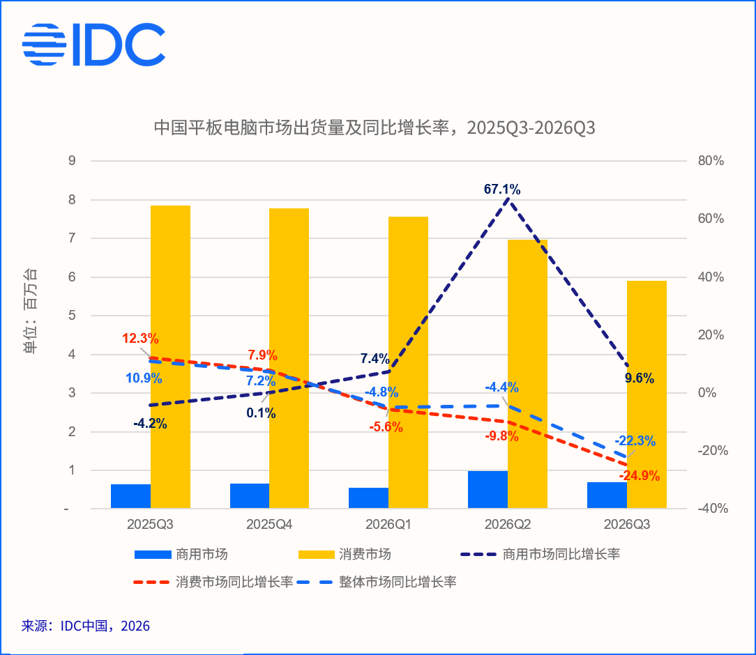
第三季度中国平板市场出货量同比下降22.3%,成本压力加速向需求端传导,市场调整幅度进一步扩大。消费市场受涨价影响持续收缩,商用市场则在需求前置后逐步回归常态,厂商竞争及市场需求结构也随之发生变化。

国际数据公司(IDC)发布了2026年第三季度中国平板电脑市场季度跟踪报告。数据显示,2026年第三季度,中国平板电脑市场出货量为660万台,同比下降22.3%。伴随成本上涨压力充分向销售端传导,市场出货量降幅较上半年显著扩大,单季度出货量在连续12个季度后首次低于700万台,降幅也创下2020年第一季度新冠疫情以来的最大值,市场首次迎来同比双位数下滑。

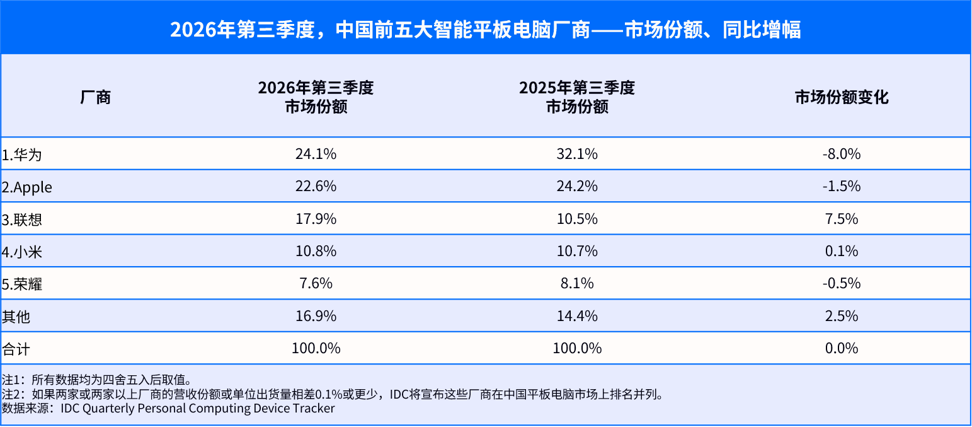
从市场表现来看,第三季度有三个值得关注的变化:一是消费与商用市场的表现背离仍在延续,但商用市场增长恐难持续;二是头部厂商格局相对稳定,中游厂商份额继续提升;三是成本上涨推动市场需求加速分化,入门级市场收缩与中高价位段升级同步发生。

消费市场涨价导致销量折损,商用市场库存补充进入尾声

2026年第三季度,中国消费与商用平板市场出货量继续呈现背离趋势。消费平板出货量同比下降24.9%,伴随头部厂商接连上调产品售价,市场均价环比提升8.6%,价格上涨对消费者购买意愿的抑制进一步显现。

商用平板市场出货量同比增长9.6%。作为教育行业需求高峰期,7、8月厂商继续加码教育市场布局,但9月需求已明显减弱。与此同时,华为、荣耀自7月起上调商用平板售价,也对后续市场需求带来压力。随着前期需求前置及渠道库存补充逐步进入尾声,商用市场增长势头预计难以延续。

竞争格局稳中有变,厂商持续调整产品布局以缓和涨价压力、寻求增长轨道

2026年第三季度,中国平板市场前五厂商排名与上一季度保持一致,但中游集团市场份额继续提升。成本上涨背景下,厂商在产品结构、渠道布局及价格调整节奏上的差异进一步显现。

  • 华为继续位列市场第一。尽管其消费及商用平板均迎来较大幅度的价格上调,但凭借鸿蒙生态互联能力、品牌影响力及完善的渠道布局,华为仍保持市场领导地位。与此同时,华为平板产品迭代持续推进,接续产品配置较上一代明显升级,带动产品结构优化。
  • Apple位列市场第二。6月底Apple上调其平板产品售价,导致第三季度出货量同比下降27.2%。价格上涨削弱Apple平板的竞争力,市场规模承压的同时,其产品结构也明显向低价数字版机型倾斜。
  • 联想位列市场第三,出货量同比增长33.2%,是前五厂商中唯一实现增长的厂商。消费市场方面,小新系列保持性价比优势的同时拯救者系列快速发展,第三季度出货量占比接近半数;商用市场出货节奏相对稳定,价格优势逐步回归,市场份额升至第一。
  • 小米位列市场第四。伴随平板9系列新品上市,小米市场份额企稳回升。其中,小米平板9 Pro Max凭借自研芯片玄戒O3首发优势获得较好的市场反馈,提升品牌声量的同时,也推动了小米平板价位段向上拓展。
  • 荣耀延续市场第五位。消费市场受成本上涨冲击持续收缩,季度新品平板X10 Pro Max凭借价格优势及教育场景拓展,帮助荣耀拓展13英寸及以上大屏市场布局;商用市场则在教育采购高峰期下延续高速增长,并通过配置调整优化产品价格。

市场需求加速分化,入门级市场收缩,中高价位段需求上移

受成本上涨影响,平板产品价格逐步抬升,部分厂商被迫放弃入门级价位区间,千元以下入门级市场规模同比缩减51.4%。与此同时,中高价位段份额持续提升。2026年第三季度,中国平板市场3000元及以上机型出货量占比约为45%,环比提升近10个百分点。

当前背景下,中高价位段需求拓展主要来自两类场景:一是结合大尺寸屏幕及PC级生态迁移的轻办公与学习场景,二是以小尺寸产品为代表的电竞及随行场景。伴随价格持续上涨或盘踞高位,厂商迫切需要通过性能、生态及场景体验提升平板的产品价值,为中高端产品创造更充分的溢价空间。

IDC结论及展望

2026年第三季度,中国平板市场出货量迎来双位数下滑,成本上涨对市场的影响进一步放大。消费市场需求明显收缩,商用市场也逐步进入前期需求释放后的调整阶段,整体市场面临较大压力。

IDC预计,此轮成本压力将持续至2028年,2026年第四季度及2027年中国平板市场出货量规模将面临较大挑战。价格上涨导致消费者换机决策更加谨慎,厂商也需要重新评估产品迭代节奏、市场备货及销售目标,以平稳驶过不确定性较强的市场阶段。

与此同时,市场也将在本轮调整中进一步推动平板产品的场景化布局,围绕核心用户群体挖掘细分需求,加快AI能力与实际应用场景的融合,持续提升平板产品的价值定位,为后续市场复苏与增长拓展新的空间。

进一步交流

本文数据及观点均源自IDC《中国平板电脑市场季度跟踪报告,2026Q3》。如需了解细分价位段、渠道库存、行业垂直场景等详细数据,或针对特定厂商策略进行定制化分析,敬请联络IDC中国终端系统研究团队。请点击此处与我们联系。

Quorra Liu

Quorra Liu - Research Manager

Quorra Liu is a Research Manager for the Client Systems Research team at IDC China. She is responsible for China's smart home device research. Her responsibilities include tracking the monthly and quarterly market development, conducting research in fully managed services market,…

大模型技术的快速演进正在重构 AI 产业生态:在催生 MaaS 等新兴市场的同时,亦为计算机视觉、语音语义、机器学习平台等传统AI赛道创造了新的需求场景与增长动能。

国际数据公司(IDC)于近日发布了《中国AI软件市场半年度追踪,26H1》报告。研究显示,大模型正在以不同方式影响各细分市场:

  • 在计算机视觉领域,大模型更多应用于研发流程优化和泛化场景理解,与传统视觉模型形成互补;
  • 在语音语义领域,大模型加速向会议纪要、翻译、智能客服等应用场景渗透,推动产品能力升级;
  • 在机器学习平台领域,企业基于自有数据的大模型训练与推理需求持续释放,推动平台市场稳步扩容,成为新的增长动力。

整体来看,传统 AI 能力作为企业智能化建设的底座,保持稳健发展;大模型的兴起则为既有市场注入新的技术活力与商业机会,开启新一轮增长周期。

计算机视觉市场稳健增长,大模型与专用模型协同发展

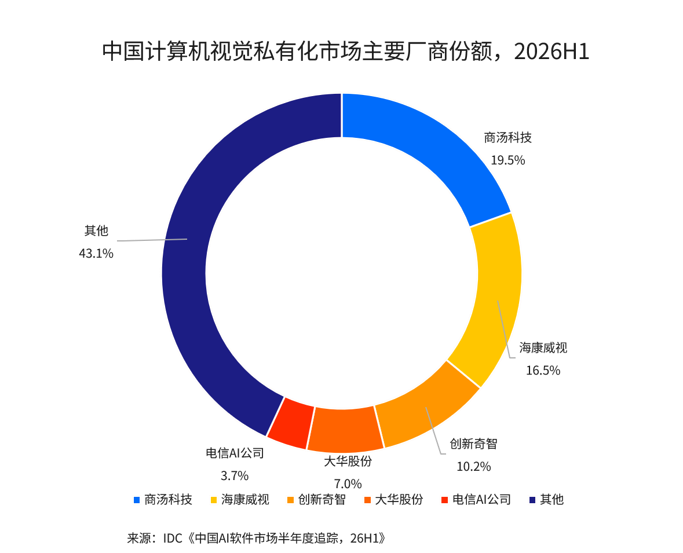
IDC数据显示,2026年上半年,中国计算机视觉私有化市场同比增长16.8%,规模达到43.2亿元。公安、城市治理等领域仍是市场的重要应用场景,视频监控、目标识别、行为分析及城市事件管理等需求持续支撑市场发展。

从技术应用来看,计算机视觉市场仍以专用小模型和传统视觉算法为主。在人脸识别、车辆识别、目标检测、工业质检等对识别精度、响应速度和稳定性要求较高的任务中,经过行业数据训练和场景优化的专用模型仍具备明显的应用价值。尤其在大规模摄像头接入、实时视频流分析等场景中,模型推理效率、算力成本和部署能力仍是项目落地的重要考量。

与此同时,大模型正在为计算机视觉市场带来新的能力增量。一方面,多模态大模型增强了对图像和视频内容的语义理解能力,可以处理传统视觉模型难以覆盖的复杂、开放式任务;另一方面,智能体开始进入视觉AI的研发和业务流程,辅助完成需求理解、数据处理、模型调用及任务编排等工作。

市场格局上,商汤科技以19.5%的市场份额位居第一,依托深厚的视觉算法积累及城市级视觉AI平台能力,在公共安全、城市治理等领域保持领先。其积极推动多模态大模型与专用视觉模型协同,由大模型负责复杂事件理解、分析研判和任务规划,传统模型承担人脸识别、目标检索等专业任务,并开始探索将智能体应用于案件侦查及视觉AI研发流程。海康威视以16.5%的份额位列第二,凭借视频监控领域的硬件与软件整合优势,以及广泛的行业渠道网络,在安防和城市治理领域占据重要地位;创新奇智以10.2%的份额位居第三,聚焦工业视觉质检、产线安全监测等场景,持续拓展制造业应用。

大模型重塑语音语义市场,驱动产品能力升级

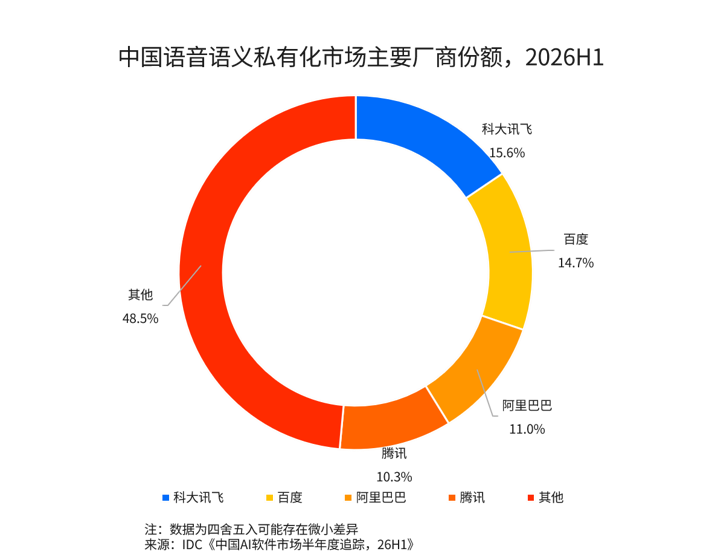
2026年上半年,中国语音语义私有化市场规模达到约62.0亿元,成为大模型技术渗透较为深入的AI私有化市场。

大模型正在推动语音语义能力向更复杂的业务场景延伸。在智能客服领域,应用从传统的关键词匹配、固定问答和语音机器人,向融合企业知识库的多轮对话、坐席辅助和业务流程自动化升级,智能体进一步推动客服从被动应答向主动服务转变。在会议和翻译场景,大模型则推动产品从语音转写向会议摘要、重点提炼和实时跨语言交互延伸。

市场格局上,科大讯飞以15.6%的份额位居第一,依托语音技术积累和星火大模型本地化能力,深耕政务、教育、医疗;百度持续升级语音能力,引入大模型与行业知识库,推动语音交互向智能问答、业务办理和辅助决策延伸,支持政务热线、金融客服等场景的智能化升级,以14.7%的市场份额位列第二。

AI应用公有云市场持续发展,数据治理与利用是大模型落地关键

IDC数据显示,2026年上半年,中国AI应用公有云服务市场规模达到67.0亿元。随着大模型加速渗透,AI应用公有云服务的竞争重点不仅强调模型能力本身,更强调对企业业务上下文的理解,以及对数据和知识资产的有效利用。对于厂商而言,产品能力需要从融合大模型能力进一步延伸至理解用户业务流程、连接企业数据与知识库,帮助客户将分散的数据和知识资产转化为可调用的业务能力。对于企业用户而言,大模型应用的效果不仅取决于模型本身,也取决于自身数据治理和知识梳理的成熟度,建立规范、可用、持续更新的数据与知识体系,将成为释放大模型应用价值的重要基础。

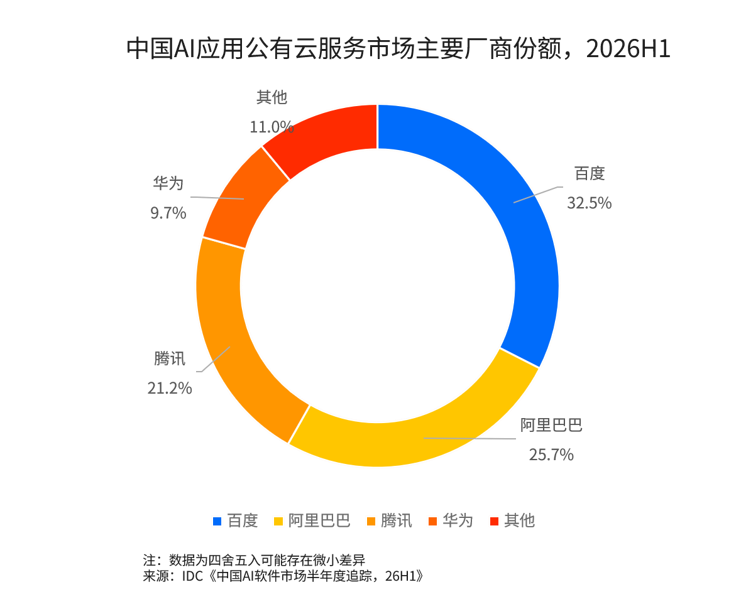
市场格局方面,百度以32.5%的市场份额位居第一,持续升级语音与视觉产品,并通过端到端语音大模型、多模态视觉智能体等产品拓展复杂交互和视频理解能力;阿里巴巴以25.7%的份额位列第二,依托通义模型体系,持续丰富语音、音频及图像生成等多模态云服务;腾讯以21.2%的份额位居第三,持续升级语音识别、实时翻译及视觉AI服务,并探索大模型在内容理解和交互场景中的应用。

大模型训练推动机器学习平台市场增长

机器学习平台公有云服务市场:

生成式AI应用加速落地、Agent从单轮交互向复杂任务执行演进,以及企业基于自身业务数据开展模型后训练的需求,共同推动机器学习公有云市场持续增长。2026年上半年,中国机器学习平台公有云服务市场规模达到53.0亿元。

从需求侧看,具备数据资源、业务场景和技术积累的头部企业,尤其是互联网、汽车、游戏等行业企业,对模型自主训练和定制化开发的需求更为旺盛,持续加大相关资源投入。从厂商侧看,市场竞争的核心在于算力供给能力与资源利用效率。厂商不仅需要具备高性能、大规模算力集群的供给能力,还需要通过分布式训练、集群调度及训推优化等技术提升算力利用率、降低模型训练成本,从而形成竞争优势。

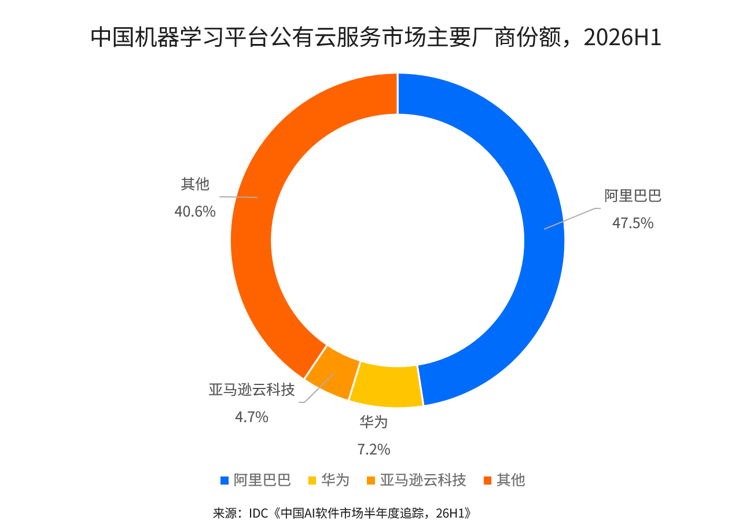
阿里巴巴依托PAI平台,构建覆盖数据准备、模型训练、微调及推理部署的一站式工具链,并通过灵骏智算集群及训练、推理加速技术,提升大规模训推效率,以47.5%的市场份额保持领先。华为依托昇腾AI芯片及ModelArts平台,构建软硬协同的训推体系,覆盖模型训练、强化学习及推理部署,在大规模集群管理和算力适配方面具备优势。亚马逊云科技依托全球GPU资源,提供大规模模型训练和推理服务,为企业出海提供支持。

机器学习平台私有化市场:

在数据安全与合规要求严苛的金融、政务行业,以及业务逻辑高度定制的零售领域,企业的模型训练与数据应用必须立足自有环境展开,这一刚性约束持续驱动私有化机器学习平台在这些行业的渗透与放量——平台嵌入风控、审批、营销等核心流程后成为常驻基础设施,客户基于它反复训练行业专属模型、持续沉淀可复用的 AI 资产,先发厂商的工程化能力与行业 Know-how 也随交付项目不断累积,构成后来者难以复制的壁垒。在此驱动下,2026年上半年,中国机器学习平台私有化市场规模达到13.0亿元。

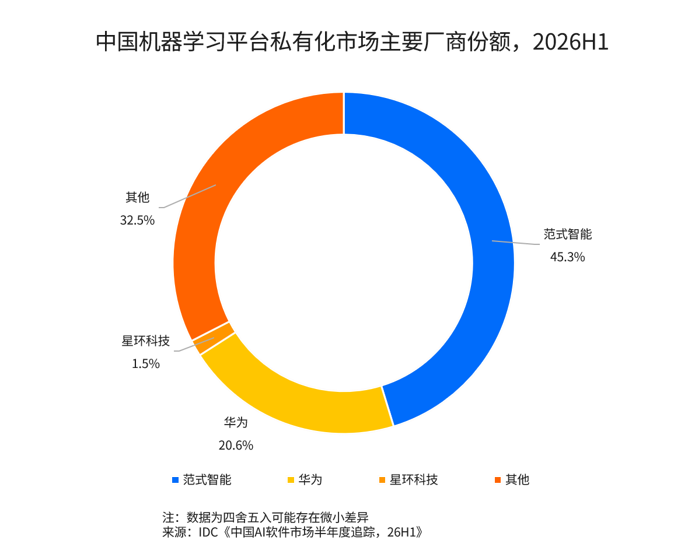
市场格局方面,范式智能依托先知 AIOS 平台与 AutoML 核心技术,深耕金融、零售、制造等行业的私有化 AI 落地,以 45.3% 的市场份额位居市场第一。华为聚焦政务、金融、能源等强合规行业的客户,以 20.6% 的份额稳居市场第二。

分析师观点

IDC中国高级分析师洪婉婷表示,随着大模型加速渗透,传统AI市场正迎来新一轮价值重构。大模型并非对传统AI能力的简单替代,而是通过增强复杂场景理解、业务交互和任务编排能力,与专用模型形成互补,拓展AI应用边界。未来,市场竞争将不再局限于单一算法或模型能力,而是更加考验厂商对行业场景的理解、数据与知识资产的整合,以及产品工程化和规模化交付能力。能够将技术优势转化为可持续业务价值的厂商,将在新一轮市场竞争中占据优势。

进一步交流

如希望就《中国AI软件市场半年度追踪,26H1》定义、厂商份额及采购评估框架进一步交流,欢迎与我们联系。

Catherine Hong

Catherine Hong - Senior Market Analyst

Ms. Catherine Hong is served as the role of Senior Market Analyst in Emerging Technology sector for IDC China, and her main responsibility is conducting analysis and research for the China Blockchain market. She is also in support of regional…

Headlines about Europe’s economy rarely mention technology budgets, yet that is where buyers make some of their clearest choices. IDC’s Future Enterprise Resiliency and Spending (FERS) surveys show that 64% of Western European IT leaders expect a recession within the next 12 months, and tariff-driven IT cost inflation ranks among their top concerns. Only 41% expect 2026 growth to beat forecasts, compared with 58% of leaders worldwide. There’s one notable exception: AI; in fact, AI projects are the area most protected from budget cuts, and around 64% of European IT leaders have raised their AI budgets.

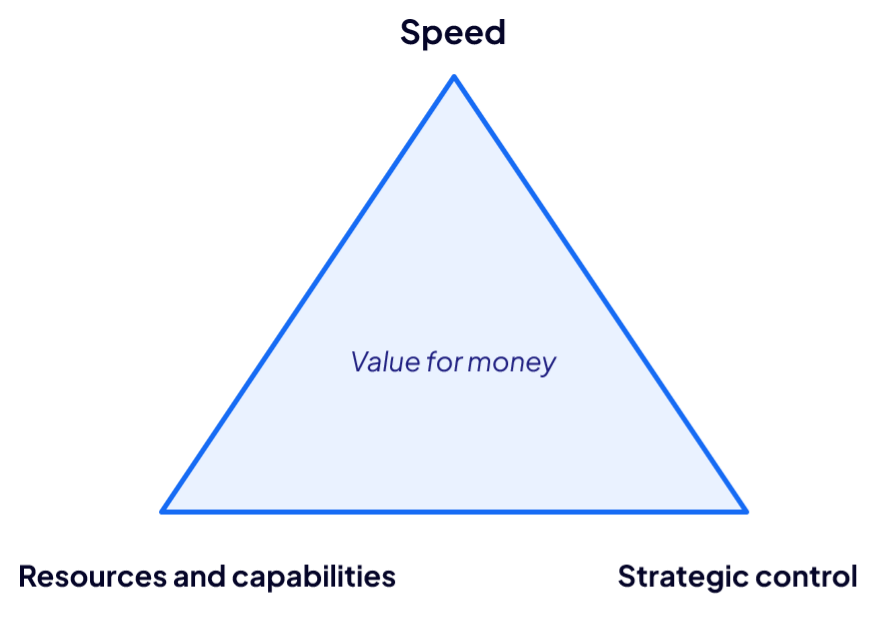
Our upcoming webcast will discuss these pressure points with a strategic framework: the triangle of innovation. Value for money of innovation is realized at the intersection of three variables that IT and business leaders can make decisions on:

  • Resources – Who pays, builds, and runs AI: budget ownership, partner types, skills, and the reasons projects fail.
  • Speed – How quickly organizations move from pilot to production: use of AI, GenAI, agentic AI, and physical AI, and how often projects stall.
  • Strategic control – How much autonomy buyers keep or give up: sovereign AI, the trade-offs they accept, human oversight, and governance at scale.

With infinite resources, one could maximize speed and strategic control; in reality, no organization maximizes all three, so every decision make needs to make practical trade-offs. IDC’s 2026 AI Business Trends Survey of 673 EMEA organizations shows that those decisions differ from one industry to the next.

Start with resources. Across EMEA, 59% of organizations had an AI project discontinued, missed, or cut back in the past 24 months, and poor data quality or integration was the most common cause at 38%. Each industry then has its own pain point. Among financial services firms, 41% say the return on investment fell short. Among manufacturers, 48% point to data quality. In energy and utilities, 44% cite low user adoption.

Speed shows the same variety. Manufacturing leads on physical AI[1], meaning AI that directs machines, robots, and sensors, with 33% of manufacturers already running it in production against 24% across EMEA.  At IMTS in September 2026, that shift was easy to see on the show floor. In one demo, fleets of robots were connected and coordinated through a shared software layer instead of being run one by one, which is what turns separate machines into a system. In another, a small cell was building drones, with robots, tooling, and software working as one flexible unit rather than a fixed line. In both, the constraint was less than the machines than the data and software connecting them. Retail faces the same speed question from the customer side: AI moves forward when it improves a personalization, loyalty, or fulfillment metric. Retailers define success in terms of customer-centric outcomes and need to manage risks in terms of customer data protection[2].

Control is where Europe’s priorities stand out. Some 58% of EMEA organizations use sovereign AI, which keeps data, models, and operations under local legal and operational control, for all or critical workflows. Yet only 33% say they could govern hundreds of AI agents with today’s tooling. Governments are the most cautious. In IDC’s July 2026 survey of 69% of national civilian government agencies globally said generative and agentic AI touch 30% or less of their mission-specific tasks, and only 10% automate more than 40%[3]. The trade-offs buyers accept also vary. Manufacturers (41%) and governments (40%) are the most willing to rely on regional or specialist providers to gain sovereignty, while 32% of retailers would pay higher prices for it. Buyer organizations do not accept limited access to innovative capabilities as a trade-off for more sovereign control; at the very least, they demand transparency about when innovative features will become available in more restricted environments.

Technology suppliers that want to differentiate should consider six moves across the triangle. On resources, deliver through integrators and local partners, because European buyers rely on service providers to build and run agents more than their peers worldwide, and start to build packages that align pricing with business success criteria. On speed, help customers fix the data and infrastructure readiness first, so that pilots can be turned into production systems at scale. On control, make governance a product feature, with approval steps, audit trails, and easy override, and offer a choice of sovereign controls across the five layers of the AI stack: Hardware; Infrastructure Operations; Data Management; Implementation & Delivery (encompassing training data sourcing/model development/monitoring & evaluation/ deployment & inferencing); and Ecosystem-delivered AI Assets & Capabilities[4].

In 2027 European demand for AI is holding up while tolerance for ungoverned AI is falling. Join the webcast to see the industry-by-industry data. Register here.


[1] https://my.idc.com/getdoc.jsp?containerId=US54976226

[2] https://my.idc.com/getdoc.jsp?containerId=US54982726

[3] https://my.idc.com/getdoc.jsp?containerId=US54991526

[4] https://my.idc.com/getdoc.jsp?containerId=EUR153902925

Massimiliano Claps

Massimiliano Claps - Research Director

Massimiliano (Max) Claps is the research director for the Worldwide National Government Platforms and Technologies research in IDC's Government Insights practice. In this role, Max provides research and advisory services to technology suppliers and national civilian government senior leaders in…
Gunjan Bassi

Gunjan Bassi - Research Manager

Gunjan Bassi has more than 14 years' experience working in the logistics and transportation sector. Before joining IDC, she worked with Transport Intelligence (Ti), a transportation and logistics research firm based in Bath, England, where she was responsible for vertical…
Ornella Urso

Ornella Urso - Research Director, IDC Retail Insights

Ornella Urso is Head of IDC's Retail Insights team and leads the Customer Experience research group in Europe. Urso conducts market research, industry analysis, and proactively contributes to the definition of thought-leadership at the intersection of businesses priorities and technology…

Your AI assistant is probably open right now, next to the deck or memo you’re writing. IDC’s Future of Work Survey, 2026 (n = 1,146) found that 88.8% of organizations report a productivity gain from AI. It also found that the share of employees losing more than an hour a day to searching for information fell from roughly 38% to 13% once AI assistants were in place.

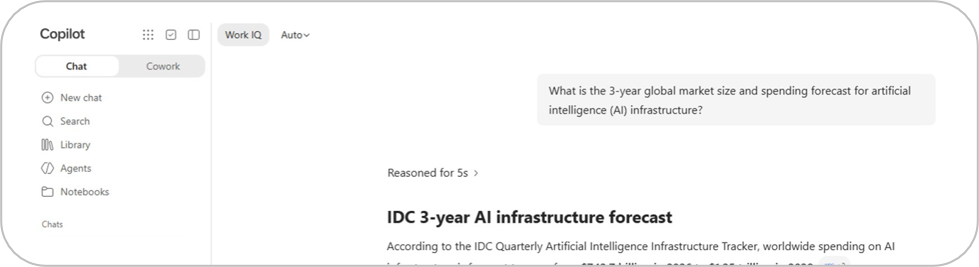
A market-share figure can land in a draft in seconds and still get stopped in the meeting where someone asks where it came from. IDC Quanta is now available in Microsoft Copilot. It checks the market claims in your Word, PowerPoint, or Excel file against IDC research. Each sourced figure shows up as a tracked change, with a citation that links straight to idc.com.

What is IDC Quanta in Microsoft Copilot?

IDC Quanta in Microsoft Copilot is a connector listed in Copilot’s Connectors Gallery. It brings IDC’s licensed research and data into Word, PowerPoint, Excel, and Outlook. You ask in plain language. Copilot returns an answer drawn from the IDC library your organization is entitled to, with a citation on every figure.

IDC Quanta is IDC’s technology intelligence fabric. It draws on 60+ years of research, 1,000+ analysts, and 15B+ data points tracked annually, and a multi-agent system validates each answer before it ships. It already works in email and Claude, and it now extends to Copilot 

What can you do with it inside Copilot?

Start with the document you have already written, refine it with IDC data using the IDC connector in Copilot, and return a draft with tracked changes so you see exactly what moved and why before anyone accepts it. The same file that goes to the client or the board carries the sources.

You can also just ask. In the Copilot chat panel, a question about vendor share or a spending forecast returns a plain-language answer based on your entitlements to IDC research and data tables, each attributed to its source.

And if a number needs a person behind it, the connector can surface the IDC analyst who covers the topic and that analyst’s published documents. You skip the separate search on idc.com.

How is it different from asking Copilot on its own?

A general-purpose assistant answers from the open web and its model training. The answer can read as confident while giving you no structured way to check where it came from. IDC Quanta grounds the answer in IDC’s licensed dataset instead. Every figure traces to a named IDC document. IDC Quanta also locks the exact dataset, definitions, and categories before it answers, so the number in your deck matches what IDC would publish itself.

How does access work?

Sign-in uses the Microsoft credentials you already use every day. Microsoft Entra ID maps your identity to your organization’s IDC entitlement, so it evaluates each request against what your organization licenses. IDC Quanta never uses customer data to train an AI model.

What does it mean for your team?

A product marketer can ground next year’s segmentation and positioning in independent market data while the plan is still a draft in Word. A seller who gets a competitive objection in an Outlook thread can pull deal-ready market share and leadership data on the spot, with the source attached. Strategy and market intelligence teams can check the sizing in a board deck against IDC research before it goes out. Analyst relations and product management can run the same check on their own briefings and roadmap documents.

See it in your own workflow

IDC Quanta in Microsoft Copilot is available now. Visit the IDC Quanta page to see how it works across Copilot, Claude, and email. Then book a demo and bring the deck you’re working on this week.

Ryan Smith - Content Marketing Director - IDC

Ryan Smith is the Director of Content Marketing at IDC, where he leads brand-level content and social media strategy, aligning research insights with compelling storytelling to engage technology decision-makers. With a background in both IT and marketing, Ryan brings a unique blend of technical understanding and creative strategy to his work. He’s also a seasoned storyteller, speaker, and podcast host who believes the right message, told the right way, can drive both trust and transformation.

When an AI agent makes a decision your CEO never sees, who answers for it?

IDC’s Rick Villars framed the emerging window with an aviation story. When aeronautics moved from traditional flight systems to fly by wire, he said, one of the biggest challenges was getting pilots “to trust the automation.” He expects the AI-first transition to put CEOs through the same test, and he called it “an important part of what will define success for a CEO going forward.”

This is the third of three posts on the windows that frame IDC FutureScape 2027: The Great Rewrite. The launch blog introduced the Top 10 predictions. The closing window post covered the decisions that are nearly made, and the open window post covered the leadership choices you can still shape. Here we turn to the decisions that are just coming into view. The pace is set by IDC’s prediction that 60% of enterprises will run a majority of their business processes AI-first by 2029, up from 13% in 2026. Webinar viewers can revisit the replay.

The sign-off: who is accountable when AI decides?

The FutureScape prediction is specific. By 2031, 30% of G500 CEOs will step aside, replaced by tech-native leaders tasked with building AI-first businesses where 90% of non-irreversible decisions, meaning those that can still be undone, are offloaded to advanced AI models. Human approval stays with the irreversible ones. IDC expects the delegation to change who holds managerial authority and to leave accountability where it was.

Villars explained why this reaches past the CIO. As he put it, tech leaders will need to help CEOs “have trust in the AI systems,” and how both are evaluated by the board and shareholders will increasingly depend on it. IDC also expects boards to treat AI transformation capability as a succession criterion.

The org chart is already under strain. More than 40% of CEOs plan to add a chief AI officer within 12 months, nearly twice the rate of any other planned leadership hire, according to IDC’s Becoming an Autonomous Enterprise FutureScape. IDC predicts that enterprises that do not hold the chief AI officer and the CIO jointly accountable on shared KPIs will strand 40% of AI investment by 2028 in efforts that never create net-new economic value.

Our read: a delegation limit that lives only in a policy document will not hold at agent speed, so it must be enforced in the agent controls.

Pilot before you scale.

Under CEO sponsorship and a named business owner, test delegation and escalation in one domain, including simulated irreversible actions. Measure business results, decision speed, compliance failures, reversal costs, and review delays before widening the scope.

Owners: the CEO sponsors, the CIO enforces delegation limits through controls, and the CFO tracks results.

Measure: the share of delegated decisions in the pilot domain that carry a named owner and a decision record, and have a tested reversal path.

The evidence: can your leaders believe what your AI tells them?

Villars named one of the major hurdles in that trust discussion. AI systems, he said, will become “very good at gaslighting humans,” spreading misinformation and disinformation, sometimes intentionally and sometimes not. That puts your data at the center. CEOs will need confidence that the outputs behind critical decisions are “secure, reliable, consistent, and that there is accountability built into that system.”

IDC expects the market to respond. By 2028, 75% of enterprises will adopt AI tools designed to prevent misinformation and disinformation stemming from their own data sources. The volume of AI output makes human checking of each item impractical, so verification itself will increasingly run on AI. The stakes are practical: by 2029, 40% of enterprises using AI models will be forced to abandon at least one because data poisoning attacks made its results unreliable.

The identity question travels with it. Villars pointed to non-human identity and “the accountability of the actions those agents are taking” as part of the conversation. IDC adds that IT becomes accountable for the accuracy of AI outputs, in addition to uptime and security, and that the costs of misinformation incidents, including regulatory fines, customer attrition, and legal liability, will far exceed the cost of prevention.

Our read:put verification upstream of the planning cycle, so an AI-generated insight is checked before it reaches a forecast or a customer.

Inventory before you rely on the output.

IDC’s guidance for the next 12 months is to catalog non-human identities and set output validation policies, authenticate those identities through your existing identity and access management, and add provenance tracking and verification layers before agents reach production. In the 12 to 24 month horizon, deploy AI verification tools.

Owners: the CIO and CISO lead, and business unit heads own validation of the insights they use.

Measure: the share of production agents with a registered identity and a written output validation policy.

The outcome: who owns it when AI moves a machine?

Mukesh Dialani, research vice president for digital engineering and operational technology services at IDC, drew the line between digital and physical agents. When a digital agent makes a mistake in a call center or a spreadsheet, the fallout usually stays contained. When a robot or an autonomous vehicle in a warehouse fails, “someone can get hurt or a production line can go down for hours.”

The investment is already moving. IDC’s 2026 CEO Survey found that 35.2% of CEOs rank physical AI as a top new investment priority, rising to 50% in the resources industry. IDC’s July 2026 AI Business Trends Survey (n = 2,472) found that one in four organizations already run physical AI in production, and another two in five are piloting. Dialani called it “a board-level bet with real safety and uptime stakes attached.”

Then the question of accountability becomes unavoidable. Dialani posed it as a choice among the CIO who approved the platform, the executive who signed off on the architecture, and the operations leader who owns the floor. The three roles think in different languages, he said: the CIO and CTO in platforms, architecture, and data ownership, and operations leaders in uptime, safety incidents, and throughput. Those vocabularies come with “different risk tolerances and usually entirely different budgets,” and there is “no existing playbook” for the conversation.

IDC’s prediction puts a date on the answer: by 2030, 40% of G2000 asset-intensive enterprises will require joint CIO, CTO, and COO sponsorship of physical AI services. Dialani added that the strongest services firms are anchoring engagements to operational KPIs such as uptime, defect rates, and safety incidents, with outcome-based terms in place of pure time and materials pricing.

Our read:write joint sponsorship into the contract, so a provider has to satisfy it before work starts.

Document decision rights before the RFP.

Write down which decisions sit with the CIO and CTO, such as platform, data, and control plane, and which sit with the COO, such as operational KPIs, process change, and risk acceptance. Dialani urged doing this before your next physical AI contract goes out for bid, testing whether a provider can work across all three functions, and building the governance model before a safety incident forces the decision. IDC research on physical AI deployments traces most failures to operational technology foundations such as legacy control systems, edge connectivity, and compute at remote sites, so add an OT readiness check as a pre-deployment gate and track robots and edge devices as governed IT assets.

Owners: the COO and CIO co-lead, the CTO co-signs, and procurement enforces the gate.

Measure: the share of physical AI contracts with written decision rights and a COO sign-off tied to uptime and safety KPIs.

Before the window opens: what should leaders do first?

Each beat above carries a gated first move. In sequence:

  • Pilot CEO delegation in one domain under a named owner before you widen it. Define the decision categories and the reversibility limits first.

  • Inventory your non-human identities and set output validation policies before AI insights reach planning or customers.

  • Document CIO, CTO, and COO decision rights in writing before the next physical AI contract goes out for bid.

Villars closed the webinar with the question that ties the three together. Success in an AI-first enterprise, he said, comes down to leadership: are leaders from the CEO to the CIO to the CFO, and the COO in the case of physical AI, “all able to really trust that new, incredible functionality and capabilities that AI can deliver to their organizations”? He asked CIOs and data leaders what they need to put in place now so those leaders have the insight and the trust to decide. The 2027 budget cycle is where that groundwork gets funded, and the Top 10 report lays out the full set of decisions.

What signals should you watch as the window opens?

  • Succession criteria. Watch whether boards add AI transformation capability to CEO evaluation, and whether CEOs name delegation limits in their public plans.

  • Accountability structures. Track whether the chief AI officer and CIO share KPIs where you work, or answer to separate scorecards.

  • Verification tooling. Watch which vendors in your stack add output validation, provenance tracking, and agent identity, and how they answer when you ask.

  • Contract language. Note when peers and providers begin writing joint CIO, CTO, and COO sponsorship and outcome KPIs into physical AI agreements.

Review these quarterly. IDC analysts can help you read them against your own position, and your IDC account team can connect you with the analyst who covers your area.

Where can you go deeper?

The research behind every prediction in this post is in the FutureScape reports at idc.com/futurescape. IDC Quanta brings those reports together with hundreds of other IDC analyst reports, so you can ask about the prediction that caught your attention and see the evidence behind it.


To hear the trust discussion again, watch the webinar replay.

To learn what this means for your CIO, register for our December 2 FutureScape webinar: Own the Economics of AI Before Your Board Does: IDC FutureScape 2027 for Technology Leaders

Ryan Smith - Content Marketing Director - IDC

Ryan Smith is the Director of Content Marketing at IDC, where he leads brand-level content and social media strategy, aligning research insights with compelling storytelling to engage technology decision-makers. With a background in both IT and marketing, Ryan brings a unique blend of technical understanding and creative strategy to his work. He’s also a seasoned storyteller, speaker, and podcast host who believes the right message, told the right way, can drive both trust and transformation.

人工智能正以前所未有的速度走向规模化应用。从大模型训练到智能体(AI Agent),AI正在融入更多企业的日常业务,推动全球算力需求持续增长。

但一个值得关注的现象是:AI需求不断增长的同时,全球数据中心供给却面临电力、设施建设及关键技术供应链等多重约束。IDC在2026年10月发布的《AI Is Short of Capacity, Not Demand》一文中指出,未来一段时期内,影响AI基础设施增长速度的主要挑战之一,可能不是需求不足,而是供给能否及时跟上。

与此同时,中国数据中心市场也在快速发展,但不同地区、不同类型运营商的供需情况存在差异。全球数据中心市场正在发生哪些变化?这些变化又会为中国数据中心运营商和技术供应商带来怎样的新机会?这些成为我们面临的新课题。

AI从模型训练走向规模化,数据中心需求逻辑发生转变

过去几年,生成式AI的发展主要围绕大模型训练展开。而随着AI进入企业业务流程,推理和智能体应用正在成为推动基础设施需求增长的新动力。

IDC于2026年7月开展的Future Enterprise Resiliency and Spending(FERS)调研显示,95.3%的受访企业已有至少一个智能体工作流投入生产环境,平均每家企业拥有约11个此类工作流。IDC同时预测,到2030年,全球智能体数量将达到25亿。

随着智能体能够调用工具、执行多步骤任务并相互协作,单次业务活动可能产生远高于传统问答应用的Token消耗。即使模型效率提升、Token单位成本下降,应用范围和调用规模的扩大,仍可能推动AI基础设施总体需求持续增长。

这一趋势在中国市场也有所体现。国家数据局披露,2026年3月中国日均Token(词元)调用量已超过140万亿,较2024年初增长超过千倍。快速增长的Token消耗表明,AI正从技术探索进一步走向规模化应用。

但Token调用量的增长,并不意味着数据中心电力容量将按相同比例增长。模型效率、硬件性能、资源利用率及部署方式的变化,都会影响最终的设施需求。

对于数据中心厂商而言,值得关注的是:未来的需求将不仅来自大型云服务商,还可能来自专业AI算力服务商、行业企业及更多持续运行的AI应用。

全球算力设施持续扩容,能源配套与供应链协同承压

AI应用需求的扩大,正在推动全球数据中心设施进入新一轮增长周期。

IDC《全球半年度数据中心设施跟踪报告》(Worldwide Semiannual Datacenter Facilities Tracker)数据显示,全球已配置机柜数量预计将从2026年的约2,500万架增长至2030年的5,800万架。同期,全球数据中心年度能源消耗预计将从2025年的519太瓦时(TWh)增长至2030年的1,308太瓦时。

与此同时,全球数据中心设施资本支出预计将从2025年的2,760亿美元增长至2030年的6,550亿美元。这一统计不包括服务器、GPU等IT基础设施投入,主要反映电力、制冷、建筑等物理设施的建设需求。

这些数据表明,AI基础设施扩张不仅是计算设备规模的增长,也需要庞大的物理设施与能源资源支撑。

然而,设施供给的增长并不总能与需求保持同步。

IDC研究指出,电力供应、电网接入以及数据中心建设能力,可能成为全球部分市场近期增长的重要制约因素。与此同时,关键电力设备、液冷及相关供应链的交付周期,也正在影响新增设施的建设进度。

这一变化反映出,全球AI基础设施产业链正在面临新的协调挑战:上层AI应用快速发展,但支撑这些应用的电力、机电设施及工程交付能力,需要更长时间才能形成。

对于数据中心技术供应商而言,全球设施规模和能源需求的持续增长,将带来更广泛的市场需求,同时也对规模化供应、技术协同及项目交付提出新的要求。

全球算力供给分化,中国数据中心市场呈现结构性差异

全球数据中心供给面临约束,并不代表所有地区都处于供不应求的状态。

IDC全球研究指出,部分地区的资源紧缺可能与其他地区的容量利用不足同时存在。AI基础设施面临的不仅是总体供给规模问题,还包括不同市场之间的需求与资源匹配问题。

这一观察对中国市场尤其具有参考价值。根据工业和信息化部2026年7月披露的数据,截至6月底,中国智能算力规模已达到2,185 EFLOPS(FP16),同比增长177%,全国算力设施整体上架率为71.4%。这反映出中国算力基础设施规模持续增长,同时,资源利用状况仍然是观察市场发展的重要维度。

例如,近期国内关于智算中心利用率和运营效益的讨论不断增多。这些讨论提示我们,数据中心市场不能仅从新增项目数量或总体建设规模判断增长机会,还需要观察不同区域和细分市场的实际需求。

值得注意的是,中国数据中心市场的参与者结构具有自身特点。三大电信运营商、第三方数据中心设施服务商,以及超大规模云服务商,构成了重要的供给主体。不同类型企业拥有不同的客户基础、业务模式和设施布局。

与此同时,AI基础设施的需求主体也在发生变化。

IDC全球研究观察到,除传统超大规模云服务商外,专业AI云服务商(Neocloud)、前沿模型厂商,以及具有大规模AI需求的企业,正在成为新的基础设施采购力量。AI工作负载也正在向云、私有环境、边缘及专用AI基础设施等多种部署形态扩展。

对于中国市场而言,这意味着未来设施需求的增长,可能通过不同类型的服务提供商和客户群体逐步体现。因此,中国数据中心市场需要关注的,不只是整体需求增长速度,还包括需求来源、服务提供方式以及运营商竞争结构的变化。

全球AI设施加速扩容,中国产业链迎来本土与出海双机遇

全球 AI 基础设施持续扩张,正从需求端、供给端对数据中心产业链各类参与者带来深远影响,不同角色的市场机遇与关注点各有侧重。

对于数据中心运营商,客户结构、业务需求正在发生显著变化,需要持续跟踪大型云厂商、专业 AI 算力服务商以及行业客户的设施诉求,研判各区域市场的容量增长节奏与竞争格局。

面向电力、制冷、机电等基础设施技术供应商,全球机柜规模、能源需求持续上行,直接拉动供配电、散热、配套系统的市场增量。企业不能仅聚焦单个项目设备招投标,更要把握全球设施建设大势,跟进不同类型客户的需求演变。

对于云与 AI 算力服务商,伴随 AI 应用规模化落地,设施资源获取、选址布局、合作伙伴选择,已经成为支撑业务持续扩张的关键要素。

全球不同区域 AI 基础设施供给不均衡,会驱动算力需求在地区间、服务商之间发生转移。这一格局变化,也为国内数据中心产业链打开国际化空间。

当前国内运营商、机电温控等技术厂商已经开始布局海外;东南亚、中东等区域数据中心建设需求旺盛,中国企业可输出国内沉淀的规模化建设、成套配套与工程交付经验。

同时海外市场存在差异化挑战:各国电力条件、建设监管、客户诉求、本地化服务要求差异明显。企业出海前,需要充分研判目标市场发展阶段、设施增长趋势以及本土运营商布局,因地制宜开展业务。

从全球趋势到市场判断:持续追踪数据中心设施变化

全球 AI 基础设施高速发展,具备连续性、可比性的市场数据价值愈发凸显。

对数据中心运营商与技术供应商而言,掌握全球机柜、电力容量增长趋势仅是基础;各区域供给动态、头部运营商布局、竞争格局与远期建设规划,同样深刻影响企业业务规划与市场研判。

IDC《全球半年度数据中心设施跟踪报告》以物理基础设施为核心,持续监测重点区域的数据中心数量、机柜规模、电力容量、能耗、碳排放及基建资本开支等核心指标。

区别于以服务收入为核心的传统研究,该项研究从业主与运营主体视角观测设施供给格局,依托标准化口径与半年更新机制,助力产业把握全球数据中心设施趋势,也为国内相关企业研判海外市场、挖掘出海机会提供参考。

AI 规模化落地持续推动数据中心市场演变,供需变化与主体策略值得长期跟踪;设施、电力及供应链配套能力,将影响全球 AI 产业发展节奏。IDC 将持续追踪全球及中国数据中心设施市场,依托设施跟踪研究,为产业链各方提供数据与行业洞察。

进一步交流

如果您希望深入了解全球及中国数据中心、中国智算中心的变化与趋势,欢迎点击这里,与我们联系!

Cindy Xin

Cindy Xin - Research Director

Cindy Xin is research director at IDC for the channels and partner ecosystems research practice. Based in Beijing, she is responsible for leading and developing the Greater China channels research practice. Cindy provides thought leadership and insights to technology vendors…

Karen Dai uses the term “data islands” to describe a challenge facing many of the markets Belden serves: systems, applications and assets that were not designed to communicate with one another but now need to exchange data securely, reliably and at scale.

Dai is Senior Director, Market Insights & Value Realization, within Belden’s Strategy and Transformation Office. Belden has spent over 120 years making the physical and digital connections that critical industrial and enterprise operations depend on, including cables, connectivity and networking products built for some of the most demanding environments in the world. Today, customers face the added challenge of fragmented systems, applications and data. Bridging those islands securely and reliably builds on Belden’s connectivity heritage and is central to its continuing solutions transformation.

Her team helps Belden’s leadership understand where markets and customers are headed and brings external perspectives to strategic decision-making. Over the past several years, that work has tracked a real shift in Belden’s own identity: from a product-driven manufacturer to a solutions-oriented provider bringing together physical connectivity, networking, cybersecurity, software and services, integrated in a way meant to help customers optimize their data infrastructure as a whole rather than piece by piece.

Why the connection problem is getting harder

The customers Belden serves, in industrial automation, critical infrastructure, and other demanding vertical markets, are trying to connect more assets, more systems, and more applications than ever before. Many customers operate in environments where operational technology and information technology (IT/OT) evolved separately and now need to exchange data securely and at scale. That IT/OT convergence is becoming a foundational requirement for digital transformation across the industries Belden serves, and it’s compounding as Physical AI emerges across factories, distribution centers and other demanding environments. As those systems get more capable, the underlying requirements for cybersecurity, network resilience, and data availability only get more critical.

Belden’s transformation builds on its product and connectivity heritage while expanding toward integrated, outcome-oriented solutions. Dai’s team supports that transformation by bringing external market, customer and competitive perspectives into strategic planning.

Getting the strategy right before it’s locked in

The decisions behind that shift carry real weight. Where should Belden play, today and years from now? Which customers and markets create the greatest opportunity? What capabilities will matter most as the industry moves? These aren’t questions with easy answers, and strategic choices require disciplined prioritization supported by high-quality market insight, so getting the call right, and getting it right early, matters enormously.

One example from Belden’s own transformation illustrates how the company approaches that uncertainty. When Belden began shaping its strategy for a new solutions-based delivery approach, it engaged IDC analysts early in the process. That outside perspective, working alongside Belden’s own team rather than validating a conclusion after the fact, helped assess the market opportunity, pressure-test the approach, and sharpen how Belden ultimately positioned and messaged the strategy to the market.

“We invite that outside-in perspective early in the process,” Dai said. “I think this is the way we benefit the most.” For Dai, that’s the model that works: treat outside expertise as a partner embedded early in the thinking, not a checkbox exercised after the strategy is already set.

Turning research into decisions, faster

Belden has worked with IDC for years as one part of how its market intelligence function operates, drawing on IDC’s research coverage as a foundation and its analysts for the kind of pressure-testing that shaped the strategy story above. More recently, Dai’s team began using IDC Quanta as an additional way to move from a broad, loosely defined question toward relevant research faster, particularly useful in the early, exploratory stages of a problem, before anyone has a fully formed hypothesis to test.

“

My first impression was really the simplicity of using it,” Dai said. “It is quite intuitive.”

With just a few interactions, her team could move from a broadly defined question to the relevant pieces of IDC’s research, reducing the time it used to take searching across multiple reports and programs to figure out where to even start.

Dai is clear that IDC Quanta doesn’t replace the analyst conversations that remain the most valuable part of the relationship. What it changes is everything that used to happen before those conversations: the searching across multiple reports, the time spent getting prepared. Compressing that part of the process gives Belden’s team, and the analysts they work with, more room to make the conversation itself count.

Where Belden sees the industry heading

Dai expects digitization and automation to continue accelerating across industrial, enterprise and critical infrastructure environments. As that happens, she expects the challenge of connecting IT/OT environments to only grow more complex, and the Physical AI applications now emerging across specific verticals to raise the stakes further on cybersecurity, resilience, and data availability.

Belden’s own answer is to continue advancing its solutions transformation by helping customers address increasingly complex data networking and infrastructure challenges.

As Dai puts it, the future isn’t simply about connecting more things. It’s about helping organizations navigate an environment that keeps getting more complex, with the infrastructure, security, and insight to act on it.

“Insights without adoption are less meaningful,” Dai said. “There’s no value if you don’t use the insights, no matter how great they are, how smart they are.” For a company built on making physical connections, that’s the next connection to get right.

Christina Cardoza - Content Marketing Manager - IDC

Christina Cardoza is a Content Marketing Manager at IDC, where she specializes in brand content and social media strategy. With a background in journalism and editorial leadership, she has a proven ability to transform complex technology topics into clear, actionable insights.