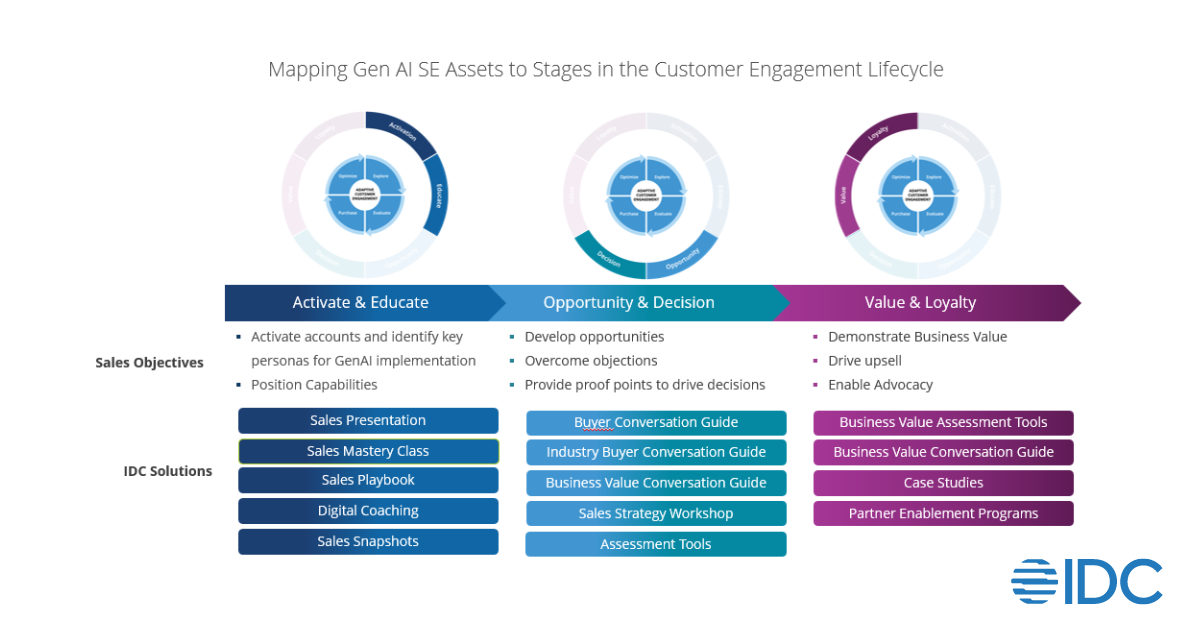
As customer expectations evolve continuously and competition intensifies, we cannot overstate the importance of sales enablement resources. These resources support sales teams by giving them the information they need to engage with potential customers and close sales. However, managing and updating these resources to ensure they remain relevant and impactful can be a daunting task.
To help sales leaders navigate this challenge, here are ten tips for optimizing sales resources for relevance and impact:
1. The Best Sales Enablement Tools Help You Understand Your Audience
The first step in optimizing sales resources is understanding your target audience – the sales team. What are their pain points? What challenges do they face in their day-to-day activities? Understand your sales team’s needs to provide the right resources and support for increased productivity.
By 2028, 70% of B2B buyers in the United States will use GenAI to help them discover, evaluate, and select products and services.
It’s especially crucial to address their concerns about the evolving landscape of B2B buying behavior. As AI becomes more common in the discovery and consideration process, sales reps may fear being sidelined or becoming less relevant. Instead of fearing AI, sales leaders can support their teams by learning how to use AI effectively.
By using AI insights in sales, reps can better understand customer preferences and behaviors, helping them customize their approach. Finally, invest in training programs to enhance their performance and empower them to build thoughtful relationships.
Equipping your team with the best sales enablement tools ensures that they are adeptly poised to navigate the intricacies of modern sales landscapes. Arm your sales force with interactive selling tools that empower them to build relationships and thrive amidst the evolving paradigms of B2B sales.
2. Prioritize Quality (Over Quantity) in Sales Enablement Resources
Rather than inundating the sales team with an abundance of resources, emphasize the delivery of curated materials that offer actionable insights and substantial value. It’s imperative to ensure that your sales enablement tools, content, and resources are finely tuned to address the evolving needs of both the sales representatives and the market.
Keep your sales enablement content updated with the latest industry trends, product enhancements, and competitive intelligence. Engage in periodic assessments to evaluate the effectiveness of your sales enablement resources, seeking feedback from the sales team to pinpoint areas for enhancement and adjustment.
61% of sales reps are not skilled at selling to C-level buyers
Source: IDC 2022 Outcome Selling Advisory IDC Survey on Value Selling Excellence
A strategic blend of educational content, sales aids, and sales engagement tools is paramount. However, don’t overlook the significance of continuous training and support. Sales enablement goes beyond providing resources; it involves giving the sales team the skills and knowledge to use those resources effectively.
3.Tailor Resources to Different Sales Stages for Enhanced Value Selling
Recognizing the nuanced nature of the sales cycle is paramount. Sales representatives operate within distinct stages, each demanding tailored approaches and resources to optimize outcomes. Whether they’re engaged in prospecting, qualifying B2B sales leads, or closing the deal, acknowledging and addressing the specific needs of reps at each stage is essential for effective value selling.
Understanding the diverse requirements across sales stages necessitates a strategic approach to sales enablement. Provide your sales team with the appropriate arsenal of sales enablement tools, designed to empower them at every step of the journey and facilitate the generation of valuable B2B sales leads.
To refine your sales enablement strategy further, leverage the frontline expertise of your sales team. They possess invaluable insights garnered from their interactions with prospects and customers daily. Establish channels for transparent communication and actively solicit feedback from the sales team regarding the efficacy of existing resources and potential areas for enhancement.
By fostering a collaborative environment where feedback is welcomed and acted upon, you can continuously refine and optimize your sales enablement tools to align seamlessly with the evolving needs of your sales team. Embracing this iterative approach ensures that your resources remain finely tuned to support value-driven interactions, enhance lead qualification processes, and facilitate seamless deal closures in the dynamic landscape of B2B sales.
Optimizing sales resources for relevance and impact requires a strategic and proactive approach. By understanding the needs of your sales team, focusing on quality, keeping content updated, providing training and support, tailoring sales enablement resources to different sales stages, fostering collaboration, and seeking feedback, you can empower your sales team to drive more b2b sales leads in today’s competitive landscape.
Stay ahead in a rapidly evolving market. Get timely insights, trusted research, and actionable guidance to help you make smarter technology and business decisions — whether you’re driving innovation, evaluating solutions, or shaping strategy.
International Data Group is committed to protecting the environment, the health and safety of our employees, and the community in which we conduct our business. It is our policy to seek continual improvement throughout our business operations to lessen our impact on the local and global environment. We are committed to environmental excellence, pollution prevention and to purchasing products that reduce the use of natural resources.
We fulfill this mission by a commitment to:
Encouraging all partners to share in our mission
Understanding environmental issues and sharing information with our partners
Recognizing that fiscal responsibility is essential to our environmental future
Instilling environmental responsibility as a corporate value
Developing innovative and flexible solutions to bring about change
Using our platforms and position in the IT industry to promote sustainability
Minimize air travel to help reduce our impact on the environment
Minimize use of materials and energy consumption in our offices
Create a working environment that efficiently uses our office space
Develop and maintain a hybrid working model that benefits both our employees and business partners
Encourage employees to measure, minimize and collaborate on reducing energy consumption at home and in the office
Engaging employees and promoting active participation in environmental and sustainability initiatives
Leaving?
You are about to leave this section. Do you wish to continue?