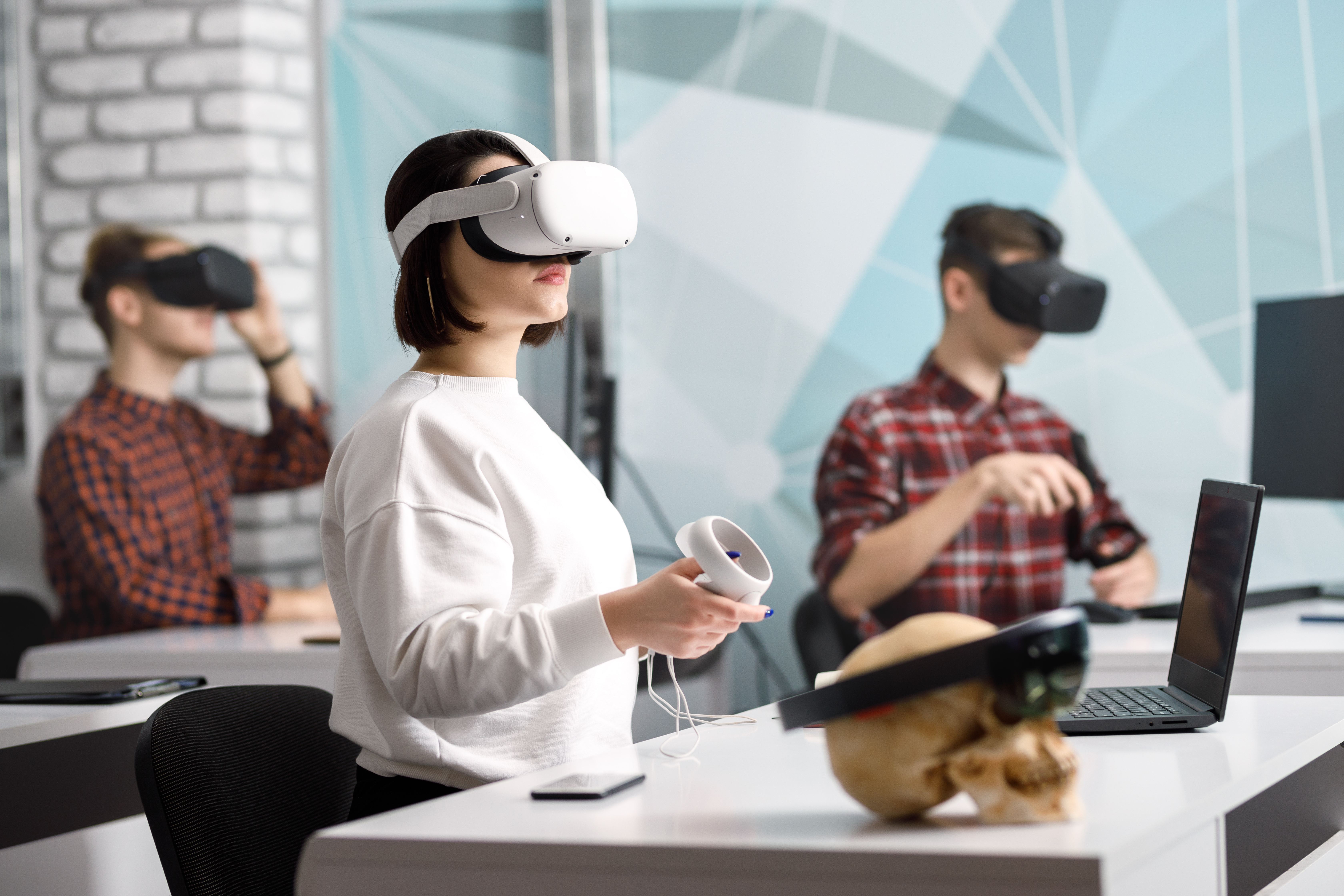
CES 2026 made one thing clear: smart glasses are no longer a niche experiment, they’re rapidly evolving into a mainstream category with serious innovation, big partnerships, and compelling use cases. From gaming-focused specs to next-gen waveguides, the show floor and private suites were buzzing with announcements that signal a transformative year ahead for augmented reality (AR) and extended reality (XR).
XREAL steals the spotlight with big partnerships and big ambitions
XREAL had arguably the most headline-grabbing announcements at CES:
- Gaming gets serious: XREAL unveiled its partnership with Asus ROG, introducing the first smart glasses with a 240 Hz display; a spec that gamers will appreciate for ultra-smooth visuals. This move positions further cements XREAL’s glasses as a gaming accessory and when paired with a PC, they can also function as a productivity tool.
- Google partnership: Beyond gaming, XREAL announced a multi-year collaboration with Google, marking the first major Android XR development news of 2026 and likely means that XREAL won’t stop working on Android XR after Project Aura.
- Fuel for growth: To top it off, XREAL secured $100 million in new funding, signaling strong investor confidence and giving the company plenty of runway to innovate and scale.
Viture’s “Beast” lives up to its name
In a private suite, Viture showcased its latest device, aptly named The Beast, and it didn’t disappoint. The display quality was stunning, truly worthy of the moniker. But the real game-changer? 3 Degrees of Freedom (3 DoF) tracking, which puts Viture in direct competition with XREAL. Expect this feature to trickle down to other brands later in 2026, intensifying competition and benefiting consumers with more choice and better tech.
Lumus pushes the boundaries of AR displays
My best demo experience came from Lumus, the company behind the optics in Meta’s AR glasses. Lumus introduced new geometric waveguides offering a 70° field of view which is a massive leap forward. While these won’t hit consumer products this year, expect them in devices within the next two years.
Why does this matter? These waveguides are highly efficient, minimizing light loss and eliminating the dreaded eye glow problem. Combined with a lightweight form factor and high fidelity, this tech will enable AR glasses to transition from simple heads-up displays to fully immersive experiences.
More brands are jumping in—thanks to a mature supply chain
One of the most interesting trends at CES 2026 was the influx of new players entering the smart glasses space. Brands like Amazfit and XGIMI, traditionally known for wearables and projectors respectively, are now launching AR glasses. Why? The technology and supply chain have matured to the point where reference designs are readily available. This means companies can make minimal changes to existing designs and still deliver competitive products.
This evolution lowers the barrier to entry, accelerates innovation, and ensures consumers will have more options at different price points. It’s a sign that smart glasses are moving from early adopter tech to a broader consumer category.
Beyond AI: Real use cases are emerging
While “AI” is the default answer to the question of smart glasses’ purpose, CES showcased a broader range of practical applications:
- Payments on the go: Rokid demonstrated glasses capable of mobile payments, hinting at a future where wallets become obsolete.
- Fitness integration: Brands like Amazfit and Meta displayed workout stats in real time, turning glasses into personal trainers.
- Health tracking: Even Realities G2, announced before CES, now integrates health metrics via the R1 ring.
- Smarter AI assistants: AI isn’t just answering questions anymore, it’s actively listening and interjecting with relevant information when needed.
What this means for 2026 and beyond
The smart glasses category is heating up. XREAL’s partnerships and funding show confidence in the long-term vision, while competitors like Viture and RayNeo are upping the ante with immersive features. Meanwhile, Lumus is laying the groundwork for the next generation of AR optics that will redefine what “immersive” truly means. And with new brands entering the space thanks to mature supply chains, expect rapid growth and diversification.
The big question now: Will consumers embrace these devices beyond gaming and fitness? With AI becoming proactive and new use cases emerging, the answer might be yes sooner than we think.
Bottom line: CES 2026 wasn’t just about flashy prototypes rather it was a clear signal that smart glasses are moving toward mass adoption. With major players investing heavily and technology advancing rapidly, the next two years will be pivotal for AR and XR.