
Each year, IDC’s Smart Cities North America Awards provide a unique window into how cities are evolving—not just in ambition, but in execution. This year’s entries, finalists, and winners tell a clear and compelling story: Smart Cities are no longer conceptual. They are operational, integrated, and delivering measurable impact in communities of all sizes.
At their core, Smart Cities have always been about using technology to improve the quality of life for residents, businesses, and visitors. What stands out in 2026 is how firmly that vision has translated into action.
From experimentation to execution
One of the most striking trends across this year’s submissions is the level of operational maturity. Projects are no longer exploratory pilots or isolated proofs of concept. Instead, they are focused on execution and performance.
We saw widespread adoption of technologies that enable cities to function more effectively every day, including digital procurement and workflow automation, GIS and data integration, real-time monitoring and dashboards, and AI-enabled analytics. These capabilities are not just enhancing services—they are transforming how cities operate at a foundational level, particularly in critical systems such as public safety, fire response, and water management.
Another notable trend is the growing—but pragmatic—use of AI. Rather than being positioned as a standalone innovation, AI capabilities are embedded within broader solutions to analyze data, support decision-making, automate workflows, and improve service delivery. We saw this in projects focused on procurement automation, real-time analytics, and operational intelligence, as well as in Scottsdale’s AI-powered real-time crime center.
AI in Smart Cities is not experimental or abstract—it is being applied in targeted ways to solve specific problems and deliver measurable outcomes. This was also reflected in the many panels at the Smart Cities Connect conference, which showcased how cities are using AI in defined use cases to achieve concrete results.
This shift signals an important milestone: Smart Cities have moved beyond experimentation and into sustained, real-world delivery.
Breaking down silos: The rise of systems thinking
Another defining characteristic of the 2026 entries is the move toward integrated, multi-domain approaches. Cities are increasingly designing solutions that cut across traditional silos, embracing systems-thinking models rather than isolated implementations.
Many of this year’s projects span multiple functional areas or departments, with common combinations including public safety, infrastructure, and transportation; administration, civic engagement, and digital equity; and urban planning paired with resiliency initiatives.
This evolution reflects a growing ability to collaborate across departments and address challenges in an interconnected way, using coordinated solutions that bring together data, technology, and stakeholders. Key to this shift is the increasing influence of innovation teams, leaders, and smart city directors acting as city-wide coordinators.
Technology in service of community priorities
Across all categories, one theme was consistent: technology is being applied to clearly defined community needs.
Projects focused heavily on areas such as flood mitigation and environmental monitoring, community resiliency, accessibility and digital inclusion, and public safety innovation. Many also emphasized strong cross-sector partnerships, bringing together government agencies, private sector partners, nonprofits, and academic institutions.
This alignment between technology and community priorities reinforces a critical principle of Smart Cities: technology is not the goal—it is the enabler. The most impactful projects start with a clear understanding of local challenges and apply technology deliberately to address them.
Innovation that is scalable, agile, and inclusive
Another encouraging finding from this year’s awards is how accessible Smart City innovation has become.
A significant number of projects were delivered with relatively modest budgets, with 37 initiatives under $100,000 and only a handful exceeding $10 million. At the same time, most projects were implemented in less than two years.
This demonstrates that meaningful innovation does not require massive, multi-year capital investments. Instead, cities are embracing modular, agile approaches that allow them to move quickly, scale solutions, and deliver results.
Equally important, innovation is no longer concentrated in large metropolitan areas. This year’s submissions highlight strong participation from mid-sized cities and regional communities, underscoring that Smart City capability is widely distributed across North America.
Celebrating the 2026 finalists and winners
At the heart of the Smart Cities Awards is the recognition of the cities and partners leading this transformation.
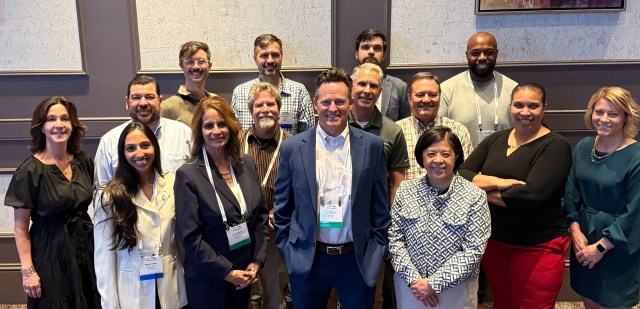
This year’s awards highlight the breadth of innovation happening across North America. The finalists and winners exemplify what is possible when vision meets execution and demonstrate the diversity of approaches organizations are taking. A few examples include:
- The City of Boston, advancing both digital equity and operational efficiency through initiatives such as Green Light for Education, which addresses student access and transportation challenges, and BidBot, an AI-enabled tool transforming municipal procurement.
- The City of Pittsburgh, driving climate-focused urban planning through initiatives like Planting with Purpose, using data and partnerships to strengthen community resiliency and guide sustainable development.
- Austin Water, modernizing infrastructure through advanced metering initiatives that improve water management, operational visibility, and customer service.
- New Jersey Transit, enhancing resiliency and infrastructure intelligence with its Storm Surge Early Warning System, using real-time data to anticipate and respond to flooding risks.
- The City of Phoenix, pushing innovation across multiple fronts, particularly in public safety—from its Unmanned Aerial Systems (UAS) program to broader efforts in real-time operations and community engagement.
- The City of Scottsdale, recognized as the overall winner for its AI-powered real-time crime center and drone-as-first-responder program, highlighting the power of integrated, data-driven approaches.
Each finalist and winner represents not just a successful project, but a model for others to learn from and build upon.
Looking ahead
One of the most compelling aspects of Smart Cities is that while the definition continues to evolve, the purpose remains constant: improving communities and addressing complex urban challenges through technology.
Today’s Smart Cities are practical, multi-domain, partnership-driven, and deeply focused on outcomes. They are powered by technology, but centered on people—the practitioners, innovators, and leaders working every day to make their communities better.
As we celebrate this year’s winners and finalists, we are also recognizing a broader movement—one that is steadily transforming how cities operate and how they serve their residents.