An AI system flags a high-value customer for fraud and blocks a transaction.
The customer churns within days. The business cannot explain why the decision was made.
A regulator asks for an audit trail of an autonomous workflow.
The organization cannot trace how the outcome was generated.
These are not edge cases. They are early signals of a broader shift.
As AI systems move into core operations, decisions are faster, workflows are more autonomous, and consequences are more visible. What changes is not just scale. It is accountability.
The challenge is no longer whether AI works.
The challenge is whether it can be trusted to work reliably, transparently, and at scale.
The new reality: scale without trust creates instability
Enterprise AI is entering high-stakes environments.
- Decisions are automated
- Workflows are autonomous
- Data moves across systems and partners
This creates new pressure points:
- Limited visibility into AI-driven decisions
- Increasing regulatory and compliance exposure
- Vulnerabilities across data, models, and agents
- Erosion of customer and stakeholder confidence
Expectations are rising at the same time. Customers, regulators, and employees demand accountability, explainability, and control.
Without trust, scale introduces instability.
The shift: from AI adoption to trusted AI systems
IDC’s FutureScape 2026 predictions highlight a critical transition.
Organizations are moving from deploying AI systems to embedding trust into those systems.
This requires a new operating model:
- Trust is built into workflows, not added after deployment
- Governance operates continuously, not periodically
- Security spans the full AI ecosystem, not isolated components
In practice, this means an AI-driven decision is no longer a black box.
A financial services firm deploying agentic AI for credit decisions can trace how a decision was made, validate the data used, demonstrate compliance, and apply human oversight where needed. That level of visibility allows AI to operate in regulated environments with confidence.
Trust, in this context, is operational.
To get there, organizations must move from principle to execution.
Charting the path: four moves to build trust and resilience
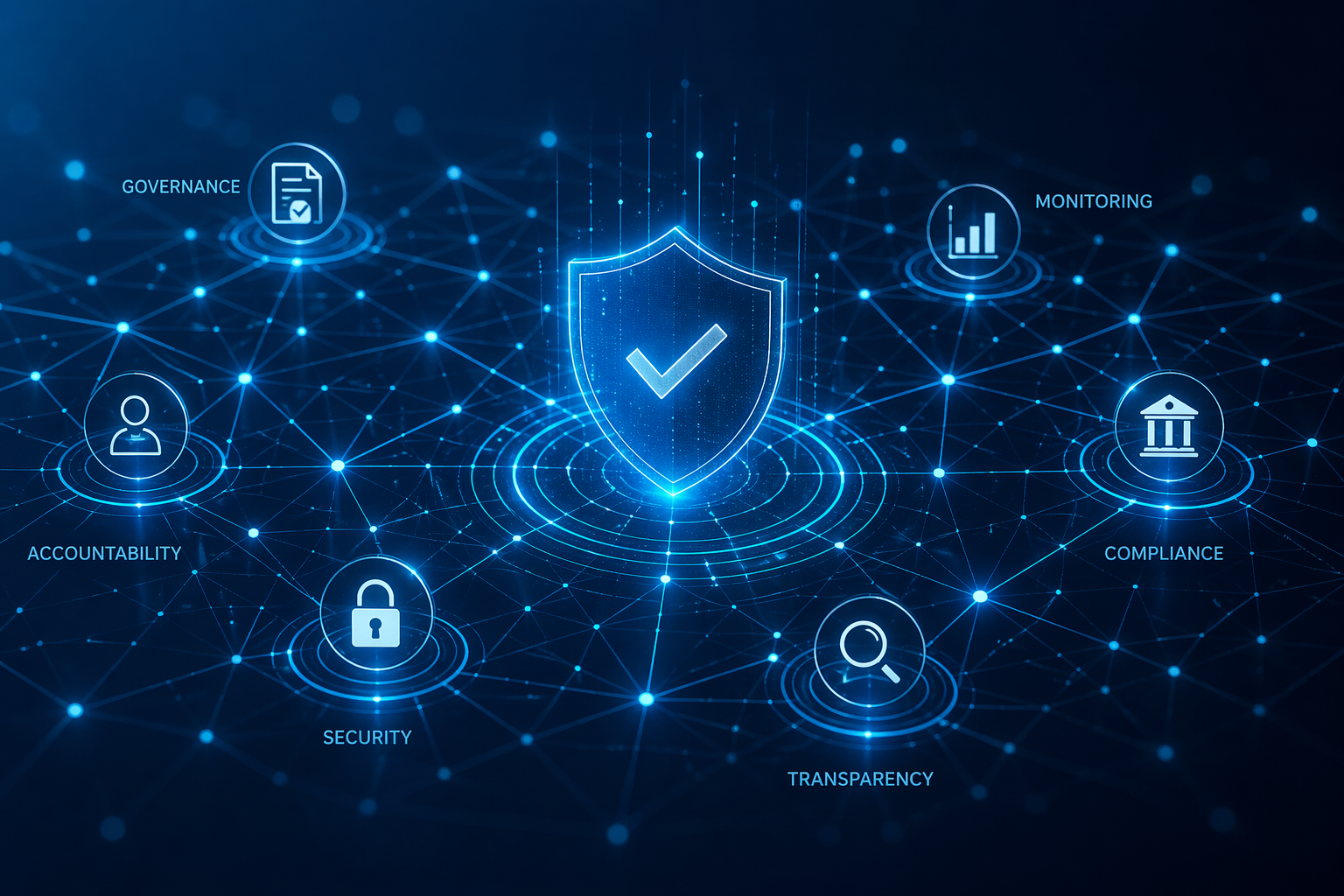
To succeed in this environment, leaders must take a deliberate approach to governance, transparency, security, and organizational readiness.
1. Embed governance into everyday operations
AI governance must move beyond policy frameworks.
Leading organizations are integrating governance directly into workflows through automated compliance checks, continuous monitoring, and embedded controls.
Without this:
Governance becomes reactive. Issues surface after failure, increasing regulatory risk and slowing adoption.
2. Establish transparency and accountability at scale
Autonomous systems require visibility.
Organizations must ensure that AI decisions can be traced, audited, and explained, with clear ownership for outcomes.
Without this: Decisions cannot be defended to regulators, customers, or internal stakeholders, limiting the use of AI in critical operations.
3. Strengthen security across the AI ecosystem
AI expands the attack surface across data, models, and agent interactions.
Organizations are adopting unified approaches to security, risk, and compliance that operate continuously across the AI lifecycle.
Without this: Vulnerabilities scale with adoption, exposing organizations to breaches, manipulation, and operational disruption.
4. Build a resilient, AI-ready organization
Resilience extends beyond systems to people and processes.
Organizations must prepare for workforce shifts, system disruptions, and evolving regulatory requirements.
Without this: AI-driven operations become fragile, with disruptions cascading across workflows and slowing response to change.
The payoff: trust as a foundation for scale
When trust is embedded into AI systems, organizations unlock consistent and measurable impact.
They gain:
- Confidence in scaling AI initiatives
- Stronger relationships with customers and stakeholders
- Faster adoption of new capabilities
- Greater resilience in uncertain environments
Trust enables organizations to move forward with clarity and control.
From control to confidence
The agentic future introduces new forms of risk alongside new opportunity.
Organizations that cannot explain, govern, or secure their AI systems will encounter increasing friction as they scale. Those that embed trust into their operations will move with greater confidence, expand into higher-value use cases, and sustain performance over time.
FutureScape 2026 makes the trajectory clear.
AI adoption is accelerating.
Trust will determine who can sustain it.
Those who operationalize trust will define the next phase of competitive advantage in the agentic economy.
Explore the FutureScape 2026 predictions behind trusted AI systems
FutureScape 2026 includes detailed research, analyst perspectives, and events that expand on building trust, resilience, and prosperity in the agentic future
Core Research
Analyst perspectives
On-demand webinars