中東での紛争激化は、すでに脆弱さを抱える世界のテクノロジー環境に対し、新たなマクロ経済・地政学的な変動要因をもたらします。

IDCは政治的な力学についてコメントしませんが、テクノロジー産業への影響は即時的で、定量的にも捉えられるものです。初期の地域インテリジェンスとIDCのマクロ経済モデリング・フレームワークに基づき、IDCはIT支出に対する主な影響要因を次の6つのベクトルとして整理します。エネルギー価格の変動、クラウドおよびデータセンターのレジリエンス(回復力)、ソブリン(主権)インフラの加速、サイバーセキュリティ、サプライチェーン、消費者および企業の投資心理の変化です。

本件は初期段階で急速に状況が変化しているため、IDCのシナリオ分析と予測は、中東に限定された戦争が3か月未満で終結するケースに主眼を置いています。現時点では、より長期に及ぶ場合のシナリオデータは公表しません。今後も状況を注視し、長期化の蓋然性がより明確かつ重要になった段階で、追加の分析を検討します。

紛争が最大3か月続く場合の「下振れシナリオ」では、IT支出への影響は測定可能である一方、相対的には中程度にとどまる見込みです。マクロ環境が弱含む局面でも、サービスプロバイダーはグローバル規模でのAIインフラ投資を引き続き積極的に維持する可能性が高いとIDCは見ています。短期の戦争は、クラウドサービスやエンタープライズソフトウェア需要への直接的影響は限定的ですが、再燃するインフレ圧力によってデバイスの更新(買い替え)や裁量的支出にブレーキがかかり得ます。
この下振れシナリオでは、2026年の世界IT支出成長率は、IDCのベースライン予測である約10%成長に対して、約9%成長に低下すると見込みます。戦争が長期化した場合は影響がより顕著になる可能性がありますが、現時点では予見が難しい状況です。
中東・アフリカ(MEA)地域のIT支出は2025年に1,550億米ドル(世界市場の4%)で、2026年は5%増が予測されています。これは、同地域のIT支出におけるデバイス比率が相対的に高く、メモリ価格上昇圧力の影響を受けやすいことから、世界平均より低い伸びとなっています。

紛争が3か月以内に収束する場合の「下振れシナリオ」では、MEAのIT支出成長率は2026年に3~4%へ低下し、短期的に企業・投資家心理へマイナスの含意が生じ得ます。国別の影響は、原油供給の力学などにより極めてまちまちとなる見通しです。長期化すれば影響はより大きくなります。

ただしIDCは現時点で、紛争は短期に終わり、混乱度合いも比較的低いというベースラインの前提を維持しています。AIインフラ展開、クラウド移行、継続中のデジタルトランスフォーメーション(DX)といった基礎的需要への影響は限定的である、という想定です。IDCは状況の進展に合わせて、継続的にモニタリング、およびアップデートを行う予定です。
以下は、IDCによる中東および世界のIT支出に関する短期~中期の構造化評価です。

原文:2026年3月2日公開(英語)|日本語版監修: 寄藤 幸治

1. エネルギー価格ショック:最も主要な波及メカニズム

紛争激化の直後、原油価格は7~8%上昇し、ブレント原油は70~80米ドルレンジへ向かいました。IDCのIT支出モデルでは原油価格のベースライン平均を65~75米ドルとしています。IDCのモデルは、3か月の紛争を前提に平均原油価格が75~85米ドルへ上昇すると想定し、さらに長期化した場合は100米ドル前後、またはそれ以上へ近づく可能性があると見ています。

供給側の懸念を増幅させているのが、アラムコの製油所生産停止で、報道ベースでは日量約50万バレルに影響が出ています。またカタール・エナジーは一時的にガス生産を停止し、欧州のガス価格は40~50%高となりました。戦争が長期化すれば、中東からのガス・石油への依存度が高い国々(日本を含むアジアにも波及し得ます)で投入コストが大きく上昇します。

エネルギー価格の変動は、2026年のIT支出前提に影響する最重要のマクロ波及経路です。エネルギー価格の上昇は新たなインフレ圧力を生み、中央銀行の金融政策にも大きな影響を及ぼす可能性があります。近年の高インフレ局面を経て、企業・消費者の信頼感は依然として脆弱である一方、IT製品もメモリ部材不足によるインフレ圧力を抱えています。価格上昇は、支出の先送りや配分見直しにつながり得ます。

IT支出への影響

グローバル(世界)
• エネルギー価格高は、データセンター運用、半導体製造(ファブ)、物流、製造のコストを押し上げます。
• インフレが長引けば利下げが遅れ、企業ITプロジェクトの資金調達環境がタイト化し、IT購買に対する企業・消費者心理も悪化し得ます。
• 投入コスト上昇により、AIやDX施策の優先順位見直しが起こり得ます。

中東地域
• 紛争長期化と防衛支出の増加が、原油高による余剰収入を相殺し、テクノロジー投資を先送りする可能性があります。
• 事業継続、サイバーセキュリティ強化、ソブリン(主権)インフラ導入など必須領域への支出が優先されます。
• 湾岸の富裕国では政府主導のDXプログラムが維持され得る一方、他国では優先順位の見直しが起こり得ます。

2. クラウド&データセンターのレジリエンスが戦略課題に

今回の戦争は、主要クラウド事業者のリージョンおよびアベイラビリティゾーン(AZ)が現実の戦闘地域で稼働するという、初めての事例となります。紛争初期に、あるグローバルクラウド事業者の複数AZにまたがる施設が相次いで攻撃を受けたことで、アーキテクチャのレジリエンスが示される一方、長期的紛争局面におけるクラウド環境の脆弱性も浮き彫りになりました。IDCは、クラウド、ストレージ、データセンター・アーキテクチャへの投資が優先事項になると見ています。ただし、データセンター建設は資本集約的で年単位の取り組みであり、建設費や資金調達コストの上昇、サプライチェーン摩擦が、実行のスケジュールを遅らせる可能性があります。

構造変化

• パブリッククラウドを利用する企業およびSaaS事業者にとって、マルチAZが最低限の標準となり、マルチリージョンはベストプラクティスとなります。
• 多国籍企業のクラウド配置におけるリスクモデリングは、国単位から、より広域のレジリエンスの枠組みへ拡張されます。

中東への影響

IDCでは以下のような影響が表れるものとみています。

• 冗長性を有する、自国資本のソブリンクラウドおよび国内データセンター投資の加速
• ハイパースケーラー(大手クラウド事業者)による、物理分離を伴うマルチAZ構成(例:単一AZから3-AZ設計へ)へのコミット強化

世界への影響

今回の事象は、以下のような事項に関する期待値の見直しを迫ります。

• クラウドのリカバリープランニング
• レジリエントなデータセンター基盤
• 地理的分散戦略
• インフラ投資判断に織り込まれるリスクプレミアム

長期的にはクラウド投資が増える可能性がある一方で、短期的には企業がアーキテクチャを再評価する中で、プロジェクトの進捗が遅れる場合があります。

3. ソブリン(主権)インフラと「戦略的自律性」

デジタル主権は、湾岸地域の各国が組織と市民のデジタル自己決定を重視する中で、この地域におけるクラウド戦略の主要潮流として、すでに定着しつつありました。紛争の初期段階においても、湾岸の政府、とりわけ資本余力のある国々は、俊敏性、レジリエンス、長期的な持続性を強化するため、ソブリン・デジタルインフラや分散クラウドモデルへの投資を加速する可能性があります。焦点は以下です。

• ソブリンクラウド・プラットフォーム
• 国家レベルのパブリックAIインフラ
• 政府機関によるサイバーセキュリティ強化と対応実務

各国は、より広い「戦略的自律性」への動きと整合する、重要インフラのレジリエンス・モデルの構築にも注力し、海外インフラ事業者への過度な依存を低減しようとします。代表的なモデルは次の通りです。

• Shared public:インフラ共有、運用はグローバル
• Dedicated public:占有リージョン、運用はローカルパートナーと共有
• National public:ローカルのクラウド事業者が保有、運用
• Managed private:顧客向けに事業者がホストし、事業者が管理
• Air-gapped private:分離(エアギャップ)された環境を顧客が運用

ただし財政要因は重要です。紛争初期だけでも数十億規模と推定される軍事支出は、予算配分のトレードオフを生みます。紛争期間が、ソブリンIT投資の加速を決めるのか、一時的な優先順位変更に留まるのかを左右します。

4. サプライチェーン:メモリ供給、スマート兵器、半導体への圧力

中東は、エネルギーの動脈であると同時に、物流・積み替え(トランシップ)拠点として、グローバル・テクノロジーサプライチェーンで重要な役割を果たしています。ホルムズ海峡の閉鎖、あるいは持続的な混乱は、頻度は低いものの影響が極めて大きいショックとなり、世界のIT市場へ実質的な影響をもたらし得ます。

ホルムズ海峡は、世界の原油輸送の約20%と、相当量のLNG(液化天然ガス)輸送を担います。同海峡が混乱した場合の最も即時的な影響は、エネルギーコスト増を通じて、欧州やアジア(日本を含む)におけるガス価格上昇、データセンター運用費増、半導体製造のエネルギーコスト増を招くことです。また、物流面では、保険料・航空/海上輸送費の上昇、消費者向けテクノロジーの組立・流通に向かう部材の遅延、アフリカや欧州の一部地域への出荷の停滞が見込まれます。

同海峡は、Jebel Ali(UAE)、Dammam(サウジアラビア)、Hamad Port(カタール)など湾岸主要港を支える航路でもあり、アフリカ、南アジア、欧州の一部地域への再輸出における重要ノードです(テクノロジー製品・部材を含む)。

世界のメモリ市場は、紛争激化以前から逼迫していました。本紛争は、タイトな需給環境をさらに悪化させ、世界のITハードウェア・エコシステムに波及し得ます。レノボのサウジアラビアでの製造拡張のような生産地域化の動きは、中東がグローバル・テックサプライチェーンで存在感を増していることを示しています。

主なリスクは次の通りです。

• 湾岸航路を通る物流の混乱
• 新たな製造ハブ立ち上げの遅延
• 保険・運賃コストの上昇

紛争が長期化すると、スマート弾薬やドローンシステムで先端半導体・メモリの軍事用途消費が急増し、国家安全保障の観点から半導体供給確保に向けた追加の国家介入が起こり得ます。これはDRAM/NAND価格、AIアクセラレータのメモリ構成、エンタープライズストレージ基盤コストに上押し圧力となり、AI導入を計画する企業がプロジェクト順序を見直す要因になり得ます。消費者デバイス価格もリスクに晒されます。

全体への影響は、戦争の期間と地理的な封じ込めに左右されます。数週間で収束すれば短期混乱の後に迅速な回復が見込まれますが、長期化すると地域・世界の市場条件により深刻な影響を及ぼします。

5. サイバーセキュリティ:即時の緊張上昇と構造的な支出増

地政学的な紛争は、サイバーリスクを実質的に高めます。国家支援や代理勢力によるサイバー活動は、軍事的緊張の高まりとともに増えることが多く、主な標的は以下です。

• エネルギーインフラ
• 金融サービス
• 通信
• 政府システム
• クラウド基盤およびSaaSプロバイダー

中東は高度持続的脅威(APT)の焦点地域であり、エスカレーションは攻撃頻度と高度化の両面を押し上げます。

直近のIT支出への影響

1)セキュリティ予算の加速
不確実性が高い局面でも、セキュリティは削減されにくい予算の一つであり、この文脈では増加する可能性が高いと考えられます。企業・政府は次の領域で支出を増やすでしょう。

• マネージド検知・対応(MDR)
• セキュリティオペレーションセンター(SOC)のモダナイゼーション
• ゼロトラスト・アーキテクチャ
• エンドポイント検知・対応(EDR)
• クラウドワークロード保護
• ID/アクセス管理(IAM)

2)インフラの堅牢化
重要インフラ事業者(エネルギー、公益、輸送)は次へ投資を増やします。

• OT(制御/運用技術)セキュリティ
• ネットワーク分離(セグメンテーション)
• エアギャップ型復旧環境
• バックアップ/サイバー復旧用ボールト

3)クラウドセキュリティの引き上げ
クラウドが戦略的標的になるにつれ、企業は次を進めます。

• CSPM(クラウドセキュリティポスチャ管理)への投資拡大
• マルチリージョンバックアップ戦略の拡充
• ハイパースケーラーに対し、レジリエンスやインシデント対応に関する透明性向上を要求

地域別の影響

中東

• 政府主導のサイバーセキュリティ・プログラムは拡大
• ソブリンなサイバー防衛能力への追加予算
• サイバーレジリエンスが国家DXに組み込まれる

世界

• 他地域に展開している多国籍企業は防衛投資を拡大
• サイバー保険コストが上昇し、リスク低減投資を後押し
• 防衛関連のサイバーセキュリティ/セキュア通信市場が成長

マクロ環境が弱含み、経済成長が鈍化しても、サイバーセキュリティは相対的に成長する領域となり得ます。紛争長期化のシナリオでも、セキュリティ投資は比較的底堅いと見込まれます。

6. 消費者向けテクノロジー支出と心理

消費者向けIT支出は、インフレの長期化とメモリ起因のデバイスコスト上昇で、すでに圧力を受けていました。紛争激化はこれに以下を上乗せします。

• 消費者心理の悪化(消費者信頼感は依然として脆弱)
• 投入コスト増によるデバイス価格上昇
• サプライチェーン混乱リスク

中東はJebel Aliなどを通じた積み替え拠点でもあるため、中東域内に加え、アフリカや欧州への物流にも波及します。供給網の混乱は、地域内外でPC、スマートフォン、各種デバイスの供給に影響する可能性があります。

また、高級不動産や観光といったエンターテインメントや高級品にかかわる産業では支出が一時停止し、関連する企業IT投資にも間接的影響が及び得ます。

中東域外でも、脆弱な消費者支出は、大幅または長期の価格上昇に耐えにくい状況です。エネルギーコスト上昇は、PC・タブレット・スマートフォン等の購入先送りを促す可能性があります。これらのカテゴリはメモリ供給不足によってすでに価格上昇が進んでおり、消費者が買い替えを待つ傾向をさらに強めるでしょう。

IT支出・投資への影響(IMPACT ON IT SPENDING & INVESTMENT)

AI投資:加速か、一時停止か?

投入コスト上昇とマクロ不確実性が、特に紛争長期化の場合、一部企業にAIの本番展開を再検討させる可能性があります。消費者心理と同様に、企業心理も依然として脆弱で不確実です。実体経済の減速が見え始めれば、短期的にプロジェクトの延期や縮小が起こり得ます。

一方で、ROIが実証され、測定可能な成果が迅速に効率改善をもたらす領域では、マクロでの逆風への対応としてAIがより積極的に導入される場合もあります。IDCの調査では、マクロ圧力への戦術的対応としてITを活用しようとする組織が増えている傾向が一貫して見られます。これは、外部環境の軟化兆候が見えた際に、IT支出削減が最優先の対応となりがちだった過去の景気後退局面とは異なる変化です。

総じて、比較的短期の紛争は多くの組織のAI/IT支出計画を大きく崩す可能性は高くありません。基礎需要は強く、近年の関税や他の地政学的対立といった外部ショックに対してもレジリエンスを示してきました。AIは引き続き優先度が高く、2026年はビジネスインパクトを高めるためのスケール展開が焦点となります。

最大のリスクは、紛争が長期化し、インフレ圧力とサプライチェーン混乱で資本・リソース制約が強まるケースです。AI支出は他投資より底堅い可能性がある一方で、最悪シナリオでは免疫ではありません。

相反する2つの力学

抑制要因(Constraining Forces)

• インフラコスト上昇
• 資金調達環境のタイト化
• メモリ不足

加速要因(Accelerating Forces)

• サイバーセキュリティ需要の増加
• 防衛関連のAI/アナリティクス投資
• 湾岸諸国におけるソブリンAI構想

どのような影響を受けるかは地域で異なります。

• 湾岸諸国:国家主導のAI投資が継続する可能性
• 欧州・アジア(日本を含む):マクロへの感応度がより高い可能性
• グローバル企業:ROI精査がより厳格化

IT支出の3シナリオ見通し(Three-Scenario Outlook for IT Spending)

IDCのIT支出予測は、最新のマクロ経済・業界データを反映し毎月更新されます。この月次予測には、テクノロジー市場と経済条件の変化に対する感応度の歴史的相関に基づくシナリオが含まれます。

直近のベースライン予測は2月27日に公表され、原油価格やサプライチェーン要因の一定の変動をすでに織り込んでいます。今回IDCは、地域紛争が最大3か月続く(シナリオ1)または2026年の大半まで続く(シナリオ2)場合の影響を評価するため、2つの新シナリオを作成しました。

数週間で収束する短期の混乱はあり得るものの、IDCは現時点で、2月27日時点の「Black Book」予測(※IDCの月次予測)を改定する計画はありません。短期で収束すれば、より速い反発と年内の投資・プロジェクト再開が見込まれるためです。状況は流動的であり、次回の定例予測リリースである3月30日までに、ベースライン前提が変わる可能性があります。

2つのシナリオのうち、より可能性が高いのは3か月以内に収束するケースです。この「数か月」続くケースでは、IT支出により明確な影響が出て、年間成長率が約1.0ポイント下押しされる可能性があります。影響の大半は、デバイスと裁量的プロジェクト支出に集中します。他の外部要因がない限り、サービスプロバイダーがAI投資計画を大きく縮小するとはIDCは見ていません。

2000年代初頭のイラク戦争など過去の軍事衝突と比べ、IT産業は過去20年で大きく変化しました。企業IT支出におけるOPEX(運用費)・サブスクリプション比率が高まり、インフラ投資のより大きな部分がサービスプロバイダー側に集中しています。

企業IT支出に対する主要リスクは、政治そのものではなくマクロ経済要因であり、とりわけ原油高の長期化が企業・消費支出と金融政策の両面に影響する点です。紛争が3か月を超えるシナリオ2では、ITプロジェクトやデバイス更新の先送りが増え、IT支出への影響は1.0ポイント超となる可能性があります。

MEAでは影響はより複雑で、政治動向の不確実性も相まって変動しやすい見通しです。ただし、地域のAI戦略投資は継続する可能性が高く、下振れ影響は主に企業・消費支出の先送りに集中するとIDCは見ています。

IDCのMEAにおける2026年ベースライン(5%成長)は、シナリオ1(数か月継続)では3~4%に低下し得ます。スマートフォン市場はメモリ価格上昇の影響もあり、もともと減少が見込まれていましたが、改善前に一段と悪化する可能性があります。スマートフォンはMEAのIT支出に占める比率が相対的に高く、これが2026年の地域成長率を押し下げる要因となります。

ただし、最悪シナリオで3か月を超えて長期化しても、地域のクラウド/AI導入の基礎需要は強く、状況が落ち着けば比較的速く回復する可能性があります。

3つのシナリオ(要約)

ベースライン:紛争が封じ込められる(数週間)

• 一時的な原油スパイク
• 地域プロジェクトの軽微な停滞
• 世界IT成長見通しの修正は最小限

シナリオ1:地域不安定が継続(3か月未満)

• 原油は85~95米ドルで推移
• インフレ圧力により世界IT成長は0.5~1.0ポイント下押し
• ソブリンクラウド構築が加速
• 消費者向けデバイス回復が鈍化

シナリオ2:エスカレーションとエネルギーショック(6~9か月)

• 原油は100米ドル超
• 金利正常化が遅延
• 消費者需要が大幅に縮小
• 企業はレジリエンス/サイバー/重要インフラへ再配分
• とりわけMEAでIT支出への影響がより顕著

IDCの戦略的見解(IDC’s Strategic View)

中東での戦争は単なる地域の地政学イベントではなく、デジタル経済のエネルギー依存、インフラのレジリエンス、サプライチェーンに対する構造的な試験といえます。

IDCが注視する主要テーマは以下です。

• エネルギー価格の持続性とインフレ軌道
• クラウド基盤リスクの再評価と冗長化投資
• 防衛需要と連動するメモリ市場の逼迫
• 防衛とDXの間で生じる政府財政のトレードオフ
• 消費者心理の変化とデバイス需要の価格弾力性

中東が直接の影響を受ける一方で、世界のIT産業も、エネルギーコスト、半導体供給、資本配分判断を通じて二次的影響を被ります。

短期的には、企業の意思決定は慎重姿勢とシナリオプランニングが中心となるでしょう。中期的には、本紛争が、ソブリンインフラ、サイバーセキュリティ、マルチリージョンのクラウドレジリエンスといった構造的投資を加速させる可能性があります。

IDCは、経済前提の変化に応じて支出見通しを精緻化し続けます。IT支出予測は、最新の市場データと動向を反映し、毎月月末の最終営業日に公表しています。今後数日~数週間のデータを注意深くモニタリングしていきます。

エグゼクティブサマリー(Executive Summary)

• 紛争激化は脆弱な世界のIT環境に新たなマクロ/地政学変数を追加する。IDCは政治ではなく、測定可能なテック市場への影響に注目
• 主な影響ベクトルは6つ:エネルギー価格変動、クラウド/データセンターレジリエンス、ソブリンインフラ加速、サイバーセキュリティ、サプライチェーン(メモリ/半導体/物流)、消費者/企業心理
• ベースケース:中東に限定され、3か月未満。長期シナリオのデータ公表は現時点では見送り
• 世界IT支出:ベースライン2026年約10%成長、下振れ(最大3か月)で約9%成長。弱含みは主にデバイスと裁量案件
• MEA IT支出:2025年1,550億米ドル(世界の4%)。2026年ベースライン約5%成長。下振れで3~4%成長、国別影響は混在
• エネルギーが主要な伝播経路:原油・ガスの変動が運用/投入コストを押し上げ、インフレを強め、資本をタイト化し、プロジェクトを遅らせ得る
• クラウドレジリエンスは必須:マルチAZ/国内冗長化/リスクモデリング拡張。短期は再評価でペース鈍化の可能性
• サイバーセキュリティは相対的にプラスの影響:MDR/SOC、ゼロトラスト、EDR、IAM、CSPM、OTセキュリティ、復旧環境への投資が加速

執筆者(Authors)

• Stephen Minton(Group Vice President, Data & Analytics, IDC)
• Laurie Buczek(GVP, Research, IDC)
• Rick Villars(Group VP, Worldwide Research, IDC)
• Lapo Fioretti(Senior Research Analyst, IDC)
• Andrea Siviero(Senior Research Director, MacroTech, Digital Business, and Future of Work, IDC)
• Thomas Meyer(General Manager and Group Vice President, IDC EMEA, IDC)
• Ashish Nadkarni(GVP/GM, Infrastructure Research, IDC)
• Simon Ellis(Program GVP, IDC)
• Ranjit Rajan(Research Vice President, Worldwide C-Suite Tech Agenda, IDC)
• Harish Dunakhe(Research Director, Software and Cloud, META IDC)
• Jebin George(Senior Research Manager, Software, Cloud, and Industry Transformation, IDC MEA)
• Jean Philippe Bouchard(Vice President, Data & Analytics, IDC)

原文:2026年3月2日公開(英語)|日本語版監修:寄藤 幸治

Yukiharu Yorifuji - Group Vice President and Chief Research Analyst - IDC Japan

Yukiharu Yorifuji is Group Vice President and Chief Research Analyst of IDC Japan. In this role, Yorifuji is responsible for all the research area of IDC Japan, including hardware, software, services, and innovation accelerators. He had been engaged in IT and business services research for more than 12 years as a part of IDC services research team, such as market forecast, competitive analysis, and users' buying behaviors. He now makes a research of enterprises’ organization, talent management, and selection of the partners in Digital Transformation era, and introduces these results via reports and presentations. He has over 30 year experience in the IT industry in various roles including sales, marketing, and market analyst. Prior to joining IDC Japan, Yorifuji worked for a local consulting firm responsible for strategic projects including new business planning, corporate governance, and financial strategy for large companies. He also worked for Fujitsu where he was involved in international sales, marketing, and brand management. He holds a BA from Department of Social Science and MBA from International Corporate Strategy, from Hitotsubashi University, Japan.

国内市場において、AIインフラは新興技術分野から脱皮し、日本経済を支える中核的な社会基盤へと位置付けが変わりつつあります。2026年は、まさにこの変化を象徴する年になるとIDCではみています。

IDCが発表した最新データによると、日本のAIインフラ市場は構造的転換点に入ったことがわかります。ハイパースケーラー主導で始まったAIインフラの拡張は、いまや経済活動、企業競争力、そして中長期的な産業変革を支える国家的な基盤へと進化しています。これは、データで裏付けられた明らかな変化です。

以下では、IDCが発表した「Worldwide Quarterly AI Infrastructure Tracker」および「Worldwide AI and Generative AI Spending Guide」に基づき、国内市場の次の成長局面を示す3つのシグナルを整理します。

1AIインフラは国家戦略的な資産へ

過去3年間で、日本のAIインフラ支出は経済的役割を根本から変える水準まで拡大しました。2025年の支出規模は、2022年比で約7倍に達しています。

AIインフラ市場の初期段階における急速な成長を後押ししたのは、経済安全保障推進法に基づく政府によるクラウドプログラムへの支援です。対象となったGPUサーバーの大規模案件は今年度内に完了見込みであり、国内のAIインフラの能力を一気に引き上げています。

しかし、その意義は政策効果だけにとどりません。大規模かつ集中的な投資は、AIインフラが従来のITインフラからのアップグレードとは異なる国家戦略的な資産として扱われ始めたことを示しています。換言すれば、日本は単に計算能力を拡張しているのではなく、ソブリンAIの能力を構築しているのです。

2.インフラ市場全体を上回る構造的成長

政策主導のAIインフラ投資が一巡した後も、市場の構造的成長は持続します。IDCは、2026年の国内AIインフラ支出が前年比18%超増の8,210億円に達すると予測しています。これはエンタープライズインフラ市場全体の成長率を大きく上回る水準です。さらに2029年までの5年間の年平均成長率(CAGR)は、約13%と高水準を維持する見通しです。

特筆すべきは、2028年にAIインフラ支出が非AIインフラ支出を上回る転換点を迎えることです。これは、日本のインフラ市場の重心が構造的にAIへ移行することを意味しています。AIはもはや一部の企業で行われる限定的な実証実験の領域ではなく、多くの企業で実稼働段階に入っています。そのAIワークロードを支えるAIインフラは、当面はホステッド/パブリッククラウド中心に推移するとみていますが、ソブリンAIへの意識やニーズが高まる中で、オンプレミス、エッジなどエンタープライズAIインフラにも広がる可能性があります。

3.エンタープライズ需要の再加速

AIインフラの次の成長局面はエンタープライズ主導で進んでいきます。2026年、エンタープライズ向けAIインフラ支出は前年にあった大型案件の反動減から一転、前年比約5%のプラス成長へ回復するとIDCでは予測しています。

さらにIDCのAIユースケース別支出データによれば、投資額の増加しているAIユースケースは営業、カスタマーサービス、研究開発といったコア事業領域へとシフトしています。AIは局所的な業務効率化から、売上拡大や競争優位性の確立に直結する領域へと役割を変えています。

さらに、実験段階から本番運用への移行に伴い、推論処理を中心とした高負荷ワークロードが増加し、より強靭で拡張性の高いインフラ需要を一層押し上げることとなります。同時に、運用の高度化に対するニーズも高まることになります。

2026年、日本のAIインフラ市場は新たな段階に入っていきます。問われるのは、いかに迅速に導入するかではなく、いかに最適に設計し、統合し、運用するかです。ユーザー企業は個別のPoCを超え、全社規模でAIをスケールさせるアーキテクチャ設計が求められます。一方でベンダーは、ハードウェア供給モデルから、インフラ統合、ライフサイクル支援、マネージドサービスを含むエコシステム型能力へと進化する必要があります。すなわち、競争の焦点は容量から能力へと移りつつあるということです。

まとめ

2026年の日本のAIインフラ市場は、規模、構造的成長、そして経済的重要性によって特徴づけられます。わずか3年で7倍という成長は、単なる技術サイクルではなく、日本経済を支えるインフラ基盤の再定義といえます。

IDCが提供するデータのご紹介

IDCはAIおよびAIインフラに関して、以下のように継続的かつ多層的なデータを提供し、分析を行っています。

これらのデータセットを統合することで、日本のAI市場の進化を可視化することが可能となります。

さらに2026年3月には、Special Study「2026年 国内AIインフラおよびAI向けITインフラサービス市場動向分析」を発行予定であり、ユーザーやベンダーの動向、エコシステムの変化についてより詳細な分析を提供する予定です。ぜひご期待ください。

Shinya Kato - Senior Research Manager, Enterprise Infrastructure, Data & Analytics, - IDC Japan

Shinya Kato is a Senior Research Manager at IDC Japan and is responsible for the data analysis and forecasting team of Japan enterprise infrastructure market. He analyzes the impact of product technology, service offerings, and marketing strategies on enterprise infrastructure market and provides market forecasts, focusing on the domestic enterprise storage systems market. Through understanding technology adoption trends, he also provides insight into emerging devices such as flash, accelerators, and quantum computing. In addition to researching the HPC and AI infrastructure markets, he is also investigating new consumption models such as Hardware-as-a-Service, to help stimulate the market. Prior to joining IDC, he spent more than 10 years at Silicon Graphics, which was later acquired by HPE, where he held various domestic positions in sales, marketing, and business development. He has covered a wide range of businesses, from infrastructure hardware and container-based data center facilities to digital asset management, industrial virtual reality, and software for media & entertainment. He also served as a product manager for enterprise internet security software and appliances at the emerging vendor. He holds a Bachelor of Economics degree from Rikkyo University.

It has been just over a week since Chinese New Year 2026 and the impact of this year’s robotic display still lingers in my mind.

For those who have not already seen it, the performances stole the CNY limelight, featuring humanoid robots executing jaw-dropping feats such as somersaults and nunchaku routines—blending traditional culture with cutting-edge robotics and AI technology.

I could not help but imagine that if these robots were dressed in full traditional attire and masks, I would be hard-pressed to distinguish them from human performers.

These viral displays highlight China’s growing dominance in robotics, from AI-driven humanoids to industrial robots, signalling a significant leap in automation that is  reshaping industries worldwide.

The tech enthusiast in me—as I’m sure many of you can relate—began wondering about the engineering and infrastructure puzzle pieces that made this possible.

What Powered the CNY 2026 Robot Performance?

Infrastructure Considerations

  • Physical Hardware – The cost-effective materials and scalable mass production capabilities required to design robots capable of such performance suggest clear pathways toward real-world consumer and industrial applications.
  • Compute Power: CPUs, GPUs, and AI Acceleration- Deploying these robots require edge computing hubs, high performance processors, AI accelerators, and potentially cloud-based large language models (LLM) integration. This enables real-time vision processing, path planning, environmental perception, and precise motion control, allowing the robots to perform complex and dynamic movements with high synchronization accuracy
  • Network Infrastructure – The underlying high-speed backbone network facilitates real-time command, control, and data-transmission—essential for large-scale synchronized robotic choreography. Localized 5G-A networks likely played a key role in minimizing latency and enhancing responsiveness
  • Digital Platforms – Software platforms enable seamless integration, centralized control, developer customization, and system scalability, allowing robotic systems to be adapted across multiple industries and use cases.

Sovereignty Considerations

Balancing rapid high-tech adoption requires data localisation policies, cybersecurity safeguards, and protection of critical infrastructure components to ensure operational resilience and national autonomy.

Who Built the Robots Behind the CNY 2026 Show?

The company behind the spectacle is Chinese robotics startup Unitree Robotics, founded in 2016. Unitree has often been compared to Boston Dynamics, but with a significantly more affordable pricing model—much like Deepseek’s positioning relative to ChatGPT.

For example, Unitree’s R1 robot starts at approximately USD 5,000, utilizing cost effective hardware while supporting modular LLMs that allow developers greater customization and experimentation.

In addition, the system platform is open-source, enabling distributed training, custom model development, and seamless deployment with support for major open-source frameworks. In 2025, the company announced that users could further customise and control robots via a mobile application. In a world where most individuals own at least one smart device, the primary limitation becomes creativity rather than accessibility.

What Hardware Do These Robots Run On?

The robots run on high-performance computing module featuring 8-core CPU and integrated GPU. Newer models offer integration with NVIDIA Jetson Orin models, delivering AI performance up to 275 TOPS (trillions of operations per second).

For Terminator fans, it may be reassuring to know that—at least for now—battery limitations mean these robots operate for 1-2 hours before requiring charging.

Note: The G1 robots featured in the CNY show are more advanced models and may have enhanced performance specifications.

How Were the Robots Coordinated?

The robots relied on cluster-performance technology, enabling synchronized group movement. Onboard sensors provided real-time environmental perception, supported by localised 5G-A networks. However, while the robots were physically autonomous in movement, they were largely pre-programmed and choreographed for the specific event rather than operating with full independent agency.

Implications for Infrastructure and Sovereignty: Infrastructure Control & Autonomy

The shift to software-defined, centralized robotics platforms means that manufacturing, logistics, and operational infrastructure increasingly depends on digital orchestration layers and ecosystem partnerships. Whoever governs these platforms–whether vendors, hyperscalers, or local integrators–can significantly influence operational autonomy, resilience, and long-term competitiveness.

Regional adoption of integrated execution platforms—particularly in Asia Pacific’s push for industrial embodied AI–signals a move toward locally governed infrastructure ecosystems, reducing dependency on foreign technology stacks. In Asia/Pacific, local partnerships are becoming essential to accelerating innovation while protecting data sovereignty and regulatory compliance.

Final Reflections

Reflecting on China’s CNY 2026 robotic spectacle, I was struck not only by the technical brilliance and seamless choreography, but by how it exemplifies the convergence of affordable, high-performance robotics infrastructure and strategic technological self-reliance. The future of automation is not just about building smarter robots—it is about who controls the orchestration layers, data flow, compute infrastructure, and platform ecosystems behind them.

What’s your take on balancing innovation and digital independence?

Interested to learn more? Talk to us.

Franco Chiam - Vice President - IDC

Franco Chiam is the vice president for IDC's Asia/Pacific (excluding Japan) Cloud, Datacenter, Telecommunication, and Infrastructure Research Group. He manages and shapes the above domains' offerings to IDC clients, which include cloud and infrastructure surveys, market analysis and perspective, speaking engagements, and executive briefings. In the ever-evolving landscape of technologies, the pillars of cloud computing, datacenters, and telecommunication have emerged as the driving forces behind our interconnected world. As these domains continue to shape the future of infrastructure, their integration and advancement play a crucial role for the foreseeable future.

Manufacturers across Asia/Pacific are navigating powerful crosscurrents: cost pressure, supply chain volatility, skills gaps, and intensifying competition. At the same time, AI is shifting from isolated pilots to systems that can plan, decide, and act. Agentic AI is moving from experimental tooling to bounded operational use cases. The shift is real, but uneven, and it will reward manufacturers that already have disciplined data, process ownership, and governance.

IDC’s FutureScape Worldwide Manufacturing 2026 Predictions for Asia/Pacific (excluding Japan) are more than forecasts. They are a planning input and a view of where investment and capability-building are likely to concentrate. Use them to pressure-test priorities and readiness, not as a certainty about what will happen or when. In the context of agentic AI, they help answer the question for leaders on whether agentic AI will matter, and how quickly they can translate these signals into measurable operating outcomes (eg. disruption recovery, cycle time, quality, OT risk).

What is Agentic AI in Manufacturing?

Agentic AI in manufacturing goes beyond analytics and copilots. It introduces AI agents that can sense conditions, evaluate options, and autonomously execute and orchestrate workflows across the organization, including planning, production, quality, engineering, IT, and cybersecurity, within defined guardrails. Humans remain accountable for strategy, oversight, and exception handling.

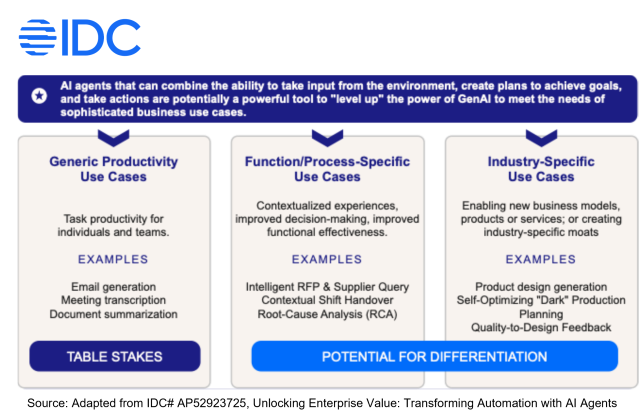
Most manufacturers in Asia/Pacific are not starting from this end state. As the differentiated use cases in the above IDC framework illustrate, many organizations remain concentrated in early stages:

  • Generic productivity use cases, providing task-level assistance such as document summarization or reporting.
  • Early functional or process-specific use cases where AI provides decision support within a single function but remains human-driven.

These capabilities are increasingly table stakes. They improve efficiency, but do not yet differentiate manufacturers or fundamentally change how factories, supply chains, or engineering organizations operate.

For manufacturers, the real value lies further up the curve, adopting advanced functional and industry-specific use cases, where AI agents are deeply integrated with operational data, engineering systems, and execution platforms. This is where AI begins to autonomously coordinate decisions across functions, close the loop between design and operations, and where value becomes measurable with fewer schedule resets, faster recovery, reduced security detection time, and fewer late-stage design remedies.

The following three predictions should be read through this lens. Each one highlights a step away from generic productivity toward higher-order, manufacturing-specific agentic capabilities.

Autonomous Production Scheduling

IDC Prediction: By 2027, over 40% of manufacturers with a production scheduling system in place will upgrade it with AI-driven capabilities to start enabling autonomous processes.

Autonomous production scheduling is the most pragmatic entry point into agentic AI for manufacturers because it sits at the intersection of demand, capacity, assets, labor, and supply. Most Asia/Pacific manufacturers already operate advanced planning and scheduling (APS) tools, but these systems are typically static, rule-based, and highly dependent on human planners to intervene when conditions change.

Agentic scheduling represents a step change. AI agents continuously ingest live signals from manufacturing execution systems (MES), maintenance systems, supplier updates, logistics data, and demand forecasts. They evaluate trade-offs in near real time, simulate multiple scenarios, and rebalance production plans dynamically. Over time, these agents do not just recommend changes, they begin to execute them autonomously within predefined constraints, escalating only when exceptions exceed risk thresholds.

This moves manufacturers beyond functional decision support into advanced functional autonomy. Planning is no longer a periodic activity; it becomes a continuously orchestrated process that coordinates decisions across production, maintenance, and supply chain functions.

What to do now:

  • Start where volatility is highest: a constrained line, plant, or product family with frequent schedule disruption.
  • Connect real-time shop floor, asset health, and supply signals directly into the scheduling layer.
  • Establish human-on-the-loop governance early, then expand agent decision rights as performance, trust, and accountability mature.

Predictive Industrial Data Security

IDC Prediction: To counter data model poisoning risks, 70% of large manufacturers will use AI-enabled OT cyberdefense by 2029, autonomously flagging low-level threats and cutting detection times by 60%.

As manufacturers scale advanced agentic AI use cases, cybersecurity becomes a foundational requirement, not a supporting function. Agentic AI systems depend on trusted data, models, and execution environments. If those inputs are compromised, autonomy magnifies risk at machine speed.

AI-enabled OT cybersecurity introduces agents that continuously monitor behavior across networks, devices, control systems, and AI models themselves. Instead of relying on signature-based detection, these agents identify subtle anomalies such as data poisoning, abnormal control logic, or coordinated low-level intrusions that traditional tools and human operators often miss.

For Asia/Pacific manufacturers operating complex brownfield environments, this capability is essential to safely scaling autonomy. Without it, organizations will be forced to cap agent decision authority, limiting the very value agentic AI is meant to unlock.

What to do now:

  • Map critical OT assets, data streams, and AI models that feed systems and agentic workflows.
  • Deploy AI-driven anomaly detection alongside existing SOC and OT security tooling, not as a replacement.
  • Define clear escalation and containment rules that balance autonomy with human accountability.

Agentic Product & Process Simulation

IDC Prediction: By 2028, 50% of A1000 manufacturers will use AI agents in conjunction with design and simulation tools to continuously validate design changes and configurations or variants against product requirements.

Continuous design validation is where agentic AI clearly enters the industry-specific tier. Today, engineering, simulation, manufacturing, and quality operate in loosely coupled stages with design validation occurring episodically, often disconnected from real-world production feedback, and issues surfacing late through defects, rework, or warranty issues.

Agentic AI changes this by embedding validation agents directly into the digital thread. These agents continuously test design changes against requirements, manufacturability constraints, historical defect data, and live production feedback. As materials, suppliers, processes, or operating conditions change, validation updates automatically, closing the loop between design intent and operational reality.

For manufacturers with high product complexity, configuration variability, or rapid innovation cycles, this capability transforms how risk, quality, and cost are managed. It shifts validation from a checkpoint activity to an always-on assurance mechanism.

What to do now:

  • Integrate PLM, simulation, quality, and manufacturing data into a shared, persistent validation workflow.
  • Use agents to automatically assess the downstream impact of engineering changes before release.
  • Move from milestone-based validation reviews to continuous, agent-driven validation embedded in daily operations.

Turning Predictions into Action

These predictions highlight a common truth: agentic AI is not a single technology investment. It is an operating model shift. Manufacturers that succeed will align four foundations:

  1. Strategy: Clear ownership of where autonomy creates value, where human judgment must remain in the loop, and how decision rights evolve over time as agents mature.
  2. Workforce: New roles focused on supervising, governing, training, and continuously improving AI agents, not just consuming AI outputs. This includes redefining accountability as work shifts from people executing tasks to people overseeing autonomous systems.
  3. Technology: Modernized data, security, and cloud foundations designed for continuous orchestration, resilience, and trust spanning IT and OT environments.
  4. Measurement: A clear baseline of current maturity and performance, with success defined not by one-time deployments but by metrics tied to targeted outcomes, such as reduced disruption, faster cycle times, improved quality, or increased autonomous decision coverage.

For Asia/Pacific manufacturers, near-term advantage will come from moving a few bounded workflows into governed production use. Leaders who default to a “wait for certainty” strategy, delaying action until technologies, standards, or competitors fully converge, risk locking themselves into lower positions on the agentic maturity curve and find themselves under increased competitive pressure. Those who treat these predictions as navigational beacons, not distant forecasts, will build factories that are more resilient, adaptive, and competitive.

Agentic AI will not replace manufacturing excellence. It will amplify it.

FAQs on Agentic AI in Manufacturing

  1. What real business problems does agentic AI actually solve in factories and supply chains?

Agentic AI excels in volatile and constraint-heavy operations with frequent disruptions, competing priorities, and too many variables for humans to continuously rebalance. In practice, it helps manufacturers shorten disruption recovery time, reduce manual coordination, and ensure more decisions follow defined guardrails. Examples include autonomous production scheduling, predictive maintenance, quality inspection and predictive quality, AI-enabled OT cyberdefense, and digital twins / simulation-driven design and operations.

  1. Where is the ROI—quality, throughput, inventory, OEE, labor, or something else?

ROI usually shows up first as reduced disruption cost (fewer expediting cycles, fewer schedule resets, less unplanned downtime) and then as improvements in throughput and service levels once planning and execution tighten.

  1. Is agentic AI really different from traditional automation, RPA, or rules-based systems?

Yes, the difference is adaptive decisioning across systems, notjust automation. Rules-based automation executes what you already know; agentic AI can evaluate trade-offs under changing conditions, run scenario logic, and act within constraints, then escalate exceptions when risk thresholds are exceeded.

  1. What data and integration requirements matter most?

Agentic AI depends on trusted signals and tight integration across planning, shopfloor execution, asset health, and supply inputs, otherwise it just automates bad decisions faster. Prioritize master/asset data quality, event-level timestamps, and clearly governed interfaces between IT and OT, with security controls that protect both data and models, and assign data owners to ensure continued data quality assurance.

  1. What workforce impacts and change management issues should be expected?

Expect work to shift from “doing the task” to supervising decision quality: defining guardrails, monitoring exceptions, tuning agents, and clarifying accountability when outcomes are wrong. The hard part is decision rights, escalation paths, and aligning planners/engineers/IT/OT/security around a shared operating model, and this will involve changed responsibility and job design.

Register now for the live webinar on 24 February 2025 at 1:30 pm SGT to join IDC in charting the agentic future with confidence

Stephanie Krishnan - Associate Vice President, Manufacturing and Energy Insights Programs - IDC

Stephanie Krishnan is an associate VP responsible for producing, developing, and growing the IDC Manufacturing and Energy Insights programs in Asia/Pacific. Within Manufacturing Insights, Stephanie conducts supply chain and Industry 4.0 research that supports clients with global sourcing (profitable proximity and sustainable outcomes), transportation, logistics, warehousing, and more. In addition, her contributions to subscription products and custom research span ecosystems, value chains, and the supply chains of industrial industries. In this role, she delivers a research agenda that supports technology buyers in their strategies and buying decisions as well as vendors in terms of market trends and intelligence.

In January, Carla Arend, Rahiel Nasir and Luis Fernandes presented IDC’s predictions for cloud in 2026 and beyond. Below is a summary of the main points that were made in the webcast.

The need for digital resilience has never been more crucial

  • Tariffs, supply chain glitches, regulations, skills shortages… digital organisations are being assaulted from all sides.
  • For the majority of EMEA organisations, maintaining operational resilience and cyber security is the top priority.
  • To survive, organisations need to ensure their tech stack is robust and assess the strengths of their tech partner ecosystem. Adaptability and financial stability will also be key weapons to add to the armoury.

Digital sovereignty could help

  • Around half of organisations in EMEA have increased interest in implementing digital sovereignty solutions due to all the geopolitical uncertainties, such as trade tensions, regional conflicts, and regulatory shifts, witnessed in 2025.
  • Digital sovereignty solutions offer data owners complete control and autonomy over their digital assets – maintaining operational resilience is a key tenet of sovereignty.
  • Governance, risk and compliance solutions will be the key focus for organisations looking for sovereign cloud providers, especially for their AI. This will help them reassess their cloud provider options, determine the right IT venue for their workloads, and help to create a more robust tech stack.

The right venue for AI workloads

  • Enterprises are shifting to specialized AI providers and edge infrastructure to maximize performance and efficiency.
  • By 2028, physical AI use cases will experience explosive growth with cloud providers powering the bulk of these deployments at the edge with industry-specific AI agents and high-performance edge infrastructure.
  • By the end of this decade, at least 30% of advanced GPU needs will be met by specialised AI cloud providers offering true cloud features, flexible pricing, APIs, and software services (unlike GPU-only providers).

 AI and cloud modernisation

  • Cloud modernisation continues while legacy systems are re-platformed for AI, using autonomous agents to automate operations and orchestration.
  • Over the next two years, more than half of enterprise apps will leverage SaaS platforms to orchestrate predefined app functions and AI agents for real-time workflows, enabling modular and interoperable solutions.
  • By 2030, 45% will use cloud AI-infused tools to assess cost and performance metrics to optimise workload placement. Furthermore, a fifth will use AI agents to automate workload orchestration.

 Recommendations for cloud users

  • With geopolitical turmoil continuing into 2026 (and probably beyond), organisations are advised to take a risk-based approach to their cloud and AI strategies.
  • Choose the most appropriate venue for your workload. This should be supported by a hybrid and multicloud ecosystem of partners who offer services tailored to your needs.
  • The time to modernise your cloud estate to get ready for AI is now.

Watch the European cloud predictions webcast here:

For the EMEA FutureScape predictions webcast, click here.

If you would like more information on any of the above, please drop your details in here.

Rahiel Nasir - Research Director, European Cloud Practice, Lead Analyst, Digital Sovereignty - IDC

Rahiel Nasir is responsible for leading and contributing to IDC's European cloud and cloud data management research programs, as well as supporting associated consulting projects. In addition, he leads IDC's worldwide Digital Sovereignty research program. Nasir has been watching technology markets and writing about them throughout his professional life.

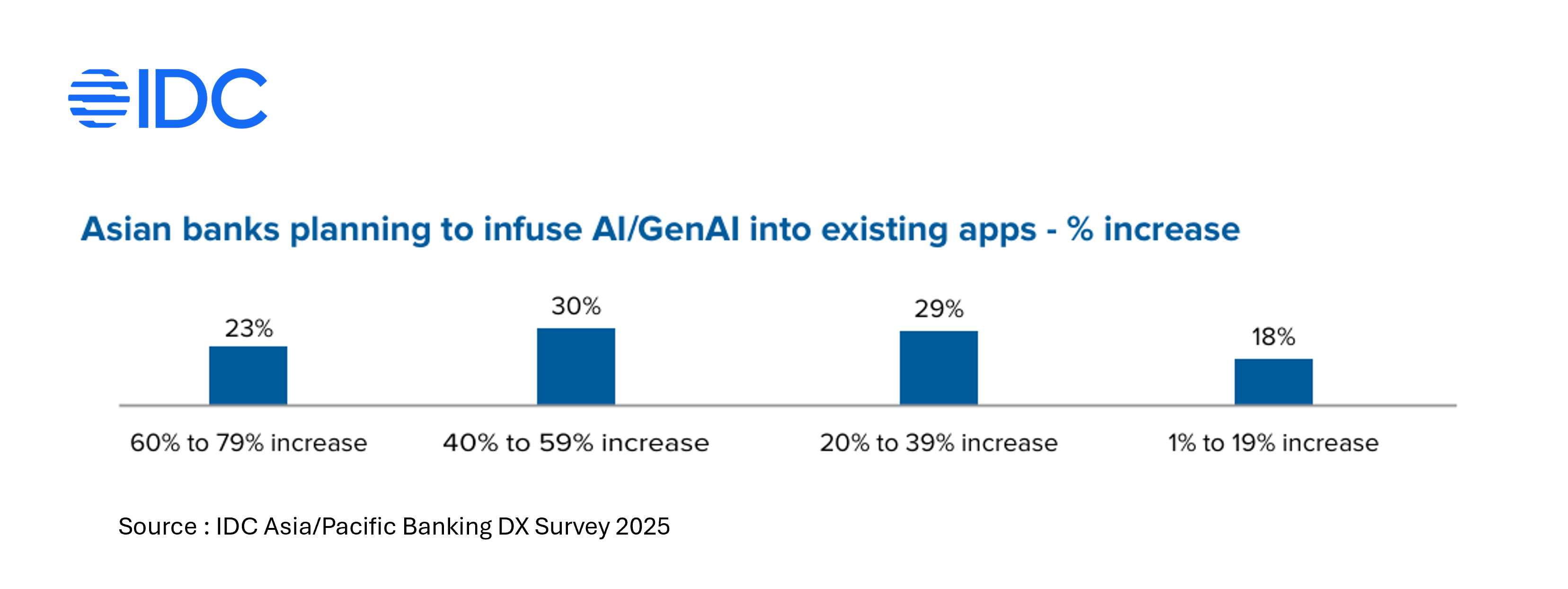
Asian banks are at a strategic crossroads.  Business complexity is rising as new asset classes, digital channels and ecosystem partnerships expand. Meanwhile, banks face softening interest rates, credit pressures, and geopolitical uncertainty. In response, banks are increasing investment in technology, especially AI, to drive efficiency, resilience, and revenue growth.   Recent IDC surveys show a clear rise in AI-related spending across the region.

The critical question is no longer whether banks are investing in AI, but how they can monetize that investment to generate measurable ROI and what role agentic AI plays in that equation.

Agentic AI offers banks a path from AI experimentation to measurable returns. By deploying autonomous AI agents across complex, multi-stage banking processes such as credit decisioning, risk management, and compliance, banks can accelerate decisions, improve consistency, and scale automation while maintaining governance. The greatest ROI comes from disciplined use case selection, AI-ready data and infrastructure, and strong trust and governance frameworks.

What Is Agentic AI in Banking?

Agentic AI in banking refers to AI systems composed of multiple autonomous agents that can independently analyze information, make decisions, and execute actions across workflows within defined guardrails and human oversight.

Unlike traditional AI models or copilots that provide recommendations, agentic AI systems can orchestrate end-to-end processes. This makes them well suited to banking operations, which involve multiple handoffs, probabilistic decision-making, regulatory constraints, and risk thresholds.

Why Banking Processes Are Strong Candidates for Agentic AI

Banking processes are often complex, involving multiple decision stages, approvals, and risk checks.   Many already rely on probabilistic model-driven decision-making engines, making them well-suited for agentic architectures.  

Example: Agentic AI in Credit Approval

Consider a credit approval process:

  • One agent specializes in credit checks against defined risk acceptance criteria.
  • Another agent estimates the maximum unsecured exposure the bank can underwrite.
  • A higher-level supervisory agent evaluates outputs and acts as the approver.

Together, these agents can accelerate credit decisions, improve consistency, and maintain governance and control.

Key Challenges Banks Must Address to Generate ROI

While the opportunity is significant, deploying agentic AI at scale poses several challenges banks must address.

Is the Bank AI-Ready?

Banks must realistically assess their data architecture and infrastructure readiness. Data patching and manual corrections may work during proofs of concept, but are unlikely to succeed in production. Similarly, pilot deployments may run on spare capacity, while scaled agentic AI systems require dedicated, resilient, and secure infrastructure.

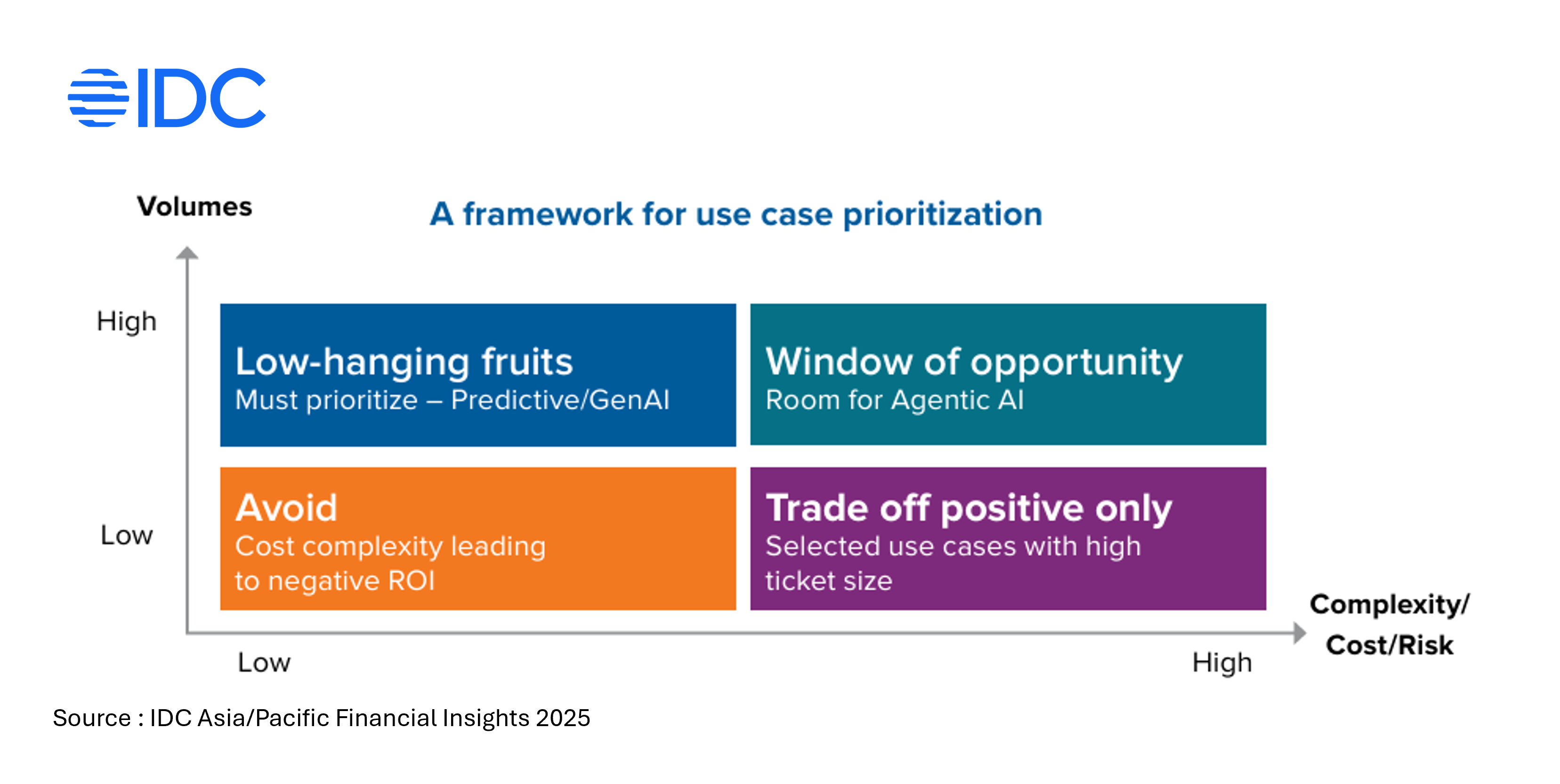
Selecting the Right Use Cases

Use case discipline is critical. Many banks run multiple exploratory or hobby AI projects driven by local enthusiasm rather than measurable business value. Even when proofs of concept show limited ROI, some initiatives still progress.

Prioritization must be anchored in clear business outcomes, such as:

  • Revenue growth
  • Operational efficiency
  • Risk reduction and compliance effectiveness

Establishing Trust and Governance

The AI trust deficit remains a major barrier, especially given the persistence of hallucinations and model errors. Building trust requires governance frameworks, transparency, human-in-the-loop controls, and continuous monitoring.

Turning Agentic AI Investment into an AI Dividend

While these challenges are not insurmountable, overcoming them is essential to generating an AI dividend. IDC research and client engagements include multiple case studies that validate that agentic AI represents a significant opportunity for the banking sector.

According to the IDC FutureScape: Worldwide Banking and Payments 2026 Predictions — Asia/Pacific (Excluding Japan) Implications report, by 2027 in APeJ, the share of AI investments directed toward innovation will rise from 25% to 40%, with increased spending on new products and services.

Banks that act now—focusing on high-impact use cases, readiness, and governance—will be better positioned to translate the potential of agentic AI into measurable business outcomes.

What’s Next

IDC works with banks across Asia/Pacific to assess AI readiness, prioritize agentic AI use cases, and design governance models that support scalable ROI.

Register now for the live webinar on 24 February 2025 at 1:30 pm SGT to join IDC in charting the agentic future with confidence.

Ashish Kakar - Research Director - IDC

Dr. Ashish Kakar is research director for IDC Financial Insights in Asia/Pacific. Based in Singapore, he is the lead Financial Insights analyst responsible for all aspects of banking and insurance research. Dr. Ashish's own interest is in fraud and risk, resilience, customer centricity, AI/ML, retail banking, insurance, alternative investment management, cloud and infrastructure, and credit risk management. Prior to joining IDC, Dr. Ashish had over 16 years' experience in Citibank, five years' experience with insurance companies, and has run his own asset management start-up for two years. In his last role in Citibank, Dr. Ashish managed processes across banking technology, servicing operations, and product. He was a regional senior with oversight of the Asia and Europe operations.

国内ITインフラ市場(2025年の振り返り)

AIインフラ
2025年もAIインフラ投資が主役となりました。2024年に引き続きハイパースケーラーやサービスプロバイダーによる投資が中心ですが、研究機関や一般企業によるAIインフラ投資も徐々に拡大しています。

AIインフラは国内外の動向が一般ニュースに取り上げられるほど注目度が高く、2025年は講演でもAIインフラ関連のテーマが多くなりました。エージェンティックAIなどAI活用が進むにつれてAIインフラ投資への関心が高まってきますので、2026年も引き続き国内ITインフラ市場の注目テーマになるとみています。

仮想化&HCI
2024年から市場が流動的になっていますが、利用企業ごとに方向性が定まりつつあります。仮想化環境の移行を決めた企業では検証や移行作業が本格化してきました。2026年はこうした動きがさらに顕著になりそうです。

マネージドサービス
2025年はマネージドサービスやITインフラ運用の調査に注力しました。複数のレポートを発行しましたが、特にマネージドクラウドサービス領域でベンダー評価レポートを発行できたことは大きな取り組みでした。

クラウド移行は、ユーザー企業・ベンダー双方にとって関係性を見直す機会になっています。
調査にご協力いただいた皆様にはこの場を借りて御礼申し上げます。

FutureScape(今後5年間の予測)

IDCでは毎年、各調査領域でFutureScape(今後5年間の10項目の予測)を発行しています。デジタルインフラ戦略では、AIインフラ関連と、ITインフラへのエージェンティックAI適用に関する項目が中心です。

AIの影響は、コンピュート、データセンター、データロジスティクス、ネットワーク、コンテナ化、エッジ、プライベートデジタルインフラへの再投資など幅広い領域で強まります。

2026年に向けて

デジタルインフラ戦略の調査を主導して3年が経ちました。複数の領域を担当するアナリストと連携しながら調査を拡充してきましたが、2025年はさらに幅が広がった年でした。

2026年は新たな挑戦が始まる1年になりそうです。引き続き、AIインフラ、仮想化、インフラモダナイゼーションなどITインフラ分野の調査に取り組みます。そして、GPUクラウドなどを含む、Accelerated Compute as a Serviceの分野もMarketScapeを実施予定です。


2025年もご支援ありがとうございました。2026年もどうぞよろしくお願いいたします。

Yukihisa Hode - Research Manager, Infrastructure & Devices, Research, IDC Japan - IDC Japan

Yukihisa Hode is a research manager covering digital infrastructure strategies as well as AI infrastructure, IT infrastructure services, IT operations, hybrid/multicloud and hyperconverged infrastructure (HCI). He leads the research program on digital infrastructure strategies, providing insight and advice on the digital infrastructure through research reports, marketing content, and presentations to support IT and digital decision-making.