
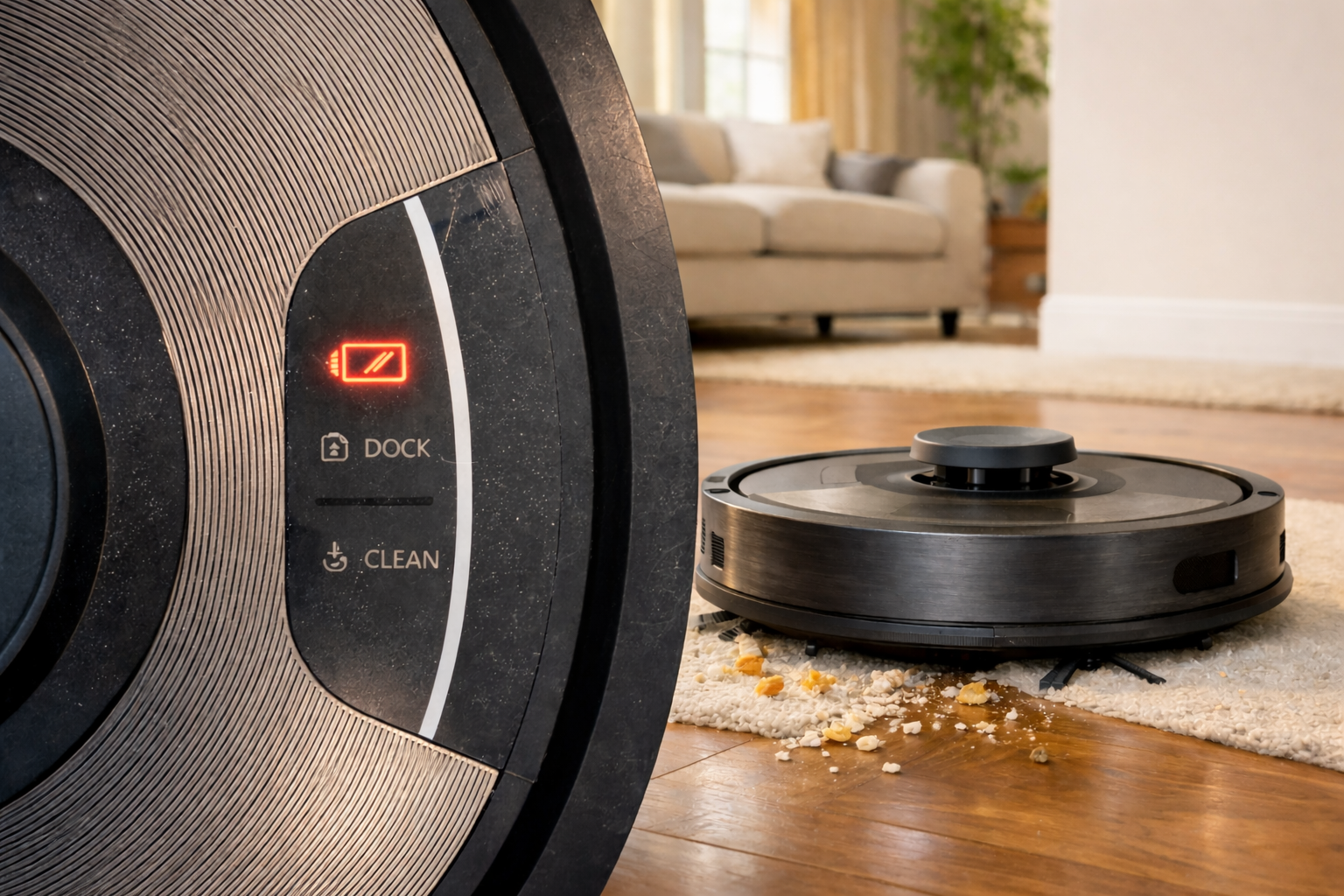
The global cleaning robot market shipped 32.72 million units in 2025, up 20.1% year over year, according to IDC. While smart vacuum remain the largest segment, lawn mower robotics and window cleaning robots are the primary growth engines. Chinese brands now dominate multiple categories, reshaping global competition through AI-driven innovation, cordless upgrades, and rapid international expansion.
This blog highlights the structural shifts, competitive realignment, and strategic priorities defining the next stage of smart cleaning robotics.

Market Overview: Structural Shift Accelerates
According to IDC’s Worldwide Cleaning Robot Trackers:
- Total shipments: 32.72 million units (+20.1%)
- Smart Vacuums: 24.12 million (+17.1%)
- Lawn Mower Robotics : 1.99 million (+63.8%)
- Window Cleaning Robots: 2.37 million (+70.4%)
- Pool Cleaning Robotics: Stable overall, with rising cordless penetration
The key trend is structural transformation. Growth is shifting from single-purpose indoor cleaning to multi-scenario intelligent automation spanning indoor and outdoor environments.

Smart Vacuum: Scale Meets Strategic Realignment
Smart Vacuum account for nearly three-quarters of total shipments. Growth was strongest in the Middle East & Africa (+95.6%) and Central & Eastern Europe (+40.3%), driven by expanding middle-class adoption and aggressive overseas expansion by Chinese brands.

The competitive landscape is shifting. Roborock maintained global leadership, ranking No.1 in major markets including the US and Germany, while Dreame expanded rapidly in Europe. Meanwhile, iRobot exited the global top five, reflecting deeper strategic divergence rather than temporary share fluctuation.
Two models are emerging:
- Vertical expansion into full home robotics (indoor + outdoor)
- Horizontal diversification into broader consumer electronics
Future leadership will depend on ecosystem strength and AI capability.
Window Cleaning Robots: High Growth, Low Differentiation
Window cleaning robot shipments rose 70.4% in 2025. Demand is fueled by high-rise living in China, large glass-window homes in Western markets, and rising safety and labor costs.
Ecovacs held over 50% global share. However, mid- and low-end competition is increasingly homogenized, characterized by similar product design and price-driven competition. Innovation is focusing on cordless design, stronger suction, and smarter navigation.
Lawn Mower Robotics: Cordless Disruption Reshapes the Market
Lawn Mower Roboticsgrew 63.8% YoY, the fastest among all categories. Wire-free models reached 1.32 million units, accounting for 66.2% of shipments and surging 182.4%, while traditional boundary-wires models declined 10.1%.
Adoption is accelerating due to mature RTK, vision, and LiDAR navigation, simplified installation and true out-of-box usability, DIY-friendly design for Western consumers, and cost advantages enabled by Chinese supply chains
Notably, the top six wire-free brands are all Chinese manufacturers, including Segway-Ninebot, Dreame, and Ecovacs, as AI-driven iteration speed erodes traditional garden equipment advantages.
Pool Cleaning Robotics: Intelligence Drives Premiumization
The pool cleaning Robotics market remained stable overall but is undergoing rapid upgrading. In-ground cleaners—the core segment—reached 2.75 million units, with cordless penetration rising to 55% (+32.8%).
Consumers increasingly expect autonomous navigation, stain recognition, app control, and smart home integration. Cleaning capability alone is no longer sufficient—intelligence now defines premium positioning.
Chinese manufacturers are leveraging cordless battery systems and AI navigation to challenge legacy players.
Three Defining Industry Trends
1. Chinese Brands Lead Innovation and Scale
Across Smart Vacuum, pool cleaning robotics, window cleaning robotics, and lawn mower robotics Chinese manufacturers are setting pricing benchmarks, accelerating cordless transitions, commercializing AI navigation, and scaling globally through e-commerce.
Supply chain depth and rapid iteration have become decisive competitive advantages.
2. Niche Segments Remain in Competitive Flux
Lawn Mower Robotics and Pool Cleaning Robotics are still in early intelligent transformation stages. Navigation technology, channel strategy, localization capability, and financial discipline will determine long-term winners.
Market concentration is not yet fixed.
3. AI Is the Long-Term Competitive Moat
AI is transforming:
- Obstacle avoidance (scene understanding)
- Path planning (targeted optimization)
- Stain detection (adaptive cleaning)
- Human-machine interaction (natural language control)
Companies that invest consistently in AI algorithms, data accumulation, and embodied intelligence will command higher margins and global leadership.
Strategic Recommendations for Industry Players
- Capture niche growth windows while cordless and intelligent upgrades are still reshaping market structure.
- Treat AI as core infrastructure, not feature marketing.
- Build multi-category ecosystems that unify apps, data, and cross-device coordination to increase customer lifetime value.
Conclusion: From Appliances to Intelligent Platforms
2025 data confirms a decisive transition: home cleaning robots are evolving from standalone appliances into AI-powered home service platforms. With Chinese brands leading innovation and cordless technology accelerating adoption, the market has entered an era of all-scenario competition. Future growth will be defined less by shipment volume and more by intelligence, ecosystem integration, and global execution capability.
Ready to unlock the power of data? Connect with our IDC analysts today to transform insights into impact. Contact us now.