
AI is quickly changing the workplace, but not everyone is reaping the rewards. Office workers are seeing the perks of AI, while those on the front lines are lagging due to a lack of training and resources. This gap could lead to a two-tier workforce, where some people with AI skills excel while others find it tough.
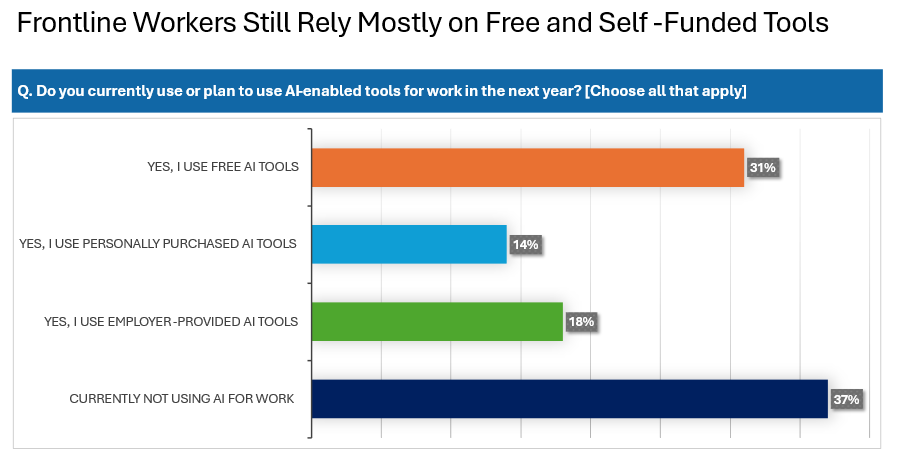
Many frontline jobs involve a lot of manual and repetitive tasks. Automation and AI are great tools to help shift workers’ focus from boring tasks to more interesting ones. So, it’s no shock that found that 63% of frontline workers are using AI tools in their jobs. Unfortunately, just 18% of employees have access to AI from their companies, which has led 45% to seek out free or personal AI tools for their work. This creates serious security risks for companies.
 While frontline workers generally view AI less favorably than office staff, nearly half believe it could enhance their work experience. Generational differences are notable though, with 55% of Gen Z frontline workers expressing excitement about AI, compared to just 27% of baby boomers.
Frontline workers frequently also feel more anxious about AI, mainly because they’re worried about job security, feeling powerless against new tech, and thinking that human input in decision-making is dwindling. IDC’s survey shows that just 48% of frontline workers think AI isn’t a threat to their jobs. On the flip side, 20% feel they are at serious risk, with the remainder unsure. Getting to know AI tools better can help ease these worries for frontline workers and turn skeptics into skilled AI users.
More than 2 billion frontline workers play a crucial role in keeping our planet running. Their jobs are tough and often risky, involving 10- to 12-hour shifts in different settings. AI is changing the game for these workers by automating tasks, offering real-time insights, and giving them more power. AI isn’t just for office work anymore; it’s now making waves in most industries, including those with large numbers of frontline workers.
To move forward, tech providers and tech buyers must rethink what expertise means in today’s AI era. They must help frontline workers understand how AI tools can enable them to handle complicated tasks even with little prior experience. Our research suggests that companies can — and ought to — expand their view on who can get involved in AI-driven initiatives. By doing so, they can leverage the complete potential of their workforce and make sure that everyone is part of the AI transformation, ultimately boosting the return on investment for current and future AI projects.
Listen to Meike on the latest webcast, “Important Workplace Insights to Drive AI Sales in Europe”