
Artificial Intelligence
Converged Workloads and the Real-time Enterprise
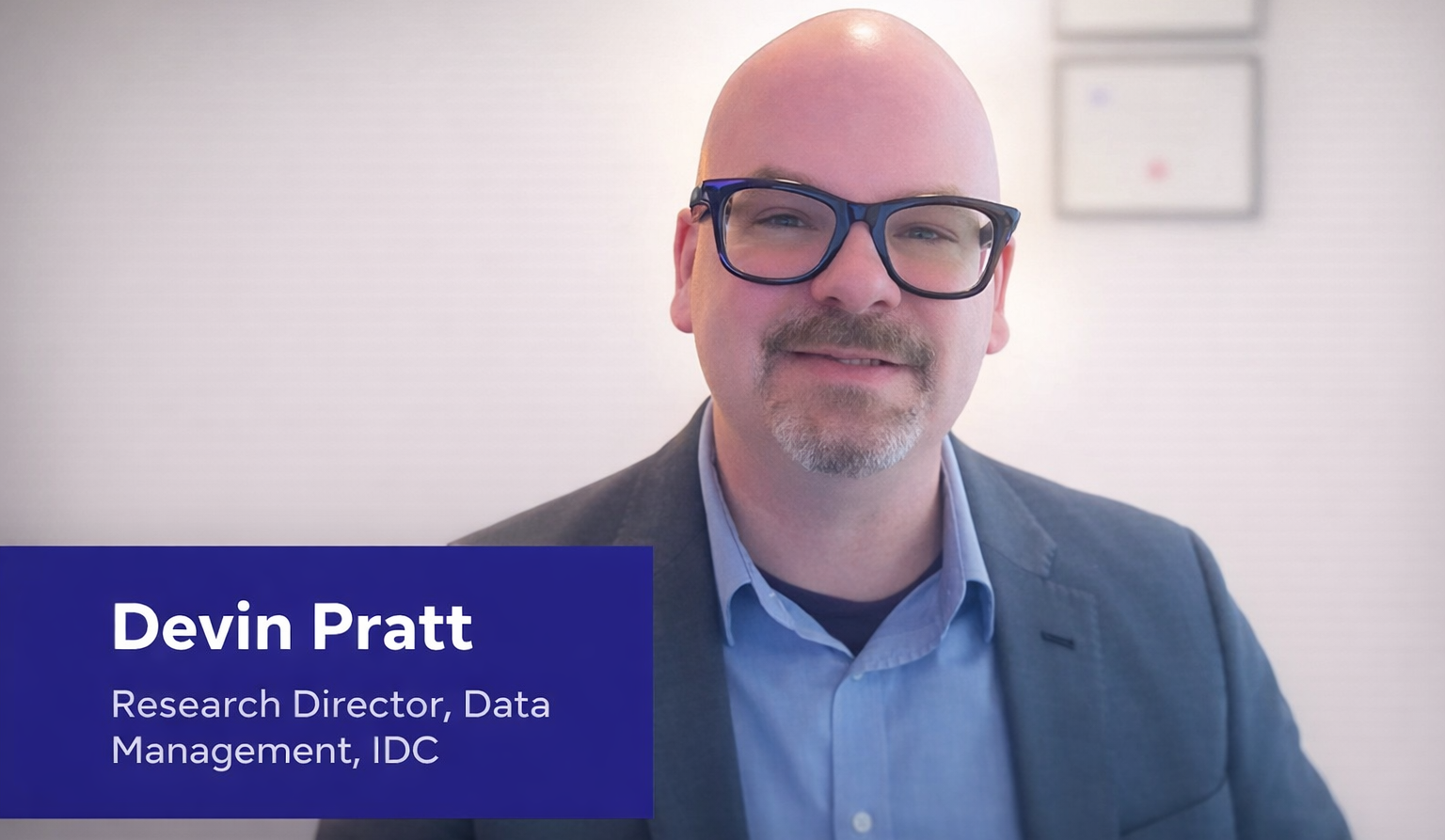
Insights from IDC Research Director Devin Pratt
Converged workloads bring transactions, analytics, and AI closer to the same live data so organizations can reduce the delay between an event, insight, and action, enabling real-time decision-making and making agentic AI viable at scale.
What Are Converged Workloads?
Definition
According to IDC, converged workloads as an architectural approach where transactional systems, analytical processing, and AI operate on shared, live operational data rather than disconnected pipelines.
Why this matters
Pratt emphasizes that this is not about replacing legacy systems:
Separate transactional and analytical systems still serve important purposes—but the key shift is reducing the time between event → insight → action.
Why Convergence Is Happening Now
1. The Need for Speed
Pratt explains that the shift is fundamentally about reducing latency:
- Faster decisions
- Continuous intelligence
- Real-time response
Converged workloads enable organizations to act while events are happening, not after.
2. Agentic AI Requires Live Data
Pratt makes this explicit:
“If you want real ROI from agentic AI, it cannot run on stale data.”
He explains that agentic AI needs:
- Real-time operational data
- Embedded analytics
- Immediate execution capability
Without this, AI cannot deliver meaningful business value.
3. Technology Readiness Has Caught Up
Pratt cites IDC data to show the shift is already underway:
- 53% of enterprises already have AI agents in production
- 28% plan deployment within six months
- 96% are adopting or planning streaming data
- 75% plan to use integrated vector databases
These signals indicate convergence is becoming mainstream infrastructure, not experimental.
When Converged Workloads Make Sense
Pratt stresses that convergence should be selective, not universal.
Use convergence when:
- Latency impacts revenue or customer experience
- Real-time response changes outcomes
- AI-driven automation is required
Keep separation when:
- Workload isolation is critical
- Real-time response is unnecessary
- A phased approach is more practical
“Converge where latency really matters—and let the rest evolve over time.”
What Is a Real-Time Enterprise?
Definition
IDC defines a real-time enterprise as an organization that can sense what is happening and respond while the moment still matters, using live data, analytics, and AI.
What this looks like in practice
Pratt describes examples such as:
- Stopping fraud in real time
- Predicting equipment issues before failure
- Adjusting customer interactions mid-experience
He contrasts this with traditional analytics:
This is not about faster dashboards—it is about acting in the moment.
Market Direction: From Systems to Platforms
Pratt points to a broader market shift:
- Lakehouse vendors adding transactional capabilities
- Databases adding analytics and AI
- Platforms converging around unified architectures
“Buyers want fewer copies, fewer handoffs, less data movement, and stronger governance.”
This signals a move toward AI-ready, unified data platforms.
How to Evaluate Convergence for Your Business
Pratt recommends starting with a simple diagnostic:
Where does stale data hurt the business?
If it impacts:
- Revenue
- Customer trust
- Operational resilience
- Speed
→ Convergence is likely necessary.
Practical Evaluation Framework
- Identify high-value real-time use cases
- Assess operating model readiness
- Start with a phased approach
- Implement governance and observability early
“Prove performance and trust, then expand.”
Architectural Priorities for CIOs
Pratt outlines four priorities for AI-ready architecture:
1. Make Data Available in Real Time
- Trusted, contextual, accessible data
- Even across distributed systems
2. Build a Real-Time Foundation
- Streaming data
- Change data capture
- Event-driven workflows
- Open interfaces
3. Put Governance at the Center
- Identity and access control
- Observability
- Data trust
4. Keep AI Close to the Data
Pratt emphasizes:
Organizations want AI embedded into the data platform—not pushed into another silo.
FAQ
What are converged workloads?
IDC defines converged workloads as systems that combine transactions, analytics, and AI on shared live data to enable faster decisions.
Why are enterprises moving to converged architectures?
According to IDC, organizations are reducing the delay between events, insights, and actions to support real-time decision-making and AI.
Does every organization need converged workloads?
No. IDC advises applying convergence only where real-time response materially impacts outcomes.
What defines a real-time enterprise?
IDC defines it as the ability to sense and respond to events while they are happening using live data and AI.
What should CIOs prioritize for AI-ready architecture?
IDC recommends real-time data access, streaming infrastructure, governance, and embedding AI close to data systems.
Source
Insights from IDC Research Director Devin Pratt