在费率持续压缩、监管要求不断提高、客户期望快速变化的背景下,资管与财富管理行业正站在一个关键转折点上。对机构管理层而言,未来三到五年的竞争力,将不再取决于规模本身,而取决于是否能够利用AI、区块链与平台化能力,重塑核心业务流程与价值创造方式

为什么这份FutureScape,对金融机构尤为重要

《IDC FutureScape:全球资管及财富管理2026年预测——中国启示》(Doc#CHC53819126,2025年12月)中,IDC明确指出:分布式账本、AI智能体、云原生与API生态的融合,正在系统性地改变金融价值链
报告显示,从跨境支付、合规管理到财富管理服务、资本市场流程与资产管理模式,技术不再只是效率工具,而正在成为决定业务模式、成本结构和客户覆盖能力的核心变量

看懂这十个判断,才能理解金融行业的下一轮分化

IDC FutureScape 资管及财富管理 2026,并不是在描绘一个遥远的未来,而是在回答一个现实问题:哪些金融机构能够借助技术实现结构性跃迁,哪些将被迫在同质化竞争中承受持续的利润压力?

预测1|稳定币汇款(Stablecoin remittances transactional cost– (注:全球预测)

到2030年,基于稳定币的汇款将使平均手续费降低50%以上,每笔交易的成本将从约6.5%降至3.0%以下。
要点:跨境支付成本结构将被重写,金融包容性和交易效率同步提升。

预测2|合规自动化(Cost-savings compliance automation

到2027年,50%的合规报告将通过监管科技(Reg-Tech)解决方案实现自动化,合规成本将降低30%以上。
要点:持续合规与实时监管正在成为新常态。

预测3|零售财富管理团队优化(Retail wealth head count reduction

到2028年,财富管理服务将利用AI助手减少30%的日常事务,从而使后台行政管理人员数量减少15%。
要点:AI正在重塑组织结构,而不仅是流程效率。

预测4|零售财富管理智能化(Retail wealth investment intelligence

到2027年,AI驱动的财富管理应用将成为70%零售投资者获取信息和建议的主要来源。
要点:投资咨询正在从“人对人”转向“系统主导、人类把关”。

预测5|交易管理智能体(Agentic AI deal management

到2029年,45%的标准一级和二级市场流程将通过专用的智能体AI应用实现自动化。
要点:资本市场流程将进入“自动执行 + 人类监督”的新阶段。

预测6|代币化资产跨越式增长(Tokenized market growth– (注:全球预测)

到2030年,代币化资产市场规模将超过10万亿美元,释放新的流动性,并从根本上改变机构发行、交易和结算资产的方式。
要点:资产形态与流动性机制正在被重新定义。

预测7|生物识别防范证券欺诈(Biometric authentication securities fraud

到2030年,生物识别认证和区块链溯源将大幅消除与身份相关的证券欺诈事件,使此类事件减少50%。
要点:信任基础设施将成为金融创新的前提条件。

预测8|投资基金智能体(AI running investment funds

到2030年,全球30%的管理资产将由高度自治、AI驱动的基金管理,人类主要负责治理和风险管理的监督。
要点:资产管理正在步入AI驱动,人类监督的新阶段。

预测9|非核心业务白标化(Outsourced noncore services

到2029年,至少20%的财富管理公司将把非核心服务外包或白标给金融科技合作伙伴,打造API驱动的价值链并提升效率。
要点:平台化与生态协作将成为重要竞争手段。

预测10AI驱动股权私募(Private equity AI analytics

到2028年,30%的大型私募股权公司将利用AI分析工具持续监控投资组合公司,实现更早的问题发现并提升整体投资回报。
要点:投后管理正在从周期性回顾走向持续智能监控。

这些预测,对金融机构真正意味着什么?

IDC FutureScape 2026 传递的核心信息十分清晰:未来的竞争,不再是谁更早采用某项技术,而是谁能够将技术系统性地嵌入业务核心。在资管与财富管理领域,技术已经从“辅助系统”升级为“业务中枢”,决定着成本结构、合规能力、客户体验与规模扩展的上限。

分析师观点

IDC 中国研究总监高飞认为,AI、区块链和API生态的融合,正在推动金融行业从“以流程为中心”转向“以智能编排为中心”。资管及财富管理FutureScape(2026)  显示,能够率先实现合规自动化、流程智能体化与资产数字化的机构,将在费率压缩和监管趋严的环境下保持更强的盈利韧性。

不同角色,应该如何解读这些变化?

  • 董事会 / CEO:技术已成为长期价值与风险管理的重要变量
  • CIO / CTO:从系统建设者转向业务智能与生态协同的关键推动者
  • 合规与风控负责人:自动化与可解释性将成为合规能力的核心
  • 财富管理与投资负责人:AI正在改变客户服务和投资决策的基本方式

如果现在只能做几件事,IDC建议从这里开始

  • 优先布局合规自动化与AI助手等高ROI场景
  • 明确哪些流程适合智能体化、哪些需要人工把关
  • 在代币化与数字资产领域选择低风险、合规场景概念验证
  • 构建API与生态合作能力,提升平台化水平
  • 系统培养AI、数据与业务复合型人才

接下来12–24个月,值得持续关注的信号

  • 稳定币与代币化资产相关监管的进展,尤其是对于资产真实性、估值、投资者保护和跨境资本流动等方面的风险评估和准备。
  • AI智能体在交易与投后管理中的实际落地效果
  • 金融科技合作生态与白标化服务的成熟度

如需进一步了解与研究相关内容或咨询 IDC其他相关研究,请点击此处与我们联系。

Eric Gao - Research Director - IDC

Eric Gao, or Gao Fei if go by his Chinese name, is a research director for IDC Financial Insights China practice, his work covers research and consulting engagement in the area of Fintech and innovation, with a strategic view from both end user and tech provider’s perspective on how technology has been transforming the financial services industry (FSI) in China and making an impact beyond. BACKGROUND Mr. Gao has over 15 years of cross-industry and cross-border professional experience in US and China. For twelve years, he worked as consultant with Deloitte US practice serving FSI clients that included major financial institutions and regulatory agency (FDIC). He had in-depth knowledge of strategic planning, risk management, US banking system (especially in relation to resolution and receivership) and data analytics. Before joining IDC, Mr. Gao worked as independent advisor in China on a variety of Fintech start-up engagements such as SME enterprise service, inclusive finance. EDUCATION/INDUSTRY ACHIEVEMENTS EMBA – Jointed Program by Tsinghua University and INSEAD (2017); MA of Economics, Georgetown University, US (2004); Consultant (on contract term) at The World Bank Group assisting poverty research in developing countries when I began to develop interest in sustainable finance and impact investing; Also volunteering for intangible heritage perseveration and commercialization initiatives; Follow Eric LinkedIn: www.linkedin.com/in/ericfgao , or WeChat (Flying_Hi)

数据不再仅仅是人工智能的输入,而是企业智能的基石。

一个正在到来的数据重构拐点

随着AI Agent从概念走向实际部署,数据正在经历一场根本性的角色转变。对中国企业而言,问题已不再是“是否拥有数据”,而是:现有的数据架构、治理方式和组织能力,是否足以支撑Agent的实时决策、自主行动与持续智能。

为什么这份FutureScape,对数据负责人尤为关键

在《IDC FutureScape:全球数据与分析2026年预测——中国启示》(Doc#53780325,2025年12月)中,IDC清晰指出:数据不再只是AI的输入,而是企业智能的基石
报告预测,从2026年开始,中国企业的数据平台将从集中式、以供给为中心的模式,转向联合治理、实时访问和持续可观测的新范式。这一变化,直接决定了AI Agent能否从PoC顺利走向生产环境,以及企业是否能够在合规、信任与效率之间取得平衡。

读懂这十个预测,才能理解“AI in Data”的真正含义

IDC FutureScape 数据与分析 2026 并不是一份技术路线图,而是一张企业未来三到五年数据能力演进的风险地图。以下十个预测,刻画了Agent时代对数据平台、治理、架构与组织提出的真实要求。

预测1|数据和AI联合治理

到2027年,80%的AI Agent将需要访问实时、与上下文相关的数据,这将让中国500强企业的大部分CIO/CTO将数据平台从单向的数据供给转向联合治理。
要点:Agent时代需要去中心化访问,而非集中式“数据上缴”。

预测2|融合工作负载

到2028年,60%的企业数据平台将搭建HTAP架构来统一事务处理和分析工作负载,从而为AI Agent提供支持,实现实时数据访问和持续智能。
要点:实时决策正在倒逼事务与分析的融合。

预测3|数据协作

到2029年,60%的企业将通过私有数据交换、可信数据空间、数据联邦的方式进行数据协作,应用于生成式AI和Agent在内的各种用例。
要点:安全、受控的数据协作将成为AI规模化的前提。

预测4|合成数据

到2027年,不断完善的数据和隐私保护规则将使得30%的企业依靠合成数据来支持AI,以防止敏感和机密数据泄露。
要点:合规压力正在推动数据形态的转变。

预测5|数据重拾

到2028年,超过40%的归档数据将被重新识别为“战略性数据”,因为AI将揭示其潜在的商业价值。
要点:冷数据正在被重新定义为潜在资本。

预测6|数据可观测

到2027年,实现端到端数据价值链的可观测,包括数据和应用程序工作流程的透明,将使AI应用从PoC到生产的成功率提高50%。
要点:没有可观测性,就没有可复制的AI成功。

预测7|自动数据访问

到2029年,Agent的增长将使得50%的CIO去重新组织并自动化身份认证和数据访问及授权管理,以减少信息滥用和泄露,将其作为零信任架构的一部分。
要点:Agent数量增长,迫使身份与访问管理自动化。

预测8|实时数据

到2026年,中国500强企业中将有40%采用流式数据技术和物化视图来满足Agent中实时数据处理需求。
要点:事件驱动成为Agent响应世界的基础。

预测9Data Agent

到2028年,60%的中国500强企业将部署企业级Data Agent,实现动态数据处理、数据管理、数据治理以及追踪。
要点:数据管理开始“自主化”。

预测10Agentic Insight

到2026年,50%的中国500强企业将部署数据分析Agent来自动化日常任务,使人们能够参与创新和高级分析,并更快进行战略决策。
要点:分析Agent将把洞察嵌入业务流程本身。

这些预测在提醒企业什么?

IDC FutureScape 数据与分析 2026 反复强调一个核心事实:Agent的成功,不取决于模型能力,而取决于数据是否随时可用、始终可信、持续可控如果数据仍然是批处理、割裂治理、低可见性的资产,那么Agent只能停留在演示层;只有完成数据架构、治理和访问方式的系统性重构,AI才能真正走向生产。

不同角色,如何理解这些变化?

  • CIO / CTO:数据平台职责从“存储与供给”转向“联合访问与治理协调”
  • CISO:身份、访问与数据安全必须自动化,才能支撑Agent规模化
  • 数据负责人:数据产品化、可观测性和实时能力成为核心指标
  • 业务负责人:数据不再只是支持分析,而是直接驱动决策与行动


IDC 中国高级分析师李浩然认为,Agent 的规模化部署正在迫使企业重新定义“数据”的角色:数据不再只是被动供给 AI 的原材料,而是必须以实时性、上下文相关性、可治理性和可观测性为前提,主动支撑智能体的持续决策与行动能力。FutureScape 2026 显示,真正限制 Agent 从 PoC 走向生产的,并非模型成熟度,而是企业是否完成了从集中式数据供给,到联合治理、事件驱动和自动化数据访问的体系性转型。那些能够将数据架构、治理、安全与业务流程协同重构的组织,将更有可能把 Agent 转化为可复制、可扩展的企业级能力;而忽视这一转型的企业,即便引入先进模型,也难以释放 AI 的长期商业价值。

IDC建议:

  • 评估现有数据平台是否支持联合访问与实时数据
  • 在关键用例中试点HTAP或事件驱动架构
  • 将数据治理、隐私与安全嵌入Agent设计之初
  • 建立端到端数据价值链的可观测能力
  • 为Data Agent和分析Agent规划清晰的治理与KPI

接下来12–24个月,值得持续关注的信号

  • 数据可信空间与私有数据交换的落地速度
  • 合成数据相关政策与技术成熟度
  • Data Agent从工具走向平台的演进路径

如需进一步了解与研究相关内容或咨询 IDC其他相关研究,请点击此处与我们联系。

Leo Li - Senior Market Analyst - IDC

Leo Li is a senior market analyst on artificial intelligence (AI) and big data for IDC China. He conducts research and analysis on AI and big data for the China and worldwide markets. He is also involved in regional and global consulting and business development in related markets. Prior to joining IDC, Leo has in-depth working experiences in AI and a wide range exposure on various businesses in AI. Leo holds a master’s degree in economics from Boston University.

一个正在迅速关闭的AI决策窗口

当AI从“试点探索”迈向“规模化应用”,企业管理层正面临一个清晰却短暂的决策窗口:继续零散投入,还是系统性重构业务与技术底座。对于CEO、CIO以及业务负责人而言,是否现在行动,将直接决定未来三到五年的增长韧性与竞争位势。

为什么这份FutureScape,比以往任何一次都更关键

《IDC FutureScape:全球AI驱动的业务战略2026年预测——中国启示》(Doc#CHC53834026,2025年12月)中,IDC首次将AI投资与可量化的新经济价值、ROI失败风险以及组织治理能力系统性地联系在一起。


报告指出,到2030年,数字化业务新增价值中将有50%来自今天已开始规模化扩展AI能力的企业;而另一面,到2026年却有50%AI驱动应用场景无法实现ROI。这意味着,AI不再是“是否要投”的问题,而是“如何避免战略性误判”的问题。

读懂这十个判断,才能看清未来三到五年的分水岭

这份 FutureScape 报告并不是在回答“AI值不值得投”,而是在回答“为什么大多数企业会在AI上走弯路”。下面这十条预测,正是IDC给中国企业划出的关键分水岭。

预测1AI成熟度规模化(Scaling AI maturity

到2030年,数字化业务所创造的新经济价值中,将有50%来自于那些今天就已经在投资并扩展AI能力的公司。
要点:AI规模化能力将成为数字业务价值的首要分水岭。

预测2AI业务价值(AI business value

到2026年,50%的AI驱动数字化应用场景将无法达到ROI目标,原因包括收益不清晰、风险上升、人机协作薄弱以及数据基础薄弱。
要点:ROI导向与治理能力不足,将直接淘汰一半项目。

预测3|数字主权要求(Digital sovereignty imperative

到2028年,70%的中国跨国企业将把AI技术栈分布在不同的主权区域,集成成本将增加三倍,战略扩展放缓。
要点:主权与合规成为AI架构设计的硬约束。

预测4AI治理(AI governance

到2027年,40%的企业将以统一、协调的AI治理取代各自为政的管理方式,使业务部门能够以“代理式AI”为引擎加速创新。
要点:集中治理 + 分级执行成为主流模式。

预测5AI客户价值(Customer value through AI

到2027年,仅有30%的在产品和服务中集成AI智能体的组织能够实现客户价值目标。
要点:流程碎片化与信任缺失将成为客户价值杀手。

预测6|通过并购加速AIAI acceleration via acquisitions

到2028年,20%的非科技类中国C1000企业将收购或投资AI原生企业以保持竞争力。
要点:并购成为AI能力“快进键”。

预测7|企业间数据协作(Intercompany data collaboration

到2028年,30%的C1000企业将与生态伙伴共享数据,共建行业专属AI系统。
要点:数据协作是行业级AI突破口。

预测8AI驱动数据架构(AI-driven data architectures

到2027年,40%的企业将战略性投资AI融合的数据架构,以避免错误决策和竞争力下降。
要点:AI就绪数据架构成为“必选项”。

预测9|代理式AI编排(Agentic AI orchestration

到2030年,50%的企业将实现AI智能体的集中编排管理。
要点:从“孤立智能体”走向“企业级协同”。

预测10|数字技能差距(Digital skills gap

到2028年,60%的企业将通过结构化知识转移举措,优先发展内部业务与数字技能。
要点:内部能力建设决定AI能否规模化。

这些预测真正想告诉管理层的是什么?

IDC FutureScape 2026 传递的核心信息并不复杂:AI失败的根本原因,不是技术不成熟,而是企业没有为AI准备好自己。当AI仍被当作IT项目或部门工具时,ROI失败几乎是必然;而当AI被当作企业级能力来治理、投资和培养时,它才会转化为长期竞争优势。

不同角色,应该如何应对这十个预测?

  • CEO / 董事会:AI已经进入“必须对经营结果负责”的阶段
  • CIO / CDO:角色正在升级为AI治理与价值兑现的关键枢纽
  • CFO:需要用投资组合思维管理AI,而非一次性项目审批
  • 业务负责人:AI是流程与商业模式的重构力量,而不是效率插件

IDC中国副总裁兼首席分析师武连峰先生表示,要实现可量化的业务成果,企业必须在战略规划、技术基础设施、人才培养及治理体系等方面做好全面准备。”

如果现在只能做几件事,IDC建议从这里开始

  • 用ROI与风险视角,重新审视现有AI项目
  • 建立统一、可执行的企业级AI治理框架
  • 投资AI就绪的数据架构,而不是单点模型
  • 将代理式AI纳入核心业务流程设计
  • 系统性推进内部AI与业务复合技能培养

接下来12–24个月,哪些信号值得高度关注?

  • 生成式AI与数据合规监管的进一步细化
  • 行业级数据共享与行业模型的成熟速度
  • AI并购与生态合作是否进入加速期

如需进一步了解与研究相关内容或咨询 IDC其他相关研究,请点击此处与我们联系。

Lianfeng Wu - Vice President - IDC

Mr. Wu Lianfeng, the Vice President and Chief Research Analyst of IDC China, has more than 25 years of experience working in the IT industry. Since joining IDC in 2000, Mr. Wu has extensive research and consulting experience in the areas of overall ICT market, vertical industry market, Internet and new media, smart connected devices, software and service outsourcing, digital transformation, digital economy, and emerging technology, among others. In recent years, Mr. Wu has been leading IDC China's digital transformation research and event. In 2017, he started to build the CXO circle excellence club, the vision of which is to help industry CXOs transform from good to excellent. Mr. Wu holds monthly offline activities and publishes daily articles that focus on digital transformation: business trends, technology trends, industry trends, organizations, and people role trends. Mr. Wu also worked with IDC global analysts to lead China's annual ICT direction forum and Top 10 Predictions (IDC FutureScapes) forum, providing industry forecasts of the latest development directions and business opportunities. At the same time, Mr. Wu works with a team of analysts to explore and discover new research topics and build thought leadership in the ICT market. Recent research areas he has delved in include Future of Work (FoW), Future Industry, Smart City, and DevOps, among others. Mr. Wu is also a guest speaker in all kinds of top ICT summit, CIO summit, and industry digital transformation summit. He gives nearly 50 speeches every year, which greatly promotes the application and development of digital technology in the industry. Prior to joining IDC, Mr. Wu worked with China Academe Launch-vehicle Technology (CALT), China Hewlett-Packard Co. Ltd., Jardine Pacific (JOS) Information Technology Co. Ltd., accumulating 9 years of working experience in the field of IT and telecommunications. Mr. Wu holds an MBA from the University of International Business and Economics in Beijing, a Master's degree in Engineering from China Academy of Launch Vehicle Technology, and a bachelor's degree in Engineering from the University of Electronic Science and Technology.

In the SMB world, a pivotal shift is underway. Small and medium-sized businesses (SMBs) are moving from technology experimentation to strategic adoption, with AI, generative AI (GenAI), and cloud technologies at the core of their competitive strategies. In 2026, IDC expects this momentum to continue, but with a clear caveat: SMBs will focus on highly pragmatic use cases that are easy to deploy and deliver measurable ROI. 

IDC’s Worldwide Small and Medium-Sized Business 2026 Predictions outlines 10 key predictions for the year ahead and their implications for SMB leaders, IT buyers, and technology vendors navigating this changing landscape.

AI-Driven Communications, Customer Engagement, and Marketing/Brand Awareness

AI and GenAI will become core tools for SMB marketing, enabling faster content creation, improved customer engagement, and more effective omnichannel brand building.

AI is rapidly becoming a practical tool for SMBs, particularly in communications and marketing. It’s no longer limited to internal chatbots or advanced analytics. SMBs are embedding AI into how they engage customers, manage marketing content and campaigns, and even make IT buying decisions.

GenAI is increasingly becoming SMBs’ “marketing sidekick.” Many small businesses already use it to generate content, refine campaigns, and maintain consistent brand messaging across channels. This shift is accelerating. Lengthy campaign launch cycles will give way to faster execution as GenAI becomes a standard tool for content creation, campaign optimization, and brand awareness at scale.

Hardware Gets Smarter

SMBs will increasingly invest in AI-ready and edge-enabled hardware to automate tasks and analyze data closer to where it is created.

Hardware is becoming a strategic enabler of AI adoption for SMBs. Businesses are investing in devices designed to support AI and edge computing, making it easier to automate workflows and generate insights in real time—without relying entirely on centralized IT systems.

From laptops with built-in AI capabilities to point-of-sale systems that detect trends instantly and edge servers that process data on-site, smarter hardware allows SMBs to act faster and compete more effectively with larger enterprises. However, to unlock the full value of these investments, SMBs will also need to modernize their underlying infrastructure to ensure long-term scalability and performance.

SMB Buying Behavior: GenAI and Cloud Marketplaces for Discovery

By 2026, SMBs will rely on GenAI tools and cloud marketplaces as primary channels for discovering, evaluating, and deploying IT solutions.

SMBs are changing how they research and purchase technology. Increasingly, they will turn to GenAI tools to explore IT solutions—using chatbots to ask questions, compare options, and quickly narrow down viable products. This approach can significantly reduce the time spent on initial research.

However, this shift comes with an important requirement: SMBs will need to invest in employee AI literacy. Effective prompt engineering and consistent fact-checking will be essential to ensure GenAI-driven research leads to sound decisions.

At the same time, cloud marketplaces are becoming central purchasing hubs. Rather than relying exclusively on traditional vendors or resellers, SMBs are browsing, comparing, and deploying solutions directly through these platforms. While this simplifies procurement, it also requires greater comfort with managing multiple vendors and integrating new tools rapidly.

FinOps and Finding Digital ROI

FinOps will become essential for SMBs seeking to manage AI and cloud costs while accelerating returns from digital investments.

As SMBs expand their use of AI and cloud services, cost management is becoming more critical. Financial operations (FinOps) is emerging as a must-have discipline—particularly for medium-sized businesses—to prevent budget surprises and maintain visibility into spending.

This comes alongside the fact that MBs are set to increase the speed at which they see returns from their digital investments, all thanks to the productivity gains made with AI and agentic AI. With smarter automation, sharper insights, and FinOps methodology, companies can deliver faster value while keeping a tighter grip on costs.

Navigating Security and Risk

Security, compliance, and risk management will increasingly determine which technology vendors SMBs trust and adopt.

Security and regulatory readiness are becoming decisive factors in SMB technology decisions. Rather than prioritizing feature breadth alone, SMBs are gravitating toward vendors that simplify risk management and compliance.

The growing complexity of global regulations and shifting trade requirements is also prompting many SMBs to reassess international expansion plans. As a result, trust, operational resilience, and simplicity are taking precedence—even if that means moving away from niche or overly complex solutions.

Next Steps for SMBs Going Into 2026

SMBs that succeed in 2026 will take a pragmatic, honest approach to assessing AI readiness across infrastructure, skills, and governance.

Looking ahead, SMBs will conduct clear-eyed evaluations of their digital maturity, identifying where infrastructure, talent, or governance gaps could limit the value of AI and cloud investments. This disciplined self-assessment is critical to unlocking innovation without increasing risk exposure.

With this renewed focus, IDC expects meaningful shifts in the SMB economic landscape as organizations double down on smart, secure, and outcome-driven digital transformation.

For a deeper dive into the trends shaping SMB growth, explore the full IDC FutureScape: Worldwide Small and Medium-Sized Business 2026 Predictions, which examines impacted market segments, adoption timelines, and strategic implications in greater detail.

Katie Evans - Sr. Director, Research - IDC

Katie Evans, Senior Director, Worldwide Small Medium Business (SMB) Research Program within the Digital Transformation space. Katie's core research coverage includes identifying and supporting the unique, evolving needs of the Very Small, Small and Medium Business technology buyer. Katie has a strong, SMB-focused research and writing background, having covered SMBs in the retail and ecommerce space for over 12 years. Most recently, her primary coverage area was researching the technology needs of SMB retailers and analyzing the vendor offerings on the market to meet those evolving needs. Katie has also conducted extensive writing and research on mobile and international ecommerce and has authored several custom reports for vendors serving SMBs.

Elisabeth Clemmons - Research Analyst - IDC

Elisabeth Clemmons is a Research Analyst for IDC's Worldwide Small and Medium Business Markets program, where she covers the technology priorities, needs, challenges, and goals of small and medium businesses across the globe. Leveraging primary and secondary SMB research, she provides insights into technology trends and developments, buying patterns, market segmentation, and more. She additionally serves as an analyst for the Digital Economy Strategies research theme, covering the interrelationship between geopolitics, macroeconomics and the technology industry.

Work in 2026 is being rewired around human-AI teams, where people who learn to collaborate with intelligent systems are gaining a clear edge in productivity, creativity, and career growth. IDC’s latest FutureScape and Future of Work insights show that this is no longer a distant trend but the operating reality for leading organisations worldwide.

The new shape of work

According our 2026 Futurescape for the AI-enabled Future of Work around 40% of roles in the G2000 will involve direct engagement with AI agents by 2026, fundamentally reshaping how entry, mid-level, and senior jobs are designed. In Europe specifically, we expect around 70% of new positions to be directly influenced by AI, blending technical fluency with human-centred capabilities like problem solving, empathy, and domain expertise.

AI is simultaneously and subtly absorbing much of the background work. Our analysis suggests AI tools can save workers over 40% of their typical workday, with IT workers gaining up to 45% of their time back as routine tasks are automated. Instead of spending hours on status reports, basic analysis, or rote documentation, employees can focus more on designing solutions, making decisions, and collaborating with customers and colleagues.

Agents as instruments, not co-workers

One of our most important messages though is that AI agents should be treated as instruments that extend human capability, not as synthetic co-workers to be managed like people. When AI is framed as a powerful tool in a human-led process, organisations are less likely to over-automate and more likely to invest in skills, governance, and thoughtful workflow redesign.

This mindset shift is already visible in how leaders talk about AI “co-pilots” across development, operations, and knowledge work. We predict  that as agentic AI matures, organisations that focus on measuring and improving AI–human collaboration, rather than just raw productivity, will see margin gains of up to 15% by the end of the decade.

The skills crunch: $5.5 trillion on the line

The biggest drag on this transformation is no longer the technology but the skills to use it well. Our data shows that over 90% of global enterprises will face critical skills shortages by 2026, with AI-related gaps alone putting up to $5.5 trillion of economic value at risk through delays, missed revenue, and quality issues. Yet in our Global Future of Work Decision Maker only about a third of organisations say they are fully ready for AI-driven ways of working, and just a similar share of employees report receiving any AI training in the past year.

This imbalance is already reshaping labour markets. The 2025 IDC Employee Experience survey shows that that 66% of enterprises are reducing entry-level hiring as they deploy AI, and 91% report roles being changed or partially automated. Routine-heavy junior tasks are disappearing fastest, while demand grows for roles that can design, supervise, and continuously improve AI-infused workflows.

How to ride, not resist, the wave

For leaders and professionals, the 2026 question is not “Will AI take my job?” but “How quickly can my organisation and my skills adapt to human–AI collaboration?”. Our research into AI, automation, and Future of Work points to a few practical priorities that separate frontrunners from the rest.

  • Build AI literacy for everyone, not just specialists: core skills now include prompt design, interpreting AI output, and knowing when to override or escalate decisions.
  • Redesign roles around human strengths: shift job descriptions toward judgment, creativity, relationship-building, and cross-domain problem solving, with AI handling repeatable analysis and orchestration.
  • Invest in trustworthy data and governance: companies that neglect high-quality, AI-ready data will see productivity fall behind as they struggle to scale agentic solutions.
  • Measure collaboration, not just output: by 2029, organisations that track and optimise human–AI collaboration are projected to enjoy up to 15% higher margins than those that chase automation alone.

Work has been rewired, but the most valuable node in the system is still the human at the centre of an intelligent network of tools, agents, and collaborators. In 2026, the winners will be those who treat AI not as a threat or a crutch, but as a force multiplier for distinctly human ambition.

To watch our EMEA FutureScape predictions presentation, click here.

If you have any questions, please drop them in this form.

Meike Escherich - Associate Research Director, European Future of Work - IDC

Meike Escherich is an associate research director with IDC's European Future of Work practice, based in the UK. In this role, she provides coverage of key technology trends across the Future of Work, specializing in how to enable and foster teamwork in a flexible work environment. Her research looks at how technologies influence workers' skills and behaviors, organizational culture, worker experience and how the workspace itself is enabling the future enterprise.

By 2028, 60% of enterprises will collaborate on data through private data exchanges or clean rooms, according to IDC’s 2026 FutureScapes predictions. This shift isn’t just a technical evolution—it’s a strategic one.

Why Data Collaboration Matters Even More Now

For years, we’ve called data the foundation of digital business. AI needs more and more data ‘fuel’ to train models, to ground outputs and to generate process and enterprise-specific responses. No one enterprise can create – or even independently curate – all the data it needs. It is time to lean into ecosystems (and data providers) who can expanding value through partnership. With new tooling this data is accessible securely and transparently between organizations in environments where governance is built in and privacy is preserved.

AI Demands Better Data

Generative and agentic AI systems thrive on diverse, contextual, high-quality data. Private data exchanges and clean rooms are emerging as the bridge between innovation and regulation—spaces where enterprises collaborate responsibly without exposing sensitive information. As highlighted in IDC’s Worldwide Data and Analytics 2026 Predictions, these environments are becoming essential bridges between innovation and regulation—spaces where collaboration is not only possible, but also safe.

Real-World Examples

  • Healthcare: Providers combine anonymized data sets to accelerate breakthroughs in personalized medicine.
  • Finance: Institutions partner to improve fraud detection while maintaining customer confidentiality.
  • Retail: Brands join forces to understand customers holistically, creating richer experiences without compromising trust.

A Mindset Shift

This isn’t just about technology—it’s about rethinking data strategy:

  • From owning all the data → to identifying the right data partners
  • From guarding information → to governing it
  • From isolation → to collaboration

Advances in privacy-enhancing technologies make this possible, turning fragmented information into collective intelligence.

Lead With Trust

Success in data collaboration depends on transparency, shared principles, and clear accountability. Organizations that invest now will strengthen AI outcomes and help define ethical, interoperable data standards for the next decade.

The goal isn’t just to manage data—it’s to make it meaningful.

In the agentic AI era, no organization operates alone. The future belongs to those who share wisely.

Lynne Schneider - Research Director - IDC

Lynne Schneider is Research Director leading IDC's Data Collaboration & Monetization, and Location & Geospatial Intelligence market research and advisory practices. Ms. Schneider's core research coverage in DaaS includes data sourcing and delivery services from traditional and emerging data providers along with evolving data aggregation and dissemination platforms. The breadth of coverage includes services that enable an organization to externally monetize data generated as part of the organization's ongoing operations, value-added information derived from this data, and the marketplace for combining data with other solutions. This research analyzes the supply and demand side business and technology trends of this emerging category.

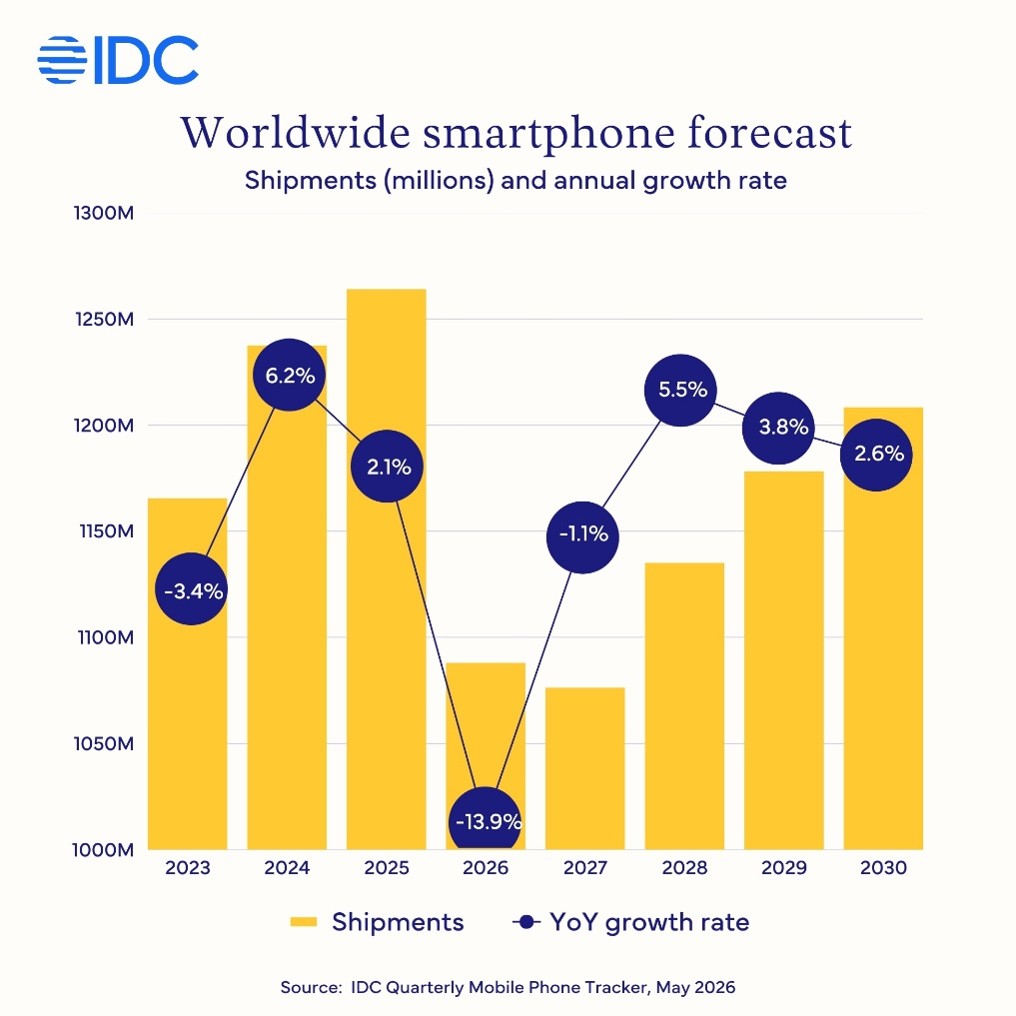
In late 2025, the global semiconductor ecosystem is experiencing an unprecedented memory chip shortage with knock-on effects for the device manufacturers and end users that could persist well into 2027. DRAM prices have surged significantly as demand from AI data centers continues to outstrip supply, creating a supply/demand imbalance. 

IDC was monitoring the memory situation as we prepared our November device forecasts, and we factored them into the update. The situation, however, has become more acute since publishing, and we feel it’s important we address the situation. Although we are maintaining our official forecasts as the situation is still evolving, we will offer here two downside risk scenarios that may play out in two critical markets: Smartphones and Personal Computers. 

What’s causing the shortage? The memory market is at an unprecedented inflexion point, with demand materially outpacing supply.  For an industry that has long been characterized by boom-and-bust cycles, this time is different.  The rapid expansion of AI infrastructure and workloads is exerting significant pressure on the memory ecosystem.  These AI workloads require large amounts of memory, and the shortage, in part, is driven by a reallocation of manufacturing capacity away from consumer electronics toward high-margin memory solutions to support AI. Instead of expanding conventional DRAM and NAND used in smartphones, PCs, and other consumer electronics, major memory makers have shifted production toward memory used in AI data centers, such as high-bandwidth (HBM) and high-capacity DDR5. This has restricted the supply of general-purpose memory modules and driven up prices across the board. 

AI servers and enterprise environments require far more memory per system than consumer devices, so the AI build-out is pulling a disproportionate share of global capacity and creating shortages, as suppliers prioritize orders from hyperscalers and OEMs building AI servers. That dynamic has left less DRAM available for consumer devices, exacerbating price pressure in a tight market.  

However, this is not just a cyclical shortage driven by a mismatch in supply and demand, but a potentially permanent, strategic reallocation of the world’s silicon wafer capacity. For decades, the production of DRAM and NAND Flash for smartphones and PCs was the primary driver for production. Today, that dynamic has inverted. The voracious demand for HBM by hyperscalers, such as Microsoft, Google, Meta and Amazon, has forced the three biggest memory manufacturers (Samsung Electronics, SK Hynix, and Micron Technology) to pivot their limited cleanroom space and capital expenditure towards higher margin enterprise-grade components. This is a zero-sum game: every wafer allocated to an HBM stack for an Nvidia GPU is a wafer denied to the LPDDR5X module of a mid-range smartphone or the SSD of a consumer laptop. 

As a result, IDC expects 2026 DRAM and NAND supply growth be below historical norms at 16% year-on-year and 17% year-on-year, respectively.  

The Crisis in the Devices Market 

The result of this supply/demand imbalance is twofold: DRAM and NAND/SSD prices have risen sharply in recent months, and the availability of these components is limited, forcing device manufacturers to navigate a fluid situation. 

The Potential Smartphone Market Impact 

The global smartphone market, particularly Android manufacturers, is facing a threat in 2026. The industry’s decade-long trend of democratizing specs by bringing flagship features to affordable smartphones is reversing.  

The cost structure of a smartphone is heavily dependent on the memory used. For a mid-range device, memory can represent 15-20% of the total bill of materials (BOM), while for a high-end flagship device, it is around 10-15%. As memory prices continue to surge, OEMs will likely have to raise prices significantly, cut specifications or both.  

Different Vendors, Different Impacts 

The impact of the shortage is highly asymmetric, creating winners and losers on supply chain resilience and vertical integration. 

Manufacturers, whose business is mainly in the low end of the market, are likely to suffer significantly. The business models of vendors such as TCL, Transsion, Realme, Xiaomi, Lenovo, Oppo, Vivo, Honor or Huawei are based on thin margins. This increase in cost will hit their margins substantially, and they will have no other option but to pass the cost (or part) to end users. 

In the high end of the market, Apple and Samsung face pressure but are structurally hedged. Its cash reserves and long-term supply agreements allow it to secure memory supply 12-24 months in advance. On the other hand, new flagship models in 2026 will likely have no RAM upgrades, sticking to 12GB for Pro models rather than increasing to 16GB. It is also unlikely that current models will see the same price erosion seen after the introduction of the latest model. 

The cumulative effect of these pressures is a potential contraction in the global smartphone market alongside an increase in average selling prices (ASP). In 2026, in our moderate downside scenario, we could see the market contract by 2.9%. In our pessimistic downside scenario, it could be as bad as 5.2%. The severity of each scenario depends on how long this situation lasts. 

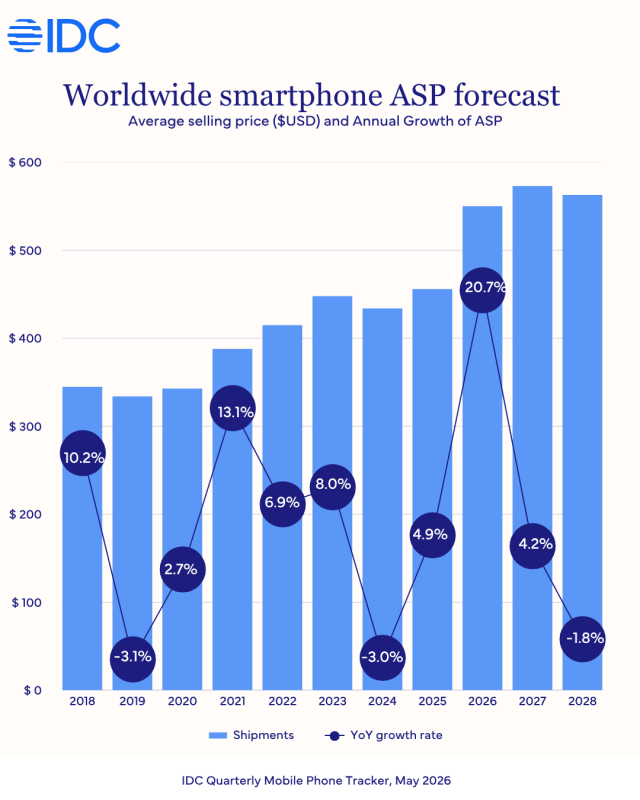
At the same time, smartphone ASPs could rise by 3% to 5% in the moderate scenario, or by 6% to 8% in the pessimistic scenario. These price rises will be significantly higher in the low end of the market, where margins are extremely tight, and OEMs will have to pass the cost to end users.  

But regardless of the severity of the scenario, longer replacement cycles are likely to occur in markets with rising costs causing lower purchasing power. By contrast, in more mature markets, consumers are likely to rely on financing and instalment plans to absorb higher prices. 

While there could be significant downside risk to volumes in 2026, we expect 4Q25 to outperform our earlier projections as vendors stocked channels ahead of price increases.   

Impact to the PC Market 

If the smartphone market is facing pressure, the PC market is bracing for disruption. The timing of the memory shortage creates a perfect storm for the PC industry, colliding with the Microsoft Windows 10 end-of-life refresh cycle and the AI PC marketing push.  

PC vendors are signalling broad price increases as cost pressures intensify into H2 2026. Lenovo, Dell, HP, Acer and ASUS have warned clients of tougher conditions ahead, confirming 15-20% hikes and contract resets as an industry-wide response.  

PC vendors with larger shipment volumes should be better positioned to navigate current supply constraints, enabling them to capture market share from smaller and regional brands. Regardless of how much the total market size may be impacted, we expect vendor market shares to shift in favor of the largest vendors armed with inventory and greater leverage with suppliers.  

White box as well as lower tier (often local) vendors, on the other hand, will bear the greatest burden of the shortage, and that would include DIY systems, oftentimes built by gamers. That in turn represents an opportunity for large OEMs to gain share from smaller assemblers in the gaming space by positioning pre-built systems as offering higher value.   

The Impact on AI PC 

The shortage threatens to derail the industry’s growth narrative around AI PC. IDC defines the AI PC as any PC with an NPU. Crucially, these devices tend to have more RAM (Microsoft’s Copilot+ PCs require a minimum of 16GB). As more small language models and large language models move on device, memory becomes even more important, with many higher-end systems shifting toward 32GB or higher. Just as the industry is seeing a need to add more RAM, it has become prohibitively expensive to do so, even if they can get supply. This will result in higher prices, lower margins, or a potential downmix in the amount of RAM in new systems at the worst possible time for this to occur. 

As with smartphones, IDC is not changing its official PC forecast. Here again, we offer two potential scenarios for 2026.  

In the more moderate downside scenario, we could see the PC market contract by 4.9% compared with a 2.4% year-on-year decline in the November forecast. Under a more pessimistic scenario, the decline could deepen to 8.9%. The severity of each scenario will largely depend on how long the current supply constraints persist through 2026. 

Under these downside scenarios, PC average selling prices would likely rise, increasing by 4% to 6% in a moderate scenario, and by 6% to 8% in a pessimistic scenario.  

As with smartphones, channels are building inventory in advance to mitigate the impact of further price increases in the months ahead, which is expected to support stronger-than-expected forecast performance in Q4 2025, relative to the November outlook. 

Conclusion 

What began as an AI infrastructure boom has now rippled outward, with tightening memory supply, inflating prices, and reshaping product and pricing strategies across both consumer and enterprise devices. As the industry adjusts to this new reality, the smartphone and PC markets are bracing for a period of higher costs, altered product roadmaps, and slower volume growth. The severity and duration of the shortage will be determined by how quickly production capacity can expand and how effectively demand rebalances across segments. 

For consumers and enterprises alike, this signals the end of an era of cheap, abundant memory and storage, at least in the medium term. The year 2026 is shaping up to be one in which technology becomes more expensive, driven by supply constraints rather than demand growth. 

Francisco Jeronimo - Vice President, Data & Analytics - Devices - IDC

Francisco Jeronimo is VP for Data and Analytics at IDC EMEA. Based in London, he leads the research that covers mobile devices, personal computing devices, emerging technologies and the circular economy trends across EMEA. His team delivers data on personal computers, tablets, smartphones, wearables, PC monitors, PC gaming, enterprise Thin Client devices, smart home, augmented reality and virtual reality, and sales of used devices. He provides in-depth analysis of the strategies and performance of the key industry players.

Tom Mainelli - Group Vice President - IDC

Tom Mainelli heads the Device & Consumer Research Group, overseeing a wide array of hardware and technology categories that cater to both home and enterprise markets. His team's research spans PCs, tablets, smartphones, wearables, smart home devices, thin clients, displays, and virtual/augmented reality headsets. He also co-manages IDC's supply-side research team, which monitors display and ODM production across various categories. IDC's consumer research, anchored by the Consumer Market Model, employs regular surveys and proprietary models to forecast numerous consumer-focused activities and spending across hardware, software, and services. As Group Vice President, Tom collaborates closely with company representatives, industry contacts, and other IDC analysts to provide comprehensive insights and analysis on a diverse range of commercial and consumer topics. A frequent speaker at public events, he travels extensively, enjoying every opportunity to engage with colleagues and clients worldwide.

Bryan Ma - Vice President - IDC

Bryan Ma is Vice President of Client Devices research, covering mobile phones, tablets, PCs, AR/VR headsets, wearables, thin clients, and monitors across Asia as well as worldwide. Based in Singapore, Bryan provides insights and advisory services for both vendors and users, and coordinates his team of analysts in building IDC's core market data, analysis, and forecasts in these sectors. Bryan has been quoted in a number of publications, including The Wall Street Journal, The Economist, The Financial Times, BusinessWeek, The South China Morning Post, and The New York Times. He has been a featured speaker at numerous industry conferences and appears frequently as a guest commentator on television networks such as CNBC, Bloomberg, and the BBC.

Ryan Reith - Group Vice President, WW Device Trackers - IDC

Ryan Reith is the Group Vice President for IDC's Worldwide Device Tracker suite, which includes mobile phones, tablets, wearables, and most recently AR/VR. His teams research focuses on the quantitative aspects of the mobile device industry, including market sizing, forecasting, vendor market share analysis, and technology trends. His current responsibilities include engaging with mobile device OEMs, supply chain, distributors, and the financial industry to discuss market trends and forward looking analysis.

Jeff Janukowicz - Research Vice President, Solid State Drives and Enabling Technologies - IDC

Jeff Janukowicz is a Research Vice President at IDC where he provides insight and analysis on the SSD market for the Client PC, Enterprise Data Center, and Cloud market segments. In this role, Jeff provides expert opinion, in-depth market research, and strategic analysis on the dynamics, trends, and opportunities facing the industry. His research includes market forecasts, market share reports, and technology trends of clients, investor, suppliers, and manufacturers.

The global smart vacuum cleaner market didn’t just grow in 2025, it reorganized. Shipments reached 17.42 million units in the first three quarters of the year, up 18.7% YoY, with Q3 alone up 22.9%. Chinese brands; Roborock, Ecovacs, Dreame, Xiaomi, Narwal dominated the top five reflecting a structural shift powered by faster product cycles, ruthless price segmentation, and deep ecosystem plays. Consumers signaled what they value: AI-driven navigation, obstacle recognition, self-emptying docks, and seamless integration with voice and home platforms. Vendors that delivered those at mid-tier and entry-level prices won share while those that didn’t are now playing catch-up.

iRobot: A Pioneer That Missed the Turn

The news is unambiguous: iRobot filed for Chapter 11 and agreed to be acquired by its primary Chinese manufacturer, Shenzhen Picea Robotics, with the plan to take the company private and continue operations under Picea’s ownership. It’s an ending few expected a decade ago.

What caused the fall from grace? iRobot’s decline boils down to three things:

  • Tech posture: iRobot resisted LiDAR navigation for too long, opting for vSLAM (camera-based visual mapping) that proved less consistent in real-world homes and lighting conditions.
  • Price architecture: iRobot clung to premium pricing while rivals shipped better-specced mid/low SKUs globally.
  • Balance sheet & policy shocks: Debt refinancing and new U.S. tariffs raised costs just as competition intensified and the Amazon acquisition collapsed.

Market Implications

Innovation cadence beats incumbency – The winners executed rapid, visible upgrades such as the inclusion of LiDAR, AI, auto‑empty bases, low‑profile designs, and more. The pace of innovation sometimes led to multiple product releases a year while the laggards optimized margins and brand heritage. The market rewarded the former.

Ecosystems matter more than SKUs. Tight integration with Mi Home, Alexa, Google Assistant, regional retail, and services is now as important as suction ratings because it drives repeat purchase and lock‑in.

2026 Outlook: Five Predictions to Watch

AI Navigation Goes From ‘Specs’ to ‘Outcomes’. Expect vendors to market room‑level autonomy such as predictive pathing, dynamic no‑go zones, seasonal routines, rather than sensor acronyms. The winning KPIs will be coverage completeness, cleaning time, and failure‑free runs per week. Chinese leaders already test and iterate on these claims aggressively.

Platform Moats Deepen. Roborock/Ecovacs/Dreame will push first‑party apps and hubs into broader home control (air purifiers, mops, window cleaners). Xiaomi will double down on Mi Home stickiness. Other brands that can’t anchor a platform will lean on Amazon, Apple, and Google integrations and retail partnerships.

Design Improvements: Thin Is In — Smart vacuums are evolving to tackle real-world challenges with slimmer profiles that reach under low-clearance furniture, enhanced ability to clear taller thresholds, and AI-powered object recognition for hazards like cords, socks, and pet waste. These innovations are increasingly being brought to more affordable models, making advanced navigation and hands-off cleaning accessible to a wider audience.

Regionalization of Portfolios. MEA and parts of Europe will continue to outgrow North America, driven by tuned SKUs (tile/stone floor focus, water tank size, voltage standards) and offline retail investment. Brands that localize service and spares win loyalty.

Bottom Line (for 2026)

Expect Chinese brands to extend their lead, especially in Europe/MEA, on the back of holistic ecosystems and relentless iteration. Watch iRobot under Picea: it may emerge as a good-enough brand with improved navigation and cost structure, but it must earn back trust and relevance quickly. The consumer win continues: more capability at lower prices.

Jitesh Ubrani - Research Manager - IDC

Jitesh is a Research Manager for the Worldwide Mobile Device Trackers, including Wearables, Augmented Reality (AR), Virtual Reality (VR), Tablets, and Phones. The team focuses on the market sizing, forecasting, and analyzing trends to provide insight into the competitive landscape of the worldwide mobile industry. Prior to joining IDC in 2012, Jitesh was part of the Market Analysis and Intelligence team at Bell Mobility, one of Canada's largest telecom service providers, where his role focused on understanding smartphone adoption and usage as well as consumer purchasing behavior. Mr. Ubrani holds a bachelor of commerce degree with a major in Economics from Ryerson University and is currently based in Toronto, Canada.

After 38 years with IDC, I have decided that it’s the right time to step into the next chapter of my career. Beginning in January, I will transition out of my current role into supporting the company as a Special Advisor, where I will continue to champion IDC and the critical role we play in guiding the technology community forward. 

When I joined IDC as an associate research analyst, I could not have predicted the opportunities and experiences that would follow. I was drawn to IDC because of its unique vantage point on the technology industry, and I stayed because of two things: the constantly changing nature of technology and its impact on the world, and the opportunity to learn from some of the smartest people in the industry—across IDC, our customers, and the broader market. 

Throughout my career, I’ve had the privilege of working with exceptional colleagues and leaders who shaped IDC’s global research and data offerings. Together, we created, honed, and strengthened IDC’s position as the trusted source for technology intelligence used by organizations around the world. 

What’s next 

During my time here, IDC has evolved through multiple technology cycles—from client/server, to mobility and cloud, and now AI. With strong leadership, a talented global team, and a clear vision for what trusted tech intelligence looks like in the AI era, IDC is stronger than ever. 

To my colleagues: thank you for your dedication, your partnership, and the professionalism that defines IDC. 

And to our customers and partners: thank you for trusting us with your most important decisions and challenging us to continuously raise the bar. 

IDC’s future is bright and I am excited to support it.  
 

Crawford 

Crawford Del Prete - President - IDC

Crawford Del Prete was appointed President of IDC in February 2019. Prior to his current role, he served as IDC's Chief Operating Officer. Through his leadership, IDC has established a leading position as the world's most prominent and trusted technology market intelligence provider. Crawford joined IDC in 1989 as a research analyst. Throughout his IDC career, he has grown multiple IDC businesses to industry leadership positions. He was instrumental in creating IDC's high visibility research and data tracking products which are used daily in the IT industry for strategic planning. Crawford is a leading authority on the IT industry and has completed extensive research on the structure and evolution of the information technology industry. He advises technology and business leaders on how to adapt and change in a time when technology is changing the world. He is frequently quoted in publications such as The Wall Street Journal, The Financial Times, The New York Times and other leading media sources. He is a regular guest on Bloomberg Technology TV, offering insight and perspective on daily technology events. He was awarded The Patrick J. McGovern Award for Management Excellence in 2014. In 1995, he was awarded IDC's James Peacock Award for research excellence, IDC's highest research honor. He holds a B.A. from Michigan State University and in 2012, he was named a Distinguished Alumni of the University. Follow Crawford on Twitter @craw.

As the IDC Government Insights team developed this year’s IDC FutureScape: Worldwide Smart Cities and Communities 2026 Predictions, one trend became clear: cities of all sizes are rapidly adopting LLM-driven AI tools. As cities confront tighter budgets, rising public needs, and the accelerating pace of AI adoption, two predictions stand out: One prediction on Agentic AI and workflow orchestration, and the other on unlocking the value of government data through fine-tuned large language models (LLMs).

Together, these prediction signal a shift from technology-as-a-tool to technology-as-a-teammate (or as “a personal intern”)— where intelligent systems collaborate with humans to simplify complexity, bridge data silos, and elevate service delivery. For mayors, CIOs, and innovation officers, this is more than automation, it’s a reimagining of how government works.

Agentic AI Connects the Dots Across City Systems

By 2027, 65% of cities will deploy AI agents across systems and data to orchestrate end-to-end workflows and reduce workloads while addressing risks of misuse and overreach and “process debt.”

Local governments have long wrestled with what IDC has termed “process debt” — the accumulated workflow inefficiency of fragmented systems, redundant data entry, and manual workarounds. Agentic AI changes that equation. Unlike traditional AI models built for narrow tasks, AI agents can understand goals, coordinate across systems, and execute full workflows — from processing applications to reconciling budgets to automating permit approvals.

But this evolution demands groundwork. Before AI agents can drive real impact, state and local governments must map workflows, clean data, and redesign processes that currently constrain efficiency. As we often discuss, automating broken processes “rarely delivers better outcomes.” Instead, success depends on combining automation with human oversight, workforce readiness, and transparent governance.

Human + Machine Collaboration

Agentic AI will shift how public sector teams work — not by replacing people in the near-term, but by augmenting their capacity. Entry-level clerical roles may evolve, but new opportunities will emerge for “AI process managers,” ethics officers, and cross-agency data specialists. IDC emphasizes that HR must be a strategic partner in this transformation, guiding reskilling and maintaining morale during rapid change.

The payoff? Smarter workflows, faster decisions, and lower service delivery costs. When AI agents manage the repetitive, city staff can focus on what humans do best — strategic decisions, innovation and empathetic human interactions.

Unlocking the Hidden Value of Government Data

By 2026, 50% of state and local governments will invest in fine-tuning LLMs on data the models have never seen, unlocking value from decades of protected records and siloed systems.

Every city sits on a goldmine of data — from zoning and traffic to health, housing, and economic development. Yet much of it is trapped in systems that don’t talk to each other; not only that, this data is private and has not been used to train the LLMs that are serving up GenAI results.

The next wave of Smart City innovation will come from fine-tuning LLMs on this untapped data. Cities will begin training models on internal records — with strict governance — to capture local context and institutional knowledge. The result: AI systems that “speak government”, understand regulatory nuances, and generate insights and recommendations grounded in real municipal operations. This provides faster insights for planning decisions and actions that support mission outcomes.

From Locked Archives to Living Intelligence

Imagine an AI system trained on decades of urban planning documents, council minutes, and building permits. It could summarize past precedents for new zoning requests, detect policy inconsistencies, or surface patterns in infrastructure maintenance failures. Or consider a model fine-tuned on social services data — capable of predicting which households may need early intervention to prevent homelessness.

These capabilities hinge on one foundation: responsible data governance. IDC advises governments to invest in “AI-ready data” — standardizing formats, labeling metadata, and implementing data governance technologies to ensure security and trust. As models become more specialized, leaders must also modernize infrastructure, upgrading government clouds and integrating intelligent computing power to support large-scale inferencing.

Bringing It Together: The Convergence of Agentic AI and Data Intelligence

The two predictions are two sides of the same coin. Agentic AI depends on data liquidity; data intelligence depends on intelligent orchestration. Together, they form the digital nervous system of the future city.

As IDC’s broader FutureScape 2026 report underscores, the Smart City of the near future is not just connected — it’s context-aware. AI agents will move seamlessly across departments, drawing on fine-tuned LLMs to provide decisions informed by a city’s own history and conditions.

The FutureScape highlights key trends:

  • Agentic AI is the next leap in digital government, transforming automation into orchestration across workflows.
  • Fine-tuned government LLMs will unlock decades of hidden data, fueling more contextual and accurate decision-making.
  • Responsible governance is the foundation — without ethical frameworks, AI progress can erode rather than build trust.
  • The future is collaborative: Humans define intent and context; AI executes and optimizes — together delivering public value faster and smarter.

Guidance for City Leaders

Smart City success depends not just on adopting AI, but on designing for agility, responsibility, and inclusion. Based on Predictions 1 and 6, here are three critical actions:

  1. Modernize the Data Core
    Build secure, interoperable data platforms that connect siloed systems. Invest in metadata management, data lineage, and ethical AI governance frameworks that prepare your data for fine-tuning and automation.
  2. Pilot Agentic Workflows in High-Impact Areas
    Start small but strategic — automate processes where the value is measurable (e.g., licensing, fleet maintenance, or procurement). Use sandboxed environments to test AI agents safely before scaling.
  3. Center People in the Process
    Partner with HR to redefine job roles and develop AI literacy. Transparent communication and change management are essential to maintain public trust and employee confidence.
  4. Design for Accountability and Transparency
    Incorporate audit trails, explainable AI, and citizen feedback loops. The legitimacy of AI-driven decisions will determine long-term success more than the sophistication of the technology.

The FutureScape 2026 predictions make one thing clear —when agentic AI and data governance converge, cities can be better proactive orchestrators of well-being, equity, and sustainability.

Cities like Boston, Singapore, and Barcelona are already using AI-powered urban planning platforms to integrate policy, climate, and citizen feedback — showing how government-specific data can supercharge innovation responsibly. These early movers demonstrate what’s possible when leaders treat AI not as a black box but as a civic partner.

As Smart City leaders plan their 2026 strategies, now is the time to evaluate your readiness for agentic AI and data-driven transformation.

If your city is already advancing innovative, AI-enabled initiatives, consider submitting your project for the IDC 2026 Smart Cities and Communities North America Awards, now open for nominations.

Ruthbea Yesner - Program VP - IDC

Ruthbea Yesner is the Vice President of Government Insights at IDC. In this practice, Ms. Yesner manages the US Federal Government, Education, and the Worldwide Smart Cities and Communities Global practices. Ms. Yesner's research discusses the strategies and execution of relevant technologies and best practice areas, such as governance, innovation, partnerships and business models, essential for government and education transformation. Ms. Yesner's research includes analytics, artificial intelligence, Open data and data exchanges, digital twins, artificial intelligence, the Internet of Things, cloud computing, and mobile solutions in the areas of economic development and civic engagement, urban planning and administration, smart campus, transportation, and energy and infrastructure. Ms. Yesner contributes to consulting engagements to support K-12 and higher education institutions, state and local governments and IT vendors' overall Smart City market strategies.