Leo Li is a senior market analyst on artificial intelligence (AI) and big data for IDC China. He conducts research and analysis on AI and big data for the China and worldwide markets. He is also involved in regional and…
Leo Li is a senior market analyst on artificial intelligence (AI) and big data for IDC China. He conducts research and analysis on AI and big data for the China and worldwide markets. He is also involved in regional and…
核心洞察
AI 产业化正从“模型竞赛”迈入“应用深水区”。2025 年,中国 AI 应用公有云服务市场规模突破 137 亿元人民币,已显著超过大模型训推公有云市场的 79.4 亿元。IDC 认为,这一结构性变化表明:企业客户正从“探索模型能力”转向“为业务价值付费”。未来 12–18 个月,能够将 AI 封装为行业应用、并支持智能体(Agent)工程化的云厂商,将成为新一轮增长的主导者。单纯提供模型 API 或通用算力的服务商,将面临被市场边缘化的风险。
从“模型竞赛”到“应用深水区”
AI 产业化正从“模型竞赛”步入“应用深水区”。谁能将 AI 能力真正嵌入业务流程、带动规模化落地,谁就将在未来的云服务竞争中赢得先机。那些能够将 AI 从“演示 Demo”转化为“业务系统”的厂商,正在加速拉开与跟随者之间的差距。IDC 追踪了公有云上 AI 应用市场,以及支持 AI 应用的大模型训推平台市场,可以看到公有云上 AI 市场格局正在发生巨变。
AI 应用公有云服务:137.3 亿元,应用落地成为核心战场
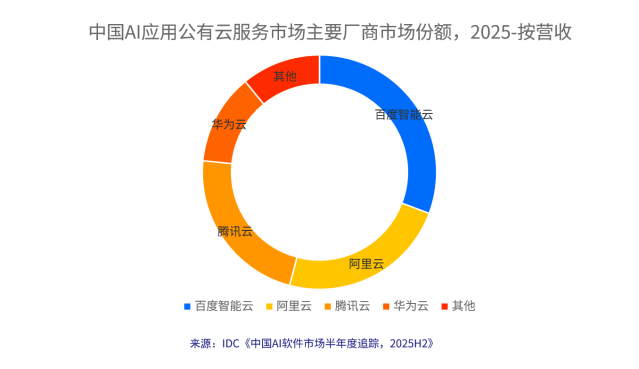
2025 年,中国 AI 应用公有云服务市场保持高速增长,市场规模突破 137 亿元人民币。在这一赛道上,头部云厂商凭借全栈 AI 能力和丰富应用场景占据领先地位。
百度智能云以 30.7% 的市场份额位居第一,依托包括智能客服、内容创作、知识管理等全面的企业级 AI 应用场景实现广泛落地。阿里云凭借智能语音、客服及视觉 AI 能力,在智能办公、营销创意等场景表现突出。腾讯云依托视觉 AI 能力、智能客服等在消费互联网、媒体、金融等场景持续发力。华为云则凭借盘古大模型在政务、金融、制造等行业的深度耕耘,稳居第四。
AI 应用市场的本质竞争,已从模型参数的“军备竞赛”转向场景价值的“落地之争”。 用户所需要的,并非孤立的模型 API 调用,而是一个能够真正解决业务问题、提升效率的完整应用。无论是智能客服、内容生成、数字人营销,还是企业知识库问答、代码辅助开发,云厂商需要将大模型能力封装为开箱即用的产品,方能打动最广泛的企业级客户。考虑到这一点,领先厂商均应将 AI 应用服务的投入重心,从底层模型能力向行业解决方案、数据接入、工作流编排等“最后一公里”能力快速倾斜。
应用背后的“算力暗流”:大模型训推市场持续扩张
AI 应用市场的繁荣并非凭空而来。每一次智能客服的响应、每一次营销文案的生成,背后都是大模型推理能力的消耗;而企业为打造差异化应用所进行的模型微调与训练,则构成了另一层刚需——大模型训推公有云服务市场。该市场虽然规模小于应用层,但其增长稳定性与客户粘性更高。
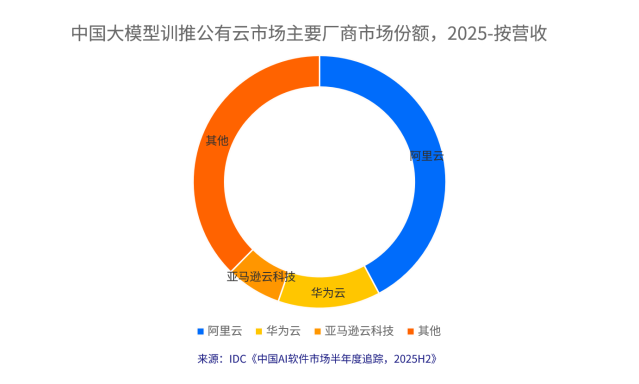
2025 年,大模型训推公有云服务市场规模达到 79.4 亿元人民币,呈现出与前文 AI 应用市场不同的竞争格局。
阿里云以 42.2% 的市场份额遥遥领先,凭借在 AI 算力领域的长期积累和完善的 MLOps 工具链,成为大模型训练和推理的首选平台。华为云(13.1%)依托昇腾 AI 芯片和全栈自主可控能力,在政企市场获得广泛认可。亚马逊云科技(7.1%)则凭借全球化的 GPU 资源和先进的模型训练框架,在出海企业和外资企业中保持优势。
大模型训推市场的快速增长,背后有三大驱动力
第一,生成式 AI 应用爆发驱动训推需求激增。 从文本生成到图像创作,从代码辅助到多模态理解,生成式 AI 应用的繁荣带来了对模型训练和推理的海量需求。企业不仅需要调用预训练模型进行推理,更需要基于自有数据对模型进行微调,以打造差异化的 AI 能力。
Yanxia Lu is a research director, focusing on big data and artificial intelligence (AI). Her responsibilities include big data information management platform, and big data analytics and applications. She is also involved in research on AI technology and enterprise…
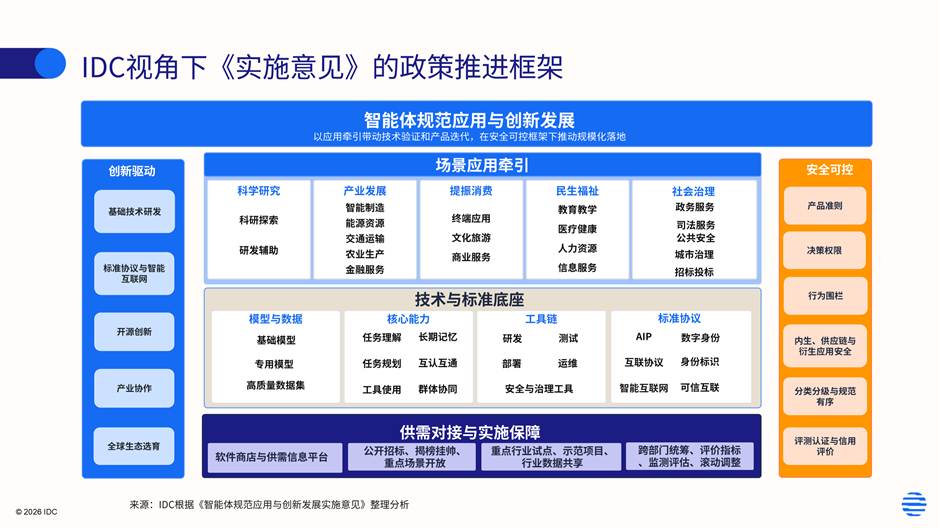
当前智能体在企业业务中的渗透率依然较低,仅有18%(IDC Syndicated Survey 2026: China AI Agents Market)。智能体没有在企业业务中真正规模化应用起来,核心在于缺少清晰的切入场景和可复用的落地路径。政策在这个角度提供了场景牵引,通过典型应用场景帮助智能体走向业务落地,并进一步形成规模化应用。
Zhenya Sun is a research manager for the IDC team focused on exploring the application of technology and industrial development of AI and AI agents. He is also responsible for providing clients with consulting services on technologies, products, and markets…
Joe Zhao is a senior research manager of Enterprise Research for IDC China. He focuses on research and analysis of the China security market. Joe has more than 12 years of domestic and international work experience in ICT. Prior to…
Yanxia Lu is a research director, focusing on big data and artificial intelligence (AI). Her responsibilities include big data information management platform, and big data analytics and applications. She is also involved in research on AI technology and enterprise…
The EMEA IT market continues to grow in 2026. But the real story is not growth alone. It is how that growth is evolving under pressure.
In our latest State of the Market webinar, IDC analysts Andrea Siviero, Stephen Minton, Ewa Zborowska and Lapo Fioretti explored how AI acceleration, geopolitical developments and rising resilience priorities are reshaping IT spending across the region.
Here are five key takeaways that define where the EMEA IT market is heading next.
1. IT spending in EMEA is growing, but becoming more selective
IT spending across EMEA remains on a growth path, supported by strong momentum in software and infrastructure. At the same time, the market is becoming more selective. Devices are expected to decline in 2026, while software, infrastructure and IT services continue to benefit from changing enterprise priorities and AI-related demand.
This reflects a broader shift in how organizations are allocating budgets. Growth is still there, but investment decisions are being made with more scrutiny. Geopolitical pressure, regulation and economic uncertainty are no longer background factors. They are directly shaping where technology spend goes and which initiatives get prioritized.
2. AI is accelerating and reshaping IT spending across EMEA
AI is now one of the clearest growth engines in the market. In EMEA, AI spending is expected to reach $319 billion in 2026, growing 19.2% year over year and expanding more than three times faster than total IT spending.
But the significance of AI is not only its growth rate. It is how deeply AI is starting to influence budget allocation, vendor strategies and enterprise priorities. Organizations are no longer asking whether AI matters. They are asking where it creates measurable value and how quickly it can be embedded into the business.
3. The shift from AI pilots to AI at scale is underway, although slow with AI Value blocked by Execution, not Interest
The AI conversation in EMEA is moving from experimentation to execution. Organizations are becoming less focused on launching new pilots and more focused on improving, scaling and operationalizing the AI initiatives they already have in place.
This is where the market becomes more complex. Nearly 48% of organizations are prioritizing investment in customized AI agents to automate business processes. But scaling AI requires more than enthusiasm or access to tools. It depends on infrastructure, data readiness, governance and skills. The bottleneck is no longer AI ambition. It is execution capability.
4. AI Focus Still High on Efficiency, with Rising Expectations for Innovation and Growth
For many organizations, the first wave of AI value is still rooted in efficiency. AI is being used to automate workflows, improve productivity and reduce operational friction.
But the opportunity is expanding. 93% of organizations now see AI as a source of new revenue, not just efficiency gains. That shift matters because it moves AI from a cost-saving discussion into a growth discussion. The next phase will be defined by organizations that can turn AI into new products, services, business models and customer value.
5. Resilience, governance and AI sovereignty are shaping IT strategy
Resilience is becoming a central filter for technology investment in EMEA. It is now the number two business priority for CEOs in the region, second only to growth.
That has major implications for AI. As organizations scale AI, they need stronger governance, clearer data control, better infrastructure resilience and trusted deployment models. AI sovereignty is also moving higher on the agenda, especially as organizations consider where AI systems are built, hosted, governed and operated.
The message from the webinar was clear: AI scale is not just a technology challenge. It is a trust, governance and resilience challenge.
What this means for technology providers in EMEA
The EMEA IT market is entering a more demanding phase. Growth opportunities remain strong, but they are increasingly tied to execution readiness.
For technology providers, this means helping customers move from AI experimentation to AI at scale. It means supporting data, infrastructure and governance readiness. And it means positioning AI not only as an innovation investment, but also as a resilience investment.
In 2026, competitive advantage will come from helping organizations turn ambition into operational impact.
Watch the webinar on demand
If you want to go beyond the headlines, the full webcast offers a deeper dive into the data, regional dynamics and real-world examples discussed by our analysts.
You will get a clearer view of where growth is actually materializing, how AI maturity is evolving across EMEA, and what is separating organizations that are scaling successfully from those that are not.
And if you would like to explore what these trends mean specifically for your business, our experts are always happy to continue the conversation. Simply reach out via the contact form.
Stephen Minton - Group Vice President, Data & Analytics - IDC
Stephen Minton is a group vice president with the IDC Data & Analytics group, focusing on ICT spending and macroeconomics. Mr. Minton is responsible for Worldwide ICT Spending programs, including the Worldwide Black Book, Worldwide 3rd Platform Spending Guides, and Worldwide Telecom Services Tracker.
Mr. Minton's research expertise includes global ICT and economic analysis, and he tracks market data across hardware, software, services, telecom and emerging technologies. He is the author of papers that focus on the economic impact of IT, and is a regular speaker on the subject of IT spending. In 2002 he addressed the United Nations in New York, speaking to UN ambassadors on the subject of the Information Society.
Mr. Minton previously worked with Digital Equipment Corporation (DEC), before joining IDC in 1998. Originally from Hartlepool in the North of England, he graduated from the University of Salford in 1995. He has also worked in the field of consumer market research with Millward Brown International.
Andrea Siviero - Senior Research Director, MacroTech, Digital Business, and Future of Work - IDC
Andrea Siviero leads IDC's European Digital Business and Future of Work Research group. The group provides market research insights to foster a purposeful and fair adoption of technologies supporting digital societies, businesses and workforce and empower tech providers in strategic decision making, planning and go-to-market activities. Siviero also co-leads the IDC Worldwide MacroTech Research program, focused on the intertwined connection between the Economical and Digital worlds - analyzing the impact key MacroEconomic factors have on the digital landscape and viceversa, how technologies are impacting economies around the world.
Ewa Zborowska - Research Director, AI, Europe - IDC
Ewa Zborowska is an experienced technology professional with 25 years of expertise in the European IT industry. Since 2003, she has been a member of the IDC team, based in Warsaw, researching IT services markets. In 2018, she joined the European team with a specific emphasis on cloud and AI. Ewa is currently the lead analyst for IDC’s European Artificial Intelligence Innovations and Strategies CIS.
Lapo Fioretti is a Senior Research analyst in IDC Digital Business Research Group, leading the European Emerging Technologies Strategies research. In his role, he advises ICT players on how European organizations leverage new technologies to create business value and achieve growth and analyzes the development and impact of emerging trends on the markets. Fioretti also co-leads the IDC Worldwide MacroTech Research program, focused on the intertwined connection between the Economical and Digital worlds - analyzing the impact key MacroEconomic factors have on the digital landscape and viceversa, how technologies are impacting economies around the world.
Lizzie Li is Associate Research Director of IDC China's Enterprise System and Software Research that focuses on research and analysis of the China Datacenter, Cloud Computing, and IT infrastructure markets. She also provides intelligence and consulting services in customized projects for…
IDC Environmental Policy
International Data Group is committed to protecting the environment, the health and safety of our employees, and the community in which we conduct our business. It is our policy to seek continual improvement throughout our business operations to lessen our impact on the local and global environment. We are committed to environmental excellence, pollution prevention and to purchasing products that reduce the use of natural resources.
We fulfill this mission by a commitment to:
Encouraging all partners to share in our mission
Understanding environmental issues and sharing information with our partners
Recognizing that fiscal responsibility is essential to our environmental future
Instilling environmental responsibility as a corporate value
Developing innovative and flexible solutions to bring about change
Using our platforms and position in the IT industry to promote sustainability
Minimize air travel to help reduce our impact on the environment
Minimize use of materials and energy consumption in our offices
Create a working environment that efficiently uses our office space
Develop and maintain a hybrid working model that benefits both our employees and business partners
Encourage employees to measure, minimize and collaborate on reducing energy consumption at home and in the office
Engaging employees and promoting active participation in environmental and sustainability initiatives
Leaving?
You are about to leave this section. Do you wish to continue?