Most of the hype related to GenAI in the industrial environment centers around applications and use cases. I call this output-driven.

Users and internal sponsors find it easy to understand this approach because they can see the benefits and ROI of the solutions. There is a tool, clear CAPEX and OPEX, and an obvious result.

The approach is transparent and straightforward: Do you need an industrial co-pilot? You got it. Do you need a knowledge management tool? Here it is.

And it does not require a redesign of processes. You can simply create a new process or add the AI-powered app to a current process (e.g., as a recommender for a service desk operator).

But what about improving the entire process using GenAI, ML, and automation? In such a case, the journey itself can be regarded as the goal.

This, of course, requires process redesign — and your organization has likely undergone such an exercise several times over the last 10 years.

However, this time around, there is a technological leap provided by GenAI, which enriches a powerful tandem of AI and automation.

Take, for example, the production planning process in an engineer-to-order environment. Workflows include complicated order management, production planning, material management, logistics, and information flowing across stakeholders from different departments as well as sales and even customers. Software handles the situation by passing information smoothly among participants and by leveraging the data warehouse and real-time data from OT systems.

Using lean approaches and digital technology convergence, such transitions have delivered successful initial results including first-time-right outcomes, absolute transparency, and customer satisfaction.

Nevertheless, the software was, typically, heavily customized to fit the company’s needs, process owners, and other software.

The next step involves redesigning processes to apply robotic process automation (RPA) and enable the automation of repetitive and rule-based tasks to make them more efficient and fault-proof.

AI can now come into play.

Important: Do not consider a process optimized and efficient until it is super-optimized and super-efficient. All the people involved in the process, the data inputs and outputs, and the value obtained by the process’s customers, must be considered.

If process stakeholders need decision-making support, consider deploying AI chatbots and GenAI assistants to enable quick access to information and data analysis.

Collaboration is the new holy grail of time to value. Think about deploying AI-based collaboration tools to enhance communication and coordination among different departments involved in the process.

AI can optimize the allocation of resources (materials, labor, machines) in the planning process to maximize efficiency and minimize costs. Planners can benefit from AI-powered simulations of various “what-if” scenarios to understand the impact of different variables on production and customer delivery dates.

The entire process can be virtualized in a digital twin or an industrial metaverse. These will simulate different production scenarios to help find the best strategies without disrupting actual operations.

In addition, a trend to monitor closely is the emerging LLM agent technology, which serves as the “glue” between various process components. Dr. Michael May, Head of Technology Field Data Analytics & AI at Siemens Technology, advises that selecting appropriate use cases is crucial. This is due to the early stage of the agent approach (or any method integrating LLMs across a workflow), making it challenging to trace errors within a complex chain.

The Bottom Line

I believe organizations are too focused on single use cases and are missing the broader goal of becoming more efficient and resilient. They need to build AI-enabled processes that are still people-centric at some point and resilient.

Sparse data, data quality, trust issues, and transferring best practices across factories are some of the key challenges that must be faced. The good news is that there are solutions.

Sparse data can be addressed using synthetic data and reinforcement learning. Another crucial point is making AI accessible to non-experts. This can be achieved by using pre-trained models.

Ultimately, success requires close collaboration between process owners, hands-on users providing feedback, process optimization teams (focused on lean, efficient processes), technology experts (sharing their knowledge), and systems integrators (bringing the process to life).

The day is approaching when AI will design processes, automate tasks, and train both ML models and people. We’re not there yet, but it’s on the horizon!

As we approach the end of the calendar year, sales teams are keenly focused on planning and optimization. A crucial element of this planning involves understanding the dynamics of sales leadership and how to harness technology to foster a competitive edge. Sales leaders must adapt by embracing innovative technologies like Artificial Intelligence (AI) to stay ahead. This blog explores how AI and generative AI (GenAI) are reshaping sales leadership and how forward-thinking leaders can harness its power to drive success.

1. AI-Driven Sales Forecasting: Enhancing Predictive Accuracy

One of the most impactful applications of AI in sales leadership is in the realm of sales forecasting. Traditional methods often rely on historical data and human intuition, leading to inaccuracies and missed opportunities. AI, however, excels at analyzing vast amounts of data in real time, identifying patterns that humans might overlook, and predicting future trends with a high degree of accuracy.

For example, AI-powered tools can track and analyze customer interactions, market conditions, and economic indicators to provide more reliable sales forecasts. These insights enable sales leaders to make informed decisions about resource allocation, target setting, and strategy adjustments, ultimately improving the overall effectiveness of their teams.

2. Optimizing Sales Processes with AI: Streamlining for Efficiency

Sales processes often involve repetitive tasks that can drain time and energy from sales teams. AI offers a solution by automating many of these routine activities, allowing sales professionals to focus on more strategic and high-value tasks. From lead scoring to pipeline management, AI tools can optimize various aspects of the sales process, making it more efficient and effective.

For instance, AI-driven CRM systems can automatically update records, manage communications, and prioritize leads based on their conversion likelihood. This not only saves time but also ensures that sales teams are focusing their efforts on the most promising opportunities. Additionally, AI can automate follow-up emails and scheduling, further streamlining the sales cycle and reducing the burden on sales staff.

3. Personalizing Customer Interactions: Enhancing Engagement

Personalization can make a significant difference in customer engagement and satisfaction in the B2B space, where relationships and trust are paramount. AI empowers sales leaders to deliver highly personalized experiences by analyzing customer data and predicting their needs and preferences.

AI-powered chatbots, for example, can engage with prospects in real time, providing tailored responses based on their browsing history and previous interactions. Similarly, AI-driven recommendation engines can suggest relevant products or services, helping sales teams to provide more targeted solutions to their clients. This level of personalization not only improves customer satisfaction but also increases the likelihood of closing deals.

4. Training and Developing Sales Teams: Leveraging AI for Growth

AI’s benefits extend beyond sales processes and customer interactions; it also plays a crucial role in training and developing sales teams. AI-driven tools can assess individual and team performance, identify skill gaps, and create personalized learning paths that address specific needs.

For instance, AI-powered sales coaching platforms can provide real-time feedback on sales calls, highlighting areas for improvement and offering suggestions for enhancing performance. This kind of targeted coaching helps sales professionals develop the skills they need to succeed in an increasingly complex sales environment.

5. Enhancing Customer Segmentation and Targeting

Effective sales leadership hinges on the ability to accurately segment and target customers. AI excels in this area by analyzing customer data and identifying the most promising leads. By leveraging tools like CRM systems integrated with AI, sales leaders can segment their customer base based on spending behavior, budget capacity, and specific needs. This allows for more personalized engagement strategies, which can lead to higher conversion rates and stronger customer relationships.

The insights gained from AI can also be used to build detailed buyer profiles, incorporating demographic, behavioral, firmographic, and technographic data. This enables sales teams to tailor their approaches and align their offerings with the unique needs and preferences of their target audience.

6. Optimizing Sales Strategies with AI Insights

AI’s ability to process and analyze data in real-time provides sales leaders with actionable insights that can be used to optimize sales strategies. For example, understanding tech spending patterns and trends—such as the prioritization of digital transformation, cybersecurity, cloud services, and data analytics—allows sales teams to align their product positioning and messaging with current market demands.

AI can also help sales leaders assess competitive standings by benchmarking against competitors. By analyzing competitors’ market positions, product features, pricing strategies, and customer feedback, AI provides a clear view of where your offerings stand in the market. This competitive intelligence is crucial for refining sales strategies and identifying areas for differentiation.

7. Driving Revenue Growth through AI-Driven Contract Management

Maximizing revenue growth often hinges on effective contract management. AI can play a vital role by analyzing existing contracts to identify opportunities for upselling, cross-selling, and ensuring customer retention. By interrogating contracts for value and renewal insights, AI helps sales teams engage with customers proactively, addressing their evolving needs and increasing the likelihood of contract renewals.

Sales leaders can use AI to track contract durations, renewal dates, and historical renewal rates, enabling timely and informed discussions with customers. This proactive approach not only strengthens customer relationships but also drives long-term revenue growth.

Challenges and Considerations: Navigating the AI Landscape

While the advantages of AI are clear, integrating AI into sales leadership is not without challenges. Sales leaders must consider data privacy issues, the need for continuous upskilling, and the importance of maintaining a human touch in customer interactions.

To navigate these challenges, it’s essential to establish clear data governance policies and invest in training programs that help sales teams understand and leverage AI tools effectively. Additionally, while AI can automate many tasks, it’s important to remember that personal relationships remain central to sales success. Balancing automation with human interaction is key to maintaining trust and rapport with clients.

Future Trends in AI for Sales Leadership: Staying Ahead of the Curve

Looking ahead, the role of AI in sales leadership is only set to grow. Future trends may include even more advanced AI-driven analytics, virtual sales assistants, and AI-enhanced customer journey mapping. Sales leaders who stay ahead of these trends will be well-positioned to capitalize on new opportunities and continue driving success in their organizations.

Conclusion: Embracing AI for Future Success

The future of sales leadership lies in the effective integration of AI. By leveraging AI for sales forecasting, process optimization, personalized customer interactions, and data-driven decision-making, sales leaders can transform their teams’ performance and drive sustained growth. As the AI landscape continues to evolve, those who embrace these tools and strategies will be best equipped to lead their organizations into the future with confidence and success.

Why Do Organizations Switch Their Service Providers?

Companies today use service providers across all facets of the business. From modernizing technology and streamlining operational processes to strategic consulting and IT outsourcing, services providers provide vast value, expertise, and increased efficiency to their customers, enabling them to spend more time and energy focused on their core functions. These relationships between service providers and their clients are forged over time, typically years or even decades, and many providers often promote the average length of time they retain clients as a performance indicator.

However, what happens when customers start questioning the relationship’s value?

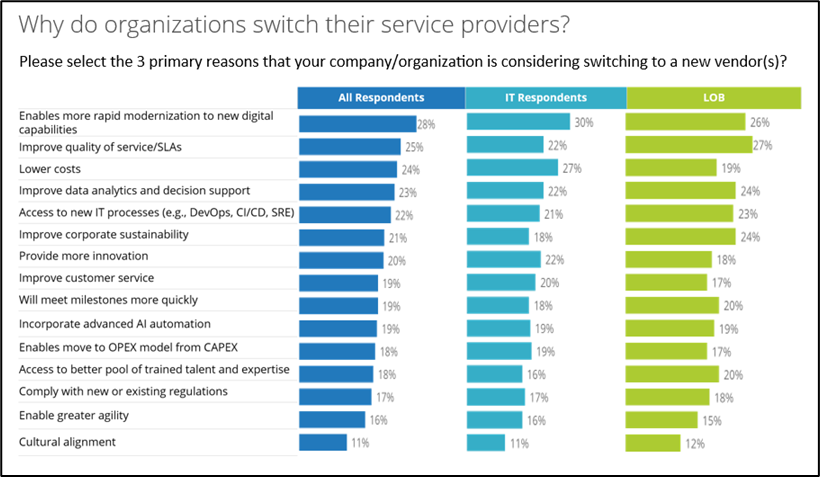
Many customers are often reluctant to switch providers because of the time it takes for a new provider to understand their business, and there are also both direct and indirect costs associated with switching providers. Sometimes, regardless of these drawbacks, customers still choose to move on. What developments usually result in customers reaching this decision? IDC recently examined this question utilizing its Services Path data, looking across all types of services, to understand the reasons why companies ultimately choose to make the switch.

IDC’s Services Path program contains comprehensive data and guidance on the mind and journey of services buyers, for professional services, outsourcing services, managed services, and engineering services. The data set is based on a global survey of approximately 2600 organizations, spanning all sizes and industries, and covers topics ranging from adoption, budgeting trends, and purchasing preferences, to pricing and contract options and detailed customer satisfaction ratings for hundreds of vendors.

Services Path data shows there are several factors that consistently stand out as the primary reasons why customers choose to switch service providers. The top 3 reasons, examined by role, are shared below (in rank order):

IT Respondents:

  1. Enable more rapid digital transformation (DX) and modernization
  2. Improve service quality and raise service levels
  3. Lower cost

Line of Business Respondents:

  1. Improve service quality and raise service levels
  2. Enable more rapid digital transformation (DX) and modernization
  3. Improve data analytics and decision support

Digital transformation, modernization, and improved SLAs/service levels are the top reasons driving companies to make replacements. However, there are some differences between IT and LOB personnel in terms of what’s driving their decisions to switch. For example, IT places a much greater emphasis on lowering costs than line of business employees. Conversely, LOB leaders view improving corporate sustainability as a significantly greater driver of replacements than IT folks.

To help reduce customer switching risk and further bolster the stickiness of long-term relationships, services firms should make note of these top switching drivers and ensure they clearly demonstrate their ability to accelerate their clients’ DX initiatives and deliver high-quality and cost-effective services. 

Customers today are looking for strategic partners that can be leveraged broadly across the business, who understand the nuances of their business, have deep expertise in their industry, and can provide fast proof of value. Firms that continually deliver on these needs will be well-positioned to maintain long-term clients and minimize the risk of customer attrition.

To learn more about IDC’s Services Path program, watch this short video.


Eric Newmark - Group Vice President/General Manager - IDC

Eric Newmark is Group Vice President & General Manager of IDC's SaaS, Enterprise Software, and Worldwide Services Division, which includes several teams of analysts covering Software-as-a-Service, 18 enterprise application markets, industry cloud, software monetization, business platforms and marketplaces, and professional services firms focused on outsourcing services, engineering services, and global services, markets, and trends. Eric also leads or co-leads three of IDC's cloud data products, including Industry CloudPath, SaaSPath, and Industry AI Path, which collectively provide global intelligence and benchmark information on the cloud, SaaS, and AI markets, across 30 industries. These programs provide strategic guidance and advisory services to both technology providers and industrial companies on technology adoption, maturity, deployment models, best practices, vendor ratings, purchasing preferences, and buyer journeys.

Artificial intelligence is consuming the attention of IT and business leaders. So much so that many organizations are racing to hire or promote individuals to the role of chief AI officer. Call it the rise of the CAIO. 

The rapid and widespread interest in this strategic job role has helped inspire the CAIO Summit, which will be held this October in Washington, D.C. This is the second such summit – the first was held earlier this spring. It is being hosted by the CDO Club, which also hosts the CDO Summit. 

I had the opportunity recently to speak with the man behind the CAIO Summit, David Mathison. We discussed the ideal background for an individual targeted for the CAIO role, the technology and business skills they should bring to the table, and the personal traits that add to a candidate’s likelihood of success. 

The Ideal Background for a CAIO Candidate 

A successful CAIO should possess a combination of technical expertise, strategic vision, leadership skills, ethical awareness, and the ability to collaborate effectively across disciplines and teams, Mathison says. This multidimensional skill set enables them to drive AI innovation and create value for the organization. 

A CEO typically expects the CAIO to be a strategic leader. They should be able to drive innovation, deliver results, uphold ethical standards, foster collaboration, and effectively communicate the value of AI to all stakeholders, Mathison explains. These expectations will vary depending on the organization’s industry, size, strategic priorities, and the specific objectives outlined for the CAIO role. 

Although artificial intelligence has been around for decades, interest in it has skyrocketed in the last few years — largely due to the popularity of generative AI tools such as ChatGPT. Since many organizations have little prior experience with AI from a strategic perspective, CEOs look to the CAIO to develop a long-term vision and road map for AI adoption and innovation. 

The CAIO should anticipate future AI trends, opportunities and challenges and ensure that AI strategies align with the organization’s long-term goals and objectives, Mathison explains. 

Top Experiences, Skills, and Traits Needed in the CAIO Role 

Mathison says the following are AI-related skills and qualifications that a CAIO should have in order to be successful: 

  • Deep understanding of AI technologies: A CAIO should have a strong technical background and a deep understanding of various AI technologies, including machine learning, natural language processing, retrieval-automated generation (RAG), and robotics. 
  • Data science and analytics proficiency: This is essential to effectively leverage data-driven insights and develop AI models. Statistical analysis, data visualization, and predictive modeling skills are required. 
  • Risk management and compliance knowledge: They should understand risk management principles and regulatory compliance requirements related to AI and ensure that AI initiatives adhere to legal and ethical standards. 
  • Strategic vision and leadership: A CAIO should possess strong strategic planning and leadership skills to develop and execute a comprehensive AI strategy aligned with the organization’s goals. This involves setting priorities, making informed decisions, and inspiring teams to achieve objectives. 
  • Knowledge of ethical and responsible AI practices: Given the ethical implications of AI, a CAIO should be well-versed in ethical considerations and trustworthy, responsible AI practices. This includes addressing issues related to fairness, reliability and safety, privacy and security, inclusiveness, transparency, and accountability. 
  • AI growth and learning mindset: Given the rapid pace of AI innovation, a CAIO should have a growth mindset and a commitment to continuous learning around what is a rapidly evolving technology. They should stay updated on the latest developments in AI technologies, trends, and best practices. 
  • AI project management skills: Proficiency in project management is important for a CAIO to effectively plan, execute, and monitor AI projects. This includes defining AI project scopes, allocating resources, managing timelines, and mitigating risks. 

There are some skills and traits that a CAIO should possess that are not unique to this leadership role. They include business acumen, ability to communicate and engage stakeholders, mastery of change management, and collaboration and interdisciplinary thinking. Assuming that a CAIO has all of the above skills and traits, attitude is equally important for success.   

Mathison recommends that a CAIO be patient and persistent. Driving AI adoption and transformational change takes time, patience, and persistence. CAIOs must stay focused on the long-term vision and objectives and celebrate incremental successes along the way, he says.  

Finally, a successful CAIO must gain a thorough understanding of the organization’s industry, business model, goals, and challenges. They should align AI initiatives with the organization’s strategic objectives and identify opportunities for AI to create value and drive innovation. 

David Weldon - Research Adjunct - IDC

David Weldon is an adjunct research advisor with IDC's IT Executive programs, focusing on IT business, digital transformation, data management and artificial intelligence. He has extensive experience as a research analyst and as a business and technology journalist. His special concentrations are in the areas of technology, business and finance, education, healthcare, and workforce management. David started his national-level journalism career at IDG's Computerworld, a sister publication to IDC. He began as a features editor working on the Management section, covering topics of interest to chief information officers and other IT executives. He then took over Careers coverage and handled most of the editorial research projects for the publication. Computerworld's Careers section won several journalism awards and was the leading source of insights and advice on careers in information technology.

The Asia/Pacific healthcare sector is at a pivotal moment, as the industry is transitioning from just ‘care anywhere’ to ‘AI everywhere in care management’ phase. This essential transition is supported and driven by the focus on robust clinical data sets and evolving connected care ecosystem. To efficiently manage the care delivery process, care providers are prioritizing enhancing clinical, operational and administrative workflow productivity.

As a result, GenAI has emerged as a transformative force, with a huge potential to revolutionize the future of healthcare workflow processes and care delivery system.

Dedicated Budget for Generative AI, Initial Investments Focused on PoCs

IDC’s recent survey shows that in Asia/Pacific over half of healthcare and life science organizations are planning to have a dedicated budget for GenAI. IDC data also shows that almost 40% of healthcare providers and nearly a third of life sciences firms in the region are currently focused on proofs of concept (POCs) of GenAI models as part of testing tools and solutions. This trend is mainly owed to the nascent stage of tech adoption and to the testing of the scalability and partnership ecosystem by healthcare organizations.

GenAI adoption is set to create a positive impact on clinician experience, patient engagement, and workflow efficiency management for healthcare provider organizations. In life sciences, the initial impact will be mostly on drug discovery and design, enhanced patient engagement, streamlined clinical trials, and patient safety. Data is at the core of AI, and this is driving healthcare organizations to increase their focus on EHRs and investments on cloud adoption to make their digital infrastructure and data platforms more robust and secure.

Evolving Partner Ecosystem

Most healthcare and life sciences organizations are of the opinion that GenAI models that leverage their own business data will give them a significant advantage over competitors. Those with mature and secure clinical data foundations, such as multi-cloud and hybrid cloud architectures are better positioned to take full advantage of GenAI at a faster pace. At the same time, the focus on data security has increased as the healthcare sector faces intense threats through cyberattacks. As a result, the GenAI ecosystem involves IT SPs, security and platform providers, and hyper-scalers in solution deployments.

Time to Align GenAI Use Cases for Healthcare Organizations

As the demand for GenAI intensifies, healthcare and life science organizations in the region are shifting their focus towards healthcare-specific GenAI use cases. To accommodate this demand, IDC recently released a study documenting GenAI use cases in the healthcare provider segment GenAI Use Case Taxonomy, 2024: The Healthcare Industry, and life sciences sector GenAI Use Case Taxonomy, 2024: The Life Sciences Industry, addressing business impact, metrics, and data modality for each use case.

Current GenAI case study deployments in the Asia/Pacific region predominantly address clinical documentation and summarization, content creation for clinician-to-patient communication, personalization of patients/consumer experiences, patient engagement, and drug discovery and design. These use cases are set to accelerate personalization, care experience, and workflow productivity.

Challenges on the Journey to GenAI Adoption

The journey to GenAI adoption is not without risks. Regulatory risks and higher infrastructure costs are the limiting factors for GenAI adoption among healthcare and life sciences organizations in the region. Organizations will carefully consider tech partnerships and align use cases to implement GenAI solutions effectively and safely. IDC data shows that healthcare CIOs expect a software provider to have robust data security, seamless and intuitive AI models to work with, and GenAI models that support a broad range of content, both structured and unstructured

Road Ahead

Moving ahead, creating a robust clinical data foundation, aligning GenAI use cases between organizational priorities with that of the tech providers’ offerings, and exploring flexible pricing options, along with trust and transparency in the solution engagement would ensure a smooth transition of GenAI use case deployments from PoCs into production.

GenAI adoption in healthcare and life sciences, though at its nascent stage, is set to have a significant impact on enhancing clinician efficiency, improving workflow productivity, and hyper-personalization of patient experience. Currently, there is increased priority towards POCs as part of GenAI model deployments but this is set to transition to full-fledged deployments supported by matured clinical data sets, regulatory support, enhanced skill sets, clinician buy-in, and alignment of GenAI use cases with organizational priorities.

For additional reference, please access IDC Health Insight’s report GenAI in Healthcare and Life Sciences: Current Trends and Future Potential in Asia/Pacific.

Learn what matters most to your customers with IDC’s AI Use Case Discovery Tool—find out more.

Manoj Vallikkat - Senior Research Manager - IDC

Manoj Vallikkat currently works as a senior research manager for Healthcare Insights in IDC Asia/Pacific. His research covers digital transformation (DX) across care delivery systems in the region, focusing on areas such as evolving healthtech ecosystem, patient-centric care, and predictive care management. He also covers the life sciences segment, with special interest in artificial intelligence (AI)-based drug discovery and remote clinical trial practices. Manoj has led key consulting engagements across the country markets in the Asia/Pacific region. He has also handled various GMS engagements for tech providers, which include tailored reports, round-tables, and speaking gigs.

Hyper-experimentation with Generative AI (GenAI) dominated the conversations of business and technology leaders in organizations of all sizes, across all industries, and in all countries for the past 18 months.

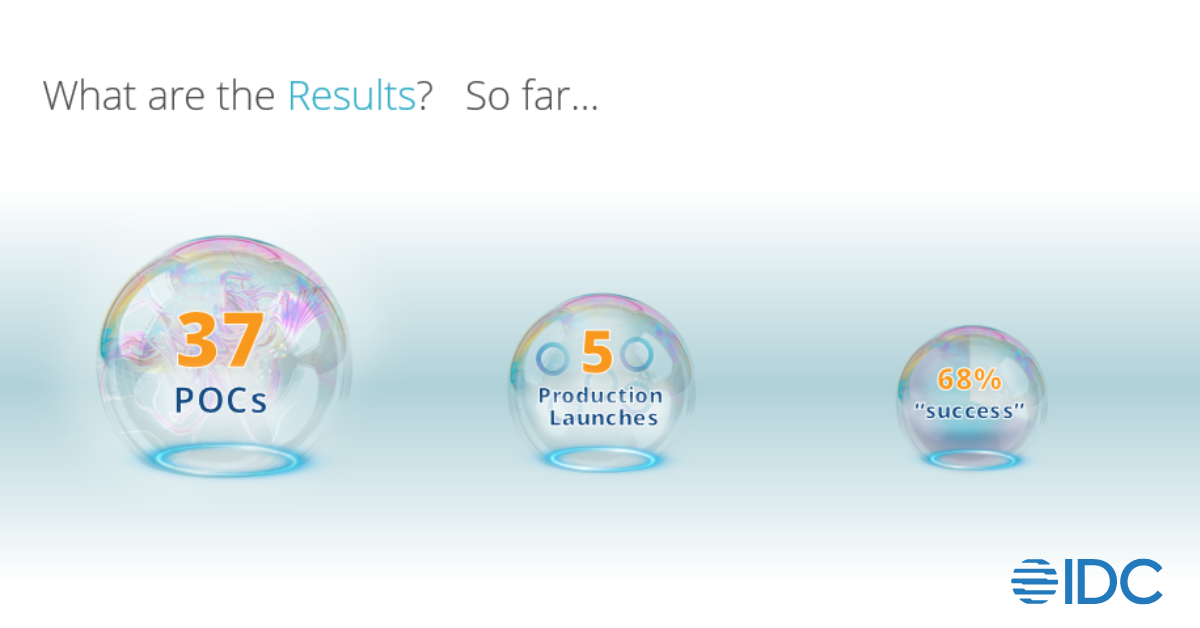
Checking in with CIOs and business leaders 18 months later, we can report that a typical enterprise identified hundreds of GenAI use cases. They launched dozens of Proofs of Concept (POCs), but they put less than six into production, so far. This GenAI scramble is not sustainable for enterprises, or for technology providers who care about converting POCs into sustainable, long-term business.

Is it time to write off GenAI as just another over-hyped tech story that generates lots of bubbles, but doesn’t have a lasting impact? Uh…no. Doing so would also be a big mistake.

The focus on GenAI experimentation obscures the reality that most organizations are already invested in AI across their business. We surveyed 889 IT leaders in May 2024, and 84% believed (42% strongly) that AI/GenAI is the next strategic corporate workload like ERP or ecommerce was before. AI is already embedded into how they engage with customers, how they monitor activities in their factories and warehouses, and how they automate tasks such as “procure to pay”.  They also know that securing employees’ devices and their critical systems depends upon aggressive use of AI by security product and services providers.

The casting of a wide net when it comes to GenAI experimentation increases your CIOs’ awareness of the extent of overall AI use, but also shows how fragmented and even duplicative that use is. Your business and IT leaders setting 2025 tech investment plans need to develop an enterprise wide-AI strategy, building on the “lessons learned” while doubling down on the demonstrated benefits of GenAI for boosting business outcomes.

2025 will be the year of the AI Pivot. How effectively you set priorities, make decisions, and address barriers will decide if you are ready to fuel business growth on an AI foundation or will still be racing to catch up a couple years from now.

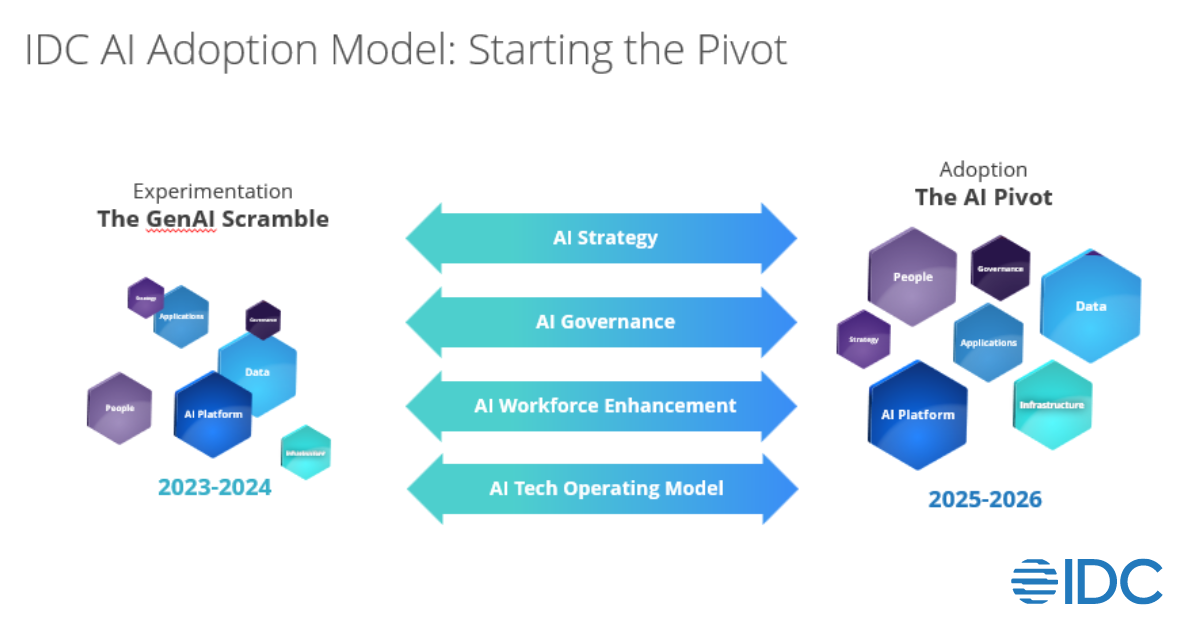
Where should you start? IDC’s AI Adoption Model

How severely were your GenAI experimentation efforts limited in the following areas?

Strategy: Depth of relationship between business and tech teams in PoC prioritization, development, and execution is a key success factor. Poor coordination between IT and lines of business (LOBs) is one of the most often cited factors contributing to low success rates. My colleague Ewa Zborowska has some good suggestions on how to reduce Pilotitis. The critical next step? Building a use case prioritization roadmap.

Governance: GenAI experimentation across functions and with ties to multiple data sets overwhelms narrow, siloed IT governance processes. Organizations with high success rates noted their ability to quickly integrate responsible AI into strong, comprehensive governance practices. Especially important, they have solid, cross-functional data-sharing governance practices.

People: Most early POCs focus on individual actions or basic process improvements, exposing significant if under-appreciated bottlenecks. What is most exposed, however? Disconnects between senior executives and employees on the consequences. IT teams are caught in the middle as promised productivity gains fall short due to lack of training or fear of consequences.

Apps: “Now (or Coming Soon) with GenAI” is a recurring theme for technology providers. The infusion of GenAI into business, IT Ops, data management, and developer apps affects decisions on which POCs to pursue and raises the stakes in “build versus buy” decisions for production launches. The biggest ask? “Please, help us show quantifiable value!”

AI Platforms: Companies are already using diverse AI platform components across a wide range of individual AI efforts. The GenAI scramble increases the use of disparate and nascent tools and technologies across AI and GenAI specific lifecycles strains resources. What’s missing? Reusability and scale.

Data: The GenAI scramble highlights the importance and exposes weakness when it comes to identifying, quality assuring, and integrating data sets for production launches. Access to high quality data contributes to high rates of success. Past decisions to treat data during app development as a byproduct or waste product, with no thought about the importance of metadata, however, means too much “dark data”.

Infrastructure: Despite the hype about lack of access to infrastructure (extremely expensive GPUs), most enterprises do not see this as a major issue. Currently, siloed infrastructure solutions and existing as-a-Service funding models support hyper-experimentation. Where they fall short is scaling for production. Excessive costs “at scale” break ROI calculations.

What’s Next?

Prioritizing goals and investments will vary depending upon how significantly you were affected in all 7 areas. The AI pivot is about reaching the end states you need to succeed in each.

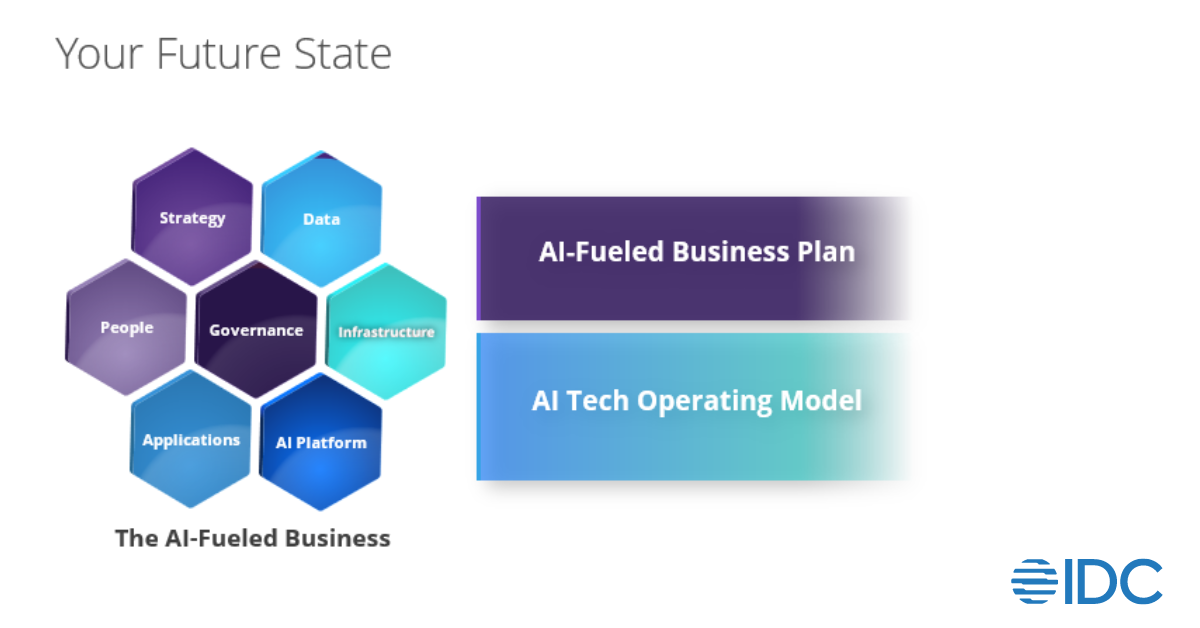
You are ready to accelerate business growth and competitive success with an AI-fueled business operating plan covering organization, culture, resources and operations. AI, not just GenAI, is fully integrated into your enterprise business strategy. It includes a targeted set of AI/GenAI super use cases that deliver maximum business impact across multiple processes and domains. You are also setting up a multi-stakeholder, unified AI governance model that aligns with your AI-fueled strategy. Most importantly, you are ensuring that effective use of AI assistants, advisors, and agents is at the core of AI-aware workforce planning and training.

Of course, setting up an AI-fueled business model is irrelevant if you aren’t shifting to an AI-ready technology operating model, ensuring that you can cost effectively and securely scale the use of AI capabilities anywhere. You are confident that you can track the costs and benefits associated with AI-infused processes & apps. You are moving towards adoption of a unified AI platform that improves data and model use as well as app dev/deployment.

You are addressing the “dark data”  with AI-Ready Data based on the adoption of a “managing data as a product” strategy, ensuring that quality, accessibility, and governance of data isn’t an afterthought. Finally, infrastructure is no longer siloed, and scaling costs are no longer an impossibly high barrier to innovation. Your tech operating model is built on infrastructure that is interoperable, fit-for-purpose, and intelligently optimizable based on workload-specific cost, placement, and scale requirements.

Executing an AI Pivot may appear daunting and will require commitment across the organization, but there is good news.

  • Hyper-experimentation was a necessary step. You have more clarity about GenAI uses in your organization, and you gained that clarity much faster than companies ever have before.
  • GenAI tools and techniques advanced significantly during hyper-experimentation, making it faster, cheaper and easier to roll out prioritized super uses cases.
  • You’ve gained more experience with the potential benefits and disruptions of GenAI in your own POCs and in the products/services you are using from tech suppliers.

IDC is ready to help you quickly assimilate all the “lessons learned” and help you find the products, services, and partners that can help you execute the AI pivot and accelerate to the next level.

Rick Villars - Group VP, Worldwide Research - IDC

Rick is IDC's chief analyst guiding research on the future of the IT Industry. He coordinates all IDC research related to the impact of Cloud and the shift to digital business models across infrastructure, platforms, software, and services. He helps enterprises develop effective strategies for using their diverse portfolio of cloud investments and applications. He supplies early guidance on implications of critical innovations such as the shift to cloud-based control platforms for deploying/managing infrastructure, data, and code delivery as well as the emergence of AI as a critical IT workload and part of all IT products/services.

If you’re a cloud provider that can offer high-caliber solutions for security and compliance, then cloud users in Europe need you. This is the most important factor organizations on the continent consider when selecting a cloud platform for migrating and modernizing applications, according to our research (IDC’s EMEA Cloud Survey 2023, August 2023, n = 1,610).

This is also borne out in IDC’s MarketScape: European Public Cloud IaaS 2024 Vendor Assessment report that has just been published. Following extensive research, this new study rates Europe’s top infrastructure-as-a-service (IaaS) providers, and those positioned in the uppers ranks were the ones that gained the highest points for a variety of criteria, including security.

What our report highlights is that when compared to other markets, Europe has very different requirements when it comes to choosing and using cloud solutions, with security and compliance emerging as the most coveted attributes that organizations seek when it comes to their cloud migrations.

When evaluating each IaaS provider as part of our MarketScape, the criteria that were given the greatest weight included their strategies and capabilities in security and compliance, as well as digital sovereignty. These are all interlinked, with the latter being the European cloud market’s most distinguishing characteristic.

Indeed, our research reveals reduced risks related to data security and regulations/digital sovereignty is one of the top business outcomes organizations in Europe expect from cloud use. Concerns over data privacy in Europe — especially in the EU — paved the way to the enactment of the General Data Protection Regulation (GDPR) in 2018, but as the continent’s regulatory and legislative landscape continues to develop and evolve, calls for greater data protection and robust cybersecurity have become louder. 

All of this is also allied to the EU’s efforts to address issues related to the market dominance of cloud players from outside the region and set more rigorous standards for online services with the goal of creating a more transparent and user-centric digital environment.

While we are seeing increased interest in digital sovereignty — which includes solutions for data sovereignty and sovereign cloud — in other parts of the world, Europe can be regarded as the frontline market here, and many cloud providers are finding they must include sovereign offerings in their portfolios to support customers in this region.

ESG is also high on the agenda for most cloud customers in Europe. While this is a concern for many organizations globally, when asked specifically about sustainability considerations, a combined 79% of the survey respondents in Europe (IDC’s EMEA Cloud Survey 2023) said they are either “moderately,” “very,” or “extremely” important when choosing a cloud solution.

As a result, an IaaS vendor’s ESG and sustainability plans and goals also played a significant role when determining their position in our MarketScape rankings. One observation that emerged here is that there is room for improvement for all providers when it comes to their ESG activities, especially in relation to transparency and their ability to prove the results of any initiatives.

What’s clear in all this is that not only do cloud providers need to cater to Europe’s specific needs, they also need to be able to support the needs of specific industry sectors. IaaS vendors were therefore also assessed on the availability of industry cloud services and the number of industries supported.

Despite cloud computing as we know it today having been around now for 18 years or so, many organizations in Europe are still at the beginning of their migration journeys. When asked to describe their current cloud maturity levels, only 10% of the organizations we polled in Europe (IDC’s EMEA Cloud Survey 2023) selected “optimized” as their response, meaning they have broadly implemented a substantial cloud team that is proactively managed and resourced well. Most users said they are “opportunistic” when it comes to cloud, meaning they are driven by business needs when requested by internal stakeholders, and that their employees have no significant training or certifications.

Of course, these maturity levels vary according to industry sector. For instance, those in the life sciences and telecommunications, media, and entertainment sectors chose “ad hoc” as their top response (i.e., their cloud usage is focused primarily on pilot projects and validation activities driven by the needs of individual projects), while those in the education sector selected “managed” (i.e., cloud is offered across the business and supported by proactive business leadership).

To add to all this, organizations will also be encountering challenges unique to their industry’s needs. These may include regulatory requirements, cost concerns, limited budgets, and/or a lack of skills and know-how around implementing cloud specific to their business activities.

To add to all this, organizations will also have challenges unique to their industry’s needs. Such challenges may include a lack of skills and know-how around implementing cloud specific to their business activities, regulatory requirements, cost concerns, and limited budgets, etc. 

The cloud providers that will ultimately succeed in Europe will therefore be the ones who not only score the highest in all the capabilities highlighted above but can also demonstrate the expertise needed to support the disparate needs of these industry users, as well as the disparate needs of Europe and each market within it. One size will not fit all.

To find out more, check out our latest report here: IDC MarketScape: European Public Cloud IaaS 2024 Vendor Assessment

Rahiel Nasir - Research Director, European Cloud Practice, Lead Analyst, Digital Sovereignty - IDC

Rahiel Nasir is responsible for leading and contributing to IDC's European cloud and cloud data management research programs, as well as supporting associated consulting projects. In addition, he leads IDC's worldwide Digital Sovereignty research program. Nasir has been watching technology markets and writing about them throughout his professional life.

In the rapidly evolving landscape of technology, Artificial Intelligence has emerged as a beacon of innovation, with companies looking to increase operational efficiency, cost savings and improve employee productivity through AI initiatives.

AI and Generative AI Spending Across the Globe

IDC has recently unveiled the latest release of its Worldwide AI and Generative AI Spending Guide, 2024 V2. Presently, the global Artificial Intelligence market stands at nearly $235 billion, with projections indicating a rise to over $631 billion by 2028.

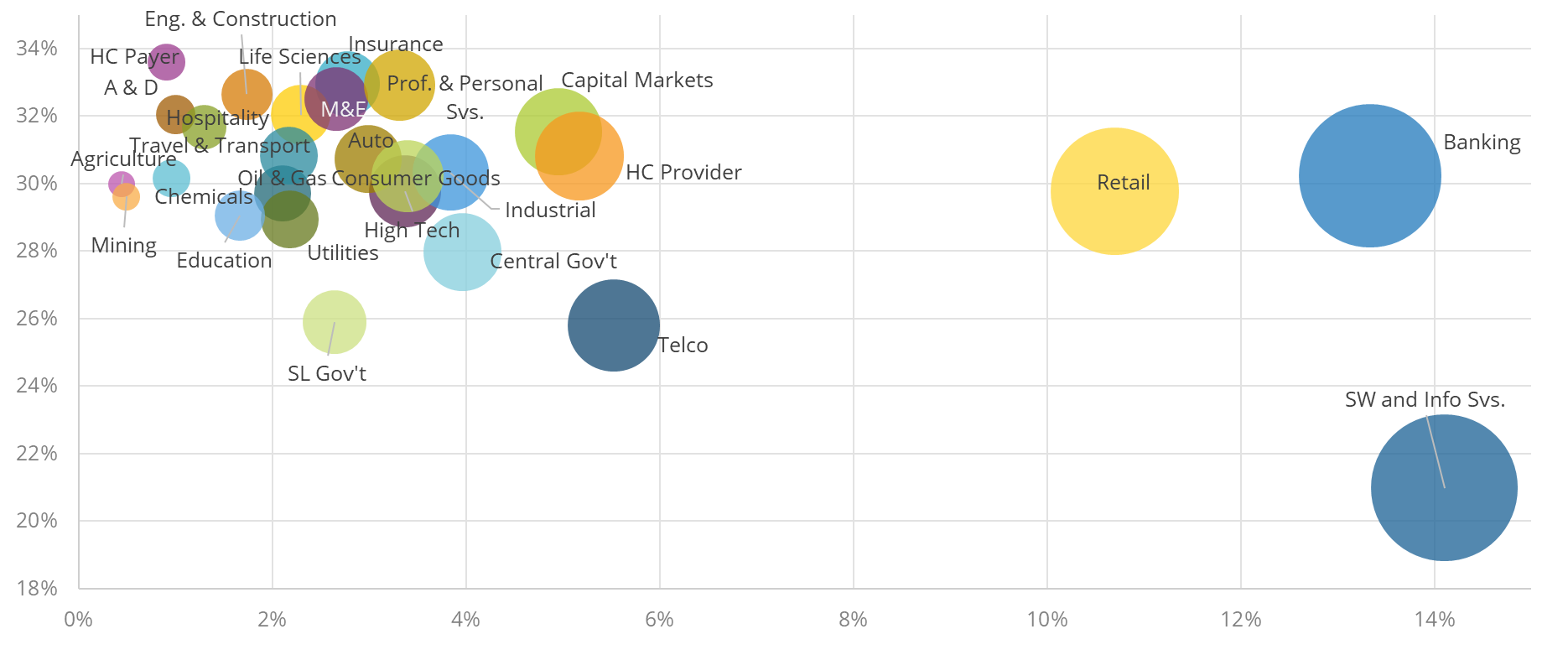
The three leading industries in terms of Artificial Intelligence spending are Software and Information Services, Banking, and Retail. Combined, these sectors are projected to allocate approximately $89.6 billion towards AI in 2024, representing 38% of the global AI market. With an impressive five-year Compound Annual Growth Rate (CAGR) of 27%, their collective investment is anticipated to surge to nearly $222 billion by 2028. Notably, Generative AI accounts for more than 19% of the total investment across these three industries, highlighting its growing significance in the AI landscape.

Worldwide AI and Generative AI Spending by Industry

Source: IDC’s Worldwide AI and Generative AI Spending Guide, August (V2 2024)

Industries Key Highlights in Artificial Intelligence

The Software and Information Services industry is known for its dynamic nature and rapid growth, is now at the forefront of integrating Artificial Intelligence to revolutionize how services are delivered and consumed. With a spending of $33 billion in 2024, companies are using AI to make the software development lifecycle more efficient and error-resistant through AI lifecycle software and predictive models. Enhancing information services by personalizing content delivery based on user data, thus improving user engagement. Artificial Intelligence is also driving innovation by creating new products and tools for data analysis and market trend prediction, helping businesses stay competitive. Additionally, AI is augmenting and automating operational processes, increasing efficiency, and reducing costs by allowing functions such as human resources to focus on strategic tasks. This comprehensive integration of AI is not only streamlining operations but also fostering the development of high-quality, adaptive software and services.

The Banking industry, a market with approximately $31.3 billion in investments in AI in 2024, is using the technology to enable banks to offer personalized customer experiences through machine learning and data analytics, allowing banks to tailor services to individual preferences. AI-powered chatbots and virtual assistants provide round-the-clock assistance for both basic and complex tasks, improving customer service and allowing human representatives to focus on intricate issues. Robotic Process Automation (RPA) streamlines back-office operations, reducing costs and errors. AI algorithms enhance fraud detection and risk management by analyzing transaction patterns and customer behavior for real-time action, thus protecting assets and building trust. In investment banking, AI-driven algorithmic trading analyzes market data for quick, strategic trading decisions, while AI also improves risk assessment models by predicting market shifts, aiding in informed investment decisions and risk management.

Spending in AI for the retail industry is reaching around $25 billion in 2024. Artificial Intelligence is revolutionizing the retail industry by creating personalized shopping experiences through machine learning and data analytics, enabling retailers to understand and cater to individual customer preferences. This leads to enhanced customer engagement and loyalty with customized product recommendations and targeted marketing. AI also addresses inventory management challenges by predicting demand patterns and optimizing stock levels, reducing overstock and stockouts. AI-powered chatbots and virtual assistants improve customer service by handling inquiries efficiently, enhancing customer satisfaction. Additionally, in physical stores, Artificial Intelligence enhances the shopping experience with technologies like smart mirrors for interactive advertisements, promotion and product information and AI-driven systems for improved store security and layout optimization.

Regional Outlook in Artificial Intelligence

In both the Americas and EMEA regions, the banking industry emerges as the top spender in Artificial Intelligence, with market sizes estimated at approximately $19 billion and $8 billion for 2024, respectively. These markets are experiencing robust growth, with five-year Compound Annual Growth Rates (CAGRs) of 30% and 32%. Conversely, in the Asia-Pacific and Japan (APJ) region, the Software and Information Services Industry takes the lead in AI investments, boasting a nearly $11 billion market size, characterized by early and rapid adoption of certain AI technologies. A common trend across all three regions is the relatively low AI spending in the agriculture and fishing industry, marking it as the industry with the least investment in AI technologies.

Conclusion

The integration of Artificial Intelligence across various industries is not just a trend but a transformative shift that is reshaping the landscape of business, technology, and customer interaction. From retail to banking, software and information services to healthcare, AI is enhancing efficiency, personalizing experiences, and opening new avenues for innovation and growth. It’s clear that AI’s potential to drive operational excellence, understand and predict consumer behavior, and innovate product development is unparalleled. As industries continue to harness the power of AI, IDC continues to follow this journey closely and offers the latest insights in about AI and Generative AI spending across the globe.

Find out what matters most to your customers with IDC’s AI Use Case Discovery Tool.


Karen Massey - Research Director - IDC

Karen Massey is a research director within IDC's Data & Analytics Organization where she manages and contributes to several programs, consulting engagements and custom research, including the Worldwide AI and Generative AI Spending Guide, Worldwide Big Data and Analytics Spending Guide, and Worldwide Industry Insights Spending Guides (Financial, Government, Health, Manufacturing, and Retail). In this role, she analyzes technology trends across industry, region, use case, company size and line of business to quantify and forecast spending and trends for AI and BDA technologies. Ms. Massey also engages in custom projects and research requests supporting vendor market strategies and opportunities, and end user planning and budget cycles. Ms. Massey brings more than 20 years of research, consulting and analysis experience to IDC, previously with IDC Financial Insights leading research and consulting on transformational technologies and services impacting financial institutions including digital transformation, cloud, and innovation accelerators.

Artificial intelligence (AI) has been around for some time, but the recent surge in popularity from Generative AI has made consumers and businesses excited and wary at the same time. While it is natural to be cautious with new technologies at first, the more businesses are willing to explore and evaluate the technology, the faster they will enjoy its benefits and be prepared for the ever- changing environment that surrounds them. Global investment in AI technologies is experiencing a robust upward trend, with projections indicating sustained growth in the coming years. This dynamic growth is driven by the pursuit of more efficient processes, tailored services, and innovative solutions.

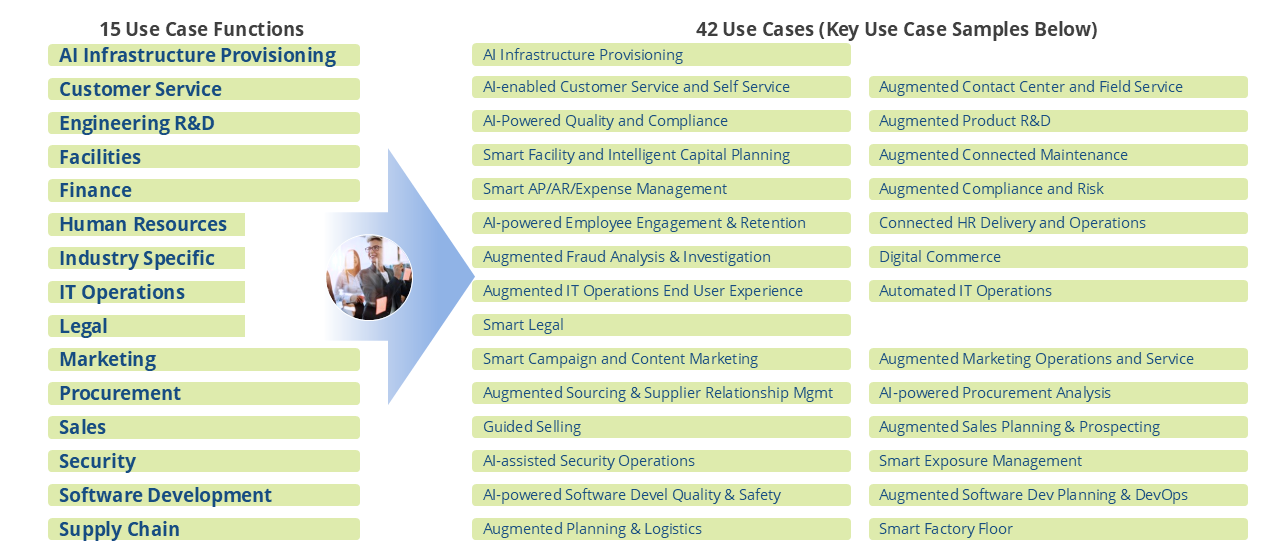
The 2024 V2 release of the Worldwide AI and Generative AI Spending Guide introduces significant updates, including broader technology coverage, a unified dataset perspective of Generative AI alongside the rest of AI, and a refresh of AI use case categorizations.

This comprehensive analysis has identified over 250 functional use cases, meticulously examined and defined by a diverse team of IDC analysts across various research domains. These use cases are organized into 13 functional areas, with the addition of industry-specific use cases to offer an extensive overview of the AI spending landscape. Consequently, this release of the Worldwide AI and Generative AI Spending Guide encompasses a total of 42 modeled use cases, spanning both functional and industry-specific AI applications.

IDC’s WW AI and GenAI Spending Guide Use Cases

Source: IDC’s Worldwide AI and Generative AI Spending Guide, August (v2 2024)

Use Cases Highlights

The AI Infrastructure Provisioning use case, which encompasses the spending with the IT infrastructure and resources for AI systems from infrastructure service providers, underscoring its pivotal role in the Artificial Intelligence ecosystem. It represents the largest AI investment area with expenditure reaching $30.3 billion for the year 2024. Projected to grow to $47 billion by 2028, this use case accounts for approximately 30% of the total global spending in Artificial Intelligence. It is heavily used in particular in the Software and Information Services industry.

The use case Augmented Fraud Analysis and Investigation has emerged as a significant industry-specific use case, drawing over $17 billion in investments in 2024 alone, and showcasing a remarkable five-year Compound Annual Growth Rate (CAGR) of 31%. This application is widely adopted across various sectors, notably within the financial industry, which extensively utilizes its capabilities. It is designed to detect illegal or illicit financial activities characterized by intentional deception and/or misrepresentation within different organizational areas, such as operational and financial.

Leveraging AI, these systems employ rule-based learning to pinpoint transactions indicative of fraudulent activities or an increased fraud risk. The systems autonomously learn to identify a wide array of fraud schemes perpetrated by both employees and customers.

Another popular one is the AI-enabled Customer Service and Self Service use case, commanding an impressive $16.7 billion in spending in 2024, represents a universally adopted solution across industries globally. This innovative approach streamlines customer query resolution by autonomously generating knowledge from received queries, eliminating the necessity for live agent involvement. It boasts the capability to curate pertinent articles, recommend new ones based on responses, and engage customers across multiple languages. Furthermore, it enables the delivery of highly personalized products or bundles, precisely timed and optimally priced across various channels, among other advanced functionalities.

The Augmented Threat Intelligence and Prevention use case, a $13.3 billion market in 2024, identifies the banking sector as its primary adopter across various industries. This application employs sophisticated systems that analyze intelligence reports, distill essential information, organize data into a standardized format, and integrate this information into the workflow. By correlating disparate data points, it effectively identifies threats to databases, systems, websites, and organizations, enhancing security measures and safeguarding assets.

Regional Outlook

In both the Americas and the Asia Pacific and Japan (APJ) regions, the AI Infrastructure Provisioning and AI-enabled Customer Service and Self Service use cases stand out as the most prominent. Combined, these two use cases account for 20% ($28 billion) of the total AI spending in the Americas and 28% ($12.8 billion) in the Asia Pacific and Japan region for the year 2024, highlighting their significant contribution to the overall investment in Artificial Intelligence within these regions.

While for the EMEA region, the Augmented Fraud Analysis and Investigation use case emerges as the frontrunner, closely followed by the Augmented Threat Intelligence and Prevention use case. Collectively, these two use cases constitute 17% of the region’s AI spending in 2024, amounting to $8.6 billion, showcasing their prominence in EMEA’s Artificial Intelligence investment landscape.

Conclusion

The integration of Artificial Intelligence into business operations has become a tangible reality for numerous organizations. Understandably, apprehensions about the unknown—such as the potential return on investment (ROI) of such technology, the optimal timing, and the most strategic regions for investment—can initially seem daunting. However, the pathway to making informed decisions, such as concerning the adoption of new technologies, is significantly smoothed by acquiring deeper insights. At IDC, we are committed to continuously enhancing our data and insights to empower businesses at every stage of their journey, ensuring decisions are made with confidence, professionalism, and a forward-looking perspective.

Learn more about IDC’s AI and GenAI Spending Guide by downloading this product overview.


Karen Massey - Research Director - IDC

Karen Massey is a research director within IDC's Data & Analytics Organization where she manages and contributes to several programs, consulting engagements and custom research, including the Worldwide AI and Generative AI Spending Guide, Worldwide Big Data and Analytics Spending Guide, and Worldwide Industry Insights Spending Guides (Financial, Government, Health, Manufacturing, and Retail). In this role, she analyzes technology trends across industry, region, use case, company size and line of business to quantify and forecast spending and trends for AI and BDA technologies. Ms. Massey also engages in custom projects and research requests supporting vendor market strategies and opportunities, and end user planning and budget cycles. Ms. Massey brings more than 20 years of research, consulting and analysis experience to IDC, previously with IDC Financial Insights leading research and consulting on transformational technologies and services impacting financial institutions including digital transformation, cloud, and innovation accelerators.

Customer buying behavior is changing. Sales cycles are lengthening, and budgets are tight. Now, more than ever, you need to quickly and effectively generate leads to meet your business goals.

Events are one of the shortest and most effective lead generation paths. Here are five reasons events partnerships should be part of your lead generation strategy.

  1. Events Raise Your Profile

Your brand is the single most important investment you can make in your business.

  • Steve Forbes, editor-in-chief, Forbes

When your target audience is looking to purchase tech tools, you need to ensure your business is front of mind. Customers now source their own information before approaching a company to make purchasing decisions. Ensuring your business is part of the conversation around the markets you serve is crucial to making an ICT buyers shortlist.

Events are a good way to introduce and/or position your business to new and existing clients. An event is an opportunity to engage with key decision makers and influencers and demonstrate your expertise in the context of the market. Being part of an industry event gives you a chance to shine as a thought leader and display your authority to your target audience.

  1. Thought Leadership Influences Buying

It’s not enough to just put out information on your products and services. Tech buyers have rising expectations about the quality of the information they receive. In IDC’s 2023 B2B Tech Survey, vendors ranked thought leadership as one of the top 3 buying influencers. Foundry’s 2023 Customer Engagement Survey found that 71% of IT decision makers may get a negative impression if a vendor does not supply valuable educational content.

Thought leadership is about demonstrating expertise in your market. You should educate prospective buyers not just on the benefits of your products and services but also about the market. This provides value to buyers and increases your authority in your markets.

Industry events enable you to be front and center with your target buyers. An event grants you space to demonstrate your thought leadership to an engaged audience. It allows you to follow up with audience members in person, giving them a chance to ask you questions.

Explore the key points to consider in the IDC eBook,

Empowering Lead Generation: The Quickest and Most Effective Path to Building a Strong Pipeline

  1. Get in Front of Key IT Decision Makers

IDC’s B2B Tech Buyer Survey revealed that B2B tech buyers expect to buy more through ecommerce and deal less with salespeople over the next three years.

With fewer face-to-face engagements occurring, you need to take advantage of any opportunity to get directly in front of decision makers and influencers. Such exposure allows you to personally engage key personnel on the benefits your business can provide during a digital journey. This omni-channel approach gives you a chance to differentiate yourself from your competitors and build relationships.

  1. Obtain Customer Insights

People attend events to network with peers and gain insights into the markets in which they operate. They want to understand the trends and drivers that are impacting them. They want to benchmark themselves against the market and competitors.

Directly engaging with decision makers at events offers you a window into their thinking and a view of the factors influencing their buying decisions. These insights and knowledge will help you further define the needs and goals of your target audience and help you position your business in alignment with their priorities.

  1. Measurable ROI

ROI is a key metric for all your marketing and engagement strategies. It is often said that B2B marketing does not push for the immediate sell but is aimed at positioning your business at the top of mind for when the buyer is ready to purchase. As such, ROI can be a tricky topic for marketers.

Getting budget for activities that do not directly link to ROI can be a struggle. Event partnerships give you the ability to demonstrate measurable return. They enable you to link events to opportunities obtained through networking and meetings with event attendees.

More Important Than Ever: Events Partnerships

To summarize: Events offer you space to demonstrate your thought leadership directly to key decision makers. They provide you opportunities to network, learn market information, and raise your brand awareness by talking directly to customers and prospects. Such contacts can give you insight into customer needs and goals, enabling you to better align your business. And events allow you to show ROI through opportunities gained through these activities.

Explore how IDC | Foundry events can help you get in front of key IT decision makers and build a strong, effective lead generation pipeline that converts. Download the 2025 events portfolio and contact us today.