2026 年 3 月,“算电协同” 首次被写入《政府工作报告》,标志着算力与电力系统的深度融合正式上升至国家战略层面。当前全球 AI 产业竞争正从技术赛点转向成本赛点,这一战略落地不仅能化解算力快速增长与能源供给之间的结构性矛盾,更可依托 AI Token 跨境服务输出带动电力资源数字化出口,推动我国算力竞争迈入电力系统调度与协调能力比拼的全新阶段,为数字经济出口打造新增长极。

战略落地:政策沉淀与能源转型的必然结果

算电协同升级为国家战略,是长期政策铺垫与内需驱动的必然结果。早在 2023 年 12 月,“算电协同” 概念首次出现在《关于深入实施 “东数西算” 工程加快构建全国一体化算力网的实施意见》中;2024 年,国家发改委、能源局等部门在《加快构建新型电力系统行动方案(2024—2027 年)》中,为算电协同配套项目制定了具体实施纲领,其推进节奏与我国新型电力系统建设、能源转型的时间线高度契合。

从能源供给端来看,2025 年底我国风电光伏装机占比达 47.3%,首次超过煤电;非化石能源发电量占比升至 42.9%,风光新增发电量占全社会新增用电量的 97.1%,新能源已成为用电增量的核心供给主体。但现阶段能源与算力布局仍存在明显矛盾:一方面存在结构性、时段性供电紧张的时间错配问题,另一方面是东部算力需求旺盛但绿电资源稀缺,西部绿电富集但算力需求不足的空间错配问题。算电协同不仅是解决时空错配的抓手,更承担着推动区域协调发展、保障国家算力安全、完善新型电力系统、落地 “双碳” 目标的多重使命,其核心是将我国电力系统的产业优势转化为数字经济的竞争优势。

全球竞争:算力竞争的终局是电力系统综合实力的较量

全球 AI 产业规模化落地,推动算力需求呈指数级增长,算力消耗与电力供给的强绑定成为行业发展的核心特征。IDC 数据显示,2023-2028 年全球智能算力五年复合增长率达 46.2%,2025 年我国智算规模达 1037.3EFLOPS,同比增长 43%,这背后是 AI 大模型训练与推理规模化落地带来的算力需求爆发。算力需求的快速攀升直接推高电力消耗,2025 年我国 AI 数据中心 IT 能耗预计达 77.7 太瓦时,2027 年将增至 146.2 太瓦时,五年实现 6 倍增长,电力供给端的压力持续加大。

全球 AI 产业竞争已出现阶段变化,上半场竞争聚焦芯片等核心技术突破,下半场则转向电力系统综合实力的较量,成本竞争趋势显现:低成本、稳定且绿色的电力供给是核心竞争力。

模式创新:AI Token 开创电力出口新模式

算电协同将继续推动我国电力出口模式转型。通过 “电力转化为算力、算力生成 Token”,实现电力资源的数字化跨境服务输出。与 2000 年后我国电子家电、智能手机、新能源汽车等实体商品出口不同,AI Token 属于数字服务贸易范畴,依托 API 电子传输实现跨境交付,且受 WTO 电子传输关税豁免规则保护,形成了数字经济领域的 “免税高速公路”,降低了跨境服务输出的成本与壁垒。

当前全球 AI Token 产业竞争呈现明显的层级特征,表层是 AI 模型技术的比拼,中层是算力服务能力的竞争,而底层则是电力体系综合实力的较量。在全球 AI Token 竞争中中国拥有四大核心优势:

1. 电力规模优势:2025 年全国用电量突破 10 万亿千瓦时,电力供给能力稳居全球前列;

2. 成本优势:中西部地区拥有丰富的低成本绿电资源;

3. 布局优势:“东数西算” 与 “算电协同” 双战略加持下,我国算力布局与能源布局的协同性提升;

4. 技术优势:我国 AI 模型性价比高、开源生态强大,为算力服务与 AI Token 产业提供有力支撑。

未来方向:电力和算力的双螺旋演进

未来,算电协同发展将聚焦三大核心方向——推动实现电力服务算力、算力反哺电力的双向赋能、提升能源与算力资源的配置效率。

1. 持续推进 “算力跟着电走”,推动算力设施向绿电资源集中区域集聚,最大化利用低成本绿电;2. 推动算力错峰用电落地,将非实时性算力任务合理安排在电力低谷时段;

3. 推动算力成为电网可调节资源,助力电网实现削峰填谷,提升电网运行的稳定性。

产业机遇:算电协同背景下,IT 供应商迎市场新空间

算电协同战略落地为 IT 技术供应商打开了新市场空间,IDC认为有四个机会窗口:

1. 算力电力协同调度系统开发需求爆发,全国一体化算力监测调度、源网荷储一体化管控等场景,亟需能实现算力负荷与电力供应动态匹配的智能调度平台;

2. 绿色算力基础设施技术升级需求凸显,液冷温控、高密度供电、低 PUE 数据中心改造等技术成为算力设施建设标配,绿电直连配套的数字化适配技术也迎来蓝海市场;

3. 跨域融合技术服务空间广阔,算力枢纽与新能源基地协同布局背景下,数字孪生、AI 能效优化、跨境算力服务 API 搭建等技术服务需求快速增长;

4. 中西部算力基建配套市场持续扩容,“算力跟着电走” 的布局思路下,中西部新能源富集区的算力集群建设,将带来服务器部署、算力网络搭建、边缘计算节点建设等大量项目机会。

IDC 认为,未来全球算力竞争不再局限于规模比拼,而是转向算力、电网、储能、调度的系统能力综合较量。算电协同作为我国新型基建的重要组成部分,其深度推进不仅能推动新能源高效消纳、降低数据中心运营成本、提升我国 AI 产业全球竞争力,更能优化电网资源配置、稳定居民用电成本、推动绿色 AI 服务普惠化。而以 AI Token 为纽带的电力数字化出口,也将成为我国数字经济出口的全新增长极。对于 IT 技术供应商而言,当前正处于算电协同领域的市场窗口期,企业需紧密关注国家及地方政策导向,积极融入行业生态,与电力运营商、发电集团、电力设备商、综合能源服务商等主体深化合作,才能把握产业发展机遇。

IDC相关研究报告:《IDC Perspective 电力算力协同发展趋势预测与市场研判,2025》(Doc#CHC52926825)

算电协同正在成为数字基础设施与能源体系深度融合的重要方向,也将重塑全球算力产业的竞争格局。围绕这一趋势,IDC已在算力基础设施、数据中心能源管理、电力数字化以及绿色算力发展等领域持续开展研究。未来,IDC将持续发布相关研究成果与产业洞察,深入解读算电协同的发展趋势与市场机遇,欢迎持续关注IDC在数字能源与算力产业领域的最新研究与观点。
如需进一步了解与研究相关内容或咨询 IDC其他相关研究,请点击此处与我们联系。
OpenClaw的应用迈向规模化部署阶段,安全不再是可选附加,而是支撑其全域落地与长效运行的先决条件。

OpenClaw龙虾爆火全球,区别于以往的AI助手、聊天机器人或智能体,OpenClaw具备长期记忆能力,在本地运行,可以主动通过用户偏好的现有消息应用向用户发送消息并在后台持续运行,受到了全球用户的广泛关注并引发安装潮。对于企业来说,OpenClaw的潜力更大。理论上,OpenClaw可以查看用户的日历、阅读会议记录,并持续关注正在进行的项目。与传统需要用户主动提问或提示的方式不同,OpenClaw会主动通过消息应用如Microsoft Teams、微信、飞书、钉钉等联系用户,它还可以执行诸如浏览网页、撰写和发送邮件、编写代码、创建新agent以实现目标等操作。用户可以通过包括手机和笔记本电脑在内的多种设备与其交互。这类持续在后台运行、能够检测趋势、异常和机会的环境型agent,对知识型员工来说极具价值。它代表了一种新层次智能助手理念——不再需要人类先设想可能性并指示助手执行,而是助手能够主动确定下一步行动并识别新机会。这类能力与高度自主性息息相关,意味着助手在实现目标时可能表现出异常强大的资源整合能力,这既带来了益处,也会大幅扩大威胁暴露面,“裸奔”的小龙虾会造成巨大的安全风险,给个人、企业带来难以挽回的巨大损失。

具体来说,OpenClaw可以执行Shell/Python、访问本地文件、调用API、安装社区Skills等,这些能力会带来巨大的安全风险,IDC总结了其存在的一些安全:

  • 公网暴露+弱认证风险:OpenClaw默认端口(18789/19890)常被设为 0.0.0.0 全网监听,全球超23万个实力裸奔,攻击者不需要密码、不需要权限、不需要确认即可连接OpenClaw服务,获得权限,进行未授权访问和远程代码执行,对主机进行完全控制,是超高危风险。
  • Skill供应链风险:ClawGuard发现36.8%的ClawHub Skills存在安全问题,至少76个Skills含恶意代码,攻击者可以一次发布多个恶意Skills,用户在安装Skills时面临重大安全风险。2026年2月,ClawHacvoc大规模恶意Skills投毒,一旦用户执行恶意安装步骤,攻击者便可获取 SSH 密钥、浏览器密码、加密货币钱包私钥、云服务 API 密钥等敏感数据,或在用户设备上植入远程控制程序(RAT),实现完全系统接管。
  • Agent权限失控风险:OpenClaw 可以做Shell执行、文件访问等高权限动作,可以读写全盘、执行任意命令。当Agent做出如删文件、格式化的高危动作时,无二次确认将带来不可挽回的损失。2026 年 2 月,Meta 安全专家在测试OpenClaw 时,因 AI 处理大量邮件时遗忘 “未经确认不得操作” 的安全约束,批量删除其 200 多封工作邮件,专家只能通过强制关机物理止损。
  • 提示注入风险:攻击者可以在skills、网页、邮件、工具中嵌入恶意指令,诱导Agent执行高危操作。
  • 敏感信息明文存储:OpenClaw 将 API Key、账号凭证及会话数据明文保存在本地目录,已被主流窃密木马列为重点窃取目标,存在高风险的数据泄露隐患。
  • 高危漏洞频发:OpenClaw持续暴露高危安全漏洞,攻击者可利用这些漏洞实现远程控制或系统接管,严重威胁运行环境安全。国家信息安全漏洞库(CNNVD)发布通报,2026年1月到3月9日,共采集到82个OpenClaw漏洞,存在极大的安全隐患。

无论是个人还是企业部署类似OpenClaw的工具时,需要采取严格的安全和治理措施,IDC建议组织可以从以下几点入手进行检测和防护:

  • 网络隔离:网关绑定 127.0.0.1 ,关闭默认端口,禁止公网暴露;远程用SSH隧道/VPN/零信任,配IP白名单+强密码+MFA;防火墙阻断外部入站,仅内网/堡垒机访问。
  • 最小化权限:用普通用户启动,禁用root/管理员权限;仅开放必要文件路径,禁用删除/格式化等高危命令;关键操作强制二次确认等。
  • Skills供应链安全管控:Skills供应链扫描、安装前代码审计等。
  • 数据与凭证安全:开启数据加密,禁止明文存密钥/密码;定期更换API密钥,用密钥管理服务/环境变量注入;清理本地缓存与日志,避免敏感信息残留等;
  • 漏洞与监控:开启自动更新;开启操作日志,异常实时告警;定期用官方工具自查绑定地址、认证状态。

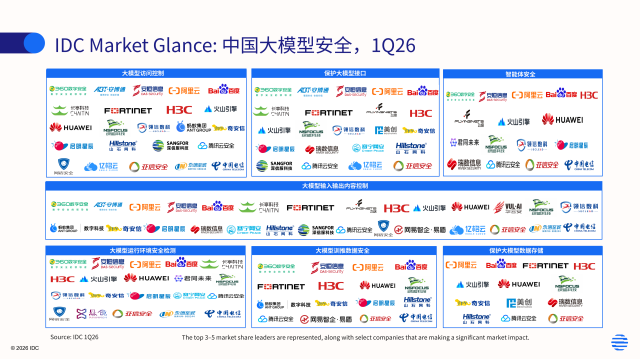
目前,中国众多大模型厂商陆续推出了免费版类OpenClaw智能体,积极抢占新的用户端入口。伴随类OpenClaw智能体部署节奏的加快,AI云厂、网络安全厂商以及AI安全创新型企业快速推出了OpenClaw安全风险分析与防护解决方案和 “安全小龙虾” ,帮助用户安全地使用OpenClaw。为了更好地帮助用户了解大模型安全、智能体安全的市场格局并帮助其做技术选型,IDC正式发布《IDC MarketGlance:中国大模型安全,2026Q1》(Doc#CHC53617026),市场格局详见下图:

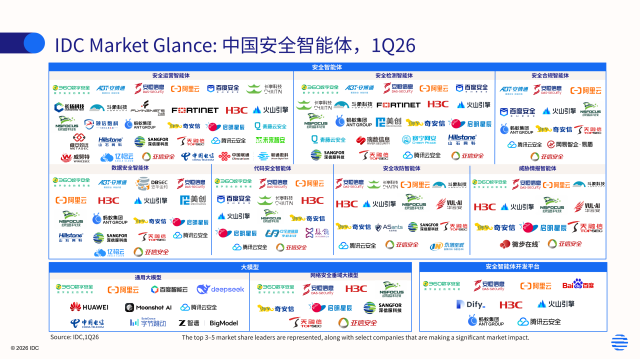
与此同时,大模型、智能体的安全检测与防护也少不了AI的赋能即安全智能体的加持。当前众多技术服务提供商已经将安全智能体和智能体集群的能力集成到其安全解决方案中,帮助用户提质增效,用AI对抗AI、AI防护AI将成为未来大模型安全、智能体安全防护的一个重要思路与能力。IDC同期发布《IDC MarketGlance:中国安全智能体,2026Q1》(Doc#CHC53597826),希望通过IDC对于中国市场中安全智能体产品的调研来帮助用户充分地了解安全智能体相关技术的发展和市场格局,详见下图:

IDC《全球CIO议程2026年预测——中国启示》报告预测,到2030年,中国500强企业中15%的组织将因对AI智能体的管控与治理不足,引发高关注度的运营中断,进而面临诉讼、高额罚款及CIO被解雇的情况。企业管理者亟需构建一套智能体安全和治理体系来帮助企业安全地用好智能体,规避安全风险。

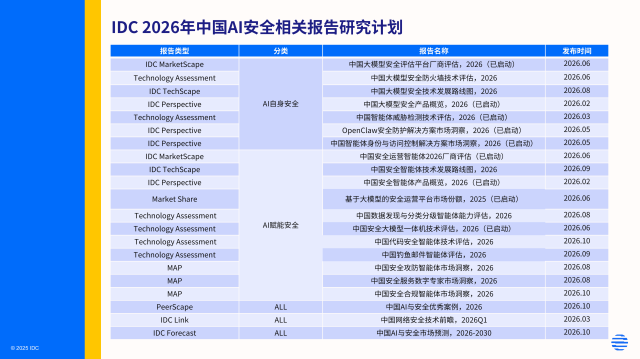
为了更好地帮助用户了解智能体安全检测和防护如何入手,IDC正式启动《IDC PerspectiveOpenClaw安全防护解决方案市场洞察,2026》报告、《IDC Perspective:中国智能体身份与访问控制解决方案市场洞察,2026》报告研究,欢迎大家与我们保持沟通交流,与IDC共同开展更多前瞻性与实践性研究。

IDC更多相关研究

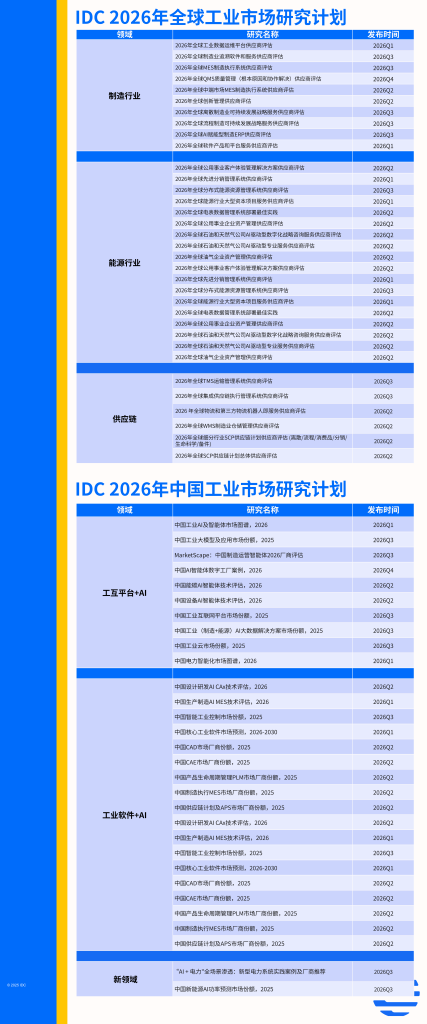
IDC已于2026年启动AI安全技术系列研究,围绕AI原生安全架构、安全智能体成熟度评估、AI驱动DevSecOps实践路径及企业级AI治理框架展开深入分析。

如需进一步了解与研究相关内容或咨询 IDC其他相关研究,请点击此处与我们联系。
Sophia Wang - Research Manager - IDC

Sophia Wang is a Research Manager in IDC China. She is responsible for the analysis and research of China's cybersecurity market. Her primary focus is on China's cybersecurity appliance and services market and operational technology (OT) security market. Additionally, she provides related research and consulting services for regional and global IT customers and supports their business development. Prior to joining IDC, Sophia worked in several consulting companies. She was independently responsible for consulting projects in fast-moving consumer goods (FMCG), internet, and other industries. Through market analysis and benchmarking analysis, she helped many clients solve problems in the different stages of their development. Sophia graduated from the University of Southern California with a master's degree in econometrics. She also majored in human resource management and journalism for her bachelor's degree.

Japan’s IT market is evolving beyond its traditional reliance on large enterprises, including public sector modernization, as a primary growth driver.

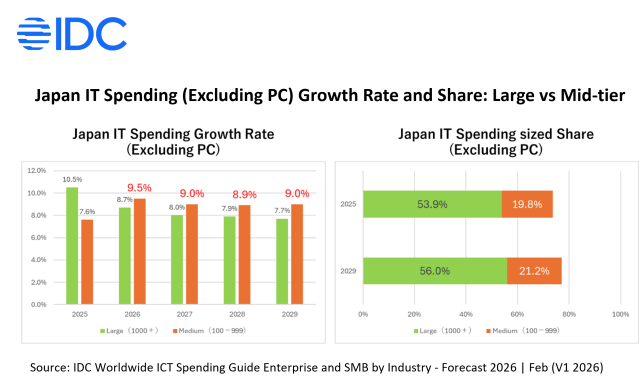
In 2026, IDC forecasts the market will reach ¥28,418.9 billion, growing 3.3% year on year, with a 6.4% CAGR through 2029. Large enterprises remain dominant, increasing their share from 53.9% (2025) to 56.0% (2029).

Japan IT market growth accelerates as mid-sized firms drive 9.5% spending surge, reshaping vendor strategy and digital transformation demand.

However, the key shift is in the rise of mid-sized companies.

  • Mid-sized firms (100–999 employees) will expand IT spending share from 19.8% in 2025 to 21.2% by 2029
  • In 2026, IT spending (excluding PC) will grow 9.5% YoY, outpacing large enterprises (8.7%)

Japan’s IT market is entering a dual-engine growth phase, combining enterprise modernization with accelerating mid-market digital transformation.

Why Are Mid-Sized Companies Accelerating IT Investment?

1. Is labor shortage forcing mid-sized firms to digitalize?

Yes, and it’s becoming urgent.

Labor shortages in Japan aren’t just a macro trend anymore. They’re showing up in day-to-day operations, especially for mid-sized companies.

Large enterprises have advantages: stronger employer brands, deeper recruiting pipelines, and more mature digital platforms. Many have already invested heavily in automation, workflow integration, and data infrastructure.

Mid-sized companies often lack both talent depth and digital maturity. They cannot compete on compensation scale or recruitment visibility. As labor shortages intensify in 2026, digitalization becomes essential for business continuity rather than a discretionary initiative.

In addition, digitalization mandates from large business partners and public sector procurement processes are cascading downstream. Mid-sized firms that fail to digitize risk exclusion from supply chains and ecosystem participation.

Bottom line: From 2026 onward, digitalization is no longer optional, it’s how mid-sized companies will stay operational and competitive.

2. Why will mid-sized firms rely more heavily on IT vendors and system integrators?

Because they don’t have the in-house capacity.

Large enterprises are increasingly building in-house digital capabilities or partnering directly with hyperscalers and advanced technology firms. Their internal IT maturity has advanced significantly.

Mid-sized companies usually can’t. Most have small IT teams, limited internal expertise, and constraints in executing complex modernization programs. So as digital transformation moves from planning to execution in 2026, they’ll depend more on vendors.

Mid-sized companies typically require:

  • End-to-end implementation support
  • Packaged, use-case-driven solutions
  • Operational scalability
  • External expertise in AI and cloud adoption

What this means for vendors: Serving this segment requires structural adaptation. Projects are smaller. Budgets are tighter. Engagement models must be leaner and outcome oriented.

3. Do mid-tier vendors have a structural advantage?

In many cases, yes.

While Tier 1 and Tier 2 vendors remain essential for large-scale enterprise transformation, mid-sized companies often require a different delivery model. Engagements are more operational, localized, and execution focused.

Mid-tier system integrators and regional IT vendors may hold an inherent structural advantage in this environment.

Their scale, cost base, and organizational focus are often better aligned with the needs of mid-sized enterprises. They’re often closer to the customer, more hands-on, and are better structured standardized delivery of outcome-driven solutions without the overhead associated with mega-enterprise programs.

Meanwhile, Tier 1 vendors are optimized for complex, multi-year transformation programs. Mid-tier vendors are often optimized for speed, proximity, and practical execution, attributes that align naturally with mid-sized companies entering digitalization at scale.

So, the fit matters. As mid-sized companies increase IT investment from 2026 onward, vendors whose size, service intensity, and geographic reach match this segment are likely to capture disproportionate growth.

4. How does cloud adoption lower transformation barriers?

Large enterprises frequently face modernization bottlenecks due to deeply embedded legacy systems and customized architectures. Transformation often requires extensive integration and long transition timelines.

Mid-sized companies face fewer structural constraints.

While legacy platforms may exist, system environments are typically less complex. As infrastructure-as-a-service (IaaS) and cloud-native platforms expand in Japan, cloud adoption reduces both cost and complexity barriers.

Cloud changes the equation by enabling:

  • Faster deployment
  • Lower upfront costs
  • Scalable digital infrastructure
  • Easier integration of AI-related capabilities

And that last point is important. In 2026, spending on AI (models, data, agents) is expected to expand rapidly. Cloud environments allow mid-sized companies to adopt these capabilities without large-scale architectural overhauls.

In simple terms: Cloud reduces friction and that speeds everything up.

What Does This Dual-Engine Growth Mean?

Japan’s IT market is not fragmenting, it’s expanding from two different directions at once. Large enterprises continue invest and modernize. Mid-size companies are stepping up as a real growth driver.

Going forward, growth will be shaped by:

  • Sustained large-enterprise modernization
  • Accelerating mid-sized digital transformation
  • Expanded AI adoption across both segments
  • Increased reliance on scalable cloud platforms

What Should IT Vendors Do Next?

Focus more seriously on the mid-market.

Growth won’t come only from large enterprise deals anymore.

It will increasingly come from:

  • Reaching more mid-sized customers
  • Delivering repeatable, outcome-driven solutions and
  • Aligning pricing and delivery to smaller-scale projects.

The takeaway:

Vendors that adjust early to this dual-engine reality will be in the strongest position to capture the next phase of growth in Japan’s IT market.

Contact IDC for deeper insights, or connect with our analysts to discuss what this means for your business.

Hitoshi Ichimura - Senior Research Manager, Software, Services, and IT Spending, IDC Japan - IDC Japan

Hitoshi Ichimura is responsible for the market analysis of overall Japan IT spending, based in Tokyo. In this role, he is responsible for the market analysis of IT Spending research by vertical, company size and region. His main area of research involves IT Spending market forecast and trends for the Japan financial industry local area and SMB segment. Ichimura is also involved in various custom research projects in the area.

The global cleaning robot market shipped 32.72 million units in 2025, up 20.1% year over year, according to IDC. While smart vacuum remain the largest segment, lawn mower robotics and window cleaning robots are the primary growth engines. Chinese brands now dominate multiple categories, reshaping global competition through AI-driven innovation, cordless upgrades, and rapid international expansion.

This blog highlights the structural shifts, competitive realignment, and strategic priorities defining the next stage of smart cleaning robotics.

Market Overview: Structural Shift Accelerates

According to IDC’s Worldwide Cleaning Robot Trackers:

The key trend is structural transformation. Growth is shifting from single-purpose indoor cleaning to multi-scenario intelligent automation spanning indoor and outdoor environments.

Smart Vacuum: Scale Meets Strategic Realignment

Smart Vacuum account for nearly three-quarters of total shipments. Growth was strongest in the Middle East & Africa (+95.6%) and Central & Eastern Europe (+40.3%), driven by expanding middle-class adoption and aggressive overseas expansion by Chinese brands.

The competitive landscape is shifting. Roborock maintained global leadership, ranking No.1 in major markets including the US and Germany, while Dreame expanded rapidly in Europe. Meanwhile, iRobot exited the global top five, reflecting deeper strategic divergence rather than temporary share fluctuation.

Two models are emerging:

  • Vertical expansion into full home robotics (indoor + outdoor)
  • Horizontal diversification into broader consumer electronics

Future leadership will depend on ecosystem strength and AI capability.

Window Cleaning Robots: High Growth, Low Differentiation

Window cleaning robot shipments rose 70.4% in 2025. Demand is fueled by high-rise living in China, large glass-window homes in Western markets, and rising safety and labor costs.

Ecovacs held over 50% global share. However, mid- and low-end competition is increasingly homogenized, characterized by similar product design and price-driven competition. Innovation is focusing on cordless design, stronger suction, and smarter navigation.

Lawn Mower Robotics: Cordless Disruption Reshapes the Market

Lawn Mower Roboticsgrew 63.8% YoY, the fastest among all categories. Wire-free models reached 1.32 million units, accounting for 66.2% of shipments and surging 182.4%, while traditional boundary-wires models declined 10.1%.

Adoption is accelerating due to mature RTK, vision, and LiDAR navigation, simplified installation and true out-of-box usability, DIY-friendly design for Western consumers, and cost advantages enabled by Chinese supply chains

Notably, the top six wire-free brands are all Chinese manufacturers, including Segway-Ninebot, Dreame, and Ecovacs, as AI-driven iteration speed erodes traditional garden equipment advantages.

Pool Cleaning Robotics: Intelligence Drives Premiumization

The pool cleaning Robotics market remained stable overall but is undergoing rapid upgrading. In-ground cleaners—the core segment—reached 2.75 million units, with cordless penetration rising to 55% (+32.8%).

Consumers increasingly expect autonomous navigation, stain recognition, app control, and smart home integration. Cleaning capability alone is no longer sufficient—intelligence now defines premium positioning.

Chinese manufacturers are leveraging cordless battery systems and AI navigation to challenge legacy players.

1. Chinese Brands Lead Innovation and Scale

Across Smart Vacuum, pool cleaning robotics, window cleaning robotics, and lawn mower robotics Chinese manufacturers are setting pricing benchmarks, accelerating cordless transitions, commercializing AI navigation, and scaling globally through e-commerce.

Supply chain depth and rapid iteration have become decisive competitive advantages.

2. Niche Segments Remain in Competitive Flux

Lawn Mower Robotics and Pool Cleaning Robotics are still in early intelligent transformation stages. Navigation technology, channel strategy, localization capability, and financial discipline will determine long-term winners.

Market concentration is not yet fixed.

3. AI Is the Long-Term Competitive Moat

AI is transforming:

  • Obstacle avoidance (scene understanding)
  • Path planning (targeted optimization)
  • Stain detection (adaptive cleaning)
  • Human-machine interaction (natural language control)

Companies that invest consistently in AI algorithms, data accumulation, and embodied intelligence will command higher margins and global leadership.

Strategic Recommendations for Industry Players

  • Capture niche growth windows while cordless and intelligent upgrades are still reshaping market structure.
  • Treat AI as core infrastructure, not feature marketing.
  • Build multi-category ecosystems that unify apps, data, and cross-device coordination to increase customer lifetime value.

Conclusion: From Appliances to Intelligent Platforms

2025 data confirms a decisive transition: home cleaning robots are evolving from standalone appliances into AI-powered home service platforms. With Chinese brands leading innovation and cordless technology accelerating adoption, the market has entered an era of all-scenario competition. Future growth will be defined less by shipment volume and more by intelligence, ecosystem integration, and global execution capability.

Ready to unlock the power of data? Connect with our IDC analysts today to transform insights into impact. Contact us now.

Claire Zhao - Senior Market Analyst - IDC

Claire Zhao is senior market analyst for Client System Research of IDC China. She is responsible for conducting research on the augmented reality (AR)/virtual reality (VR) market, and vertical analysis for the PC market. She started working for IDC China as a summer intern in 2019 as part of the Telecommunication group. Prior to joining IDC, Claire did some internships in the banking and insurance industries, and had some research experiences related to risk management, financial market, and data analytics. Claire graduated from Rensselaer Polytechnic Institute with a master’s degree in Financial Mathematics.

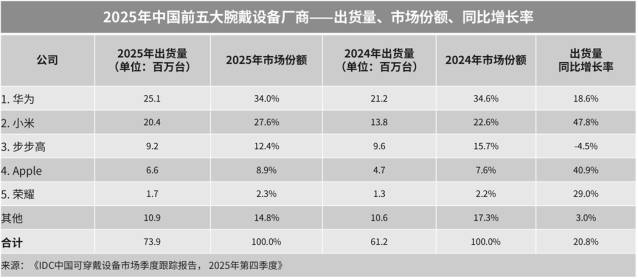
2025年中国腕戴设备市场出货量7,390万台,同比增长20.8%。国补政策与促销活动成为增长主引擎,这一趋势将延续至2026年。市场参与者如何应对政策驱动的新节奏?本文基于IDC最新数据,为您梳理市场变化与未来方向。

根据国际数据公司(IDC)最新发布的《中国可穿戴设备市场季度跟踪报告》,2025年中国腕戴设备市场出货量为7,390万台,同比增长20.8%。腕戴设备市场包含智能手表和手环产品。其中,中国智能手表市场出货量5,061万台,同比增长17.2%。手环市场出货量2,329万台,同比增长29.4%。这主要得益于国补政策的刺激以及多平台活动补贴的带动。在政策驱动的增长背后,市场呈现出哪些特点?头部厂商表现如何?2026年又将走向何方?本文将为您一一解读。

2025年中国腕戴市场发展的三大特点

根据IDC跟踪报告,2025年中国腕戴市场发展呈现以下三个显著特点:

特点一:政策驱动成为增长主引擎

2025年市场增长主要由国补政策驱动,销售节奏受政策与价格波动影响显著增强。这一趋势将延续至2026年,市场对促销及价格补贴的敏感度进一步提升。这意味着,政策和促销活动已经成为影响市场节奏的关键变量,厂商需要适应这一新的运行逻辑。

特点二:500-1000元价位段增速最快

500-1000元价位段是成人智能手表市场增速最快的区间。这一现象的形成有两方面原因:一方面受产品迭代与价格调整影响,另一方面千元档位产品促销也显著带动该价位段增长。随着智能手表市场技术日趋成熟,该价位段凭借高性价比,对消费者的吸引力持续提升。

特点三:渠道流转加快,库存结构优化

补贴政策和促销活动推动渠道流转速度明显加快,从库存角度来看,有效缓解了渠道压货压力,推动市场向更加良性的方向发展。其中线上销售增长更加明显,成为拉动整体销量、优化库存结构的重要动力。

2025年中国腕戴市场Top 5厂商表现

华为

2025年,华为在腕戴市场稳健领跑,稳居中国市场出货量第一。Watch GT 6系列首发骑行模拟功率,快速迭代并广泛铺货;Watch 5系列进一步夯实了其在中高端智能手表市场的领先地位;Watch Fit系列则凭借精致外观与出色性能,在轻运动场景中表现亮眼。

小米

小米第四季度发布智能手表新品Redmi Watch 6和全智能旗舰手表Xiaomi Watch 5。此次推出的全智能手表是小米可穿戴系列完善其产品在高阶智能手表领域布局,向中高端市场迈进的重要一步。

Apple

2025年Apple在中国市场增长迅速,主要得益于国补政策带来的价格优惠刺激。其下半年通过Apple Watch S11, Apple Watch SE3和Apple Watch Ultra 3全线产品更新也进一步带动出货。

步步高

2025年步步高旗下小天才儿童手表品牌整体表现稳健,持续领跑中国儿童手表市场,稳居出货量首位。品牌通过产品线下探、发力线上平台实现多元布局,且深耕线下渠道,巩固市场优势。

荣耀

2025年,荣耀在腕戴设备市场实现显著增长。其在智能手表领域持续完善产品布局,覆盖入门至中端主流价位段,并推出多样化外观形态产品,为消费者提供丰富选择。

2026年市场发展趋势展望

IDC报告指出,展望2026年,中国腕戴市场主要呈现以下发展趋势:

趋势一:转向结构优化的理性发展阶段

中国腕戴市场将转向结构优化的理性发展阶段。在新传感技术仍在孕育的周期下,政策与价格成为影响增长节奏的重要变量,市场对促销与补贴的敏感度持续提升,行业运行逻辑更趋市场化。

趋势二:市场结构进一步两极分化

市场结构将进一步呈现两极分化态势。入门级市场凭借天然的高性价比优势,持续吸引新增用户并有效激活换机需求;中高端市场则在促销活动与政策补贴的双重带动下,实现显著增长。

趋势三:端侧AI或将开启新时代

伴随高通推出首次搭载专用NPU的全新可穿戴旗舰平台,端侧高性能AI处理能力将有效提升,或将引领腕戴设备进入端侧AI时代。

IDC中国研究总监潘雪菲认为,腕戴市场仍需在健康场景上持续深耕,无创血糖监测等慢病管理功能将成为行业重要增长引擎,释放更大市场潜力。同时,端侧AI技术的应用将显著提升腕戴设备的算力水平,未来可进一步与智能耳机、智能眼镜等多类穿戴产品实现多模态协同交互,有望构建下一代自然交互生态,开启全新发展格局。

针对技术供应商和采购方的建议

针对技术供应商和采购方,IDC提出以下三点建议:

建议一:布局双轨产品矩阵,适配市场化增长节奏

面向两极分化的市场结构,同步强化入门级高性价比机型与中高端功能旗舰;灵活联动政策与补贴资源,优化定价与促销节奏,提升用户转化与换机周期管理能力,在理性发展阶段保持规模与利润平衡。

建议二:深耕健康场景,打造慢病管理核心增长引擎

重点投入血压、血糖等慢病监测技术研发和产品应用,推动产品健康监测能力升级;以专业健康功能构建差异化壁垒,将健康服务转化为长期用户粘性,成为驱动市场增长的新势力。

建议三:布局端侧AI与多设备协同,抢占下一代交互生态制高点

强化智能手表端侧AI高性能算力,提升设备独立处理与智能响应能力;积极推进腕戴设备与智能耳机、智能眼镜等多类穿戴产品的多模态协同交互,构建下一代自然交互生态,以生态化优势开启全新发展格局。

延伸阅读与沟通:

如需了解更多IDC相关研究或进一步与我们沟通,欢迎识别二维码与 IDC 联系,我们将安排专人与您对接,为您提供定制化的市场洞察与咨询服务。


如需了解IDC在智能终端领域的最新研究报告、数据产品及行业分析,请扫描二维码,在线获取完整研究目录与内容简介,助您精准把握市场脉动。

Sophie Pan - Research Director - IDC

Sophie Pan is a research director for the Client Systems Research team at IDC China. She is responsible for emerging technology device research, including wearable devices and smart home devices. Sophie has a deep understanding of the landscape and ecosystem development of the consumer Internet of Things (IoT) device market. She assisted the top-tier companies to formulate business strategies by conducting meticulous data analyses and uncovering opportunities and trends in the market. Prior to joining IDC, Sophie worked at a research consultancy and the IT hardware manufacturing industry, providing consumer research and market analysis services. Sophie holds a master’s degree in Integrated Marketing from the Florida State University in the USA.