As automation reshapes the contemporary workplace, companies across Europe are facing both technical and cultural hurdles. While there is a strong emphasis on the potential job losses linked to automating routine tasks, it’s equally vital for organizations to re-evaluate their current roles, work methods, and traditional leadership models. This shift is essential for fully leveraging the benefits of AI and promoting long-term innovation, rather than just improving short-term business efficiency.

The following three trends show what the AI-driven work environment in Europe might look like in 2025 and beyond:

1. The need for new leadership models
2. The emergence of new jobs and skills
3. The evolution of work itself

Farewell to Command and Control

By 2026, European organizations that rely exclusively on command-and-control leadership models will see a 20% drop in profitability due to a lack of AI innovation and adaptability.

European leaders are significantly increasing their investments in artificial intelligence, with 88% actively involved in either rolling out or testing generative AI (GenAI) projects in 2024 (source: IDC’s Future Enterprise Resiliency & Spending Survey [Wave 10], October 2024). Successful organizations highlight the importance of providing their teams with AI training and opportunities for practical experience to enhance adoption rates. However, in 2024, 53% of European decision-makers reported that their employees are somewhat to extremely worried about potential job disruptions and losses due to a lack of AI skills (source: IDC’s Future Enterprise Resiliency & Spending Survey [Wave 11], November 2024).

To integrate AI into their business DNA, organizations need to cultivate a culture of innovation that invites input from every level of the workforce. A rigid top-down management approach will stifle creativity and leave employees feeling disconnected. Companies that are stuck in outdated command-and-control structures find it challenging to keep pace with rapid changes, resulting in isolated decision-making that can hinder effective collaboration across departments and potentially lead to a profit decline of about 20%.

Instead, to promote successful AI innovation, businesses must encourage experimentation and embrace new working methods for all staff, not just leadership. By adopting agile and inclusive strategies for AI implementation, companies can benefit from quicker development cycles, improved customer service, and better employee retention. Ideally, this can be achieved through a balanced approach that combines both bottom-up and top-down strategies for AI deployment.

New Skills and Roles

By 2030, due to evolving skills demand, 70% of new job roles in Europe will be directly enabled by AI.

And the transformation won’t stop at just leadership styles. The integration of AI is set to transform roles across all levels of the workforce, with 70% of new positions being directly influenced by AI technology. As highlighted in the IDC’s EMEA Employee Experience Survey, 2024, 63% of European workers anticipate that parts of their jobs will be automated in the next two years. This change will require the acquisition of new technical skills to leverage AI effectively, alongside the development of essential business and interpersonal skills.

For example, new graduates are now moving away from dull, low-skill jobs and instead expect to interact with AI technologies like assistants and advisors. For midcareer professionals and managers, using AI-enabled applications means collaborating more across different departments and overseeing employee skills and career development with a focus on the future of traditional roles. Meanwhile, top executives will benefit from precise and instant access to various performance data and predictive analytics.

Not Just a Tool, But a New Way of Working

By 2027, agentic workflows will reshape how tasks are delivered and performed, impacting at least 40% of knowledge work in European companies and doubling productivity.

However, AI should be viewed not just as a powerful productivity tool (doubling productivity for knowledge workers), but as a driving force for a completely transformed approach to work.

In 2025, companies will explore the world of AI agents and autonomous workflows to improve tasks that have traditionally depended on human skills. Key software and AI service providers will be essential in this shift by adding innovative AI features. The rise of low-code platforms aimed at creating AI agents and workflows will motivate IT leaders in different industries to adopt these advancements, collaborating with business process management (BPM) teams to identify processes that are ready for automation or enhancement.

To realize substantial gains in productivity, it’s vital to extend agentic workflows beyond standard business functions. This should encompass areas such as planning, research, decision-making, content creation, software development, IT setup, performance monitoring, and other specialized activities, as well as collaborative project work. As organizations in Europe navigate this transformation, a comprehensive evaluation of AI agents and agentic workflows will be essential. Achieving success will also hinge on addressing current cultural challenges while leveraging this technology to enhance human capabilities and streamline knowledge work across various sectors.

Wrap-Up

In conclusion, the three work culture trends highlight a shared focus on the relationship between technology and human behavior. While science fiction often portrays a bleak future dominated by AI, IDC presents a more optimistic viewpoint. However, it’s important to acknowledge that apprehensions surrounding emerging technologies like GenAI can greatly influence their acceptance, whether in a positive or negative light.

Organizational leaders must invest time and resources into thoughtfully planning the integration of AI and GenAI technologies, as well as the new roles and workflows they bring. This challenge goes beyond mere technical aspects such as computing, security, hardware, infrastructure, and integration. At its core, it is a challenge centered on people, necessitating a commitment to empowering employees through skill development and the establishment of innovative, redefined career paths.

To learn more about the impact of automation and AI on the future of work in Europe, please access the following resources:

• Webcast: Help Your Customers Deliver Human-First Experiences in the AI-Everywhere Future of Work

• Blog: 8 Future of Work Trends for 2024

Meike Escherich - Associate Research Director, European Future of Work - IDC

Meike Escherich is an associate research director with IDC's European Future of Work practice, based in the UK. In this role, she provides coverage of key technology trends across the Future of Work, specializing in how to enable and foster teamwork in a flexible work environment. Her research looks at how technologies influence workers' skills and behaviors, organizational culture, worker experience and how the workspace itself is enabling the future enterprise.

This IDC Blog provides an initial assessment of the potential implications of the new US administration on the worldwide Information Communication Technology (ICT) market.

The global digital landscape is experiencing profound transformations, with a deepening interdependence between technology and economic growth. This convergence brings a host of uncertainties, opportunities, and challenges, further complicated by ongoing global tensions. In IDC’s Future Enterprise Resilience & Spending Survey (Wave 11, December 2024), over 30% of the IT leaders considered “the impact of geo-political factors (e.g. tariffs, export controls) on tech budgets” to be the primary risk for technology strategies and spending in the coming year.

The 2024 US elections were watched with keen interest, considering the global implications of US policy. There is much speculation around the new administration’s agenda, budget priorities, shifts in policy and regulations, proposals for new programs such as the Department of Government Efficiency (DOGE), and the impact of tech leaders in positions of political influence. The second term of the Trump administration officially kicked off on January 20th and from day one the administration started enacting a series of executive orders.

These changes are likely to have an impact on technology suppliers, vendors that serve US federal, state and local governments, and enterprises in the private sector. In the coming year, governments and businesses in other countries will also need to assess the implications on their technology investments and priorities. As the details of the Trump administration emerge in the coming weeks, we will be identifying significant impacts on the technology and digital landscape, particularly in the following areas: the US Government Digital Agenda, Technology Trade and Digital Supply Chain, Digital Regulation and Policy, Data Privacy and Cybersecurity, and Energy and Green Technology.

Key Tech Topics to Watch in 2025

The US Government Digital Agenda

In the past months, President Trump and other leaders within the incoming US administration voiced plans to reverse several initiatives of the Biden administration that impact healthcare, climate, AI and cybersecurity policies, government spending, and budget priorities.

Budget negotiations are also on the horizon with the current federal government funded through March 14, 2025. Even more changes are possible depending on the impact of the Department of Government Efficiency (DOGE) and the roles for private sector advisors within specific agencies to recommend budget cuts, staff reductions and possibly reforms in disaster relief, immigration and the tax code. 

The federal budget and shifting priorities will also have far-reaching impacts on US state and local governments, as well as research programs and sectors that rely heavily on federal programs and grant money, which often support investments in technological innovations. Shifting budget priorities to domestic issues could negatively impact funding for international nonprofits and foreign aid agencies which as of late, have been pursuing tech modernization.

Technology Trade and Digital Supply Chain

Trade policies were a key pillar of President Trump’s 2024 campaign. The incoming administration has signaled a willingness to pursue additional export controls on national security grounds, especially in advanced technology. This is considering a continued negative balance of trade in technology, which increased from -$2.18 billion in 2023 to -$2.7 billion in 2024, according to data from the U.S. Census Bureau.

Upon inauguration, President Trump introduced a memorandum on “America First Trade Policy,” which directs federal agencies to address trade deficits, explore an External Revenue Service for tariffs, and assess export controls to maintain the US’s “technological edge.” Over the coming weeks, it will be important to monitor free trade agreements, bilateral trade deals, IP legislation, semiconductor supply chain policies, and more, as these will all potentially have digital impacts.

Maintaining this edge in AI appears to be a priority, and work is being done in securing AI/digital supply chains. President Trump repealed former President Biden’s 2023 executive order on AI risks, stating that it hinders AI innovation (see next section). However, he has thus far maintained executive orders related to AI supply chains from the Biden administration, including one on securing energy for AI and a new AI export control framework introduced last week. This framework provides global licensing requirements, expands the Foreign Direct Product Rule to cover advanced AI chips and model weights, imposes quotas to limit their accumulation, and reshapes semiconductor trade by targeting high-performance AI technologies. These restrictions, if upheld, will have potential impacts on the global AI market and access to digital supply chains.

Digital Regulation and Policy

Key figures in the Trump administration have voiced support for general deregulation, considering extensive laws as inhibitors to innovation. Digital regulations that are anticipated to undergo significant changes will include data privacy (see next section), data center development, telecommunications—particularly in relation to 5G advancements—and AI. President Trump overturned former President Biden’s 2023 executive order on AI that put in place guardrails around the AI development and usage. While the new administration may reshape existing digital regulations, we anticipate that a degree of scrutiny will remain consistently in place.

This week, President Trump announced “Stargate,” a $500 billion AI infrastructure initiative led by OpenAI, SoftBank, and Oracle with support from major investors including MGX (Abu Dhabi’s AI-focused fund) and technology partners Microsoft, Nvidia, and Arm Holdings. The stated goal of Stargate is to build advanced data centers and virtual infrastructure in the U.S. and continue the US lead in AI innovation. The first datacenter is reported to be under construction in Abilene, Texas.  The move could create more AI jobs and create more AI-ready infrastructure to advance AI development and deployment.

The delivery of these large-scale datacenters requires resources, and the Stargate team is complex with multiple high-powered stakeholders, so it will be important to watch the timeline for build out and completion. It is also important to consider that AI innovation will require participation from start-ups and smaller innovators beyond the Stargate members and global competitiveness will require advancements in AI research, talent development, and responsible AI guardrails. 

With the nomination of Commissioner Andrew Ferguson as chair of the Federal Trade Commission (FTC or Commission) and Gail Slater to helm the US Department of Justice’s (DOJ) Antitrust Division, the Trump administration’s antitrust policy is expected to diverge from the past four years towards a “more relaxed” antitrust approach, reducing merger enforcement and being more receptive to settlements and consent decrees.

Data Privacy and Cybersecurity

During his 2024 campaign, President Trump indicated that data privacy and cybersecurity will remain important. The previous Trump administration established several initiatives related to cybersecurity, including a “defend forward” cybersecurity policy in the Department of Defense, promoting proactivity rather than reactivity, and creating the Cybersecurity and Infrastructure Security Agency (CISA) under the Department of Homeland Security (DHS). However, the current Trump administration has indicated that it is looking to shrink the role that the Cybersecurity and Infrastructure Agency (CISA) plays in domestic cybersecurity regulation, instead shifting responsibilities to states and public-private partnerships as well as individual companies.

President Trump’s administration has terminated all memberships of advisory committees that report to DHS, and this includes the Cyber Safety Review Board (CSRB) in CISA which investigates major cybersecurity incidents, such as the Salt Typhoon attack. While no further action has yet taken place, Kristi Noem, Trump’s nominee for Homeland Security Secretary, commented in her confirmation hearing that she would make cuts to CISA and refocus its mission, removing its role in countering disinformation and online foreign influence in US elections. This will alter spending priorities for cybersecurity infrastructure in the near-term.

With regards to data privacy legislation, President Trump’s campaign indicated a preference for minimal federal intervention, self-regulation in data privacy and security, and market-driven solutions over strict federal mandates. For a comprehensive picture on the data privacy landscape, watching state actions will be critical. Nineteen states have passed comprehensive data laws since the inception of California’s Consumer Privacy Rights Act in 2019. State-led momentum may continue under a deregulation-focused new administration.

Energy and Green Technology

President Trump, on Tuesday, January 21, signed an action withdrawing the US again from the Paris Agreement, declared a National Energy Emergency, and revoked a series of Biden administration orders focused on tackling climate crisis.  It is anticipated that drilling and mineral mining will be at the core of the country energy strategy. In his inaugural speech he also vowed to repeal an electric vehicle mandate. These actions provide a window into the administration’s energy policy, which is expected to change priorities for green technology innovation and influence investments in sustainable IT solutions.

Conclusion

According to IDC Worldwide Black Book Live Edition (December 2024 Release – Baseline Scenario), Worldwide Total ICT Spending is expected to grow +7.8%, reaching $6.57 trillion in 2025.  IDC’s “Downside Scenario” in which weaker economic growth, supply chain disruption, and resurgent inflation could impact some types of enterprise and consumer spending, would limit Total ICT Spending growth to +3.2% in 2025. At this time, the Baseline Scenario remains the most probable one. The next update will be on January 30.

The new administration’s plans will become clearer in the coming weeks, and we expect continuous activity from the Trump administration. This blog details only initial executive actions taken as of January 21, 2025. IDC will continue to analyze developments through a series of deep-dive studies on the new US administration’s digital impact, as well as the impact of any responses by other governments. We will provide ongoing recommendations to technology suppliers and buyers, so they can react and adapt to fast-changing market conditions.

IDC is also continuing its rigorous processes to deliver timely, data-driven research. This includes monthly updates to downside and upside scenarios to reflect potential outcomes for the global economy and ICT market. In IDC’s last detailed analysis on December 31, 2024, we set the expectation that ICT forecasts will remain fluid due to uncertainty in short-term policy measures and future trade negotiations.

To learn more, please reach out to any of our expert analysts on the IDC Government Insights Team or our Digital Economy Team.

Contributing Authors:

Ruthbea Yesner - Program VP - IDC

Ruthbea Yesner is the Vice President of Government Insights at IDC. In this practice, Ms. Yesner manages the US Federal Government, Education, and the Worldwide Smart Cities and Communities Global practices. Ms. Yesner's research discusses the strategies and execution of relevant technologies and best practice areas, such as governance, innovation, partnerships and business models, essential for government and education transformation. Ms. Yesner's research includes analytics, artificial intelligence, Open data and data exchanges, digital twins, artificial intelligence, the Internet of Things, cloud computing, and mobile solutions in the areas of economic development and civic engagement, urban planning and administration, smart campus, transportation, and energy and infrastructure. Ms. Yesner contributes to consulting engagements to support K-12 and higher education institutions, state and local governments and IT vendors' overall Smart City market strategies.

Survival of the Fittest

Sales is a game of survival. Without sales, a company won’t stick around very long.

What are tech vendors doing to ensure their salespeople are fit enough to survive in today’s red oceans? The simple answer is: Not nearly enough.

Let’s look at some of the biggest challenges in selling in today’s tech markets.

Buyers Are Smarter

Sellers are not as prepared and enabled as the buyers of today. Buyers are becoming increasingly sophisticated in their purchasing processes — and sellers are struggling to keep up. Buyers are better informed about their needs, more prepared to engage with sellers, and more adept at evaluating proposals. This has created an uneven playing field in which buyers hold more power than ever before.

Changing Expectations

Buyers operate with a lot more information than in the past. There was a time where, in B2B sales, much of the buyer’s education hinged on speaking to sellers and gathering insights and sales materials from salespersons. This practice continues in many industries, but it’s either been augmented or replaced by buyers’ own insights. Buyers can independently research and pre-qualify vendors before they ask sellers to demonstrate the value they can offer and provide clear solutions to their specific needs.

Governance and Accountability

With increased buyer expectations, solutions come with increased accountability. It’s not just about investing in products that will deliver a great return, but working with companies that share the same values, ethos, and reputation.

Team Spirit

Buying teams are growing and now include a wider range of stakeholders from across the business. This collaborative approach ensures that diverse perspectives are considered when evaluating new goods and services or renewing existing contracts. The downside is that buying decisions and the sales process are gradually becoming longer — in constrained economic times, even more so.

From Surviving to Thriving

Despite the challenges that salespersons face in today’s competitive marketplaces, it’s not all doom and gloom for those who want to move into sales or are moving into a new sales role in another industry or region. As salespeople mature in their careers, they will see that regardless of where and what they sell, there are few universal steppingstones to sales success.

Put the Human First

The goal of sales is to build relationships with customers, use past successes to build credibility, and work with the customer team to grow and entrench the partnership. Soft skills are often sought in the hiring process but wash out when the pressure mounts and becomes a numbers game. By putting the human first in sales, you can build stronger relationships with your customers and close more deals.

In today’s digital world, much is lost in daily working interactions. Digital tools have made it easier to connect buyers and sellers from all over the world — but they can also make it harder to build relationships like in the past, where much of our business practices of today were formed. In the age of AI, sellers should strive for face-to-face interactions, putting the human first.

Sellers Should be Artisans

Artisans are skilled people who excel at a particular trade or craft. The term is often used to describe those who work with their hands or in a physical environment — but it’s just as apt for what a salesperson should be.

Sales is a lot more practical than it’s made out to be. Sales teams need practical tools and skills that they can immediately apply to their accounts once they’re in the job. Tools can be anything that helps support their role and sales, such as a CRM. Skills encompasses everything from understanding how to do account plans to soft skills such as intercultural fluency, through to knowledge and understanding such as the specific regulations that are impacting the industry in which their customers operate.

Sellers will do well to realize that, when given charge of customers or accounts, it’s an opportunity to shape the future of the customer relationship, much like an artisan turns raw materials into beautiful creations.

Organizations need to provide their sales teams with better raw materials. Sales enablement is not sales training: It is a considered plan to improve performance through education and empowerment, providing sales teams with the right insights, tools, and frameworks to grow presence and success in their customer base.

The goal of sales enablement is to ensure that sales representatives have access to the right information at the right time to successfully interact with current and prospective customers and drive growth within the customer base.

Organizations should focus more on sales enablement and create a discrete function that can deliver sales resources at scale for teams. And salespersons need to be more open to adapting to new ways of doing business and working across and within technologies, industries, and markets.

How IDC Can Support Your Organization’s Sales Enablement

To capture today’s technology buyers, sales and marketing engagement strategies must be aligned. IDC’s Sales Enablement practice empowers organizations to sell more effectively and helps connect and align your marketing and sales efforts. We leverage our deep understanding of vertical, technology, and country markets to deliver programs designed around our clients’ specific enablement needs.

Connecting the Dots

IDC Sales Enablement delivers a considered plan to connect the dots linking your products and services with the right buyers.

IDC can help you:
• Educate sellers on markets, buyer personas, and business challenges
• Facilitate persuasive sales conversations with technology buyers and C-level executives
• Align digital marketing conversations with interpersonal sales conversations

Beyond Enablement

The role of sales enablement has transcended its supporting function to become an indispensable strategic driver of revenue growth. A well-structured sales enablement strategy, supported by purposeful tools, can align an organization’s sales and marketing efforts effectively, nurture customer engagement, and guide prospects through a seamless journey that culminates in higher conversions and enduring customer relationships.

Managing customer data has never been more important – or more complex. Organizations are grappling with the need to not only consolidate vast amounts of customer data but to use it as a foundation for driving personalized, omnichannel customer experiences.

At the heart of this transformation is the Customer Data Platform (CDP) – a technology that enables organizations to unify fragmented data and profiles, build segments, and use AI, orchestration and activation capabilities to deliver exceptional customer engagement and drive alignment between marketing, sales, customer success and other functional teams.

CDPs: Backbone of Data-Driven Engagement

Whether you are operating in B2C or B2B markets, customer experience (CX) matters more than ever. It is a strong driver of financial growth and organizational outcomes and sets leaders apart from followers.

B2C brands engage with customers, who often switch between channels, through multiple touchpoints and modalities. A successful CDP should allow businesses to deliver cohesive, personalized experiences across all these channels, ensuring that a customer’s journey is consistent regardless of where it begins or ends—whether in-store, in contact center, in-field, online, or on social media.

Effective omnichannel orchestration drives higher engagement and reduces friction in customer journey, which is particularly important in B2C sectors like retail, travel, financial services, and hospitality.

B2B brands are always looking for opportunities to drive growth and differentiation for their products and services as they lean into the shift towards consumer-like purchasing behavior. B2B buyers are demanding omnichannel journey experience, clear understanding – not of just their needs, but also the role they play in the buying group – and experimentation with new channels, especially digital.

Firms are adopting CDP technologies that can unify and activate individual data across accounts and opportunities and navigate multi-stakeholder, non-linear acquisition and retention cycles to serve their B2B customers.

Evaluating B2B and B2C CDPs: Tailoring Your Approach

While the foundational goals of CDPs—data unification, analytics and AI, and engagement—are consistent across industries, their applications in B2B and B2C context differ.

In B2C environments, CDPs must handle vast amounts of customer data generated by millions of interactions daily. The emphasis is on scale, speed, and dynamic personalization. B2C CDPs need to enable real-time marketing interactions that adapt instantly to customer behaviors, ensuring relevance and impact. Key success metrics often include customer lifetime value, conversion rates, and engagement levels.

Conversely, B2B CDPs are optimized for precision and alignment with longer, more complex sales cycles. These platforms focus on account-based marketing (ABM), lead scoring, and multi-touch attribution, providing insights that enable sales and marketing teams to work seamlessly together. Integration with enterprise systems and the ability to support high-value, multi-stakeholder accounts are critical.

These customer and buyer trends have pushed vendors to provide integrated CDPs with functionality ranging from data unification and management, analytics and AI to activation. There has been ongoing market deliberations between packaged CDP vendors who provide integrated all-in-one solution, but also emphasize interoperability, extensibility, and modularity, and composable CDP vendors who offer buyers the flexibility to select and assemble individual CDP functional components.

Even between these two informal classification of CDP vendors, there is overlap of functionality, workflows, systems and architecture approaches.

Overall, the CDP market continues to be diverse and there is some level of confusion for buyers. Buyers must carefully consider not only CDPs, but how their selected solution will integrate with other MarTech (marketing technology) and enterprise investments.

Growing Interest in CDPs From IT and Data Personas

As CDPs evolve, their appeal is extending beyond traditional marketing users. Today, data management and IT leaders and users are emerging as additional stakeholders in CDP evaluation decisions.

For these personas, the focus is on ensuring that the CDP integrates with broader data ecosystems, particularly cloud data warehouses and enterprise analytics platforms. CDPs that offer robust APIs, native integrations, zero-copy and zero-ETL approach, and support for modern data architectures are gaining traction as businesses prioritize interoperability and scalability.

Additionally, data and IT teams are increasingly involved in evaluating the security, privacy, compliance, and governance features of CDPs. As regulations become more stringent and as customers demand transparency and trust in how their data is being used, handled and protected, CDPs that address these challenges while offering hyper personalization are becoming essential in an organization’s marketing and CX technology stack and for brands to differentiate themselves from competitors.

Announcing the IDC MarketScape: Customer Data Platforms

To bring clarity to this rapidly evolving market and for buyers, IDC has released two MarketScape reports that help you understand and evaluate how these vendors stack up against capabilities and strategy criteria. The CDP market is constantly evolving, with vendors that vary in size, expertise, and geographic focus.

Key Findings:

  • AI and Analytics Lead the Way: Platforms incorporating AI for predictive analytics, audience segmentation, lead scoring, journey optimization, churn prevention and related use cases are delivering value for organizations.
  • Interest and use of Generative AI is rising: Evaluate how GenAI capabilities within CDP tooling and workflows will make it easier for non-technical users in terms of productivity and data literacy for users and drive better personalization of content and engagements.
  • Go beyond structured data sources: Consider how unstructured and semi-structured data can be transformed into consistent attributes, enrich it with identity services and further augment customer profiles for broader marketing, sales, customer service, etc. use cases.
  • Privacy and Governance as a Feature, not a Hurdle: Vendors that embed privacy, consent management and compliance tools directly into their platforms are helping businesses build trust while delivering personalization.
  • Real-Time Engagement is Non-Negotiable: CDPs excel in enabling real-time data activation to meet customers where they are, instantly and effectively, especially in B2C settings, to drive higher engagement rates and meet continuously evolving customer expectations.
  • Omnichannel activation is key: Weigh how CDPs will help to simplify tooling, spend and complexity associated with campaign execution across channels within your existing or planned MarTech stack.
  • Playbooks and Use Case templates: Prioritize CDPs that offer templates, schemas, or playbooks specific to B2C or B2B functions and use cases to streamline implementation and adoption.
  • Value Measurement: There is growing interest in understanding which data elements, attributes and profiles contribute effectively to drive desired outcomes across use cases in marketing, sales, customer service, and other functions.
  • B2B specific capabilities: B2B buyers should prioritize CDPs that reveals complex B2B relationships, segmentation, lead scoring, individual-, account- and opportunity-level insights, among other criteria specific to B2B interactions.

To learn more about our research findings, CDP vendors, and IDC’s marketing and CX technology best practices, feel free to schedule an inquiry or briefing request. Please reach out directly (Tapan.Patel@IDC.com) or fill out a briefing request form.

Tapan Patel - Research Director for Customer Data Platform (CDP) - IDC

Tapan Patel is Research Director for Customer Data Platform (CDP), Intelligence and Analytics software market segments and a member of the Customer Experience (CX) Research team at IDC. Tapan’s core research coverage includes market trends, end-user requirements, use cases, market sizing, and business models for these critical segments. He is lead analyst for the CDP market, used by brands to improve customer insights and journeys across all touchpoints. His other research coverage areas include customer and product analytics and AI applications used by marketing, service, sales, contact center, and other enterprise teams to improve CX in B2C, B2B, and DTC engagements.

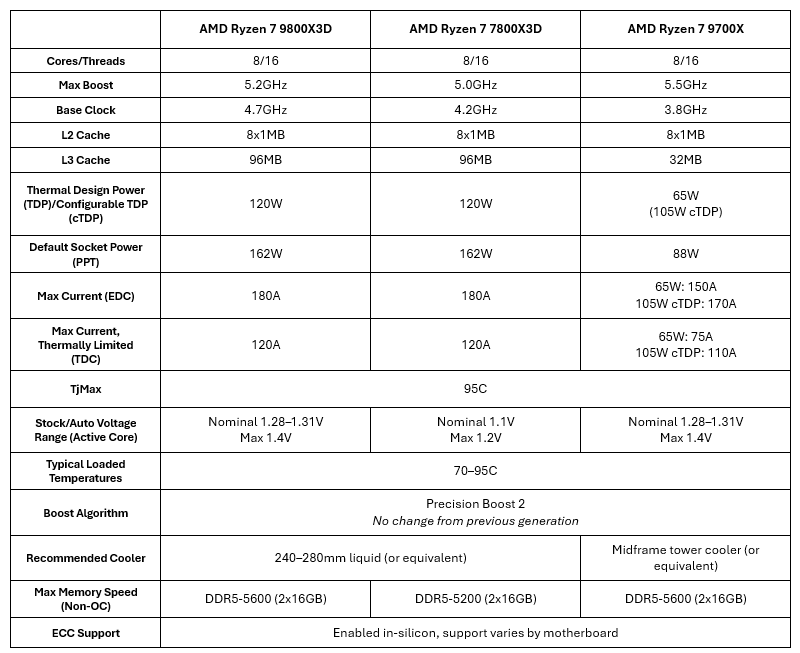
AMD announced the Ryzen 7 9800X3D on October 31, 2024, with availability starting November 7, 2024. Priced at $479, it features the new “Zen 5” architecture and 2nd Gen AMD 3D V-Cache technology, offering up to an 8% gaming performance improvement over its predecessor, the Ryzen 7 7800X3D (priced at $449 at launch).

At stock settings, the AMD Ryzen 7 9800X3D boasts eight cores, 16 threads, a base clock of 4.7GHz, and a boost clock of 5.2GHz. The 2nd Gen 3D V-Cache — now located under rather than on top of the CPU die, which improves heat transfer from the core — allows users to enable Precision Boost Overdrive (PBO), making the 9800X3D the first overclockable X3D processor. This helps overcome a key limitation of first-generation 3D V-Cache processors, which was a significant reduction in clock speeds compared with standard Ryzen parts. This means the Ryzen 7 9800X3D is ideal for both gaming and productivity tasks that depend on low memory latency and higher clock speeds. It makes this processor a compelling upgrade for existing Ryzen 7 5800X3D users and a suitable solution for those demanding even more performance than the Ryzen 7 7800X3D can deliver.

In this review, we’ll cover the key features of AMD’s flagship gaming processor, its advancements over the previous generation, and its gaming performance, and conclude with advice for the vendor.

The Zen 5 Architecture and the AMD Ryzen 9000 Series Desktop Processors

AMD’s Zen 5 architecture introduces significant enhancements in terms of energy efficiency, performance, and computational capabilities — particularly for machine learning and AI workloads — thanks to full-width (rather than half-width, double-pumped) AVX-512 and VNNI support. According to AMD, it achieves a notable 16% improvement in IPC across 13 common desktop workloads over the previous generation Zen 4–based CPUs. The Zen 5 core complex die (CCD), which now uses TSMC’s 4nm process, offers substantial power reductions. At standard thermal design power (TDP) points (65W, 105W, 170W), AMD reports an average 22% increase in performance per watt.

The New 800 Series AM5 Platforms

The Ryzen 7 9800X3D is supported by the AM5 platform. AMD has committed to supporting the AM5 socket through at least 2027 and potentially beyond, ensuring long-term compatibility with future Ryzen processors and making it a reliable choice for upgraders.
The AMD 800 series chipsets — the X870E, X870, X850, and X840 — introduce AMD’s latest motherboards. The X870 and X870E motherboards feature USB4 and support PCIe Gen5 for both x16 graphics and SSDs, setting them apart from the competition. The main difference between the X870 and X870E lies in the number of I/O lanes, such as SATA and total PCIe lanes.

The X870 and X870E motherboards are optimized for overclocking and can achieve DDR5-8000 speeds and beyond, depending on the hardware. However, AMD does not support the new CUDIMM standard for higher-clocked DDR5 DIMMs in either the Ryzen 7000 or Ryzen 9000 series platforms — and this is an area where the 3D V-Cache of the Ryzen 7 9800X3D can help drive performance for memory-intensive workloads or games.

2nd Gen AMD 3D V-Cache Technology

With Ryzen 7 9800X3D, AMD is introducing the 2nd Gen AMD 3D V-Cache technology. The key improvement lies in the cache’s location. Previously, the 3D V-Cache was layered on top of the Zen 3 cores (in the Ryzen 7 5800X3D) and Zen 4 cores (in the Ryzen 7000X3D processors) and required additional structural silicon to provide support for physical stability. However, in the Zen 5–based Ryzen 7 9800X3D, this cache is now placed below the processor cores, and is a single piece of silicon for simplified design and manufacturing.

This change allows the Zen 5 CCD to be directly in contact with the integrated heat spreader (IHS) and the cooling solution mounted on top of it, resulting in better heat transfer and higher sustained clock speeds, which lead to better performance.
Consequently, the Ryzen 7 9800X3D features a 500MHz faster base clock and a 200MHz faster maximum boost clock compared with the Ryzen 7 7800X3D. Additionally, the Ryzen 7 9800X3D is fully overclockable, with the same clock and voltage limits as standard Ryzen 9000 processors.

The Test Platform

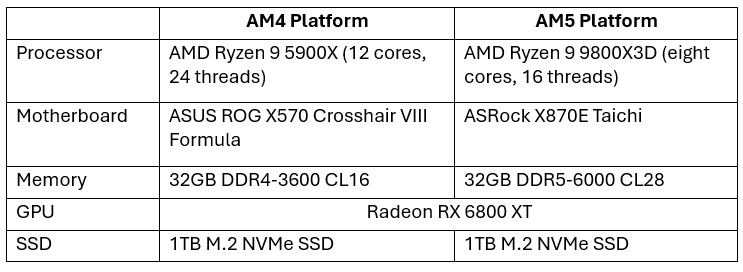
Hardware components for the test PC used in this review include the AMD Ryzen 7 9800X3D processor, the base model AMD Radeon RX 7900 XTX graphics card, an ASRock X870E Taichi motherboard, and a G.SKILL Trident Z5 Neo 32GB (2x16GB) DDR5-6000 CL28 memory kit. The Windows 11 main drive was a 1TB Samsung 990 PRO NVMe Gen4 solid state drive and a Thermaltake View 71 Tempered Glass Full Tower case was used.

An ARCTIC Liquid Freezer III 420 water cooler was installed for the processor, which was paired with a be quiet! STRAIGHT POWER 11 Platinum 850W power supply. For QHD tests, 34″ Dell Gaming S3422DWG monitor — a Quad-HD 3440×1440 display with a 144Hz refresh rate, FreeSync, 10-bit colors, and high dynamic range support — was used, while for 4K testing, a 48″ LG OLED48CX5LC 120Hz monitor was used.

The reviewers used the motherboards’ default settings, set the memory profile to EXPO 6000, and made sure that Smart Access Memory was enabled. No special tuning, optimization, or overclock was carried out for the tests.

Gaming Performance

The following tests were carried out using the built-in benchmark utility for each game.

Shadow of the Tomb Raider, Far Cry 6, and The Callisto Protocol

In Shadow of the Tomb Raider, Far Cry 6, and The Callisto Protocol, the 9800X3D delivers 107, 134, and 205 frames per second (FPS) on average respectively, at the highest settings, with ray tracing set to Ultra and FSR set to Quality, at 1440p resolution at 120Hz.

For Shadow of the Tomb Raider, the 9800X3D delivers 86 FPS at 4K.

Microsoft Flight Simulator 2020

While QHD and 4K gaming may be GPU limited in some scenarios compared with 1080p resolutions — typically used for esports titles, where the CPU is the limiting factor — a number of games are heavily CPU dependent, such as Microsoft Flight Simulator 2020 (MFS2020). When settings are dialed to Ultra at 4K native resolution and with a terrain Level of Detail (LoD) of 400, the GPU is underutilized most of the time, with the CPU being the limiting factor in the test.

For this game, we also tested the Ryzen 7 5800X3D, with the original top-mounted 3D V-Cache architecture, with the same settings. It was often unable to sustain its rated maximum boost clocks of 4.5GHz in this game and managed only 24 FPS, with a 1% low of 20 FPS. Meanwhile, the Ryzen 7 9800X3D was able to boost all cores to 5.2GHz and maintain those speeds at stock settings. As a result, it achieved 58 FPS in MFS2020, with a 1% low of 35 FPS. This 140% increase in performance shows the potential performance uplift for owners of the AM4-based Ryzen 7 5800X3D of an upgrade to AM5 and the Ryzen 7 9800X3D, with its improved thermals and higher sustained clock speeds for a much-improved gaming experience.

Upgrading from Older Platforms

Upgrading to the 9800X3D involves not just the cost of the CPU but also potentially a new motherboard and RAM, especially if you’re moving from an older platform such as the Ryzen 7 5800X3D or the Ryzen 9 5900X (which we reviewed four years ago). Many users might consider skipping the platform upgrade to allocate their budgets toward a higher-end GPU, particularly in high-resolution display scenarios where the GPU is the bottleneck.

To gauge performance improvements, we tested both platforms.

Both processors were overclocked using Precision Boost Overdrive for the following tests.

In Shadow of the Tomb Raider, the two platforms achieved almost identical average frames per second. However, the Ryzen 7 9800X3D rendered 52% more frames on average (334 versus 220), though it was bottlenecked by the GPU.

In Far Cry 6, there was a 28% increase in average FPS. Finally, in The Callisto Protocol, the average frames per second were 13% higher. This indicates that even at 1440p, there is a double-digit benefit from upgrading from the 5800X3D, despite having four extra cores, when playing modern and optimized games.

From a performance improvement point of view, the Ryzen 7 9800X3D makes much sense for those that have a platform that is two or more generations old, such as the Ryzen 5000 series. The performance improvement is substantial and with the modest power demand of 120W, the Ryzen 7 9800X3D can run on many cost-effective AM5 motherboards that support overclocking, including previous-generation B650 and X670/X670E motherboards. DDR5 memory support has increased in capacity per DIMM, and RAM has dropped substantially in price. With the Ryzen 7 9800X3D, many issues around memory latency and bandwidth are effectively masked by the 3D V-Cache, allowing cheaper but larger-capacity memory to be used.

The upgrade argument for a user of the Ryzen 7 7800X3D is perhaps less clear since the performance uplift is not as large, and the cost of the new CPU is not insignificant. The Ryzen 7 7800X3D remains popular and its street price is at or above the RRP, so users wishing to upgrade will most likely find a willing market for their used CPUs, helping to justify the upgrade.

Overclocking

We enabled Precision Boost Overdrive, which remains the best method for overclocking while maintaining optimal power efficiency. It’s important to note that PBO is an advanced overclocking feature and may void the warranty, according to AMD. In the BIOS, under the Advanced settings, we set the limits to “Motherboard” and adjusted the CPU Boost Clock override to “+200MHz.” We incrementally adjusted the Curve Optimizer, starting at -10 and achieving stability at -35 on all cores, verified through Cinebench 2024 testing.

With the ARCTIC Liquid Freezer III 420 AIO cooler in our first 9800X3D system, we reached a frequency of 5.2GHz on all eight cores under a 10-minute full load in Cinebench 2024. PBO enabled us to hit 5.4GHz, with a maximum temperature of 84C and power consumption of 140W. This resulted in an 12% improvement in our Cinebench 2024 score (from 1234 to 1381).

Besides overclocking manually in the motherboard’s BIOS, users can also use the Ryzen Master tool to fine-tune performance. This flexibility allows advanced users and overclocking enthusiasts to fully explore and enjoy the capabilities of this chip.

Final Words and Conclusion

The first generation of AMD’s 3D V-Cache technology was a welcome addition to the Zen 3 and Zen 4 architectures, propelling certain processor SKUs to the top of gaming performance charts. However, it had limitations in terms of clock speed and thermal performance. The second generation, designed for Zen 5, builds on the previous generation’s advantages, being placed beneath the core complex die to improve heat transfer, which helps sustain high-clock performance. AMD’s commitment to innovation and rapid execution is clearly paying off.

While there is a strong focus on gaming performance, the high core speeds of the 9800X3D, especially across an all performance cores, make it suitable for entry-level to midrange productivity tasks, from office applications to photo editing and light rendering. It is also well-suited for CAD/CAM applications, such as using SolidWorks for 3D printing. This processor offers great value for professionals by day and gamers by night.

The suggested price for the AMD Ryzen 7 9800X3D is $479, compared with the initial price of $449 for the AMD Ryzen 7 7800X3D. Keeping the price below $500 and only 7% higher than its predecessor is a competitive move by AMD, ensuring this chip remains mainstream and popular despite being a flagship product.

The 3D V-Cache technology also helps compensate for system RAM speed and overall latency. Although Socket AM5 motherboards are interoperable with CUDIMMs at reduced data rates in bypass mode, it would be beneficial for AMD to enhance its memory controller in future generations of chips, to support anticipated speeds beyond 8,000 MT/s. Furthermore, improving the Infinity Fabric clock speeds would help in keeping pace with these rapidly increasing memory clock speeds.

Mohamed Hakam Hefny - Senior Program Manager - IDC

Mohamed Hefny leads market research in EMEA on professional workstation PCs and solutions. He also reports on professional computing semiconductors, processors, and accelerators (CPUs and GPUs), as well as breakthroughs and trends related to the market. In addition, Mohamed is actively involved in AI PC taxonomy and research. He participates in business development projects, contributes to consulting activities, and provides IDC customers with analysis, opinions, and advice.

In today’s dynamic environment, the focus isn’t just on achieving efficiency—it’s about achieving “intelligent efficiency,” where cutting-edge technologies enable smarter, faster, and more adaptive processes tailored to the unique challenges of the region.

Technologies like AI, ML, and Generative AI (GenAI) are empowering Asia/Pacific supply chain participants to enhance logistics, optimize inventory management, and respond dynamically to disruptions caused by regional complexities such as varying regulations, diverse markets, and evolving consumer demands. This approach drives unprecedented levels of operational agility and precision in one of the world’s most dynamic supply chain ecosystems.

“Intelligent efficiency” also bridges the gap between sustainability and profitability. By leveraging cloud platforms and IoT-driven digital twins, organizations are not only enhancing operational speed and accuracy but are also enabling circular supply chains that reduce waste and comply with stringent environmental regulations. This holistic approach ensures that efficiency is no longer just about cost-cutting but also about building long-term resilience and competitiveness.

When thinking about approaching organizational goals, whether they be focused on efficiency or otherwise, organizations can leverage IDC’s Futurescape predictions to strategically prepare for and adapt to the rapidly evolving supply chain landscape. These predictions act as a “north star,” guiding organizations toward smarter decision-making and long-term success. By incorporating predictions into strategic planning, businesses can focus on how they will integrate technology to support organizational outcomes.

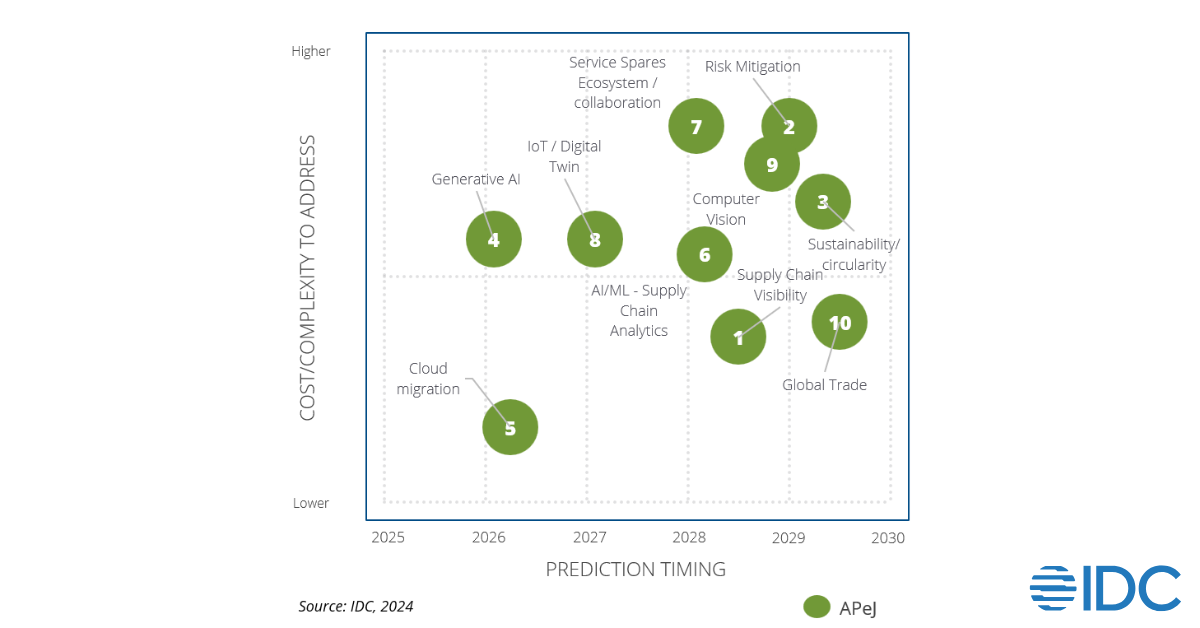
Prediction statements can provide clarity on building resilience through technology adoption, highlighting how the outcomes and goals of the organization while navigating disruptions and proactively managing risks. That’s why, at IDC, each year we come up with 10 predictions that we expect to drive supply chain organizations forward (Figure 1) and publish it in our report  IDC FutureScape: Worldwide Supply Chain 2025 Predictions ― Asia/Pacific (Excluding Japan) Implications.

Here are five of those supply chain FutureScape predictions that are shaping how Asia/Pacific organizations will support operational efficiency and build resilience for future success.

1. Predicting the Unpredictable with LLMs

IDC Predicts: By 2028, 50% of A1000 supply chain organizations will deploy LLM-powered platforms to simulate and predict risks related to geopolitics, regulatory frameworks, and weather impacts to increase resiliency.

These platforms not only enable faster, data-driven decisions but also highlight the shift towards predictive, proactive supply chain management. By identifying potential disruptions in advance, these tools help organizations build more resilient operations, ensuring stability and agility in an increasingly volatile global environment. This trend reflects the growing emphasis on leveraging advanced technologies to future-proof supply chains and respond effectively to complex challenges.

2. Sustainability Gets Smarter

IDC Predicts: By 2029, 60% of A2000 supply chain participants will deploy AI to comply with circularity regulations, achieving adherence to environmental regulations and 20% efficiency gains.

As circularity regulations grow stricter, organizations are increasingly turning to AI to navigate these demands while aligning with sustainability goals. This shift represents more than compliance; it underscores a fundamental transformation in how supply chains operate—from reducing waste to optimizing resource use. By embedding AI into their strategies, companies are not only meeting environmental expectations but also enhancing operational efficiency and building more competitive and sustainable supply chains for the future.

3. Cloud Levels the Playing Field

IDC Predicts: By 2026, 45% of A2000 supply chain organizations will have migrated to cloud solutions, improving inventory velocity by 5% and making small and medium-sized businesses competitive with larger players.

Small and Medium-sized Enterprises (SMEs) are the backbone of the Asia/Pacific region’s economy. In APEC in 2020, it was estimated that they make up approximately 98% of businesses. Most businesses created today are likely to be digitally native, and that often means adopting cloud-based solutions. These solutions enable SMEs to compete effectively by offering cost-efficient tools that enhance connectivity, scalability, and collaboration. This shift empowers a new wave of businesses to improve visibility, agility, and operational efficiency, laying the foundation for interconnected, resilient supply chains and accelerating digital transformation across the region.

4. AI Supercharges Logistics

IDC Predicts: By 2028, 60% of A2000 supply chains organization will utilize AI/ML for dynamic shipment planning and network optimization, reducing disruption response time by 75% and delivering 5% reduction in transportation spend.

AI and ML are taking center stage in shipment planning and network optimization, enabled by the increasing adoption of cloud-based technologies that provide a stronger data foundation. With this improved infrastructure, these tools can deliver smarter, more adaptive logistics systems that respond dynamically to real-time conditions. By leveraging these advancements, supply chains are achieving unprecedented efficiency and resilience, positioning themselves to thrive in an increasingly interconnected and unpredictable global environment.

5. GenAI Transforms Risk Management

IDC Predicts: By 2029, 40% of APeJ manufacturers will utilize AI and GenAI for compliance automation, ensuring a 90% reduction in manual compliance tasks and cutting operational costs by 15%.

AI and GenAI are driving significant advancements in compliance automation, helping businesses streamline traditionally manual and resource-intensive tasks. These technologies are a response to increasing regulatory complexity, enabling organizations to ensure adherence while reducing costs and errors. By leveraging these tools, supply chains can focus on more strategic priorities, improving overall operational efficiency, enhancing compliance accuracy, and significantly boosting productivity. This enables businesses to not only adapt swiftly to evolving compliance landscapes but also gain a competitive edge in a highly regulated environment.

A Future of Intelligent Supply Chains

Asia/Pacific* supply chains are evolving into ecosystems of intelligence and resilience. Technologies including AI/ML, GenAI, IoT, cloud computing, and digital twins are not just enhancing operational efficiency but redefining the boundaries of what is possible. From smarter sourcing and predictive risk management to sustainability-driven efficiencies, AI and emerging technologies are transforming challenges into opportunities.

Ready to embrace the future of intelligent supply chains? For more insights and detailed analysis, explore our report: IDC FutureScape: Worldwide Supply Chain 2025 Predictions ― Asia/Pacific (Excluding Japan) Implications, or join us for our FutureScape webinar “Building a Future-Ready Supply Chain” on January 22.

*Asia/Pacific excludes Japan.

In a world where change is constant and opportunities are often hidden in plain sight, organizations must navigate a maze of challenges while identifying the pathways that lead to growth. Staying competitive requires not just data but meaningful insights to inform decisions and shape strategies.

IDC’s recent research highlights how businesses are increasingly leveraging AI and other advanced technologies to stay ahead. The market for AI platforms, for instance, saw impressive growth in 2023, with revenue expanding by 44.4%, reflecting the surge in AI adoption across industries​.

The Power of Actionable Insights

Actionable insights have become the key for businesses to stand out and lead with purpose. These insights are more than just data—they are the catalysts that drive strategic decisions, enabling organizations to identify opportunities and address challenges with precision and agility. IDC’s research emphasizes the growing role of market intelligence in decision-making, with Strategic Market Insights (SMI) tools offering businesses access to comprehensive data, trends, and forecasts that are critical for making informed choices.

IDC’s Rapid Modules, such as Barometer and Analyst Pulse, provide businesses with quick access to proprietary data, insights, and their very own IDC analyst panel. These tools offer a valuable lens for tracking the pace of AI adoption and understanding market dynamics. What makes these insights particularly powerful is the credibility of the research behind them. IDC has been recognized as the Analyst Firm of the Year for the fifth consecutive year by The Institute of Influencer & Analyst Relations (IIAR). This recognition highlights IDC’s reputation for thorough analysis, strategic thinking, and expertise across areas like AI services, cybersecurity, digital commerce, and emerging technologies such as generative AI.

Addressing Key Challenges for Long-Term Success


As companies embrace actionable insights, they must also address key challenges—such as digital security, technical debt, and the evolving role of AI. These challenges must be recognized and tackled head-on to stay ahead of the curve and set the foundation for sustainable success. Let’s take a closer look at how these issues impact strategic planning.

  • Expanding Digital Security Frontiers
    With the sophistication of cyberattacks increasing, safeguarding data has never been more important. IDC’s research suggests integrating AI into security systems to protect sensitive information and maintain customer trust. AI can enhance security measures, detecting anomalies and mitigating risks in real time, making it an essential part of any security strategy.
  • Managing Technical Debt
    Adopting new technologies often leads to the accumulation of technical debt, creating inefficiencies. IDC stresses the importance of addressing these issues to maintain agility and drive innovation. Organizations must streamline processes, update legacy systems, and integrate new technologies seamlessly to stay competitive in an ever-changing market.
  • Monetizing AI
    What was once considered hype, generative AI is now a crucial business tool. IDC reports that nearly half of organizations deploying generative AI in production have selected AI platforms. This shift creates new opportunities to explore revenue streams, enhance product offerings, and adjust business models to align with evolving market demands.

Unlocking the Full Potential of Strategic Insights


As businesses continue to adopt data-driven strategies, it becomes clear that insights are the true differentiator. By embedding these insights into every level of their operations, organizations can gain a competitive advantage, accelerate growth and ensure long-term sustainability. IDC’s research shows that businesses leveraging strategic insights, particularly through AI and advanced analytics, are better positioned to respond to market shifts and align offerings with demand in real time.

Furthermore, organizations increasingly rely on third-party data and AI to enhance their insights. This enables more effective decision-making through predictive analytics that drive performance. As AI adoption accelerates, IDC forecasts a 50.9% compound annual growth rate (CAGR) for cloud-based AI platforms over the next five years. This shift to cloud platforms not only increases operational efficiency but also enables businesses to scale securely and adapt swiftly, reinforcing the value of strategic insights as guiding forces in an organization’s long-term strategy.

Embracing Strategic Leadership


To stay ahead, organizations must move beyond simply reacting to change. They must leverage tools like IDC’s Strategic Market Insights and thought leadership to lead proactively. By embracing these insights, companies can maintain a neutral and unbiased view of the market, positioning themselves to foresee change, allocate resources effectively, and navigate an increasingly digital landscape with resilience.

Building a Future-Ready Roadmap

Strategic planning has never been more crucial. It’s not just about keeping up—it’s about staying agile, spotting new opportunities, and making smarter decisions at every turn. To get there, businesses need to embed actionable insights into their day-to-day operations. This goes beyond simply collecting data—it’s about transforming that data into actionable perspectives and insights, viewed from multiple angles. IDC’s research makes it clear: the organizations that leverage strategic insights, particularly through AI and advanced analytics, are the ones poised for success.

As 2024 comes to a close, organizations across industries are preparing for change in 2025. Technology is advancing rapidly with investments being prioritized, use cases being evaluated, and employees being primed for the changes on the horizon.

2024 was clearly the year of Artificial intelligence (AI). It comes as no shock that within the coming year we saw more AI. However, we would need some advancements in areas such as autonomous agents. With this looming pivot around AI, the ability for business functions, teams, and stakeholders to orchestrate data seamless to make better informed decisions will be the dividing line between success and failed proof of concepts or investments.

In this environment, the experience-orchestrated business (X-O) is a transformative approach that leverages AI and generative AI (GenAI) to create interconnected, data-driven experiences for all stakeholders.

This concept is crucial as it enables organizations to deliver enhanced value and differentiated outcomes in a competitive market. AI and GenAI technologies play a pivotal role in this transformation by:

  • Optimizing processes
  • Automating tasks
  • Breaking down data silos

These advancements allow businesses to align actions with desired outcomes, ensuring that investments yield meaningful results.

In an X-O business, data and insights are embedded in daily operations, fostering a connected ecosystem that benefits employees, customers, and partners alike. This shift not only improves efficiency but also drives innovation and growth, making it essential for organizations aiming to thrive in the digital age.

Overcoming Challenges in Transitioning to an Experience-Orchestrated Business

Transitioning to an experience-orchestrated (X-O) business is a complex endeavor that involves several significant challenges. One of the primary hurdles is transforming existing business operations. This requires a comprehensive roadmap, the establishment of new metrics, and the integration of advanced technologies like AI and GenAI. Organizations must be prepared to overhaul their processes and systems to align with the goals of an X-O business.

Stakeholder alignment is another critical challenge. Internal and external stakeholders often have different perspectives, success metrics, and goals. Achieving a unified vision and ensuring that all parties are working towards common objectives is essential for the success of an X-O business. This alignment and orchestration requires continuous communication and collaboration to align expectations and outcomes.

Data silos present a significant barrier to the seamless flow of information necessary for an X-O business. Many organizations struggle with fragmented data environments, which hinder their ability to unify customer and operational data. Breaking down these silos and ensuring data accessibility and integration across all functions is crucial for deriving actionable insights and delivering cohesive experiences.

Employee resistance to change is another major obstacle. The shift to an X-O business involves adopting new technologies and processes, which can be met with apprehension and resistance from employees. Educating and engaging employees about the benefits and value of becoming an X-O business is vital.

Addressing their concerns and demonstrating how these changes can enhance their roles and contribute to the organization’s success will help mitigate resistance and foster a culture of innovation and adaptability.

Steps to Implement Experience-Orchestrated Applications

Establish Metrics

Begin by defining clear metrics that align with your organization’s goals. These should measure both internal and external stakeholder experiences. Metrics like customer satisfaction, employee engagement, and operational efficiency are crucial. Regularly review these metrics to ensure they reflect the evolving needs of your stakeholders.

Invest in Technology

Invest in AI-enabled technologies that support experience orchestration. This includes predictive analytics, machine learning, and generative AI. These technologies will help automate tasks, optimize workflows, and provide actionable insights. Ensure your technology stack is integrated and scalable to adapt to future needs.

Educate Stakeholders

Educate all stakeholders about the benefits and functionalities of experience-orchestrated applications. This includes training sessions for employees, informational meetings for executives, and collaborative workshops with external partners. Clear communication will help mitigate resistance and adopt a culture of innovation.

Foster Collaboration

Encourage collaboration across departments and with external partners. Break down data silos to ensure seamless information flow. Use collaborative tools and platforms to facilitate communication and data sharing. This will help in creating a unified approach to delivering exceptional experiences.

By following these steps, organizations can effectively become an experience-orchestrated business, driving value and differentiation in a competitive market.

The Future of Experience-Orchestrated Business

X-O business models offer transformative benefits, including enhanced stakeholder engagement, streamlined operations, and improved decision-making. Embracing this transformation is crucial for staying competitive in an AI-driven world.

Organizations must prioritize outcomes over outputs, leveraging AI to create interconnected experiences. The journey to becoming an experience-orchestrated business is challenging but essential for long-term success. Start by assessing your digital maturity, aligning metrics, and fostering a culture focused on value creation.

Now is the time to act and lead your organization into the future of X-O business.

Aly Pinder - Research Vice President - IDC

As Research Vice President, Aftermarket Services Strategies, Aly Pinder Jr leads IDC research and analysis of the service and customer support market for the manufacturer, which includes topics such as field service, warranty operations, service parts management, and how these service areas impact the overall customer experience. Mr. Pinder Jr. establishes a roadmap for organizations to better understand how technology can transform service and support functions to drive exceptional customer experiences and customer value, profitable revenue growth, and improved efficiency in the field.

2024 was nothing short of transformational for the tech industry, with AI taking center stage. From groundbreaking implementation practices to AI’s sweeping impact across industries, this year marked a turning point. IDC analysts explored how AI is shaping business strategies, uncovering use cases that redefined innovation, and analyzing its economic ripple effects across the globe.

Throughout the year, we shared hundreds of free resources packed with insights from our research. If you missed one or two, don’t worry—we’ve curated a list of our most accessed content. Explore the top ten must-reads below, covering topics your peers found important.

As 2024 comes to a close, the rollout and adoption of 5G in Europe stand at a pivotal juncture. This year has seen significant progress but also challenges that continue to hinder its full potential. Let’s reflect on the milestones achieved, the obstacles overcome, and the outlook for the coming year, positioning 5G as a key driver of innovation for businesses of all sizes.

Key Achievements of 2024

1. Expansion of Network Rollout

5G coverage has expanded significantly across Europe, reaching rural areas and less-developed regions, spreading the availability of 5G Standalone widely across key markets in Europe. This has reduced the digital divide and unlocked opportunities for new business models based on advanced connectivity.

2. Consolidation of Enterprise Use Cases

Industries such as manufacturing, logistics, and automotive have led the adoption of 5G through mobile private networks (MPN) and are beginning to look at network slicing capabilities that are still not fully available commercially. These industrial solutions have enabled operational optimization and applications such as predictive maintenance and real-time remote control.

3. Push of OpenAPIs

A significant milestone in 2024 was the formation of a consortium led by Ericsson, a group of communication service providers (CSPs), and Google to drive the adoption of OpenAPIs. This initiative aims to standardize and simplify the integration of 5G capabilities, opening doors for monetization through new digital services. By enabling seamless interoperability, OpenAPIs pave the way for developers and enterprises to create innovative solutions, further enhancing the value of 5G in both consumer and enterprise markets.

Challenges Remaining

1. Investment Profitability

Although deployment has advanced significantly, and many industries are already looking at 5G as a “no brainer”, monetization remains a challenge. Many operators struggle to justify returns on 5G investments, particularly in saturated markets where consumers perceive 5G as an extension of 4G.

2. Fragmented Ecosystem

The European landscape remains characterized by fragmentation, with differing regulatory frameworks and adoption levels across countries. This limits economies of scale and complicates cross-border solution implementation – a good example being the spectrum required to deploy 5G mobile private networks

3. Business Awareness and Education

Despite progress, some enterprises and many SMEs still lack a clear understanding of 5G’s benefits. This knowledge gap hampers broader adoption, particularly in traditional sectors.

Outlook for 2025

1. Prioritizing Business Innovation and Cocreation with Customers

5G infrastructure is essentially ready to fly, but it must solidify its role as a key tool for digital transformation. Multinationals will leverage its capabilities to scale global solutions, while SMEs can focus on tailored solutions to enhance competitiveness.

2. Expansion of Use Cases

5G is a fantastic enabler to get fast, accurate and reliable data from enterprise operations and customers, and aggregate those into platforms where insights can be extracted. Based on this, technologies like edge computing and artificial intelligence (AI) integrated with 5G are taking center stage and they will continue to do so. These will enable new real-time services, such as autonomous fleet control or connected healthcare applications.

3. Harmonized Regulatory Framework

The European Union is expected to move toward more uniform regulations, fostering a more favorable environment for collaboration and innovation across the continent.

4. Sustainability Focus

Energy efficiency will remain a priority. 5G, combined with sustainable solutions, can help reduce energy consumption in key sectors, contributing to Europe’s climate goals.

Conclusion

2024 has been a year of consolidation for 5G in Europe, marked by significant achievements but also highlighting challenges that remain. Looking ahead to 2025, priorities must focus on maximizing the business and societal impact of 5G, reinforcing its role as a driver of innovation for companies of all sizes. Only by doing so can Europe lead the race toward a connected and competitive future.

Alejandro Cadenas - Associate Vice President - IDC

Alejandro Cadenas leads the European Telco Mobility unit, comprising the CISs European 5G Monetization and Adoption Strategies, European Consumer Telecoms Strategies, and European Internet of Things Ecosystem and Trends. The focus of these three programs is to address the Monetization strategies, best practises, challenges and recommendations for all players across the telecom sector. The key areas addressed include, but are not limited to, OpenAPis monetization, 5G monetization in the Enterprise (Mobile Private Networks, Slicing) and Consumer (digital products categories) segments, Partnerships, Commercial stratregies, key customers and pain points, LEO satellite connectivity, Mission Critical systems, as well as all strategies to take these to the market.