After much back-and-forth on work models, bold ultimatums from employers and staunch resistance from workers, European businesses are in the process of codifying different ways of where, how, when, and why we work. One of the many reasons for this change is the speed with which technology, especially artificial intelligence and GenAI, have made it possible to work equally well in varying, flexible work models.

The downside of this rapid technology development has been that European organizations simply cannot hire enough workers with current or deep skills – both technical and human. Do you manage highly distributed teams performing complex and interdependent tasks? Certainly not easy. Finding employees trained sufficiently well to safely transition to the use of Gen AI solutions? Not easy either.

Enter the promise of automation and in particular the ability of AI and Gen AI tools to both facilitate repetitive tasks like coding, data entry, research, and content creation but also to amplify the effectiveness of learning in the flow of work and secure company assets.

The following 3 predictions are examples of what work in Europe might look like in the next five years, considering the areas of work personalization, skills development and the impact of climate change on office design.

Future of Work Predictions for 2024 and Beyond

  • Prediction 1: 60% of Large Businesses will upgrade hardware and software technologies to increase worker retention with personalized work experiences and enhanced collaboration by 2025.

Rapidly evolving technologies and work methods are forcing companies to upgrade hardware and implement new software technologies that support better employee experiences, personalization and improved collaboration.

Collaboration apps are becoming more visual and continue to develop features unlike multiplayer games that enable a more personalized view of work and teams, better targeting of projects, and hands-on collaboration apps. Meetings and other work resources, including collaboration resources (workflow, meetings, new document formats, etc.) are translated and transcribed in real time, captured, analyzed and exploited by other integrated business data sources. The results enable faster and more personalized decisions and collaboration, including summaries using generative AI. AI solutions are gradually increasing the ways people consume content and data, and AI itself will become a digital collaborator.

  • Prediction 2: Enterprises will leverage personalized technology skills development to drive $1T in productivity gains by 2026, enabled by GenAI and automation everywhere.

As the development and use of technology in everyday work environments becomes more complex, organizations struggle to find experts for programming, security, architecture, operations, management and many other roles. IDC data from 2023 shows that 43 % percent of organizations lack the capability support needed to successfully implement automation.

One of the reasons Gen AI adoption and experimentation has grown so rapidly is that everyday workers can see its immediate value. As new jobs come online due to new automation requirements and workers learn new skills, Gen AI is being incorporated into tools that create employee training. Workers with entry-level skills can better target individual learning needs based on the speed with which Gen AI can generate code, summarize data, and create first-draft multimedia products. This customized approach ensures that people (including IT staff) receive the most appropriate training, optimizing efforts to increase their skills and competencies as jobs evolve, plus the need to program GenAI applications themselves.

  • Prediction 3: By 2028, organizations will invest in office climate havens, using asset-based/renewable energy to defray 30% of their ongoing operating costs.

It is not just work patterns that are rapidly changing. The environment we live and work in is rapidly changing too. As uncontrolled wildfires, climate change and extreme weather events become more common in Europe, the consequences are affecting human health and the ability to work effectively. Sustainability measures are no longer considered optional as organizations worldwide recognize them as necessary components of strategic planning and sustainable operational excellence.

In future, progressive companies will adopt a combination of innovative building design, digital twins, robotics and integrated climate systems to create climate havens where workers and their families can both find relief and focus on work. Unfortunately, simply rebuilding existing buildings with AI or robotics adds energy demand to an already struggling European energy infrastructure.

Companies that invest heavily in asset-based energy (hydro/tidal, geothermal, solar and wind) on-site in their climate havens, support both their operating costs and potentially create a secondary revenue stream when they feed electricity back into the grid. This is reversing the long-term trend of digital organizations threatening their local communities through excessive power usage, while improving community relations, employee retention and talent recruitment.


All the above predictions have much in common – they seek to better understand the intersection of technology and human behavior. Science fiction predicts dystopian visions of mechanized and artificially controlled societies where human efficacy is threatened. IDC far from that point of view, but we also see how the concerns raised by new technologies such as Gen AI can play a big role in hindering adoption—for better or for worse.

Organizational leaders must invest time and money in the strategic planning for the adoption of AI and GenAI technologies, as well as the new roles and ways of working they create. This is not just a technology issue that affects computing, security, hardware, infrastructure, and integration requirements. It is also a human issue that must be addressed employee empowerment through skill development and the development of appropriate, re-imagined career paths.

For more information on the impact of Automation on the European Future of Work, please access the following resources:

Meike Escherich - Associate Research Director, European Future of Work - IDC

Meike Escherich is an associate research director with IDC's European Future of Work practice, based in the UK. In this role, she provides coverage of key technology trends across the Future of Work, specializing in how to enable and foster teamwork in a flexible work environment. Her research looks at how technologies influence workers' skills and behaviors, organizational culture, worker experience and how the workspace itself is enabling the future enterprise.

IDC recently published a new document that offers a holistic assessment of how Communications SPs are evolving their communications infrastructure and operations through digital transformation to become more agile at offering advanced digital and managed services to business customers. The IDC MarketScape on Worldwide Communications Service Provider Digital Infrastructure and Services evaluated 12 global Communications SPs.

Communications SPs face common challenges, including service commoditization, fierce competition, and a lack of flexibility to innovate rapidly to meet shifting market needs. To capitalize on new opportunities, Communications SPs across the globe are accelerating their focus on digital transformation across communication networks, IT, and business operations to become more agile digital service providers and transition from telco to techco. This transformation is inevitable to stay relevant and support the needs of organizations as they face the full impact of digital business evolution.

Key Trends Representative of the Digital Business Evolution
The shifting digital business landscape and the requirement to be judicious about capital investments is leading more enterprises to depend on IT partners for best-in-class technology, and managed service options, that help them to manage their internal skills gaps. Some important trends that are driving digital business services transition include:

  • Cloud-centric digital application strategies that provide compelling business and technology benefits have accelerated the implementation of digital platforms. As organizations move applications to the cloud, the right mix of secure and flexible network services becomes essential to underpin their digital business strategy.
  • Managed services become a more attractive option for organizations, as cloud-centric digital strategies expand, to help simplify complex tasks through optimized network-as-a-service experience that can be tailored to its specific business and to help companies manage their lack of internal expertise.
  • Composable services that offer flexible pricing models by applying a consumption methodology to simplify the buying process, create cost-effective service bundles, and can help organizations reduce the cost of managed services and connectivity over the long term.
  • The evolving threat landscape continues to drive demand for managed/cloud-based delivery models for integrated security management to address cost, complexity, and the lack of internal security staff. It is increasingly convenient for organizations to acquire integrated security features and tools as part of managed services, that can also address data sovereignty concerns.
  • The intelligence of the digital infrastructure to ensure a differentiated experience is accelerating the use of AI and Gen AI models with advanced analytics to turn large amounts of data into valuable business insights, benefits, and outcomes.
  • Comprehensive API capabilities to better expose the full value of the network, service, and partner assets to help drive automation under an open environment that can integrate with a broad range of proprietary and legacy solutions.
  • ESG requirements are moving higher in priority for organizations, in some cases, closely tracking behind profit and revenue. Sustainability is becoming an important factor in driving organizations’ managed service investment requirements that can offer energy-efficient as-a-service models.
  • Strategic service provider partnerships have become paramount to help organizations embark upon new journeys that will improve operational efficiency, business resiliency, and customer experience with their digital infrastructure and services transformation, beyond just connectedness.

2023 IDC MarketScape for Digital Infrastructure and Services Evaluates 12 Communications SPs

The 2023 IDC MarketScape for Worldwide Communications Service Provider Digital Infrastructure and Services evaluates 12 Communications SPs across 20 scoring criteria categories, including 10 each of strategy and capabilities. Communications SPs had to meet a minimum threshold of annual revenue and network portfolio that offers a range of managed services including managed WAN, managed cloud, managed security, managed Internet of Things (IoT), multi-access edge computing (MEC), and other network services targeting business customers. The analysis also evaluated the underlying intelligence of their digital infrastructure such as network virtual/cloud-native functions, NaaS platform, API integration, and AI capabilities.

This research includes the analysis of twelve communications service providers including AT&T, BT, Comcast, e&Enterprise, Lumen, NTT, Orange, Reliance-Jio, Telefonica, Telstra, Verizon, and Vodafone, who are positioned in the leaders and major players categories. The analysis identified that all 12 of the Communications SPs have a strong digital transformation plan, but some are more progressed than others for now.

The ample landscape of service providers offering digital infrastructure and managed services means organizations can face increasingly complex choices in service provider selection for their agile digital infrastructure modernization needs. The 2023 IDC MarketScape for worldwide communications service provider digital infrastructure and services is meant to be a guide for helping organizations evaluate Communications SPs to become their strategic partner in this important digital business evolution.

We also recommend you take advantage of these recent resources from our tech market experts:

Peter Chahal - Research Director, Worldwide Telecommunications Services and Strategies - IDC

Peter Chahal is a Research Director at IDC's Network and Telecommunications research practice covering telecommunication services and strategies. Some of the key areas of his research includes mobile broadband services, 5G monetization, SD-WAN, wireline broadband services, and other emerging telecom digital services. Peter’s also looks at telecommunication service providers’ broader strategies and how those strategies influence telecommunication providers’ digital transformations. His research helps telecommunication service providers and vendors have a better understanding of the worldwide telecommunications market and discover new opportunities for growth.

Without a doubt, generative AI (GenAI) has been the most talked about innovation this year, and it looks like it is only going to grow in 2024 and beyond. Love it or hate it, ignoring GenAI and its benefits for organizations means losing out on a tool that is set to revolutionize the way we work.

Now, organizations are faced with a critical decision: do they build their own GenAI capabilities or opt for ready-made solutions from vendors? This pivotal choice can shape the trajectory of innovation within an organization.

In this blog, we will explore the various considerations when making the build vs. buy decision and delve into the impact of GenAI on productivity, functional excellence, and industry-specific applications.

GenAI Unleashes Innovation

GenAI transforms an organization’s knowledge and makes it accessible to employees, customers, and suppliers. It connects data to insights, unlocking lots of information in an organization and turning it into a valuable asset.

Boosting Productivity

Staying ahead of the competition often hinges on the ability to maximize productivity while driving operational efficiencies. GenAI shines in productivity use cases, automating tasks like summarizing reports, generating job descriptions, and even coding in languages like Java and Python. By automating these processes, GenAI enhances workforce efficiency, reduces human errors, and augments overall output.

To boost productivity with GenAI, you have two options. You can integrate it into existing commercial apps or opt for standalone GenAI apps. This flexibility enables customization to meet specific requirements. Companies often choose this path to overcome challenges like finding specialized AI talent and limited budgets.

However, this approach may have trade-offs, such as lower control over model governance, data security, privacy, and compliance issues. Careful consideration is necessary when deciding to build or buy GenAI for productivity enhancements.

Functional Excellence

GenAI also plays a vital role in enhancing functional excellence by automating processes, optimizing decision-making, and providing highly personalized, context-aware solutions. Companies can modify open-source models or use existing models from AI platforms to align GenAI with their business needs.

The adoption of GenAI for functional excellence is facilitated by well-harmonized institutional data, in-house talent, budget availability, and a moderate risk appetite. While it offers contextual experiences and operational efficiencies, companies need to be aware of the potential challenges, including model governance and data security.

Industry-Specific Applications

GenAI’s impact in industry-specific contexts is profound. It empowers companies to create new digital business models, design innovative products and services, and establish unique competitive advantages. Fine-tuning existing models or developing custom models are the primary approaches for industry-specific GenAI implementations.

Industries often turn to GenAI for applications such as groundbreaking drug discovery in the life sciences sector and generative material design in manufacturing. While these implementations offer tremendous value, they also come with high costs and the responsibility of managing regular model refreshes.

The ‘Buy’ Perspective

The ‘Buy’ perspective offers a way to quickly access GenAI benefits by leveraging enterprise applications with GenAI capabilities or native GenAI applications. These solutions empower businesses to harness GenAI’s capabilities without extensive in-house development efforts. However, they may lack competitive differentiation and offer limited customization.

The ‘Buy’ approach is suitable for enterprises wanting quick access to GenAI benefits, especially those with low maturity around enterprise data management and AI. It can kickstart the GenAI journey while establishing a foundation for data management, governance, and the skills needed for further GenAI development.

Fine-Tuning GenAI Models

Fine-tuning existing models is a powerful strategy that involves modifying open-source or commercial models to align with specific business requirements. This approach offers robust solutions, control over training data, and superior performance. However, it requires labeled data sets and regular updates.

Three main avenues for fine-tuning generative AI models include fine-tuning, retrieval augmented generation (RAG), and prompt engineering. Each approach has its advantages and is suitable for different use cases.

Building Your Own GenAI Model

Building your own GenAI model involves developing a foundational model using institutional data. This approach offers the highest level of control, governance, and transparency. It is ideal for organizations aiming to create unique products or services derived from proprietary data.

However, building your own model comes with challenges, including the need for a proficient data science team, high costs related to data collection and infrastructure, and a requirement for expertise in machine learning.

Converting GenAI’s potential into use cases that generate business value requires a clear-eyed understanding of current limitations and challenges. GenAI technology is powerful, but it is not fully mature and presents opportunities for misuse.

IDC’s leading-edge expertise and insight into GenAI trends, opportunities, requirements, and challenges help you elevate conversations and better engage with your customers.

Are you ready to meet the challenge? Contact us today to discuss how IDC can help you succeed with GenAI.

With the introduction of OpenAI’s GPT-3.5 series in late 2022, the world witnessed a surge in investment in generative AI. IDC predicts that worldwide spending on AI solutions will surpass $500 billion by 2027, signifying a significant shift in technology investments toward AI implementation and the adoption of AI-enhanced products and services.

IDC recently hosted a FutureScape webinar by Ritu Jyoti, group vice president of Worldwide Artificial Intelligence and Automation Market Research and Advisory Services. This webinar highlights some of the top 10 worldwide AI and automation predictions for 2024 and beyond. Watch now on-demand.

“ChatGPT’s explosive global popularity has given us AI’s first true inflection point in public adoption,” says Ritu Jyoti. “As AI and automation investments grow, focus on outcomes, governance, and risk management is paramount.”

IDC’s FutureScape 2024 research focuses on the external drivers that will alter the global business ecosystem over the next 12 to 24 months. It also addresses the issues technology and IT teams will face as they define, build, and govern the technologies required to thrive in a digital-first world.

A closer look at IDC’s top ten predictions for artificial intelligence, GenAI, and automation reveals the following:

  • Prediction 1: Tempering GenAI’s Risks: Accelerated efficiency and catastrophic risk are the two sides to the shiny new GenAI coin. To reduce the risks, cloud and software platform providers will bundle GenAI safety and governance packages with their primary services to add value and differentiate their offerings.
  • Prediction 2: Diverse Regulatory Requirements: Efforts to regulate the deployment and development of AI systems will vary across regions and countries. These diverse regulatory requirements are likely to result in organizations taking more phased approaches to AI rollouts. This will also increase time to value.
  • Prediction 3: Conversation as the Standard UI: Conversation is already emerging as the standard user interface (UI) for both enterprise and consumer applications and solutions. These conversational AI interfaces will significantly affect customer engagement, sales, marketing, and even the IT help desk.
  • Prediction 4: The Focus Shifts to Outcomes: As their understanding of automation matures, project sponsors have shifted from a technology focus to an outcomes mindset where they require tangible proof of value delivered for their investments This is measured by KPIs aligned with business and financial outcomes.
  • Prediction 5: GenAI-based Tools Automate Software Quality: Because of the value GenAI brings to automated testing, IDC expects it to quickly change the landscape of software testing. Vendors will become capable of producing a significant percentage of tests to decrease manual efforts and improve test coverage leading to better code quality.
  • Prediction 6: GenAI Transforms Application Modernization IT Services: Increased utilization of AI in application modernization IT services can streamline efficiency, enhance services delivery speed, and bolster IT services margins.
  • Prediction 7: Bringing AI to Knowledge Discovery: The latest advances in generative AI have prompted a surge of demand for capabilities such as natural language question answering and conversational search to support self-service knowledge discovery.
  • Prediction 8: Monetizing GenAI: While technology is a source of advantage, it is the business model that will help businesses monetize generative AI and drive lasting competitive advantage. By 2024, 33% of G2000 companies will exploit innovative business models to double their monetization potential of GenAI.
  • Prediction 9: AGI on the Horizon: Multiple groups are working toward Artificial General Intelligence (AGI) and companies will be experimenting with AGI systems by 2028. As it progresses, AGI will be transformative, impacting everything from the labor market to how we understand concepts like intelligence and creativity.
  • Prediction 10: Chip Priorities Change: Until AI workloads that require the offload of tasks from server processors to accelerators standardize on algorithms and software stacks tuned to server processors, purchase of accelerators (GPU, FPGA, and AI ASIC and ASSP) will eat into purchase of server processors (CPUs).

Are you interested in learning more? Access the complete IDC FutureScape event series and stay updated on the latest IT industry trends.

NRF24 Retail’s Big Show in New York City is fast approaching, and we, IDC Retail Insights will be there. We cannot wait to talk with retailers, technology companies, and industry experts, share our views and learn more about what matters for the industry in 2024 and beyond.

As we prepare for the event, let’s summarize the critical technological imperatives that retailers must embrace to thrive in today’s ever-evolving business environment. Our insights are drawn from IDC Retail Insights’ Global Retail Survey 2023, where over 800 retailers worldwide shared their strategic priorities. Let’s dive into it!

Multilevel Loyalty Strategy for a Greater Retail and Customer Experience

We predict that “by 2024, 40% of Retailers Will Adopt a Multilevel Loyalty Strategy, Leveraging a Unified View of the Customer, to Increase Retention Rate by 20% and Net Promoter Score by 35%”.  Retailers worldwide are on the brink of customer loyalty revolution, with a staggering 35% gearing up to unveil cutting-edge multilevel programs within just three years, as revealed by IDC’s 2023 Global Retail Survey.

The once-reliable methods like points and promotions are losing their edge, lacking the spark needed to captivate customers. Now, in an era where privacy regulations tighten and accessing third-party data becomes limited, the game-changer lies in collecting firsthand customer data—it’s the cornerstone of tomorrow’s success.

But the game is evolving, and the retail world is diving headfirst into the realm of immersive tech. By embracing this tech-savvy frontier, retailers can elevate loyalty strategies, crafting experiences finely tuned for the ever-evolving Alpha and Gen Z consumers.

Brands like Ralph Lauren and Lacoste are venturing into Web3 for exclusive immersive experiences and community building.

The real challenge is about seamlessly delivering these immersive experiences across every retail touchpoint, navigating a landscape growing more complex by the day. That’s why empowering workforce with digital tools isn’t just essential; it’s a key differentiator for maintaining contextualized customer experiences.

Meanwhile, in the hospitality sector, a digital revolution is reshaping the guest experience, demanding personalized, predictive experiences despite ongoing labour shortages. This calls for a strategic fusion of systems and capabilities, a dynamic approach to cater to the digital-driven needs of today’s guests.

Investing in Technology to Deliver Efficiencies and Effectiveness in the Omnichannel Customer Journey

Retailers are navigating challenging a business environment and are under pressure to increase revenue and reduce costs. According to our IDC Global Retail Survey, while customer experience is at the top of retailers’ concerns, increasing operational efficiency is the second most important business priority for retailers.

This is mainly due to the greater complexity of the business environment the industry faces.

Let’s consider, for example, the role of brick-and-mortar in today’s omnichannel operations. The physical store is the pillar of retail operations today, but it must be connected and fully integrated with digital operations to play its role as the centrepiece of the customer journey.

One strategic imperative for retailers is investing in in-store Technology, such as AI, Computer Vision, and IoT, to digitize, automate, and streamline the omnichannel experience in-store.

While retailers are navigating challenging territories and need to do more with less, they haven’t stopped investing in technology. Top investment areas in 2024 include physical infrastructure, cloud, and managed services.

Therefore, another digital transformation imperative is investing in IT Infrastructure, including network infrastructure to connect the physical store and rethink cloud and edge balance to provide a seamless omnichannel experience.

A transformation imperative that should not be overlooked to streamline the efficiency of retailers’ operations is linked to the importance of embracing a best-of-breed Retail Commerce Platform. Retailers are investing in modular and headless platforms, to move towards composable architectures that match the needs of modern omnichannel retail.

As we can see, retailers should be laser-focused on the technological imperatives that make omnichannel operations more efficient and in turn generate better omnichannel customer experience.

AI and Augmented Reality for Customer Experience

In today’s landscape, AI is everywhere as it’s revolutionizing how consumer brands approach customer experiences. This shift places a heightened emphasis on human-centric approaches, especially as AI and GenAI streamlines routine tasks.

In this augmented context, organizations are placing a premium on customer empathy, trust, and privacy. However, this requires a fundamental leadership’s cultural shift and a business transformation, detached from traditional hierarchies towards flatter structures, identifying shared metrics, and nurturing a collaborative culture where innovation thrives.

Retailers growing attention to and investment in advanced analytics, AI, machine learning (ML), and natural language processing (NLP) are unlocking and demonstrating the potential of generative AI (GenAI). It is a point of no return, where retailers are shifting from being merely data-rich to strategically data-driven organizations.

Omnipresence across different channels, such as social media networks, marketplaces, ecommerce, in combination with personalized engagements allow retailers to extract real-time value from every interaction. AI’s impact on CX personalization is profound, evolving from static segments to real-time, context-driven experiences.

The depth of coherent customer data leverages the integration of AI and ML analytics, notably in predictive product recommendations. Our IDC’s 2024 Retail Predictions say that “by 2028, 50% of retailers will offer AI-enabled contextualized recommendations to enhance customer engagement, increasing real-time interactions by 30% and overall conversion rate by 20%”.

These AI algorithms amplify omni-channel strategies, empowering both store associates and digital agents for seamless customer engagements as well as contextualized marketing and merchandising. AI isn’t merely a buzzword; it’s a game-changer. Particularly, it’s reshaping new revenue streams, such as Retail Media Networks, facilitating and powering orchestration across interconnected systems, aiming to seamlessly handle pricing, inventory, forecasting, planning, and maintain consistency across channels and partners.

Importance of the Supply Chain on the Customer Journey and Sustainability

Retail logistics have seen a few challenges in recent years, including disrupted sourcing streams and workforce shortages, but supply chains have started to readjust. Despite things getting better, retailers are preparing for the future by anticipating challenges like those experienced in the recent past, and now investing in making the Supply Chain even more resilient through greater automation and data insight has become a digital transformation imperative.

The primary reason for investing in the supply chain is to increase efficiency and improve product availability, resulting in a better omnichannel customer experience. Sustainability is also a big factor in retailers’ strategic imperatives related to improving the efficiency of the supply chain.

Fortunately, these two objectives—efficiency and sustainability—are not in conflict with each other. Investing in supply chain efficiency has the potential to reduce costs, improve customer experience, and make operations more sustainable.

Retailers are taking a proactive approach to address the challenges of the future. By investing in supply chain resilience, they are ensuring that they can continue to provide the best possible customer experience while also being mindful of the environment.

Let’s Meet at NRF!

As we anticipate key themes for IT vendors and retailers in 2024, we expect these 10 Imperatives for Success to be prominent topics in our conversations at NRF in January. If you’re attending NRF, reach out to us to arrange a meeting or visit our booth at number #1032.

We look forward to meeting you there!

What do customers expect from brands? They expect contextually relevant experiences. This should manifest throughout digital journeys with their preferred brands regardless of the business model. They value relevant content, next steps, and contextual awareness throughout their journeys. For brands, contextual awareness means that they can communicate to customers that the brand understands the nuances of each customer interaction, with every communication conveyed in a sensitive and acceptable way from the customer’s perspective.

Most customers (B2C) or buyers (B2B) will not engage with vendors when the communication is not contextually aware. The decision to view content or communications (or not) is based on brands meeting their expectations (or not). B2B buyers are also B2C customers in their personal lives and carry over high expectations of contextual awareness from consumer brand interactions into decisions made in their work lives.  IDC’s 2023 B2B Technology Buyer Survey responses prove this point.

Source: 2023 B2B Tech Buyer Survey Findings: Growth Depends on Brands Adapting to the Permanent Changes in B2B Buyer Behavior, IDC #US51260123, September 2023. N=400

The experiences that customers expect from brands are, increasingly, all digital. Online transactions have become the majority; among Gen Z, 67% lean toward an online-first mentality, while younger millennials are at 75%. Digital communications, delivered with contextual awareness at the right moment in time, allow brands to demonstrate cognitive empathy, competence, and integrity which together create digital trust.

Callout: With digital engagement dominating engagement mode, the use of contextually relevant content, informed by unified customer data, will be imperative for brands to maintain, nurture, and grow customer relationships.

The challenge for brands, across all go-to-market (GTM) models, is delivering the digital experience reality that customers expect. Meeting customer expectations is a fast-moving target that is difficult to meet without a tremendous amount of data and insights.  In IDC’s latest monthly survey (October 2023), less than one-half of respondents (47%) say they are mostly or entirely digital businesses (leaders), with the rest (53%) reporting that they are somewhat or not digital businesses (followers). CEOs recognize that proficiency in digital strategy is almost as important as proficiency in business strategy (46% vs. 49% in our 2023 survey).

The Three Technologies

What are the CX technology investments that your brand should be making to aspire to or maintain leadership in CX in your markets?

  • Customer data platforms (CDPs), which create and continually update unified customer data profiles, are the basis for understanding customers’ needs in their interactions with your brand. CDPs provide a unified and connected data fabric that delivers a continual understanding of customer context from previous interactions combined with current, real-time interactions. 75.2% of IDC survey respondents plan to increase this area of CX technology spending over the next 12 months.
  • Predictive AI (AI, ML, advanced analytics), which delivers active learning from customer insights in the data by gathering customer intelligence, generating and analyzing insights, and evaluating actions based on real-time feedback from each engagement. Sentiment measurement also plays a significant role in active learning for contextual awareness, as real-time sentiment sensing can be an early warning signal for positive or negative changes in customer behavior. 58.1% of survey respondents plan to maintain or increase this area of CX technology spending over the next 12 months.
  • Generative AI, which is already being used in marketing, sales, and service applications to deliver interactions with individualized content in digital communications including emails and web pages with automatic branding elements to maintain communications consistency. Generative AI is also improving customer support interactions by adding organizational knowledge bases to improve digital assistant and agent quality. One-third of organizations are already investing significantly in Generative AI for training, acquisition, and implementation of Generative AI-enhanced software and consulting services in the next 18 months. Customer support, marketing, and sales organizations report their top Generative AI business focus is improved customer satisfaction, with an average response of 58%.

How do these three technologies interact with each other? Here is one example, with CDPs performing data aggregation and customer context, Predictive AI insights, and Generative AI activation which is the personalized interaction sent to the customer through a communication channel that is most likely digital but could also be physical (in-store).

Source: IDC, 2023

What business outcomes are possible using these three technologies?

  • A global technology brand achieved a 5x lift in conversions by using AI-driven insights to reallocate media spend, with 96% AI accuracy for predicted user behavior.
  • A global pharmaceutical brand achieved a 40% increase in cosmetics sales due to better personalization, with a 40% reduction in cost per acquisition (CPA) for completed purchases.
  • A global automobile brand experienced a 300%+ increase in advertising click-through rates (CTRs), a 2.5x increased conversion rate in the top customer segment, with a 38% reduction in cost per acquisition (CPA).

The business outcomes for Generative AI will be more available with increased adoption of use cases in production. IDC’s C-suite tech survey results provide a preview of the top expected business outcome areas in these business groups:

  • CX, Service and Support: improved customer satisfaction (64.7%)
  • Marketing: revenue growth (57.2%)
  • Sales: increased operational efficiency and employee productivity (69.9%)

A Glimpse into the Future

In this blog, we have focused on three technologies that increase insight, trust, and engagement with your customers now. Let’s look into the future with IDC FutureScape 2024 predictions that are based on the technologies described in this blog.

  • Customer data platforms will deliver high-quality data for predictive AI and GenAI, activating 80% of real-time personalized customer interactions at scale for G2000 firms with 4x engagement gains by 2026.
  • By 2025, 65% of G1000 companies will adopt trust-based marketing programs, harness greater value from zero- and first-party data, and improve marketing profitability by 50%.
  • Pervasive sentiment and intent AI will propel 55% of G1000 firms to conduct all marketing journeys as real-time, two-way conversations by 2025, improving leads to purchase conversions by 40%.

Is your firm future-proofed to achieve the outcomes from these predictions?  If you use the three technologies discussed here, you can confidently answer – Yes! If you don’t have these technologies, and you see your firm as a digital follower – Watch Out! Your customers, revenue, and market share are at risk from your competitors who are digital business leaders.

This year’s Enlit Europe, which took place between November 28 and November 30 in Paris, attracted almost 12,000 visitors,700 exhibitors from 100 countries and 500 speakers, — proving once again to be a reference point for the European (if not worldwide) utility sector.

Sessions on the energy transition (energy efficiency, electrification and decarbonization), flexibility, and digitalization, as well as numerous hub sessions, provided a great opportunity for knowledge sharing during the three-day event. Here are our key takeaways from discussions and debates with technology providers and utilities.

Among the conversations with various utility leaders, three key themes emerged that outline the direction in which this industry is moving.

  • Flexibility at the heart of energy transformation. One of the dominant conversations that continued this year at Enlit is the growing criticality of flexibility for the utility industry. With increasing renewable energy sources and the need to integrate distributed energy resources more effectively, utilities are increasingly focusing on operational flexibility. Additionally, booming electrification requires demand flexibility to mitigate the impact of the energy transition on grids, which are the invisible enabler of it all. Industry representatives stressed the importance of investing in technologies and systems that enable more dynamic grid management, ensuring more efficient and sustainable energy distribution and consumption.
  • The imperative of marketing. Another interesting aspect that emerged during the event was the growing success of utilities that understand the value of marketing, to change customers’ perception of their company and the industry as a whole, while improving their relationship with consumers. Utilities that have invested in understanding consumer needs and have built strong brands are reaping the benefits. Utilities are at the heart of a transformation that impacts everyone and will set the stage for the next generations, if done right and marketed well, companies can turn misconception of the industry on its head, leading to newfound success.
  • What about Generative AI? Despite growing interest over the last year, the topic of GenAI was not as apparent as we would have expected. Discussions we had were more focused on the benefits of horizontal applications of GenAI and very rarely on industry specific use cases that utilities should be digging into. Currently, the discourse on GenAI tends to be more high-level than practical, with utilities trying to figure out how to integrate this technology effectively into their daily operations. The largely uncharted territory of GenAI also raised additional conversations around artificial intelligence and machine learning overall and the untapped potential that still exists. And it all came back to the topic of “data” … the quality of the data, the frequency of the data, the amount of data, etc. The challenge now is for utilities to translate high-level discussions into concrete and practical action, successfully addressing industry challenges and capitalizing on emerging opportunities. And for this they need the help of their peers and the technology ecosystem that surrounds them.

Overall, it was positive to see an Enlit returning to its pre-COVID bustle, with a diverse pool of companies exhibiting on the floor, both from a software and a hardware perspective. Let’s hope the onsite enthusiasm trickles into utilities daily activities fostering more drive to the energy transition.

Here’s to quickening progress in 2024 to be discussed when we meet in Milan at next year’s Enlit Europe.

For more of our coverage on the energy market, visit our website.

In 2023, IDC analysts covered a wide range of topics affecting the technology industry from the economic downtown to the rapid implementation surge of GenAI. Over the course of the year, we developed a number of free resources to provide you with insight into our analyst research. Through the hundreds of resources developed, you may have missed one or two, so we wanted to highlight our most accessed content that may provide important insight to you and your company.

Starting Monday, December 11, we will be counting down our top 10 most popular content resources of 2023. Return each day to gain access to new insights:

Top 10 content 2023 content 1. Generative AI the path to impact blog. Image of city outside buildings people walking, looks distorted as if moving quickly.

The Dawn of Augmented Reality

The recent metaverse hype catalyzed discussions around augmented reality. However, AR is not a new concept.

The first mention in science-fiction of the concept of augmented reality occurred already in the early 20th century. But only thanks to the incredibly fast technological advancements of the past decade did augmented reality become a science-based reality.

Indeed, the latest advancements in augmented and mixed reality technologies like Apple’s new headset are stirring a lot of interest. The past decade witnessed the emergence of the first modern augmented reality devices, starting with Google Glass released in 2012, the first Microsoft HoloLens or Magic Leap One headsets.

Until recently, the costs of augmented reality were substantial, but today things have changed and augmented reality is becoming available to businesses and consumers.

AR is Gaining Momentum

When Google Glass – the first augmented reality consumer-oriented device – was unveiled in 2012, it was supposed to revolutionize the wearables world. However, its clunky design, limited number of functionalities and its steep price of $1,500 did not convince the smart glasses consumer niche.

While Google Glass no longer exists, the technology lives on within the products that succeeded it. Other companies such as Vuzix or Microsoft have since expanded the niche in a way Google Glass was not able to.

While virtual reality is already enjoying much popularity in the market, especially in the consumer segment, augmented reality is slowly unveiling its potential. In Europe, the AR market reached $ 0.8 billion last year and since then is expected to almost triple by 2027 growing at a 21,7% five-year CAGR. As new use cases emerge, we will see a strong adoption curve of AR in the coming years.

The Pioneers in AR Implementation

The use of AR is increasingly common in the commercial sector. It is largely deployed in discrete and process manufacturing industry, in transportation and in retail. These four industries together absorb 55.0% of AR-related spending in Europe in 2023.

Augmented reality has revolutionized the way manufacturers design, produce, and distribute products.  Using AR, Intel has transformed its operations in its semiconductor fabrication facility in Ireland, one of the most advanced manufacturing facilities. Working in the smallest known geometry Intel manufacturing process is extremely complex. Manufacturing technicians use the HoloLens 2 which has become integral to Intel manufacturing processes from maintenance and repair tasks to remote communication and troubleshooting and training.

AR will see a boom in the consumer segment in the next five years, with purchases growing at a 53.6% five-year CAGR. In the commercial space, it is central government to see the most significant increase in AR spending as many European governments have committed to allocate substantial part of their national resilience plans to digitalization projects such as smart cities.

The Benefits of AR for Businesses

AR technology can revolutionize the way we work and live. It enriches the traditional work environment and optimizes business processes while providing significant benefits in terms of safety, efficiency, and productivity.

By allowing virtual objects and real-time information into the physical world, AR can dramatically expand the user’s access to information and performance. In production-driven industries like manufacturing, augmented reality allows us to display every feature of a machine, product, or component, visualize and streamline complex concepts and processes, and provide valuable insight into the operations. Employees can access and apply detailed instructions while they work and make better informed decisions which helps mitigate downtime and reduce errors. This in turn results in overall optimization of processes across the value chain enhancing time and costs efficiencies.

AR helps reduce work-related hazards and improve workplace safety, this is particularly important in the case of industrial organizations that have complex heavy machinery which might be unsafe to operate, or in remote or hard-to-reach locations, where carrying out operations may be time-consuming or dangerous. AR offers the opportunity to identify potential risks in real time or operate remotely.

AR has been shown to be enormously effective in improving the learning curve for the employees.  Immersive training is tailored to a particular worker and is more engaging with traditional learning methods leading to increased knowledge retention while reducing training time. European organizations recognize its potential and increasingly allocate a substantial portion of AR-related budget to virtual training. Investments in AR training will grow at a 46.7% CAGR by 2027.

Companies across Europe have long been struggling to find a qualified workforce. The pandemic accelerated digital transformation in organizations which would boost technical progress but would reveal how deepening skills gap creates bottleneck in the transformation.

According to IDC’s Future Enterprise and Resiliency Survey, organizations are seeing delays in digital transformation of more than eight months due to the lack of skills. In the current setting of ageing population and low supply of the talent from universities and professional courses which potentially undermine the technological progress, AR offers a great opportunity for businesses to increase their upskilling and reskilling initiatives from within.

Moreover, augmented reality contributes significantly to enterprises’ efforts towards sustainability. Remote maintenance helps minimize CO2 emissions from travel, contributing to the realization of a low-carbon society and addressing climate change. AR technology allows remote working, helping eliminate inequalities between urban and rural regions, and contribute to the creation of sustainable cities and communities.

Furthermore, remote tools allow employees to achieve higher productivity, contributing to more sustainable economic growth.

Not All Headsets Are Created Equal

Head-mounted displays (HMDs) come in various forms, but all we can divide them between tethered and standalone. Standalone devices are those whose processing is done within the device, usually capable of 3D mapping.

Some examples of standalone devices are Microsoft’s HoloLens 2 and Magic Leap 2. Tethered devices, however, are usually less capable and less expensive. Processing for these devices is done on an external device and most serve simply as an external virtual screen without being capable, by themselves, of 3D mapping. Brands focused in this category include XReal and Rokid.

The AR Market Landscape

The Augmented Reality market has historically been very focused on the commercial segment, with this segment taking approximately 70% of the market, but this is due to change. The dawn of less expensive devices that mainly function as portable screens, as well as new use cases, are bringing this technology to the masses.

If this trend continues, AR HMDs shipments are set to be 45% to consumers by 2027.

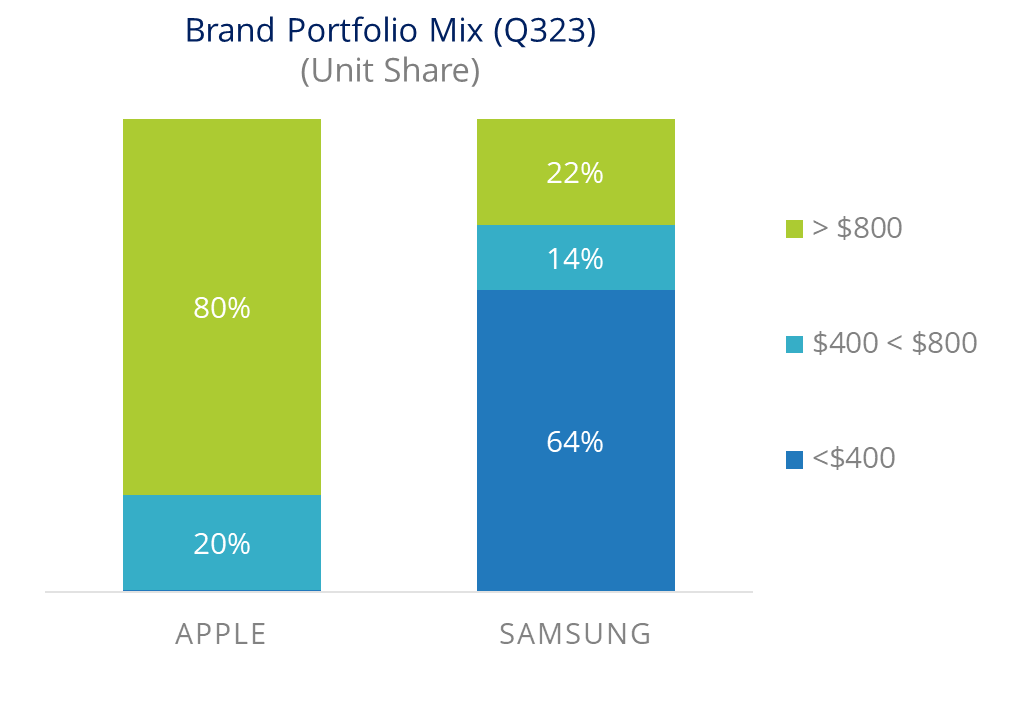
Whilst the more consumer focused VR market is still dominated by a couple of brands (with Meta’s share reaching 60-70%), the AR market is much more fragmented, counting 5 dominant brands. Magic Leap, a high end commercial-industrial focused brand, with devices selling for north of $3.000, is the dominant single brand responsible for about 30% of the AR market. Consumer focused brands that offer “portable screen solutions”, such as Xreal and Rokid take a combined 39% share in 3Q23.It should also be noted that this market has its peculiarities. Due to the reasons mentioned above, AR headsets are, on average, 5 times more expensive than their VR counterparts, this category’s ASP standing at around $2000. This ASP, along with the still limited use cases, is making these HMDs lagging behind VR, representing 8.1% of the combined ARVR market.

As this technology matures, we should expect a steep decrease in price, as well as substantial share growth of the consumer-focused brands who are proving that this form factor is getting closer to being able to replace laptop screens. When it comes to XR technologies, AR is clearly in a good position to become the fastest growing category.

The Future of AR

As mentioned previously, AR technologies, albeit currently niche, are becoming an important part of many companies’ workflows. Remote collaboration is made easier and seamless; high-fidelity pass-throughs can make digital models come to life and discard expensive physical ones. Handsfree AR screens can make specialist trips for maintenance work unnecessary, design processes are streamlined and made cheaper, as well as training and many other cases. This is what is currently possible with today’s technology, but these are still bulky, expensive, or lacking in features.

It is arguable that one of the most interesting developments in the horizon of technology is the evolution of AR. As breakthroughs are made in the AR space, these devices will become lighter smaller, and more affordable enabling access to a broader range of users, from professional across diverse fields to everyday consumers. If we can visualize a future in which HMDs resemble ordinary eyewear, we start imagining a future where individuals can seamlessly blend digital information with their surroundings.

Education serves a notable example of how we can take advantage of these advancements. Students and researchers will be able to interact with 3D models of anything, from the smallest cell to the entirety of the solar system. Field trips to historical landmarks, or to witness rare scientific phenomena will all be possible from the comfort of the classroom. This will increase retention and comprehension.

Accuracy and efficiency in vital sectors such as healthcare will also be improved to a great extent. Surgeons equipped with AR devices will have access to real-time data visualization during procedures and greater detail in the visualization of internal organs. Augmented reality will also allow patients to have therapy sessions, or to manage chronic conditions from their own home, providing more comfort to the patient and reducing the strain on the health services.

Moreover, entertainment will reach new heights with AR. Imagine watching sports with real-time statistics overlaid on the field or experiencing movies as immersive 3D adventures in your living room.

Whether for work, education, healthcare, or entertainment, as AR becomes more feature-rich and fashionable, the possibilities become limitless. Augmented reality is poised to reshape our perception of what technology is and how we use it to interact with the world around us. The future of AR is not a distant dream but a rapidly approaching reality.

The era of AI Everywhere coupled with the storms of disruption, such as inflationary pressures and a sea of digital sameness, has led to a positive trend for customer experience (CX). Its ability to augment value creation in knowledge management, customer service, and customer engagement has enabled greater personalization, more efficient issue resolution, and so on. Proof of this is that CX initiatives continue to be in the organization’s top investment areas and most immune to budget reduction in the next 12 months, according to IDC’s Future Enterprise Resiliency and Spending Survey (FERS) (Wave 8).

There is still a tug of power though as C-suite leaders fight internally for power and budget influence. The C-suite needs to shift towards a tug of value where everyone works together to create flows of value across the entire stakeholder system and connect them to quantifiable metrics.

However, there is still a lot more to be done by Asia/Pacific excluding Japan (APEJ) organizations to truly execute customer-centric CX transformation initiatives.  IDC’s Future of Customer Experience Survey 2023 found that the main obstacles hindering CX transformation journeys are:

  • Technological – legacy infrastructure, lack of unified customer view due to data siloes
  • Organizational – limited strategic support, challenges to provide business value, lack of focus on operational efficiency
  • People related – lack of skills and resources

Aside from implementing customer data platforms and data privacy regulations, which will play a pivotal role in setting the technology and data layers for value orchestration, IDC has recently released IDC FutureScape: Worldwide Future of Customer Experience 2024 Predictions — Asia/Pacific (Excluding Japan) Implications, which short-lists the 10 most urgent business and technology trends. CX executives must pay attention to and build a gameplan for these trends, to emerge resilient against increased similar offerings from competitors, maintain a competitive edge, and not get left behind in the race to demonstrate value and get buy-in from the C-suite.

Among the predictions, I will focus in this blog on #10: Value streams trump experiences. I will show this in real-life situations, and why IDC thinks that by 2027, to differentiate and drive loyalty, 30% of organizations will undergo structural and technological changes to deliver value outcomes, shifting focus from providing experiences to value parity.

While customers expect brands to deliver great experiences, experiences aren’t all that matters.

The value customers get in the exchange is what makes them come back and continue purchasing from the same brand. However, such value needs go both ways. It is when both brands and customers fulfill their goals in frictionless and contextually relevant engagements that value parity is achieved, which is exactly what prediction #10 is all about. However, to do this, brands will need to undergo structural and technological changes which we are now seeing in some organizations:

  • Starbucks, for example, has constantly been innovating through technological changes ranging from mobile apps (reinforcement learning), and greater customization (extra foam, less sweet) to more automated machines, and blockchain – they are planning to launch an NFT marketplace with the goal of attracting a new user base.
  • Telecom operators, such as Starhub and Singtel, are undergoing organizational restructuring and decentralization with the goal of coming closer to achieving strategic priorities and direct accountability respectively.

The end goal is simple. Value parity is what organizations will strive towards. It is the balance between delivering high-quality experiential value to the customer, as well as, bringing value back to the company and its ecosystem.

Donning my consumer hat, let me cite some examples:

Retail: Why do I go back to buy my coffee from Starbucks again and again, despite them not being a cost-friendly option? It’s because I know after a few purchases, I will be rewarded, whether with a size upgrade or 2$ off my next coffee. The idea of getting a bang for my buck allows me to outweigh the short-term cost with the long-term benefits. It also clearly benefits brands like Starbucks to build a loyal customer base and attract the most valuable customers. I also appreciate their proactive real-time issue resolution, such as when my coffee was flat and bitter, and they made me another cup as per my required customization. How a company takes action on a bad experience in real-time to rectify it is a crucial part of customer service and forms a lasting impression in the customer’s mind.

FSI: What makes customers put in the additional effort of setting up alternative wallets, such as GrabPay and ShopeePay in Singapore, and using these for transactions, especially when they can easily use PayNow or NETS to pay through their bank account? For me, like other customers, it is the added value I get in terms of rewards once I collect enough points. By ensuring continuous value gained from digital wallets, these companies are also able to ensure value parity when the value comes back to them through repeat transactions.

Telco: In the telco space, a very important aspect that appeals to customers is the freedom to choose and customize services. Losing an existing customer because of a single service can lead to unwanted loss across all the services the customer has signed up for. Personally, Giga is a great example of a mobile virtual network operator (MVNO) by Starhub, as it offers a great level of customization based on your data usage without any contractual obligation. Its transparency makes the porting-over process very smooth. Their incentives also make me want to continue my subscription. A recent example is a reward program where existing customers are rewarded with 0.2GB of data when they log onto the app every time it rains in Singapore. Simple but smart, isn’t it? By ensuring competitive pricing options and reducing the customer pain points of lock-in periods and contractual obligations, Giga enables customer retention. This further helps with continued subscription and customer advocacy, again enabling value parity.

A few other examples of companies in the region that have realized this and have moved in early are Klook (points), Shopee (cashback vouchers), and Yuu’s cashback tie-up with banks.

After all, which customer doesn’t like feeling rewarded? This is particularly a very evident trait in Asian customers; however, this goes both ways. As companies gain a lot in delivering this value, one bad experience may also cost them a lot. The minute a customer feels they are not getting value they will be quick to switch. Regardless, this area is still constantly growing, with more tie-ups between different vendors and innovations in the type of rewards (particularly crucial for Asia Pacific as rewards tend to lose power over time if customers don’t see value in them). This only goes to show that value is indeed considered a currency in today’s economy, but to effectively create mindshare, companies need to be quick and wise about their approach to creating this value.

Interested in finding out more about the IDC FutureScape: Worldwide Future of Customer Experience 2024 Predictions — Asia/Pacific (Excluding Japan) Implications?

Lavanya Jindal - Senior Research Analyst - Channels & Ecosystem Strategies - IDC

As a Senior Research Analyst at IDC Asia/Pacific, I focus on Channels & Ecosystem Strategies, analyzing trends and supporting strategic decision-making through research. Prior to this, my work encompassed customer experience (CX), Martech, ecommerce and product operations - highlighting my ability to adapt to various domains.