Home Office is an Advantage, But Security Risks Remain

Would you work for a company that wants you to spend 40 hours a week at the office? Three years ago, you probably would have raised your eyebrows at the question. But times have changed — and the answer may not be as evident as it used to be.

The COVID-19 pandemic has dramatically altered how we work. Lockdowns and social distancing made the introduction of home office working inevitable for many companies. For a period, this was necessary to keep companies afloat without putting the health of employees at risk.

But home working has now become an expectation for many employees — and it is widely offered by employers to attract and retain workers.

To stay competitive, enabling a hybrid home-office model, full-time home working, or remote working is an increasingly popular strategy for organizations. But it requires the deployment of substantial security measures to limit risks in a digital environment that remains highly threatening.

Home Office: A Key to Attracting Professionals

Our research reveals that companies are using hybrid and remote working models to strengthen their competitiveness. From the employer point of view, offering a home office opportunity can improve employee satisfaction. In many cases, it also boosts productivity, resulting in better products and services and greater customer satisfaction.

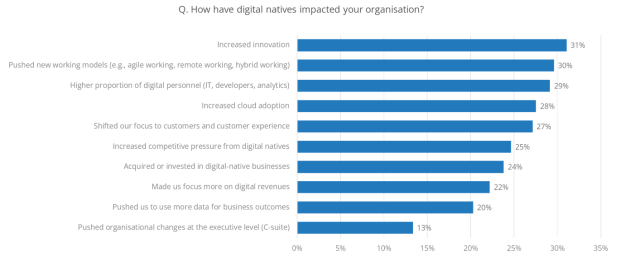
Companies want to keep employees motivated — and hybrid working models are one way to do so. IDC’s European Industry Acceleration Survey 2022 found that 37% of the 1,500 respondents regard hybrid working as an external force that positively impacts the organization. Among all listed options, hybrid working won the most support from survey respondents.

Job seekers increasingly prefer companies that enable them to work from home on a regular basis. Many employers have supported this preference to avoid losing applicants. IDC’s 2022 Future Enterprise Resiliency and Spending Survey (Wave 6) offers confirmation: One-third of respondents cited offering a hybrid working opportunity as their top strategy for attracting and retaining IT professionals.

The survey also found that 29% of organizations regard offering a hybrid model as having the most impact of a range of strategies. Offering competitive compensation packages or designing inspiring workplaces were lower-ranked options.

Almost half of respondents said choosing the right strategy is crucial in the recruitment of IT professionals, particularly those who possess key skills that are in high demand.

Same Road, Different Stages

Companies are generally open to taking the necessary steps to satisfy the home office-related needs of their employees. But they are at different stages of introducing hybrid working models.

Around one-quarter of IDC survey respondents said company leadership had expressed interest in learning more about employee perspectives on hybrid or fully home-based working. One-quarter of respondent organizations have introduced short-term policies for it. Nearly one-third have invested in technologies to support ongoing remote and hybrid work based on feedback from employees, while 13% intend to maintain hybrid and remote working models over the long term.

Of course, not everyone has a positive view of home/remote working. But the Future Enterprise Resiliency and Spending Survey found that only a minority of enterprises face a situation in which the leadership and employees have completely divergent views on the subject.

What does home office working cost employers? IT investments, mostly related to infrastructure, are a major spend. IDC’s Future of Work Spending Guide reported that European companies are expected to spend $4.3 billion on remote team enablement this year. Increasing storage capacity and scaling VPN solutions are two of the most common upgrades that organizations implement.

Home Office or Remote Working?

The focus on VPNs illustrates that organizations must address the security risks of working from home. From the security point of view, there is a difference between home office and remote working. In the case of home office, employees are restricted to working in a specified location, their home, using equipment provided by the employer. In remote working, employees may work from anywhere and use personal equipment.

Remote working poses a much higher security risk. Unsafe networks, weak passwords, and unverified software are among the leading risks. People around the employee may also jeopardize the security of sensitive information. At home offices, unsecure networks, employee exhaustion, a sense of comfort and security, and distractions are among the risk factors. Security measures implemented by the employer can alleviate many of these concerns.

Increasing Focus on Security

After data management, cybersecurity is the second-ranked focus area for organizations. More than two-thirds of IDC survey respondents cited cybersecurity as a focus of skills acquisition and training. Having security experts at the company is essential for technology projects. Many respondents highlighted that IT security professionals remain in high demand, especially for key initiatives.

Security is indeed an increasingly crucial sector for investments, especially in the current era of cyberwar. IDC’s Security Spending Guide reveals that European organizations spent more than $42 billion on security technologies in 2021. A nearly 11% increase is expected in 2022.

The results of IDC’s European Industry Acceleration Survey 2022 align with this trend: 32% of respondents regard cyberthreats as an external factor that negatively impacts the organization. It is thus not surprising that 34% of respondents expect cybersecurity regulations to have a major impact on business in the next two years. In 2023, cybersecurity will continue to be among the top priorities driving digital investment.

There are many ways to boost an organization’s cyber-readiness. Among the listed security services in the Future Enterprise Resiliency and Spending Survey, security training received the most votes (33.6%). When working from home, employees leave the secure working environment provided by the office, exposing employers to greater risk of data breaches and cyberattacks.

Increased spending on cybersecurity, however, is not solely due to the risks posed by home and remote workers. Private and the public sector organizations may be targeted for cyberattacks no matter how many employees are physically present in the office. Because an inability to secure sensitive data poses operational and reputational risks, security budgets must not become victim to budget cuts by organizations trying to survive inflation and recession.

Home office has become widely popular and, for many, the default way of working. It remains to be seen whether the rising cost of living will force employees back to the office. But for now, labor market competitiveness depends on whether companies are willing and/or able to satisfy employee demands for home office. And this trend will continue to influence security sector spending.

Next week I am attending the Smart City Expo World Congress in Barcelona. I’ve have been an attendee, exhibitor and speaker at this annual gathering for many years now, and it’s great to see that in the past couple of years there has been a growing focus on inclusion.

Gone are the days when speaking about bright and shiny new tech toys was enough. Cities are eager to understand how to become truly people centric, including for people with disabilities. On the inclusion front, one topic that I’d like to hear more about at the Expo, in 2022 and beyond, is how to make cities autism friendly.

A Global Phenomenon

According to the World Health Organization, one in every 100 children has autism spectrum disorder (ASD). The US Center for Disease Control estimates it is one in every 44 in the US. If we consider a conservative estimate of one in every 100, then of the 4 billion people worldwide that live in urban areas, 40 million would have ASD. UN projections indicate that we’ll have 7 billion urban dwellers by 2050, meaning 70 million with ASD, assuming the prevalence of ASD does not change.

Autism is a challenging neurodevelopmental disorder. It’s a broad spectrum that includes people with cognitive, speech and motion disabilities, people with milder challenges but that still have a hard time speaking and socialising, and people with high-functioning autism (such as Asperger’s Syndrome), who can be like the genius “good doctor” in the TV series of the same name, but with the crying, screaming and lashing out when overwhelmed by stress, shiny lights, loud noise or unexpected events — stress that can be caused by hypersensitivity to noise, light, smell, touch and an inability to comprehend social interactions. Coping with ASD in a hyper stimulating environment like a city is like trying to share a file between a Mac and a PC in 1985. I know this because I have a beautiful eight-year-old son who has ASD.

Making the Urban Space and the Community Liveable

Making cities liveable for the millions of people that have ASD is a global inclusion imperative. Cities such as Aberdeen, Edinburgh, Liverpool and Glasgow in the UK; Phoenix, Mesa and Austin in the US; Prato in Italy; and tiny villages such as Clonakilty, in Ireland, are exploring how they can reimagine urban spaces and community services to become more autism friendly.

When it comes to urban spaces — both indoor, such as shops, theatres, cinemas, restaurants, museums, public transport, and outdoors, such as streets and parks — unpredictable noises, lights, smells and queues may cause sensory distress to people with autism. Adjusting ventilation, acoustics, heating, lighting, creating quiet spaces to recalibrate after a stressful moment, deploying visual signage that combines words with images, making available sensory guides and social stories to reduce the unexpected and making available small kits with “stim” toys can go a long way to improve liveability for people with autism.

When it comes to the community, lack of awareness about autism can lead to judgements. Autistic people talking to themselves in a library, for instance, can get unfriendly looks. As a result, people with autism and their families tend to isolate from social life.

It’s essential to educate people working in shops, restaurants, cinemas, museums, libraries, schools and healthcare facilities. Business owners need to understand how they can leverage the great skills that many autistic people can bring to the workplace, such as declarative memory.

Government institutions have a role to play to provide coordinated support across family allowance programmes, mental health services, job training and placement, and schools, without requiring people with autism and their families to explain their condition and needs at every point of interaction with the public administration.

How Technology Can Help

Technology is not a silver bullet. Cities have had enough smart techno solutionism. Autism is the least suitable area for cookie-cutter approaches because every person with autism is at a different place on the “spectrum”, with their own special characteristics and needs. But technology can help.

When it comes to urban spaces, using location-based intelligence, digital twins and other tools can help map areas of the city that are the least liveable for people with autism and plan alternative designs. Apps can be used to offer people autism-friendly sensory and navigation maps.

When it comes to the community, online training can help increase awareness. Apps can help communicate with people with autism who are not verbal.

Online services can be used to pre-book fast-tracking entry at certain facilities to avoid the stress of queueing. And public administrations across the city ecosystem should scale trusted data sharing to do a better job of coordinating public services that support people with autism and their families.

I look forward to hearing and learning more about autism-friendly cities at the Smart City Expo and beyond. My son and the tens of millions of people with autism deserve to be included.

Massimiliano Claps - Research Director - IDC

Massimiliano (Max) Claps is the research director for the Worldwide National Government Platforms and Technologies research in IDC's Government Insights practice. In this role, Max provides research and advisory services to technology suppliers and national civilian government senior leaders in the US and globally. Specific areas of research include improving government digital experiences, data and data sharing, AI and automation, cloud-enabled system modernization, the future of government work, and data protection and digital sovereignty to drive social, economic, and environmental outcomes for agencies and the public.

Retail has undergone a huge transformation in the past few years. It’s also still under pressure from external forces and changing buyer behaviour. With buyers changing how they shop and why they shop, retailers need to ensure that their brand purpose aligns with their customers and enhances their internal operations. At the recent IDC Retail Summit, IDC analysts and industry leaders got together to discuss how retailers can operate in a purpose-led world.

Watch IDC’s 2022 Retail Summit on demand here.

The Need to Bridge the Gap Between Online and Offline Retail Experience

The pandemic has forced many changes in retail and now, with offline beginning to expand again, retailers need to bridge the gap between expectations created by online experiences.

Customers are used to a certain experience online, and this can cause friction between their online experience and their experience in brick-and-mortar stores. Technology can help bridge this gap, bringing aspects of the online experience such as personalisation, rewards and speed into the offline experience.

A huge part of bridging this gap is identity management. Identity management isn’t just about security. As digital shopping experiences pick up, retailers can gather more and more data on buyer behaviour. Customers and the way they buy are changing quickly. Understanding who your customers are and how they are buying is important to ensure your company can adapt to a changing buyer.

Digital Transformation Needs to be Practical

Digital transformation is a key part of retailers’ development, and is key to bridging the gap between offline and online experiences and communicating and demonstrating brand purpose. But with all change, it must be effective. Technology that is implemented must be useable and easy to adopt, for employees and customers. Incremental changes that bring value without too much disruption are ideal.

Technology can be a bridge between stores, HQ and employees. Implementing technology as part of digital transformation can help break silos in retail organisations and drive innovation and collaboration by streamlining processes. It can empower teams in stores by giving them information and connecting them to the wider team. It can provide HQ with real-time store data and ensure that teams that work in all parts of the retailer work together effectively and efficiently. Collaboration and communication are vital. When introducing new programmes, tech or functionality, being able to communicate why is important across the organisation. Retailers’ key personas and employees need to understand business priorities but also feel that changes are there to help them and build towards achieving their goals and brand purpose.

Brand Purpose Impacts Everything from Buying Decisions to Employee Productivity

Purpose is becoming increasingly important to brands, but especially those in the retail sector. Customers are becoming more conscious of the social, ethical and environmental impact of the products they buy, and purpose is now part of many customers’ buying decisions.

Customers have expectations for a brand or company experience, not just for the retailer itself but for the whole supply chain. While some of those expectations might not be realistic, retailers have to ensure that their brand purpose is as much a part of their messaging as product information.

Brand purpose is also important for employees. A clear brand purpose that aligns with the products sold is effective in both recruitment and in creating a strong company culture. A strong company culture impacts productivity and improves the customer experience. A company purpose that reflects the core values of your staff and products is now crucial.

Purpose connects value for retail optimisation. It defines the what, the why and the how of a retailer’s business, and it is one of the most influential connectors for retail proceedings and a powerful facilitator of operation and process optimisation.

Retailers are operating in a shifting environment. Purpose is key to ensuring they continue to align with their customers. It also promotes internal coordination and the drive towards an aligned and connected organisation that delivers value. It enhances performance and creates value. This is why, of all the topics discussed at IDC’s 2022 Retail Summit, purpose stood out.

For more information, please watch IDC’s 2022 Retail Summit on demand here. For more insights and key takeaways from the summit from IDC Retail Insights analysts, see Retail Operations in a Purpose-Led World: Key Insights from the IDC European Retail Executive Digital Summit 2022.

For more on our coverage of the retail sector, please visit our website.

Agile development empowers teams with many benefits but also presents challenges around managing and measuring its effectiveness. The way to resolve these is Function Point Analysis.

From business impediment to business enabler, IT development has come a long way since Agile has become the favored practice. Now empowered with speed and responsiveness, organizations have left the days of slow, cumbersome, inflexible, and unresponsive practices behind in the dust. Instead they’re able to support business needs and experience better alignment with changing business environments better than ever before.

It’s easy to understand why Agile is experiencing a strong increase in adoption; as companies become more nimble to embrace the pressures they’re facing in digital transformation, IT development is able to respond aggressively to evolving competitors and exploit markets more easily. But these benefits rival the frustrations on the management side of Agile teams. The nature of Agile makes it so that IT has lost visibility and scope control while the business has lost predictability. While Agile might make teams fast and responsive, businesses don’t know when projects will be delivered, and quality of delivery is often poor.

This is due to story points. Story points is a relative and subjective effort measurement that allows teams to estimate how much work of a certain item is required compared to a certain reference story with a fixed number of points. Story points can be used as an assessment method within a team. But how do these points happen? In an Agile Scrum environment, productivity is often associated with delivered story points, often expressed in Velocity as an estimation unit. The problem is that story points are not standardized, and productivity based on story points means nothing outside of a team itself. Even within a team, story point deflation is always lurking.

Is it even possible to objectively measure productivity? This blog will show that using a ratio scale is the way to objectively measure productivity as proven by IDC Metri’s years of helping clients turn around this common challenge. Management information can be established through a ‘unit of measurement’, bringing answers to long-sought after questions such as which teams are performing well, which teams are not performing so well and when is which functionality ready at what cost?

If you want to use productivity to compare teams, departments, organizations and/or suppliers, or the market, it’s a necessity to use a standard measure of output. Even when this data is about trends on your teams, this insight creates a unified and common view.

For years IDC Metri has been offering function points to create this factual view to clients. Function point analysis was developed in the 1970s to determine the productivity of development teams when it was impossible to do this by counting lines of code. By making function point analysis independent of the technical implementation (programming language, architecture, etc.) and the development method (Waterfall, Agile, etc.), it’s also relevant today and fits into the solution that Agile teams and management need to resolve the challenges that story points create. In short function points are the de-facto standard to express the amount of functionality in a standardized size unit.

Several manual standards are available and one international ISO standard is available for automated function point analysis: ‘Automated Function Points (AFP)’. IDC Metri prefers to use automated measuring of functional size but also employs certified analysts who can manually measure when automated measuring is not possible for whatever reason.

To measure the size of the output of a team, it is also important to not only look at the added functionality but also at the changed and removed functionality. IDC Metri uses automated measuring of ‘Enhancement Function Points (EFP)’ to measure how much functionality has been added, changed and/or removed during a sprint, release or project. This gives the ‘Project Size’ in EFP, a standardized method to measure the output of a sprint or release.

While Agile is hard to measure and manage for full value, the IDC Metri proven approach of using function points transforms a team-driven, fast-moving, rapid iteration process that evaluates progress on qualitative measures into something that can be quantified and predicted.