In highly competitive markets, vendors must constantly look for new and engaging ways to stay top of mind with buyers. In the business-to-business (B2B) world, much marketing comes via content or thought leadership campaigns.

Salespersons, in addition to understanding the business and the products and services they sell, need to be able to contextualize this value within the marketplace and the trends and drivers that are impacting buyers.

What makes content truly effective in this space? And how can you develop content that both works for your target audiences and gives your salespeople a competitive edge in their client conversations?

The Importance of Storytelling

Humans are hardwired for stories. Narratives evoke emotions, create memorable experiences, and make complex information digestible.

In B2B marketing, storytelling helps deliver narratives that take buyers on a journey of understanding that uncovers insights they may not yet had exposure to. Without directly advertising or selling, storytelling can present an alternative view of the challenges businesses face in the industries in which they compete.

Information Overload: Strategies for Creating Effective Content

In today’s digital age, buyers are bombarded with messages from all directions. AI and instantaneous access to information through various media contribute to an “always-on” global marketplace.

Marketers and salespeople must also continually stay up to date with clients, prospects, the competition, and the factors that are impacting buyers. Both seller and buyer may wind up suffering from information overload, resulting in analysis paralysis and high levels of attrition — a situation in which no one wins.

Building Buyer Relationships: Key Components of Engaging Marketing Content

The secret of great content lies in providing a combination of stories, ideas, and insights. These elements are the building blocks of all successful content marketing campaigns.

By weaving together compelling narratives, innovative ideas, and valuable insights, you can create content that not only captures attention but also drives action with buyers. Leveraging data points and case studies further enhances your business credibility, sending a clear message to the marketplace that you have evidence to support your insights and messaging.

Too often, content is created in isolation. A good marketing team will look at what the competition is doing, compare it to current thought leadership campaigns, topics, and talking points, and find white space for new stories and discussion.

Without knowing what is out there, it’s hard to find ways to improve upon it and capture the right audience, let alone buyer attention!

From Insights to Action: Crafting Targeted Marketing Content

Crafting effective marketing content for your sales teams is essential in today’s crowded markets. But how do you ensure your content hits the mark? Here are some key strategies:

1. Know your audience. This is the first step in creating content that resonates. Who is the audience? What are their pain points? What solutions are they seeking? The more you understand your audience, the better you can tailor your content to meet its needs.
2. Build resonant content. Once you know your audience, the next step is to create content that speaks to them. This means addressing their specific challenges, providing valuable insights, and offering solutions relevant to their needs. The goal is to create content that not only informs but engages and inspires.
3. Get out and test. Have your salespeople take your content — whether written/visual material or just talking points — out to clients to see how it resonates in client and prospect conversations. Providing content that holds up in important conversations is key to building trust and ownership in B2B relationships.

Conclusion

In the world of B2B marketing, content is a powerful tool that influences buyer decisions and fosters long-term relationships. By prioritizing storytelling and understanding your audience’s pain points and aspirations, you can create engaging narratives that resonate deeply. This approach helps you cut through the noise of a crowded marketplace and make a lasting impact.

The secret to great content lies in combining authentic stories, innovative ideas, and valuable insights. Empowering your marketing and sales teams with strong narratives enhances their ability to confidently convey your brand’s message and engage meaningfully with potential buyers. Ultimately, effective storytelling can set your brand apart and lead to greater recognition and success in the B2B landscape.


Interested in how IDC can help you create compelling content, messaging, and campaigns that truly engage your target audience? We can help you address your top priorities. Whether you’re looking to generate and nurture leads, establish your brand as a thought leader, or develop a strong value proposition that highlights what sets you apart, our expertise can make a significant impact. Let’s connect and explore how we can work together to drive your success!

Observability is rapidly evolving as organizations across Europe embrace digital transformation, cloud adoption, and AI. As IT environments become more complex, traditional monitoring approaches are no longer sufficient.

The future of observability in Europe will be shaped by advancements in AI-driven analytics, regulatory requirements, sustainability goals, and the increasing need for proactive system intelligence. This shift will impact enterprises, public sector organizations, and technology vendors as they strive to optimize performance, enhance security, and control costs.

IDC’s MarketScape: European Observability Market 2025 Vendor Assessment evaluates the major players based on their observability portfolios, solutions, and go-to-market strategies. Key trends highlighted in this document include:

1. AI’s Role in the Observability Space

AI/ML will redefine observability in Europe by enabling automated anomaly detection, predictive analytics, and intelligent remediation. AI-driven observability platforms will help organizations move from reactive to proactive monitoring, identifying potential issues before they cause business disruptions.

One key development is AI-powered incident response, which correlates vast amounts of telemetry data (logs, metrics, traces) to detect patterns and surface actionable insights. This will reduce mean time to resolution (MTTR) and enhance IT efficiency. GenAI will assist IT teams by summarizing alerts, suggesting fixes, and automating routine tasks.

With the increasing adoption of AI observability tools, European enterprises will focus on data quality and contextualization to ensure accurate AI-driven decision-making.

2. European Regulations

Europe has some of the world’s most stringent data privacy and cybersecurity regulations and these will significantly influence the future of observability. Organizations must ensure that observability platforms align with regulations like the GDPR, the NIS2 Directive, the EU’s AI Act, DORA, and the CSRD.

These regulations will drive data sovereignty initiatives, pushing European businesses toward in-region observability solutions that ensure compliance with local data residency laws. Vendors will need to offer localized cloud services, on-premises deployment options, and sovereign cloud observability solutions.

3. The Value of Observability in Meeting Sustainability Goals

As sustainability becomes a top priority, European organizations will increasingly integrate GreenOps principles into their observability strategies. The focus will be on energy-efficient infrastructure monitoring, carbon footprint analytics, and sustainable FinOps.

Governments and enterprises will require sustainability observability dashboards to comply with the EU’s CSRD and ensure transparency in emissions tracking. Cloud providers and observability vendors will respond by embedding carbon intelligence features into their platforms.

4. The Rise of Open Observability Standards

To improve interoperability and avoid vendor lock-in, European organizations are embracing open source observability frameworks such as OpenTelemetry and Prometheus. These standards enable unified data collection across hybrid and multicloud environments, ensuring greater flexibility and cost efficiency.

As European enterprises prioritize vendor-agnostic observability, the market will see increased adoption of self-hosted and open source observability solutions, particularly among companies concerned about data sovereignty and compliance.

5. Security and Cyber-Resilience

With the rise of sophisticated cyberthreats, observability is becoming a key component of security operations. Security observability will integrate with SIEM and detection and response platforms, enabling real-time threat detection and automated incident response. Future observability solutions will focus on zero trust observability and AI-powered threat intelligence.

Conclusion

Observability in Europe will be driven by AI, regulatory compliance, sustainability, open source adoption, and enhanced security measures. Organizations will increasingly adopt intelligent observability platforms that provide end-to-end visibility across complex IT ecosystems, helping them optimize performance, mitigate risks, and achieve compliance. As these trends accelerate, European enterprises must invest in cutting-edge observability solutions to stay competitive in an evolving digital landscape.

Reach out to Filippo Vanara to learn more about how IDC can help you on your observability journey in Europe.

For more information about the upcoming EU regulations (specially regarding AI and ESG) and learning how to navigate these changes, adapt to new standards, and leverage Europe’s unique approach to digital governance as a competitive advantage, register for our webcast here: Simplifying EU Digital Regulations: Opportunities in ESG and AI

Filippo Vanara - Senior Research Analyst, European CloudOps, IDC - IDC

Filippo Vanara co-leads and contributes to IDC's European CloudOps and Cloud Governance and Europe, Middle East, and Africa Sustainable Strategies and Technologies research programs. He also contributes to associated consulting projects. FinOps and sustainable operations (GreenOps) are, among others, key research areas in his research agenda. Joined IDC in 2019 and London-based, he is part of the European cloud practice, but he previously covered other key technologies such as the Internet of Things (IoT) and edge computing.

The EU’s Corporate Sustainability Reporting Directive (CSRD) aims to revolutionize corporate reporting via the transparent environmental, social, and governance (ESG) reporting of key performance indicators (KPIs), strategies, and monitoring. The CSRD’s impact has been substantial, with around two-thirds of EMEA companies reporting in accordance with the 2028 compliance deadline.

CSRD reporting standards — including more than 1,000 data points consolidated for certain industries — has elevated ESG data architectures to a new high and become an unspoken benchmark for ESG reporting globally.

Omnibus Simplification Package Creates Regulatory Uncertainty

In February 2025, the EU’s Omnibus Simplification Package was introduced, driven by the EU Competitiveness Compass, which aims to simplify sustainability reporting and reduce the administrative burdens on business and promote competitiveness. It presents far-reaching changes to the CSRD and other EU ESG regulations (e.g., the EU taxonomy, CSDDD, and CBAM). Key elements of the proposal include:

  • The number of companies mandated to report is reduced by 80% by increasing company size to >1,000 employees.
  • Small and medium-sized businesses are exempt from reporting but can adopt voluntary reporting standards (VSME).
  • Within the ESRS, fewer and more simplified datapoints (KPIs) have to be reported and some will become voluntary.
  • There will be no (mandatory) sector-specific ESRSs.
  • Implementation of CSRD for the second wave of companies (large EU-based companies) is postponed for two years.
  • The requirement for reasonable assurance is removed (only limited assurance required).

The proposal is under debate in the European Parliament and the European Council. A finalization — and thereby clarity for businesses — cannot be expected for several months.

At the same time, banks and other investors still require sustainability metrics for lending decisions and/or fund allocation to achieve their ESG targets and risk management. Consequently, even companies potentially now exempt from CSRD will face indirect ESG disclosure pressure, leading to a two-tier ESG reporting ecosystem: those who report for compliance and those who report for investors.

Finally, there is a small but growing number of companies that actually perceive sustainability (and ESG reporting) as a benefit, potential business growth driver and, thus, competitive advantage.

CSRD Maturity is Still Limited in EMEA

Our new research on the CSRD readiness of European businesses has shown that ESG regulation (and CSRD in particular) is still often perceived as a cost burden, as it requires additional resources, new skills, changes in data architecture and management, new technologies to be implemented — and a new level of collaboration across silos within the business and partner ecosystem.

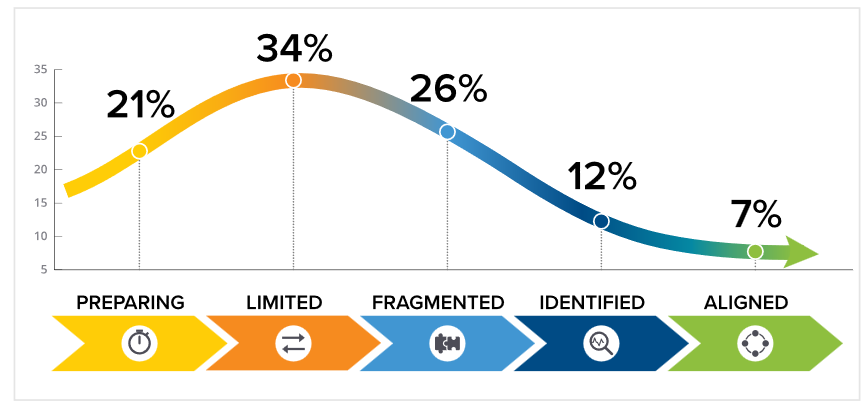
CSRD maturity is still limited among European businesses. Only one in five EMEA businesses is in the mature stages of CSRD readiness, currently publishing or finalizing their first-ever CSRD report. They have invested substantially in human and technology resources to hit the crucial milestone and are looking to leverage the CSRD data, processes, and expertise to further generate value for the business.

Our CSRD Readiness Report reveals that CSRD-mature organizations consider ESG/sustainability practices pivotal for fostering innovations that improve business resilience and customer satisfaction. They rely extensively on the support of external service and technology providers, particularly to develop CSRD/ESG reporting strategies, implement ESG data management platforms, and leverage AI/GenAI.

This creates ample opportunities for business service providers and technology vendors. But it is essential to understand market segment maturity levels as well as differences in challenges and requirements (e.g., by geography, industry, company size) so as to adequately adapt solution design and go-to-market strategies.

Sustainability Initiatives Generate Business Value for EMEA Companies

On a positive note, our research results illustrate that becoming more sustainable is clearly perceived as being increasingly important for enterprise value creation. A significant number of European companies are seeing real business benefits generated by sustainability initiatives.

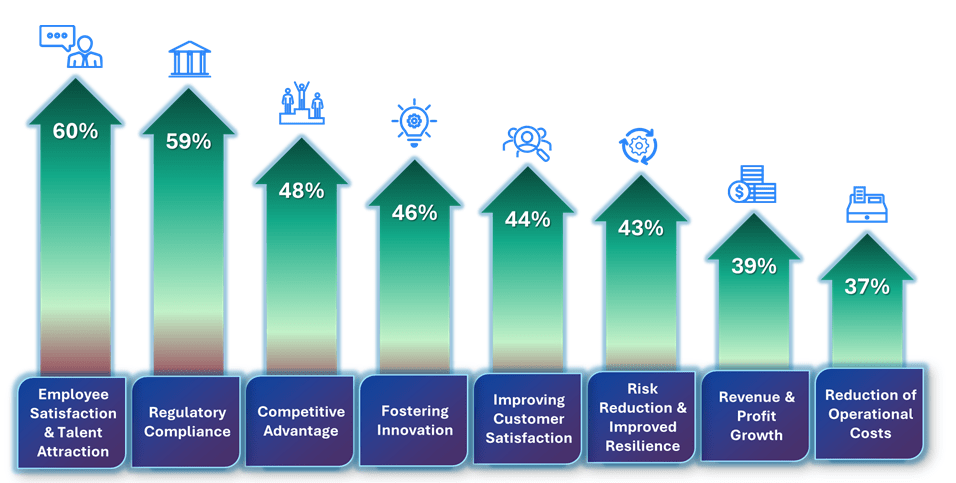
What business outcomes were achieved or are expected to be achieved within 1-2 years by your organization’s current or planned sustainability initiatives?

As shown in Figure 2, nearly half of EMEA companies see competitive advantages and innovation, and nearly 40% realized revenue and profit growth.

Interestingly, it is precisely these topics, innovation and growth, that European CEOs list at the top of their agenda for 2025 (as found in IDC’s February 2025 CEO Perspective on Technology Survey). So it comes as no surprise that investment in ESG/sustainability technologies remains among the top 3 technology investment priorities of European CEOs in 2025.

For technology and service providers, this implies that offerings increasingly need to focus on showcasing how sustainability solutions are geared toward these aspects. In particular, it will be critical to illustrate how CSRD reporting initiatives help to foster innovation and growth.

If you want to know more about our Sustainability research, visit our website here.

Katharina Grimme - Associate VP, Research and Practice Lead, EMEA Sustainable Strategies and Technologies - IDC

Katharina Grimme has more than 20 years' experience as an industry analyst and strategy consultant in the tech industry and is leading is leading IDC's Sustainability research in EMEA. With her expertise and passion for sustainable concepts for business, society, and digitization, she drives thought leadership at the intersection of sustainability and digital transformation.

Employees are often highlighted as the first line of enterprise cybersecurity defense. But who – and what — safeguards our households as we become more connected and digital plays an ever-greater role in our personal and civic existence?

Consumer digital life protection (CDLP) solutions seek to provide the security and privacy controls that households need for their identities, devices, home networks, and digital transactions and interactions. These tools include everything from antivirus and password managers to VPNs and secure home networks.
However, with no security or IT department to advise or support them, are European consumers making the right choices about which technologies to adopt — and do they feel confident about deploying them?

IDC’s 2025 CDLP Survey, which included respondents from the three major European markets of the U.K., France, and Germany, provides insights into the home security goals and challenges of European households.

A Tormented Target Market

The research found that almost half of European consumers lack confidence in selecting the right CDLP solutions. Many simply don’t know what they need — and those that do know find it difficult to choose between the different offerings of different providers. Almost one-quarter of consumers say that CDLP solutions are too difficult to use. Finally, many are concerned about additional costs in their household budgets.In fact, affordability and ease of use are cited as the top priorities for European consumers when it comes to choosing CDLP solutions. Despite that, potentially advantageous bundled offerings are not so attractive. This suggests that vendors could do more to optimize such bundles and educate prospects on the benefits of a comprehensive package.

What would such packages need to deliver? The most common consumer complaints are forgotten passwords/password resets, but these are not the only challenge. Others include deteriorating PC performance, lost devices, virus infections, online scams, or simply becoming uncomfortable with the level of personalization in online ads and websites. Many users have suffered one or more of these incidents.

Accordingly, the top priorities for CDLP measures center on protecting PCs from viruses and malware and safeguarding ecommerce and ebanking transactions. Maintaining unique and complex passwords for each account and blocking access to phishing and sites that host malware are also very important.

Trusted Providers

When it comes to who consumers trust the most to meet their CDLP requirements, security technology vendors are the clear top choice, cited by one-third of respondents. Device or software vendors follow, mentioned in just over one-quarter of the interviews.

In terms of technologies, consumers are most willing to pay for VPN, secure home networks, and antivirus. For any given CDLP technology, between one-third and one-half of consumers opt for a free solution.

Spreading the Word

Reaching the market is also a challenge: Word-of-mouth recommendations from friends and relatives is the most frequent trigger for adoption of CDLP technology. Pre-installing solutions on new devices is also a dependable route to drive adoption.

Conversely, online advertising and news articles seem to have a limited impact. The techie uncle of the family can be as effective at driving purchase decisions as any glossy ad splash. This is a challenging audience to market to.

The European CDLP market surpassed $2.1 billion in 2023 and is projected to expand at a CAGR of 3.7% into 2029. Difficult digital experiences and a rising level of concern about the risk and exposure in consumers’ digital lives can drive adoption of premium CDLP solutions.

Nevertheless, CDLP vendors must improve awareness and understanding of their paid solutions and subscriptions. They may need to rethink their approach: Does the security message need to be simplified? Can the use of the products be more intuitive and automated — even invisible? What is missing in the education? Do consumers understand that if the product is free, they’re the product?

Security technology brands are trusted — and those companies need to find ways to leverage that trust through the word-of-mouth channel more effectively and generate a flywheel effects

The European findings of IDC’s 2025 CDLP Survey are presented in this report. Findings from the complete global survey are available here

Mark Child - Associate Research Director, European Security - IDC

Associate Research Director Mark Child of IDC’s European Security Group leads the group's Endpoint Security and Identity & Digital Trust (IDT) research for both Western Europe and Central & Eastern Europe. He monitors developments in security technologies and strategies as organizations address the challenges of evolving business models, IT infrastructure, and cyberthreats. Mark's coverage includes in-depth security market studies, end-user research, white papers, and custom consulting.

In October 2024, our IDC colleague Jennifer Thomson published an excellent presentation,  Value-Driven DevOps and App Engineering in the AI Everywhere Era.
Delivered at IDC’s 2024 DevOps Summit in London, the presentation delves into the future of modern app development and delivery. This future is driven by three key factors: developer experience and productivity, security resilience, and business empowerment.
The future of DevOps is app-centric, focused on user experience, value, and resilience by design. Platform teams play a crucial role in enabling effective app development and management.

The transformation integrates security, finance, and operations into the development process to create a seamless and automated software delivery environment. However, achieving “value-driven DevOps and app engineering” requires breaking down the silos between DevOps, CloudOps, and DataOps and creating smart integrations to meet business needs for speed, security, and cost efficiency.

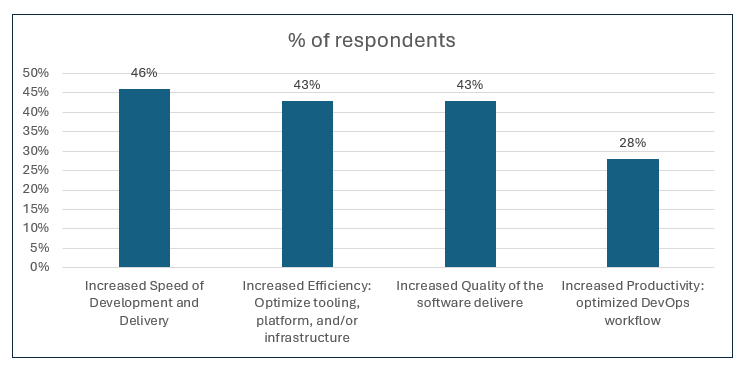
According to IDC research, delivery excellence is defined by four strategic priorities:

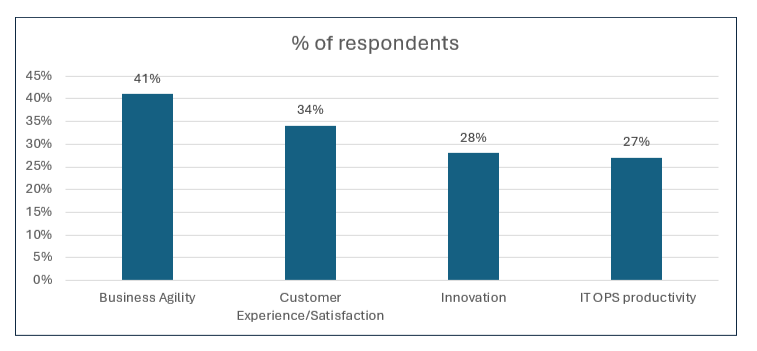
Agility is the core business outcome BUT business agility is most negatively affected by current capabilities in the development processes of organizations.

As an answer to the question: ‘Which of the following areas are most negatively affected by your organization’s current software development and delivery capabilities?’, the following answers were given:

Apparently, many organizations are restricted in their ability to deliver excellence by their own development processes. However, with the rise of AI, things may change fast! A few recent IDC predictions (IDC FutureScape: Worldwide Developer and DevOps 2024 Predictions — European Implications, IDC Doc #EUR151753024) show:

• By 2028, natural language will be the most widely used programming language, creating 55% of net-new applications.
• By 2028, generative AI (GenAI) tools will write 70% of software tests, reducing manual testing and enhancing test coverage, usability, and code quality.
• By 2025, 50% of DevOps teams will use DevSecOps tools leveraging AI to identify security challenges in applications and supply chains.
• By 2026, 40% of new apps will be enhanced by AI, improving experiences and creating new use cases.

Incorporation of AI into the development processes of organizations promises to improve all 4 aspects of delivery excellence: increased speed of delivery, efficiency, quality and productivity, resulting in better business agility, meaning that the organization can respond to market changes faster and is able to provide more value, faster and better to its customers.

This sounds great! However, as management guru Peter Drucker one said:” You can’t control what you don’t measure”. And if you can’t control something, it’s very hard to improve it. This means that measurement of Delivery Speed, Product Quality, Efficiency, Productivity and ultimately Value

delivered, is an important management activity for organizations that are determined to control and to improve their delivery excellence and thus business agility.

As an example, using AI to code faster may result in better productivity, but when this code is not compliant to ISO 25010 or ISO 5055 standards for software quality, significant risk may be introduced into the application, potentially resulting in incidents, unhappy customers, loss of money, rework in the team, resulting ultimately in lower productivity and delivery speed, etc. In this case, measuring productivity and code quality are important to understand the overall performance of the teams, in relation to the quality produced.

IDC Metri, the tech buyer consultancy part of IDC, has years of experience in measuring these aspects on the team level. It offers the ‘Team Performance Optimization’ service to organizations that wish to understand and benchmark their current delivery excellence on team-level, and aggregate this to an organizational level. By benchmarking, it becomes clear which of the teams are high-performing (against industry averages) and which teams can use some help to improve. For many organizations, it would be helpful to create a baseline performance now, so they can see which AI initiatives result in improvement of the metrics, and which don’t.

For more information about measuring, benchmarking and/or optimizing (agile/DevOps) team performance, please contact me at hvanheeringen@idc.com.

The annual IDC Telco Forum: Barcelona was held Sunday, March 2, to kick off the Mobile World Congress (MWC) 2025.

During the event, IDC delivered presentations that addressed pivotal transformation and monetization opportunities in the telecoms sector, as well as our expectations for the industry’s development through 2030. Key executives and stakeholders across the telecoms ecosystem and technology sectors attended the meeting (previously known as the IDC pre-MWC Brunch).

Telecom Industry: A Massive Market Undergoing Bold Transformations

Spending by telecoms worldwide is projected to reach $1.375 trillion in 2025, accounting for 24% of the global ICT market. Meanwhile, telecom service provider CAPEX intensity is declining year on year but is expected to reach $309 billion in 2028. This shift reflects the focus of telcos on network efficiency and simplified, cost-effective operations.

The telecom industry is undergoing a profound transformation, driven by slowing mobile data growth, market fragmentation, and increasing financial pressures. As the industry evolves, telcos are shifting from being traditional connectivity providers to being full-stack technology suppliers that require structural changes to sustain profitability.

Market consolidation, workforce realignment, and strategic investments are now central to long-term success.

Reinventing the Business Model

To enhance efficiency and financial resilience, operators are consolidating in domestic markets and reassessing international operations. European regulators have approved key in-market mergers that come with network investment commitments, signaling a broader acceptance of industry consolidation.

Middle Eastern telcos are strategically acquiring stakes in European firms, capitalizing on stock market fluctuations to expand their influence. Operators are streamlining their international presence, divesting from underperforming markets and leveraging joint ventures to optimize scale and operational efficiency.

The Rise of LEO Satellite Partnerships

Satellite technology is playing an increasingly strategic role in telecom operations, addressing connectivity gaps where terrestrial networks are insufficient. The convergence of low Earth orbit (LEO) satellite networks with mobile infrastructure is gaining traction, particularly in the realm of direct-to-device (D2D) connectivity.

By forming alliances with satellite providers, telcos can extend their service footprint, unlocking new revenue streams in remote and underserved regions. Some LEO providers are partnering with chipset and device vendors to enable direct satellite connectivity on standard mobile devices. Efforts are underway to expand dedicated satellite frequency bands to support this growth.

Programmable Networking Gains Traction

The shift toward network programmability is pushing telcos to embrace API-driven ecosystems that enhance service agility and unlock new monetization opportunities. Network API monetization is becoming a key revenue stream, with operators engaging enterprise developers, aggregators, and cloud marketplaces to integrate network capabilities into digital services.

In the short term, quick-win APIs such as SIM swap and number verification are gaining traction. More advanced APIs, like quality on demand (QoD), hold greater long-term potential but remain a secondary focus.

The real value lies in combining multiple APIs, such as QoD with security or edge computing, to deliver differentiated, high-value solutions.

To scale these opportunities, multi-operator collaboration will be essential to ensure broad applicability across industries. Additionally, developers will require training and certification to fully leverage telco APIs, raising questions about who will provide this support.

As telcos expand their API strategies, they must also address a critical challenge: avoiding commoditization and securing a strong position in the evolving digital value chain.

AI Moves from Hype to Execution

AI is rapidly moving from theory to real-world deployment, transforming both network operations and customer engagement. GenAI is already driving measurable improvements in predictive maintenance, automated network management, and customer service.

The next stage of adoption will integrate task-specific AI agents to further enhance efficiency, streamline operations, and optimize service delivery. However, challenges persist: Security risks are the primary reason for GenAI project delays or abandonment (43%), while project costs rank lowest (10%), according to IDC’s 2024 Future Enterprise Resiliency and Spending (FERS) Survey.

Telcos are leveraging GenAI across two key areas: operational efficiency and customer experience. In network operations, AI-powered copilots assist with incident management, collaborative network operations, and intelligent field support, while SOC-NOC collaboration enhances user experience assurance. On the customer experience side, GenAI is improving business support systems (BSS) knowledge sharing, lead generation for enterprise markets, intelligent service recommendations, and complaint handling.

With adoption accelerating, telcos must address security concerns, workforce adaptation, and cost control to fully capitalize on GenAI’s transformative potential.

Telco Monetization Strategies

As traditional telecom value chains evolve, operators must rethink their approach to monetization. A customer-centric mindset, combined with rapid experimentation and continuous iteration, is essential to stay competitive.

Leveraging composable technology stacks is a key enabler of monetization. By adopting modular, API-driven architectures, telcos can achieve greater flexibility, enabling mass customization and cost-efficient service delivery. The transition to 5G standalone networks is further driving the need for new monetization models, particularly in network slicing and private 5G solutions that offer premium, differentiated services for enterprises.

AI and API monetization are expected to become major revenue contributors. The telco AI market is projected to grow from $235 billion in 2023 to $632 billion by 2028, capturing 6% of global AI spending.

Similarly, the telco API market is forecast to reach $6.7 billion by 2028, expanding at a 57.1% CAGR, with significant contributions from the Americas ($2.7B), Europe ($1.9B), and APAC ($2.1B). Industry-wide initiatives such as the GSMA Open Gateway — supported by 67 mobile operator groups across 265 networks and covering 75% of global connections — highlight the strategic importance of API-driven revenue growth.

Winning Strategies for Telcos

Service Play

Telcos must focus on select industry verticals, leveraging in-house capabilities and strategic partnerships to develop specialized solutions. The ability to deploy rapidly, monetize effectively, and refine value propositions based on market feedback will be key to success.

Platform Play

Connectivity remains central to telco operations, but its value proposition is evolving. Operators must enhance their offerings by prioritizing security, performance, and flexibility, ensuring that their networks support a broad range of enterprise use cases beyond basic connectivity.

Vertical versus Horizontal

Telcos must determine whether to pursue vertical or horizontal service models. A vertical approach focuses on industry-specific solutions, including private 5G, edge computing, network as a service (NaaS), and network slicing, providing tailored services to high-value sectors. In contrast, a horizontal approach emphasizes the development of scalable, reusable capabilities that can be deployed across industries, optimizing efficiency and cost structures.

META: The Emerging Digital Hub

The Middle East, Turkey, and Africa (META) region is emerging as a key digital hub, driven by large-scale infrastructure investments and regulatory support. Network expansion is accelerating, with increased investment in datacenters, subsea cables, and carrier-neutral facilities.

Strategic initiatives are enhancing regional interconnectivity, particularly in Africa and major hubs such as the UAE, Saudi Arabia, and Turkey. Favorable policies are enabling digital transformation, fostering internet traffic growth, and supporting the proliferation of digital services.

The Future of Telco Transformation

Sustained success in the telecom industry requires a shift toward platform-based, adaptable service models that serve multiple industries. As telcos position themselves as digital transformation enablers, they must balance efficiency, innovation, and strategic investments to remain competitive in a rapidly evolving landscape.

Key Takeaways

  1. Slowing mobile data growth necessitates new monetization strategies beyond traditional bandwidth expansion.
  2. Telco transformation must focus on efficiency, simplification, and adaptability.
  3. Attracting and retaining top talent is crucial to leveraging disruptive technologies.
  4. Collaboration across ecosystems is essential for both commercial and technical advancement.
  5. Energy efficiency is a strategic priority, directly impacting both OPEX and CAPEX decisions.


The telecom sector is entering a decisive phase. Those who embrace transformation will define the industry’s future.

If you missed the IDC Telco Forum: Barcelona session, you can watch the content in a webcast on March 12: MWC2025: Telco Transformation and Monetization in EMEA.

Masarra Mohamad - Senior Research Analyst, European 5G Enterprise Strategies - IDC

Masarra Mohamed is a senior research analyst specializing in analysing the connectivity and communications services markets, focusing on the changing networking requirements, trends, and competitive dynamics that support enterprises in their digital transformation. She explores how enterprise network strategies evolve to enable cloud, AI, and security.

When Amazon opens a new store, it’s never just about adding another retail location. The company’s recent launch of a beauty and personal care store in Milan (Amazon Parafarmacia & Beauty store, opened on February 12, 2025) offers fascinating insights into Amazon’s evolving retail strategy and suggests ambitious plans for the European market.

Beyond Digital: Why Physical Beauty Retail Matters for Amazon

Amazon’s choice to open a beauty store is telling. Beauty products represent a unique challenge in eCommerce: customers often want to test, try, and receive personal recommendations before purchasing. By tackling this challenge, Amazon addresses a critical weakness in its digital-first approach to beauty retail.

The Strategic Playbook Revealed

In a recent IDC Link, we discussed how Amazon’s new store prioritizes customer experience and personalization. Our visit to the store reinforced our idea of what Amazon is thinking:

  • Rather than focusing on immediate sales through frictionless checkouts (like Amazon Fresh stores), this location prioritizes customer experience and brand building.
  • The integration of “Place & Learn Stations”, interactive screens through which shoppers can access detailed product information, and a “Derma-bar”, where shoppers receive bespoke skin analysis and expert recommendations, signals Amazon’s understanding that beauty retail requires education and personalization.
  • The carefully curated selection of premium brands suggests Amazon is positioning itself to compete with high-end beauty retailers, not just mass-market stores.

The Bigger Picture: European Market Expansion

The Milan store serves as a strategic launchpad for Amazon’s broader European beauty ambitions. By establishing a physical presence in one of Europe’s fashion capitals, Amazon is:

  • Building credibility as the go-to retailer for the premium beauty sector.
  • Creating a showroom for brands to expand their sales across its European online platforms.
  • Developing a model that could be replicated in other key European markets.

Strategic Implications

Amazon’s physical retail journey began with Amazon Go in Seattle in 2018 and has been one of constant experimentation. The Milan beauty store reveals several key aspects of Amazon’s evolving retail strategy:

1. The company is willing to take a long-term approach, prioritizing customer experience over immediate sales.
2. The company is using physical locations as brand-building tools, not just sales channels.
3. Amazon is tailoring its retail approach to specific product categories rather than applying a one-size-fits-all solution.

We recently mentioned in a LinkedIn post how Amazon strategically leverages physical stores to compete with retail giants like Walmart in the U.S. market (as well as how Walmart is taking new revenue generation approaches from Amazon’s book). This beauty store opening represents another calculated move in the company’s evolving retail playbook.

What This Means for the Retail Industry

For other retailers, Amazon’s beauty store strategy offers important insights. The future of retail isn’t about choosing between physical and digital — it’s about understanding when and how to use each channel effectively. Amazon’s investment in an experience-focused beauty store demonstrates that even a (predominantly) eCommerce pure-play retailer recognizes the value of physical retail when used strategically.

The Milan beauty store is a window into Amazon’s thinking about the future of retail. As the company continues to evolve its omni-channel strategy, this store could serve as a template for how digital giants can effectively blend physical and digital retail experiences in specialized product categories.

If you are interested in knowing more about IDC’s Retail research, visit our website here.

Filippo Battaini - Research Manager, IDC Retail Insights, Europe - IDC

Filippo Battaini is Research Manager at IDC Retail Insights, responsible for the IDC Retail Insights: Worldwide Retail Experiential Operations Strategies program. Filippo’s research centers on the impact of technology as an enabler of omnichannel retail, including the digitalization of physical stores, online-offline integration, and omnichannel commerce architectures. Before joining IDC, Filippo worked at the global research and advisory firm Coresight Research, advising prominent companies and emerging retail technology providers on the transformative impact of technology in the retail sector.

The rapid adoption of GenAI is reshaping cloud computing, offering transformative solutions while accelerating the achievement of sustainability goals. As cloud providers navigate regulatory complexity, escalating costs, and environmental pressures, GenAI is emerging as a critical enabler of innovation and efficiency.

This post explores how GenAI empowers cloud ecosystems to thrive in 2025 and beyond.

Navigating Regulatory Challenges in Cloud Sustainability

Navigating complex and ever-evolving regulatory landscapes remains a challenge for cloud technology vendors. Governments worldwide are implementing stringent regulations to curb carbon emissions and promote sustainable practices.

The EU’s Corporate Sustainability Reporting Directive (CSRD), for example, mandates comprehensive sustainability reporting. The European bloc’s Energy Efficiency Directive (EED) has introduced obligations, especially for datacenter operators, in terms of energy saving and energy efficiency. Noncompliance can lead to hefty fines and damage to a company’s reputation.

GenAI can potentially assist cloud vendors in ensuring compliance with regulations by automating the collection, analysis, and reporting of ESG data. AI can process vast amounts of data from various sources, identify relevant regulatory requirements, and generate accurate and comprehensive sustainability reports.

This not only reduces the administrative burden on cloud vendors but also ensures timely and accurate compliance with regulatory requirements.

Managing Cloud Energy Consumption and Carbon Footprint

According to IDC, global IT datacenter capacity will grow from 180GW in 2024 to 296GW in 2028, and electricity consumption will rise from 397TWh to 915TWh in 2028. Electricity is the largest ongoing expense to run a datacenter.

As the demand for cloud services continues to surge, so does the energy required to power datacenters. This presents a significant challenge for cloud vendors striving to reduce their carbon footprint.

To address this, vendors must invest in energy-efficient technologies and collaborate with energy providers to ensure a steady supply of green energy. An IDC survey found that while 31% of organizations are looking to deploy GenAI workloads in locations able to offer renewable or zero-carbon energy supplies, 31% also say that GenAI workloads are helping the company reduce its overall greenhouse emissions through business-level optimization and efficiency improvements.

AI models can optimize cloud datacenter operations by predicting and managing energy consumption more efficiently. AI-driven energy management solutions can analyze patterns in energy usage, predict peak demand periods, and optimize cooling systems to reduce energy consumption.

Cloud Vendors: Balancing Cost and Sustainability

Cloud vendors are increasingly adopting FinOps and GreenOps. These — along with advanced analytics, AI, and machine learning — will provide better data and insights and increase visibility into cloud resources, resulting in better optimization.

GenAI can analyze spending patterns and recommend cost-saving measures. AI-driven financial models can analyze the costs and benefits of various sustainability initiatives, helping cloud vendors make informed decisions that maximize both sustainability and profitability. For instance, AI might suggest moving non-critical workloads to less expensive storage options or shutting down underutilized instances automatically.

We predict that 60% of organizations will leverage GenAI for sustainable transformation by 2026, reflecting a significant shift toward data-driven decision-making in ESG initiatives.

Conclusion

As we move deeper into 2025, cloud technology vendors are facing a multitude of obstacles in their quest for sustainability. Navigating complex regulatory landscapes, managing energy consumption, ensuring supply chain sustainability, balancing costs, meeting customer expectations, and innovating and optimizing for sustainability are all critical challenges that vendors must address.

GenAI offers a powerful tool to help overcome these challenges and propel sustainability in the cloud tech industry. By leveraging AI, the cloud ecosystem can optimize operations, enhance supply chain sustainability, balance cost and sustainability, drive innovation, and contribute to a more sustainable future.

How IDC Can Help

IDC’s Custom Solutions portfolio can assist cloud ecosystem players in addressing sustainability challenges through tailored services and strategic guidance.

1. Research and Advisory Services: IDC provides in-depth research and expert advice on trends, regulations, and best practices specific to the cloud industry.
2. Custom Market Intelligence: Vendors can gain insights into market dynamics, competitive landscapes, and customer expectations.
3. Strategic Consulting: IDC consultants work with vendors to develop and implement comprehensive strategies, including on “where to play” and “how to win” in the marketplace.
4. Content Marketing Services: We can help create compelling content to communicate the value proposition and enhance brand reputation and customer engagement.
5. Sales Enablement: Equipping sales teams with knowledge, tools, and content helps to effectively communicate the value proposition to customers and stakeholders.

SAP’s new subscription offer, “SAP ERP, private edition, transition option,” expected to be available by 2Q25, will give SAP customers an additional three years to transform their ECC6-based legacy SAP systems.

Customers can subscribe to this new option from 2031 until 2033, as a natural extension of the current extended support period that runs to 2030, which also requires a premium. Mainstream support is set to end in 2027.

The offer is being introduced amid a tense environment for SAP customers. Many organizations have already migrated to SAP’s cloud options: One-third (34%) of European organizations currently use S4/HANA Private Cloud Edition. But many customers are still at the beginning of their transformation path.

According to an IDC study, 17% of European organizations currently have no migration plan, and 7% remain undecided. Another key point is that the RISE with SAP program has attracted only 7% of organizations planning to migrate to S/4HANA in the coming months.

In a blog post, SAP shared further details about the new offer:

• It applies only to ECC — not the entire Business Suite 7 — with SAP validating eligible systems.
• It targets large-scale, complex SAP implementations engaged in the RISE with SAP program.
• Adaptations will be required to subscribe to the new offer, including data transformation efforts and addressing dependencies on third-party technologies. The subscription will be limited to the HANA database.
• Eligible organizations are required to migrate to S4/HANA private edition before the end of the extended maintenance period in 2030.
• SAP emphasizes that this is not an extension of the maintenance period but a new subscription service.

Impacts on Service Providers

As highlighted in IDC MarketScape: European SAP Modernization Services 2024 Vendor Assessment (IDC, December 2024), service providers play a pivotal role in SAP migration and modernization strategies across Europe.

The dual focus of service providers is a key trend: enhancing the value proposition of RISE with SAP while positioning SAP modernization as a cornerstone of broader business transformation. Migration to S/4HANA is framed as a critical step in overall enterprise modernization.

The introduction of this transition option requires service providers to adjust their strategies and emphasize certain services.

Strengthening Assessment and Consulting Services

Developing robust consulting services is crucial for assessing legacy systems. This involves analyzing the current state of the code base, system dependencies, and architecture, and discovering business processes.

By offering in-depth assessments, providers can help orgs build tailored modernization road maps aligned with corporate strategies. Many service providers have enhanced their expertise in process mining, often using tools like Signavio (or Celonis or their own internal tools), and have established dedicated centers of excellence across Europe.

The new subscription offer reinforces the need for these assessments. We believe service providers should:
• Evaluate existing systems for compatibility with SAP HANA (the only supported database).
• Help clients manage third-party software dependencies.
• Develop extended road maps that fit both business objectives and operational constraints.

Additionally, providers will need to guide clients on cost analysis to weigh the benefits of the new offer, particularly in cases where completing the migration by 2030 may not be feasible, or what would be the cost of the transformation with RISE with SAP, including in the new subscription.

Build Long-Term Customer Relationships

The new subscription and extra period should push service providers to start creating long-term modernization plans that balance evolving business needs and IT budgets. This involves fostering deeper client relationships with SAP users targeted by the new subscription.

Integrate AI to Optimize Business Processes

The integration of AI will play a central role in business process transformation by 2025, according to SAP’s roadmap. Service providers can embrace a long-term vision and capitalize on this by offering AI-driven process optimization and further enhancing the value of RISE with SAP.

Providers will need to implement training programs for both developers and end users to ensure broad adoption of new models and systems. This requires repositioning key roles (e.g., SAP developers) to transition from managing highly customized code to supporting externalized, standardized processes under the RISE with SAP model.

Change management will be critical, particularly for organizations with complex processes. They will increasingly demand structured, gradual change management programs from their partners to ensure both technical and organizational readiness.

Enhance BTP and Integration Services

Expertise in SAP’s Business Technology Platform (BTP) has become a market differentiator. The new subscription option will likely push service providers to focus on deeper integration services, AI, and third-party cloud services to rebuild business processes on top of S/4HANA.

For large-scale projects, balancing a “clean core” of standardized processes and customized processes will be critical, making integration via BTP a must-have capability.

Modernize Data Models and Streamline Data Migration

Data modernization is a core component of the HANA migration process. Providers will need to help businesses redesign data models and develop tools and accelerators to streamline the transformation. Many providers are partnering with specialized vendors such as SNP. These efforts will be vital as organizations assess the feasibility and costs of migrating to HANA while leveraging SAP’s new subscription model.

IDC has published a number of documents designed to provide a better understanding of the SAP systems modernization market and the role played by service providers in this context.

These include:

The IDC MarketScape: European SAP Modernization Services 2024 Vendor Assessment (IDC, December 2024) analyzes the positioning of service providers in Europe and their service portfolios when it comes to SAP modernization.
SAP Modernization Services in Europe: Insights from IDC’s 2024 European Cloud Survey (IDC, December 2024) provides insights into organizations’ intentions on the transformation of their SAP systems, in particular the evolution of S4/HANA private edition and public edition implementations in Europe.

Cyrille Chausson - Research Manager, European Application Modernization Strategies - IDC

Cyrille Chausson is a research manager within IDC's European Cloud Innovation, Services and Skills research team. Based in Paris, Cyrille is responsible for IDC's European Application Modernization Strategies research program. In his role, he offers insights into trends, market dynamics, and strategic investments pertaining to application transformation, migration, development, and delivery. Cyrille's research primarily focuses on the opportunities and challenges that application modernization presents to service providers and IT buyers, as they transition to more digital-oriented organization and models.

Multilateralism and collaboration are surrendering to unilateralism, bilateralism, and competition in international relations. In this competitive and volatile geopolitical context, AI has become one of the most popular battlefields for nations competing for economic and security leadership.

Once upon a time, AI technologies were of interest primarily to researchers, tech firms, and specialized business and government teams that used them to help detect fraud, for example. The introduction of GenAI has changed all that, catapulting AI into the consciousness of regular employees and citizens.

Although our understanding of its real impact on business and our personal lives continues to fluctuate between hype and worrying ramifications, one thing is clear: AI is driving political agendas.

Nations are implementing digital sovereignty policies and strategies that encompass AI sovereignty as a bulwark of economic competitiveness and security. Two years after the release of ChatGPT, the world is reaching a climax of these AI sovereignty political power battles.

On January 13, the U.S. Department of Commerce’s Bureau of Industry and Security, still under the Biden administration, announced export controls on advanced computing chips and certain closed AI model weights, alongside new license exceptions and updates to the Data Center Validated End User (VEU) authorization.

The same day, the U.K. Secretary of State for Science, Innovation and Technology presented the AI Opportunities Action Plan, which sets the goal for the country “to provide global leadership in fairly and effectively seizing the opportunities of AI, as the U.K. have done on AI safety.”

One week later, under the new Trump administration, the Stargate Project, a $500 billion four-year initiative to build new AI infrastructure for OpenAI in the United States, was announced. A week after that, the DeepSeek frenzy disrupted financial markets. On February 11, the President of the European Commission announced a plan that aims to mobilize €200 billion for AI. Even emerging countries, like Kazakhstan, are making their own investments.

From an economic competitiveness perspective, political leaders want to promote the growth of the national AI innovation ecosystem and ensure the resilience of their AI supply chains. From a national security perspective, they consider AI a means to protect their countries from kinetic and non-kinetic threats.

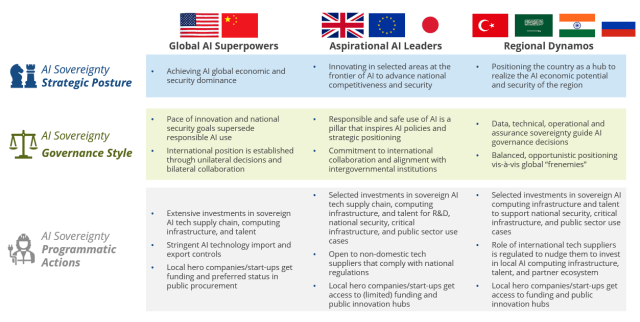
In this fast-evolving landscape, three archetypes of AI sovereignty are emerging. Countries’ positioning across the range of archetypes indicates how policy and regulation will evolve and impact technology suppliers.

The Three Archetypes of AI Sovereignty Policy

A full analysis of AI sovereignty policies — and their theoretical foundations in geopolitical strategies or data protection — is beyond the scope of this blog post. However, it is possible to compare archetypes by observing key dimensions, including:

• The strategic posture of the country defines what the nation commits to in the long term.
• The approach to AI governance determines how policymakers make decisions.
• The programs a country puts in place determine how the long-term vision translates into execution.

Taking those dimensions into account, three AI sovereignty archetypes are emerging.


Figure 1 — AI Sovereignty Policy Archetypes

  •  Global AI Powerhouses: There are just two global powerhouses: the U.S. and China. They aim for dominance. They have the power to unilaterally make decisions and bilaterally influence partner countries. They prioritize being at the frontier of technology innovation over responsible AI innovation. They take different approaches, however: The U.S. allows the private sector choose whether and how to develop and use AI responsibly and ethically; in China, the national government applies more direct control over private sector practices. Both have the sheer critical mass for heavy investments across the AI value chain, from talent to the raw materials that go into chips manufacturing. They have such a big internal markets, both from the supply and demand perspectives, that they can afford to dictate a “made in …” approach to public procurement.


  • Aspirational AI Leaders: This cluster includes countries or regional blocs like the U.K., the EU, and Japan. It is important to note that within the EU, for example, there are nuances in terms of balance between EU multilateralism and partnerships with the U.S. or other countries. These countries aspire to leadership status but they simply do not have the critical mass on their own to dominate. They thus selectively invest in strategic areas, such as AI computing infrastructure for R&D, national security and defense, critical infrastructure protection, and public sector AI use cases. They keep their markets open for collaboration with non-domestic tech suppliers that comply with their regulations. The U.K.’s AI Opportunities Action Plan, for example, acknowledges that “Sovereign AI compute will almost certainly be the smallest component of the U.K.’s overall compute portfolio.” These countries are making a political and strategic commitment to responsible use and safe use of AI by fostering multilateral collaboration, and prioritizing investments in open source, such as the new European Commission plan. They apply a strict approach toward data protection risks. The strict approach to data protection and the ethical use of AI, which inspires policies and regulations like the EU’s GDPR and AI Act, can increase the cost of doing business for international tech suppliers. These countries are also investing in digital inclusion, for instance, by supporting the development of LLMs that cater to minorities.


  • Regional Dynamos: This cluster includes countries like Saudi Arabia, India, Türkiye, and Russia that aspire to become the kernel of regional AI economies, under their political influence, while establishing a foundation to influence the global AI market. Saudi Arabia’s National Strategy for AI, for example, aims to “Position KSA as the global hub where the best of Data & AI is made reality” and, by 2030, to compete on the international scene as a leading economy utilizing and exporting data and AI. Some, like Russia, are more aligned with one of the powerhouses. But most regional dynamos take an opportunistic approach to governance and international collaboration to accelerate their economic competitiveness. They are open to non-domestic tech suppliers because they need to fill AI supply chain, AI computing infrastructure, and talent gaps. However, they have set up regulatory and financial incentives to ensure that global tech suppliers commit to making local investments, hire local talent, and collaborate with local partners.

The Silver Lining for the Tech Industry

In a complex and competitive geopolitical environment, tech suppliers that need to make AI supply chain, computing infrastructure, product and solution, talent, marketing, and sales investments should carefully align their strategic choices to maximize the ROI they can realize in different countries and regions.

  • With respect to global AI powerhouses, tech suppliers should prioritize one of them in terms of AI supply chain and AI computing infrastructure. They should leverage closer alignment with that powerhouse as a door opener to strengthen their positioning in partner countries. But they should also continue to observe the evolution of AI innovations developed by opposing powerhouses. This is important to understand how their road map and ecosystem could benefit from those innovations. They should also consider selected reseller agreements to go to market with an opposing powerhouse.


  • With respect to aspirational AI leaders, tech suppliers should position the breadth of their AI solution portfolio to show business and government buyers in different countries how their solutions can provide speed of innovation, agility, and scalability. Suppliers can enhance their positioning in these countries by helping local ecosystem players get value out of government AI innovation programs. They should articulate how they can provide tools and practices to help assess the risks of AI and innovate responsibly, in line with ethical principles, security standards, and regulations.


  • With respect to regional dynamos, tech suppliers will have to selectively coinvest with local partners in AI computing infrastructure, open innovation hubs to collaborate with partners and customers, and train and hire local talent.


Tech suppliers that do not consider these AI sovereignty policies when making strategic decisions risk losing market share — or worse, they may face compliance actions by government regulators.

Massimiliano Claps - Research Director - IDC

Massimiliano (Max) Claps is the research director for the Worldwide National Government Platforms and Technologies research in IDC's Government Insights practice. In this role, Max provides research and advisory services to technology suppliers and national civilian government senior leaders in the US and globally. Specific areas of research include improving government digital experiences, data and data sharing, AI and automation, cloud-enabled system modernization, the future of government work, and data protection and digital sovereignty to drive social, economic, and environmental outcomes for agencies and the public.