
Resource Regions: Asia Pacific
If part of your job is staying ahead of where the market is headed, the stack you built your 2026 plan around won’t survive to 2028. IDC predicts today’s enterprise stack won’t exist in its current form by 2030, and by 2028, 42% of the world’s largest companies will have already rationalized their entire agent and apps portfolio just to keep pace.
That’s not an IT problem. It’s a shift in where value gets created, how deals get won, and what your go-to-market story needs to say next, and it belongs at the leadership table, alongside your P&L and risk register.
That’s the premise behind IDC FutureScape 2027: The Great Rewrite, IDC’s annual technology predictions event for Asia/Pacific, taking place live on 13 November 2026, 8:00 AM–12:00 PM SGT, at the Conrad Singapore Orchard.
The theme: The Great Rewrite
Intelligence is leaving the cloud for the device. AI factories run large-scale inferencing, agents work the network edge, and hardware is being rebuilt to carry it. Robots have moved off the roadmap and onto the factory floor. Quantum computing is out of the lab and into five-year plans, with real use cases beyond cryptography. Connectivity is heading into orbit and under the ocean floor, redefining what “always-on” means. Work is being redivided between people and agents, creating job titles, like Agent Supervisor, that didn’t exist a year ago.
Even the money is being rewritten. Knowing matters less than acting fast, and that shift is forcing CFOs to build an entirely new financial discipline just to keep up with what AI actually costs.
Dozens of evidence-backed forecasts, across every layer of the stack and every industry, converge on one conclusion: AI isn’t being added on top of the technology industry. It’s rewriting it from underneath, from the compute layer to the org chart.
The morning is packed with evidence. Agenda highlights include:
- Keynote: The Great Rewrite
- AI’s Reckoning: The Race, the Bill and the Ground It Stands On
- AI Infrastructure Race: The Compute, Power and Trust Stack Reshaping Asia Pacific
- Industry Panel: From AI Deployment in Practice to Emerging Capabilities
- Winning in the Reimagined Technology Leader Landscape
- Live Q&A and closing remarks
The full agenda, with timings and speaker bios, is available to download from the event page.
As Sandra Ng, senior vice president, Research and Data Intelligence at IDC, puts it, “The technology stack isn’t just evolving, it’s being rewritten from the compute layer up. Every leader in this room has a stake in that rewrite, whether they’re setting strategy, building the roadmap, or telling the story to the market. FutureScape 2027 gives you the evidence to make your next move with confidence, instead of waiting to see how the rewrite plays out.”
Why business and technology leaders need to be in the room
Predictions are only useful if you can act on them. That’s what separates FutureScape from a typical trends report: IDC analysts turn these predictions into a diagnostic tool to help technology leaders develop their enterprise IT strategy and roadmap and navigate their decisions with confidence. If you’re a technology provider, IDC FutureScape reports and analysts can help you identify where your brand needs to position to win in the agentic economy with third-party backed content.
Whichever seat you’re in, this belongs on your calendar for three reasons: early access to evidence-backed predictions for 2027–2031, ahead of your competition; the breakthrough trends defining 2027 and the evidence behind how they’ll reshape IT roadmaps, purchase decisions, and the stories you tell in-market; and the best network in the room, with 150+ industry peers, technology leaders, and IDC analysts all in one place.
This shows up differently depending on your seat:
- C-suite: know which shifts change your capital allocation and risk exposure before your board asks.
- Sales: get evidence that reframes client conversations around where the market is heading.
- Marketing: get the narrative and proof points before your competitors publish theirs.
- Product: see which categories, from Agent Supervisor tooling to sovereign AI infrastructure, are being created before they have established players.
- MI/Strategy: build your next planning cycle on the same evidence the analysts used to produce it.
“Every year, FutureScape asks the same question: what’s actually going to matter in the year ahead, and what’s just noise? This year the answer touches everything, from where AI infrastructure lives to who’s accountable for governing it. My hope is that leaders leave this room with a clearer view of where to place their bets for 2027,” said Dr. Chris Marshall, vice president, Financial Services Research, IDC.
IDC FutureScape has already earned the trust of business and IT leaders across the region:
“The AI buyer engagement playbook was a game-changer — exactly what service providers need to stay ahead.” – Analyst Relations, Software
“The insights at IDC FutureScape helped us understand not just where AI is going, but how to get there with confidence.” – VP Southeast Asia, Korea and Channels, Solutions Provider
“Appreciate IDC for the bold, global conversations around the future of tech — lots to take forward.” – Industry Analyst, Consulting
Your next move
The technology stack is being rewritten layer by layer, and the leaders who show up with evidence will navigate it with confidence. Seats across the region are limited.
Register now for IDC FutureScape 2027 and reserve your seat at the Conrad Singapore Orchard on 13 November 2026.

Vanessa Ong - Senior Marketing Specialist, Demand Generation - IDC Asia/Pacific
Vanessa Ong is Senior Marketing Specialist, Demand Generation, at IDC Asia/Pacific, where she develops and executes integrated marketing programs that generate qualified leads and support business growth across the APJ region. A seasoned marketing professional with strong expertise in social media marketing and content creation, she is known for turning creative ideas into high-impact campaigns. Vanessa has played a key role in flagship programs including the Future Enterprise Awards and FutureScape, and is recognised as a collaborative team player who brings energy and expertise to every initiative.
暑促带动云台相机热销,26Q2全球手持智能相机出货量同比增长57%创新高
IDC预计,至2030年,全球手持智能相机市场出货量规模将会接近4100万台,五年复合增长率接近20%。
Read full release企业需求正由企业网盘、内容管理等单点产品采购,逐步转向覆盖内容管理、知识管理和AI应用的一体化平台建设。AI大模型的发展推动企业内容平台由“文件存储工具”升级为“知识资产基础设施”。内容统一管理平台、知识库、AI助手、智能体成为新的投资重点。
IDC看到,在这个市场,AI能力的演进会有四个阶段。目前市场多数产品仍处于AI功能增强和工作流优化阶段,而领先平台正在向知识资产化和Agent化方向演进。
这一判断,来自IDC对中国智能企业内容与知识平台市场的持续跟踪与研究。
市场现状及竞争格局
国际数据公司(IDC)于2026年9月发布的《市场份额:中国智能企业内容与知识平台市场份额,2026年上半年》显示,中国智能企业内容与知识平台2026年上半年的市场规模达到了10.9亿人民币,同比增速19.0%,市场保持快速增长。
同时,数据安全、本土化替代、跨境合规及行业数字化升级持续推动市场扩容,头部厂商凭借平台能力、AI集成能力和行业实践进一步提升竞争优势。
市场排名前五的厂商市场份额占比超过50%,表明该市场仍然是一个由头部厂商主导的市场。其中本土厂商正依托AI、本地化交付及行业解决方案持续提升市场影响力。其中,联想Filez业务正由企业网盘与内容协同向智能内容与知识平台升级,强调数据安全、内容治理、多云架构、全球触达及行业化应用方案,在制造、金融、工程等行业和大型企业市场具有竞争力;百度网盘企业版在多模态内容管理、AI视频剪辑、AI商业级人像精修、多模态知识检索等场景持续增强竞争力,近年来进一步完善专属版能力,并在集成、安全、品牌定制等方面全面升级;360亿方智能以私域知识治理、安全权限体系和AI知识库为核心竞争力,并强调“存智一体”和知识驱动的AI落地,依托集团安全能力在数据安全要求较高的行业持续拓展。
整体来看,2026年上半年市场增长的核心动力来自AI能力与传统业务需求的深度融合。制造业的存量资产管理和安全合规、服务业和互联网的AI场景化提效、金融和政府的私有化部署需求,构成了当前市场增长的三大支柱。随着AI从单点辅助向业务流程自动化演进,各行业对AI应用的投入将持续扩大。
IDC对智能企业内容与知识平台的定义
IDC对于智能企业内容与知识平台的定义是,该软件帮助企业采集、创建、管理、转换、共享、发布及存储企业文件、文件夹等内容,并可在指定设备、人员及应用之间进行共享和发布,为知识管理与合规管控奠定底层基础;同时,结合业务流程管理、数据分析能力及AI核心能力,依托AI语义识别、智能分类,把企业非结构化内容转化为可治理、可协同、可搜索、可被AI调用的知识资产。
另外,本市场追踪的是企业级产品,个人网盘和个人内容知识管理类的产品不在该报告统计范围内。
AI能力演进的四个阶段
IDC观察到在这个市场AI能力的演进会有四个阶段。目前市场多数产品仍处于AI功能增强和工作流优化阶段,而领先平台正在向知识资产化和Agent化方向演进。
阶段一:功能增强
AI作为辅助功能,不改变产品形态。比如摘要、问答、OCR、图片识别。
阶段二:工作流嵌入
AI开始影响用户工作方式。比如自动分类、智能搜索、内容生成。
阶段三:数据层重构
文件转化为企业知识资产。比如AI知识库、语义/多模态理解、多文档关联。
阶段四:Agent化
AI成为企业数字员工。比如自动执行任务、调用系统、流程自动化。
市场发展情况和趋势
基于本次报告对于市场的调研和对未来趋势的判断,IDC认为中国智能企业内容与知识平台市场发展情况和趋势如下:
1. AI驱动内容智能化
AI已成为企业内容与知识平台市场的核心增量。企业网盘和内容管理应用正从存储、传统文档管理、协作工具,升级为支持AI Agent、语义理解、自动化流程和智能内容发现的智能平台。
生成式AI(GenAI)和Agent技术推动内容管理从“存储-检索”向“洞察-行动”转变,内容成为AI驱动业务流程和决策的基础燃料。典型场景包括:自动文档摘要、AI内容生成、智能标签、知识图谱、内容安全检测、自动化合规审查、智能内容路由等。
2. 技术架构重构和安全合规增强
AI技术正在驱动技术架构的重构:RAG(检索增强生成)成为AI知识库的核心架构,产品通过多模态技术打破信息形态壁垒,Agent化从概念走向早期落地,隐私计算与安全可控正在成为技术标配。
伴随AI化进程,数据安全、隐私保护、合规治理成为企业采购和厂商竞争的硬性指标。端到端加密、细粒度权限、审计追踪、合规引擎、跨境数据流动管理等能力成为平台标配。
数据治理与AI治理将成为新的竞争维度——“哪个AI可以用哪些数据”比“谁能看文件”更重要。
3. 内容和知识与流程深度融合,场景化落地
内容与知识服务正与业务流程自动化(BPA)、智能流程自动化(IPA)、低代码/无代码平台深度融合,推动内容和知识驱动的业务创新。低代码/无代码工具赋能业务人员自定义内容流程、自动化Agent和集成,提升业务敏捷性。
行业场景成为服务厂商差异化竞争的关键要素,行业专属内容和知识智能体、合规模块、数据治理能力需求快速增长。
4. AI成为市场增长的新动力
企业非结构化数据持续增长,对统一存储与治理、协同办公、国产化替代、数据安全合规的需求仍然是市场增长的基本盘。
但是无论是政府机构还是各类企业,传统行业抑或是新兴行业,对AI的需求与落地实践均在持续增加。在此背景下,企业采购可助力企业实现高效内容管理与协同、将文件沉淀为知识资产并生成全新业务内容的AI产品及功能,已成为智能企业内容与知识平台市场增长的全新驱动力。
5. 多种部署模式满足不同用户需求
与全球情况有所不同,中国市场的公有云部署模式和私有化部署模式市场规模都保持着两位数的增长。
传统企业和政府对于私有化部署模式更加青睐;互联网公司、服务、批发零售行业以及中小企业对于公有云模式的便捷和性价比更加认可;甚至还有客户提出混合部署(数据在本地、应用在云端)的需求。不同的部署模式满足了不同用户的需求,市场向多云化和混合模式交付的方式发展。
6. 市场竞争格局从单一产品竞争转向生态和平台竞争
市场竞争格局正从单一产品能力竞争转向生态和平台能力竞争。不同类型厂商依托自身优势切入市场,分别在内容资产治理、办公入口、智能检索和模型应用等方面形成差异化能力。
随着企业AI应用深入,未来竞争重点将从简单的知识库问答功能,转向覆盖内容底座、AI理解、多模态处理、权限治理和Agent执行的全链路能力。具备企业知识沉淀、数据治理、安全管控以及生态连接能力的平台型厂商,有望成为企业建设知识资产基础设施的首选。
分析师观点
IDC中国助理研究总监李昭表示,企业关注的不再是”如何存储文件”,而是如何让文件被机器理解、被语义搜索、被智能问答、被Agent调用——文件系统正在演变为知识系统,存储正在成为可推理的数据层。未来竞争核心将从AI功能竞争转向企业知识资产基础设施竞争。智能企业内容与知识平台将成为连接企业数据资产与智能应用的重要基础设施,推动企业从“人找文件”进入“AI理解知识、调用知识并执行任务”的新阶段。
进一步交流
如果您希望进一步了解Agent在企业软件中的落地路径、市场演进趋势或对自身业务的具体影响,欢迎与IDC分析师团队联系。IDC将基于持续的市场跟踪与研究,提供更具针对性的洞察与建议,支持企业与厂商在这一轮变革中做出更有前瞻性的决策。请点击此处与我们联系。
Lizzie Li - Associate Research Director
Lizzie Li is Associate Research Director of IDC China's Enterprise System and Software Research that focuses on research and analysis of the China Datacenter, Cloud Computing, and IT infrastructure markets. She also provides intelligence and consulting services in customized projects for…
开放式耳机告别普涨,进入“形态分化、阵营博弈、AI落地、全球化合规”四重竞争的新阶段。
国际数据公司(IDC)发布了2026年第二季度全球可穿戴设备市场季度跟踪报告。数据显示,2026年第二季度,全球耳戴市场出货9,613万台,同比增长5.4%,其中开放式耳机出货1,233万台,同比增长35.0%,增速虽然领跑全品类,但与第一季度相比,开放式出货量的同比增速放缓,内部剧烈分化:耳夹式+82.2%,耳挂式-5.1%,颈挂式+0.9%。这组数据说明,厂商不能再靠单一爆款或单一卖点取胜,必须回答四个问题:选什么形态?靠什么阵营优势?AI怎么落地?出海怎么合规?
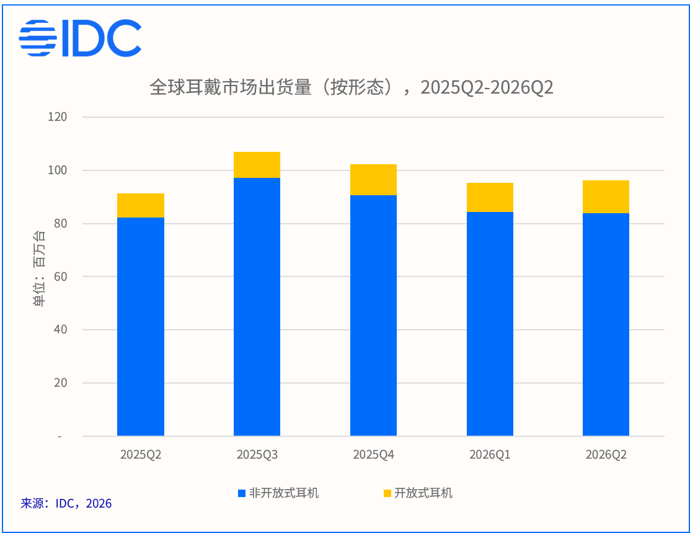
形态分化——市场告别普涨,厂商需做形态取舍
耳夹式依托形态优势持续收割市场红利,第二季度同比增幅高达82.2%。耳挂式、颈挂式增长动力逐步衰减。开放式耳机告别全品类普涨阶段,转向形态分层,场景细分的结构性竞争。赛道内不同形态产品的价值分化持续显现,厂商需基于自身资源,采取差异化形态布局策略。
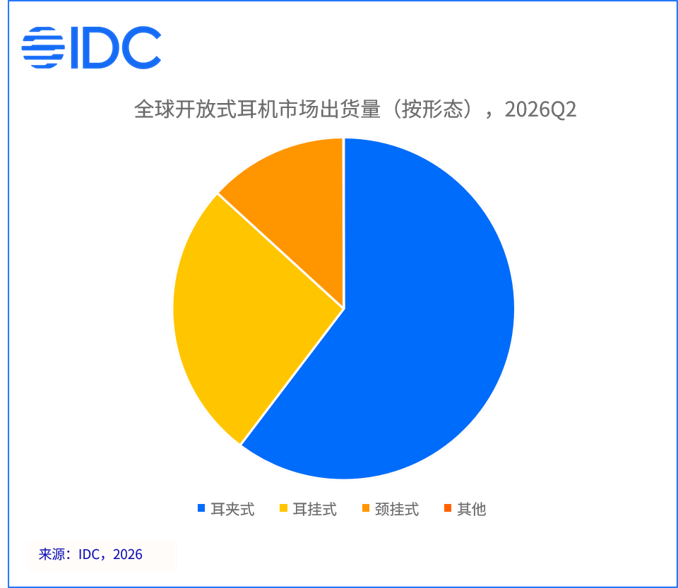
耳夹式:品类增长核心引擎,体验与时尚双轮驱动
第二季度耳夹式延续爆发态势,开放式内部出货量占比突破六成,成为拉动整个开放式增长的核心引擎。耳夹式实现出货规模与同比增速双领跑,是佩戴体验、产品定位、厂商供给策略等多重因素共同共振的结果。佩戴层面,耳廓夹持结构天然适配眼镜用户,轻量化设计降低长时佩戴负担。产品定位层面,它突破音频工具属性,叠加时尚穿戴价值,丰富的配色与配套配饰赋予产品社交属性,支撑消费溢价。供给端,手机品牌与音频厂商形成分层布局,头部手机品牌以高端机型树立品牌标杆,平价厂商依靠快速外观迭代、硬件参数升级铺开多价位产品线,触达更广消费人群。
耳挂式:低端份额收缩,聚焦运动场景优势
耳挂式产品第二季度出货同比下滑 5.1%,25美元以下低价产品份额持续萎缩。早期开放式赛道红利期涌入的大量低价耳挂产品,正在被市场清出。随着消费者认知成熟,单纯低价已经无法持续转化用户,市场需求向更高价值区间转移。但耳挂式并未完全丧失竞争力。更大的机身空间使其在运动佩戴稳固性、长续航、降噪处理、搭载AI芯片等方面保有独特优势,未来仍有差异化立足点。
颈挂式:增长趋于平缓,深耕小众专项场景
颈挂式则进入低速增长区间,第二季度出货同比仅增长0.9%,赛道入局厂商数量偏少。相较于耳夹及耳挂形态,颈挂式便携性不足,大众市场拓展竞争力相对偏弱。不过依托骨传导方案,本地存储能力以及脑后佩戴带来的稳固性,它在游泳等脱离手机的专项运动场景中仍保有不可替代的价值。
IDC认为,开放式赛道红利不再普惠所有形态,厂商应当有所取舍:耳夹式做规模与溢价,耳挂式凭借更大机身承载高阶功能,在运动场景之外挖掘音频及AI交互增值空间,颈挂式守住小众刚需,以场景化产品组合构建竞争力。
阵营博弈——不同厂商凭自身禀赋走出差异化路径
2026年第二季度中国仍是全球开放式耳机规模最大区域市场,出货量占比超过六成。中国厂商凭借先发优势与供应链能力主导全球市场。国际一线音频品牌跟进,聚焦高端市场保守迭代。以印度厂商为代表的新兴玩家依托极致低价,抢占全球下沉市场。赛道阵营差异化竞争特征愈发显著,厂商应立足自身资源禀赋,明确差异化定位,以长期竞争力打开增长空间。
赛道先行者(韶音为代表)
该类厂商较早入局开放式赛道,在骨传导技术,漏音控制等领域构建核心壁垒。早期深耕专业运动场景,后续逐步拓展耳挂及耳夹等全形态产品,向全场景大众音频品牌转型。
厂商可依托已建立的品牌心智加速大众市场渗透,持续夯实核心声学技术以抵御后发厂商的冲击,同时也要妥善平衡高端技术定位与大众定价。在海外市场可以利用运动用户积累的品牌口碑,拓宽全球增长空间。
大众音频厂商(漫步者、倍思为代表)
以高性价比,全价位段产品矩阵与潮流设计抢占年轻用户市场,凭借机海战术实现规模化铺货,通过与第三方大模型公司合作,在中国市场积极落地各类云端AI功能,推动开放式耳机基础智能化体验。
厂商应跳出单纯价格竞争,打造产品差异化亮点,不要造成重营销、轻品质的品牌认知。AI功能需立足真实使用需求,规避噱头化设计,同时提前规划海外市场AI服务受限场景下的产品方案。
手机生态厂商
2026年加速布局高端开放式赛道,依托自有操作系统实现多终端生态协同。借助端云协同AI算力打造低时延交互体验,以耳机作为智能生态延伸入口,拉升品牌高端价值。
厂商应适度开放生态,提升跨设备适配能力。兼顾生态优势与耳机声学核心体验,避免重生态,轻音质。面向海外市场时,可依托品牌其他出海产品的渠道与用户基础实现生态协同,用户复用,兼顾各地区AI合规要求,助力全球化拓展。
外资及新兴厂商
Bose、索尼、森海塞尔等品牌多年深耕音频高端市场,凭借深厚声学调校,音频编码技术入局开放式市场。但整体新品推进节奏相对保守,产品上新速度较慢。印度厂商以极致低价推出入门级产品,快速抢占全球下沉市场。
国际高端厂商需提速本土化产品迭代,更贴合国内用户场景需求。新兴低价厂商在放量基础上,可适度提升产品品质,逐步塑造品牌价值。
AI落地——从营销卖点转向生产力工具
基础翻译与办公功能已通过云端算力快速普及,但低时延通话翻译等高阶场景仍依赖端侧NPU与软硬件协同。当前多数AI功能仍停留在营销卖点层面,谁能把AI从“噱头”做成“稳定可靠的生产力”,谁就能拉开差距。
载体优势:长时佩戴属性,奠定AI落地基础
开放式耳机凭借非入耳的产品形态,可支撑用户全天候长时佩戴,是音频采集与声音输出的天然硬件终端。在中国市场,AI已成为开放式耳机品类的下一增长引擎,办公与翻译成为现阶段商业化核心场景。
路线分化:云端普及基础功能,端侧支撑高阶生产力
围绕AI落地,行业已形成两条泾渭分明的技术路线:
- 云端路线:平价品牌普遍与第三方大模型公司合作,依托云端算力实现面对面翻译、基础办公类AI能力,耳机端仅承担拾音与发声。该方案硬件成本可控,可快速将AI能力打造为产品溢价卖点,但功能同质化明显,交互体验偏浅层。
- 端云协同路线:部分手机厂商及传统技术厂商发力低时延通话翻译等高阶生产力场景,对拾音阵列、降噪算法、端云协同及系统适配能力提出严苛要求。相关旗舰耳机搭载高性能NPU,引入端侧本地算力支撑复杂AI任务,但产品定价偏高,部分产品声学积淀不足,娱乐体验存在短板。
能力短板:云端有功能缺体验,端云协同有能力缺规模
两条路线各有短板:云端路线“有功能、缺体验”,端侧路线“有能力、缺规模”。行业后续需要平衡AI生产力能力、声学基础体验与产品定价,才能让AI从“卖点”真正变成“生产力”。
出海新局——中国厂商主导全球,但合规与本地化是必答题
中国厂商凭借先发优势与供应链能力,占据全球开放式耳机超六成出货份额,但出海并非简单铺货。海外市场区域差异显著:欧美市场运动场景普及,用户重视品牌与产品品质;东南亚电商渠道蓬勃发展,年轻消费群体集中,偏好兼具设计感的产品;印度以极致低价产品争夺下沉市场。与此同时,区域数据隐私法规、语种本地化适配、AI服务受限等约束,要求厂商在产品定义阶段就嵌入合规与本地化能力——国内AI方案不能照搬海外,语种覆盖需提前规划,数据存储与处理需符合当地法规。出海不是“把国内产品卖到海外”,而是“为海外市场重新定义产品”。
未来竞争不再聚焦AI功能的有无,而是端云协同能力、多场景下AI体验的可靠性、声学综合实力,以及面向海外市场的本地化合规与场景适配能力的综合比拼。
结语
形态取舍、声学功底与AI全球化落地,构成下一轮竞争的综合壁垒
开放式耳机告别普涨红利,进入形态分层、阵营博弈、AI落地与全球化合规的新阶段。红利退潮之后,竞争是形态取舍、声学功底与AI全球化落地能力的综合较量。厂商需结合自身资源禀赋选择赛道定位,兼顾声学根基、场景化AI体验与海外本地化合规,方能在分化市场中构筑可持续增长曲线。
进一步交流
本文基于IDC全球季度跟踪报告梳理了开放式耳机的核心趋势。若您关注中国厂商出海面临的区域合规、语种适配与AI服务落地等具体问题,或需要分区域、分形态的海外市场数据支撑,欢迎联系IDC,获取更细颗粒度的数据与分析。请点击此处与我们联系。
Judy Dai - Research Manager
Judy Dai is joining as the research manager of IDC China Client Devices, focusing on the market insights of wearable and audio markets. At the same time, she is responsible for providing project consulting, market analysis, business development, and customer…
四足机器人市场的分化,还在加深。
IDC最新数据显示,2026年上半年,全球出货量超过4.9万台,同比增长92.5%;市场规模超4亿美元。但比出货量更值得关注的,是收入结构:教育科研和家用消费贡献了约60%的出货量,却只贡献了不到三分之一的收入;而政府、工业制造、公共事业等行业级应用,用不到40%的出货量,拿走了超过三分之二的收入。
国际数据公司(IDC)最新发布的《全球四足机器人市场份额,1H26》报告显示,行业级应用已成为市场增长的核心引擎,2026上半年行业应用市场规模超过2.7亿美元,同比增长125.1%,部署量同比增长260.5%。
这个增速,远超出货量整体增速。实际行业需求的比重持续提升。
市场进入商业化扩张期,竞争格局仍在快速演变
2025年,全球四足机器人市场进入规模化发展阶段,全年出货量约5.8万台、市场规模超过4.9亿美元,较2024年均实现翻倍以上增长。2026年上半年,市场延续高增长态势,出货量超过4.9万台,同比增长92.5%;市场规模超过4亿美元,同比增长95.4%,商业化进程进一步加快。
随着运动控制、环境感知和人工智能能力持续提升,产品应用正从科研教育、展示表演和家用消费,逐步向政府,工业制造,公共事业,石油天然气,矿产及工程、建设及房地产等专业场景拓展,市场增长动力中,实际行业需求的比重持续提升。
全球四足机器人市场呈现多梯队竞争、厂商定位分化和区域化拓展等特征。宇树科技(Unitree)、云深处科技(DEEP Robotics)、智元机器人(AGIBOT)、具微科技(Micbot)等中国厂商依托供应链、成本和规模制造优势,加速拓展消费、科研及多行业应用;ANYbotics、Boston Dynamics等欧美厂商主要聚焦政府、工业、石油天然气及特种作业等专业场景。
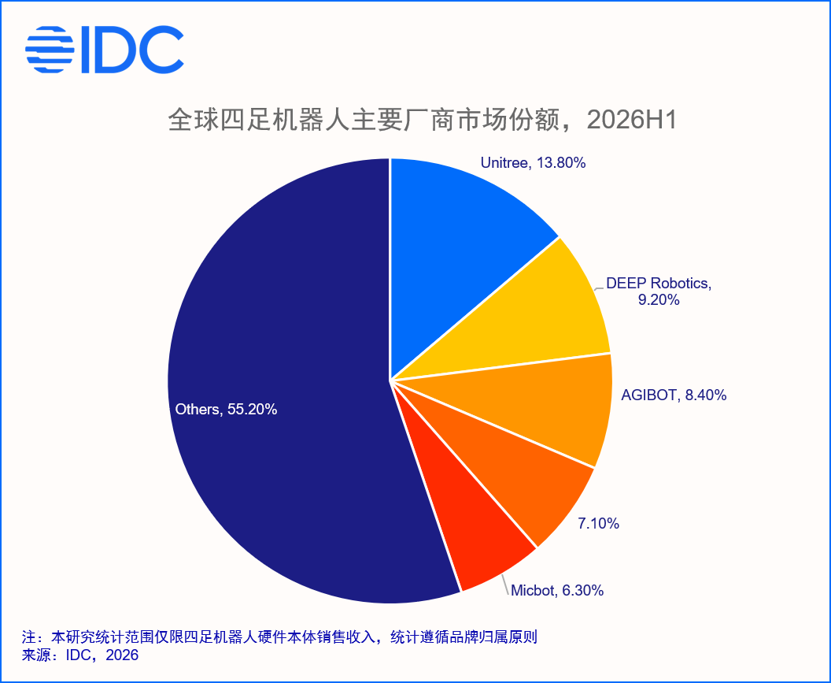
与此同时,技术门槛降低、产品成本下降及应用市场扩大,推动新厂商持续入局,市场竞争进一步加剧,竞争格局仍处于快速演变阶段。随着本体技术逐步成熟,厂商竞争也将由早期的运动性能和硬件参数竞争,进一步向AI能力、行业场景、软件生态及整体解决方案竞争演进。
出货靠消费科研,收入靠行业级应用
全球四足机器人市场正在呈现明显的“出货靠消费科研、收入靠行业应用”特征。2026年上半年,教育科研和家用消费贡献约60%的四足机器人出货量,但收入占比不足三分之一;相比之下,政府、工业制造、公共事业等行业级应用市场虽然出货规模相对有限,但产品单价和项目价值更高,贡献了更高的市场收入,成为整体市场增长的重要驱动力。
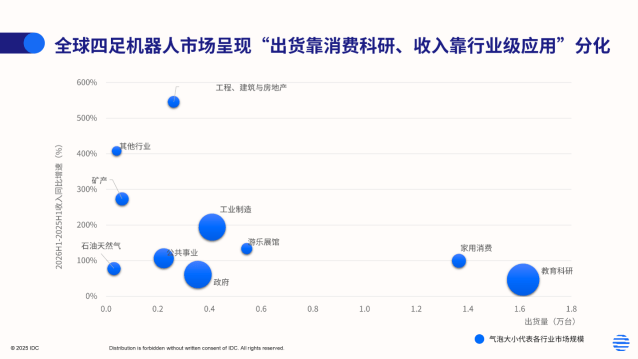
2026年上半年,除教育科研、家用消费之外的行业级应用市场规模超过2.7亿美元,同比增长125.1%;部署量超过1.9万台,出货量同比增长260.5%。从厂商表现来看,云深处科技(DEEP Robotics)位居行业级应用市场首位,凭借在电力巡检、工业巡检、应急消防等场景的广泛部署,以及较为成熟的产品和解决方案能力,在行业级应用市场保持领先。
这一结构性差异并非新现象,而是四足机器人市场的长期特征。2025年如此,2026上半年依然如此,且分化程度还在加深。消费及科研市场仍是推动产品规模化和降低成本的重要力量,行业应用则持续成为厂商实现收入增长和商业化变现的关键市场。两者不是替代关系,而是并行关系。从行业级应用维度来看,政府和工业制造是规模最大的两个细分市场;其中工业制造市场增速更高,正成为厂商重点拓展的方向。
工业制造:四足机器人加速进入规模化应用阶段
2026年上半年,全球四足机器人工业应用市场规模约7675万美元,同比增长194.2%;部署量超过4100台,出货量同比增长537.9%,市场进入快速扩张阶段。
随着工业应用加速落地,越来越多厂商开始进入这一细分市场,竞争由早期的少数厂商探索逐步转向多厂商拓展。
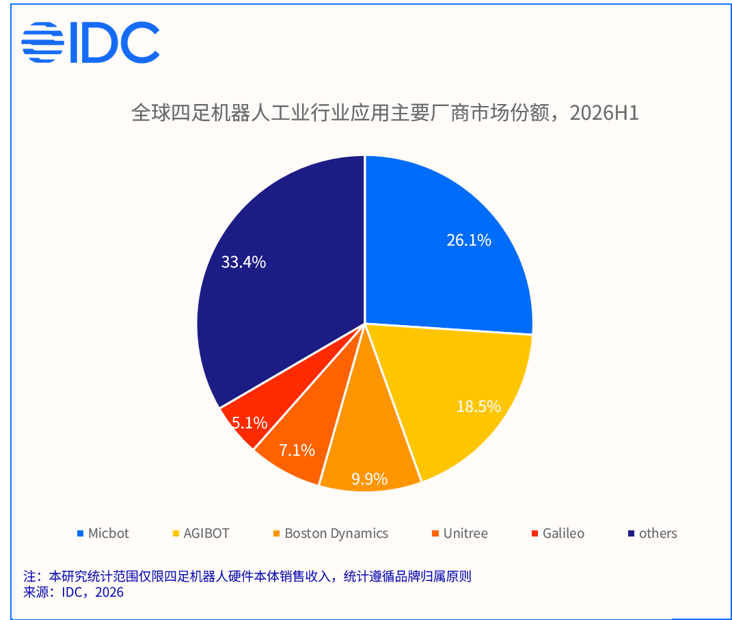
具微科技(Micbot)聚焦高危工业场景,依托轮足机器人和工业具身大脑,推进防爆等特种产品的规模化量产与交付,工业市场收入份额位居前列。智元机器人(AGIBOT)通过生态合作伙伴快速拓展工业应用,Boston Dynamics、宇树科技(Unitree)等厂商也持续探索工业场景,推动四足机器人从传统巡检向更多任务延伸。
未来展望:从单机巡检走向复杂作业
未来,全球四足机器人市场将从高速扩张逐步进入应用深化与能力升级阶段,市场增长动力中,行业应用和商业价值的比重将进一步提升。
行业应用从单点试用走向规模化部署。 随着四足机器人在工业制造、石油与天然气、公共事业、工程建筑、矿山等领域持续落地,市场增长将逐步由教育科研、消费等早期需求,向行业客户的批量采购转变。安全性、可靠性、部署效率和ROI将成为影响采购决策的重要因素。
从移动巡检向智能作业平台演进。 多模态感知、AI模型、机械臂及专业作业载荷的融合,将推动四足机器人从“移动+巡检”向设备检测、维护、操作和应急处置等复杂任务延伸,实现从感知、识别到决策和执行的能力闭环。
数据与具身智能成为新的竞争壁垒。 随着运动控制、定位导航等基础能力逐渐成熟,厂商竞争将更多聚焦真机数据、模型训练和任务泛化能力。通过真实场景数据持续训练和优化,机器人将从“一次部署、固定任务”向“持续学习、能力扩展”演进。
消费级与行业级市场双向发展。 消费级市场将通过降本、改善交互和丰富内容扩大用户基础,行业级市场则持续向高可靠、高智能和高ROI方向升级,形成不同的增长路径。
全球竞争从产品出海转向本地化能力竞争。 中国厂商将进一步拓展欧洲、亚太、中东非等市场,全球竞争将更加考验技术、成本、供应链、行业经验以及本地化交付与服务能力,市场逐步形成头部厂商、多梯队厂商及细分专业厂商并存的竞争格局。
IDC中国研究经理李君兰表示,四足机器人商业化路径日益清晰,行业级应用市场持续向巡检、安防及复杂作业深化,消费市场则在降本和产品能力提升的推动下持续扩展。随着具身智能技术、产品可靠性和载荷能力不断提升,四足机器人正从以移动和巡检为主的平台,逐步向多场景通用作业平台演进。
IDC建议:两条路,两种打法
对于厂商而言,2026年下半年是一个需要做出选择的节点。
如果主打消费科研市场,核心是降本和生态。消费级市场对价格敏感,产品同质化风险高,单靠硬件参数很难建立长期壁垒。厂商需要通过规模化制造压低成本,同时用内容、交互和开发者生态提高用户粘性,把“卖一台机器人”变成“留住一个用户”。
如果主打行业级应用市场,核心是场景理解和交付能力。工业、政府、能源等场景高度碎片化,没有一款产品能通吃。厂商需要选择擅长的细分场景做深做透,积累真实场景数据和任务经验,把“能巡检”升级为“能作业”,把“卖产品”升级为“卖解决方案”。安全性、可靠性和ROI,是行业客户真正关心的三件事。
如果两条路都想走,则需要警惕资源分散。消费市场和行业市场的竞争逻辑差异很大,前者拼成本和规模,后者拼场景和服务。同一套产品和团队很难同时打好两场仗。更现实的路径是:用消费市场的规模摊薄成本,用行业市场的利润反哺研发,但前提是找到两者之间的技术复用点,而不是简单地把消费级产品改一改卖给行业客户。
对于整个市场而言,四足机器人正在从“能走能跳”的技术展示阶段,进入“能干活、能赚钱”的商业验证阶段。谁能率先证明四足机器人在真实场景中持续创造价值,谁就能在下一阶段的竞争中占据主动。
进一步交流
以上为《市场份额:全球四足机器人市场份额,1H26》(Doc#: CHC53325026)报告核心内容洞察。如需了解细分市场完整数据、厂商排名详情,欢迎联系与IDC团队联系。请点击此处与我们联系。
Lily Li - Research Manager
Lily is the Research Manager for China Robotics and Embodied Intelligence, specializing in market research on embodied intelligent robots. She has long focused on the development trends of China’s embodied intelligence robotics industry, systematically studying the evolution of robot hardware,…
中国PC显示器整体跌幅看似有限,但市场结构已经发生显著分化。国际数据公司(IDC)发布的2026年第二季度中国PC显示器市场季度跟踪报告显示,2026年上半年,中国PC显示器市场出货量14.3M,同比下滑2.2%;其中商用市场出货量7.7M,同比增长5.7%,消费市场出货量6.6M,同比下滑10.1%。
大盘的“微跌”掩盖了一个更关键的事实:商用与消费之间的增速差已超过15个百分点,市场正在从“普涨普跌”进入“结构性分化”阶段。与此同时,显卡、存储、显示驱动芯片涨价持续推高整机成本,但终端市场竞争激烈,涨价向下传导阻力较大,厂商利润承压。本文结合IDC最新季度跟踪报告,梳理PC显示器行业穿越周期的结构性机遇。
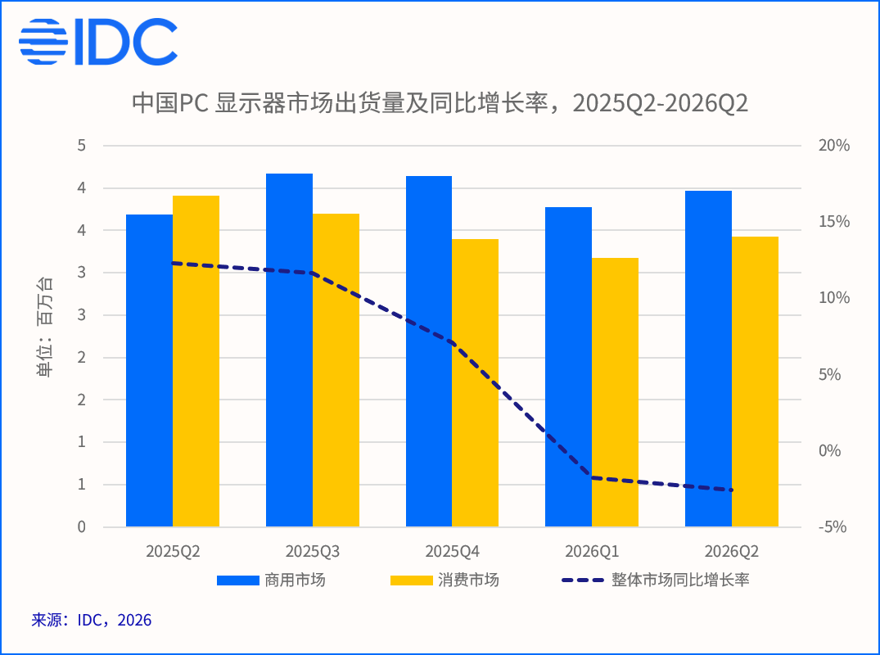
本文将沿着三条主线展开:第一,拆解商用与消费两大市场的分化逻辑,看商用增长还能持续多久、消费疲软为何降价也拉不动;第二,聚焦电竞与高端市场,分析成本压力下厂商如何通过中高端放量、OLED/Mini LED/双模布局来对冲成本、寻找利润空间;第三,结合头部品牌份额变化与IDC建议,探讨厂商在业务资源调配、产品矩阵优化和价值营销上的具体应对策略。
商用市场:增长还能持续多久?
商用显示器与台式机市场保持强相关性。2026上半年商用显示器5.7%的增长,主要来自政府及大型企业台式机集中采购释放的需求。中小企业采购意愿偏弱,上半年中小企业显示器出货量同比下滑5.4%。台式机采购存在需求前置效应,对显示器的拉动将逐步收窄;叠加8月多家厂商宣布显示器涨价,将扰动下半年商用显示器出货节奏。
商用行业内部需求同样出现分化,厂商需要及时调整策略,聚焦垂直细分赛道。高校、职业院校的实训与科研场景对中高端显示器需求旺盛,高端制造业产能扩张也将持续带来批量采购订单,企业应规避通用市场的同质化竞争,针对各行业业务痛点挖掘增量机会。
消费市场:为什么降价促销也拉不动需求?
2026 上半年消费显示器出货量同比下滑 10.1%。一方面,去年国补政策提前释放部分市场需求;另一方面,显卡、内存涨价及供给紧张,抑制消费者装机及显示器采购意愿。即便大促期间厂商通过产品升级、降价促销拉动销售,消费端需求依旧延续收缩态势。
体验式消费已经成为当下年轻群体新的消费选择。厂商需要降低对价格促销的依赖,转向体验营销,搭建家用、影音、电竞等多元使用场景,依靠场景价值带动产品销售;同时强化护眼、色准、双模等差异化卖点,减少价格内卷,适度收缩低端机型资源倾斜,引导用户向中高端价位升级迁移。
电竞市场:中高端放量,低端收缩
竞显示器作为行业竞争焦点,在大盘低迷环境下增长承压。受显示驱动芯片涨价影响,整机成本抬升,厂商为保障盈利,加快中高端产品布局,同步收缩低端产品供给。OLED、Mini LED 及双模显示器迎来新品集中发布周期,带动2026上半年国内电竞显示器出货量同比微增 1.0%,市场份额达38.6%。
电竞产品迭代速度快,产品端应锚定 QHD&240Hz 及以上核心规格,以此夯实电竞业务基本盘;重点布局 OLED、Mini LED、双模显示器三大方向,打造标杆产品。渠道端严格管控低端电竞库存,防范价格倒挂风险,及时清退低效 SKU。营销层面强化参数体验感知,向用户传递高刷、双模技术带来的实际游戏价值。
成本压力:终端涨价传导受阻,企业如何应对?
显卡、存储涨价对显示器需求的抑制仍将延续,显示驱动芯片、电源芯片涨价进一步抬升整机成本。但终端市场竞争激烈,涨价向下传导阻力大,行业难以复刻 PC 产品的普涨行情,低端产品极易发生价格倒挂。
厂商需要依托产品结构升级对冲成本上涨,借助中高端产品摊薄成本压力;同步完成 SKU 优化,削减低毛利低效机型,降低生产与库存风险,并提前锁定供应链产能,缓解元器件涨价带来的经营冲击。
高端市场:OLED 显示器、Mini LED 显示器、多模显示器是突破口
伴随高端面板产能持续释放,高端显示器迎来发展窗口期,OLED、Mini LED、多模显示器成为品牌抢占高端市场的核心突破口。IDC 数据显示,上半年2000元以上价位段,OLED 产品占比已超 50%,IDC预计 2026 年中国 OLED 显示器出货将实现翻倍增长。
厂商应持续迭代高端产品线,完善渠道高端体验建设,线上强化画质色彩内容输出,线下搭建真机体验场景,开展用户产品价值教育,将色彩表现、功能特性、多模式切换等技术优势转化为可感知的使用体验,支撑高端产品定价,对冲成本压力,拓展利润空间。
结构分化,市场格局出现新变化
市场结构的分化,最终会反映到厂商格局上。商用与消费的此消彼长、成本上涨对低端产品的挤压、中高端市场加速渗透,正在让不同厂商走出不同的策略路径。有的继续守住全价位基本盘,有的借商用渠道快速上量,有的靠成本优势吃性价比市场,也有的押注高端和生态协同。2026上半年,中国前五大PC显示器厂商的份额变化,正是这种策略分野的直接体现。
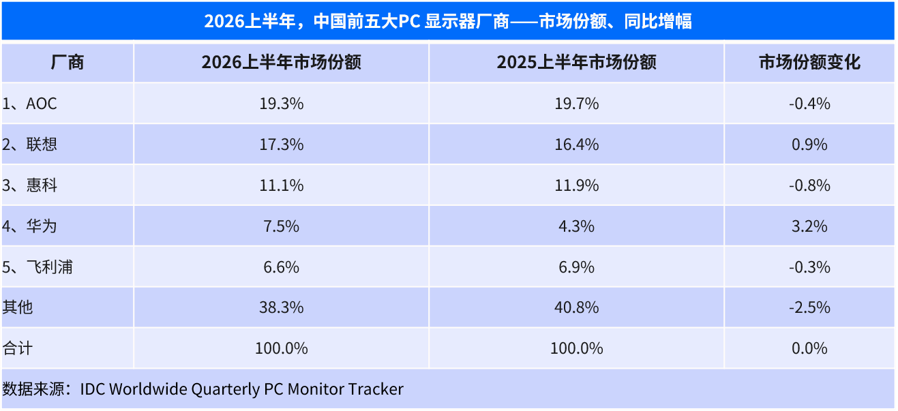
AOC 位列国内显示器出货量首位,整体表现稳健。其全价位产品布局完备,在市场下行周期主动优化产品结构,1500元以上价位出货大幅增长,推进中高端渗透;同时深耕电竞赛事营销,在电竞用户群体拥有较高品牌认知。
联想排名第二,依托台式机整机捆绑的渠道协同优势,商用显示器上半年实现显著增长,但消费端承压,二季度以库存消化为主,出货面临挑战,旗下拯救者、来酷斗战者系列持续布局电竞赛道。
惠科位居第三,具备突出成本优势,高性价比电竞爆款表现良好,高刷产品维持增长;但目标用户价格敏感度高,成本上涨将对后续出货形成压力。
华为市场份额提升至第四,受益于政府、大企业台式机采购带动显示器出货,份额提升3.2%,消费端新品放量同样拉动整体出货增长。
飞利浦位列第五,深耕中高端办公市场,主打护眼、色准卖点;旗下电竞子品牌 EVNIA 弈威聚焦中高端赛道,但行业竞争激烈,尚未带动整体电竞显示器出货增长。
对中小厂商而言,无需追求全价位段覆盖,深耕细分赛道、优化渠道结构、执行精准价格卡位,依旧可以挖掘增量空间。企业应当规避低端内卷,要么打磨垂直领域性价比,要么打造差异化产品卖点。
IDC总结与展望
2026上半年,中国PC显示器市场呈现显著结构性分化:消费端需求疲软叠加成本上行,低端产品经营压力加剧;成本刚性上涨又在持续推动产品结构升级,OLED、双模显示器等高端品类加速渗透。这意味着,厂商过去依赖低价走量、被动等待集采红利的打法已经难以为继,需要从业务资源、产品矩阵和营销逻辑三个层面主动调整。
- 重新调配业务资源。商用业务端摒弃对集采红利的被动等待,主动拓展细分行业订单,挖掘垂直领域新增需求;消费市场放弃降价走量模式,依托场景化体验与核心卖点营销应对需求收缩,规避无效价格内卷。
- 优化产品矩阵,强化供应链风险管理。持续精简低端SKU,把资源向 QHD& 240Hz + 电竞、双模、OLED、Mini‑LED 等高潜力产品倾斜,逐步淘汰低毛利、周转效率低下的低端 SKU,收缩低端产品供给,严控低端产品排产及库存规模,防范价格倒挂造成经营亏损。针对显示驱动 IC、显卡存储等上游元器件涨价问题,前置做好供应链风险管控,积极引入国产配件,规避成本上涨以及供货短缺带来的被动冲击。
- 转向价值营销,明确系列产品差异化定位。推动营销逻辑从价格比拼转向价值传递,电竞产品强化高刷、新技术的用户认知教育,消费端重点输出护眼、色准、双模等功能的实际使用价值,商用市场着重突出产品品质与售后服务能力,跳出单品比价的竞争困局。中小厂商更要找准自身赛道定位,避开与头部厂商的全维度正面竞争,深耕垂直细分领域,依靠细分赛道实现增量突围。
价格博弈与细分市场的增长将会共同影响整体市场规模,厂商唯有把握结构性升级机会,方能穿越周期。
IDC 相关研究报告
Worldwide Quarterly PC Monitor Tracker
Worldwide Quarterly Gaming Monitor Tracker
进一步沟通
如果您对本文提到的数据、市场趋势或厂商策略有不同看法,欢迎一起交流探讨。你也可以与我们联系,获取更完整的季度跟踪报告与定制化分析。期待与您进一步沟通,共同挖掘PC显示器市场的结构性机会。请点击此处与我们联系。
国际数据公司(IDC)最新数据显示,2026年第二季度,中国工业PC市场出货量同比增长16.8%,增速创下近五个季度新高。但亮眼数据背后,市场参与者正面临更复杂的周期挑战:本轮增长同时包含 AI 转型带来的真实增量,与短期供需波动催生的前置需求,无法通过简单线性外推判断未来走势。厂商需穿透数据表象调整经营策略,从追求规模增速转向订单质量与产品竞争力的提升。
一、Q2市场复盘:16.8% 高增速的双重增长构成
2026年Q2中国工业PC市场出货118.9万台,同比增长16.8%;上半年累计225.4万台,同比增长11.9%,呈现同环比双高增的态势。
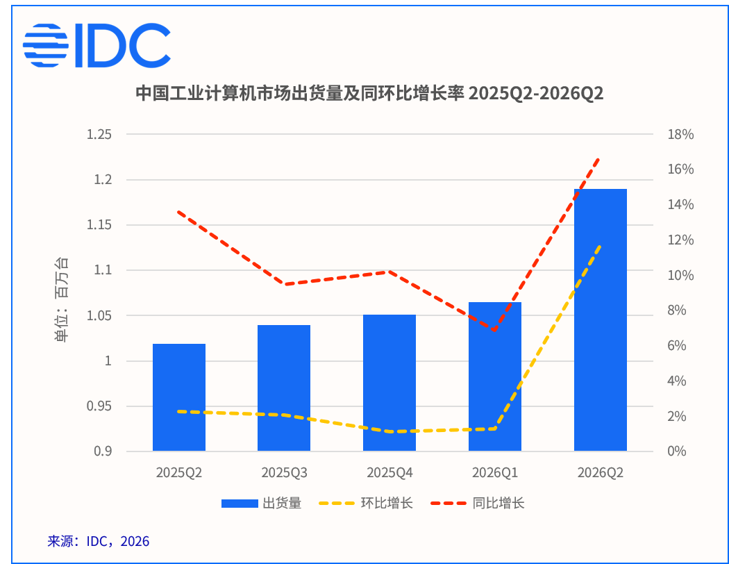
IDC认为,本轮增长由双重性质完全不同的动力共同驱动,也决定了市场增长的结构稳定性不足:
首先是AI 边缘算力带来的真实增量,具备长期可持续性。伴随产业加速进入以智能体为核心的新阶段,边缘侧算力缺口持续扩大;工业 PC 凭借高稳定性优势,可支撑多步骤、长时间运行的本地化 AI 任务,为制造等核心场景提供可靠端侧算力。产业智能化转型的长期趋势,为工业 PC 市场带来了坚实的底层增量。
其次是涨价预期下的需求前置,需要警惕的短期变量。面对核心元器件价格上行与交期不确定性,下游客户集中提前锁货,导致部分订单实质是对 2027 年需求的提前支取。整体来看,2026 年上半年的高增长由多重因素叠加促成,厂商制定 2027 年经营计划时,不宜直接用当前增速做线性外推。
二、周期深层解析:三重因素主导行业增长节奏分化
第二季度的高增长由短期与长期双重动力共同支撑,但拉长全年乃至三年周期来看,行业增长节奏并非线性延续。供需格局、产业链供给与下游资本开支的三重变化,正在重塑工业 PC 市场的周期逻辑。
IDC 预测,2026 年中国工业 PC 市场出货量预计达 448.9 万台,市场规模约 120.0 亿元;2026–2030 年复合增长率 13.1%,2030 年将达 735.5 万台。其中 2026 年下半年预计出货约 223.5 万台,相较上半年环比微降 0.8%,增长动能已出现边际走平的迹象。CPU、PCB、Power IC 供给紧张是增长放缓的核心原因,头部厂商交期已拉长至半年;积压订单虽将递延至 2027 年释放,但订单动能已经边际走弱,头部厂商中国区订单出货比降至 1.21,为全球主要区域最低水平。
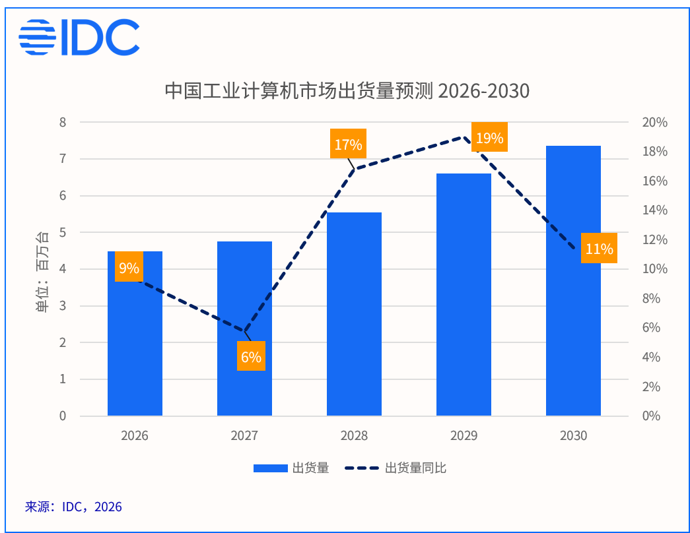
具体来看,三重因素共同影响了工业计算机市场的增长节奏:
- 上半年高增长掺杂显著的前置需求,透支后续增长动能。存储芯片涨价、交付周期拉长,促使客户提前备货,实质上透支了后续年度的市场需求,2027 年市场需要消化这部分提前释放的订单。背后的深层原因是全球存储行业正处于 AI 超级周期下的结构性供需失衡:三大原厂持续将晶圆产能转向高毛利 HBM,而 HBM 单片晶圆消耗量约为通用 DRAM 的三倍,持续挤压成熟制程产能,本轮涨价周期预计将延续至 2027 年底。。
- 供给瓶颈持续时长超出预期,订单大规模向后递延。CPU、PCB、功率 IC 等核心物料紧缺,头部厂商产能饱和、订单交期长达半年。2026–2027 年全球成熟制程处于旧产能已满、新产线尚未投产的瓶颈阶段,新增产能要到 2028 年才会形成有效产出,大量订单因此向后递延。
- 制造业资本开支节奏切换,中长期增长动力换档。2026 上半年自动化市场呈现 OEM 领跑、流程行业承压的结构性分化。设备更新资金集中在年内释放后,2027–2028 年缺少同等规模新增资本开支接续,项目型市场增长动力随之回落。
IDC行动建议:三大维度重构经营策略
综合来看,前置需求透支、供给瓶颈延期、资本开支换挡三重因素叠加,意味着行业高增长难以简单线性延续。厂商需要跳出传统的年度规划思路,从经营规划、产品价值、业务结构三个维度针对性调整,以应对周期波动。
1.重构年度经营规划,摒弃线性推演逻辑:针对需求前置带来的周期错配风险,首要动作是打破传统规划惯性。摒弃以年度出货量、积压订单线性外推来年业绩的传统模式,对2026年上半年在手订单进行结构化拆分,分为AI真实刚需、常规设备更新、涨价前置备货三大类型,针对各类订单分别搭建独立的测算假设与经营模型。
避免将本年度高出货、高积压订单直接作为2027年业绩基本盘,充分预留行业周期回落的缓冲空间。预判2027年上半年行业同比增速大概率承压,需提前制定排产、物料采购、库存管控的应急预案,实现主动风控,避免订单下滑后被动减产、调仓的滞后操作
2.依托边缘AI场景,筑牢产品溢价能力:面对产业链成本上行与供给约束的长期压力,企业需要跳出硬件堆砌的内卷,打造差异化价值。高端高性能机型需跳出单纯硬件配置堆砌的竞争逻辑,聚焦边缘AI核心赛道打造差异化价值。通过优化算力配置、深耕细分场景适配、完善配套软件栈,打造设备本地化长流程AI稳定运行的核心能力,形成客户认可的差异化价值支撑,以此实现合理产品溢价。
同时依托落地场景案例、软件配套服务收入,持续验证产品溢价的真实性与可持续性,摆脱低价同质化竞争。
3. 均衡产品结构,强化跨周期对冲能力:为了对冲行业周期波动与单一业务的经营风险,均衡化的产品结构是跨周期发展的核心支撑。避免单一产品线重仓押注的经营风险,构建多元化、抗周期的产品组合体系。依托标准化通用机型的规模优势,通过有序成本传导稳定市场份额,不盲目跟风涨价;充分利用项目型定制订单与AI场景业务、传统设备更新业务的周期错配特性,实现业务互补对冲。
最优经营结构为:AI高性能机型贡献核心毛利增量,标准化机型保障业务规模与稳定现金流,搭配灵活的新品迭代节奏,对冲当前设备更新周期拉长带来的行业增长压力,提升企业整体经营稳定性。
进一步交流
本文数据及观点均源自IDC《中国工业PC市场季度跟踪报告,2026Q2》。如需了解分形态、分行业、分场景的详细数据,或针对特定厂商策略进行定制化分析,敬请联络IDC中国研究团队。请点击此处与我们联系。
2026年以来,主流数据库厂商围绕AI的产品与战略发布明显提速。海外 Oracle 持续迭代 Agentic AI 增强的 Oracle AI Database,Google Cloud发布数据库智能体工具预览;国内 OceanBase、腾讯云、阿里云、华为云等厂商,也相继发布面向 AI/AI Agent 负载的数据库新版本。
这些发布共同指向一个变化:数据库厂商不再只回答“数据库能否支持AI”,而是开始回答“数据库能为AI承担多少数据准备和持续服务工作”。IDC认为,这轮竞争的关键,不只是增加多少AI功能,而是能否将企业数据转化为AI可持续使用、可治理、成本可控的业务上下文。从功能叠加走向可持续的数据供给,是当前AI原生数据库发展最值得关注的产业变化。
厂商密集发布的背后,是需求侧正在发生的结构性变化。当 AI 从演示走向生产,企业面对的不再是“要不要用 AI”的问题,而是“AI 能不能持续、稳定、成本可控地用上企业数据”的问题。数据规模、数据类型、数据消费方式都在改变,数据库作为企业数据的主要承载者,自然被推到了这轮变化的前台。也正因如此,AI 原生数据库才从一个产品概念,变成了一个需要被认真讨论的产业命题。
AI 工作负载重构需求,推动数据库迈向 AI 原生时代
国际数据公司(IDC) 相关调研结果显示,2025 年企业新生成的数据资产中约 90% 为非结构化数据,但大量数据散落在各类存储系统、各类业务系统之中,多模态数据相互割裂,企业手握数据 “富矿”,却缺少将数据转化为 AI 可用燃料的冶炼能力。
《IDC FutureScape: 全球 Agentic AI 2026年预测——中国启示》中提到,到2027年,未优先构建高质量AI就绪数据的企业将在扩展生成式AI和Agentic AI解决方案时面临显著挑战,导致生产力下降15%。
进入到2026年, 产业界已经形成清晰共识:AI 的竞争焦点正在离开大模型本身的能力演示,转向如何让企业存量海量数据真正服务于生产级 AI 业务。造成企业 AI 落地困局,本质是传统架构围绕结构化数据构建,难以应对海量非结构化多模态数据的处理需求。这些数据分散多系统带来副本冗余、版本不一致,极易引发 AI 输出失真。同时数据访问主体向 AI Agent 转变,原有架构缺少适配机器高频访问的安全、隔离与状态管理能力。此外传统治理体系无法覆盖向量、多模态数据,缺少将原始业务数据加工为 AI 可用上下文的完整链路。
为此企业需要数据库具备多模态混合检索、Agent 运行支撑、AI 链路治理以及成熟的企业级能力,支撑 AI 走向生产落地。这一产业现实,也让 AI 原生数据库的价值被推到台前。
向量能力只是入场券,不等于 AI 原生数据库。
增加一个向量检索能力,或者在管理控制台中接入一个对话助手,并不足以说明整个系统已经完成AI原生转型。判断“原生”程度,更有价值的观察标准是:当数据发生变化、模型需要替换、权限需要调整、负载出现波动时,这些能力能否在统一的管理机制下持续运行,还是仍需开发者在多个系统之间反复维护连接与同步关系。
因此,谈到AI原生数据库,不是要求数据库必须从零开发,也不是要求大模型必须运行在数据库进程内部,而是强调AI工作负载是否已经成为数据库架构设计的重要前提,而不再只是附加的使用场景。
AI需要的不是一堆数据,而是可用的业务上下文
向量搜索擅长发现语义相似的内容,但相似度本身无法判断数据是否满足时间、状态、金额等业务条件。例如一个售后服务Agent需要判断某笔订单能否退款,它不仅要找到一份语义相关的售后政策,还要核对订单时间、商品状态、客户身份、政策期限,以及操作权限。
这要求数据库具备标量与向量相结合的混合搜索能力,将结构化字段的精确匹配、范围过滤与向量相似度检索纳入同一查询过程,共同回答“哪些数据既相关,又满足当前业务条件”。对于企业AI而言,结构化查询并未因向量搜索的引入而失去价值,反而成为约束检索结果的重要基础。
因此,评估AI原生数据库,不能只看是否支持向量搜索,还需要看其能否融合标量与向量查询,并进一步承担多模态数据的组织与管理。真正的能力边界,不是“能检索多少种数据”,而是“能否将不同类型的数据组织为适合当前任务的业务上下文”。
Agent成为新用户,带来的不只是更多查询
IDC 预测,到 2031 年中国企业将拥有 3.5 亿个活跃智能体。
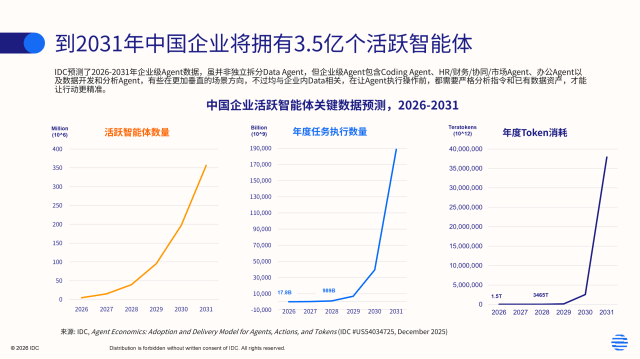
当数据库的服务对象拓展至持续执行任务的智能体时,数据访问需求将不再局限于单次查询。Agent 的长周期任务会反复读取数据、留存中间状态、调用业务工具,并依据返回结果持续迭代执行逻辑,这使得记忆与状态管理能力变得至关重要;面向 AI 开发场景,数据库环境的快速创建、隔离测试与回滚能力同样成为刚需。
由此看,AI与Agent并没有让数据库传统能力失去价值。相反,当数据被用于连续执行的业务流程时,事务一致性、资源隔离、故障恢复和可观测性依然非常重要,需要与新的检索、记忆和模型调用能力一起接受检验。
一体化正在升温,但不是把所有数据搬进同一个库
这一轮发布还有一个值得关注的共同点:厂商越来越少只发布一个孤立的检索功能,而是开始提供覆盖数据接入、处理、治理和应用服务的组合。在《IDC FutureScape:全球AI驱动的业务战略2026年预测——中国启示》中显示,到2027年,40%的企业将战略性投资AI融合的数据架构,以避免错误决策和竞争力下降。
面向AI工作负载,“一体化数据管理底座”的趋势愈发明显。但不能将“一体化”简单理解为“一个数据库替代所有系统”。对于企业,更重要的是减少重复的数据搬运、相互矛盾的业务定义和分散的权限管理,而不是追求产品数量最少。同样,支持开放格式或统一接口,也不意味着跨系统的一致性、性能和治理问题已经自动解决。企业仍需验证:数据更新多久可见,权限如何传递,多个引擎能否使用一致的业务定义,以及不同工作负载之间是否会相互影响。
“一体化”的价值应当体现在面相AI工作负载时的复杂度下降,而不是架构图上少了几个方框。
谁将受益,谁又面临压力?
根据《IDC Market Glance: 中国数据库管理系统,3Q26》报告显示,中国数据库管理系统涵盖了包括关系型数据库、多种非关系型数据库、数据仓库与湖仓一体、专用型数据库等等多类细分领域。当前,几乎所有细分领域的产品都在从不同“控制点”向面向AI的数据管理赛道演进。
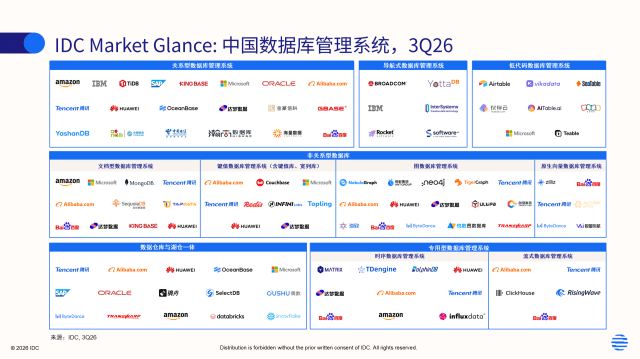
当前看来,拥有存量业务数据、成熟数据库能力和应用生态的厂商,具备向AI数据管理延伸的有利起点。但这种优势能否转化为新增收入,取决于它们能否降低客户的实际实施成本,而不只是把更多功能放入产品目录。
其他细分领域数据库厂商也并非没有发展空间。对于检索规模、响应延迟、数据类型或部署方式具有特殊要求的场景,专用产品仍可以提供更合适的方案。其竞争力是证明特定工作负载下的效果与成本优势,同时降低与企业现有数据体系对接的难度。但需要警惕的是,当向量生成、混合检索、模型调用和连接服务逐步被平台集成,单靠“支持某一项AI功能”建立的优势可能收窄。
真正被重构的,是数据库向AI提供价值的方式
从2026年以来的代表性发布看,数据库厂商正在同时回答两道题:如何借助AI改善数据库自身,以及如何让数据库更好地支撑AI。两者的交汇,使数据库的能力边界从存储与查询,进一步延伸至检索、上下文、记忆和受控的数据服务。
AI原生数据库的价值,不应由产品名称决定,也不应由演示中一次成功的问答证明。而是应该体现在,在复杂业务和持续变化的数据环境中,面向AI工作负载能稳定提供正确时间、正确范围内的数据,并让这一过程可管理、可追溯、成本可控。
IDC认为,未来的数据库竞争,不只是“谁能把数据管好”,还包括“谁能让AI持续、可靠、成本可控地把数据用好”。
进一步交流
如您希望进一步了解 IDC 对 AI 原生数据库、AI数据基础设施市场的规模预测、厂商格局及企业采用阶段的研究,或需要针对贵公司所在行业与目标市场进行定制化解读,欢迎与我们联系。请点击此处与我们联系。
Nan Wang - Research Manager, Enterprise System and Software Research, IDC China
Nan Wang is a research manager the IDC China Enterprise Research Group. His research focuses on China’s IT security market, and includes the study of the IT security software market and IT security appliance market. Nan is also involved in…
2026年,全球智能眼镜市场迎来新一轮结构性变革。国际数据公司(IDC)最新发布的《全球智能眼镜市场季度跟踪报告》显示,第二季度全球出货量同比增长35.3%,音频及拍摄类眼镜成为增长主力,AR/ER眼镜加速渗透,头显市场则面临调整。国际大厂持续主导行业方向,生态与AI体验成为竞争新焦点;中国创新厂商加快全球化步伐,通过产品多元化和渠道拓展提升海外影响力。与此同时,市场结构正向高阶智能化演进,应用场景不断拓展。尽管中国市场短期承压,但行业活力未减,技术创新、生态协同和全球化布局为未来发展注入新动能。本文将系统梳理全球及中国市场现状、主流厂商动态与未来趋势,探讨智能眼镜产业的新机遇与挑战。
全球市场
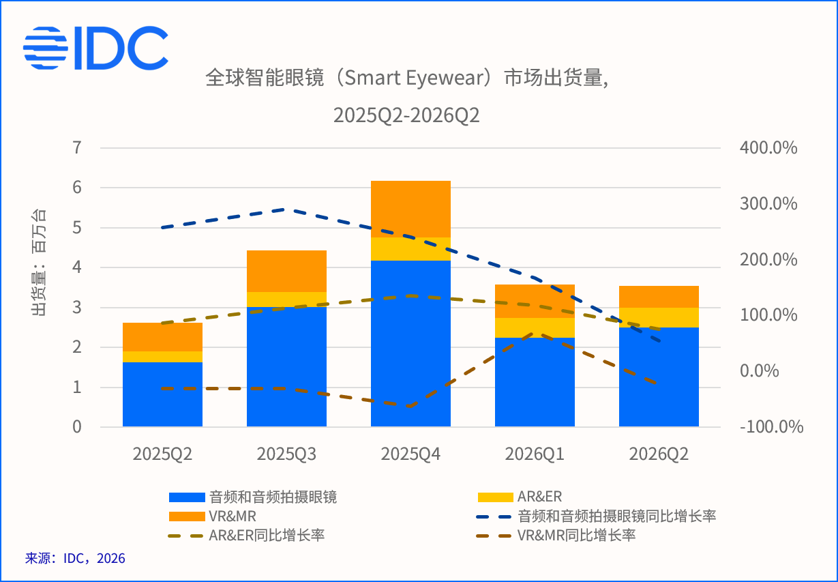
IDC最新数据显示,2026年第二季度全球智能眼镜(Smart Eyewear)市场出货量达到354.7万台,同比增长35.3%。其中,音频及音频拍摄眼镜出货量为249.4万台,同比增长54%;AR/ER眼镜出货量为50.5万台,同比增长75.7%;VR/MR头显出货量为54.8万台,同比下降23.3%。
2026年上半年,全球智能眼镜市场累计出货量达到711.4万台,同比增长70.5%。本轮增长主要由眼镜形态产品推动,市场结构正逐步向更高阶和智能化方向演进。下半年,随着新品发布和技术融合,行业格局有望进一步调整,但整体需求表现还需持续观察。
全球市场产品动态
1.国际大厂份额领先,资源投入重心明显转移
国际头部厂商持续引领智能眼镜行业发展方向。Meta凭借音频类智能眼镜稳居市场领先地位,并积极筹备新品发布。苹果首款智能眼镜产品已进入量产倒计时,行业竞争重心正由单纯的硬件出货量转向生态系统和AI体验的深度融合。尽管国际大厂多线布局,但资源投入重心已发生明显转移。
Meta:继续保持全球智能眼镜市场的领先份额,二季度推出更具性价比的新品,进一步巩固其在大众消费市场的基础。Ray-Ban Display等显示类智能眼镜受限于良率和产能,出货量尚未形成规模,细分市场优势尚待建立。头显方面,Quest系列持续推进,但整体出货量预计有限。
Apple:首款智能眼镜产品进入量产倒计时,头显产品线节奏相应调整,下一代头显发布时间或将大幅延后。
2. 中国科技创新厂商加速全球化,产品线与渠道多元化
中国科技创新厂商加速全球化布局,通过丰富产品线、拓展海外渠道和深化本地化运营,在显示类眼镜领域形成差异化竞争力,海外市场份额持续提升。
雷鸟:加速产品迭代,推出主打高端观影体验的GT系列和轻量化V4 AI拍摄眼镜,同时Q3将正式发布iO系列显示类智能眼镜。其今年海外市场拓展加快,线下渠道建设提速,上半年在全球及中国消费级AR&ER眼镜市场保持领先。
Xreal:海外市场出货占全球比例已超过60%。产品线持续丰富,覆盖不同价位段和细分场景,包括入门级XBX A01+、和面向游戏市场的R1。同时Q3将在海外正式发布Project Aura,进一步完善高端显示类智能眼镜布局,全球市场区域覆盖日益完善。
Inmo、Viture等厂商也在海外市场持续发力。Inmo计划Q3推出王嘉尔联名款,拓展时尚消费场景;Viture专注细分市场,持续扩展海外零售渠道,在北美等地表现稳健。
3. 生态搭建与跨界合作提速,应用场景持续拓展
生态搭建与跨界合作加速,智能眼镜应用场景持续拓展,厂商通过AI能力、内容生态和多终端协同不断提升产品价值。
千问:千问在国内带摄像头、以AI功能为主的智能眼镜市场中快速上量,依托大模型与电商、支付生态的深度整合,取得领先。三季度有望与新品千问AI耳机协同,进一步完善AI硬件生态布局。
Rokid:海外出货开始增加,二季度在全球非全彩眼镜市场保持领先。生态层面,Open Day 2026发布Yoda OS完善底层系统,后续计划引入腾讯WorkBuddy AI办公能力,探索眼镜在办公场景的落地。
中国市场
2026年二季度中国智能眼镜市场出货61.1万台,同比下滑8.0%,市场首次出现负增长。下滑主要受到音频眼镜市场影响,但整体行业竞争依然活跃,厂商持续优化产品线和渠道布局,新玩家不断进入,市场活力未减。
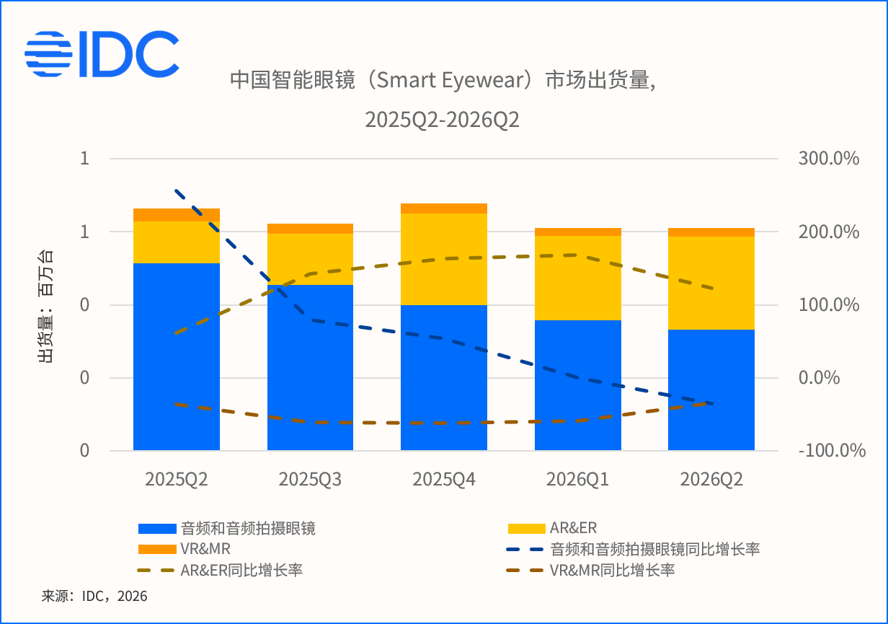
中国细分市场概况及市场格局
音频和音频拍摄眼镜市场
2026年二季度,中国音频和音频拍摄眼镜市场总出货量为33.2万台,同比下滑35.4%。市场结构继续升级,音频拍摄眼镜市场份额已超过音频眼镜,占比达到55.3%,同比增长81.4%。
本季度市场下滑,主要是由于头部品牌产品逐步进入生命周期末期,导致整体出货承压,而市场上推出的新产品尚未形成有效接力。同时,音频眼镜产品同质化问题突出,缺乏差异化创新,进一步影响了消费者的换新意愿。尽管促销季带来了一定关注,但对销量的拉动作用有限。在此背景下,部分新厂商对市场持观望态度,入局节奏相对缓慢。未来市场能否恢复持续增长仍取决于创新功能的落地和用户需求的进一步释放。
AR/VR市场
2026年二季度,中国AR/VR市场出货量27.9万台,同比增长85.8%。
AR&ER眼镜市场同比增长123.0%,其中受益于以AI功能为主的轻量级眼镜的带动。单色眼镜的市场份额首次超过全彩眼镜,达到51.2%,以千问、Rokid、Inmo等品牌为代表。价格段覆盖主流消费区间,满足不同用户需求。同时从《中国智能眼镜市场月度跟踪报告》数据来看,讯飞将于7月开始出货,预计将进一步推动市场格局变化。行业整体呈现出技术创新加速、应用场景多元化的积极趋势,AI与AR&ER硬件的深度融合为市场带来更多想象空间。
VR&MR头显市场二季度出货量同比下滑34.4%,下滑有所收窄。随着行业应用的不断拓展,头显在大空间商用、机器人后台数据采集、远程操控等新场景中展现出新的增长机会,有助于消化部分库存。同时Pico将在年底发布头显新品,将对市场格局及未来走向带来较大影响,行业将普遍关注其在产品量级和生态建设方面可能带来的变化。整体来看,随着新产品的推出和行业应用的深化,头显市场有望回暖,迎来结构性增长机遇。
未来展望与新机会
IDC中国市场分析师叶青清认为,尽管有国补政策和促销活动的支持,智能眼镜作为新兴科技产品,用户的购买决策依然偏向谨慎。当前,智能眼镜作为终端生态与AI能力融合的重要交互入口,其潜在价值尚未完全释放。只有当产品体验、内容生态和实际应用场景进一步丰富,产业链参与者和终端消费群体才会持续扩大。
展望下半年,市场将出现以下几个动向:
第一,产品线分化与创新加速。下半年,厂商将加快产品线分化,针对不同用户需求在色彩显示、重量控制、佩戴舒适性等方面推出更多组合方案。轻量化全彩眼镜将成为布局重点,既满足日常佩戴的便携性,也提升视觉体验。部分厂商还将探索AI、影像、健康等多功能融合,推动产品从单一功能向多场景应用转型,进一步激发用户换新意愿。
第二,出海步伐加快,全球化布局深化。随着国内市场竞争加剧、增长空间阶段性受限,越来越多中国厂商加速海外市场拓展。海外细分市场尚未完全饱和,尤其在AR&ER等领域,国产品牌凭借技术积累和性价比优势,已在部分区域建立知名度。轻量级产品的推出有望进一步打开海外市场空间,降低与国际大厂正面竞争压力。除科技创新企业外,部分传统大厂也在积极布局或关注海外机会,全球化将成为行业主旋律。
第三,生态建设与场景落地持续推进。生态体系的完善和跨界合作将成为智能眼镜行业发展的关键。厂商将加大与内容、AI、支付、电商等生态伙伴的协同,推动智能眼镜在办公、娱乐、健康、教育等多元场景的落地。AI大模型与终端硬件的深度融合将提升产品智能化水平,带动新一轮应用创新。
进一步沟通
IDC持续关注全球智能眼镜及可穿戴设备市场的发展动态。我们诚邀行业同仁、投资机构及媒体朋友与IDC中国分析师团队保持沟通,共同探讨市场趋势、技术创新与商业机遇。无论您是希望深入了解数据细节,还是寻求定制化市场洞察,欢迎随时与我们联系。请点击此处与我们联系。