After surviving a year that brought us supply chain issues, record inflation, labor shortages, and massive layoffs, we are now faced with a tumbling stock market, a hike in interest rates, and an emerging recession.  

But as we have seen in the past, an economic downturn can be an opportunity instead of a threat. After all, companies like Microsoft, Instagram, and Air BnB were formed during or just after a recession. 

Companies that will win in this climate are the ones who diligently use data to maintain and improve their strategies and services, and who master the balance between cutting costs to survive today and investing in growing tomorrow. 

And there are tools and actions available that will help you successfully navigate an economic slowdown.  

Create a Data-Driven, Agile Strategy 

In challenging times, building a strategy should neither rely on gut instinct alone nor should it repurpose what worked in the past. Situations can change very quickly during a decline in economic activity, and new factors impact even the best-researched plans. Make sure you use independent, reliable, up-to-date data to be able to reflect all kinds of economic scenarios and make informed decisions about factors like forecasting your total accessible market, pricing models, growth performance, and financial models. 

Working with an industry analyst can fast-track the development of a successful strategy by delivering third-party insight, feedback, and ideas. 

Credit: The State of Startups with Industry Analysts, Christ Holscher / Robin Schaffer / Prof. Neil Pollock, 2022

Understand your Buyer 

In times of economic downturn, it’s more important than ever to understand your customers and their changing buying habits. The right data will give you insights into your users’ experiences, expectations, and motivations, and will ensure that actions involved in acquiring new and serving existing customers are tailored to your buyers’ needs. 

Read the latest research on tech buyers’ behaviors in our recent worksheet

Use Data to Forecast – Carefully 

Forecasting is a vital part of any company’s success strategy, regardless of the economic climate. Now more than ever it’s essential to equip your sales team with the right data and analytics that enable them to plan and take the decisions needed to succeed. 

When planning a forecast during a recession it’s important not to be overly optimistic. Use timely intelligence and “from the field” market insights to forecast thoughtfully. Also remember that planning in difficult times calls for accounting for best-case scenarios, realistic scenarios, and worst-case outcomes. 

Enrich Data to Remain Competitive 

While there is no doubt that the first-party data that you collect gives you invaluable insights into your performance, you will soon fall behind your competitors if you fail to enrich it with external data sources. 

Enriching your data will fill in any gaps and add new information. This will give you the insight you need to stay relevant to your current clientele and fine-tune your products and services to reach new audiences. 

Tools like IDC’s Black Book can enrich your data and define your customer target to align your sales strategy to the latest market opportunities and plan for future market expansion. 

Keep Investing – But Wisely 

According to research by Harvard Business Review, the companies that don’t only survive a recession but flourish after aren’t the ones who drastically cut costs. It’s the companies who master the balance between cutting costs to survive today and investing in growing tomorrow. 

A data-driven approach will help you identify which parts to cut, and where to invest for future growth. Wise investments during a recession can make the difference between surviving or flourishing during and after the economic downturn. Programs like IDC’s Emerging Vendor Solutions will help you to increase market awareness, find prospective clients, and stay top of mind to changes in the industry. 

When organizations in all industries are struggling to attract talent, IDC explores opportunities for dealing with this shortage.

Introduction

Organizations in all industries are struggling to attract talent. The shortage of potential employees is a problem that has plagued the IT sector for years but has possibly never been worse than it is now. In this blog IDC explores opportunities for dealing with this shortage.

Employee Benefits

The most obvious perspective to consider is that of salary. Benchmarking employee expenses will allow your organization to match your peers and stop losing employees over salary competition.

Another benefit of benchmarking salary cost is tackling the possible internal tug of war for budget increases. An independent benchmark report is often useful to convince senior management that additional budget is required, if the benchmark points this out.

However, employees are not motivated by salary alone. For many, satisfaction also comes from working on cutting-edge technology, something that only some IT organizations allow an employee to do. In contrast, maintaining legacy systems at less competitive organizations may not be interesting to IT professionals who love to experience technology. In a benchmark, the technologies maintained by the IT staff are closely examined and compared to peers. IDC identifies key areas to innovate your business’ digital transformation, keeping IT staff engaged at the same time.

Optimize Your Current Environment

Another perspective to take is optimizing the existing situation. If finding new IT talent is challenging, IT management must consider ways to maximize the use of existing employees. With talent being as scarce as it is, management must be fully aware of possible optimizations.

A benchmark will show how teams are performing in terms of productivity and where potential exists.

Because IDC’s data collection methods dive deep into your IT administration and governance, gaps that no doubt exist are discovered and reported on. The results of a benchmark will uncover where your automation is lacking and whether your end users are educated to market conform levels. All of these insights will allow you to deliver more and better IT with the resources that you already have available.

Rationalizing and consolidating your IT environment has many benefits and generally offers an attractive business case. That said, possibly the most interesting result is simply reducing the amount of IT that needs to be managed by the talent that is so scarce. The size and complexity of the IT environment is a large factor in our benchmarks, be it the complexity of the networks, the size of the datacenter services, the setup of the end user workplace, or the amount of contract management and governance required. IDC reports on all of these components and shows the way to reducing unnecessary complexity and size.

Is Outsourcing the Way?

Finally, if the options of increasing budgets, optimizing teams, and reducing complexity are exhausted, outsourcing more of the IT services can be considered. Outsourcing can be a relatively quick answer to a suboptimal internal IT team, but it does not come without its share of challenges. The first step is deciding which IT domains are attractive candidates to place under a contract. In other words, an organization needs a sourcing strategy. This strategy will determine how each part of the IT organization should be sourced and what a fitting roadmap to get there should look like. Prioritization of rationalization projects are also considered, as well as the potential to supplement existing teams with external talent from an IT supplier.

Cost is, of course, an important factor in deciding which sourcing scenarios are feasible for the organization. IDC will provide so called ‘landing zones’ in which the future cost of a sourcing scenario are modeled based on the current IT market. This is essentially a virtual benchmark of your IT organization as if parts of it were outsourced.

If IT is outsourced in some way, the existing organization should also change. External contract governance and service management capabilities need to evolve and a future organizational model needs to be constructed. When transforming the organization, one must also consider whether it is attractive to re-educate the existing teams into roles that are needed in the new organization.

The ongoing war on talent is challenging. This blog, however, has hopefully shown that the tools to navigate this challenge exist. IDC continues to help organizations daily and to us, the current market offers new and exciting ways to help CIOs globally.


Generative AI is the buzzword of the day. More specifically, ChatGPT, the OpenAI model that is trained to interact in a “conversational way”.

The dialogue format enables ChatGPT to answer follow-up questions, admit its mistakes and challenge incorrect premises. Of course, like many geeks in the ICT industry and beyond, I have tried it.

It’s quite impressive. Well, besides the fact that it took me a couple of attempts to find the right time of the day when traffic was not so high to cripple access. I asked a couple of questions about my passion, mountaineering and climbing.

The answers were correct, although a bit conservative. For example, when I asked about which multipitch routes I could climb with my level of experience, in Western Canada, the model provided only two options that were exactly in line with my multipitch skills. Instead, I would have appreciated a wider variety of options, some easier and some harder than my skill level, so that I could make a choice.

The model also told me to consult local guides for more information, which indicates that careful ethical principles, like personal safety, are embedded in the design of the algorithm. I then asked about who I should vote for in the upcoming primary to elect the new secretary of the Italian Democratic Party. The answer was that the model can’t express a political opinion, but that it could provide me with the list of candidates.

That’s fair enough, and further proof that ethics are taken into account. So, I asked for the list of candidates and their programmes. The answer was that the model is trained on historical data available until 2021, so it’s not up-to-date on events between 2022 and early 2023. This is understandable, but I would expect it to be quasi real time in the future.

Regardless, fascinating.

Embracing the Augmentative AI Vision

I’ve not done enough research (yet) to say how good the model is and for what use cases. Many of my IDC colleagues are developing thought-leadership research and collecting in-depth data into how generative AI will affect enterprise and consumers.

What I’m thinking about is the societal implications of generative AI. This was triggered yesterday during our first meeting with the 2023 IDC Government Xchange Advisory Board. Gwendolyn Carpenter, a member of the Advisory Board, who has kids in school, said she’d heard about students using it to cheat on their homework.

My colleague Matt Ledger has already written a quick take on this matter too. As Matt noted in his piece, there are a range of opinions on this, from schools that believe ChatGPT can be very valuable as a learning tool, to those that are uncertain about the impact and have temporarily banned usage, to educators that believe that generative AI could make redundant our ability to write, learn and eventually think. This, paradoxically, could hamper our ability to invent brilliant new tools such as ChatGPT itself.

I am no Luddite. I don’t think we should stop progress. But I think generative AI is a great case in point for the ongoing debate about whether we should design AI that can replace human abilities versus AI that can augment human abilities.

For example, I don’t want generative AI to replace my writing, just because it’s much faster and more elegant than I am at synthesising available knowledge. I’m having a lot of fun expressing my opinions in this blog because, in a way, I’m creating it while I write it!

But I would definitely like to have a tool that can critique my writing. A tool that could, for instance, highlight where my piece is biased or where I could consider additional sources of data and literature to enrich my perspective. Sort of a much smarter version of the spell checker that tells me if there’s a typo or if I didn’t use punctuation correctly or if I used too many passive forms. This augmentative AI tool would push my brain to think more, not less. And I’d still be able to make my own choices on whether to apply the advice or not.

Policymakers need to think about how they can shape the new norms to maximise the benefits and tackle the risks of AI. For instance, by recommending (or mandating) a machine-readable label that helps recognise if a piece of content is generated by AI, for example in the case of government-regulated certifications. But regulation is not enough.

If that does not happen, AI will fail to meet the high expectations that it can be a positive force in the future. In fact, according to our Future Enterprise Resilience and Spending Survey (Wave 11, December 2022), only 25% of government executives worldwide think the promise of AI has completely lived up to their organisation’s expectations.

The future of generative AI (and the AI market in general) will depend on whether users and suppliers embrace the human augmentation narrative, in both the B2B and B2C worlds. We need to ask ourselves what kind of AI solutions we want — solutions that replace humans or augment humans. And then design and engineer them in a way that reflects that purpose.

I look forward to discussing more about the power of innovation, and how we can use it at scale to make a positive and ethical impact on society, at our Government Xchange.

Massimiliano Claps - Research Director - IDC

Massimiliano (Max) Claps is the research director for the Worldwide National Government Platforms and Technologies research in IDC's Government Insights practice. In this role, Max provides research and advisory services to technology suppliers and national civilian government senior leaders in the US and globally. Specific areas of research include improving government digital experiences, data and data sharing, AI and automation, cloud-enabled system modernization, the future of government work, and data protection and digital sovereignty to drive social, economic, and environmental outcomes for agencies and the public.

In a chilly and wintery New York, the IDC Retail Insights team joined more than 30,000 attendees from technology and retail companies at Javits Convention Center for NRF 2023: Retail’s Big Show. The four-day event, which took place from January 14 through January 17, was the first since the pandemic, and everyone was excited to meet in person after two years of remote interactions.

We attended more than 150 meetings with technology vendors to learn more about their offerings and discuss the latest trends in retail technology.

Here are some of the key points from our conversations:

In-store Frictionless Experience, Next-generation Checkouts

The physical store is making a big comeback, and this was visible when browsing the floor at NRF. Customer expectations have changed in the past few years and the store can no longer operate as before.

The challenge for retailers is how to “modernise” store visits and minimise friction. Vendors are expanding their offerings to accommodate this. We saw numerous innovative solutions to make checkout frictionless, including biometric checkout (through palm scanning or face recognition), POS leveraging IoT and computer vision to recognise products and improve loss prevention, and walk-out solutions.

eCommerce-like Experience In-store and Online-offline Integration

Reinventing the POS is part of a broader narrative focusing on the digitalisation of the physical store experience and online-offline integration. Computer vision and IoT in POS, for example — aside from making it easier for shoppers to pay in-store and prevent losses — effectively connect the front end (the POS) with the back-end operations (e.g., inventory management) for better omni-channel experience and operation management. In addition, shoppers expect greater, ecommerce-like engagement in the store, such as scanning a product to gather more information like customer reviews and item features.

Payments

Payment capabilities are becoming increasingly important in retail operations, particularly with the expansion of digital commerce and omni-channel retail. We noticed how some providers were announcing new payment platform offerings and new partnerships in the area.

As for in-store checkouts, digital payment can create friction if not executed well. With the proliferation of payment types available to shoppers and regional differences in terms of preferred methods, retailers need to ensure they can offer a vast range of options.

Also, payments need to connect with the entire customer journey and its personalisation options, such as shoppers linking to their loyalty schemes or donating to their preferred charity when checking out.

Reverse Experience

There is a growing emphasis on the back-office operations that are instrumental in retailers providing great omni-channel customer experience. In conjunction with the importance of front-end customer journey personalisation, what’s behind the scenes becomes key to meeting the expectations of increasingly channel-agnostic shoppers. Reverse experience — improving operational efficiencies to provide great customer journeys — is one of the key themes of our research for 2023 (watch this space!).

One vendor told us that order management systems (OMS) are the powerhouse that enable omni-channel retail. We agree. Among back-office operations, logistics and fulfilment weigh on retail operations’ profitability.

In addition, staff shortages make it harder for retailers to expand in the area. During our conversations at NRF, we came across concepts such as automation in fulfilment (e.g., microfulfilment), democratisation and uberisation of last-mile fleets (joining forces with partners to expand last-mile delivery), and solutions for reverse logistics and returns minimisation.

Employee Engagement

Reverse experience also means focusing on people — not just the customers but also employees and how store associates can integrate the two sides of the shopping experience to offer the best customer experience leveraging the right instruments, tools and training. The role of the store associate is growing in conjunction with the pivotal role of brick-and-mortar retail in the post-pandemic omni-channel environment.

Immersive Experience

Customers expect a coherent and augmented shopping experience. This should have the power (and the mystery) to transcend any discrepancies across channels.

Visual commerce is already a reality for retailers and brands that aim to enhance 360-degree customer engagement. This includes 3D visualisation, live streaming shopping, product design, digital showrooms, virtual try-on, the creation of personalised digital objects, virtual shopping assistants, customer care agents and human-like generated content.

Data Management

Customer data remains the fuel of the retail and consumer industry. Customer data platforms (CDPs) and data lakes have been the engine for collaboration between retail peers and brands. At the same time, AI and ML analytics are the foundational elements that convert data into actionable insights, that are converted into a better customer experience and personalisation, data accuracy, data security, identity management, data privacy and regulatory compliance, and data valorisation within partners’ ecosystems to generate a new source of revenue streams (e.g., retail media networks).

Loyalty

Retailers always aim to increase and maintain loyalty to build solid and trusted relationships with clients. This has led retailers to mix and match loyalty schemes, moving beyond rewards and unlocking customer lifetime value.

The platform-based approach to loyalty capabilities that we heard about in several conversations throughout the event is a clear sign that both retailers and brands have realised how important loyalty and customer satisfaction have been, especially during the pandemic. This has raised the bar for customer expectations and has led to new forms of collaboration between brands, as in the case of delivery subscriptions, by combining convenience, personalisation and omni-channel.

Next-generation Retail Platforms

Commerce platforms are central to retailers’ technology stacks. Retailers and D2C brands are looking for agility and flexibility in their commerce architecture to achieve omni-channel-ready operations.

These were recurrent topics in our conversations with commerce platform providers during the event. Composability was the key feature of next-generation commerce platforms at NRF. Composable commerce enables merchants to combine business services or modules without affecting other parts of the architecture. Simplifying UX and reducing the cost of experimentation are key objectives of the next-generation commerce architectures we came across at NRF, as well as enabling plug-and-play capabilities by ensuring the readiness of the back-end interface, such as making product categorisation ready for use in different touchpoints with the shopper, including mobile commerce apps and social media apps such as TikTok.


Retailers are focusing on getting the foundational capabilities right to meet the requirements of an increasingly complex omni-channel environment, particularly as the physical store is again becoming the centre of omni-channel operations and there is a strong need to blend online and offline and make the brick-and-mortar experience more digital. This resonates well with the reverse experience narrative.

Themes that would probably have been more prominent during the pandemic, including the role of emerging technologies such as blockchain, NFTs, Web3 and the metaverse, were less visible this year. We don’t believe retailers are turning their back on more visionary topics, however. Rather, they are preparing their back-end operations for the future of retail — whatever form that might take.

As of January 23rd 2023, Oracle has replaced Oracle Java SE Subscriptions commonly purchased by customers with a new Oracle Java SE Universal Subscription.

Employee for Java SE Universal Subscription: is defined as (i) all of Your full-time, part-time, temporary employees, and (ii) all of the full-time employees, part-time employees and temporary employees of Your agents, contractors, outsourcers, and consultants that support Your internal business operations. The quantity of the licenses required is determined by the number of Employees and not just the actual number of employees that use the Programs. For these Java SE Universal Subscription licenses, the licensed quantity purchased must, at a minimum, be equal to the number of Employees as of the effective date of Your order. Under this Employee metric for Java SE Universal Subscription Programs(s), You may only install and/or run the Java SE Universal Subscription Program(s) on up to 50,000 Processors, If Your use exceeds 50,000 Processors, exclusive of Processors installed and/or running on desktop and laptop computers, You must obtain an additional license from Oracle.

Source – https://www.oracle.com/us/corporate/pricing/price-lists/java-se-subscription-pricelist-5028356.pdf

Effectively, the new terms require customers to now purchase sufficient subscriptions in line with the Total Number of Customer Employees, regardless of whether they utilize/leverage the software directly, indirectly or not at all.  A customer with a small number of installs and a high number of employees, could see bills in the $Millions per annum.

As an example, a customer with 20,000 employees utilizing JAVA SE in any capacity under the new subscription terms would need to purchase JAVA SE Universal Subscriptions for all 20,000 Employees, at a monthly rate of $6.75, total $1.62M per annum.

Furthermore, there is a requirement to license Employees, Agents, Contractors, and temporary workers from third parties that support internal business operations of the customers, which will require further consideration and perhaps increase counts considerably.

For new customers this latest model will apply immediately and for existing customers this model might apply at next renewal. Whilst Oracle may signal that existing customers might be able to renew under the previous terms, this shouldn’t be considered a guarantee. Initial published costs for the model are as follows:

Source – https://www.oracle.com/us/corporate/pricing/price-lists/java-se-subscription-pricelist-5028356.pdf

When considering server deployments, the requirements to count Processors (Oracle Defined Processors) is still required although perhaps less emphasized, as by licensing all Employees, customers receive a grant of up to 50,000 Processor installations without extra charge (a further charge will apply to customers with higher Processor requirements). Those previous customer concerns around Virtualized Environments could likely still apply to customers when counting to that limit, noting the 50,000 Processor grant is still governed and defined by the same terms and definitions which have proved challenging to some customers previously.

Further information on pricing, full terms and further details can be found here:

What should customers do?

Overall, costs for many customers could be higher than those previously, therefore customers might choose to consider the impact of these changes on future renewals, gathering overall employee and partner counts, along with assessing Processor requirements in line with Oracle terms and definitions, to estimate any potential future requirements.

Furthermore, customers may wish to establish, or re-establish, assessments of third-party alternatives to Oracle JAVA that might fulfill their requirements, including both paid for and open-source options, in order to avoid potential costs.

Where assessments have been made to requirements with both the current and the revised model, IDC Pricing Evaluation customers can seek to benchmark pricing and obtain further advice on commercial optimization and strategy.

Finally, for customers that do not use Oracle JAVA, consideration might still be made, noting that Oracle terms are accepted on the download of the software and that Oracle monitors downloads from the JAVA website, therefore controls on the permission, access, download, and installation of Oracle JAVA might be seen as key to ensure large liabilities are not generated.

IDC’s Sourcing Advisory Services (SAS) provides you with the industry’s most-recognized price benchmarks, analyst advice and IT optimization insight. Learn more.

Neil Stewart - Vice President-Software Contracting Advisory (Major Vendors) - IDC

Neil Stewart, IDCs Senior Research Director for the Sourcing Advisory Service, provides expert coverage and insight into the Software Procurement and Commercial Market for Global Customers. Focusing on Major Software Vendors, Mr Stewart provides research, data and competitive intelligence helping customers to optimise their Software Investments, providing research and commercial insight on optimal pricing, contract vehicles and terms, available concessions, and proven negotiation strategies. Where Vendors might be transitioning to new product offerings, or where customer requirements are yet to be fully developed, he also provides more consultative assistance and strategic insight helping organisations both right-size software services and product requirements, but also understand their ongoing investments, entitlements and contractual responsibilities.

The current economic downturn has had a significant impact on businesses across industries. Digital native businesses (DNBs) are no exception. IDC defines DNBs as companies built based on modern, cloud-native technologies, leveraging data and AI across all aspects of their operations, from logistics to business models to customer engagement. All core value or revenue-generating processes are dependent on digital technology. A DNB leverages its ecosystem of stakeholders (i.e., customers, partners, suppliers, and the community) to drive community-led innovation, dynamically evolve, and co-create offerings.

Market growth for DNBs is heavily influenced by VC funding cycles. And these have seen drastic change over the past 24 months. Comparing deal activity to 2021, each quarter in 2022 showed an increasing decline.  Late-stage deal activity is low, and there is a significant lack of exit activity. This has an impact on valuations and results in portfolio triaging from venture capitalists. VCs have warned their portfolio companies to buckle up and ‘prepare for the worst’.

The last two years, however, create the basis for some tough comparisons (due to the pandemic driven spike in VC investments for digital native businesses). To put it into context, it is interesting to note that when compared to pre-pandemic levels (prior to 2020) overall VC investments have actually stayed on par or even showed growth (depending on the segment). Fundraising remained resilient, with most of the funds raised by larger, more experienced funds. Available cumulative dry powder is at an all-time high, just short of $300B, leaving enough money on the table to invest.

When looking at future market developments, it is important to note though that there is a difference in DNB business models and DNB company size. IDC distinguishes three DNB business models:

  • Tech-oriented DNBs, who focus primarily on selling a tech solution
  • B2B DNBs who offer tech-enabled digital services to the B2B market
  • B2C DNBs, who offer tech-enabled digital services to the B2C market.

The graphic below shows that tech-oriented DNBs are least likely to be affected by the economic downturn. B2B DNBs, in many cases, are vertical-oriented, and not all sectors are hit equally by current market conditions. The B2C market, appears to be hit the hardest. The consumer tech sector showed the largest decline in deals in 2022. In this consumer-driven recession, many of the larger B2C-oriented DNBs have been forced to look at their business model. The adage of profits over revenue and value over speed to market has become dominant in the B2C segment.

The same holds true for the various size classes that we distinguish in the DNB market. Not all size classes are affected to the same extent.

Up until this point, angel and seed deal activity appeared to be resilient to the economic downturn; however, this may change as the drop over the recent quarters has been significant. Deal value did increase, implying that start-ups in this segment are applying for larger funds to extend their runway. Early-stage deal activity also declined compared to 2021, but increased compared to pre-pandemic levels. Valuations remained on par, however, looking at a quarterly trend, they are declining as well.

The more mature digital natives are the most susceptible to economic conditions and public market pressure. Unicorns and mature, publicly listed DNBs face tough public market conditions and many of them have announced layoffs. Those planning an initial public offering are postponing their plans, making it more difficult for investors to cash in on their investments. This creates a hurdle in the venture capital investment cadence and in turn, makes it harder for start-ups and scale-ups to secure additional funding.

While the downturn may present challenges, it also presents opportunities. One area where start-ups and scale-ups can find opportunities is in recession-resilient tech areas such as cybersecurity, AI/ML, robotics and supply chain solutions. Additionally, focusing on industry-specific growth opportunities in the B2B DNB category, such as Fintech, Healthtech, and ClimateTech, remains beneficial.

Looking back, the pandemic has led to an abundance of funds available and the emergence of new business models in various sectors. The following economic downturn increases the need for sophisticated and innovative IT solutions. DNBs who depend on a digital business model are therefore expected to continue to increase their market share. IDC’s latest survey results show that DNBs are not inclined to cut back on their IT expenses*. This survey, of over 1200 DNBs globally further showed that this segment continues to invest more than average in IT and that the majority plans to increase these investments over the next 12 months. Overall IDC expects the worldwide digital native business tech spending to grow with a CAGR of 20.9% to become a $500 Billion Market in 2026.

In conclusion, the economic downturn will have its challenges for start-ups, scale-ups and unicorns, but still sees opportunity for growth, especially for the tech sector. By focusing on recession-resilient tech sectors and industry-specific growth opportunities, digital native businesses can navigate the current economic environment and secure the funding they need to grow their businesses.

If you want to learn more about this survey: please reach out to our Digital Native Business Team.

Customers’ raised expectations, government policies, a spike in fuel prices and technology innovation are converging to enable convenient, affordable, safe and environmentally sustainable mobility as a service (MaaS). MaaS solutions help connect the different phases of the door-to-door mobility experience, from planning to booking, payment, navigation and information queries, with seamless integrations across modes of transportation.

MaaS is not new, but it has been plagued by technical interoperability challenges and difficulty in finding the right business models that can push mobility ecosystem stakeholders — transit authorities, car OEMs, payment providers, transport network companies — to collaborate and share data.

Good Practices for MaaS Ecosystem Innovation

IDC research shows that MaaS is reaching an inflection point. Best practices are emerging among public transportation authorities and transportation operators to deliver on the promise of enabling customers to travel in a convenient way, when it suits them and at a reasonable cost.

At the same time, MaaS is enabling transport operators and planners to optimise the use of capital-intensive asset capacity, launch new revenue-generating services and encourage a modal shift to public modes of transport among citizens.

It all starts with the customer. User-centric MaaS apps enable travellers to build their unique mobility profile based on personal preferences, financial profile, physical characteristics and past behaviour. Service providers must recognise, serve and safeguard the individual preferences of each user to deliver truly personalised MaaS offerings.

Cities such as Genoa have deployed mobile-first user apps that provide a single point of access to information and services while on the move.

To book and pay for their journeys directly in the MaaS app, without the need to switch to a transport operator app, stakeholders must share data and define contractual models that benefit the whole ecosystem. In Spain, train operator Renfe has launched a door-to-door booking MaaS solution (the dōcō app) underpinned by a platform that enables actors across the mobility ecosystem to collaborate openly, from micromobility service providers, to ride-sharing apps, to technology manufacturers and payment system providers.

To enable rapid innovation and scale these MaaS data platforms to process, store, integrate and analyse vast swathes of data, transportation ecosystem companies such as Entur in Norway are moving away from monolithic, legacy systems to cloud-native solutions that enable data sharing at scale and agile innovation. 

Once data is aggregated and information is made accessible through platforms, transportation authorities can use it to build a mobility digital twin of the city that can help with traffic forecasting and simulation, traffic/city planning, infrastructure maintenance and asset management, and logistics resource planning. Data sharing can also support the development of new services and businesses. 


Further reading:

IDC PeerScape: Practices to Successfully Implement Mobility as a Service

Massimiliano Claps - Research Director - IDC

Massimiliano (Max) Claps is the research director for the Worldwide National Government Platforms and Technologies research in IDC's Government Insights practice. In this role, Max provides research and advisory services to technology suppliers and national civilian government senior leaders in the US and globally. Specific areas of research include improving government digital experiences, data and data sharing, AI and automation, cloud-enabled system modernization, the future of government work, and data protection and digital sovereignty to drive social, economic, and environmental outcomes for agencies and the public.

The ongoing general crisis due to geopolitical events such as the Russia-Ukraine war, skills shortages, and recession has increased prices and, consequently, inflation in Europe.

Improving energy efficiency (47%), reducing energy demand (41%), electrifying energy loads (34%), or investing in renewable sources and production (32%), are, among others, the main actions European organizations are taking to limit the impact of rising energy prices, according to IDC EMEA, FERS Survey Europe, Wave 11: December 1 — December 10, 2022 (N=363).

There is hardly any sign of a slowdown in the accelerated cloud adoption seen during the 2020 crisis. However, organizations are now realizing that cloud costs and assessing IT’s role in meeting an organization’s sustainability-related targets are rising in priority.

Only 8% of European organizations stated that they are not wasting money in the public cloud, according to the IDC European Multicloud Survey, 2022 (N=1,077). With ever-increased cloud costs and waste and greater concern about sustainability credentials, organizations are keen to embrace FinOps and GreenOps. Both solutions are connected to reducing cloud costs and IT’s carbon footprint.

What Are FinOps and GreenOps?

FinOps

We define FinOps as a cloud discipline that enables users to maximize business value and achieve financial excellence while aiming at improving teams’ collaboration, transparency of cloud costs as well as optimizing cloud resources. Optimizing cloud use can contribute to reducing a company’s carbon footprint and help cut cloud “waste”.

GreenOps

GreenOps is defined as an operating model that integrates the technologies, techniques, and business practices designed to maximize efficiency in the cloud while reducing environmental impact. It optimizes resource usage with better cooling, greener building materials, and smarter control systems, which are fundamental in datacenters.

A common GreenOps and FinOps capability is the optimization of cloud resources through right-sizing. GreenOps practices include switching off resources during idle hours, choosing a region that utilizes renewable energy (e.g., the Nordics), developing energy efficient architecture for workloads, or using cloud-native solutions (e.g., event-driven, serverless technologies), but also implementing heat and water re-use as well as improving waste management.

Why Are FinOps and GreenOps Important?

Both FinOps and GreenOps will become increasingly important as companies look for concrete ways to control cloud costs, deliver innovation, and contribute to ambitious sustainability-related goals. Indeed, reducing operational costs is one benefit of GreenOps, as well as the capability to attract both consumers and businesses that are increasingly interested in purchasing green brands with strong environmental, social, and governance (ESG) credentials.

FinOps and GreenOps strategies will also enable cloud vendors to build and empower their digital trust with customers. In conclusion, costs and carbon footprint reductions are the challenges that European organizations are facing in this current macroeconomic environment. Only through a deep collaboration with cloud vendors can they embrace FinOps and GreenOps and then compete and keep their business running.

Join us on Wednesday, January 25, 2023, at 11am GMT, when IDC will discuss the new European cloud trends in 2023 and beyond, including trends and opportunities around FinOps and GreenOps.

Consumer electronics, as illustrated at the recent International Consumer Electronics Show (CES), is increasingly about experiences rather than just devices. This mirrors IDC’s new approach to consumer market research where coverage is aligned with lifestyle or experience categories rather than with device silos.

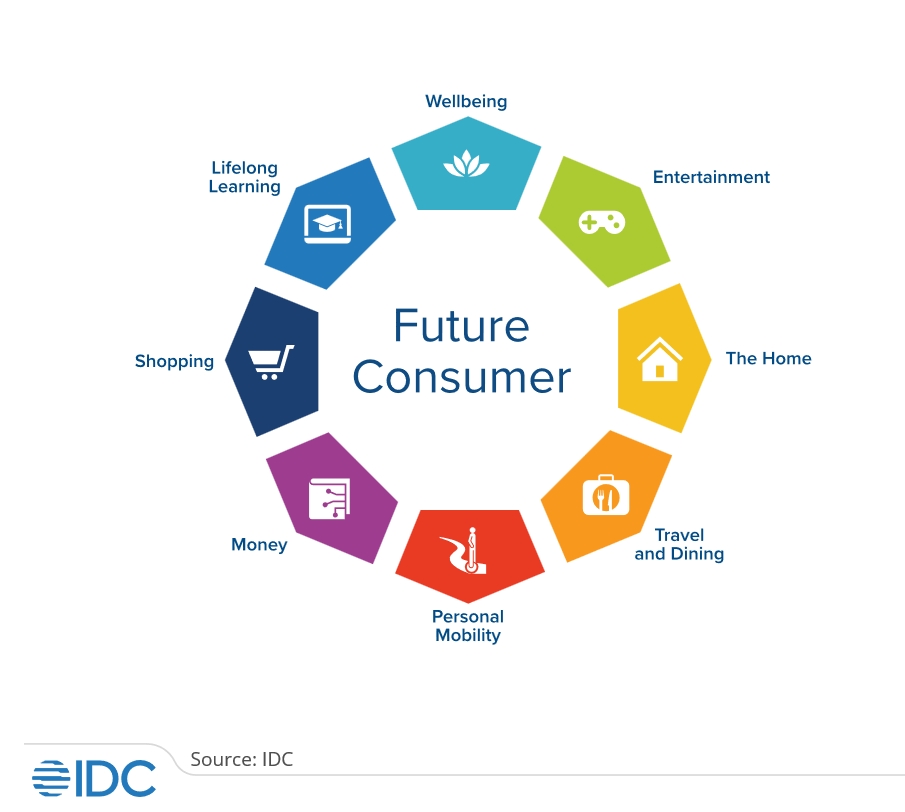
IDC still covers gaming, wearables, phones, tablets, PCs, AR/VR and the smart home as deep dive subject matters, but IDC’s new Future Consumer research practice uses a framework in which consumer experiences (comprising devices, services, business models, and more) are broken down into eight categories. These categories are Entertainment, The Home, Travel and Dining, Personal Mobility, Money, Shopping, Lifelong Learning, and Wellbeing. These categories were reflected, to different degrees, in the floor plan organization of CES, which took place in Las Vegas during the first week of 2023. The LVCC North Hall, for example, featured exhibits categorized as Digital Health, Advanced Mobility and Fintech (although Fintech was poorly represented).

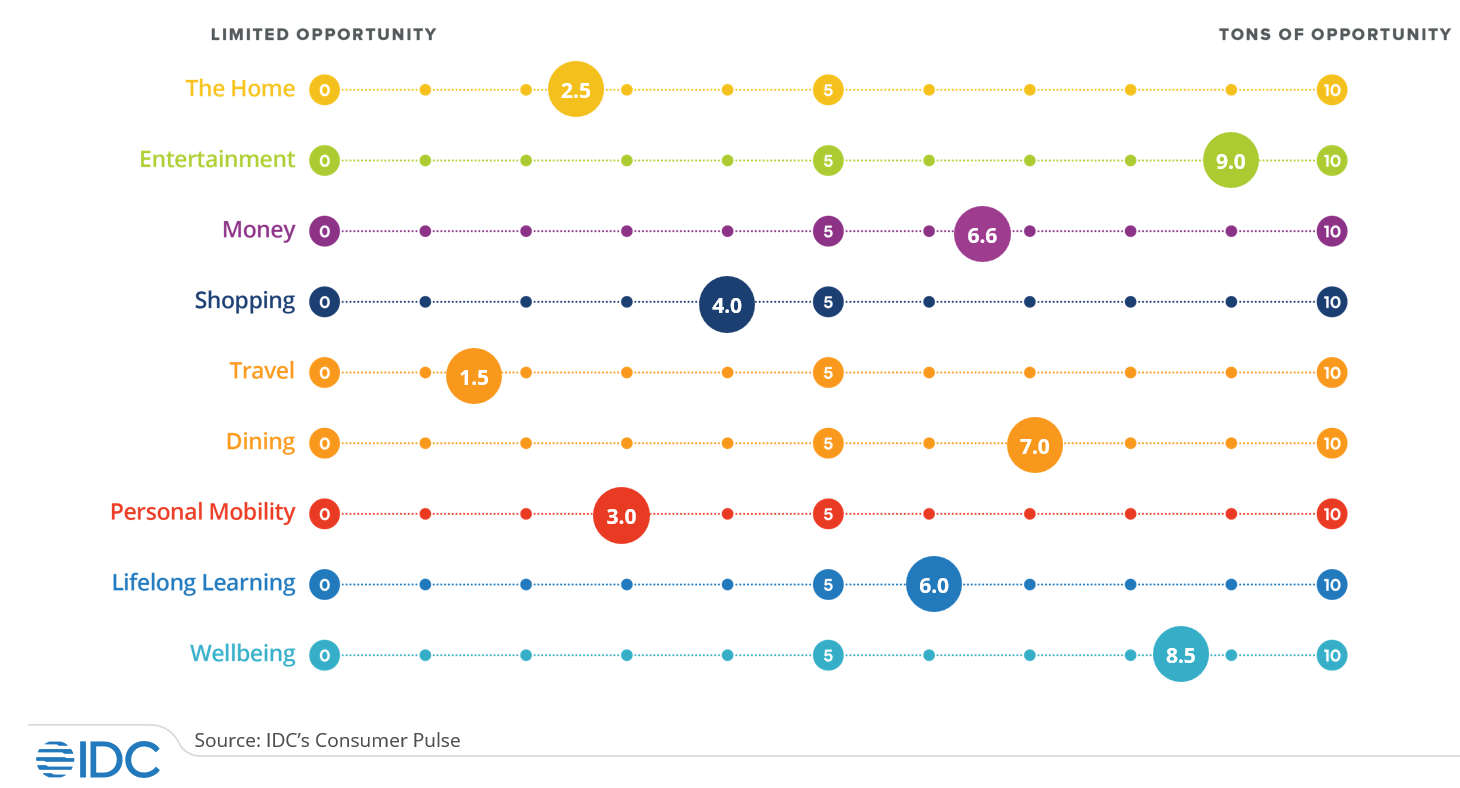
Entertainment, The Home, Personal Mobility, and Wellbeing were dominant facets of CES vendor exhibits. On the other hand, consumer experiences enabled more purely through services such as Travel and Dining, Money, Shopping, and Lifelong Learning were not well represented on the show floor.

Entertainment

Entertainment experiences at CES included the obligatory large flat panel television screens featuring the latest display technologies and highest resolutions. However, whereas televisions dominated the central hall booths of leading consumer electronics vendors in years past, in 2023, television was part of a much broader story of connected devices and experiences. Most of the large consumer electronics vendors pushed various smart home solutions as hard, or harder, than they pushed the next generation of large-screen TVs. So the Entertainment category featured a diverse range of consumer devices and services. Perhaps featured most prominently were gaming and the Metaverse.

Unfortunately, the designated Metaverse area of the show floor featured relatively lackluster demos that likely did little to convince CES attendees that the fully touted potential Metaverse experiences are anywhere close to coming to market. But various VR headsets and VR gaming experiences (notably a key focus for Sony), offered a more near-term incremental step toward a more robust and all-encompassing “Metaverse” experience. Microsoft featured gaming, along with its Surface tablet, but, along with other large exhibitors, failed to put forward a story that tapped into the growth of consumers as content creators.

Sony was a notable exception and specifically called out creators as a key customer segment with a selection of Sony tools, solutions, and devices ranging from entry-level for the beginning content creators to high-end for the advanced and professional creators. Sony articulated the notion of a technology roadmap of products that creators could use as they gain experience and demand more sophisticated content creation results. IDC believes it is a missed opportunity that other vendors did not mirror Sony’s focus as independent content creation continues to grow as a key facet of the consumer entertainment market.


IDC’s Consumer Market Model (CMM) forecasts demand for independent content subscriptions will grow to over 3.7 billion users worldwide in 2026.


The Home

Whereas in past years, entertainment devices seemed to dominate CES, in 2023 the torch was arguably passed to the smart home. Smart home experiences were highlighted throughout the LVCC Central Hall in the large booths of major CE vendors and the Venetian Expo show floor. While large vendors demonstrated whole-home connected experiences, smaller vendors tended to focus on specific products designed to integrate into the smart home.

Robot lawnmowers, pool cleaners, vacuums, and security guards were nothing new and were overshadowed by experiences such as smart baby nurseries, air quality management, and the connected kitchen. A key facet of these experiences is that the value proposition for consumers transcends just a single device and a single piece of smart home functionality.

IDC believes that such value propositions can help propel the smart home forward, but success depends on the proper go-to-market strategies by vendors to educate consumers and sell solutions rather than individual products. The volume of smart home solutions on display at CES illustrated industry belief in a robust smart home future, but the supply side of solutions needs to be coupled with effective consumer education to drive demand.

Other items highlighted on the show floor also bear watching. Wireless power solutions, for example, to keep smart home devices charged, were well represented on the show floor. And CES showed us that Matter has arrived; Matter feeds into the importance of interoperability in delivering on the promised experiences of tomorrow’s connected home, experiences that are personalized, proactive, predictive, and contextualized.

Wellbeing

In terms of the volume of floor space allocated to a FC category at CES, Wellbeing may have trailed only The Home. Wellbeing devices, applications, and services encompassed sleep tech, health monitoring, fitness, and other market segments. Similar to the continued development of robust multifunction smart home solutions, Wellbeing solutions have moved well beyond fitness trackers and increasingly into health monitoring. And the range of solutions available to consumers in this category is vast, ranging from urine test applications to detect a host of health attributes to technologies designed to provide therapeutic activities for brain health.

All of these empower consumers at home with convenient access to the means to track, detect, and diagnose health and wellness issues, offering consumers more independence from costly in-person medical care. For insurance companies, one can see how many of the tools could be leveraged to decrease the need for in-person office visits and thereby reduce costs. Notable at CES was the AARP (American Association for Retired People) booth in which vendors were aggregated to demonstrate how tech can be employed to address aging, with a particular focus on items such as social engagement and brain function health.


The demand-side outlook for Wellbeing solutions is strong as IDC’s Consumer Market Model projects 1.5 billion users of sleep tech and 2.7 billion users of online fitness services worldwide in 2026.


Personal Mobility

Motorized bikes and scooters were on display from many vendors throughout booths at both the LVCC and Venetian. Perhaps ironically, many motorized bikes and scooters were featured just steps away from the designated areas for sports tech and wellbeing solutions in the LVCC North Hall.

One of the most notable announcements during the show was the unveiling of branding for a combined effort between Sony and Honda to bring a next-generation electric vehicle to market. The car looked promising, but the name, Afeela, left us scratching our heads. Broadly speaking, however, the trend towards electric transport has moved downstream from cars and other large vehicles to personal mobility items such as scooters and bikes. They indicate the degree to which small electric vehicles can transform consumer experiences within the Personal Mobility segment.

Key Future Consumer Themes to Watch

  • A key theme we’re monitoring is the impact of younger Millennials and Generation Z on the tech landscape. These consumers are typically digitally self-sufficient, having grown up with smartphones and connected experiences. They often behave far differently than older generational cohorts and vendors across the B2C landscape (tech and non-tech alike) must understand the needs and wants of these consumers before it’s too late to react. IDC’s Consumer Pulse offers extensive analysis of how these consumers drive demand for new experiences and how their share of tech spending will grow in the decades to come.
  • Consumers as creators and as consumers of independently created content is a trend that will disrupt major media, advertising strategies and spending, traditional content distribution, streaming services, and the social media landscape. The growth of services drives demand for enabling platforms, software solutions, connectivity, and monetization technologies. Moreover, it drives demand for creation tools ranging from phones to cameras to PCs and more. Understanding the demand growth sheds light on the vast scale of this opportunity, and understanding the needs of creators informs device and software strategies of vendors across the consumer tech ecosystem. And, the growing power of AI is poised to radically redraw what it means to create content.
  • Hyper-personalization at scale brings the personalized experiences consumers have been promised. Personalization will impact all eight of IDC’s Future Consumer framework categories. Personalization changes the dynamic between consumers and vendors, creating challenges and opportunities. The creation of new types of data collection and processing will necessitate a willingness on the part of vendors to find a balance between trusting the data and the knowledge and intuitions of the human team. For consumers, it has the potential to drive greater trust in and affinity for brands or damage previously earned trust. AI will be a major force in personalization.
  • Everything-as-a-service is a theme that is increasingly coming to the consumer market as a shift to “as a service” models can benefit both consumers and vendors. Consumer benefits include lower up-front costs, more knowable long-term costs, an improved user experience that evolves and gets better over time, and one-on-one relationships with trusted and admired vendors. Vendor benefits include more predictable refresh rates, opportunities to upsell services that improve experiences, recurring revenue streams that can fund long-term product development, and high-touch interactions with consumers which shift the sales model from transactions to trusted relationships.

The impact of the Future Consumer will be felt everywhere. It’s not just how consumers engage, for example, with social media, but also how non-tech consumer brands must leverage specific social media applications to reach consumer segments. The impact transcends the consumer market. Consumers are also buyers of B2B services and corporate devices in their professional capacities. The behaviors of consumers, therefore, particularly among younger generation cohorts, will also permeate business environments. And the growth of new consumer services will drive demand for infrastructure, tools, software solutions, connectivity, and more as businesses evolve and transform.

As IDC articulated in its breakfast briefing presentations at CES, we are seeing the rise of the Future Consumer. Are you ready for the seismic shift?  Learn more about with IDC’s Future Consumer research and services and how you and your organization can prepare.

Gregory Ireland - Sr. Director, Research - IDC

Greg Ireland is a Senior Director for the Consumer Markets programs at IDC. In this role, he manages IDC's Consumer Market Trends, Consumer Market Model, and GenAI for Content Creators and Consumers research programs. He focuses on consumer adoption of and engagement with digital technologies, services, and applications that transform consumer experiences, business models, and market opportunities. Greg leads IDC's coverage of consumer GenAI, and he also has expertise in and provides in-depth analysis on the ways in which digital video content is distributed, consumed and monetized across traditional pay TV, over-the-top (OTT), and social media services and platforms.

This is the second blog in IDC’s series focusing on the implications of the EU’s updated Security of Network and Information Systems directive, NIS2. The directive comes into force in January 2023, after which Member States have 21 months to transpose it into their national law – by October 2024.

The broad aim of NIS2 is to engender a high common level of cybersecurity in the EU, across all Member States, in the long term.

The first blog looked at the regional and national entities that are tasked with transposing and implementing the new directive, as well as some of the mechanisms that are being put into place to effect improved cybersecurity across the bloc.

This second instalment looks at which organizations NIS2 will apply to and what will be required of them.

Expanding the Reach

The first NIS directive introduced a clear focus on improving cybersecurity and risk management at critical infrastructure in Europe: energy (electricity, oil, and gas), transportation, drinking water supply and distribution, healthcare, banking and finance, and digital infrastructure (Internet Exchange Points, DNS service providers, and Top-Level Domain (TLD) name registries). These were defined as operators of essential services (OES’s).

The volume and frequency of cyberattacks since the first directive came into force has driven home the message that cybersecurity safeguards and improvements need to be more far-reaching. Industry sectors that may not be viewed as critical may supply components or services to critical infrastructure, from electrical equipment to medical devices. Disruption of food production and distribution or waste management can have a major impact on the function of society. Digital providers such as search engines and online marketplaces are recognized for their universal value.

Consequently, the NIS2 directive extends coverage into all these segments and more. A full list of sectors defined as high criticality or critical is below:

High Criticality Sectors

  • Energy.
  • Transport.
  • Banking.
  • Financial market infrastructures.
  • Health.
  • Drinking water.
  • Waste water.
  • Digital infrastructure.
  • ICT service management (B2B).
  • Public administration.
  • Space.

Other Critical Sectors

  • Postal and courier services.
  • Waste management.
  • Manufacture, production and distribution of chemicals.
  • Food production, processing and distribution.
  • Manufacturing (medical devices, computer, electronic and optical products, electrical equipment, motor vehicles, transport equipment).
  • Digital providers (online marketplaces, search engines and social networks).
  • Research organisations.

Furthermore, it is recognized that it is not only large enterprises that represent a target for cybercriminals or are fundamental to critical services. Consequently, the NIS2 directive also extends the scope to cover midmarket organizations with 250 or more employees and turnover of €10 million or more.

The To-Do List

So, if your organization falls within the sectors covered by NIS2, what requirements are coming your way in the next two years? There are two major aspects to this, detailed in Chapter 4 of the directive, Cybersecurity risk management measures and reporting obligations.

Article 21 of the directive covers the cybersecurity risk management measures and lists the following 10 areas as the minimum recommendation:

  • Policies on risk analysis and information system security
  • Incident handling
  • Business continuity and crisis management
  • Supply chain security
  • Security in network and information systems acquisition, development and maintenance
  • Policies and procedures to assess the effectiveness of cybersecurity risk-management measures
  • Basic cyber hygiene practices and cybersecurity training
  • Policies and procedures regarding the use of cryptography and, where appropriate, encryption
  • HR security, access control policies and asset management
  • MFA, continuous authentication, and secure communications where appropriate

It is likely that most entities within critical infrastructure sectors will already have many of these technologies and measures in place, to some degree. The question will be in the level of detail or prescriptiveness that member states go to when transposing this article into their national legislation.

The directive emphasizes that the implementation of these measures should take into account the state-of-the-art, relevant European and international standards, the cost of implementation, the degree of the entity’s exposure to risks, the entity’s size and the likelihood of occurrence of incidents and their severity, including their societal and economic impact. These considerations should be used to determine appropriate or proportional measures.

Article 23 of the directive covers reporting obligations and requires that in the case of any incident that has a significant impact on the provision of their services, essential and important entities notify their CSIRT or competent authority. An early warning should be submitted within 24 hours of the organizations becoming aware of a significant incident, and a more comprehensive incident notification should be submitted within 72 hours.

Further reporting obligations are detailed within the directive and it will be necessary for all organizations covered by NIS2 to familiarize themselves with these obligations once they have been transposed into their national law.

Conclusion

It is early days still for NIS2 and much will depend on the work done over the next 21 months. Nevertheless, the cyberthreats driving this directive will not wait and the benefits from improved cybersecurity measures will outweigh the risks.

Regardless of the final wording of the local versions of the directive, organizations can benefit from getting up to speed with NIS2 and engaging with the existing cybersecurity authorities within their countries to develop their strategies.

Mark Child - Associate Research Director, European Security - IDC

Associate Research Director Mark Child of IDC’s European Security Group leads the group's Endpoint Security and Identity & Digital Trust (IDT) research for both Western Europe and Central & Eastern Europe. He monitors developments in security technologies and strategies as organizations address the challenges of evolving business models, IT infrastructure, and cyberthreats. Mark's coverage includes in-depth security market studies, end-user research, white papers, and custom consulting.