The next wave of industrial revolution is here, and it’s being propelled by a brand of businesses that are native to the digital world. Digital-native businesses, or DNBs, are enterprises built from the ground up on digital technologies like cloud computing, data analytics, and artificial intelligence. Unlike traditional companies trying to retrofit new technologies, DNBs have disruption codified into their organizational DNA.

As entities born into the era of ubiquitous connectivity and rapid technological progress, DNBs are unshackled from legacy constraints. They can be bolder in adopting cutting-edge innovations to gain a competitive edge. This first-mover advantage allows DNBs to continuously reinvent industries and push the boundaries of what’s possible.

As we progress into the second quarter of 2024, DNBs are poised to accelerate their trajectory as digital pioneers. Here are the top 5 trends that will shape their transformative impact.

Generative AI Becomes Their Killer App

By 2025, research indicates that DNBs will invest in generative AI (GenAI) technologies like ChatGPT at a blistering pace – 5 times higher than traditional businesses. This isn’t surprising given how generative AI perfectly complements the data-driven, innovative core of DNBs.

From automating back-office workflows to enriching customer touchpoints with conversational interfaces, DNBs will embrace generative AI across every facet of their operations. Their ambitions will be turbocharged by the fact that many prominent generative AI players like Anthropic and OpenAI are themselves DNBs pioneering novel use cases.

As of early 2024, nearly $50 billion has already been poured into generative AI startups and scale-ups (source: PitchBook, January 2024). With their laser focus on disruptive technologies, DNBs are at the forefront of creating world-changing generative AI solutions and applications that will redefine how businesses operate.

Data As The Fuel For Growth

In this AI-powered era, data is not just the new oil – it’s the renewable fuel propelling innovation for DNBs. By 2026, these digital tenacities will spend over a third of their cash burn on technologies like robust data architecture and platforms to integrate generative AI models with their proprietary data sources.

Why the heavy investment? Because how well a DNB can generate value from generative AI directly ties back to how strategically it leverages its own and third-party data reserves. From reducing costs to fortifying data privacy and knowledge security through AI, superior data capabilities will dictate which DNBs gain an unassailable competitive advantage.

While DNBs currently lead traditional companies in data investments and access to collaborative data platforms, the deluge of diverse data streams is an emerging challenge. Cracking the code on unifying and extracting insights from these disparate data sources will be key to unlocking the full potential of their generative AI exploits.

Rise Of The Automated, Augmented Workforce

The frenetic pace of innovation also brings with it an acute shortage of skilled technical talent for emerging roles like AI prompt engineers and data scientists. By 2025, over 70% of DNBs will lean on a powerful two-pronged approach to plug these workforce gaps:

  • Intelligent Automation: By harmonizing artificial intelligence with robotic process automation (RPA), intelligent automation will allow DNBs to automate repetitive manual tasks while deploying generative AI to handle sophisticated, judgment-based work. This duet of technologies will be instrumental in alleviating the talent crunch across roles.
  • Enhancing the Human Element: While leveraging advanced automation, DNBs won’t lose sight of the human factor. They will double down on investments in employee experiences – from fostering engaged cultures to pioneering flexible work models. Proven to invest twice as much as traditional firms in this area, DNBs understand an outstanding employee value proposition is vital for attracting and retaining top talent.

Generative AI’s omnipresent role in the workplace may have rocked certain industries, but the tech-first DNA of DNBs positions them to be relatively insulated from workforce displacement fears. Instead, they are poised to be catalysts in reskilling and upskilling their existing employees to adapt to the demands of an AI-augmented future of work.

Delivering Superlative Customer Journeys

In the hyper-competitive digital economy, customer experience (CX) is the universal currency. Recognizing this, over 50% of DNB scale-ups will heavily prioritize CX and personalization as key battlegrounds in 2024. 27% of DNBs plan to directly invest in dedicated CX initiatives and projects.

GenAI will be their loyal lieutenant in this campaign. From deploying AI-powered chatbots and virtual assistants to reduce support costs to leveraging predictive analytics to hyper-personalize products and services – DNBs will pull out all the stops to curate unparalleled customer journeys. The ultimate goal? To foster a deep, emotive connection with users that inspires rabid brand loyalty and long-term value creation.

Underpinning this CX supremacy is the recognition from venture capitalists that DNBs harnessing generative AI for superlative customer engagement are hugely attractive investment propositions. As the catalysts of the modern consumer economy, DNBs have an acute understanding that individualization at scale is no longer a luxury, but an existential imperative.

Pioneers Of The New World Of Work

By 2026, a remarkable 85% of new job roles across emerging tech disciplines like quantum computing, autonomous transportation, augmented reality and blockchain will be birthed by DNBs. This prophecy is rooted in the fundamental truth that these companies are natively wired to constantly reimagine the art of the possible.

Their propensity for deep tech R&D, coupled with their appeal to Gen Z and Gen Alpha technophiles, positions DNBs as the ideal launchpads for redefining the future workforce. Fields like robotics, ethical AI governance, nanotechnology, and virtual production are just a few examples of novel vocations these companies will spearhead.

In tandem with universities that cultivate breakthrough innovations, DNBs are the conduits translating theoretical possibilities into commercialized products and services that transform industries. In their quest to remain hyper-relevant and future-proof their operations, DNBs will constantly shed old job archetypes in favor of emergent roles adept at harnessing new technology frontiers.

Embracing Change As A Constant 

From leveraging generative AI as an upheaval catalyst to architecting novel workforce paradigms, digital-native businesses are hard-coded for metamorphosis. Their superpower lies in their ability to be nimble and quickly adapt to disruptive technological shifts in a VUCA (volatile, uncertain, complex, ambiguous) world.

While companies anchored in 20th-century operating models scramble to evolve, DNBs are unencumbered by legacy frameworks or archaic mindsets. They can freely re-imagine industries from first principles and rapidly pivot to capture opportunities in dynamic, technology-fueled environments. 

So as we hurtle into a future where human-machine partnerships become the norm and AI co-pilots uplift every experience, DNBs are poised to be our extraordinary guides. By relentlessly staying ahead of the innovation curve, these digital leaders will open new realms that enhance how we work, engage, and fundamentally live as a society.

Disruption is no longer an existential risk, but an existential imperative for businesses. Digital-native enterprises are living, thriving case studies in how boldly embracing change is the only sustainable path to creating long-term value. The trends of 2024 are merely airbrushing the beginning of their transformational legacy.

In today’s digital landscape, where AI can churn out content in seconds, marketers face a unique challenge: How can we create narratives that stand out? Let’s explore strategies for crafting compelling and differentiated stories in the era of generative AI (GenAI).

  1. Connecting the Dots

Marketers must start by connecting the dots between their promotional goals, their target audience, and a narrative that sets them apart from competitors. Relying solely on AI-generated content won’t suffice. Instead, strategic architects of brand stories must emerge.

  1. The Power of Unique Market Data

Leveraging unique market data is crucial. Dive deep into analytics, trends, and IT buyer behavior. What insights can be gleaned from data that others might overlook or might not have access to? Perhaps hidden patterns or emerging needs exist that GenAI hasn’t discovered yet. Tap into this data to create narratives that resonate.

  1. Insights Beyond Algorithms

GenAI analyzes vast amounts of information, but it lacks context. Unique insight comes from understanding not just what the data says but also why it matters and to whom. Ask: What motivates our audience? What pain points do they face? How can our product or service genuinely make an impact?

  1. Customer Success Stories

Compelling customer success stories resonate because they’re authentic, relatable, and emotional. GenAI can help write these narratives, but marketers must discover, create, and curate them — and find the right audience.

  1. The Art of Storytelling

GenAI generates content, but it can’t create captivating and unique stories. Marketers should not passively rely on GenAI. They should use it as a creative partner, stepping up to the role of the storyteller. Weave together facts, emotions, and aspirations. Whether it’s a blog post, a white paper, or an entire campaign, storytelling remains a uniquely human skill.

Conclusion

In the age of GenAI, marketers are both collaborators and curators. Collaborate with AI tools like GenAI to streamline content creation, but also curate the essence of your brand through unique narratives. By joining the dots, leveraging data, and telling authentic stories, marketers can thrive. Remember: GenAI can write — but marketers create the story.

Interested in a deeper understanding of the issues discussed here? Contact Dominique Bindels at dbindels@idc.com.

Also, you might be interested in the following complimentary IDC guides:

Increase Customer Lifetime: The B2B Growth Marketing Guide for Tech Vendors

AI: Unleashing Strategic Sales – Driving Tech Investments in 2024

B2B Marketing & Sales Guide to Outcome-Focused Conversations

Dominique Bindels - Consulting Manager, Custom Solutions Europe - IDC

Dominique Bindels is a consulting manager in the IDC European Custom Solutions team, partnering with companies in the AI/ML, security, process automation, and Big Data analytics spaces. He has a background in strategic consumer market research for consumer electronics and related services and ecosystems, providing leading consumer electronics companies with insights and analysis. He is a regular speaker at industry and client events. He studied in the U.K. and Germany, and has master's and bachelor's degrees in international business with finance.

AI: The Game Changer

Hold on to your hats because the business world is in for a transformative ride! Artificial intelligence (AI), especially generative AI (GenAI), is rapidly changing how companies operate. This isn’t just a passing trend; it’s a strategic must-have for businesses that want to stay ahead of the curve.

According to IDC’s December 2023 Future Enterprise Resiliency and Spending Survey (Wave 11), 66% of organizations worldwide are exploring the potential of GenAI. The survey found that an estimated 50% of legacy application code is running in production environments today with 40% being replaced with GenAI applications.   Many are in the early stages of model testing or developing use cases. This heightened interest underscores the transformative power of AI in reshaping business landscapes.

IDC’s research shows a surge in companies exploring GenAI, recognizing its potential to revolutionize how they work. And when it comes to the ability to generate content, AI can turn isolated asset into connected experiences that benefit everyone – not only employees and customers, but also everyone and everything in the ecosystem.

Experience Orchestration: The Heart of the Revolution

The future belongs to businesses that prioritize experiences. This is where IDC’s latest released framework for an experience-orchestrated (X-O) business comes in. Imagine a world where AI-powered technology connects everything, creating seamless, data-driven experiences at every touchpoint.

As described in the IDC Perspective: The Value of an Experience-Orchestrated Business, the definition of an X-O business delivers shared experience value powered by intelligence. To compete in an AI everywhere world, digital businesses must orchestrate a meaningful value exchange between the organization and their key stakeholders. Data is vital to intelligent applications embedded in daily operations and decision-making.

Insights help align actions with desired outcomes and ensure that investments deliver the desired results for the experience-orchestrated business. Using AI-enabled technology to optimize journeys and automate workstream tasks, organizations can break down organizational silos and foster connectedness across the experience ecosystem.

In today’s competitive environment, where economic uncertainty reigns supreme, exceptional experiences are the key differentiator. Transforming mundane tasks into meaningful interactions strengthens relationships and fuels growth, even in challenging times. IDC’s research highlights that becoming a digital business requires a strategic focus on experience orchestration. By investing in technologies and processes that enhance daily operations and interactions, businesses can elevate their digital maturity and stand out from the crowd.

People Power: The Human Touch in GenAI World

The shift to an X-O business requires not just the right technology, but also the right talent. Companies need passionate individuals who are driven to create exceptional experiences. This means fostering a culture that embraces AI and focuses on outcomes derived from stellar experiences, not just the outputs of completed tasks.

Organization leaders must channel a change management and growth mindset by finding opportunities to embed GenAI into existing applications and providing resources for self-service learning. The C-suite should champion experience orchestration and invest in training and commit to new management models for AI-centric roles. Prioritize how to address human biases and data privacy issues while optimizing collaboration methods.

The road to becoming an X-O business involves several key steps: establishing the right metrics, engaging stakeholders, and adopting the necessary AI-infused technologies that assists in creating and managing engaging content across product, engineering, sales, marketing or customer support. IDC outlines a path forward in The Experience-Orchestrated Business: Journey to X-O Business — Assessing the Organization’s Ability to Become an X-O Business. When choosing which GenAI technology to invest in, businesses should find a balance between the talent and skill needed to build their own solutions, leverage existing tools, and partner experts to accelerate their transformation.

The adoption of AI got a big boost from GenAI, making organizations re-think how they can leverage it for better content creation, operations and experiences.

Content is King: Building Trust in the Age of AI

Let’s take a deeper dive into how AI is changing the content game and how organizations should setup their AI system and associated processes to create and deliver authentic content. Here are 15 considerations when using GenAI in the content supply chain.

  • Word Usage and Cultural Language Bias: Content should avoid language bias and cultural insensitivity. Organizations must be mindful of how their messaging resonates across diverse audiences.
  • Accessibility: Customers expect a smooth, frictionless experience online. This means user-friendly mobile apps and clear, concise information that makes completing transactions a breeze.
  • Transparency: Building trust is crucial to customers who want to know how their data is used to personalize their experiences. Transparency builds empathy and strengthens trust.
  • Privacy: With data privacy laws evolving, marketers are adapting content creation to ensure customer confidence. Strong security measures are essential to safeguard information.
  • Brand Authenticity: Customers can sniff out inauthentic content a mile away. Building trust requires actively learning about your audience and reflecting their values in your content.
  • Shared Knowledge: Providing high-quality, free information about your product or service (or industry if you are so bold) will establish your expertise and foster trust.
  • Customer Relationships: Real-time, personalized content strengthens the bond between your brand and your customers.
  • Customer Intelligence: AI can be a powerful tool to understand customer needs and create content that resonates.
  • Plain Language: Authentic content is created using plain language. Clear communication enhances understanding and fosters trust.
  • Customer Effort: Make it easy for customers to find the information they need. User-friendly interfaces and clear communication are key.
  • Social Commerce Content: Tailoring content for regional and demographic differences is essential in the age of social commerce.
  • Social Media Content: Curate content from trusted sources and ensure your outbound content is high-quality and transparent.
  • Short-form Content: Respect your audience’s time. Invest in short videos, infographics, and bite-sized content for busy users.
  • User-Generated Content: Listen to your customers who value reviews, influencer insights, and social media trends which can all inform product and service innovation.
  • Authentic Brand Voice: Develop a consistent brand voice that the GenAI engine can access to reflect your brand’s values across all platforms.

Ethical considerations are also paramount in the AI era. Customers expect data privacy, responsible AI systems, and transparency in how AI is used. Organizations that prioritize these aspects as part of their content generation will build trust and establish a strong reputation.

The Road Ahead

For technology buyers looking to navigate the transition to an experience-orchestrated business, IDC offers several recommendations:

  • Provide Transparency of Customer Data: Establish governance and controls around the use of customer data in generating content and recommendations.
  • Apply Intelligence to Content Creation: Leverage generative AI to create authentic, engaging content that resonates with customers and enhances digital trust.
  • Continually Measure Digital Trust: Evolve content strategies to maintain customer trust and address changing expectations.
  • Prioritize Authenticity: Authenticity is key to engaging modern consumers. Embedding authenticity into the brand’s DNA will reflect in every interaction and content piece.

Investments in technology will lay the foundation for insights-driven transformation. IDC’s PlanScape: Experience-Orchestrated Business to Deliver Differentiated Value Outcomes has more information about developing an X-O business strategy. The journey to becoming an X-O business is exciting, but it also requires effort. By prioritizing experiences, leveraging AI, and focusing on outcomes, organizations can differentiate themselves and thrive in the digital age.

The time to act is now! The future belongs to those who can adapt, innovate, and deliver value in a world powered by AI.

Marci Maddox - VP, Product, Research & Data Planning and Operations - IDC

Marci Maddox leads IDC's research and content team for IDC's IT Tech Buyer Digital Platform. She collaborates with IDC analysts, IT development teams and the IT buyers to drive innovation and adoption of IDC's digital platform. Leveraging over two decades of experience in building and marketing digital experience applications, Ms. Maddox's work helps IDC's clients streamline their software purchasing process through market analysis, survey development, customer interactions, data management and product evaluations. She also works with IDC's industry analysts and technology suppliers to understand their market and how best to present their technology to buyers. She also works with buying organizations in an advisory role to gather enhancements for the platform and encourage networking across the organizations. Background Marci held an industry analyst role of Research Vice President of Digital Experience Strategies at IDC before joining the Tech Buyer Digital Platform team. Prior to joining IDC, Marci held a position within IBM's Watson and Cloud Platform where she helped clients to realize the future of AI, IoT and Cloud benefits for industry solutions in financial services, retail, telecom and healthcare. She also spent time at OpenText as a Senior Director Product Marketing leading a team of evangelists and industry solution marketers for Customer Experience Management solutions. Marci's education and activities: - B.S. in Computer Science from the University of Texas - M.B.A. in e-Business from St. Edwards University - Frequent speaker, presenter and moderator at industry conferences and publishing to a variety of media outlets

The EU’s new Corporate Sustainability Reporting Directive (CSRD) has thrown a chill on the business processes of organizations: Companies must modernize their applications and data foundations to enhance their reporting capabilities.

The struggle of companies in Europe to comply with the CSRD was on display at the ChangeNOW global summit, held in Paris at the end of March. Participants at the event — which seeks to map sustainable initiatives, best practices, tools, and technologies — revealed that organizations are lagging when it comes to implementing CSRD.

This is in line with results of IDC’s recent European IT Services Survey (N = 700), which found that just 25.6% of European organizations expect to deploy tech to improve sustainability KPIs as a transformation initiative in the next two years.

The CSRD is having a huge impact on organizations: It imposes reporting standards that compel organizations to publish their ESG information, which must then be verified and audited. All industrial sectors, from large accounts to SMBs, are subject to a staggered compliance timetable: The first reports must be published between 2025 and 2026 for large accounts, and in 2027 for SMBs.

Everyone agrees on one point: It’s a race. The timetable is forcing the acceleration of activities in data collection and qualification, methodologies and best practices, to structure and industrialize the creation of these reports.

CSRD weighs heavily at all levels of organizations. It requires a review of business processes and the organizational model, and, therefore, the modernization of core business applications — where the data is. New platforms or custom developments may need to be deployed to consolidate ESG data.

After examining their data lakes and the shift toward new data architectures, many businesses perceive this as a transformational endeavor.

Like any IT project, such complexity brings opportunities for services providers to support organizations with compliance. IDC surveys have shown that 41.2% of organizations expect partners to play a key role in implementing their sustainability strategy and achieving their objectives.

The Scaling Problem of Legacy Finance

Let’s examine where CSRD creates a bottleneck. Among the processes impacted by the CSRD is that of the finance department. Today, the CFO is one of the guardians of the transformation of the finance function, whose scope has been extended to non-financial matters and CSR.

For example, the French bank Crédit Agricole and cosmetics specialist L’Oréal have entrusted the finance department with their CSRD projects. Experienced in standardized financial reporting, the CFO has the difficult task of reproducing and improving processes by integrating CSRD.

Logical, but still difficult to implement. One of the biggest challenges is getting the different personas impacted by CSRD — and the associated data — to sit at the same table to find the right communication channel and vocabulary to communicate.

These human interconnections represent a real challenge in terms of governance but are necessary to deploy an application modernization strategy and convert the new operational model and business processes into a revitalized IT structure.

Financial IT systems are often very mature. CSRD requires them to scale rapidly to support new workloads in only three years. This includes related data initiatives: the mapping of data sets, the overcoming of information silos, increasing automation, and supporting heterogeneous files (PDF or Excel, for the most part).

The legacy must be modernized within the timeframe of the CSRD. But urgency means risks must be controlled. For example, misunderstanding the regulation and the requested data could have a negative impact on technological engagements and procurement.

Using GenAI to modernize legacy applications and make them “CSRD ready” has been explored to collect, map, and consolidate data, generate appropriate information for criteria, or automate the storytelling inside the CSRD reports.

Capgemini has detailed how GenAI could accelerate gap analysis and identify which data is lacking and which data is relevant for presentation. L’Oréal discussed how it believes that GenAI is key to education and acculturation on the criteria and wording of the regulation.

This scenario is in line with our vision for application modernization strategies in Europe.

The implementation of the CSRD — and, by extension, the major theme of sustainability — represents a powerful driver for adapting processes, revitalizing part of the application estate, and establishing a coherent link between IT and new business requirements.

Revitalizing applications to optimize business processes is a key theme of IDC’s European Application Modernization Strategies research program.

Modernize with a Sustainability/ESG Integration Platform

The challenges include making the regulation a starting point for a more global strategy, and placing CSRD and sustainability at the center of the organization’s decision-making and business innovation.

We believe this requires building an enterprise architecture, including modular and loosely coupled components, to integrate systems, applications, and data in a flexible and sustainable way over time.

Such a sustainable integration platform will de-silo business applications, facilitate the continuous collection of data, the industrialization of analytical reporting, and the connection to ecosystems. In short, it means building a dynamic CSR link in the value chain and anticipating the evolution of reporting obligations.

Cyrille Chausson - Research Manager, European Application Modernization Strategies - IDC

Cyrille Chausson is a research manager within IDC's European Cloud Innovation, Services and Skills research team. Based in Paris, Cyrille is responsible for IDC's European Application Modernization Strategies research program. In his role, he offers insights into trends, market dynamics, and strategic investments pertaining to application transformation, migration, development, and delivery. Cyrille's research primarily focuses on the opportunities and challenges that application modernization presents to service providers and IT buyers, as they transition to more digital-oriented organization and models.

The intersection of customer experience (CX) and employee experience (EX) has become an undeniable focus of technology innovation. Initially, the spotlight was primarily on CX, with technologies being honed to streamline, enhance, and personalize the customer journey. This investment was driven by an understanding that a positive CX was a critical driver of business success, with its impact measurable through direct correlations with customer loyalty, retention, and advocacy.

A pivot occurred when tangible data began to illuminate a direct linkage between CX and EX. IDC studies have shown that the engagement level of employees is intrinsically tied to the quality of customer service they deliver. And the good news is, as leaders became more aware of this connection, there was a marked shift in strategic priorities. Companies started to invest in technologies that improved not just the customer journey but also the employee’s day-to-day workflow. The rationale was clear: by enabling employees with better tools and processes, they could perform their roles more effectively and efficiently, leading to a direct uplift in customer satisfaction.

Business shared services have a long-standing application to support employees internally, yet, transformation in these services has not been at the forefront of digital transformation. Shared services strive for organizational efficiency, cost reduction, and process unification by capitalizing on large-scale operations and niche expertise. This model consolidates fundamental supportive functions—like HR and finance—into a unified resource for various company divisions. Employees in these contexts are indeed the internal customers that require the services from these shared functions.

Nonetheless, shared service execution currently encounters obstacles, such as inaccuracies and delays, which disrupt operations, hinder adaptability, and can lead to decreased customer satisfaction. A recent IDC report highlights that employees across all industries prefer to have their service requests completed in half of the time as they are currently.

In the world of shared services where automation meets satisfaction

In the Asia-Pacific region, shared services have become a cornerstone for organizational support, particularly in IT, finance, legal, HR, and procurement (see figure below). These shared services are heavily process-oriented, streamlining repetitive and routine tasks across these critical functions. Their process-driven nature renders them ideal for the integration of automation and artificial intelligence. As these sectors typically involve repetitive and rule-based tasks, they stand to gain significantly from the efficiency, accuracy, and scalability that AI and automation technologies can provide, transforming the landscape of shared services with innovation and smart systems. As AI and automation are among the top technology investments for Asia/Pacific businesses in 20241 , IDC anticipates that these technologies will be more widely applied to improve shared services.

There are many potential use cases that automation and GenAI can be applied to improve the most used shared services for employees in Asia/Pacific. For example, intelligent automation can significantly enhance IT shared services by streamlining ticketing processes, where machine learning algorithms predict and categorize ticket issues, enabling faster resolution times. Automation of routine tasks, such as password resets and system updates, frees up IT staff for more complex problem-solving. Additionally, AI-driven analytics can proactively monitor systems for patterns that could indicate potential issues, allowing for preemptive maintenance and minimizing downtime. This tech-forward approach not only improves operational efficiency but also elevates the user experience for employees relying on these crucial IT services.

In HR, GenAI can improve individual self-service by automatically recommending workflows across HR and non-HR applications, directing employees by query to the tools, resources, and insights they need. This way, employees can find HR-related queries with tailored information, reducing the reliance on HR support, and in shorter processing time.

For legal requests, automation and GenAI can greatly enhance the efficiency of legal shared services by automating the drafting and review of standard legal documents, which reduces the time legal teams spend on routine work. AI can assist in analyzing contracts to ensure compliance with laws and corporate policies, and machine learning models can predict legal risks by comparing against historical data, which is usually a time-consuming process. This allows attorneys to focus on more strategic tasks that require their expertise and judgment, thus improving the overall responsiveness and effectiveness of legal shared services.

In procurement, automation and GenAI can streamline the requisition-to-purchase process. For instance, GenAI can predict purchasing needs based on historical data, automate the creation of purchase orders, and assist in vendor selection by analyzing vendors’ past performance and compliance. Moreover, AI can negotiate prices within predefined parameters, carry out transactional procurement tasks, and manage inventory in real-time, significantly improving efficiency and reducing manual errors in procurement operations.

In the realm of finance shared services, automation and GenAI can be pivotal in transforming tasks such as expense management and report generation. For instance, AI can automatically categorize expenses based on learned behavior, while also flagging anomalies for review. Similarly, AI can generate predictive financial reports, offering insights based on data trends, and facilitate faster month-end closures by automating data entry and reconciliation tasks. This not only streamlines finance operations but also provides more accurate, real-time financial data to inform strategic decision-making.

IDC has recently published several Taxonomy use cases documents on the potential application of GenAI in enhancing the 13 functional areas including IT, HR, procurement, legal and finance mentioned in this article.

Automation doesn’t make us bots, it’s giving employees more time to be human

Our IDC EX Shared Services Survey, 2023 data shows that 66% of the employees believe that automating shared services within organizations can significantly improve employee satisfaction, which is rated the number one benefit of shared service optimization. It also enhances process accuracy, with a 55% improvement, ensuring that tasks are completed correctly the first time. Additionally, a 46% time savings shows that automating shared services allows organizations to operate more efficiently, freeing up staff to focus on more strategic activities. These benefits collectively contribute to a more productive and contented workforce.

Moreover, automating shared services can drastically reduce task completion times, freeing up employees to focus more on innovation, with 60% of their time being redirected towards creative and strategic initiatives. With less time spent on process-oriented tasks, employees can spend 50% more time on core organizational activities like Diversity & Inclusion, or ESG. Automation also allows a 43% increase in efforts dedicated to refining processes, leading to continuous operational enhancements and value creation within the organization.

While the data showcasing the advantages of process automation in shared services is encouraging, it’s crucial for leaders to recognize the necessity of investing in these systems. Automation of processes, including those in shared services, is pivotal in enhancing both the employee experience (EX) and customer experience (CX). Committing resources to enhance workflows and employee satisfaction should be viewed not as a mere expense but as a strategic investment that yields long-term benefits.

For more on unlocking the power of automation to optimize business-shared services, please check out this IDC Survey.


1 IDC Survey 2023: AP DX Executive Sentiment Survey, n=810

Ransomware attacks have been one of the most high-profile scourges of business over the past decade — and the threat shows no signs of abating. If anything, it has become more prevalent as “ransomware as a service” has lowered the entry barrier for threat actors.

Innovation by cybercriminals keeps security teams on high alert. When governments and security agencies advise organizations not to pay ransom, attackers may switch to extortionware approaches.

Or, sticking with ransomware, they may use AI to augment their capabilities, refine their lures, automate attacks, or hit hundreds or thousands more organizations than they would have been able to previously.

This Is Going To Hurt

According to IDC’s Future of Enterprise Resilience Survey, conducted in November 2023, 63.4% of EMEA organizations with 500 or more employees suffered a ransomware attack that blocked access to their systems or data in 2023.

Which assets are being impacted? According to the survey respondents, the most frequently impacted resources were collaborative applications (37%) such as MS 365 or Google Workspace. These were followed by virtual or physical servers (35%) and public cloud IaaS and PaaS (also 35%). For 34% of organizations, ransomware attacks impacted their partner, supplier, or customer systems.

These impacts reflect the infrastructure and environments in which most modern organizations operate: cloud-based infrastructure and platforms running cloud-based collaborative applications on enterprise licenses for cost efficiency and productivity, often within broader digital ecosystems to enhance operational efficiency.

Targeting what has become the critical infrastructure for operational capability gives cybercriminals the greatest leverage over their victims. The hackers strive to ensure there is no choice but to pay the ransom.

The Best Defense is… Multi-Layered

Despite the rising volume of attacks, more than one-third of the surveyed organizations stated that no ransomware attacks had managed to block access to their systems or data. These organizations highlighted some of the key technologies that helped them detect the attacks before the malware was able to deploy.

The most frequently cited tool was a cloud security gateway/cloud access service broker (CASB, 30%). This aligns with the operational environments described above, placing protection where it is needed most. Deploying a CASB provides visibility and control over cloud environments and assets, enabling quicker detection and containment of potentially malicious activity.

Threats can come from within the organization as well as outside. A further 26% of respondents said they used specific security analytics aimed at detecting insider threats. The third most common response was SIEM systems (25%), which help by correlating data from multiple sources to identify suspicious patterns and anomalies before an attack. Organizations also mentioned that NDR, identity analytics/UEBA, and EDR helped with detection.

Fundamentally, there is no single technology that is a silver bullet against ransomware. Effective protection depends upon a layered approach that aligns security controls to the environment, infrastructure, and processes of the organization.

As attacks grow more prevalent, fueled by ransomware as a service and AI-augmented attack campaigns, EMEA organizations need to be on their guard with a mix of technologies to detect and contain malware payloads before they can be deployed.

Mark Child - Associate Research Director, European Security - IDC

Associate Research Director Mark Child of IDC’s European Security Group leads the group's Endpoint Security and Identity & Digital Trust (IDT) research for both Western Europe and Central & Eastern Europe. He monitors developments in security technologies and strategies as organizations address the challenges of evolving business models, IT infrastructure, and cyberthreats. Mark's coverage includes in-depth security market studies, end-user research, white papers, and custom consulting.

Digital transformation, what was once thought to be the key to organizational efficiency and a path to innovation, is now a common phrase in boardrooms and in business strategy discussions. However, alongside its promises of increased efficiency, improved customer experiences, and enhanced agility, digital transformation brings with it a phenomenon that many organizations are now grappling with: digital transformation fatigue.

Digital transformation fatigue is a phenomenon that can occur when businesses and organizations undergo continuous and rapid technological changes without adequate time for adaptation or realization of full benefits from previous transformations. This fatigue can manifest as resistance to change, decreased engagement, and burnout among employees, leading to diminished productivity and innovation. It can also result in skepticism about the value of further digital initiatives, making it challenging for leaders to drive new projects forward.

Drivers of Fatigue

One of the primary drivers of digital transformation fatigue is the sheer pace of technological change. In today’s hyper-connected world, new technologies emerge at an unprecedented rate, rendering existing systems and strategies obsolete almost overnight. This constant cycle of innovation creates a perpetual sense of urgency for organizations to keep pace with the latest trends and advancements, leaving little time for consolidation or reflection.

Moreover, the scope and scale of digital transformation initiatives can be daunting. From overhauling legacy systems to implementing cloud computing, artificial intelligence, and data analytics solutions, organizations are faced with a myriad of challenges that require significant investments of time, resources, and expertise. As a result, stakeholders may experience fatigue from the sheer magnitude of the tasks at hand and the seemingly endless stream of demands placed upon them.

Resistance to change is another common barrier that contributes to digital transformation fatigue. Despite the potential benefits of digitalization, many employees are apprehensive about embracing new technologies due to fear of job displacement, lack of familiarity, or concerns about privacy and security. Overcoming this resistance requires effective change management strategies and ongoing communication to address misconceptions and build trust among employees.

Furthermore, the rapid pace of digital transformation can lead to implementation fatigue, where organizations struggle to keep up with the multitude of projects and initiatives underway simultaneously. This can result in project delays, cost overruns, and ultimately, frustration among stakeholders who feel overwhelmed by the relentless cycle of planning, execution, and evaluation.

Combat Digital Transformation Fatigue

So, how can organizations overcome digital transformation fatigue and reignite enthusiasm for innovation? Firstly, it’s essential to adopt a strategic and phased approach to digital transformation, prioritizing initiatives based on their potential impact and feasibility. By breaking down transformation efforts into manageable components, organizations can reduce complexity and focus their resources on areas that will deliver the greatest value.

To combat digital transformation fatigue, organizations should focus on clear communication about the purpose and benefits of transformation efforts, ensure alignment with overall business strategy, and provide support and training for employees. Additionally, prioritizing and pacing digital initiatives to allow for absorption and assessment of impacts can help in managing change more effectively. Engaging employees in the transformation process and fostering a culture that values adaptability and continuous learning are also crucial steps in mitigating fatigue and driving successful digital transformation.

Content Marketing Services to Combat Fatigue

Here are two tools that marketers can utilize to effectively reach customers experiencing digital transformation fatigue:

Personalized Content: Implementing personalized content can significantly enhance engagement with customers who are experiencing digital transformation fatigue. By delivering relevant content, marketers can cut through the noise and capture the attention of customers who may be inundated with generic marketing messages. Personalization fosters a deeper connection with customers, increasing the likelihood of meaningful engagement and conversion.

Interactive Marketing Tools: Interactive marketing tools offer an innovative approach to combat digital transformation fatigue by providing immersive and engaging experiences that allow customers to actively participate in the marketing process, making it more memorable and enjoyable. By incorporating interactive elements into marketing campaigns, marketers can captivate audiences and differentiate their brand from competitors. Interactive marketing tools not only alleviate fatigue but also create opportunities for deeper brand interaction.

Strategies for B2B Sellers to Combat Customer Fatigue

Three effective strategies B2B sellers can employ to combat digital transformation fatigue when engaging with fatigued customers:

Focus on Value-Oriented Conversations: Instead of overwhelming customers with technical jargon or sales pitches, B2B sellers should prioritize value-oriented conversations that address the specific pain points and objectives of the customer. This approach resonates with fatigued customers who may be inundated with generic sales messages, as it demonstrates a genuine understanding of their concerns and offers relevant solutions. Sellers should highlight the immediate benefits and long-term value propositions of their offerings.

Provide Educational Resources and Support: B2B sellers can combat digital transformation fatigue by providing educational resources and support to help customers navigate complex technologies and solutions. This may include offering informative webinars, whitepapers, case studies, and training sessions that empower customers with knowledge and insights relevant to their industry and challenges. By positioning themselves as trusted advisors and thought leaders, sellers can build credibility and trust with fatigued customers, guiding them through the digital transformation journey and helping them make informed decisions.

Streamline the Buying Process: Simplifying and streamlining the buying process can alleviate digital transformation fatigue for customers by reducing complexity and friction. By minimizing bureaucracy and streamlining workflows, sellers can expedite the decision-making process for fatigued customers, making it more convenient and efficient to do business with them.

Benefits of Digital Transformation Consulting

Digital transformation consulting offers a myriad of benefits to organizations, helping them navigate the complexities of integrating digital technologies into all areas of their business. The primary benefits include:

1. Accelerating Digital Transformation: Consulting services provide expertise and guidance to accelerate the adoption of digital technologies, aligning them with business objectives for a competitive edge.

2. Improved Operational Processes: Consultants help streamline and optimize operational processes through digital solutions, leading to increased efficiency and reduced costs.

3. Enhanced Customer Satisfaction and Retention: By implementing digital strategies, businesses can offer improved customer experiences, leading to higher satisfaction rates and customer loyalty.

4. Increased Revenue, Sales, or Bookings: Digital transformation consulting can identify new revenue streams and improve sales processes, significantly impacting the bottom line.

5. Market Share Growth: Businesses can gain a competitive advantage and capture a larger market share by leveraging digital innovations and strategies.

6. Regulatory and Process Compliance: Consultants assist in ensuring that digital transformations comply with industry regulations and standards, mitigating risks.

7. Profit Margin Improvement: By optimizing operations and creating new revenue opportunities, digital transformation consulting can lead to better profit margins.

8. Support for Cloud Migration: Consultants provide expertise in planning and executing cloud migration strategies, essential for modernizing infrastructure and applications.

9. Cybersecurity Enhancement: With a focus on security, consulting services help protect digital assets and data, ensuring business continuity and trust.

10. Talent Management and Recruitment: Digital transformation consulting can also encompass HR processes, aiding in talent acquisition, management, and retention strategies.

Learn More About IDC’s:

Changes are occurring in the work environment that can no longer be ignored or dismissed with superficial comments like, “This is how things are evolving, so you need to accept them.”

In this day and age, the full employee experience package must be nurtured. Sharp attention must be paid to the demands of younger employees entering the work environment.

The statements above are some of the thought-provoking perspectives that technology end users voiced to IDC during deep-dive discussions at IDC’s Future of Work and AI Summit in London and our Future of Work Summit in Milan. During these events, both of which occurred in March, IDC held free-ranging conversations with more than 100 Italy- and U.K.-based IT and HR experts who work in industries including education, manufacturing, finance, and healthcare.

The talks revealed 8 Future of Work trends that are likely to impact workspaces in 2024 and beyond.

  1. Using Tech to Boost Productivity and User Experience in Hybrid Workspaces: The experts IDC spoke to supported greater technology adoption, including of intuitive technologies, to unlock productivity improvements and help employees close digital skills gaps. They emphasized the need for workplace cultural change, including clear communication to employees on the benefits of new technologies. The experts noted that hybrid working models will require organizations to redesign office spaces to enable digital parity between remote and onsite workers.
  2. Assessing AI’s Impact on the Workforce: The experts were generally of the view that AI and automation will make a positive impact on processes, employee productivity, and innovation. Organizations should make upskilling a priority, as new skills will be required to advance these technologies. Attention must also be paid to the EU’s new Artificial Intelligence Act, which demands greater transparency and traceability of AI initiatives, as well as contains requirements around removing bias that could be fed into large language models (LLMs).
  3. Ensuring Cybersecurity in Flexible Work Environments: Cybersecurity remains critical, especially for organizations that employ remote workers and/or employees who split time between working at the office and at home. IDC’s discussions pointed to the need to deploy multiple layers of safeguards, such as cryptography and virtual desktops, to safeguard data and assets connected to the organization’s networks. Regardless of their location (i.e., home or office), workers must be continually trained on cybersecurity and on how to protect IT and OT data in converged environments.
  4. Leveraging Data, Automation, and Innovation to Build Intelligent HR: When applications are being created, employees in different functions may not have the same understanding of the processes that need to be designed. A pivotal initial step to ensure user adoption is to make certain that all involved share the same understanding of goals and processes. The IT function, for example, should not spend time developing solutions that will not ultimately serve user needs efficiently and effectively. A complicating factor is that many organizations are still stuck with legacy solutions that hinder technological advancement. Governance is another challenge. Many organizations are struggling to develop and implement processes that guarantee clean and ready data for use in AI and GenAI applications.
  5. Fine-Tuning Hybrid and Flexible Work Models: Hybrid and flexible models require a high level of employer trust in workers’ ability to be productive if not in the office. Some of the experts IDC spoke to indicated that many in Italian senior management remain skeptical about the benefits of work-from-home policies and continue to demand that their workforces return to the office. On the workforce side, there is growing demand for objectives and detailed KPIs. In general, the experts regard hybrid and flexible working models to be at least as productive as office-only models — in some cases more so. Flexible working models can be critical to help ensure employee engagement, especially for those who are caregivers, a parent, or members of the younger generation.
  6. Boosting Employee Engagement and Retention: Companies can utilize multiple levers to improve employee engagement and retention. These include fostering in-office/in-person connections, team building, and providing clear and continuous feedback to employees from the top to the bottom of the organization. The role of technologies in such initiatives is pivotal. Employees, for example, are usually happier and more engaged if they are satisfied with the technologies used in their workplace. The experts at our meetings also told us that the expectations of the incoming generation of workers are driving organizations to reshuffle their employee engagement priorities and requirements.
  7. Connecting the Future of Work and Sustainability: Organizations in the U.K., Ireland, and Italy are increasingly responsive to environmental, social, and governance (ESG) priorities. Much effort and resources are being invested in the “E” component as companies act to shrink their carbon footprints, for example, by shifting to more carbon-neutral cloud solutions. Initiatives connected to the “S” component are raising organizational awareness of issues like gender parity, inclusion, digital accessibility, and community commitment. “G” components focus on the R&D and implementation of technologies to collect and analyze reporting data. To meet their ESG commitments efficiently, companies are seeking to onboard sustainability experts across all organizational levels.
  8. Analyzing How Skills and Talent Are Evolving: Organizations continue to struggle to find employees with the skills to help the company stay abreast of new technology and innovations. On one hand, we see AI boosting productivity and making some tasks and jobs obsolete. On the other, there is rising demand for humans with the “hard” technical skills to effectively manage AI and connect AI with humans. Demand is also rising for humans who possess the “soft” skills to manage the creativity and needs of human employees. Employees who can effectively fulfill these roles will be highly valued and rewarded.


Many of the above points are succinctly summarized in IDC’s Human-First Future of Work Framework, which is based on five pillars that are essential for any business seeking to build a sustainable, human-first work environment.

Interested in a deeper understanding of the issues discussed here? Contact IDC’s Future of Work Team or connect with us on LinkedIn for live updates from the EMEA Xchange Summit in Malaga on April 15–16, 2024.

Erica Spinoni - Senior Research Analyst, European Research - IDC

Erica Spinoni is a senior research analyst for the European Research Team. Based in Milan, Spinoni supports IDC’s European Digital Business Strategies and IDC’s European Future of Work practices. In her role she advises ICT players on European digital business and future of work market trends, supporting them in their planning, go-to-market and sales cycles with market research, custom projects, as well as honoraria.

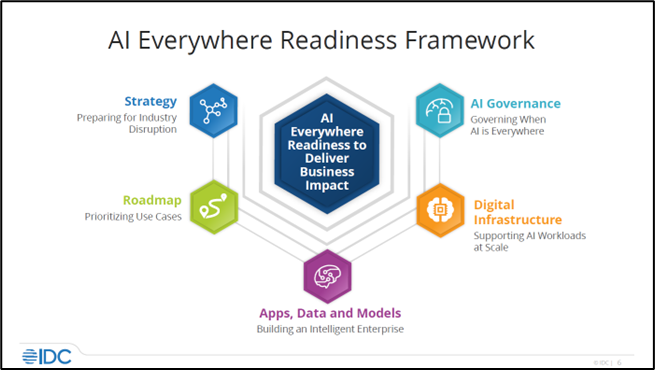
With companies across industries and regions jumping on the AI bandwagon, AI – including GenAI – has gained a lot of steam in the past few years. However, CEOs and CIOs express low confidence in the maturity of the technology provider community in understanding the risks associated with AI usage.

IDC CEO Survey 2024 shows that a little less than half of the 354 CEO (45%) surveyed feel that technology vendors do not completely understand the downside risk potential of AI. This sentiment was echoed by about two-thirds of the CIOs surveyed as part of IDC’s recent CIO Quick Poll, which was conducted in January 2024.

C-Suite Perspectives: Strategizing risk management will be key to success in the age of AI everywhere

Downside risk potential is defined as the likelihood of negative outcomes or adverse consequences associated with a particular decision or investment. In terms of AI, this translates into the following key risk categories:

  • Security and data related risks – Cybersecurity threats and data breaches are risks associated with AI, especially in instances where the models have access to sensitive company data and customer’s personal data.
  • Environmental and social impact – While the high energy consumption of AI systems can potentially harm the environment by way of increased carbon emissions, large-scale automation of business processes can reduce the need for human intervention in some functions and industries, resulting in higher rate of unemployment.
  • Governance – Having a foundational AI governance framework to regulate the use of AI is essential as the lack of understanding and transparency into how AI algorithms are developed and how the models evolve over time can raise concerns around data bias and exploitation. There have also been cases of hallucinations, which have prompted questions around the credibility and accountability of AI in business decision-making. Similarly, instances of reidentification attacks on anonymized personal data have sparked conversations around the ethical aspect of using AI on sensitive and confidential data.

With widespread adoption of AI across multiple business functions and use-cases, the need to identify risks and devise effective strategies and programs to address them has emerged as a critical business requirement. In fact, CEOs surveyed in 2024 cited improving the organization’s risk management posture as the second biggest priority this year.

In the absence of a comprehensive risk mitigation strategy, organizations will struggle to reap the true benefits of AI and leverage it confidently to inform their business decisions. In such a scenario, technology providers can play a pivotal role to support and guide their efforts. But first, they will need to build credibility as experts and trusted AI advisors by focusing on the following critical factors:

  • Transparency – By building transparency in how AI models are trained and providing information on data processing & storage, vendors can boost confidence in their solutions. Reducing opaqueness of the AI system’s operations will also help address concerns around data bias and discrimination.
  • Trust – Focusing on explainability of the AI model’s decision-making process is necessary to establish trust in the system’s output and boost customer’s confidence to leverage it for business decision-making.
  • Compliance – Another critical aspect to consider is the technology supplier’s adherence to prevalent data security and privacy regulations, as well as ESG mandates. This will not only address the requirement for regulatory compliance, but also reflect the vendor’s commitment towards promoting societal well-being and responsible use of AI.

AI has captured the attention of CEOs and the entire C-suite in enterprises. AI offers great potential for fostering automation and innovation. However, being in its early stages, it also brings risks and challenges that are still being explored by the industry.

Organizations looking to adopt AI stand to gain by collaborating with technology providers and leveraging their deep industry knowledge and technical expertise to demystify the challenges and effectively address them. Technology providers must commit to building customer trust by enhancing the transparency of their systems and ensuring adherence to prevalent regulatory standards and mandates.

For more information on the CEO Tech Survey, register for IDC’s webinar “CEO Perspectives: Leading in the Age of AI Everywhere”, Wednesday, April 10 at 12 pm EDT.

Don’t miss this opportunity to stay ahead of the curve and make informed IT decisions.

Nupur Singh Andley - Research Manager, Digital Business and AI Transformation Strategies - IDC

Nupur is Research Manager for IDC’s Digital Business and AI Transformation Strategies program. Her research examines the current trends in C-Suite technology objectives and purchase drivers, and offers guidance for technology vendors, IT experts, and business leaders to design and implement their technology strategies effectively.

Looking back at the IDC FutureScape: Worldwide CIO Agenda 2024 Predictions – Implications for Asia/Pacific (excluding Japan) that I co-wrote, and given the continued acceleration of technological evolution that are presenting opportunities for organizations, I find myself asking the question – if I were a CIO, what would I have done by now and what should I do next?  

Foster Culture, Support People, Embrace Innovation 

As tech leaders, CIOs are instrumental in leading people through change. If I am a CIO, I will cultivate my employee’s people skills to complement their technical expertise. Effective communication, empathy, and collaboration are now more important than ever in fostering a positive work culture. Technology may be the tool, but people are the heart and soul of any organization. 

Three months into 2024, I would have by now established strategic alignments with my team and peers, leading a mindset shift to ensure we do not just talk about changes but have concrete plans for implementing changes. 

I will also continue to increase the technology skills of my employees, particularly around AI. In IDC’s CEO Survey 2024, 60% of CEOs think their organizations do not have the necessary advanced technological skillsets key to having an AI roadmap. Additionally, when asked about the most critical success for CEOs, people leadership and change management capabilities is top of the agenda with close to 40% saying so in the poll results.

My next key step will be to define, invest in, and rollout training and development programs that focus on upskilling or reskilling. Continuous innovation will be at the top of my organization’s strategy. Dedicated innovation teams or initiatives within the organization will be created to explore new technologies and experiment with different approaches. 

AI, being one of the most transformative technologies to come along in a long time, will be carefully considered and planned alongside key stakeholders validating key use cases. The approach needs measurable outcome of the benefits around AI, given the fact that it makes some people excited, others fearful, and a handful of others uncertain and skeptical. This is especially so when they think about what AI means for them and their job security.

By 2028, 80% of CIOs will leverage organizational changes to harness AI, automation, and analytics, driving agile, insight-driven digital businesses.

When CEO’s were asked, IDC’s 2024 CEO Survey resonate with this and state that 75% of them agreed that AI will be key to drive differentiation and growth for their organization over the next 12 months. 

With the constantly emerging trends on AI, cybersecurity, and digital transformation, there is even greater need to inspire my team to understand and embrace these to drive positive changes. As CIO, my role is to ensure continuous innovation and alignment with corporate strategy.

Digital First Capabilities – Automation / Artificial Intelligence / GenAI 

Inevitably, by now as a CIO, I would have already considered automation in one form or another to simplify and automate repetitive tasks. I will question our automation initiatives and strategies to effectively plan our direction.

Unlike other organizations that have GenAI in their roadmap or plans, for me, GenAI is not just another tech buzzword. I will lead my organization’s GenAI initiatives with specific desired outcomes to meet business goals in mind. I will be aware that GenAI use cases are predominantly unique to different organizations across industries and that in its early stages, these will present both opportunities and risks if not managed ethically.

According to IDC’s Future Enterprise and Resiliency Spending (FERS) Survey, only a third of enterprises are investing significantly in GenAI and another third are very much in a piloting phase.  

As a CIO, I would review plans on automation and GenAI technologies against relevant use cases and explore pilot projects early, to test their potential impact and value to the organization. I will bear in mind that it is key to start small and iterate quickly, scale it up when confidence in our capabilities is gained. I will leverage our partnership with our solution provider to help to guide and shape our AI roadmap quickly in its early stages. 

Double Down on Data-Driven Decision Making 

It was once said that data is the new oil and I think that is still largely true. Like oil, data needs to be refined, processed, and analyzed to unlock its full potential. Those who can harness it effectively will stand to gain significant advantages in their targeted industries.  

The rise of GenAI has taught us that the supremacy of data will generate and create differentiated value. An organization’s capability to leverage these advantages will allow them to leapfrog the competition. However, concerns about data privacy and security remain key topics around the collection and utilization of data.  

In IDC’s CIO Poll 2024, at least 40% of organizations do not plan to disclose the data they will use to train their AI models. This means there will be much-needed investment in skills and analytics tools to harness the power data, enabling the organization to extract actionable insights.  

Similarly, use cases are critical in prioritizing data and data models. But, to establish enterprise scale, a solid governance foundation will be required to significantly influence external provider/partner decisions.

As CIO, I will make sure to build the necessary infrastructure, network, and relevant technologies and capabilities around AI. This means implementing a robust data analytics strategy and exploring key considerations for an AI-ready infrastructure for both public and private AI. 

Continuous Driving in the Co-Pilot Seat

While digital transformation remains a top priority for organizations seeking to stay competitive in today’s digital economy, as CIO it’s important that I master the conversation around AI as it has evolved into a necessity in 2024 and beyond. Cultivating people skills, empathy, communication, collaboration, and partnerships will no longer be just nice to haves but essentials in building stronger teams that will ensure business success.

Franco Chiam - Vice President - IDC

Franco Chiam is the vice president for IDC's Asia/Pacific (excluding Japan) Cloud, Datacenter, Telecommunication, and Infrastructure Research Group. He manages and shapes the above domains' offerings to IDC clients, which include cloud and infrastructure surveys, market analysis and perspective, speaking engagements, and executive briefings. In the ever-evolving landscape of technologies, the pillars of cloud computing, datacenters, and telecommunication have emerged as the driving forces behind our interconnected world. As these domains continue to shape the future of infrastructure, their integration and advancement play a crucial role for the foreseeable future.