Despite a seemingly never-ending list of headwinds, the CEO word of the year for 2023, according to IDC’s Study, is “growth.” Many CEOs are expressing an appetite to invest strategically prior to the economy stabilizing and, in some cases, capitalize on having the first mover advantage among their competitors. One CEO we spoke with during our interview series stated: “Investing when money is free and everything is growing is easy, but investing in times where stuff is really tough…you’re probably the only one, but once you get out… [once the economy recovers] you get a bigger market share.”  CEOs are confident that technology is a powerful tool to transform, scale, and optimize businesses. 87% of CEOs stated that they are looking to sustain or increase technology spending in 2023.  

Feedback from 395 CEOs across the globe will help technology vendors understand risks, spending priorities, expectations from the role of the CIO, and expectations from strategic technology partners. More will be discussed in an upcoming webinar.  

IDC’s study shows that there are 4 priorities for the forward-thinking CEO in 2023.  

  1. Remain agile in the face of economic uncertainty by doubling down on digital business initiatives and strategies.  

When asked to identify the three risks that will have the greatest impact to their organization in 2023, CEO respondents pushed economic pressures to the top of the list. This included challenges from both persisting inflation and the looming threat of a potential recession. As many of us wait with bated breath for the soft-landing pledged by central banks, it is still unclear what mid- to long-term impact aggressive quantitative tightening will have on regional and global markets.  

This is perhaps why when asked the same question about risks in two years, the top answer from CEO respondents, economic pressures, does not change. CEOs are evidently buckling up for a turbulent economic time – one that is unlikely to go away overnight. In the face of this uncertainty, many CEOs are implementing agility in their organization’s IT budgeting process. Most CEO respondents have identified macroeconomic scenarios that would result in budget adjustments at some point this year.  

The exogenous nature of economic uncertainty also led many CEOs in our interview series to underscore the importance of focusing on factors within the organization’s control. While the economy is unpredictable, the case for digital business strategies is largely in the hands of the executive team. This was reflected in the second most prevalent risk highlighted by CEOs in the two-year time frame – digital business execution gaps. In other words, CEOs understand investment in digital business initiatives is necessary and that the roadblocks to operationalization severely threaten to impact the organization’s long-term viability. Technology investments are under close watch from the executive layer and the direct connection to measurable business outcomes is non-negotiable. In fact, two-thirds of CEO respondents articulated that a critical technology initiative in 2023 will be focusing on using technology to drive more revenue generating activities.  

  1. Raise the profile of the CIO to a strategic decision-maker 

The role of the CIO must also expand to reflect the strong emphasis on using technology to drive revenue generating activities. In 2023, most CEOs expect the CIO to focus on achieving better business outcomes, improving business agility, and leading DX to create new revenue streams. This does not mean that the CIO should forgo the responsibilities of managing cost and risk. Rather, what it does reflect is that CEOs want CIOs to step beyond an operational focus and help drive measurable business outcomes – whether the target is a financial or quantifiable benefit.    

This elevation of the role of the CIO can be observed in organizational reporting lines. In the 2023 study, well over half of CEOs indicated that their organization’s CIO reports directly to them. In the past, many CIOs reported to their organization’s CFO, hindering a direct connection with the CEO. As organizations become increasingly digitally focused, technology permeates every functional area. It’s in the best interest of the CIO to take this opportunity to collaborate across the C-Suite and orchestrate the use of technology across end-to-end business processes.  

  1. Balance business growth and technology efficiency  

According to IDC’s study, CEOs are prioritizing technology spending on security and compliance, infrastructure and operations, and workplace solutions. While it is undeniable that technology investments are vital to growing a digital business, 2023 will not follow the same lavish spending on technology seen during 2021. 

The downside risk of a major security breach materializing can threaten business critical operations, and the negative press associated with such an event is too great for CEOs to ease up on security and compliance spending in 2023. This spending priority aligns well with the CIO sentiment.   

The interest in infrastructure and operations includes cloud spending, which has been a key foundation to enabling digital business. Whether an organization is developing a mobile application or ecommerce site, or the using SaaS products to standardize, automate, and/or expedite business processes, infrastructure and operations is behind the scenes making these things possible.  

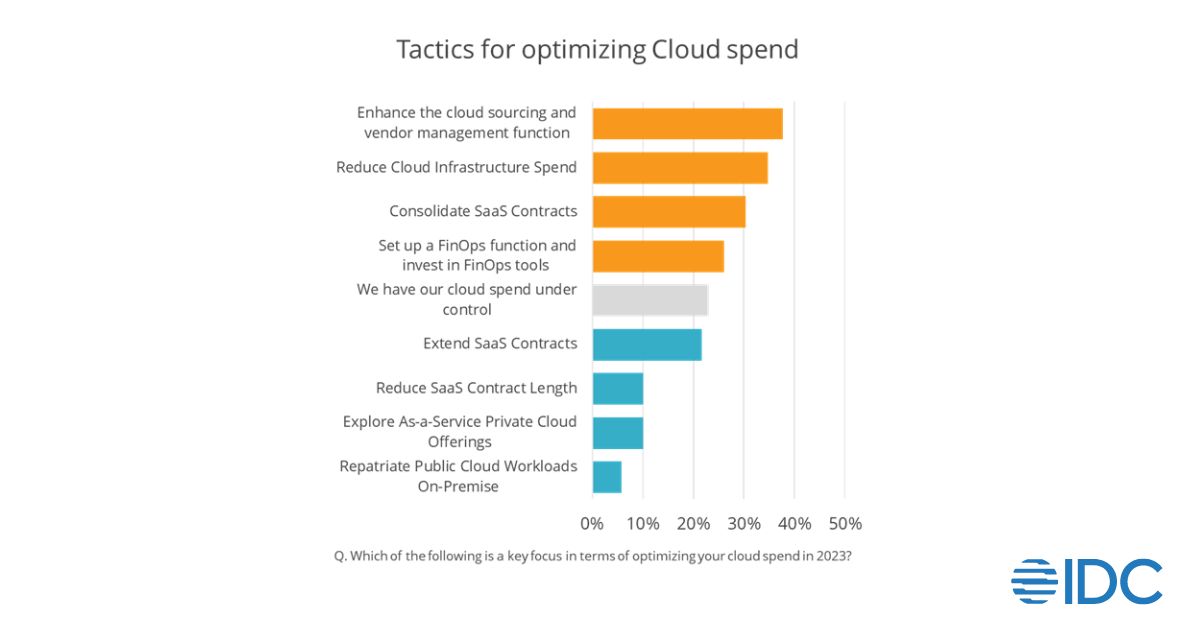
There is however, increasing concern over cloud technology costs. Like many of us are overwhelmed with the cost of subscriptions and utilities in our own personal household budgets, so are the CIOs when planning for and paying the bills for their organization’s cloud consumption. While CEOs are focusing on growth, CIOs have expressed focusing on efficiency.   

A focus on growth and efficiency provides a much-needed balance in the C-Suite. Growing without regard for cost is unsustainable. At the same time, there is a limit to how much you can optimize. Both strategic growth and cost optimization are required for a healthy business.  

  1. Build organizational resiliency with a focus on people and skills   

Over half of CEOs believe that diversity, equity, and inclusion need major improvements, or a complete overhaul at their organization. Mohamad Ali, CEO of IDG discussed in one of our interviews why Diversity Equity and Inclusion is really important. He emphasized that when trying to solve hard problems, the best solutions are often at the intersection of various disciplines. A diverse workforce has a great advantage by offering different perspectives, which is critical for innovation.  

In addition to lived experience that informs perspectives, which in turn drive innovation, the lack of digital skills across the organization, such as software engineers, data scientists, machine learning and AI specialists, were highlighted as the second most pressing challenge for the C-Suite, relating to digital business initiatives. While automation can help augment the work of existing employees, the digital skills gap has been top of mind for many business leaders. In 2023, 39% of CEO respondents indicate that spending will increase on attracting and retaining the best talent and skills.  

The forward-looking CEO knows that people are their organization’s biggest asset. They focus on what they can control by establishing strong executive sponsorship for digital business strategies, while adapting to economic uncertainty, and they move forward seeking opportunities to generate profitable growth.  

Teodora Siman - Research Manager, C-Suite Tech Agenda Program - IDC

Teodora is a Research Manager for the Worldwide C-Suite Tech Agenda program. Her responsibilities focus on creating research that assesses technology spending and buyer preferences across the C-Suite. This research covers the emerging trends around C-Suite technology objectives. Teodora’s analysis helps technology vendors, IT professionals, and business executives make informed and data-driven decisions on technology strategy.

In our January leadership strategy blog we shared our top four opportunities to create leverage for real changes with limited investment. One of them was to create a good portfolio insight. In this blog we want to dig a little deeper in how you can create that insight and what it can bring to you.

Segment your portfolio

To direct your IT spending wisely you should segment your portfolio over two (main) angles:

  1. Business Value
  2. Technical Value

By doing this you get four quadrants that allow you to prioritize your portfolio in an objective and defensible manner. This will give you an ideal starting point for explaining the changes that need to be made in the way your application landscape is developed and maintained. As an added dimension you can use the size of the circle to indicate functional or technical size of the application or the number of users or maintenance staff to get a better feeling which application needs the most attention.

Segment your portfolio into four quadrants

When you have segmented your portfolio into four quadrants, these are the logical steps you can take:

  • Applications in the upper right quadrant have a high business value and a high technical value. These applications are fit for purpose and deserve the budget and attention to keep them there.
  • Applications in the upper left quadrant have a high business value, but a low technical value. Here you should focus on how to get these applications to a better technical health to make them really fit for purpose.
  • Applications in the lower right quadrant are okay from a technical perspective, but have low business value. When you don’t want to rationalize them, try to keep the technical health in order with the lowest level of maintenance.
  • Applications in the lower left quadrant have both a low business value and a low technical value. These are the ideal candidates to review for rationalization or a minimization of development and maintenance effort.

How to get the information you need

To analyze your portfolio, we use data on the business value and technical value of your portfolio. When business data is not available, we can do a survey campaign to assess the business value of your applications. Every application owner is asked to complete a short survey about the application, its usage and the importance to your company.

When technical data is not available, we select tooling for you that can analyze the technical value in your own environment which helps you to gain the insight in the technical value of your applications. This tooling is non-intrusive in the sense that the tool results don’t contain any direct insight in the software that you are using gain your competitive advantage.

Take a closer look

Especially in the yellow quadrants you might want to take a closer look at the technical value of your applications. The selected tooling gives you the opportunity to look at certain aspects that can guide you to take more detailed action. For instance:

  • Agility
  • Security
  • Resilience
  • Cloud readiness
  • Open Source vulnerabilities
  • Use of Personally Identifiable information (GDPR risks)

We can also help you take a closer look at the business value by segmenting applications into categories of similar functionalities to see if you have options to de-duplicate some business functionalities.

Within weeks we can give you the portfolio insight you need to make guided decisions on how to spend your budget most wisely to avoid unnecessary risk or to use your IT resources optimally to support the business.

Make better decisions, faster with IDC Metri’s data driven insights in our IT Intelligence portfolio.

As more organisations embrace hybrid working, the security challenges of a decentralised workplace are becoming increasingly clear. Implementing a robust IT security strategy and using the right products and measurable KPIs will boost security capabilities and minimise risks, bringing huge value to your organisation. Secure by design is the way forward.

The best practices for secure file synch and sharing in hybrid working environments include:

  • Evaluating risks in a hybrid working environment 
  • Enabling secure file synch and share from anywhere (zero trust)
  • Unifying your security through a simple, integrated platform (single pane of glass)
  • Educating your workforce to embrace secure work practices

Evaluate Risks in a Hybrid Working Environment

This is key to making sure the data and information sitting in the files that employees are synchronising and sharing are secured and safe. To evaluate the risks, organisations need to look at four main aspects:

  • Physical: Employees use PCs and probably personal devices such as mobile phones and tablets that may have access to the organisation’s systems. Organisations need to evaluate how these devices are secured in case of theft. For example, when employees are working outside the organisation, unauthorised people shouldn’t be able to access the organisation’s system, sensitive files and information.
  • Technical: Digital files can be stored on the organisation’s servers, in the cloud and on employee devices. Organisations need to deploy solutions that ensure secure access, synchronisation and transmission of files and data. Organisations need to take a holistic view when analysing their whole IT infrastructure and environment to make sure it has no security gaps. Organisations report that around 4 in 10 internet break-ins occur despite a firewall being in place. So, relying solely on encryption and firewalls is not enough if all elements — such as access control and authorisation — are not secured. While some companies enable employees to use personal devices to access internal resources, these devices create significant security risks because there’s no formal process to verify that they are updated and maintained. The solution is continuous, 24 x 7 monitoring of these devices to identify malicious behaviour and respond instantly to mitigate the damage. 
  • IT support: Cybercrime has boomed since the pandemic. Organisations need to evaluate the breadth and quality of their IT support and their IT personnel capability and availability to react to security threats, especially for employees working outside the organisation firewall. Hybrid-working employees are more vulnerable to security risks, and time is usually critical with these security threats.
  • Business procedures and access to files/data: The main purpose here is to identify vulnerabilities and gaps in the workflow where potential risks are higher. To do this, the focus needs to be on how work gets done and by whom rather than on where work gets done. This must go hand in hand with finding ways to ensure data, applications and resources security without affecting the workforce’s efficiency and productivity. This also means it’s critical to assess what type of data/files employees have access to, what devices and applications they use, and what vulnerabilities exist in their environment so that organisations can implement the right controls to react in time. For instance, if employees are accessing protected data stored in the cloud for collaboration purposes, then using multifactor authentication to authenticate user access, VPNs to encrypt traffic and downloading security patches are highly recommended to tighten security.

Enable Secure File Synch and Share from Anywhere (Zero Trust)

An increasing number of organisations are digitising their workflow processes and using the cloud to facilitate and support hybrid working so that employees can work from the office, home or remotely. File and data access, synchronisation, sharing, storing and transmitting are key functionalities that hybrid workers need for their job, which means the number and size of such files and data in electronic format are rapidly increasing. To ensure the highest security measures in such environments, organisations need to implement zero-trust policies — the best way to address the challenges associated with digitisation, the cloud and hybrid working.

Also, implementing the principle of least privilege and ensuring that employees only have access to the data they need to complete their day-to-day jobs is critical to ensure that data doesn’t fall into the wrong hands.

Zero trust assumes that everyone is not trustworthy at the beginning of any action. This means the system performs proactive and automatic authentication to check authorisation before granting access to any application, process or database. In addition, the authorisation status is continuously validated while applications and data are in use. So, the main aim of zero trust is to implement strong identity verification and device compliance validation. It also helps organisations to comply with both internal and external regulations, simplifies the auditing process and enables much easier compliance.

Organisations need to accept that cyberattacks can be successful, and prepare schemes and solutions for effective recovery. Siloed data and processes are the major obstacle to zero trust, so organisations need to make sure everything is under the umbrella of one solution.

Unify Your Security Through a Simple, Integrated Platform (Single Pane of Glass)

It has never been more important to unify the security of organisations’ network environment, IT devices and workers:

  • Cybercrime is on the rise. Since the pandemic, organisations have made greater use of the internet and this has led to a significant increase in cyberattacks, which are now more sophisticated and pose a bigger threat year on year.
  • Organisations are increasingly using information technology and the Internet of Things.
  • Organisations are increasingly challenged by an over-abundance of IT products.
  • Security is becoming embedded everywhere.
  • Managing IT security in hybrid-working operating environments is becoming much more complex and challenging.
  • There is a growing lack of visibility in organisations’ end points.
  • IT and security need to work together to ensure employee productivity and efficiency.

Unification should aim to have end-to-end visibility of the whole IT environment. With a unified cybersecurity platform, organisations can protect data and resources across public, private, hybrid and multicloud environments with end-to-end visibility.

One of the major benefits of unification is that it provides everything that security personnel need in a single interface to help them effectively and efficiently protect employees, systems and assets. Another key benefit is related to cost efficiency because a unified security platform is less expensive to acquire and maintain than individually integrated and proprietary solutions. Organisations with unified security solutions can do more with the current IT staff, which is essential with many organisations facing a shortage of skilled IT workers.

With a unified security environment, organisations will benefit from a more secure environment (across public, private, hybrid and multicloud environments with end-to-end visibility) where all security needs are integrated and aligned by design into all aspects of the organisation’s IT infrastructure, business processes and security strategy.

Educate Your Workforce to Embrace Secure Work Practices

One of the biggest challenges that comes with remote working is ensuring that employees are security conscious when working outside the office — for example, whether they’re downloading all security patches, maintaining devices with antivirus/antimalware solutions and selecting strong passwords.

Security tools alone can’t fully protect the organisation if human behaviour is not also addressed. This means that if employees are not adequately trained on and implementing basic security practices at home, then there will inevitably be a much higher security risk.

Employee security awareness and education is probably the most overlooked and underestimated aspect, despite it being so critical. Reports show that about 8 in 10 cases of file/data loss are caused by employees inside the organisation.

It’s essential that organisations:

  • Educate and train the workforce to embrace secure work practices and make sure employees are aware of the threats of file and data loss
  • Deploy and enforce security policies and make employees accountable for any non-responsible behaviour and actions


Further reading:

Secure by Design: File Sync and Share for Hybrid Workplaces

Future of Work: Strategies for the Flexible Work Experience

How Dropbox Makes Asynchronous Work

Why a “Back to the Office” Strategy Will Fail (And Work Will Shift to a “Digital HQ”)

IDC FutureScape Webcast: Worldwide Future of Work 2023 Predictions

Work Automation and Digital Skills — A European Future of Work Perspective

ESG has become more than a buzzword: it is now an imperative for any organization to infuse sustainability into every part of their organization. Vague promises and “checking off boxes” are no longer enough to meet stakeholder expectations and to take adequate action on the most pressing environmental and social global issues. There is plenty of empirical evidence that operationalizing on organizations’ most material issues can not only enhance their risk profiles and lower their cost of capital, but also increase their operational efficiency, improve innovation potential, and help attract and retain new talent. In short, raise organizations’ enterprise value. Doing good for the planet and society and doing well financially do not have to be an “either/or.” In fact, for the most sustainably advanced organizations, they go hand in hand. 

The Foundation of ESG Value Creation 

IDC assesses organizations’ sustainability-related maturity across four dimensions: sustainable business and IT strategy, technology use, organizational adjustments, and the operationalization of these strategies. All four are critical in themselves but even more powerful when addressed together, as their combined power is required to allow organizations and industries to truly transform themselves toward more sustainable business models. We currently see organizations spread out across various maturity levels. Apart from the few most advanced organizations, most companies are currently somewhere between setting their sustainability targets and identifying material issues, getting their ESG reporting right, and (at least from an aspirational perspective) moving from reporting to considering ESG information in their operational decision making. According to IDC’s survey data, nearly 30% of organizations worldwide have embedded sustainability into their business model and overall strategy.  Improvements in operational efficiency, improved brand perception/customer loyalty, and improved employee engagement have been named the most frequent benefits in value creation as a result of ESG initiatives. 

The Growing Importance of Social Sustainability Topics 

While addressing climate change through decarbonization and energy efficiency measures remains one of the top priorities for organizations’ sustainability initiatives, the scope of topics addressed is broadening. Many organizations realize that their industry specific, material ESG issues can be very multi-faceted and complex, and they often time include several environmental issues (e.g., circularity, biodiversity impact, water efficiency, etc.) and social sustainability topics (DE&I, human rights management, community impact, etc.).

Recent IDC survey data shows that social topics in particular are growing rapidly in importance. This includes human capital topics, such as DE&I and employee safety, but also social capital topics that extend across value/supply chains, such as community impact, customer well-being, modern slavery, and child labor. Tracking some of these issues has been difficult due to a lack of visibility and accountability; and making lasting improvements can be even harder. But with the help of new technologies, such as advanced supply chain software, tackling these issues will be more feasible and enable organizations to address their ESG issues more comprehensively. 

Leveraging IT for Sustainable Transformation 

This brings us to the final section of this series overview: the role that IT plays in enabling sustainable transformation. While corporate sustainability strategies are typically formulated at the executive level, involving IT early in the strategy formulation process, and developing an IT strategy that supports the corporate mission is critical. Data is at the heart of any sustainability initiative. Once sustainability goals and objectives are established, organizations need access to data to baseline performance in key sustainability areas, develop metrics to monitor and manage ongoing performance, and report corporate sustainability metrics to internal and external stakeholders.   

While reporting and compliance mandates drive much of the need for sustainability data today, operationalizing this data and embedding it in ongoing business operations will ultimately enable organizations to drive business value beyond reporting and compliance purposes. For many organizations, however, collecting the data needed to support sustainability initiatives, and ensuring the quality of the data represents significant challenges. By engaging IT early in an organization’s sustainability journey, an effective data management strategy can be developed that allows companies to analyze sustainability data and produce actionable insight for key decision makers.  

As forward-looking organizations start viewing sustainability as a lever for driving business value, there will be a range of use cases in various functional areas of the business that will rely heavily on digital technologies. A few examples of technologies used for sustainability purposes include: blockchain technology for tracking and tracing components and materials across the value/supply chain, digital twin technology for sustainable product design, and AR/VR for predictive product support. As an organization’s sustainability ambitions evolve over time, so will their need for IT to support those ambitions.  

This IDC Blog post is the first in a series of sustainability research content which will explore how organizations can create business value through ESG, the rise of social sustainability, and the need for IT to enable sustainable transformation. For an overview of IDC’s sustainability/ESG research, our global analyst team, and more complimentary content, please visit IDC’s sustainability research showcase

Bjoern Stengel - Sr. Manager, Data & Analytics - IDC

Bjoern Stengel is IDC's global sustainability research lead. His research focuses on how environmental, social, and governance (ESG) topics impact and shape business strategies and technology usage. He provides insights into market opportunities, adoption strategies, and use cases for sustainability-related technologies and services. Bjoern helps IDC's clients understand the impact of technology-enabled, sustainable transformation processes in the context of sustainable business strategies, operations, and products and services through research reports, news publications, and speaking engagements at industry events such as Climate Week NYC.

German Chancellor, Olaf Scholz said in January that the government had successfully fended off the economic crisis, while the country’s minister of economy also addressed the extreme adaptability of German firms making it possible to avoid the worst scenarios. These statements strike a much more positive tone than those in October when negative growth was forecast for the German economy for 2023.

The panic over energy supplies has eased – at least for now – and the general outlook has significantly improved in the Germany, Austria, and Switzerland region (DACH) over the past 4 months. However, it remains clouded by some serious risks as the storms of disruption continues to rage above Europe. Organizations must remain cautious and stay focused on data to evaluate evolving risks and opportunities.

Business Risks are Hiding Behind Short-Term Improvements

The Russia-Ukraine War marks a critical economic and geopolitical turning point for Europe and the rest of the world – and the functioning of ICT markets has not escaped the impacts of the conflict.

Relying heavily on Russian gas, the DACH region has become particularly vulnerable to the increasing energy prices. Although the governments of Austria, Germany, and Switzerland reacted quickly to ensure energy supply for the winter months, the complete independence from Russian energy products is yet to come. Governments will have to consider that rapid escape from reliance on Russian gas may contravene with climate ambitions on the short term​, therefore reducing energy demand and increasing energy efficiency will need to be in focus.

Although forecasts have been revised upwards during the past months, the latest data still indicate a major economic slowdown for the DACH region in 2023. Germany is expected to grow just 0.2%, while the economies of Austria and Switzerland are projected to see 0.5% growth. These numbers can easily go negative if geopolitical conflicts escalate or there is another major outbreak of COVID-19 in China, for example. Indeed, our Future Enterprise Resilience Survey found that more than 90% of German organizations expect recession this year.

DACH experienced the highest inflation in decades in 2022, and price increases are expected to weigh on households and businesses in 2023 and beyond. Switzerland is the only country in DACH, and one of only two countries in Europe, expected to keep inflation under 2% this year.

Labour shortage will be another major factor impacting IT budgets, while the lack of digital skills within the organization may hinder the completion of digital initiatives. Easing supply chain bottlenecks and declining transportation costs reduced pressures on some of the previously constrained sectors, such as automotive manufacturing, but the possibility of further supply chain disruptions cannot be ruled out.

How is the ICT market impacted by these headwinds and how should businesses approach weathering Europe’s storms of disruption?

Shifting Focus on Tech Investments

Despite volatile market conditions, ICT spending in the DACH region is expected to rise 4.9% this year and 6.4% over the 2021–2026 period, exceeding the European average. However, IT plans have been impacted. Organizations are reshuffling their investments, focusing on technologies that can sustain the growth in uncertain times, reduce costs, improve performance, optimize processes, enhance customer experience, and nurture talent.​

Our identified the following key areas to drive ICT spending in the DACH region:

  • Artificial Intelligence: AI’s tremendous potential to improve customer experience, enable new employee experiences, mitigate skills shortages, and transform the workplace is driving rapid adoption. Augmented human resources, image processing, fleet and freight management will be among the top 10 use cases related to AI. According to IDC’s Worldwide ICT Spending Guide: Enterprise and SMB by Industry, spending on AI platforms will grow an outstanding 46.6% in the DACH region during 2021–2026.
  • Security: The rising frequency and sophistication of cyberattacks are keeping security a top investment priority. Annual spending on security in DACH is growing faster than the European average and is expected to exceed $18.5 billion in 2026.
  • Cloud: Investments are expected to more than double between 2022 and 2026 as organizations continue migrating workloads and data to the cloud to boost cost efficiency, flexibility, and customer satisfaction.
  • Internet of Things: IoT is a critical element of cost reduction, process optimization, and improved performance. Steady, double-digit growth in IoT spending is expected into 2026, with investments related to electric vehicle charging, advanced payments and shopping growing fastest.

Apart from these, enterprise infrastructure, managed services and project/professional services are additional areas where DACH organizations indicated they would continue their investment pace.​

IDC’s Recommendations

Planning the IT budgets and identifying technologies to support growth in these uncertain times is extremely difficult, especially without having the right skills and partners to complete digital initiatives. In response to the current era of uncertainty, industries are embracing transformative new trends and technologies. Adapting to these transformations, being use case-centric, and placing the right bets for growth will be essential to keep afloat and continue delivering value.


IDC can help technology vendors stay resilient, competitive, and generate revenue during turbulent times. We offer the following assets to support organizations’ needs for precision planning:

  • IDC Trackers enable organizations to assess their competition and their position by analyzing technology markets, vendor shares, and forecasts.
  • IDC Black Books provide extensive market overviews to help organizations position their products and services for the appropriate audiences.
  • IDC Spending Guides enable organizations to find strategic opportunities according to industry, company size, use case, and geography.

Contact us for more information about how IDC data products can help business leaders target, plan, and execute their most important strategic initiatives. We provide analysis of 100+ countries, 120+ technology markets, 20 industries, and 400+ use cases.

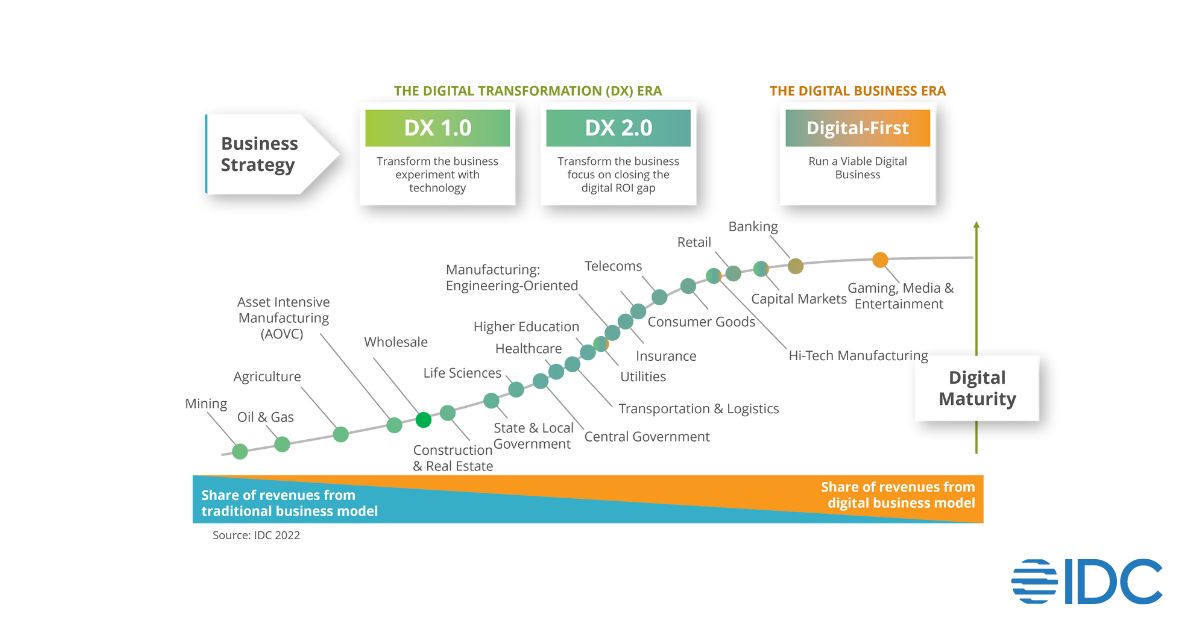
As the digital development of enterprises globally begin to move from the digital transformation (DX) era to the digital business era, the government of China unveiled its plan for the country’s digital development. This further clarifies their goals for China’s overall digital development, sharing for the first time their framework of “2522”, complete with guarantees of implementation. The timely release of this plan, which also sets China’s development goals for 2025 and 2035, will help cope with the current economic downward pressure and safeguard the accelerated development of China’s digital economy. The Plan is expected to greatly promote industrial users’ DX and the development of digital businesses and provide huge business opportunities for ICT vendors.

Building the Road to Digital China

  • Implement new development concepts, accelerate the fostering of new development paradigms, and focus on promoting high-quality development.
  • Balance development and security, strengthen systems and worst-case scenario thinking, and enhance the overall layout of the plan.
  • Follow the strategic path of solidifying the foundation, empowering the whole system, strengthening capabilities, and optimizing the environment.
  • Improve the integrity, systematic approach, and collaboration in the construction of a digital China, and promote the deep integration of the digital economy in the real economy.
  • Drive the transformation of ways of production, living, and governance with digitalization to inject strong impetus into the drive of advancing the great rejuvenation of the Chinese nation on all fronts with Chinese modernization.

2025 and 2035 Development Goals

The Plan sets out to implement 13 key goals in two phases targeted to be completed by 2025 and 2035, respectively. These goals define the pattern and lay the foundation for the construction of Digital China, and are designed to be more reasonable and coordinated developments across all aspects to strongly support the building of a modern socialist country.

Layout

The construction of Digital China will be laid out according to the framework of “2522”, which provides a directional guide for the development of the economy and society, and makes a clearer plan for the future of China’s digital economy:

Guarantees of Implementation

Efforts must be made to strengthen the overall planning, coordination of progress, and execution of all tasks. Specific guarantee measures will focus on five aspects:

  • Strengthening organizational leadership
  • Improving institutional mechanisms
  • Ensuring investment
  • Strengthening talent support
  • Creating a good atmosphere.

Moreover, the Plan specifies that efforts must be made in building digital China as a reference for the evaluation of relevant Party and government leading officials, which guarantees the implementation of the Plan from the aspect of KPIs.  

The Plan’s Positive Impact on the China ICT Market

  1. The Plan further highlights the value of digital technologies and strengthens the ICT industry’s development confidence. For the first time, the Plan proposes the promotion of the in-depth integration of digital technology with economic, political, cultural, social, and ecological progress. The Plan will help China promote a stronger digital economy, develop an efficient and coordinated digital government, build a digital culture with confidence and prosperity, create a digital society featuring inclusiveness and convenience, and shape a green and intelligent digital ecological civilization.
  2. Faster than expected growth in digital infrastructure business opportunities, as well as big data and AI. In November 2022, the China National Development and Reform Commission issued a report on the development of China’s digital economy, which puts forward a plan to moderately deploy digital infrastructure construction in advance to lay a solid foundation for digital economic development. This Plan reaffirms the need to remove the barriers to balanced development of the digital infrastructure across the country and accelerate the construction of infrastructure such as 5G networks, gigabit optical networks, IPv6, mobile Internet of Things (IoT), BeiDou Navigation Satellite System, and national computing network to synergize east and west. The Plan also proposes to promote the big cycle of data resources, accelerate the aggregation and utilization of public data, unleash the potential value of commercial data, speed up the establishment of a system of property rights for data, carry out research on data asset pricing, and establish a mechanism for the participation of data elements in value distribution by contribution.
  3. Digital sovereignty continues to be refined and deepened, and the cybersecurity market continues to grow rapidly. Digital sovereignty and cybersecurity are becoming increasingly important as the losses caused by geopolitics and insecurity intensify. The Plan sets forth to strengthen cybersecurity and data security and improve the data governance ecosystem and systems. It clearly proposes to improve laws, regulations, and policy systems related to cybersecurity, effectively maintain cybersecurity, enhance data security assurance capabilities, establish a basic system for hierarchical and classified data protection, and perfect the system for network data monitoring and early warning and emergency response with the aim of building a trusted and controllable digital security barrier.
  4. The Plan promotes international cooperation and opening up to achieve win-win results and benefit the global deployment of Chinese ICT vendors. The Plan specifies to coordinate international cooperation in the digital field by establishing a system of international exchanges and cooperation with multilevel collaboration and support, and multi-entity participation; build a high-quality Digital Silk Road; and actively develop Silk Road ecommerce. China will expand international cooperation in the digital field, actively join digital cooperation platforms under the multilateral frameworks of the United Nations, the World Trade Organization, the G20, APEC, BRICS, and the SCO, and build new high-quality new platforms for open cooperation in the digital field.  

Learn more about the IDC China Digital Business Strategies research on the impact of government policies on digital business and the ICT market. Talk to IDC experts today.

Lianfeng Wu - Vice President - IDC

Mr. Wu Lianfeng, the Vice President and Chief Research Analyst of IDC China, has more than 25 years of experience working in the IT industry. Since joining IDC in 2000, Mr. Wu has extensive research and consulting experience in the areas of overall ICT market, vertical industry market, Internet and new media, smart connected devices, software and service outsourcing, digital transformation, digital economy, and emerging technology, among others. In recent years, Mr. Wu has been leading IDC China's digital transformation research and event. In 2017, he started to build the CXO circle excellence club, the vision of which is to help industry CXOs transform from good to excellent. Mr. Wu holds monthly offline activities and publishes daily articles that focus on digital transformation: business trends, technology trends, industry trends, organizations, and people role trends. Mr. Wu also worked with IDC global analysts to lead China's annual ICT direction forum and Top 10 Predictions (IDC FutureScapes) forum, providing industry forecasts of the latest development directions and business opportunities. At the same time, Mr. Wu works with a team of analysts to explore and discover new research topics and build thought leadership in the ICT market. Recent research areas he has delved in include Future of Work (FoW), Future Industry, Smart City, and DevOps, among others. Mr. Wu is also a guest speaker in all kinds of top ICT summit, CIO summit, and industry digital transformation summit. He gives nearly 50 speeches every year, which greatly promotes the application and development of digital technology in the industry. Prior to joining IDC, Mr. Wu worked with China Academe Launch-vehicle Technology (CALT), China Hewlett-Packard Co. Ltd., Jardine Pacific (JOS) Information Technology Co. Ltd., accumulating 9 years of working experience in the field of IT and telecommunications. Mr. Wu holds an MBA from the University of International Business and Economics in Beijing, a Master's degree in Engineering from China Academy of Launch Vehicle Technology, and a bachelor's degree in Engineering from the University of Electronic Science and Technology.

The IMF has warned that half of the European Union and a third of the world face recession in 2023. This means that economic headwinds such as energy costs and currency fluctuations are forcing organisations to reassess budget decisions.

In our recent Future Enterprise Resilience and Spending Survey (December 2022), IT leaders said they expect inflation to impact spending decisions. IT cost price increases stemming from inflation and currency changes is expected to have the greatest impact on IT spending plans in 2023.

C-suite concerns are related to IT and technology challenges. In our Worldwide C-Suite Tech Survey (August 2022), 60% of European C-suite concerns about the impact on their IT and digital spending was related to challenges coming into sharper focus as macroeconomic conditions worsen. This includes IT price increases stemming from inflation.

So how can tech vendors navigate these issues and thrive?

Planning Is the Foundation for Success

According to research by the Harvard Business Review, companies that not only survived recessions but thrived afterwards were those that were prepared and agile — those that didn’t just slash costs but invested strategically.

Strategy is essential to know where to plan resources, to determine which projects you are going to prioritise and which you are not, and to know how you are going to identify and target the opportunities that will give you the best return.

Download eBook: Essential Building Blocks for an Effective Growth Strategy

A good strategy should help you align with business conditions, so that you can be agile enough to deliver short-term savings without impacting long-term growth.

Informed Decisions

Data becomes more important in volatile and uncertain economic situations. Economic conditions can impact regions and industries differently. Knowing the factors that might impact the market(s) you are selling into is crucial.

Those who are buying tech is changing, with European tech spending moving from the IT department to the C-suite. In Europe, 47% of IT spending is now C-suite funded (source: IDC Worldwide IT Spending Guide: Line-of-Business Forecast, January 2023, European forecast).

Download eBook: Speaking the Language of the C-Suite: Selling Beyond the IT Department

This is an example of how data can give you insight into your customers and how they are buying. Knowing who is buying, where they are spending and what is impacting spending decisions will help you build an effective strategy.

Data-supported decisions are key to effective resource management both internally and externally.

This means you need to know who is buying in your market. Which markets or industries are more resilient? What are their drivers and challenges?

Adapt and Invest

Times of economic uncertainty can also be a time of possibility. Microsoft, Instagram and Airbnb, for example, were all formed during or just after a recession.

Technology is an area where businesses tend to continue or increase spend. 66% of European C-suites believe that IT budgets will increase, even during an economic downturn (source: IDC Worldwide C-Suite Tech Survey, August 2022).

According to our Digital Executive Sentiment Survey (October 2022), European organisations now expect more than 50% of their revenues to come from digital business models on average in the next three years.

Technology is often seen as a critical business differentiator to better deliver business outcomes, increase resilience and accelerate revenue growth. So while caution may continue while the economic outlook is uncertain, investments in projects that improve efficiencies are continuing. According to the Harvard Business Review, prioritising digital transformation and digital technology can help cut costs and improve efficiencies.

In an economic downturn it can be harder to achieve growth, as you have to do more with less. It can also be harder to get customers to spend, so you must ensure that you are targeting the opportunities with the best chance of success.

But there are opportunities. So what you do and where you allocate resources becomes increasingly important.

You need results. To be proactive rather reactive, but still agile enough to pivot to changing market conditions. An effective strategy is essential to that.

Visit our website for more information on how we can help you build for growth.

We’re all familiar with two main types of cars for sale: Internal Combustion Engine (ICE)/regular cars or Electric Vehicle (EV)/electric cars. With the first one, you’ll have your regular maintenance scheme, and the car remains virtually the same as at the time of purchase. This is revolutionarily different than most electric cars. New “Over-the-Air” (OTA) updates for the car bring new features and improvements every month. This means that the car is getting a little bit better over time without going to the mechanic. That would also be nice for an IT environment, right?  

To accomplish this, companies are implementing Evergreen IT. But what exactly is Evergreen IT, what are the risks and how can you start applying it within your organization? This blog introduces you to the world of Evergreen IT.   

Evergreen IT 

Although the term ‘Evergreen IT’ has been around for quite some time, it is still relevant. Many companies are still catching up with technology and ways of working which are more iterative. The balance is shifting more and more towards shorter times to market for introducing new functionality and updating solutions that make use of Software as a Service (SaaS) and (public) cloud infrastructure. This requires a different approach and processes that are more aligned to these objectives.  

The Evergreen IT approach takes new ways of working from managing (public) cloud infrastructure and SaaS solutions and applies these to managing IT in general. Instead of meticulously planning large, lengthy upgrade projects, smaller updates are applied at faster frequency. The smaller updates mostly contain smaller changes in functionality and technology, which reduce the effort required to check on compatibility issues in solutions. Evergreen IT also aligns to the agile way of working which has become prevalent in many IT departments and IT vendor delivery teams. And, Evergreen IT supports the next step and move to DevOps.  

Challenges 

Introducing the Evergreen IT method requires a new kind of flexibility and managing the expectations from the end-user perspective. In more traditional IT organizations, end users face larger changes in functionality and need more time to adopt the updated solution. To manage this change and adoption, management is focused on preparing and managing the expectations of end users. Also, during and after implementing the change, IT organizations should make sure the right amount of support is available for after care. This process sounds straightforward and relatively simple, until it concerns changes in which various parties/suppliers are needed. In that case, the IT organization and supplier(s) should prepare and plan extensively regarding communication and minimize possible impact on the IT environment. End users should be informed along the changes journey to make them understand the impact on their working environment and that they might encounter some issues. The same applies to the other suppliers in the ecosystem, who need to be informed (or even taken along) as well about the upcoming changes. Managing the entire change cycle is very time consuming and proven difficult. 

The Evergreen IT approach is 180 degrees different compared to the traditional way of managing change – that is a good thing! In an evergreened IT environment, end users are facing smaller but more frequent changes. For example, daily routines of today’s end user include updates from apps, telephones and even cars. So, end users are already familiar with this process to a certain extent and have experience in a rapidly changing environment with little impact. This is a huge advantage for the IT department and helps them with faster change and the sequential introduction of new functionality and technology. By applying and deploying minor changes, end users will experience a constantly improving and easy to use IT environment and won’t be bothered with large incremental upgrades. With the introduction of Evergreen IT, also the need for communication declines because end users can continue to work as if nothing is changed.  

From the perspective of the IT department, there are multiple challenges and requirements in changing the way of working into a more agile one, which helps achieve evergreening objectives. Some examples of changes that are needed include increasing the frequency and attentiveness of monitoring trends and updates in technology and solutions. Also enhancing the flexibility of service processes like: Change Management, Release and Deployment Management, Service Validation, and Testing and Security Management, is needed. Besides the process and monitoring function of the IT organization, also the testing capabilities need to improve. Testing new versions need to happen more frequently and on an ongoing basis to become more flexible and to adopt and push new solutions quickly.  

All these changes to process require a higher level of automation, to make sure tests are performed correctly and consistent and deployment is executed seamlessly in the production environment. This aligns and supports the DevOps way of working, with the purpose of integrating development of new functionality and IT Operations, to deploy improvements and functionality faster.  

Besides improving the current IT environment and IT (Service) Management Processes, the introduction or redefinition of IT Outsourcing can play a huge role in adopting the Evergreen IT methodology and help tackle some of the challenges mentioned above.  

Experience 

Based on our experience, to be able to evergreen IT, companies need to adhere more closely to the standard ‘out of the box’ or ‘off the shelf’ functionality of (software) solutions. In this way updating becomes easier, because a large part of the testing is done by the supplier of the solution. IT organizations on the other hand, mainly need to focus on the integration of the solution within the IT environment. Additional customizations and add-ons build on top of standard solutions require more effort, which may add time to releasing and deploying new functionality. The disadvantage of mainly implementing standard functionality is that solutions are less tuned to the existing business processes and the business will need to align their processes to the solutions. 

Also, to be able to react proactively on changes to solutions, the IT department will need to monitor supplier and market developments and trends more closely and make sure that governance and (Service Management) process include this. 

Lastly, before changing a system or solution in a business process, a business case should always be part of the assessment and decision making. This way, a concise decision can be triangulating the short- and long-term objectives along with the associated financial implications.  In our experience, a business case is often lacking or not given the right amount of attention. This results in a discussion based on opinions and conversations without having solid facts! 

 Actions & tips on how to start with Evergreen IT  

  • Use the ‘at home’ end-user experience as a foundation for designing processes for upgrading solutions and implementing new functionality. At home, end-users are accustomed to an evergreen environment where updates and new functionality are delivered quickly in small iterations, and this expectation is increasingly being transferred to their working environment. 
  • Implement a multi-channel communication strategy to notify end-users, using succinct messaging along providing links to specific locations to provide more detailed information. This will allow end-users to easily access additional information about the changes and new functionality, if they desire (such as via email, SharePoint, and the company intranet/website). 
  • (re)Consider IT Outsourcing opportunities to help in introducing or further maturing the Evergreen IT way of working into the IT environment.  
  • Align to standards of the provided solution by limiting the level of customization. 
  • With regards to testing: Automate, Automate, Automate! This supports the required speed and agility in deploying new software.  
  • Validate the maturity of the supplier processes regarding their SaaS or (public) cloud solutions. Like IT departments, vendors are also in various stages of implementing Agile, DevOps, Evergreen processes resulting in risks. Verify the level of maturity carefully to make sure that the IT department and the supplier processes are aligned.  

Maximize IT investments for the business through effective sourcing and management of partners with IDC Metri’s Sourcing services.

IDC’s Future Consumer research leverages eight primary categories to help paint a picture of a consumer’s whole life and the role that technology plays in it. The eight categories of the Future Consumer Framework include Entertainment, The Home, Travel and Dining, Personal Mobility, Money, Shopping, Lifelong Learning, and Wellbeing. The goal is to go deep and wide to create a holistic view of the Future Consumer; we expect the framework to evolve based on client feedback and market shifts.

Our research includes survey data from seven countries as part of our Consumer Pulse research, internet penetration, online activities, online spending, and other forecasts as part of our 51-country Consumer Market Model (CMM), and thought leadership as part of our Future Consumer Agenda.

These consumer-centric insights will benefit not just companies focused on the consumer but also enterprise companies whose offerings must adapt to fit the demands of commercial entities whose workforce requirements are increasingly influenced by what consumers want. We believe that, increasingly, the consumer is the tail that wags the enterprise dog.

As we’ve built out this research over the past year, one thing has become clear: The data and insights we have in this research stream can help a much broader range of companies than typical technology-specific market research. To that end, we thought it might be helpful to pull an illustrative data point from each of the eight categories and articulate the broad swath of users inside a company that can use this type of data to build their business.

Entertainment

Impact/Data Point: The Future Consumer is more engaged with user-generated content and social media than with traditional linear TV or streaming. This will profoundly impact how future content is created, distributed, and consumed, and the resulting changes and influences carry huge ramifications for technology companies. Moreover, the CMM shows that spending on independent content subscriptions is set to grow at a 12% worldwide five-year Compound Annual Growth Rate (CAGR).

Who can use this type of data? Device OEMs, component vendors, strategy teams, technology marketers, content platforms, content delivery, and infrastructure vendors.

The Home

Impact/Data Point: More than 50% of Gen Z say working from home is better than working in the office, and readiness to work from home is driven by income over the type of work. As companies and employees continue to navigate the challenges associated with hybrid work, consumer attitudes will have an outsize impact on the hardware, software, and services that evolve to serve the home as the center of everything. The CMM shows that smart home-related services are set to grow at a 16% worldwide five-year CAGR.

Who can use it: Peripheral OEMs, smart office vendors, platform vendors, collaboration software developers, home services vendors, and security and privacy-focused software developers.

Travel and Dining

Impact/Data Point: The attitudes and behaviors of Gen Z and Millennials increasingly point to a very different lifestyle from previous generations regarding meals and dining. These two cohorts have a much more positive view of the quality of delivered food and the value of delivery services.

Who can use it: Hospitality, travel, transportation, and tourism executives, technology vendors serving the industry, and online travel service providers.

Personal Mobility

Impact/Data Point: Mobility is multi-mode for most, and 83% of Gen Z use at least two modes of mobility for at least 10% of their mobility time.  The largest share of all consumers (45%) uses three mobility modes monthly. The U.S. is the main exception to this pattern, with half of consumers using just one mobility mode. The CMM shows that micro-mobility services are set to grow at a 26% worldwide five-year CAGR.

Who can use it: Automotive executives, micro-mobility startups, technology strategy executives, OS and platform owners, government planners, and map services.

Money

Impact/Data Point: One in six (16%) of consumers report that their primary bank account is an online-only one. Gen Z (22%) and Younger Millennials (20%) stand out for their higher adoption. The latter are also much more likely to use the many different sources of alternative digital payments (peer-to-peer, digital wallets, etc.) over cash. The CMM shows that digital finance services are set to grow at an 11% worldwide five-year CAGR.

Who can use it: Banking and finance companies, fintech vendors, OS vendors, platform owners, device vendors, and security and privacy technology providers.

Shopping

Impact/Data Point: During the pandemic, online transactions became the majority for the first time.  Very few consumers buy “only online” or “only in-person.” Among Gen Z, 67% lean toward an online-first mentality, while younger millennials are at 75%. The CMM shows that online grocery services are set to grow at an 8% worldwide five-year CAGR.

Who can use it: Online and traditional retailers, direct-to-consumer vendors, device and accessory OEMs, and technology vendors that service retail clients.

Lifelong Learning

Impact/Data Point: Our research shows that 58% of consumers used online learning last year, and penetration is over 70% among Gen Z and Millennials but just 36% among Boomers and older. Those with a continuous learning mindset embrace it. The CMM shows that broad online services are set to grow at a 15% worldwide five-year CAGR.

Who can use it: Online learning platforms, app stores, OS providers, device vendors, content creation and delivery platforms, and strategy and marketing teams.

Wellbeing

Impact/Data Point: More people are exercising and doing it more frequently than before. Home’s share of workout time is at 44%, up from 36% pre-COVID but down from the 56% COVID peak. Interestingly, this is an area where Gen Z/Younger Millennials underperform the average. The CMM shows that online fitness services will enjoy a 19% worldwide five-year CAGR.

Who can use it: Connected health service providers, disease management firms, OS providers, wearable OEMs, and online health and fitness providers.

Conclusion

The data points above represent just the tip of the iceberg in terms of what IDC has to offer when it comes to consumer insights. Our team is ready to help you navigate an increasingly complex consumer environment with rock-solid survey data, strong forecasts built on well-reasoned assumptions, and thought leadership based on years of experience covering these markets. If any or all these topics interest you, we encourage you to reach out and start a discussion with our team.

If you’re attending West Coast Directions, be sure to register for Tom Mainelli’s Future Consumer breakfast presentation; if you won’t be there, reach out for a copy of the deck.

Tom Mainelli - Group Vice President - IDC

Tom Mainelli heads the Device & Consumer Research Group, overseeing a wide array of hardware and technology categories that cater to both home and enterprise markets. His team's research spans PCs, tablets, smartphones, wearables, smart home devices, thin clients, displays, and virtual/augmented reality headsets. He also co-manages IDC's supply-side research team, which monitors display and ODM production across various categories. IDC's consumer research, anchored by the Consumer Market Model, employs regular surveys and proprietary models to forecast numerous consumer-focused activities and spending across hardware, software, and services. As Group Vice President, Tom collaborates closely with company representatives, industry contacts, and other IDC analysts to provide comprehensive insights and analysis on a diverse range of commercial and consumer topics. A frequent speaker at public events, he travels extensively, enjoying every opportunity to engage with colleagues and clients worldwide.

Not Going Back to the Office Full Time

If you bring together a group of senior managers and ask them what the most pressing concern is in their workplace strategy, the most likely answer will be, “How can we get our workforce back into the office?” Nostalgia about the “good old days” reassures them that work is better done in the office. A buzzing office at full capacity is often taken as a sign of high performance.

Our data shows that 68% of European employers are determined to have employees back full time in the office (IDC FoW Survey, 2022). Meanwhile, workers are demanding greater flexibility and a choice of where and how to work.

Some employees want to be in the office, while many want to “balance their lives” and family obligations. Our data shows that compared with hybrid staff, employees working onsite five days a week are 10% less likely to recommend their employer, meaning they are less loyal and more likely to switch jobs.

About 73% of office workers in Future Forum’s future-of-work study say they are open to new jobs if they are dissatisfied with the level of flexibility they are offered.

In the wake of a recession in Europe, however, many businesses are reluctant to invest in the technologies needed to transform their organisation into a digital-first workplace for the long term.

Our survey data from December 2022 shows that concerns around geopolitical tensions and labour shortages remain high in Europe, with inflation having the biggest impact on spending plans for 2023. 70% of organisations are planning to significantly reduce their IT spend in 2023 (IDC FERS Survey, Wave 11, 2022).

Many managers need to seriously consider whether a return to a traditional work policy will enable their business to survive in today’s world. A typical organisation has two generations of digital natives in their workforce (Millennials and Gen Z). Employees are key stakeholders in the evolution of their workplace, and their interests and preferences must be considered. Organisational culture needs to evolve and keep pace with social changes. The alternative, in form of a non-negotiable “everyone return to the office” strategy, would cause more harm than good in terms of business outcomes such as talent attrition, quiet quitters and lower productivity.

The Digital HQ and Why It’s a Must-Have

So, what is the way forward? A digital HQ that is accessible to all — those in the office and those working away from the office — can be the foundation for a more flexible work environment that drives performance, loyalty and other positive business outcomes.

Platform vendor Slack defines the digital HQ as “a single, virtual space to connect people, tools, customers and partners for faster and more flexible work”. Contrary to most assumptions, a digital HQ does not imply that people never meet in person.

Yes, the workplace is digital by default, but people will still get together in their office. However, they do so for team building and collaboration, social connection and networking, or training.

The understanding is that going to the office to replicate an at-home work pattern that focuses on productivity would be a waste of time. As a result, the office — or “physical headquarters” — is being reimagined less as a place of routine and obligation and more of a centre for driving company culture and values.

These new offices emphasise free-form flexibility, offering hot desks, huddle rooms and smart meeting rooms. However, too few companies have given thought to the workings and architecture of digital headquarters. And given that so many workflows and team collaboration efforts now happen in the digital space, that seems like a serious lack of imagination and an invitation to failure.

To ride the wave in a challenging labour market, companies must prioritise attracting talent and keeping existing employees motivated. By enabling employees to connect and collaborate from anywhere, a digital HQ helps companies to provide the flexibility that today’s workforce demands.

All workers can feel included and productive in a digital HQ, no matter where they live or what their daily schedules might look like. Flexible work practices are also essential to building inclusive workplaces, which is top of mind for many employers as diversity, equity and inclusion have become a priority in recent years.

A digital HQ can break down silos, unite teams in an asynchronous work model and boost security. Employee and customer experience will benefit from that increased agility and create a stronger culture as a result. The fact that 56% of European companies feel they are not ready to meet current and future work transformation requirements should be a wake-up call for those trying to survive the coming storms of disruption.

Meike Escherich - Associate Research Director, European Future of Work - IDC

Meike Escherich is an associate research director with IDC's European Future of Work practice, based in the UK. In this role, she provides coverage of key technology trends across the Future of Work, specializing in how to enable and foster teamwork in a flexible work environment. Her research looks at how technologies influence workers' skills and behaviors, organizational culture, worker experience and how the workspace itself is enabling the future enterprise.