As it’s ChatGPT’s first birthday, now seems like a good time to look back at what its arrival has sparked, and to look forward at what might happen next with Generative AI.

There is no doubt that when OpenAI launched ChatGPT in late November 2022, it kickstarted a huge new wave of excitement about the potential for AI within business. A major survey conducted by IDC in August 2023 showed that in just a few months, we arrived at the situation where 75% of European organizations said they were already working with Generative AI (GenAI) in some capacity. What’s more, 18% of European organizations said that GenAI had already disrupted their business to some extent.

In August 2023. That’s just 9 months after ChatGPT’s debut.

It’s important that we remember that GenAI didn’t come from nowhere: prior to ChatGPT’s launch, a number of organisations (including Google, and OpenAI itself) had been working on GenAI technologies for years. But it was ChatGPT’s user-friendly conversational interface, and free service, that created high levels of awareness about what GenAI might be able to do – in an extraordinarily short space of time.

Of course, it’s important to note (as we have in numerous publications) that the GenAI opportunity is about much more than chatbots. Organizations are exploring use cases spanning marketing content generation, knowledge management, automation of software development activities, and much more.

Together, this span of use cases is driving massive interest. Some other key insights from IDC’s August GenAI survey:

  • 55% of European organizations said their C-Suite leaders are actively engaged with IT leaders about GenAI on a regular basis.
  • European C-Suite leaders are most interested in how GenAI can have an impact on customer experience (24.3% said this was the most sought information); how it can improve the performance of decision making (18.1%) and how it can improve employee productivity (15.8%).
  • European C-Suite leaders want to move fast: 88% of respondents said their C-Suite leaders wanted to integrate GenAI into applications and processes within 18 months.
  • On average, European organizations expected that investments in GenAI would account for 11% of new IT project budget in the next 18 months.

IDC forecasts that worldwide spending on GenAI implementation will reach $143.1B by 2027: that accounts for about 28% of the expected overall spending on AI implementation in that year. At a 5-year CAGR of 73.3% between 2023 and 2027, this represents a colossal market opportunity, that will significantly affect existing hardware, software and services markets.

As a result, it’s natural that OpenAI has now been joined by many new competitors all aiming to provide commercial GenAI models. The company now has competition from AWS, Google, and IBM, as well as other specialists (Cohere, Anthropic, Mistral, Inflection and Aleph Alpha are some examples). And enterprise application vendors like SAP, Salesforce and ServiceNow are leveraging open-source alternatives as well as partnering with a wide range of commercial model providers, in order to embed GenAI features in their application suites and platforms.

So – with GenAI set to be a major force in enterprise technology over the coming years, what happens next?

I’ve long wondered whether OpenAI might be an outlier in terms of how it approaches the GenAI opportunity; and indeed, whether its strategy makes it risky to focus too much on what OpenAI does, as a way to get a sense of overall market direction. I’ve said multiple times to colleagues and clients that OpenAI is more like a research outfit that is figuring out how to make its tech available to the world, than a product company.

Certainly, OpenAI has been culturally distinct from its competitors since before the launch of ChatGPT. While its competitors are primarily focused on developing products that businesses can use, OpenAI has operated as a hybrid between a not-for-profit research outfit committed to trying to develop what it calls “AGI” (Artificial General Intelligence) – something that many commentators feel is a very long-term project – and a commercial venture. Because it is at least partly focused on this long term mission, OpenAI is less focused than many of its competitors on meeting the real-world current needs of business customers. Which means that although OpenAI created the market that we see today, its future as a significant force in the market is far from guaranteed.

This question has come into sharp focus in recent days, as a soap opera has rapidly unfolded at OpenAI. On November 17th, without any warning, the company’s board fired its CEO, Sam Altman. The company’s President and co-founder Greg Brockman also quit. But within 48 hours, investors in the company called for Altman’s reinstatement as CEO, and for the board to quit instead. At the same time, Satya Nadella, CEO of Microsoft (OpenAI’s strategic investment backer) announced that Altman and Brockman would join Microsoft to found a new AI research lab; and hundreds of OpenAI employees signed an open letter to OpenAI’s board, saying they would quit unless Altman and Brockman were reinstated.

At one year old, human children are a hot mess of crying, screaming and unexpected and unmanaged bodily functions. Based on current events, it looks like the organization behind ChatGPT, which kicked off so much industry excitement, might be exhibiting the same tendencies…


For more information on GenAI in EMEA download our eBook: Generative AI in EMEA: Opportunities, Risks, and Futures , or visit our website.  

Neil Ward-Dutton - VP AI, Automation, Data & Analytics Europe - IDC

Neil Ward-Dutton is vice president, AI, Automation, Data & Analytics at IDC Europe. In this role he guides IDC’s research agendas, and helps enterprise and technology vendor clients alike make sense of the opportunities and challenges across these very fast-moving and complicated technology markets. In a 28-year career as a technology industry analyst, Neil has researched a wide range of enterprise software technologies, authored hundreds of reports and regularly appeared on TV and in print media.

Explore IDC’s top 10 worldwide predictions for digital business in 2024 and beyond, straight from the latest IDC FutureScape.

IDC has recently published its annual FutureScape report, IDC FutureScape: Worldwide Digital Business Strategies 2024 Predictions. This focuses on the external drivers that will alter the global business ecosystem over the next 12 to 24 months and the issues technology and IT teams will face as they define, build, and govern the technologies required to thrive in a digital-first world.

For years, digital transformation (DX) has been the focus for organizations looking to gain competitive advantages and modernize their processes and technology. The goal: to become digital businesses where value creation is based on the use of technologies for processes, products, services, and experiences.

Now, the digital business (DB) era has arrived. Companies are seeking new digital revenue streams while digitizing operations to reduce costs and increase efficiency. Spending on digital technologies is growing while traditional, nondigital spending is stagnating or even declining. And demand for digital experiences from customers, employees, partners, and suppliers has become an expectation.

“Digital transformation was only the first step — to truly gain value from change, companies need to move to an innovative state,” said Craig Powers, research director, Worldwide Digital Business Strategies at IDC. “IDC expects more companies to improve their innovation capabilities through 2024 because digital innovation — the process of ideating and testing new digital technologies — is increasingly prioritized. The time for companies to build up innovative capabilities and cultures of innovation is now if they want to stay competitive in the digital business era.”

Let’s take a closer look at IDC’s top ten predictions for digital business strategies:

  • Prediction 1: GenAI Will Be Used to Innovate – GenAI will be used to codevelop digital products and services by pinpointing market opportunities and allocating company resources. The companies that utilize GenAI in this way will more efficiently and effectively roll out new revenue-generating endeavors, leading to faster-paced growth that their competitors not using GenAI will struggle to match.
  • Prediction 2: The Pace of Investments in Digital Technologies Will Continue – Spending on digital technology by organizations will grow seven times faster than the overall economy in 2024, as companies are compelled by market demands to grow digital business models and strengthen digital capabilities.
  • Prediction 3: Elevating AI to the C-Suite – A recent IDC survey found that just over half of CIOs say their organization has or plans to have an individual leader responsible for AI, and approximately half of those CIOs believe the leader will be part of the C-suite executive team.
  • Prediction 4: Digital Native Businesses Will Embrace GenAI – Digital-native businesses rely on technology to support their disruptive business models and to create their competitive edge. These companies will be early adopters of GenAI and will invest heavily to further their competitive advantage.
  • Prediction 5: Digital Business Platforms Enable Success – Digital business platforms enable greater visibility into a company’s operations, allowing for greater insight into the impacts of their investments. As businesses mature digitally, they find measuring ROI to be more straightforward and they are more likely to build leading-edge capabilities that can drive successful digital revenue initiatives.
  • Prediction 6: AI Everywhere Will Supercharge New Digital Business Models – IDC expects that the combination of predictive AI, machine vision, and GenAI capabilities, and the provisioning of on-demand services through digital ecosystems, will take on a new dimension. This will open opportunities to create new products and services for customer segments that will appreciate the appeal of these capabilities.
  • Prediction 7: Measuring Success Will Require New KPIs – Tracking what is truly relevant to the business is critical for strategic decision-making. We expect to see new key performance indicators (KPIs) implemented that reflect a shift toward the creation and delivery of digital products, services, and experiences, which are the defining attributes of a digital business.
  • Prediction 8: Digital-First Becomes the Investment Priority – CEOs increasingly expect their organization’s technology leader to be focused on delivering better business outcomes, increasing business agility, and bringing in new revenue through digital products, services, and experiences.
  • Prediction 9: AI Will Impact Workflows and Drive Employee Retraining – The wholesale adoption of AI will bring challenges for employees who see their overall workflow and learning process impacted. To mitigate negative impact and drive adoption, employees will need to be reskilled to work alongside GenAI.
  • Prediction 10: Digital Technologies Will Be Used to Meet Sustainability Goals – To achieve their sustainability ambitions, organizations will require both business and IT leaders to pursue digital technology investments that are twofold: meeting their digital goals while taking sustainability into account.

“Investment in digital business, augmented by GenAI, will continue to drive new models and positive outcomes going forward. Those organizations that have already begun their digital business journeys have seen the value and will continue to invest and innovate. Those that have delayed are at risk of losing significant market share over the next five years,” Powers added.

Stay informed and be prepared for the AI revolution that will reshape the IT industry and the way businesses operate. Don’t miss our annual prediction webinar series to gain deeper insights into the future of technology and business:

  • Worldwide Artificial Intelligence and Automation 2024 Predictions, November 8 at 12:00 pm U.S. Eastern time, featuring Ritu Jyoti
  • Worldwide Digital Business 2024 Predictions, November 29 at 12:00 pm U.S. Eastern time, with Tony Olvet & Craig Powers
  • Worldwide CIO Agenda 2024 Predictions, December 6 at 12:00 pm U.S. Eastern time, with Daniel Saroff & Mona Liddell
  • Worldwide Emerging Technologies 2024 Predictions, December 13 at 12:00 pm U.S. Eastern time, featuring Rick Villars

Interested in learning more? Access the full IDC FutureScape event series and stay updated on the latest IT industry trends.

Heavy machinery, automotive, and machine building typically have complex bills of material, multi-tier supply chain networks, and depend on carbon-intensive materials such as steel, aluminum, and plastics. To meet sustainability goals, these engineering-oriented value chains (EOVC) must undergo a transformative shift.

Manufacturing organizations stand at the forefront of decarbonization efforts worldwide. In 2022, IDC’s Industry Intelligence Survey found that customer requirements drove investments in sustainability as a strategic business priority for 45% of U.S. and 39% of European manufacturing respondents. For 40% of U.S and European respondents, regulatory requirements were the leading sustainability investment driver.

Decarbonizing the entire value chain — with a particular focus on Scope 3 emissions — is central to the evolution of EOVCs. Scope 3 emissions represent a significant share of a company’s overall carbon footprint, extending beyond direct operational activities (Scope 1) and indirect energy consumption (Scope 2). Scope 3 emissions encompass indirect emissions generated across the value chain, including the production of materials like steel, plastics, aluminum, batteries, and glass.

Understanding the dynamics of affordable (and available) clean and renewable energy is crucial to developing an emissions-free supply chain. Europe, however, faces significant challenges in deploying the low-carbon energy resources crucial to decarbonizing supply chains in general.

Many challenges related to value chain decarbonization are addressed at the C-suite level. However, the roles that must implement these strategies include material engineers, procurement department leaders, quality managers, and supplier management leaders.

As material and production technology evolves, new components are developed, and new regulations emerge, those in supplier network management-related positions must have detailed knowledge about the impact of component materials on carbon footprints. We are not talking about emissions related solely to logistics, but about the carbon footprint of the production process itself.

Products like steel, aluminum, electric batteries, and plastics are often referred to as “hotspots” — that is, making them produces major emissions of CO2 and other greenhouse gases and is a leading contributor to the auto industry’s emissions footprint.

According to a McKinsey & Company study, typical upstream EV emissions include the battery (40%–60%), steel (15%–20%), aluminum (10%–20%), and plastics (around 10%). Upstream internal combustion engine (ICE) vehicle emissions include steel (25%–35%), aluminum (20%–30%), and plastics (15%–20%).

Let’s briefly examine the carbon-emitting hotspots in EOVC supply chains.

Batteries

The rise of EVs has highlighted the environmental impact of battery production. Manufacturing lithium-ion batteries involves resource-intensive processes that contribute to Scope 3 emissions. EV batteries contain nickel, manganese, cobalt, lithium, and graphite, which emit substantial amounts of GHGs during their mining and refining processes.

Some processes in the production of anode and cathode active materials require high, energy-intensive temperatures. Other factors that determine the amount of embedded production carbon include battery chemistry, the production technology, the raw material suppliers, and transportation routes.

Oliver Zipse, chairman of the Board of Management of BMW, said in a statement that the company’s competence center near Munich is laying the technological foundations for the efficient and resource-saving production of battery cells along the entire value chain. The statement said sample production of sixth-generation round cells has already begun. These cells are characterized by an up to 20% higher energy density, and BMW has been able to reduce the CO2 footprint in cell production by up to 60%, according to the statement.

  • Worth Watching: On November 21, 2023, Swedish company Northvolt announced a state-of-the-art sodium-ion battery developed to expand cost-efficient and sustainable energy storage systems. The cell has been validated for an energy density of 160+ watt-hours per kilogram at the company’s R&D and industrialization campus in Västerås, Sweden. This energy density is close to that of the type of lithium batteries typically used in energy storage. Lithium batteries used in electric cars have an energy density of up to 250–300 watt-hours per kilogram.  Northvolt says the technology can minimize dependence on China for the green transition. Battery designers and engineers, as well as supply chain managers, are advised to keep an eye on the company’s efforts to scale the technology for industrial use.

Steel

Traditional methods of steel production cause high emissions due to the use of fossil fuels in the smelting process. Decarbonization efforts involve adopting innovative technologies like hydrogen-based steelmaking and electric arc furnaces powered by renewable energy. Transitioning to sustainable steel production is vital to mitigating the impact of Scope 3 emissions and reducing the automotive industry’s overall carbon footprint.

Plastics

Plastics, widely used in automotive components, pose an environmental and sustainability challenge. The production of plastics, particularly from petrochemical sources, contributes significantly to carbon emissions. Addressing this hotspot involves embracing circular economy principles, recycling plastics, and developing bio-based alternatives. Recycling initiatives and reducing dependence on fossil fuels for plastic production will enable the automotive industry to make substantial strides in Scope 3 emissions reduction.

Aluminum

Aluminum, valued for its lightweight properties crucial to fuel efficiency, is a key material in automotive manufacturing. Traditional aluminum production is energy-intensive and contributes to significant carbon emissions. The adoption of recycled aluminum, coupled with advancements in low-carbon primary aluminum production, is essential to mitigate environmental impacts. Innovations in aluminum production processes (e.g., smelting using renewable energy sources) offer promising avenues for reducing Scope 3 emissions.

Conclusion

Collaboration across the entire value chain — from raw material suppliers to manufacturers and consumers — is critical to drive meaningful change and accelerate the transition toward a low-carbon EOVC sector.

Establishing a transparent and trusted carbon-free environment requires an understanding of the entire Scope 3 upstream supplier footprint. Understanding the Scope 2 emissions of each supplier is also essential. Acquiring this level of transparency requires tools and data platforms that offer access to trusted information provided by suppliers and suppliers’ suppliers, as well as tools that monitor OEM compliance with regulatory obligations.

The future of decarbonization of the entire manufacturing supply chain is, of course, inevitably enabled by ubiquitous data. Sustainable zero-carbon efforts span not only the visible chain of tier suppliers but also primary and secondary raw material processing plants and green energy providers.

Automotive, machinery, and heavy machinery OEMs may share suppliers; hence, an OEM can benefit from the sustainability-related transparency of the supplier network established by another OEM.

Utilizing a secure, scalable, and transparent digital data collection platform is an absolute must to successfully achieve the net-zero supply chain transition. I was pleasantly surprised to find that 70% of global manufacturing respondents to IDC’s 2022 Industry Intelligence Survey were already using cloud infrastructure to support sustainability metrics.

My Recommendation: Go beyond the obvious. In addition to Scope 3, focus on Scope 1 and Scope 2 of each entity in your supply chain. Turn suppliers into ecosystem stakeholders. Provide them with knowledge, help develop their workforce, and offer digital technology support!


Find out more about our Manufacturing Insights coverage, visit our website.

GenAI has broad applicability across the marketing cycle and will have a significant impact on how future customer experiences will be designed, delivered, and scaled.

Future value exchanges between customers and brands will be premised on data and customer insights. In turn, the imperative for earning and sustaining customer trust increases while accountability for the security of customer data and respect for customer privacy unequivocally falls on the enterprise. 

As customer demands and expectations continue to rise, additional pressure is placed on relational aspects of the experience life cycle, such as delivering empathetic customer outcomes, proving customer value, and mitigating churn risk. By allowing better personalization and contextualization in customer-facing content, GenAI has the potential to improve — and create — the experiences customers have with businesses.

35% of customer experience (CX) executives agree that the acceleration of innovative capabilities such as GenAI and Web3 will most impact future CX strategy.

The C-Suite – particularly CMOs – must start with an assessment of their business needs before considering which technology or product to adopt through GenAI consulting services. The aim of these consulting services is to help organizations understand the potential for GenAI technology to reduce operational costs, cut time to market for new products and services, grow existing revenue streams, and identify and drive new revenue streams. They can help with ideating, prioritizing, triaging, piloting, and later scaling GenAI use cases across the organization.

IDC predicts that by 2026, 45% of the Global 2000 will use AI/ML to elevate context and nudge customers into unfamiliar and novel experiences that simultaneously improve sentiment metrics and brand upselling potential, and GenAI will play a role in this transformation.

Some of GenAI’s potential uses — and risks — are still being worked out; CMOs should paradoxically take an adoption approach that is both bold and cautious. Bold in the sense that the organization should experiment with something that is immature and has the potential for misuse, financial damage, and even brand degradation. Cautious in the sense that this experimentation should be done with close oversight and strong guardrails.

Because GenAI is a new and disruptive technology, ready-made uses cases may not be available, or they may have little short-term and medium-term performance data to validate the likely return on investment for the enterprise (let alone any long-term data). In these cases, adoption may start from a different — and more ideational and experimental — perspective, as organizations ask what the business benefits of the new technology could be.

Two of the biggest benefits of GenAI to enterprises are cost reduction and speed. Because GenAI is still maturing as technology and is in the nascent stages of adoption by enterprises, metrics are not standardized and formalized.

For these reasons, it’s a good idea to seek advice, project management, and implementation expertise from business and IT consultancies that have experience with AI and organizational change.

In terms of cost, GenAI obviously has the potential to reduce spending on human activity in parts of the marketing cycle, notably data-heavy research, reporting and analysis, and content generation and management. GenAI’s greatest potential benefit for marketing may be its ability to empower organizations to update existing content and re-factor it for new contexts of new distribution channels.

In terms of speed, GenAI’s nature as a relentless, always-on technology with massive processing power gives it the potential to significantly shorten delivery cycles for data-intensive work, such as market research, reporting, and analysis and for the production of creative content in draft form.

As with any new technology, there are benefits, but there are also risks. There are two forms of risk for GenAI: generic risk associated with any business and technology change project and risks specific to GenAI.

Generic risks include the possibility that the business case for GenAI may be miscalculated, that the technology may not perform as it should, is not configured properly, and that the “human side” of the project is not addressed adequately. For example, if training is inadequate, the purpose of the project is not explained to ground-level users of the new applications, or stakeholders do not buy into the project, they will not have success.

Risks that are specific to GenAI relate in part to its combination of immense processing power, unpredictability, and its ability to mimic human communication.

  • Offensive and brand-degrading content. GenAI does not truly understand human ideas and emotions and because it cannot make the culturally and politically nuanced decisions that humans make, it can create inappropriate and offensive and brand-degrading content.
  • Over-personalization. If GenAI is used at scale to produce personalized content it is possible that it will flood recipients with content that is both too frequent and possibly too personalized, perhaps even “creepy”.
  • Environmental cost. Widespread GenAI use may entail significant levels of net-new datacenter and network usage, which would not sit well with any public commitments your brand has made to safeguarding the environment.
  • Sameness. This is not a cheap technology to produce and train at scale, and it’s possible that enterprises will use GenAI services that are based on just a handful of large language model (LLM) providers globally, which can produce text and images in styles that are recognizably similar.  Consumers will quickly spot GenAI produced content and may come to discount this content, reducing its powers.
  • Bias. Because GenAI is trained on large volumes of existing content, it can adopt the cultural, racial, or sexual biases of this content, lessening the ability of a brand to communicate with certain social groups.
  • Legal liability. Because GenAI content is based on large data sets of existing data, there may be legal issues surrounding copyright laws.
  • Organizational conflict. GenAI has the potential to enrich existing jobs, but it also has the potential to deskill and degrade people’s experience of work and to reduce the perceived quality of the output of their work.

As organizations prepare to deploy GenAI  they must think through the technology change and process, workflow, and organizational structural changes that will be required to make best use of its business potential. It will also require close attention to the “human side” of the changes that GenAI will bring.

Recognize Indirect Partner Value in Indirect Sales Channels

As more vendors and channel leaders recognize and accept how indirect value and demand generation impact the wider ecosystem, measures of partner success are being redefined. Revenue-centered metrics remain critical, however, traditional one-size-fits-all approaches are giving way to more nuanced and intelligent ways of recognizing and rewarding partners. By 2025, IDC predicts that two-thirds of vendors will deploy an incentive stack framework that recognizes different partner roles and rewards them intelligently.

Simply put— separate partners can play specific roles with different levels of value attached at various stages in a single customer journey. As a result, the value partners create is no longer viewed as solely tied to revenue generation; it extends across different spheres of influence, transaction, consumption, and optimization (see Figure 1).

Figure 1: Sample Ecosystem Sales Model

This complexity arises from the multitude of sales motions, purchase models, and solution deployment options available to customers. As a result, incentive stack models must be capable of allocating value across the entire customer lifecycle. The allocation depends on the type of solution, deployment model, partner involvement, and the relative importance of each function within the customer journey.

The Evolving Channel and Incentive Models

As we move towards everything-as-a-service and subscription models, traditional incentive models are losing relevance. Many vendors find themselves in the challenging position of maintaining relationships with partners who have built their business models around the traditional incentive stack while adapting to the changing demands of partners with next-generation incentive stacks.

In this evolving landscape, the concept of partner value will evolve beyond the simplistic assessment of revenue and sales volume and extend into spheres of influence and long-term value creation. Partners who prioritize building lasting relationships with customers will see increasing value attached to their roles as financial metrics within the incentive stack are recalibrated. 

To keep pace with these changes, vendors must encourage and facilitate the detachment of partner roles within the ecosystem. This detachment can lead to improvements in customer acquisition, retention, and overall experience.

Recognizing Influence as a Valuable Role

One of the most significant shifts in partner value metrics is the recognition that some partners influence customer purchasing decisions without desiring the transaction or consumption revenue on their books. This influence role is complex and challenging to quantify. It often involves processes like partner of record and deal registration, which are already surrounded by significant complexity. 

Consider a distributor, for example, acting as an influencer by generating customer demand through partners, while procurement and provisioning occur through a cloud marketplace. The value of SaaS-based Independent Software Vendors (ISVs) within cloud platform partner ecosystems often stems from the indirect demand generation they drive through underlying Infrastructure as a Service (IaaS) cloud consumption. 

Ensure Continuity with Transactionally Focused Partners

Partners that drive transactions and revenue continue to play a pivotal role, particularly in the context of CapEx-based technology spending by customers. However, the shift toward OpEx-based technology spending is becoming the driving force behind the design of “next-generation” incentive stacks. 

Some vendors are currently navigating both worlds simultaneously. Still, there’s a growing acceptance that creating relevant and future-proof partner value metrics is essential for the overall health and vitality of the wider partner ecosystem. 

For vendors, it’s imperative to ensure that the evolution of the partner incentive stack aligns with anticipated or planned changes in customer purchasing and deployment models. Building flexibility into the incentive stack allocation between partners remains crucial as models continue to evolve.

Vendors must also inform existing transaction-focused partners of proposed changes to the incentive stack and create pathways that enable them to transform their businesses in alignment with shifts in customer behavior and preferences. The intelligent allocation of the incentive stack, based on partner function and the value this provides to both customers and vendors, is the cornerstone of an adaptable, flexible, and future-focused ecosystem-based partnering approach. 

Inform Your Incentive Models with IDC

The future of partnership strategies for enterprise tech vendors is rapidly evolving. As vendors look to gain a more nuanced understanding of how changing partner activities create value across customer lifecycles, it is critical to examine partnership dynamics both internal and external to your own ecosystem. 

IDC’s Channel Partner Ecosystem (“CPE”) provides an in-depth view of the channels and partners of tech vendors, giving you insight into competitors’ partnerships, areas of technology coverage, industries served, geographic location data, and much more. Learn more about IDC CPE here.

While the journey toward redefining partner value metrics is already underway, it’s one that all enterprise tech vendors should be prepared to navigate. To help get you started, be sure to check out IDC’s Starter Guide: Modernize Your Incentive Stack for Channel Partners.

Without a doubt, 2023 has been the year of generative AI (GenAI). Its different applications offer every part of every organization the opportunity to be more productive. This is especially true for emerging and expanding tech startups and entrepreneurs, who often juggle many balls with way too few resources.

“As industries transition to use GenAI to automate or augment every process, project, or interaction, the measure of success will be in improving productivity and reducing the level of effort to complete the task in a secure, compliant, and trustworthy manner.”

(Marci Maddox, Research Vice President, Persuasive Content and Digital Experience Strategies, IDC)

GenAI is not just a tool but a game-changer for emerging tech vendors, offering a multitude of ways to assist and empower startups. In this blog, we’ll explore how GenAI can transform your startup and help you succeed in 2024 and beyond.

Market Research and Analysis

Understanding your target market is vital for any startup. It’s the foundation upon which your entire business is built. GenAI can be a startup’s secret weapon in market research and analysis, and a recent IDC survey showed that 45% of digital native businesses (DNBs) are already investing in GenAI technologies, with another 34% exploring its use cases for their companies.

In a world awash with data, GenAI can efficiently sift through vast amounts of information to identify trends, customer preferences, and potential market gaps. By processing user-generated content, social media data, and industry reports, GenAI can help you make data-driven decisions that are backed by thorough and up-to-date insights. This not only saves time but also provides a deeper understanding of your market, enabling you to adapt and respond swiftly to changes and opportunities.

Content Generation

Content is the lifeblood of digital marketing, and in today’s fast-paced world, maintaining a consistent flow of high-quality content can be challenging. GenAI can be your content creation partner. From generating product descriptions and blog posts to crafting social media updates, this technology can save your startup time and effort. By using machine learning and natural language processing, GenAI can create content that is not only informative but also engaging. You can focus on the bigger picture while your content needs are met with precision, ensuring that your messaging remains cohesive and professional.

Marketing and Advertising

Digital marketing is a critical component of a startup’s growth strategy. GenAI can enhance your marketing efforts by creating targeted ad campaigns, optimizing SEO, and even developing marketing strategies based on competitor analysis. With its ability to process and interpret vast amounts of marketing data, GenAI can provide insights that drive effective marketing campaigns. By optimizing your digital marketing initiatives, you can reach your target audience more effectively, maximize your marketing ROI, and stand out in a crowded marketplace.

Financial Analysis

Financial management is a fundamental aspect of startup survival. GenAI can assist startups in managing their finances with precision and foresight. By using historical financial data and advanced algorithms, GenAI can help with financial forecasting, budgeting, and expense tracking. With this technology, you can have a clear and data-driven picture of your startup’s financial health. By maintaining a solid grasp of your financial situation, you can make informed decisions, secure funding, and ensure your startup’s financial stability.

Competitive Intelligence

Keeping an eye on the competition is essential for a startup’s success. GenAI can play a vital role in competitive intelligence. By monitoring and analyzing competitor activities, this technology helps you stay informed about what your rivals are doing in the market. It can provide insights into their strategies, product launches, and customer interactions. Armed with this information, you can identify opportunities or threats in your market more effectively. GenAI doesn’t just help you keep pace with the competition; it empowers you to lead and innovate within your industry.

Personalization

One-size-fits-all solutions are no longer sufficient in the modern tech landscape. Personalization is key, and GenAI can help startups deliver personalized experiences. Whether it’s tailoring product recommendations, customizing user interfaces, or offering unique solutions, GenAI can enhance customer satisfaction and loyalty. By understanding individual customer preferences and behaviors, you can create products and experiences that resonate with your target audience on a personal level. This personalization not only fosters customer loyalty but also increases your chances of repeat business and referrals.

Product Development

Startups often face a race against time to develop and launch their products. GenAI can be a catalyst in this process, helping you streamline and accelerate product development. From generating code and designing user interfaces (UI/UX) to suggesting features based on market demand, GenAI can save time and resources while ensuring your product is well-aligned with the needs of your target audience. This can give your startup a considerable competitive advantage, as it allows you to innovate rapidly and bring high-quality products to market more efficiently.

How Can My Business Take Advantage Of GenAI?

To maximize the benefits of GenAI technology, organizations should assess their low-risk processes, content, projects, communications, or activities and determine whether GenAI tools can improve these tasks. A successful GenAI strategy should consider one or more of the following adoption approaches:

  • By specific use cases or scenarios (such as knowledge capture, skills training, and employee/customer onboarding).
  • By content form or format (including code blocks or product descriptions).
  • By feature or function (for example, metadata assignment/analysis and fostering collaboration between teams).
  • By availability (build or buy).

Converting GenAI’s potential into use cases that generate business value requires a clear-eyed understanding of current limitations and challenges. GenAI technology is powerful, but it is not fully mature and presents opportunities for misuse.

IDC’s leading-edge expertise and insight into GenAI trends, opportunities, requirements, and challenges help you elevate conversations and better engage with your customers.

Are you ready to meet the challenge? Contact us today to discuss how IDC can help you succeed with GenAI.

The Smart City Expo World Congress in Barcelona had over 25k delegates and was the biggest it has ever been so the question we need to ask is why? The Congress has always been the Cathedral to Smart Cities attracting a dedicated flock of the converted. Having been 10 times, I have to count myself a cult member, but this year’s event had a new sense of excitement, purpose, energy and maturity.

As I navigated the labyrinth of stands like a lab rat, across two enormous halls to get to meetings, I felt I deserved a cube of sugar for arriving on time. In the past, there has been vendor fatigue with City Hall’s inability to provide a consistent customer or the longevity of power to realize the Smart City dream so what has changed?

Like the Barcelona Sagrada Familia, Smart Cities is still a work in progress but the organizers of SCEWC have often been ‘the one-eyed man in the land of the blind’ and realized that the vision of smart cities requires more than technology vendors and the new ‘Smart’ is ‘Sustainable’. This requires better coordination between new vertical industry partners.

This was evident as the event had three themes running concurrently; smart cities, the built environment and the blue economy. This in turn meant a much larger turnout of Technology vendors, Architectural, Engineering and Construction and Commercial Real Estate Companies and IFI’s like UN-Habitat all leveraging the UN’s SDGs as overarching KPIs.

Another factor is that the locus of smart city activity has changed. We used to look to the Far East for inspiration but now that mantle has passed to the middle east and the epicenter is KSA. Saudi now leads the world in vision, ambition, investment and adoption of technology to drive ESG change. They will continue to do so because they are attracting the best global talent in the arena as they have the ability to execute plus they have the most important physical and societal experiment in the world in NEOM supported by a host of other developments like Diriyah and Al-Ula.

An example of the blurring of industry verticals and the new partner ecosystems responding to changes in the market is the concept of River Cities.

The premise is simple, you cannot imagine London without the Thames or Paris without the Seine and many cities owe their existence to the proximity of a river. However, in recent times we have separated the development of a river from the built environment of the city. We have an opportunity to maximize the river asset and add value through what we have learned in the smart city arena and leveraging rapidly maturing technology such as digital twins, AI, Edge and IoT for both the natural and built environment.

Joe Dignan (IDC Associate VP Government Insights) speaking at the Smart Cities Expo 2023
Joe Dignan (IDC Associate VP, Government Insights) speaking at the Smart City Expo World Congress 2023

I had the opportunity at the Congress to show examples in India, France and Korea of where water management and the built environment can be instrumented in concert to provide a safer environment and rebuild the sense of place.

The above requires a rethink for both vendors and City authorities. Currently, water management and the built environment are siloed in both. The new outcome led tenders coming out from the public sector will require greater horizontal value propositions from vendors partnering across verticals.

In conclusion, we have had many false dawns in the smart city market but the expo showed by understanding the horizontal nature of the arena, it’s back, on steroids.

Public trust in institutions and national leaders, across the globe, has declined for decades with alarming consistency.

This trend is alarming because trust acts as a sort of bellwether for many critical components of our everyday lives: the perceived moral quality of society, the perceived strength of the country’s government, belief in the competence of national leadership, belief in the possibilities of the future, and in economic potential.

When trust is low, nations collapse, religion collapses, democracy collapses. The youngest two generations of our current workforce, Gen Z and Millennials, are especially untrusting – an unsurprising reality for two generations who are navigating a world without the sense of security that characterized the 1950s and 1960s (and an argument can be made for the 90s), eras marked by family stability and relative prosperity, against which rebellion against authority and a strong sense of individuality could flourish.

In contrast, the GenZ and Millennial experience is marked by precariousness – by the time baby boomers hit the age of 35 in 1990, they collectively owned 21 percent of American wealth. Millennials who this year hit the age of 35 own just 3.2 percent of American wealth. These economic indicators are unsettling for trust researchers because we can anticipate that further declines in trust are coming, and with that anticipated decline in trust are further constraints to economic growth.

So imagine the surprise when one group bucked the trust decline trend: Trust in business has increased for Americans. And only Americans. (Source: 2023 Edelman Trust Survey).

This finding confirms a suspicion that has been brewing, but to fully flesh my thinking out, we have to go back to a seminal contribution to trust research: The Trust Game. The Trust Game is a game theory exercise (related to the Dictator Game) that simulates a trust end-state based on the moves of two individuals who have been given a small sum of money (one coin).

If Player 1 puts their one coin into a machine, Player 2 will get 3 coins. Player 2 can then decide whether to put in one coin themselves which turns into 3 coins for Player 1, or Player 2 can give zero coins and leave with 4 coins, while Player 1 leaves with no coins. The creators of the game complicate the parameters of the Trust Game by adding strategy variations: some players “always cooperate”, some players “always cheat”, and some players simply repeats the moves of the other player, “the copycat”.

If player 1 cheats, the copycat cheats, if player 1 cooperates, the copycat cooperates. These various strategies shake out like this: in a game where there is a player who “always cheats” and a player who “always cooperates”, cheaters do not win big. Everyone might leave the table with maybe a little bit of something, but it’s only a little bit. In a game of only “always cooperate” players, the end result is a big win for everyone. All players, including the players who always cheat, are better off because of the player who always cooperates.

But if we eliminate the cooperators and introduce copycats (players who will do as their neighbor does), they will eventually eliminate the cooperators and produce a society entirely of copycats or a society entirely of cheaters, depending on the number of interactions. A lower number of interactions produces a society of cheaters, a higher number of interactions produces a society of copycats.  

Now, if fewer interactions will produce a society comprised entirely of cheaters, then where are we headed when we can have groceries delivered to our doorstep without speaking to a single person, have pizza delivered via an app, and connect with potential mates outside of the communities we live and work using dating apps? These questions bring us back to the hypothesis and to the increasing levels of trust in business for American respondents: for some individuals, interactions with large organizations ARE their most frequent interactions and thus have the potential to be the most trusted interactions.

I might never speak to my next-door neighbor, but I will interact with Google, Amazon, or Microsoft one or two (or forty) times a day. I might talk to my brother on the phone every couple of week or so but will likely shop at Target, Walmart, Costco – whatever your big box store of choice – every week.

Trust forms through repeat interactions. If there is no possibility of a repeated interaction, there is no real need for trust. It’s for this reason that tourist traps are, in fact, traps. The majority of visitors to that area are unlikely to come back, at least in the short term, and as a result, the quality of goods can be shoddier, the food can be of poorer quality, and the overall experience can be somewhat lacking. Contrast that with your neighborhood bakery or cafe, whose success depends on the repeat patronage of neighborhood residents – the coffee and pastries are excellent, or the variety of goods perfectly meets your needs – something desirable compels you to return. That bakery or cafe has built their long-term viability on the trust their customers have in the business.

The IDC Future of Trust program is focused on what engenders and maintains trust in business, and what security, privacy, compliance, and ESG offerings lend themselves most to trust and trustworthiness. We also focus research on what breaks trust, as in the recently published survey spotlight on what was perceived to be the greatest “trust-breaking” event for businesses.

Research has long shown that trust, when compared to direct oversight, facilitates more efficient operations, mitigates the adverse outcomes of negative events such as data breaches, and is a pre-requisite to getting individuals to share high-quality personal information. IDC research has shown that trust confers benefits onto key business outcomes as well, namely in the areas of business resilience, operational efficiency, and sustainability.

In the coming months the IDC Future of Trust Program will offer greater insight into the nature of trust and into key features of trust, with empirical research applied to trusted AI, trusted Security and Privacy, and trust by industry. Stay tuned.

Grace Trinidad - Research Director, Future of Trust - IDC

Grace Trinidad is Research Director in IDC's Security & Trust research practice responsible for the Future of Trust research program. In this role she provides strategic guidance and research support on approaches to trust that include risk, security, compliance, privacy, ethics, and social responsibility. Dr. Trinidad has published peer-reviewed research on privacy and trust in healthcare, exploring public attitudes towards commercial use of personal health information. Other areas of Dr. Trinidad's research include the ethics of artificial intelligence and data sharing, trust in healthcare providers and in healthcare organizations, genomic database use and accessibility, and data equity.

2023 is nearing an end and organizations must work to map out budgets and spending plans for 2024 and beyond. As a CX practitioner, are you considering all key aspects of these programs and planning for them?

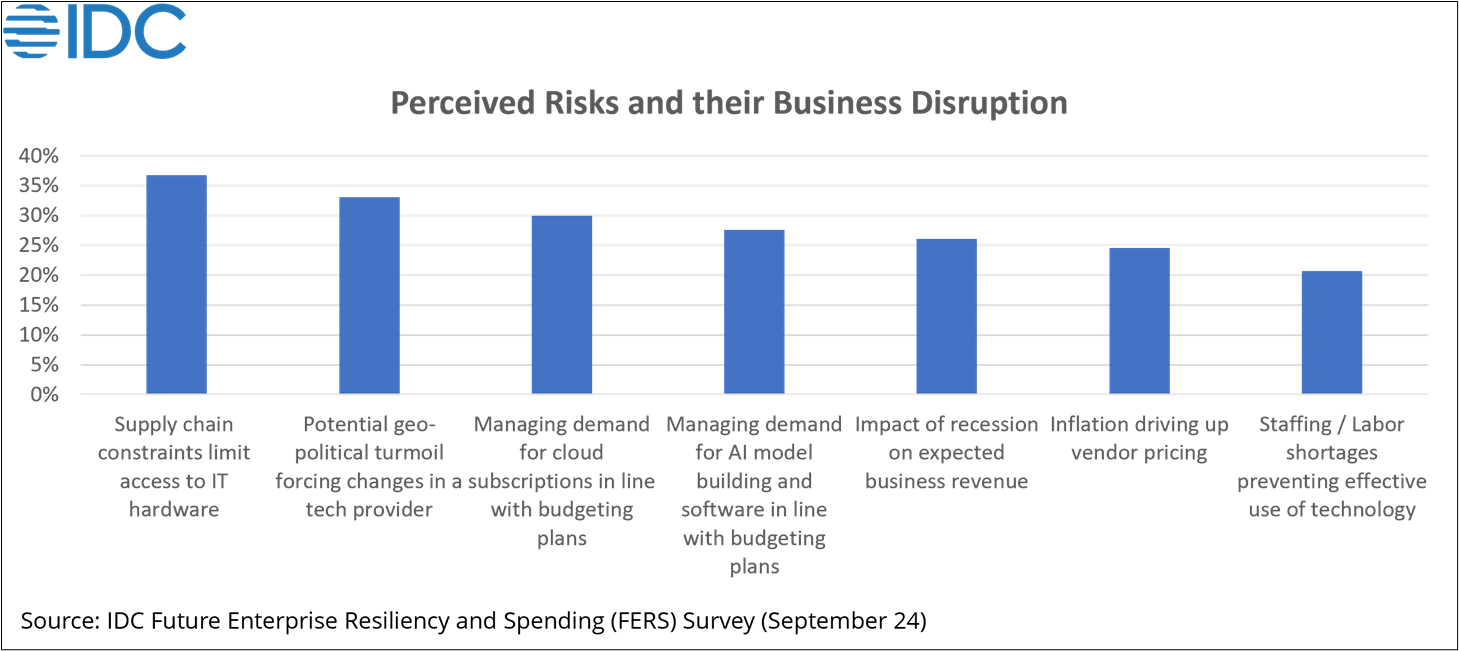
This has been a year of exceptional turbulence due to expectations for a recession, military actions in Europe and now the Middle East, and inflation remaining high. IDC found that 67% of respondents in October 2023 think there will be a recession in the coming year, and 37% of global respondents said their biggest concern was “inflation driving up vendor pricing beyond budget expectations”.

Yet, organizations remain committed to their CX programs.  IDC found that Customer Experience (CX) initiatives and projects are a priority being “most immune to budget reduction regardless of the economic environment” and “continued investment is a must in the next 12 months”. CX comes in second only behind Security, Risk & Compliance initiatives.

While it is interesting to see these projects remain high on the priority list, it is clear that a thorough review and refresh on what is needed for successful programs be undertaken as we roll into next year. 

“Voice of the Customer (VoC) and CX practitioners are clearly focused on metrics and outcomes of their programs.  They are being challenged by management to show Return on Investment for their programs as quickly as possible or risk a pull back in investments.”

Key areas for consideration in these programs are:

  • Maturity of program – VoC programs often start with structured surveys to solicit for customer feedback and then grow to include unstructured data and even inferred data. (see “Voice of the Customer” Programs: Where Are They Today? More Importantly, Where Are They Going?”) Depending on what stage of this maturity spectrum a program is on will dictate the investment in software and services to support it.  Rather than move from one type of customer feedback data to another, programs often are cumulative in the data they gather.
  • Staffing and Skillset – VoC programs are required to have skillsets to not only listen and gather customer feedback, but to analyze it, and integrate solutions to act on it through sales, marketing, support and customer success. They also need program managers, data scientists, IT support (including app and web development) and sponsorship in each functional department tied into the program. Practitioners should consider if they are prepared to provide these skillsets internally or find an appropriate partner that can offer these services.  In addition, this partnership can change over time as an organization decides to move to either outsource more of this work, or take it on internally.
  • Make sure to engage your customers – Customers today expect their brands to not only listen to them where they want to be (social media, product review sites, communities), but show them they are listening and engage them.  A recent WSJ article discussed how TikTok can be used to suggest ideas for new products or services, and if a brand is not quick to see the suggestion and follow up, a competitor could swoop in with a new product and quickly take share from the brand. Investments in CX and VoC programs should not only consider resources to engage the customers, but product development budgets should consider unexpected ideas that need to be addressed quickly.  Customers today are demanding great customer engagements and moving on to new brands if they feel they are not getting them. 
  • GenAI – The buzz around this new technology is getting significant attention in the CX space.  The opportunities to improve customer interactions via natural language interfaces and internal improvements such as feedback summarizations and insights has the potential for process and experience improvements. This can lead to potential hyper-personalization experiences where products can know their customers individually and dynamically update digital products and services to meet their real-time needs.  Being so new, the GenAI offerings on the market are still working out pricing options.  CX practitioners should consider budget items for GenAI as they move forward to ensure they can consider some form of implementation of them in 2024 and beyond.
  • Enterprise-wide programs – Customers today expect brands to understand and coordinate the different functional teams involved in customer engagements.  Marketing campaigns, sales efforts, and digital commerce and support all have to know what the other is doing to ensure customers do not receive disconnected emails, phone calls, etc. They also want to know that the calls or emails they do receive have taken account for their history (why receive an email to buy more of a new product if the customer has indicated they are not happy with the old one?)
  • Metrics and outcomes – Any program, CX or other, should have key metrics and outcome expectations followed to ensure they are having a positive effect on the organization.  Net Promoter Score (NPS – relational and transactional), Customer Satisfaction (CSAT), Overall Customer Satisfaction (OSAT), and Customer Effort Score (CES) are just a few of the most common metrics.  IDC is predicting that “By 2027, one-fourth of global brands will abandon CSAT as a measure of customer experience and adopt a Customer Effort Score correlated to outcomes as a key indicator of journey satisfaction and success” Reducing churn, improving annual recurring revenue, and improving customer lifetime value are business outcomes frequently used.  Tying metrics to investments in CX and VoC programs is key to ensuring they are performing for the organization.

While the list could go on, these are just a few of key areas to consider for updating your CX and VoC programs for next year.  The key action items to consider are to know where your customers want to be heard.  Be there, listen, and let them know you are listening.

Lou Reinemann - Research Director, Voice of the Customer and Experience Management - IDC

Lou Reinemann is a Research Director for Voice of the Customer and Customer Success, part of IDC's Customer Experience Research team. Mr. Reinemann's focus area includes strategies and technologies that improve awareness and understanding of customer's actions, expectations and sentiment for new products and within a customer journey. Lou has over thirty years of experience in Customer Support, Customer Service and Customer Success roles across nine companies, most recently with IBM and SmartBear Software. His teams have engaged with customers for 24/7 global technical support, new product on-boarding and training, customer success and renewals, and for managing product communities. His most recent work at SmartBear focused on researching and testing new technologies to engage with customers in-context and real time to improve their user experience and customer satisfaction.

The success of your content strategy hinges on aligning with the dynamic needs of your audience. As we step into 2024, it’s crucial to reassess and optimize your approach. Here are five overarching themes to make your B2B content more successful in the coming year:

1. Replace the Nonlinear Marketing Funnel

Bid farewell to the traditional marketing funnel. Marketers and sales teams today aren’t just talking with one buyer but with an entire buying cohort. Within an organization, over a dozen individuals may express distinct needs, driven by their respective tasks to be accomplished. Historically, sales and marketing adhered to a linear model—the funnel. However, the paradigm has shifted away from the progression of a lone individual through a linear journey. The funnel, once standard, lacks customer centricity and may explain the challenges faced by marketing and sales in nurturing and building relationships across the entire spectrum of the buying committee.

In 2024, it’s essential to move beyond the linear model. Based on extensive research, IDC’s new Adaptive Customer Experience (ACE) model is a circular and evolving framework and not linear at all, like its predecessor. This is because engagement with tech buyers is no longer linear.

B2B buyers have B2C experience expectations today.  They expect you, as a vendor, to understand and provide solutions for their challenges, jobs to done and business outcomes. ACE is a customer-centric framework to evolve how you go to market. 

Marketing is the conductor of orchestrated journey engagement, with data, automation and analytics to make this all work.

Laurie Buczek, Research VP, CMO Advisory Practices

And perhaps most importantly, to fully engage with a buyer, marketing and sales need to play on the same field. Put another way, no longer should the two functional groups be looked at as if they are running a relay race, where marketing passes a baton onto sales to finish the race. In fact, it’s not a race, it’s a customer experience journey.

2. Fast and Cost-Effective Digital Marketing Content Integration

In the race for B2B leads, content integration emerges as a critical strategy for effective lead generation. The quest for valuable B2B leads demands a streamlined approach to filling the content pipeline promptly and economically. One powerful tactic in achieving this goal is the incorporation of licensed content into your strategy. This approach is twofold in its advantages: it not only expedites content production but also brings in valuable perspectives from industry experts. By leveraging curated content, you can maintain a consistent and relevant flow of information to your target audience. This not only satisfies the thirst for timely insights but also proves to be a savvy financial move by minimizing production costs, allowing for a more efficient allocation of resources in the broader spectrum of B2B demand generation.

Content marketing services play a pivotal role in this endeavor. They not only facilitate the integration of licensed content but also offer expertise in optimizing its impact. The strategic use of these services ensures that curated content aligns seamlessly with the overarching B2B digital marketing strategy. In essence, the synergy between fast and cost-effective content integration, bolstered by licensed content and guided by content marketing services, becomes a key driver in propelling the efficiency and success of B2B demand generation efforts.

3. Craft a Balanced Thought Leadership Strategy

The role of thought leadership in shaping a compelling narrative and fostering trust cannot be overstated. A proactive thought leadership strategy stands as a cornerstone in the pursuit of generating demand. While it may not be the generator of B2B leads, it does serve as a vehicle to establish authority within the industry, elevating your brand awareness, positioning your business as a key player and trusted advisor. However, the landscape in 2024 demands a nuanced approach—it’s not just about the quantity of thought leadership pieces but the delicate balance achieved through strategic integration. Building a thought leadership strategy that strikes this equilibrium is essential for navigating the evolving dynamics of B2B demand generation successfully.

Strategic integration of thought leadership pieces is intertwined with the broader goal of aligning with the values and preferences of the target audience. This imperative underscores the necessity for content personalization, a pivotal aspect in crafting a distinctive B2B digital marketing strategy. Certain content marketing services specialize in the creation of bespoke pieces that delve into industry pain points while aligning intimately with your brand’s core values. These finely tuned and tailored creations resonate more profoundly with the audience, amplifying the potential for meaningful engagement and, consequently, driving successful B2B demand generation efforts.

Engaging research firms and leveraging their content marketing services becomes a strategic move to gain a topical edge. By delivering sought-after information crucial for decision-making, along with providing unique insights and high-quality research, you not only establish trust with your buyer but also elevate awareness, increase media exposure, and generate leads.

4. Strategic Decision Mapping and Audience Alignment

What can help you define your customer’s decision stage in their journey? Strategic investment in a lead generation program that yields measurable results is essential in a landscape where every dollar counts, emphasizing the efficient allocation crucial for successful B2B demand generation. Identify programs meticulously aligned with your target audience, recognizing the nuanced landscape of your market.

Understanding the customer’s decision stage within their journey is paramount for B2B demand generation. This involves the implementation of a targeted lead generation program rooted in a comprehensive database of buyer personas that align seamlessly with your overarching marketing strategy. By pinpointing the specific stage at which your audience is making decisions, you can tailor your efforts to provide timely and relevant information, optimizing the chances of conversion.

Audience alignment, as a complementary aspect, takes strategic decision-making a step further. It requires a nuanced comprehension of the target market, encompassing factors like demographics, preferences, and pain points. A successful alignment strategy involves crafting content and engagement tactics that resonate with the unique needs of the audience at different stages of their journey. This tailored approach not only boosts relevance but also fosters a deeper connection with the audience. In essence, strategic decision-making and audience alignment become symbiotic forces, driving the success of B2B demand generation efforts by ensuring that every interaction is purposeful and resonant with the evolving needs of the target audience.

5. Seamless Sales-Ready Handoff: Closing the Loop

The transition from marketing to sales marks a crucial juncture in the customer journey, and it’s at this point that many leads encounter challenges. A seamless handoff is essential to ensure the continuity of the conversation initiated online. The use of interactive tools in your marketing toolkit becomes a pivotal strategy in empowering sales teams to seamlessly pick up where online interactions left off. These tools go beyond mere engagement; they serve as facilitators of value-selling conversations by providing valuable insights and equipping sales teams with the necessary resources for meaningful and informed customer interactions.

To determine the right tools for your team, it’s essential to evaluate their compatibility with your objectives. We provide some insights in a recent blog, Evaluating Sales Tools: The Pros and Cons for Sales Enablement Leaders.

As we step into 2024, the landscape of B2B content marketing continues to evolve. By incorporating these five key strategies into your approach, you can adapt to the changing dynamics of the market, enhance lead generation efforts, and foster enduring customer relationships. Stay agile, stay informed, and let your content lead the way to B2B success in the years to come.

Learn more: