The internal combustion engine was one of the most disruptive technologies of the past 150 years. It had long-term ripple effects not only on how fast and conveniently people and goods move, but also on our shopping and leisure habits, urban planning, and individual health and well-being. Some of these impacts were arguably negative; such as time wasted in congestion, pollution, and traffic accidents. To address those externalities policymakers, government traffic and transportation departments, car OEMs, and mobility ecosystems are reinventing vehicles and business models to reduce those externalities and eventually deliver on the promise of convenient, affordable, accessible, safe, and environmentally sustainable mobility.

The transition to next-generation mobility will depend on a new generation of vehicles that are connected, autonomous, and electric on shared and public mobility, and on rethinking urban planning to make it convenient and safe for people to switch to less impactful ways of moving such as cycling and walking. These new mobility models can deliver the expected benefits only if the way roads are designed, built, operated, maintained, used, and upgraded is transformed to make them possible.

Growing Investments in Smart and Sustainable Roads

Investments in smart and sustainable roads are flourishing in Europe and beyond. Examples include:

  • The UK National Highway and Connected Places Catapult’s £1.7 million joint financing to fund innovative ideas and proofs of concept (POCs) for net-zero carbon road maintenance and construction materials and processes
  • The city of Gothenburg is working with Volvo and other partners to test dynamic low-emission zones
  • Italy’s highway and road authority Anas’ €1 billion plan to equip 3,000km of interurban roads with intelligent road systems and e-charging infrastructure
  • Cities around the globe nudging logistics service providers to use smart pick-up and drop-off zones for delivery trucks, such as Barcelona which plans to impose a yearly tax on transport companies fulfilling home deliveries for using public spaces, to eventually nudge consumers to venture out to collect their own parcels (companies with a turnover of more than €1 million would have to pay an annual income-based tax of 1.25%)

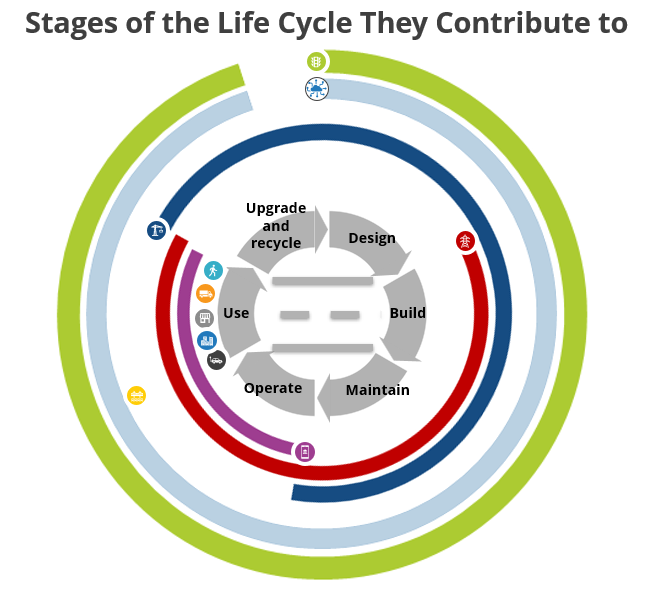
Smart, sustainable roads are not to be intended merely as the instrumentation of roads with sensors and actuators to enable intelligent traffic management use cases, but it should be considered from a wider perspective. We define smart, sustainable roads as the intelligent use of technology across road design, construction, operation, maintenance, usage, and upgrade and recycle of materials to:

  • Reduce cost of ownership and increase environmental sustainability across the design, construction, operation, and maintenance life cycle of physical road elements
  • Enhance convenience, affordability, accessibility, safety, and environmental sustainability for the movement of people and goods
  • Increase prosperity by enabling businesses to profit from new and existing economic activities related to designing, building, operating, maintaining, using, and decommissioning roads.

Next-Generation Use Cases Emerging at the Intersection of Multiple Industries

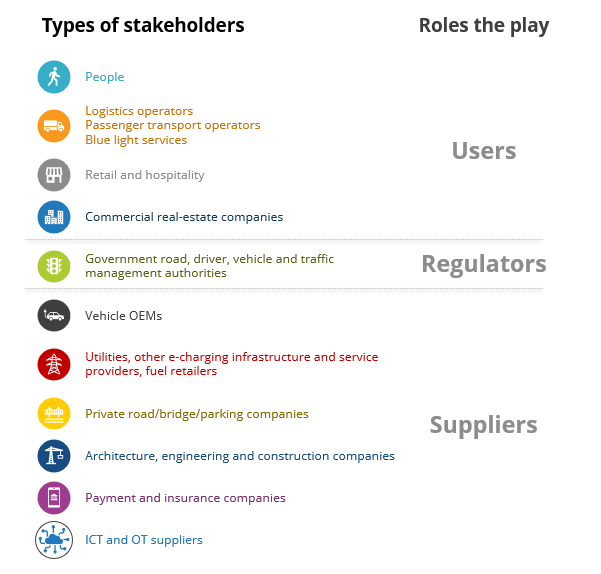
Smart roads are systems of systems. The value of technology innovation, such as IoT, AI, satellite imaging, lidar and electric mobility, is realized at the intersection of a network of stakeholders, the outcomes they aim to achieve, and the capabilities they need to implement to deliver those outcomes.

The Smart and Sustainable Roads Stakeholder Ecosystem

For example, to realize the benefits of:

  • Electric mobility. Utilities, engineering and construction contractors, and road authorities need to work together to establish an accessible and affordable charging infrastructure; vehicle OEMs need to expand the number and battery range of electric and hybrid vehicles that they offer; payment providers must enable seamless settlement across different electric charging service providers; technology suppliers need to work with OEMs to embed connected vehicle capabilities for vehicle-driver interaction (e.g., trip planning, charging locations, pricing options) and vehicle-grid interaction (e.g., for smart charging and V2G applications).
  • Low-emission or low-speed zones. Road authorities must work with technology suppliers to embed sensors in the infrastructure to count and monitor the number and type of vehicles, and they must share data with traffic departments to ensure enforcement of low-emission and low-speed regulations. Vehicle OEMs must embed connected and autonomous driving capabilities in their cars and trucks to make it easier for drivers to comply with regulations.
  • Multimodal mobility as a service. Public transit operators must work with micromobility and shared mobility operators to enable integrated journey planning and payments, while road and traffic authorities must set up incentives, such as dynamic road pricing, to nudge people to explore options, beyond driving their own cars, while insurance providers need to offer plans that cover multimodal trips, rather than vehicle ownership.

To accelerate the convergence towards smart and sustainable roads ecosystem:

  • Governments should evolve regulations and standards and monitor the impact of safety, accessibility, environmental sustainability and road service pricing policies.
  • Transport operators, utilities and OEMs should connect their products and services to road infrastructure, such as traffic systems and e-charging systems to expand service offerings.
  • Financial services should invest in smart road payment and insurance offerings.
  • Retailers should scale on-the-move targeted advertising and shopping.
  • AEC companies should invest in digital twin to increase the effectiveness and efficiency of designing, building, maintaining, and upgrading smart roads.


If you want to know more, please reach out to Massimiliano Claps


Massimiliano Claps - Research Director - IDC

Massimiliano (Max) Claps is the research director for the Worldwide National Government Platforms and Technologies research in IDC's Government Insights practice. In this role, Max provides research and advisory services to technology suppliers and national civilian government senior leaders in the US and globally. Specific areas of research include improving government digital experiences, data and data sharing, AI and automation, cloud-enabled system modernization, the future of government work, and data protection and digital sovereignty to drive social, economic, and environmental outcomes for agencies and the public.

Did you know that Sustainability is the top business risk for CEOs in Europe, even above cybersecurity? (IDC EMEA, CEO Survey, January 2023, n=108). This is the first time sustainability has been at the top of the board’s agenda, and it is likely to stay for some time. But why is it a risk and not an opportunity? Why saving the planet is seen as a threat to business?

For many, climate change and the new sustainability regulations are a disruption to their operations. After all, today’s economy was built on the premise that Nature had given us a cheque in blank, with a limitless use of resources. How wrong it was.

Therefore, having Mother Nature behaving in the most unpredictable ways (e.g., heatwaves, floods, droughts) and government policies shaping business operations (e.g., taxes, quotas, disclosures) can be painful.  

These are some examples: if you’re a semiconductor company with factories in South Asia, severe droughts can be material to your manufacturing processes as governments can prioritize water for local people. Or, if you’re a mobile phone manufacturer, the use of plastic packaging can be material to your business because of taxes or a complete ban by governments.

Sustainability is a moral, regulatory, and ultimately business mandate. There’s no opt-out: stakeholders are watching closely, e.g., customers, investors, business partners, regulators. As the executive of one of the world’s largest insurers shared in an interview recently “We don’t work anymore with customers that are not improving their sustainability. They are uninsurable for us“.    

Therefore, if sustainability is indeed a risk, can companies turn it into a business opportunity? The answer is “yes”, according to most European companies (IDC EMEA, Future Enterprise Resilience, May 2023, n = 220).


Sustainability: Evolving from Risk to Opportunity

Sustainability can be a business opportunity if there’s a clear vision and commitment from leadership. Only then, “doing good” is embedded in every facet of work, across all business units, from procurement and production to logistics and customer service.

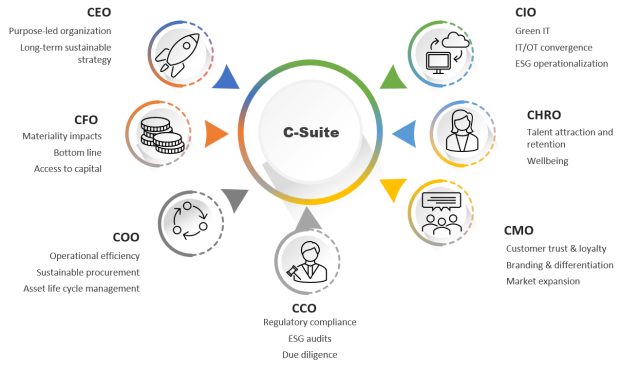
To make this happen, sustainability targets need to be fully aligned with the agenda and goals of each executive in the C-Suite. This is an illustrative example:

Benefits of Sustainability for Business

By addressing the agenda of the C-Suite, we can identify 7 reasons why sustainability is good for business:

  1. Chief Operations Officer (COO): Sustainability can drive operational efficiencies (IDC Global Sustainability Readiness Index, IDC, August 2023) across all business functions (e.g., supply chain, logistics, facilities). A sustainable firm is a fit and lean organization where “less is more”, e.g., frugality in resourcing water and energy.
  2. Chief Financial Officer (CFO): Investing in sustainable practices might not always deliver short term returns but can pay off in the form of resiliency and business longevity. CFOs have realized that the cost of “not acting” is greater than the cost of acting – for example, in their ability to access capital or insurance.
  3. Chief Marketing Officer (CMO): Sustainability is addressing the needs of a growing customer base. Buyers are looking for more transparency, honesty, and trust from suppliers. As such, brands with strong green credentials, integrity and social responsibility bring competitive differentiation.
  4. Chief Human Resources Officer (CHRO): Sustainability is a magnet in an organization, attracting and retaining talent. People are looking for purpose in their job and their companies (IDC EMEA Employee Future of Work Survey, March 2023). When work has direction is powerful and energizing: employees can work hard for goals they understand and feel connected to.
  5. Chief Information Officer (CIO): Sustainability, in an aim to reduce carbon emissions, can accelerate cloud migration, automation and optimization of IT processes (IDC Global Sustainability Readiness Index, IDC, August 2023). Moreover, based on the principle of frugality, IT assets can be rationalized based on usage and their lifecycle expanded as appropriate.
  6. Chief Compliance Officer (CCO): Sustainability can outshine a company against competitors in matters of corporate reputation and governance. The CCO can put in place strong stakeholder protections and build market trust.   
  7. Chief Executive Officer (CEO): Sustainability can be a bold strategy for long-term business value. Leading with purpose can be inspiring, ignite passion amongst employees and create a culture of high-performance. B-Corps (e.g., Allbirds, Patagonia, Teapigs and Aesop) are testimony of it.  


Sustainability can be a force for good business and meet the C-Suite goals, but it needs execution for business impact (Global Sustainability Readiness Index, IDC, August 2023): it has to be internalized across the enterprise and become the “modus operandi” of getting work done, and for everyone, from the top to the bottom of the organization. But this is easier said than done. IDC research shows this is a roadblock for many enterprises: how to move from strategy to execution? Here is where the role of the Chief Sustainability Officer (CSO) comes into the picture.

Successful CSOs are executives with strong business acumen and digital skills, on the top of their sustainability expertise. Their role is not limited to appeasing the needs of different stakeholders, chiefly regulators and investors, but also a catalyst for business value creation through sustainability. Their reporting line should be direct to their CEO to give them stature in their organization.  

CSOs are tech-savvy because technology is fundamentally the enabler to turn sustainability strategy into action and derive business value. For example, IoT and automation can optimize resource consumption in buildings and bring costs down; blockchain and AI can support resiliency in the supply chain.

In summary, sustainability can be an opportunity for business value when it meets the C-Suite goals. It needs a strategy that everyone in the organization understands and is passionate about – nothing is more fulfilling than knowing at the end of the working day you did something good for the planet and society. But, remember, it needs a CSO-led action plan and great technology to turn it into business value.


If you want to know more, please reach out to Angela Salmeron


In today’s rapidly evolving digital landscape, where technological advancements are reshaping industries at an unprecedented pace, the cloud has emerged as a beacon of innovation and efficiency. European businesses and governments have keenly embraced cloud technologies, harnessing their transformative potential to optimize operations, drive collaboration, and stay ahead of a dynamic digital market.

At the forefront of this cloud revolution is the concept of Industry Clouds – specialized platforms, applications, and services that offer industry-specific capabilities and operational prowess, revolutionizing how businesses across diverse sectors operate and excel.

A Shift in Cloud Dynamics: The Rise of Industry Clouds in Europe

The maturity of the cloud market in Europe has been steadily progressing, and forward-thinking organizations are strategically leveraging the unique advantages offered by different cloud platforms, applications, and services. The region’s robust infrastructure, bolstered by data protection regulations like the General Data Protection Regulation (GDPR), combined with the presence of established local cloud service providers, has expedited the adoption of cloud solutions across various industries.

Innovation, collaboration, and operational efficiency have become the driving forces behind European businesses’ embrace of cloud technology. Notably, the emergence of multi-cloud and hybrid cloud strategies has allowed organizations to tailor their cloud environments to their specific industry needs, adhere to local regulations, and fuel complex digital businesses that thrive on flexible infrastructure.

This holistic approach goes beyond mere migration, and moving out of legacy environments, looking for cost-efficiency, but marks a pivotal shift toward industry-specific solutions.

Empowering the Leadership: CTOs and CIOs in the Cloud Era

As cloud maturity advances, the roles of Chief Technology Officers (CTOs) and Chief Information Officers (CIOs) are undergoing a transformation. These decision-makers are no longer concerned solely with operational efficiency and scalability; they are now focused on strategic cloud implementation that drives tangible business outcomes.

The modern CTO and CIO are in search of solutions that not only streamline operations but also cater to the unique demands of their industries, thereby enhancing value for money and competitive advantage.

This shift in focus has paved the way for Industry Clouds to take center stage. As cloud providers, enterprise software vendors, and industry organizations fine-tune their offerings to align with specific sectors, CTOs and CIOs are empowered to harness cloud technologies that are tailor-made for their industries, sub-sectors and even use cases.

Deciphering Industry Clouds: Defining the Landscape

Industry Clouds, as distinguished from their conventional counterparts, are cloud-based platforms, applications, or services designed to offer industry-specific insights, technology, and operational capabilities. The hallmark of Industry Clouds lies in their vertical integration, modularity, collaboration features, and the potential to foster network effects. These specialized clouds encompass a range of services, including SaaS, IaaS, PaaS, DaaS, and various business operations-as-a-service.

What sets Industry Clouds apart are their unique characteristics. These clouds provide a suite of tools that agnostic cloud platforms and enterprise SaaS solutions simply cannot replicate. The focal technology capabilities encompass:

  1. Industry-specific data models
  2. Industry-tailored business process capabilities
  3. Pre-built blueprints and configuration templates
  4. Governance capabilities, including compliance and regulatory alignment
  5. Cross-industry collaboration options for seamless data sharing
  6. Specialized AI and analytics capabilities, including Gen AI
  7. Marketplace functionalities for optimized sourcing
  8. A PaaS platform for customized extensions and add-ons

These capabilities underpin the value proposition of Industry Clouds, allowing organizations to tap into solutions that are purpose-built for their sectors.

Navigating the Landscape: European Industry Clouds Research

The European Industry Clouds Research is a comprehensive exploration of industry-specific solutions. This research delves into the offerings of Cloud Service Providers (CSPs), competitive landscapes, adoption best practices across industries, and other critical aspects of these specialized platforms, applications, and services.

While the focus is primarily on CSP offerings, it also encompasses insights from industry players such as Siemens and Dassault, albeit in a more limited scope. Notably, the research excludes non-business solutions ecosystems, like government shared/community cloud platforms or collective standard-promoting platforms.

The research also extends into the realm of Cross-Industry approach, comparing and contrasting adoption rates across different sectors, evaluating offerings per industry, and dissecting the strategies of Cloud Service Providers, consulting organizations, and enterprise software vendors. This comprehensive exploration ensures a holistic understanding of Industry Clouds’ impact on various industries.

Industry Clouds vs. Industry Ecosystems: Navigating Complexity

Industry Clouds and Industry Ecosystems, while interconnected, are distinct concepts that play unique roles in driving innovation and business efficiency. An Industry Cloud Platform is a specialized, industry-tailored digital service offering data, blueprints, and industry knowledge to optimize operations within a specific sector.

In contrast, Industry Ecosystems encompass a broader network of businesses, partners, and stakeholders, promoting collaboration, innovation, and value creation on a larger scale. While Industry Clouds offer targeted solutions, Industry Ecosystems foster a collaborative environment that transcends organizational boundaries, nurturing multi-way value generation flows.

Embracing the Future: Leveraging Industry Clouds for European Business Acceleration and Resiliency

As European businesses continue to navigate the ever-changing digital landscape, Industry Clouds have emerged as a powerful tool to drive operational excellence, innovation, and competitive advantage. By tailoring cloud solutions to meet industry-specific needs, organizations are harnessing the full potential of cloud technology to create a transformative impact.

As we move forward, it is imperative for businesses to recognize and leverage the unparalleled benefits of Industry Clouds and Industry Ecosystems, ensuring sustainable growth and staying at the forefront of digital evolution.

To know more, please reach out to Anielle Guedes.

September through December are busy months for IDC analysts. Industry and tech vendor conferences and events are happening every week. Only over the next couple of weeks, I’ll be traveling first to Rome and then to Portugal and, every time I travel, I try to think of my carbon footprint.

Going to Rome is a no brainer, I’ll drive my hybrid car to the train station, then ride a commuter train to Milan, then a high-speed train to Rome, and eventually the subway to the hotel; I’ll ride electric end-to-end. Going to Lisbon, there’s no choice, I need to fly, unless I fancy spending two days on a bus. So, my carbon footprint will be much higher. True, Lisbon is much farther away than Rome, but still the average carbon emissions of a flight are much higher than those of a train.

Air travel executives know that policymakers, investors and passengers are expecting them to be more ambitious in terms of their environmental sustainability targets and are taking actions.


Download eBook: Sustainability in EMEA: Opportunities for Tech Vendors, Challenges for Tech Buyers


The Three Horizons of Sustainable Air Travel

In the immediate aftermath of COVID, somebody thought that doing more work, learning, getting entertained remotely would replace a lot of air travel, hence reduce emissions. But air travel came back with a vengeance.

Therefore, air travel executives need to rely on other levers to increase sustainability. One of the most critical is technology innovation. Technology innovation will play a strategic role to make air travel more sustainable through three waves.

  • In the long-term, electric and hybrid electric propulsion aircraft will drastically reduce both carbon emission and noise pollution. But although air taxis are already technically possible, long-haul electric flight is at the research stage.
  • In the medium-term, alternative fuels will reduce, but not eliminate emissions, and by 2030, they will not represent only about 10% of all consumption, according to the International Energy Agency.

Information and communication technologies (ICT) will help – for instance, AI is being applied to accelerate the discovery of alternative fuels, digital twins are used to design and develop electric engines for aircrafts – but they won’t be the critical enablers. These medium-to-long term changes will be dependent on biochemical, mechanical, and electrical engineering developments.

  • In the short-term, it will be a whole different story. ICT will be strategic to make air travel more sustainable. From designing and operating more fuel-efficient routes, by integrating traffic control systems, such as the Single European Sky, which is expected to cut carbon emissions by around 10% per year, to applying AI and machine learning to reduce taxi time – American airlines intelligent gating program is providing the capability to save more than a minute of taxi time per flight. From implementing more sophisticated data collection and analytics to report scope one, two and three emissions more accurately and then offset them, to reducing airports’ energy consumption. From sharing data among airlines, global distribution systems, online travel agencies and brick-and-more travel agencies to nudge passengers to buy environmental sustainability products and packages, to partnering with railways to replace short-haul flights or better connect airports.


Register for the webcast: Sustainability in EMEA: The Challenge of Moving from Ambition to Action


I consider myself a quite environmentally conscious person, but then when I look back at my twenty plus years career in the ICT industry, I took so many flights that make my environmental conscience feel guilty. I hope that I’ll be able to travel on an electric powered airplane, someday.

In the meantime, there are plenty of opportunities to embrace ICT innovations to make air travel more sustainable. To learn more about airlines’ sustainability and other strategic and operational innovations enabled technology, take a look at IDC’s global research on the industry.

Massimiliano Claps - Research Director - IDC

Massimiliano (Max) Claps is the research director for the Worldwide National Government Platforms and Technologies research in IDC's Government Insights practice. In this role, Max provides research and advisory services to technology suppliers and national civilian government senior leaders in the US and globally. Specific areas of research include improving government digital experiences, data and data sharing, AI and automation, cloud-enabled system modernization, the future of government work, and data protection and digital sovereignty to drive social, economic, and environmental outcomes for agencies and the public.

Adoption of Generative AI by European organizations is growing and will continue to grow in 2023 and beyond. According to IDC’s 2023 Future Enterprise Resiliency and Spending Survey, Wave 5, 20% of European organizations have already made significant investments in Generative AI, while an additional 58% say they are closely looking at the business opportunities the technology has to offer.

Our data from the above survey highlights three areas in which automation and especially Generative AI is already making an impact on European businesses and their workforce:

  • GenAI for Skill Shortage Offsetting: As of June 2023, 78% of European companies report that they have deployed or are at least piloting automation technologies to offset labor shortages.
  • GenAI as Labor Replacement: 28% of European leaders have already discussed replacing employee positions with automation; 78% plan to replace up to 20% of their workforce with “digital colleagues”.
  • GenAI for Employee Augmentation: For those using automation to augment workers (not replace them), generative AI assistants such as ChatGPT, Bard and Copilot paired with data analytics and Project Management tools will be key to improving employee productivity.

Implementing AI driven technology solutions drives operational efficiencies only if they involve the workforce. Employees’ fear of losing jobs to automation is justified because the level of trust between workers and employers on job status has been eroded by companies’ readiness to lay off staff. Therefore, the use of Generative AI within the organization requires education and communication across the organization on what it is, how it will be used, and what its benefits are.

Building trust within your workforce starts with honesty. In most cases, automation will result in job losses, be clear about that. However – organizations that make the most of GenAI limit the number of employees they let go and instead refocus the affected employees into more useful and strategic work.

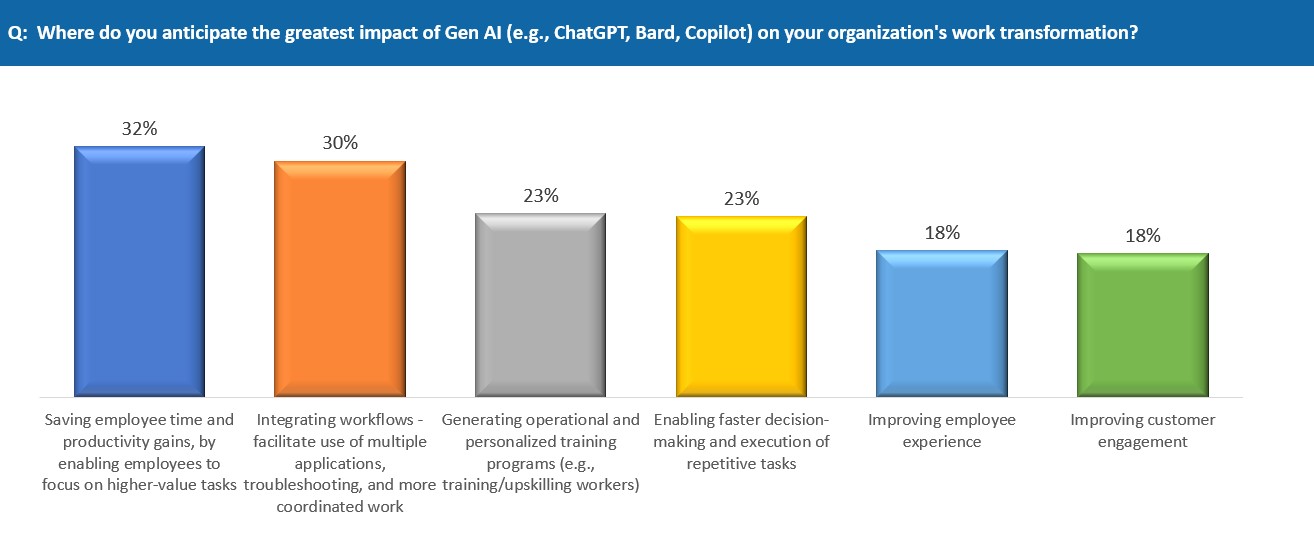
Many become users of Gen AI who understand the intricacies of newly automated tasks. They can not only capture ways to make automated work more effective but also implement insights to make better and faster decisions and choices. In summary: the implementation of Gen AI will drive work transformation at an exponential pace.

Register for the Webcast: Five Ways to Unlock a Purposeful, Automated Future of Work in EMEA


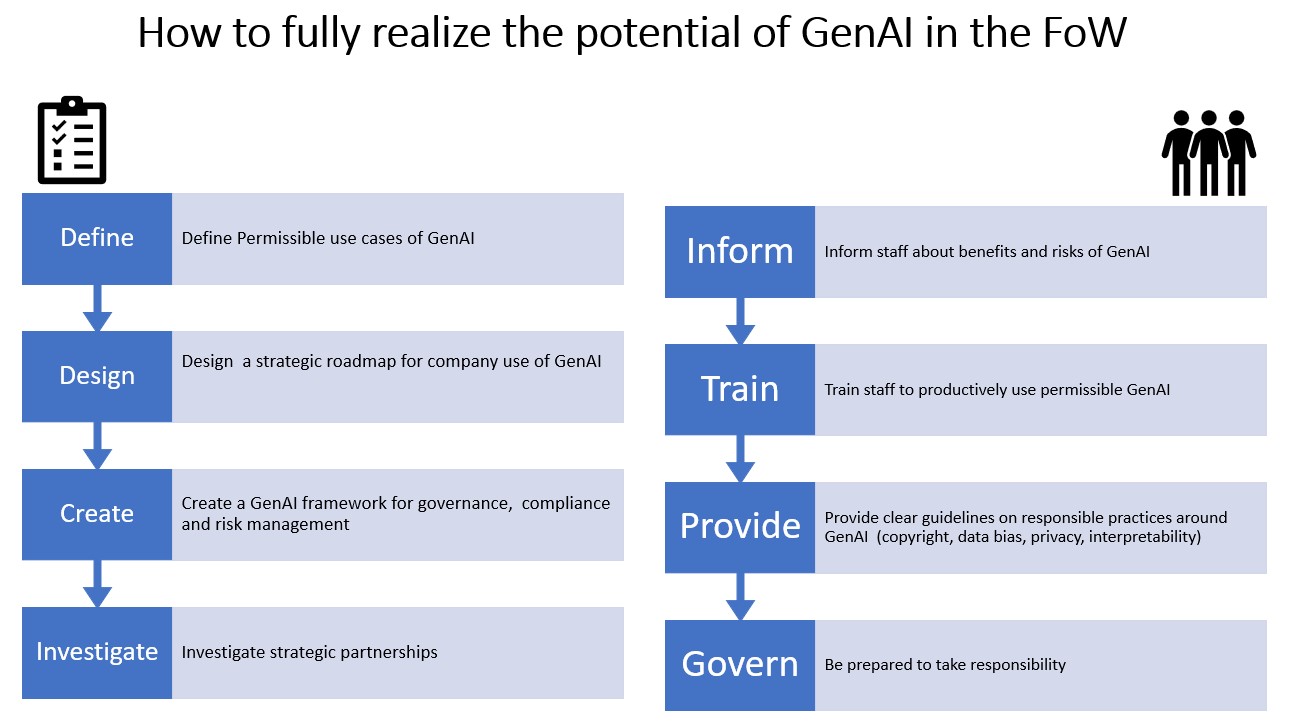
To successfully manage the cultural impact GenAI will have on your workforce, the following concerns need to be addressed with diligence and ethical integrity:

  1. GenAI Governance. The greater the depth and breadth of the AI solution, the more important it is to have a governance structure. Test that uses of Gen AI are working correctly, output is dependable and permissible, and the strategy/roadmap is resilient, transparent, and secure. The better the governance model the more employees can trust using their company’s automation tools.
  2. Change in Employee Roles. An organization’s work model will be affected after the implementation of specific Gen AI use cases. Where possible, employees doing repetitive work should now be shifted to doing more meaningful work. This will mean a reduction in staff, but also an increased need for trained staff supporting new business processes through Gen AI
  3. Training and Reskilling. The technology expertise required to implement AI tools must be considered in the earliest planning stages. The staff replaced by automation should re-focus on value-added work. This often requires internal upskilling or reskilling to perform more strategic tasks within the organization.

Workforce automation has grown in importance for organizations seeking greater flexibility while providing more meaningful work for employees, reducing costs, providing predictable processes for low value-add tasks, and increasing ROI. Generative AI especially is by no means a magic tool, but it can make a difference when implemented properly.

Taking the time to test out assumptions, pilot relevant use cases, and developing a mid to ling term plan is worth the time. The outcome is a more efficient, effective workplace and engaged workforce.

To fully realize the potential of GenAI, companies need to invest in frameworks which guide talent development and innovative business models that will create value for their customers, as well as their workforce.

Meike Escherich - Associate Research Director, European Future of Work - IDC

Meike Escherich is an associate research director with IDC's European Future of Work practice, based in the UK. In this role, she provides coverage of key technology trends across the Future of Work, specializing in how to enable and foster teamwork in a flexible work environment. Her research looks at how technologies influence workers' skills and behaviors, organizational culture, worker experience and how the workspace itself is enabling the future enterprise.

Mainframes are a staple of the European enterprise. They’re reliable, powerful, have been around for decades, and many organizations continue to use them for their most crucial business functions. Mainframe apps are common among information-intensive industries areas such as banking, government, healthcare, insurance, or utilities.

With the rise of new technologies like the cloud and low-cost servers, many predicted the mainframe’s demise. But guess what? It’s still alive and kicking, and here’s why.

Unmatched Performance: Mainframes excel at high-speed transaction processing. They handle enormous volumes of transactions swiftly and cost-effectively. This is why banks rely on them for core operations. Transactions like credit card processing and ATM withdrawals happen seamlessly, thanks to mainframes. They’re also the power behind those overnight batch runs for processing customer statements and reports.

Data Handling Prowess: Mainframes have the muscle to handle multiple terabytes of data effortlessly – the capability is vital in sectors like government, healthcare, or insurance.

Ability to Adopt: YES! Mainframes have adapted to stay relevant. Once bound to COBOL and proprietary OS, they now embrace modern programming languages like Python, Java, JavaScript, and C++. This multilingual flexibility allows them to use sophisticated tools from the x86 server world.

AI and Machine Learning: With support for languages like Scala, Python, TensorFlow, and Apache SparkML, they make interesting hosts for machine learning. It has become possible to integrate valuable mainframe data with analytics platforms, eliminating the need for data off-loading.

Security Supremacy: Mainframes rule when it comes to security. Their processing power allows for high end-to-end encryption without performance sacrifices.

So, if they are perfect, why aren’t they? Because they can also become very expensive to maintain, and often just can’t keep up with the demands of the modern world.

That’s why more and more European organizations are modernizing their mainframe applications. Skillfully done, modernization offers all the benefits of a mainframe without the drawbacks. It can help you with:

Saving cost: Maintaining mainframes isn’t cheap. There are hardware, software, and skilled personnel costs. Modernization might seem like a costly adventure, but it actually leads to significant savings in the long run.

Improving scalability and agility: Mainframes aren’t inherently scalable, which is a problem in today’s ever-changing business landscape. Migrating to new platforms allows for easier scaling and adaptation to shifting workloads.

Enhancing integration: Mainframes often use legacy technologies that make integration with modern systems and cloud services a headache. Modernization lets you embrace agile development methodologies, microservices, and containerization, making it easier to adapt and release new features.

Attracting talent: As older IT professionals retire; mainframe expertise is becoming scarcer. Modern technologies attract a larger talent pool, making it easier to find skilled professionals for modernized systems. And it is easier to maintain necessary apps.

Improving UX: Users expect web-based interfaces, mobile compatibility, and responsive design.

Mainframes struggle with this, but modernization can provide a competitive edge by improving the user experience. And modernization doesn’t have to be painful. Here are a few tips to make your mainframe modernization journey if not fun, then surely more painless:

  • Start small: Don’t try to modernize everything at once. Start with a few key elements and then gradually work your way to the rest.
  • Get help from a trusted partner: There are several companies that specialize in mainframe modernization. They can help you assess your needs, develop a plan, and execute the migration.
  • Do your research: There are a lot of different mainframe modernization options available. Do your research and choose the one that’s right for you, but be creative, don’t be afraid to think outside the box and come up with your own approach.
  • Set realistic expectations: Modernization is a complex process. Don’t expect it to happen overnight.
  • Be patient: There will be challenges along the way. Be patient and don’t give up.

Will there be challenges? There will be. Modernization can be a costly undertaking, but it’s important to remember that the cost of not modernizing can be even higher. Modernization is a complex process that requires careful planning and execution. There is always some risk involved in any major IT project. Modernization is no exception. And surely, there is a shortage of skilled professionals with the knowledge and experience to modernize mainframe applications.

Mainframe applications are here to stay, but modernization is essential for staying competitive in today’s digital era. Whether you choose to recompile with emulators, migrate gradually, focus on component-level changes, or opt for lifting and shifting, the key is to adapt while preserving what makes mainframes valuable.


To see how European organizations approach mainframe apps modernizations, please read:

Mainframe and Cloud 1/3: What Do European Organizations Plan to Do with Mainframe Applications in the Context of Cloud?

Mainframe and Cloud 2/3: What Strategies Are European Organizations Employing to Migrate Mainframe Applications to the Cloud?

Mainframe and Cloud 3/3: Why Do Some European Companies Have No Plans to Migrate Their Mainframe Applications to the Cloud?


To see what it means for service providers, please read:

Turning Challenges into Success – Mainframe App Modernization Offers Opportunities for IT Services Providers

Ewa Zborowska - Research Director, AI, Europe - IDC

Ewa Zborowska is an experienced technology professional with 25 years of expertise in the European IT industry. Since 2003, she has been a member of the IDC team, based in Warsaw, researching IT services markets. In 2018, she joined the European team with a specific emphasis on cloud and AI. Ewa is currently the lead analyst for IDC’s European Artificial Intelligence Innovations and Strategies CIS.

In March 2022, IDC asked 885 European employees that had confessed to be looking for alternative employment about their motivation for doing so. The top reason was, unsurprisingly, better pay. What was more interesting was that “better working environment (i.e., a better employee experience)” was almost as high among the reasons for job change. It showed that today, work is less about paying the bills and advancing a career. It is much about personal development and fulfillment, as well as being a social and collaborative experience.

One year later, in March 2023, similar questions to 790 employees that were looking for a new job. The proportion of employees citing “better work environment / better corporate culture” was 48%, up from 42% the year before, and just 1% point behind “better pay”. So, not only are the ‘soft’ values important to employees, but they are becoming more and more important. Inflation could also play a role in this detachment from the “hard work” paradigm (i.e. hard as working hard to reach higher levels in the company / higher level of salary). The price increases undermined salaries and dream of the salary-based buying power that we saw previously.

Is it become the strenuous, ‘blue collar’ jobs are disappearing while ‘white collar’, knowledge worker jobs are taking over? The data does not support this hypothesis. All workers, regardless of whether they are desk workers or store/factory/field workers have “better pay” as the #1 motivation to look for a new job. Also, all workers have “better work environment / better corporate culture” as a key motivation for looking for a new job. Knowledge or desk workers are relatively interested in a better corporate culture, while store/factory/field workers are relatively interested in better teams / change of colleagues. Instead, it looks like all work types are becoming more knowledge intensive and bigger part of the individual identify, which prompts all employees to place higher value on work environment, culture, leadership, etc., as opposed to pay.

Dissecting “Employee Experience” to Understand Employee Work Motivation

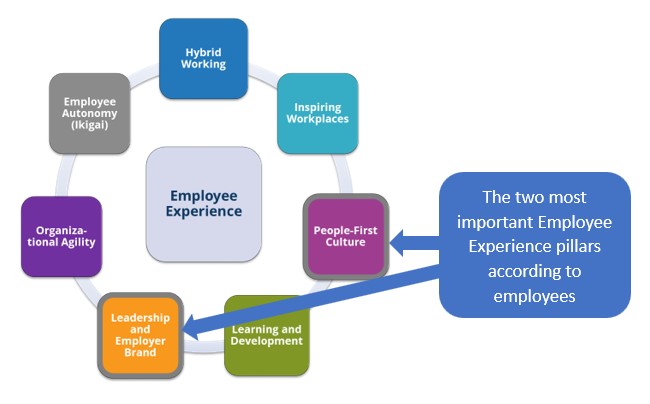
In the March 2022 European employee survey, we also set out to understand which aspects of “employee experience” were more important to employees. We defined seven fundamental aspects of employee experience and asked the employees to rate these in terms of importance. We discovered that relatively ‘soft’ aspects of work, namely corporate culture and leadership & employer brand, were the most important factors of the seven, and more important for employees than we previously assumed.In the March 2023 European employee survey, we wanted to deep dive into the work culture and leadership aspects of the employee experience. In other words, we wanted to find out what was behind the emphasis on these topics among European employees. Again, we asked employees to rate the importance of a number of subtopics underneath work culture and leadership.

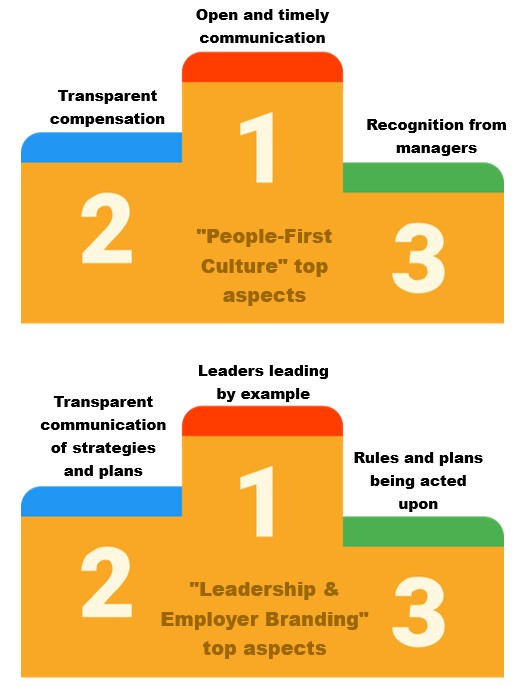
The result showed a remarkable drive amongst the employees for purpose in their work, for a sense of meaningful contribution, for personal development and for fairness. This applied to all types of workers, from desk workers over field workers to staff in stores/warehouses/factories. This drive for purpose implies a number of employee requirements around open communication, leadership integrity, fairness in recognition and compensation, etc. And these requirements are indeed reflected in the top aspects of the two pillars under investigation, work culture and leadership, respectively, as shown in the figures below.

General Implications for Organizations: New Leadership Styles Are Called For

Gone are the days of secluded top managers running organizations in separation from the myriad of employees carrying out instructions and work. Most management experts might comment that this ‘new’ style of open, visionary, and inclusive leadership have been practices for decades already. However, the results of both the 2022 and 2023 surveys suggest that most European organizations still have far to go. The survey data showed that the two most important employee experience pillars, “People-First Culture” and “Leadership and Employer Branding”, were also the two pillars with the largest gap between importance and employee’s rating of their current employer. In other words, the two pillars of the highest level of disappointment with the current employer.

The survey data also showed that for the detailed aspects of these two employee experience pillars, the most important aspects were also the aspects with the largest improvement potential. “Open and timely communication” sounds easy but is often very difficult to carry out successfully in practice. Among the general implications for organizations are:

  • Leadership development, especially in the area of soft skills, is critical.
  • Executive search must place higher emphasis on aspects such as empathy, integrity, and communication skills.
  • Enhancing work culture and leadership communication are new strategic areas where HR can make a difference for organizations.

Implications for HCM Software Vendors: New Solution Types Will See High Demand

Software solutions also have a role to play in remediation of the current culture and leadership shortcomings. In many cases, new HCM solutions will be needed to improve processes related to communication, recognition, compensation, and recruiting. We see particular opportunities in the areas below:

  • Compensation management
  • Management development training
  • Pay gap and Environmental, Social & Governance (ESG) analytics
  • Employee engagement & rewards
  • Employee performance management
  • Recruiting solutions & applicant tracking solutions


Please see the following IDC studies (behind paywall) for more information:

Bo Lykkegaard - Associate VP for Software Research Europe - IDC

Bo Lykkegaard is associate vice president for the enterprise-software-related expertise centers in Europe. His team focuses on the $172 billion European software market, specifically on business applications, customer experience, business analytics, and artificial intelligence. Specific research areas include market analysis, competitive analysis, end-user case studies and surveys, thought leadership, and custom market models.

2023 is the year of efficiency and IT optimization.

Cloud computing continues to play a central role for European enterprise IT, so are IT costs. Consequently, avoiding or reducing cloud resource waste is a top C-Suites’ priority.

FinOps is fast becoming a critical part of IT organizations’ strategy for its systematic approach to managing costs and optimizing cloud resources. It provides insights into spending, usage trends, and preferences as well as helps in forecast and change management.

Why FinOps Is Important in Europe

In today’s fast-paced world, inflation, skills gap, supply chain disruptions, and political tensions are reshaping the tech landscape and have significantly impacted IT spend in Europe. In fact, European businesses are more likely to pay more attention to their costs and spendings.

In Europe, public cloud pricing complexity is causing a tremendous shock to customers. In fact, SaaS and software application costs related to licenses and subscriptions are the second and fifth categories that had the greatest impact on costs, according to IDC EMEA, FERS Survey Europe, Wave 1: January 20 – February 3, 2023 (N=340).

Not surprisingly, increasing vendors pricing (43%), impact of recession on expected business revenue (23%), and staff/labour shortages (22%) are among the most concerned risk factors related to the European organizations’ tech strategies and budget in 2023, according to IDC EMEA, FERS Survey Europe, Wave 5:  June 2023 (N=340).

This is bringing additional scrutiny on cloud spend and cloud ROI. Over two thirds of European organizations believe their total cloud spending is not properly utilized, according to IDC European CloudOps survey, 2023 (N=1,057). Here is where FinOps comes in.

Already 46% of organizations have adopted FinOps in Europe, albeit with varied levels of maturity. But the direction of travel is clear, and it brings huge opportunities for cloud vendors to mitigate cost risks around unused resources, costs allocation, and sustainability as a direct result of waste reduction.

Concurrently, FinOps is seen as a solution in Europe, with some cloud vendors to be very active in the first half of the year. IBM, for instance, has just acquired Apptio to enhance its leadership in the FinOps space while Datadog introduced Cloud Costs Management, which further enhances the collaboration between FinOps and engineering teams to remove friction and reduce cloud costs.

Public cloud vendors are acutely aware of the cost pressures and are investing in offering native cost optimization capabilities.

For instance, AWS Cloud Financial Management (CFM) is aimed at helping organizations measure their AWS environments’ cost while providing prescriptive guidance to cost-related pain points such as lack of visibility or instance sprawl or workload rationalization. Microsoft Azure provides multiple features such as Azure Pricing Calculator and Total Cost of Ownership Calculator (TCO) to help users estimate cloud costs.

It has Azure Resource Manager to allocate costs through the creation of tags, and Microsoft Cost Management to report, benchmark, and forecast costs. Similar tools are offered by Google Cloud Platform too. It has Pricing Calculator and Rightsize Recommender to help users compare architectures costs and provide insights on whether and where to save money.

Enterprises are looking to optimize their cloud resources, control their cloud costs, and deliver innovation while creating value to both their businesses and customers. FinOps is focused on long-term value and reliability, but the outcome of an efficient implementation can already be seen in the short time through the optimization of operations and cutting costs.

Cloud spend discipline is essential and FinOps is seen as critical now more than ever before. The good news is this demand is driving a lot of cloud vendors and third-party niche vendors to offer cost visibility and optimization recommendation platforms. It is an interesting and dynamic market, one to watch closely.


Contact Filippo Vanara to learn more about IDC’s European FinOps Research.

We are a very inquisitive species with a remarkable long-term record of adaptation and with even more remarkable recent accomplishments in making the lives of most of the world’s population healthier, richer, safer, and longer. Still, fundamental constraints persist: We have changed some of them through our ingenuity, but such adjustments have their own limits.

— Vaclav Smil, How the World Really Works (2022)


The industry sector needs resources more than ever, particularly rare minerals. Even as the hunt for such resources intensifies, the industry is pushing to achieve sustainable growth and meet new environmental, social, and governance (ESG) goals.

According to the Copper Alliance, renewable energy systems require up to 12x more copper than traditional energy systems. Copper demand is expected to increase nearly 600% by 2030.

Renault’s Chairman Jean-Dominique Senard told Reuters news agency: “If there’s a real geopolitical crisis, the damage to battery factories solely powered by products coming from outside will be considerable.”

According to the UN’s Intergovernmental Panel on Climate Change, reducing industry’s greenhouse gas (GHG) emissions requires coordinated action across value chains. Such action includes circular material flows and transformational changes in production processes.

The manufacturing industry remains at the forefront of efforts to reduce the impacts of extracting natural resources and to secure materials that enable low-carbon production. But to meet these and other challenges, organizations must continue to find efficient ways to transform their value chains into closed-loop flows of the basic materials needed to extend product lifetimes. And they should double down on their recycling programs by finding ways to turn materials from end-of-life products into completely new products.

A series of game changers have been pushing organizations to be more efficient with resources and to adopt the principles of the circular economy. These include:

  • Organizations have been adopting sustainability policies that call for them to reduce their carbon footprints to at least net zero.
  • The massive spread of electromobility has turned the EV battery business, and the rare minerals needed for such batteries, into critical assets.
  • The COVID-19 crisis showed that it can be risky to depend on third parties to transport strategic materials around the world.
  • Digital technology has developed significantly in the past three years, especially in terms of cloud-based digital platforms and IT infrastructure, artificial intelligence-powered digital tools, and generative AI engines.

Manufacturing organizations, at least in theory, are in an ideal position to make circular principles inseparable from operations. Operationalizing circular principles at scale, however, remains one of the biggest challenges for managers across lines of business and industries.

In IDC’s 2022 global survey of 1,300+ manufacturing organizations, 58% of respondents said they have already incorporated circular economy principles into operations including design and production processes, waste reuse, and local sourcing of resources. Two-fifths (43%) of respondents said that shrinking carbon emissions and their CO2 footprints are key elements of achieving their ESG/sustainability strategic business goals. Two-fifths (41%) of respondents also cited the goals of reducing waste and driving cost efficiencies.

Reduced carbon production, as well as cost reductions driven by the optimized use of materials, labor, and assets, are some of the benefits organizations are receiving after adopting circular economy principles.

The auto industry is pioneering circularity principles in operations, particularly in the area of EV and EV battery production.

  • In 2022, General Motors announced an initiative to recover and reuse the raw material in its Ultium battery packs, thus driving down costs and making the manufacturer’s EVs even more sustainable.
  • Stellantis established a Circular Economy Business Unit whose objective is to “extend the life of vehicles and parts, ensuring that they last for as long as possible, and returning material and end-of-life vehicles to the manufacturing loop for new vehicles and products.” According to the company’s website, multi-brand parts that are still in good condition are recovered from end-of-life vehicles and sold in 155 countries through the B-Partsecommerce platform.
  • Renault’s “The Future Is NEUTRAL” entity aims to scale the closed-loop automotive circular economy, with the aim of moving the automotive industry toward resource neutrality.

These are all great initiatives that seek to improve material resiliency, make more efficient use of resources across the value chain, slow the impacts of climate change, and deliver sustainable profit and increased customer trust.


Download eBook: Sustainability in EMEA: Opportunities for Tech Vendors, Challenges for Tech Buyers


Operational Challenges

The following is a brief rundown of the operational challenges that organizations must tackle to reach a meaningful level of profitable circularity.

  • Fragmented Approach: Many organizations lack a clear, unified strategy and circular principles are thus applied opportunistically, mostly in production areas where the effort can bring immediate benefits or solves obvious issues.
  • Logistics: Many organizations struggle with insufficient production infrastructure and related logistics. Applying remanufacturing and repair to current operational setups significantly reduces overall efficiency during production, warehousing, and delivery processes.
  • Transparency and Flexibility: Implementation of circular principles in operations requires absolute transparency, traceability, and operational flexibility. To secure circular principles during the entire life cycle of the product, data related to the product’s usage must be captured and shared in real time in an autonomous, touchless way.

Faced with these challenges, a digital thread — a closed loop between the physical product and its digital representative — can provide relevant feedback to the product’s lifetime stakeholders. To make such data flows reality, however, several technology elements must converge, including ubiquitous connectivity, IoT, digital twins, and data capturing and sharing via cloud-based digital platforms.

Detailed transparency requires seamless integration of enterprise software. Examples of such systems include product life-cycle management, bills of material hierarchy, enterprise resource planning with remanufacturing functionality, logistics management, manufacturing management platforms, and servicing platforms.

Up-front costs and investments can be significant barriers to circularity. Achieving meaningful impact at scale requires coordination across functions and the involvement of various stakeholders inside and even outside of the company.

Suppliers, reverse logistics providers, remanufacturing and repair centers, customers, and technology partners must be coordinated into a perfectly synchronized machine. A circular environment is far more complex than traditional chains. Organizations may be challenged to create a business case with a short ROI.

Organizations must also determine whether circular principles can be applied to a product that is already in production — or if circular product design and management should instead be implemented only for new products, at the beginning of their life cycles.

Going “circular native,” as I term this last option, was very important to 46%, and extremely important for 38%, of respondents to an IDC Manufacturing Insights survey. “Circular native” is not defined by materials or extended life cycles but by a connection via digital thread to data sharing across a product’s entire lifetime.

The operationalization of circularity requires solid collaboration among procurement, engineering, and supply chain managers, especially during the design and supplier selection process.

It must also be acknowledged that the complexity of supply chains can make it challenging to establish closed-loop systems. Collaboration and coordination among suppliers, customers, and other partners are necessary for efficient material flows. And resource recovery must be underpinned by digital technology (e.g., cloud-based supply chain control towers).


Register for the webcast: Sustainability in EMEA: The Challenge of Moving from Ambition to Action


Boiling the Ocean?

For some leaders, embedding circularity principles in manufacturing operations — including reengineering product specifications according to circular principles — may feel a bit like “boiling the ocean,” or undertaking a seemingly impossible or unnecessarily difficult task.

Yet there are a great many benefits to providing data on technology processes and supply chains to stakeholders in real time. Products connected via digital thread to closed-loop stakeholders can help organizations better manage the product’s life-cycle bill of materials, collect data to improve the next generation of the product, and contextualize product data with current point-of-use data to provide a complex view of the product’s life-cycle status.

To achieve circular economy success, circular principles must be embedded across the entire product life cycle, including packaging. And the digital twin of the product must be integrated with a cloud data platform.

Circularity is not just about utilizing sustainable and recyclable materials: Life extension is a significant element. The most sustainable material is one that doesn’t need to be processed. Repair and remanufacturing are thus integral steps of the product life cycle.

Circularity also requires investments in digital tools capable of handling manufacturing processes in which input and output indicators may not always be well defined. Manufacturers that tackle this challenge should consider dedicated software enhanced with features like reverse bills of material, disassembly, expected recovery and kitting, remanufactured parts management, and remanufacturing pricing with core changes.

Data and contextualized life-cycle information, including carbon emissions, is a real enabler of the optimization of circularity principles in the manufacturing and supply chain environment.

In today’s hyperconnected world, moving from fascination with, to visualization, to implementation of circular principles isn’t viable without reliable and secure digital infrastructure, relevant digital tools, and AI-powered technology.


Bottom line: When it comes to securing material resiliency and achieving ESG goals, there is no time for hesitation or inertia!


To find out more about manufacturing visit our website, or to find out more about the framework-based guidance on how manufacturers can develop and deploy circular principles in their operations, click here.

Europe is gradually recovering from the worst energy crisis in a generation, which started as a tight supply market in 2021 and quickly escalated into a full-blown global supply shock, with energy prices peaking in Q3 2022 at levels unseen in decades. This year, as prices and supply readjust to profoundly changed market fundamentals, Europeans are weighing the long-term consequences of this crisis on their consumption behavior, the cost of doing business and broader decarbonization strategy.

In this context, energy efficiency has quickly risen to the top of the business and policy discourse, not only as a tactical tool to tackle higher energy prices today, but also as a key foundation of the EU’s climate transition under the ‘Fit for 55’ strategy.

In the near term, energy efficiency can improve consumer resilience, helping them cope with a higher cost environment. In the medium term, it should make it relatively less painful for Europe to regain its lost energy security, helping reduce energy dependency and diversify supplier risk.

Longer-term, it has the potential for lowering the cost of the energy transition by reducing the investment needed to decarbonize power production and electrify energy use.

Converging Towards Energy Efficiency: Policies, Prices and Demand Across Sectors

From a market standpoint, the time is ripe for Europe to raise its energy efficiency game as it now sits at the convergence of three critical enablers of a functioning energy services market.

  1. Policies and subsidies. Several pieces of legislation are being (or have recently been) rolled out that will accelerate changes in the way energy is used and produced in the EU. The most critical one on the use side of the balance is the ongoing revision of the Energy Efficiency Directive (EED), others include revisions of Directives covering the Energy Performance of Buildings, Renewable Energy and Energy Taxation.
  2. Energy prices. In June 2023, EU wholesale electricity and gas prices were still more than 70% and 2.7 times higher than in June 2019, respectively. Pivoting away from cheap and abundant piped Russian gas to new supplies (including via LNG, with all the related infrastructure and transport complexities) means the market may remain tight, resulting in higher prices than pre-2021 levels in the medium term.
  3. Market demand. In just one year, the energy crisis has done more to fuel the European consumer’s demand for energy efficiency than decades of direct incentives and tax credits. Especially for commercial and industrial energy consumers, from process manufacturers to food retailers and hospitals, the tactical need to react to higher energy cost is triggering investments that can serve these businesses well in their longer-term decarbonization plans. In the immediate aftermath of the energy crisis – IDC data shows – almost half of European businesses were planning to improve the efficiency of their energy use to limit the impact of higher energy prices on the cost of doing business. At the same time, between 50% and 60% were planning to invest in energy efficiency (both data- and capital investment-driven) as part of their broader decarbonization strategies.

This renewed focus has profound implications not only for energy suppliers and service providers but also for large and small energy consumers across European industries and their technical ecosystems.

European manufacturers and retailers, for example, have long been working on their energy mix and consumption to generate cost efficiencies, meet growing customer expectations and target ambitious long-term sustainability goals. In today’s energy price environment, however, energy efficiency has become critical to sustain profitability and competitiveness. This is particularly the case for organizations competing with non-European producers that have access to cheaper energy supplies.

Manufacturing

While energy efficiency has always been a consideration for manufacturing organizations, access to relatively cheap energy, loose regulatory requirements and the lack of effective digital technology led to some complacency in the past. Nowadays, manufacturers have the ability to contextualize and analyze real-time data by breaking down data silos across their IT and OT estate. With access to data, technology owners on the shop floor can adjust production plans and material routes accordingly.

Additionally, energy efficiency initiatives have the long-term potential to help manufacturers jump-start broader data-driven process improvement strategies. For example, a prominent Tier 1 global automotive supplier successfully connected over 250 energy-related data points. The energy management system allowed the company to analyze the energy consumption of injection molding machines for each produced part. With this data, not only could the company adjust production equipment and determine the most efficient injection molding machine based on the parts being produced but also detect and alert supervisors of equipment anomalies.

Retail

Retailers too are prioritizing the implementation of energy management systems in their retail operations, along with a growing focus on supply chain and logistics efficiency, to minimize overall energy consumption.

For retailers in particular, implementing energy-efficient technologies and practices goes well beyond sustaining profitability and competitiveness. As consumers become increasingly conscious of the environmental impact of their purchases, energy efficiency becomes a clear first step towards achieving sustainability goals that align with such changing preferences.

This should not be viewed (only) as a way to enhance brand reputation and attract environmentally conscious consumers, but rather materially help them improve their environmental footprint. For example, at the beginning of the energy crisis, one of the UK’s leading food and grocery retailers strengthened its commitment to tackling the climate crisis. This meant cutting as many as five years from its target to become carbon neutral in its business and operations (Scope 1 and 2), by 2035. To do so, the grocer is focusing on maximizing the energy efficiency of its operations, reducing carbon emissions, food waste, plastic packaging, water usage, and increasing recycling.

Healthcare

For European healthcare organizations, higher energy prices are rubbing salt in the wound of the enormous resource strain caused by two years of pandemic.

The sector is one of the largest and most sophisticated energy consumers and hospitals are typically among a territory’s most energy-intensive buildings. Not only medical equipment and healthcare facilities, on which patients’ lives depend, necessitate 24/7 power supply. But within the same hospital, each of those facilities and departments have their own requirements in terms of access, lighting, temperature and humidity, cleanliness and air filtration, availability of water, power, medical gases and communications.

With healthcare fees typically lagging inflation, often by several years, and with energy bills up by as much as 100% or more since 2021, energy prices are not only hurting hospitals’ bottom lines but diverting crucial resources from patient care. This adds to inflation increasing the cost of medical equipment, pharmaceuticals, medical logistics and other expenses outside core operations.

In this context, European hospitals are prioritizing efforts to reduce energy consumption (and limit their carbon emissions in the process) without impacting the quality and safety of day-to-day care.

Two investment areas are worth calling out. Adopting sustainable design principles for new builds using, for example, parametric modelling to track the rise and fall of the sun in different seasons, allowing to make the most of natural light and solar radiation. Plans for rooftop solar are also increasing, enabling hospitals to self-generate and decarbonize part of their energy needs. Deploying smart assets and measurement systems is also on the rise, to monitor temperatures, air quality, occupancy and overall humidity and optimize operations.

Public Sector

European Governments and public administrations, for their part, will have an increasingly relevant role to play going forward. They are expected to not only regulate and orchestrate but actually lead the energy transition, demonstrating best practices and setting a benchmark against which other organizations can measure themselves.

The proposed revision of the EU EED is a case in point. It firmly establishes that the public sector should have an “exemplary role” underscored by specific, more aggressive energy efficiency goals than the rest of the economy. Similarly, the UK Government’s Net Zero Strategy states that “the wider public sector will lead by example during the transition to net zero.”

This is critical because governments are among the largest contributors to European economies. They have their own significant direct environmental footprint and therefore have a critical influence on the journey to net zero. For example, in the UK, the Government estimates that emissions from public buildings account for approximately 2% of total UK emissions. And this only includes estimates of fuel burnt not wider scope 1, 2 and 3 emissions.

Driven by regulation, higher energy prices, NextGeneration EU funding, and public expectations, local, regional and national governments are putting in place measures to improve the efficiency of their biggest emitters – transport fleets and public buildings and assets.

IDC research highlights that, across Europe, 37% of governments are investing in building energy management systems and nearly 60% are investing in workplace management systems to optimize space utilization and occupancy. It must be noted that a selection of government departments, due to their size and function generate the bulk of public sector emissions.

For instance, the Ministry of Defence is estimated to account for 50% of the UK central government emissions; therefore, accelerating energy efficiency measures in those departments is essential.

Financial Services

As a relatively less energy-intensive sector, the direct effects of higher energy costs on the financial services industry were less critical than for others. The major energy consumers in financial services are data centers and, to a lesser degree, office buildings, and even for these the increase in cost remained manageable.

Financial services, however, play a critical role in enabling the energy transition of their corporate and consumer customers through the issuance of green and social bonds, credit and other financing options. The surge in energy prices, however, will likely have delayed the net-zero targets of banks’ lending portfolios, as customers have been forced to use working capital to pay their energy bills.

The bigger dilemma however is that, in addition to renewables, diversification from Russian gas will require major investments in oil and gas exploration and import infrastructures, which is fundamentally countering Europe’s green deal policies.

In autumn 2022 there were also concerns that energy suppliers and the energy-intensive industries may bend under the crisis, which increased the pressure on banks to prepare for loan defaults. Thanks largely to the estimated €758 billion (Source: Bruegel) in fiscal policy measures allocated by European government to protecting consumers from rising energy costs (including nationalization of energy utility giants Uniper and EDF), European banks only saw a marginal increase in loan defaults.

Overall, the energy crisis may have slowed down the green transformation of the financial services industry asset base, but the long-term opportunities of going net-zero remain sound.

Utilities

Finally, turning to the supply side of the energy balance, energy and utility companies represent the business and infrastructure backbone of the energy transition.

Over the past five to 10 years there has a been a substantial uptick in investment by European utilities and energy suppliers in the energy services (ESCo) space. From diversified energy companies to international electric utilities, energy infrastructure operators and municipal multi-utilities, many traditional players have added energy management technology and efficiency capabilities to their portfolios.

For example, between 2015 and 2019, a major European power utility acquired companies covering the full stack of B2B energy technology and services. The resulting ESCo offers energy analytics and energy management technology, financing and operations of solar, storage and co-generation plants, energy audit services and performance contracting, as well as demand side response solutions.

The strategic intent is clearly to integrate horizontally by adding to the existing commodity business a set of solutions that enable customers to consume more sustainably and cost-effectively, in an effort to meet the growing demand for efficiency. The energy crisis has obviously provided fresh impetus to this type of strategies. To reflect this acceleration, at the end of last year, IDC predicted that by 2025, a third of competitive gentailers would set up integrated supply, efficiency, decarbonization, and electrification service portfolios, growing average profit per customer by more than 20%.


Contributing analysts: Jan Burian, Adriana Allocato, Massimiliano Claps, Louisa Barker, Tom Zink and Filippo Battaini

For more in-depth insights into industry coverage, visit our website.